
Moomoo Insights
Jul 16 15:38
TSMC Earnings: AI Demand Is Stronger Than the Chip Selloff Suggests
Moomoo Insights
Sep 30 05:04
Live Take | Anthropic’s $518B Compute Bet: Who Wins From the AI Buildout?
Silver is an accessible and valuable precious metal that offers both potential tangible and financial benefits. While it’s subject to market volatility, silver has historically been a strong hedge against inflation, making it appealing for investors seeking to protect their purchasing power during economic uncertainty. Beginners can invest in silver through physical options like coins and bars or paper products like Exchange-Traded Funds (ETFs) and mining stocks.
Understanding the factors that can influence silver prices, along with the benefits and risks, is key to making informed investment decisions. Learn more in this beginner's guide.
Many retail investors buy silver as a way to protect their wealth from inflation, economic instability, or currency devaluation. They may choose physical silver, like coins or bars, to hold in their own possession or opt for silver-backed exchange-traded funds (ETFs) and other securities. These investors often view silver similarly to gold as a safe haven asset and a long-term store of value as it tends to hold value better than fiat currencies during inflationary periods.
Silver's ability to help protect investors against inflation stems from its role as a tangible, finite asset that generally maintains value over time. Unlike paper currencies, silver is less susceptible to inflationary pressures that can erode the value of cash holdings. By investing in silver, individuals and institutions can hedge against the loss of purchasing power that often accompanies inflation, and potentially benefit from rising silver prices during inflationary periods.
By adding silver, investors can possibly reduce portfolio risk and gain exposure to an asset with unique market dynamics. Whether through physical silver, mining stocks, ETFs, or mutual funds, silver has shown to provide both short-term protection and long-term growth potential. Incorporating silver into a well-balanced portfolio can help investors achieve better diversification, reduce volatility, and may improve the risk-return profile of their overall investment strategy.
Silver has a long history of preserving wealth, a tangible and finite nature, and intrinsic value. Its limited supply, ongoing industrial demand, and cultural significance further bolster its position as a reliable store of value. While it may experience short-term fluctuations, silver has historically proven to be a solid investment for long-term wealth preservation and a trusted asset in uncertain times.
Silver is highly influenced by industrial demand due to its diverse applications in technology, energy, healthcare, and more. This industrial demand drives both the price and availability of silver, creating a dynamic market where price fluctuations can occur based on technological trends, supply constraints, and shifts in global economic conditions.
While silver also has a role as a precious metal for investment and wealth preservation, its industrial uses make it unique compared to other metals, and these factors are key to understanding how silver behaves in the broader market.
A silver investment methods brings its own unique characteristics, potential benefits, and risks. When determining how you want to invest in silver, you should carefully consider your investment goals, risk tolerance, and level of experience when choosing how to invest in silver. While physical silver provides direct ownership of the metal, financial instruments like ETFs, futures, and mining stocks offer a way to gain exposure to silver's price movements without the need for storage or security.
Investing in physical silver can include buying physical silver coins. They are easy to store and sell and come in a variety of design weights. Popular coins include the American Silver Eagle, Canadian Silver Maple Leaf, and Australian Silver Kangaroo.
There's also silver buillion which refers to silver in the form of bars, rounds, or ingots that is bought and sold based on its metal content. Bullion is often purchased for long-term investment purposes.
Silver jewelry is another appealing way to invest in silver, but it is typically not as efficient or cost-effective as other forms of silver investment, such as silver bullion, coins, or ETFs. This comes from additional premiums for design and craftsmanship, lower liquidity, and the additional storage and maintenance considerations.
Investing in silver mining companies allows you to gain exposure to the silver market without buying the physical metal. These companies are involved in the exploration, extraction, and production of silver. Examples of popular silver mining companies can include Pan American Silver (PAAS), First Majestic Silver (AG), and Hecla Mining (HL).
Silver ETFs are financial products that trade on stock exchanges, offering a way to gain exposure to the price of silver without owning the physical metal. These ETFs hold physical silver or silver futures contracts to track the price of silver.
There's also silver mutual funds that invest in a mix of silver-related assets, such as physical silver, silver mining stocks, and other silver-backed investments. These funds are managed by professional fund managers and offer diversified exposure to the silver market.
Silver futures are contracts that obligate the buyer to purchase, and the seller to deliver, a set amount of silver at a predetermined price on a specific future date. Silver futures are traded on commodities exchanges, such as the COMEX (Commodity Exchange, Inc.), and allow investors to speculate on silver's price movements.
Investing in silver options can assist market participants in leveraging financial risk management tools and controlling risk to a level that suits their needs. They are similar to silver futures, including both products can be traded on the Chicago Mercantile Exchange (CME) as COMEX silver futures and options, but give investors the right (but not the obligation) to buy or sell silver at a predetermined price before a certain date. This method allows traders to speculate on price movements or hedge their investments.
A call option gives the buyer the right to buy silver at a set price (the "strike price") before the option expires; investors buy call options if they believe the price of silver will rise while a put option gives the buyer the right to sell silver at the strike price before the option expires. Investors usually buy put options if they believe the price of silver will fall.
Investors can purchase silver through a variety of channels, each with its own set of advantages, convenience, and costs. Here is how to purchase silver.
Investors can purchase silver at pawn shops where they may be able to negotiate lower prices; however, there may be less transparency. There are also dealers such as local coin shops, which are a more specialized form of resale store, and specialized dealers that can enable purchases of whole bars of silver and online dealers such as APMEX or JM Bullion.
Many investors ask, how can I buy silver? Buying and selling silver stocks and ETFs can be done with online platforms like moomoo.
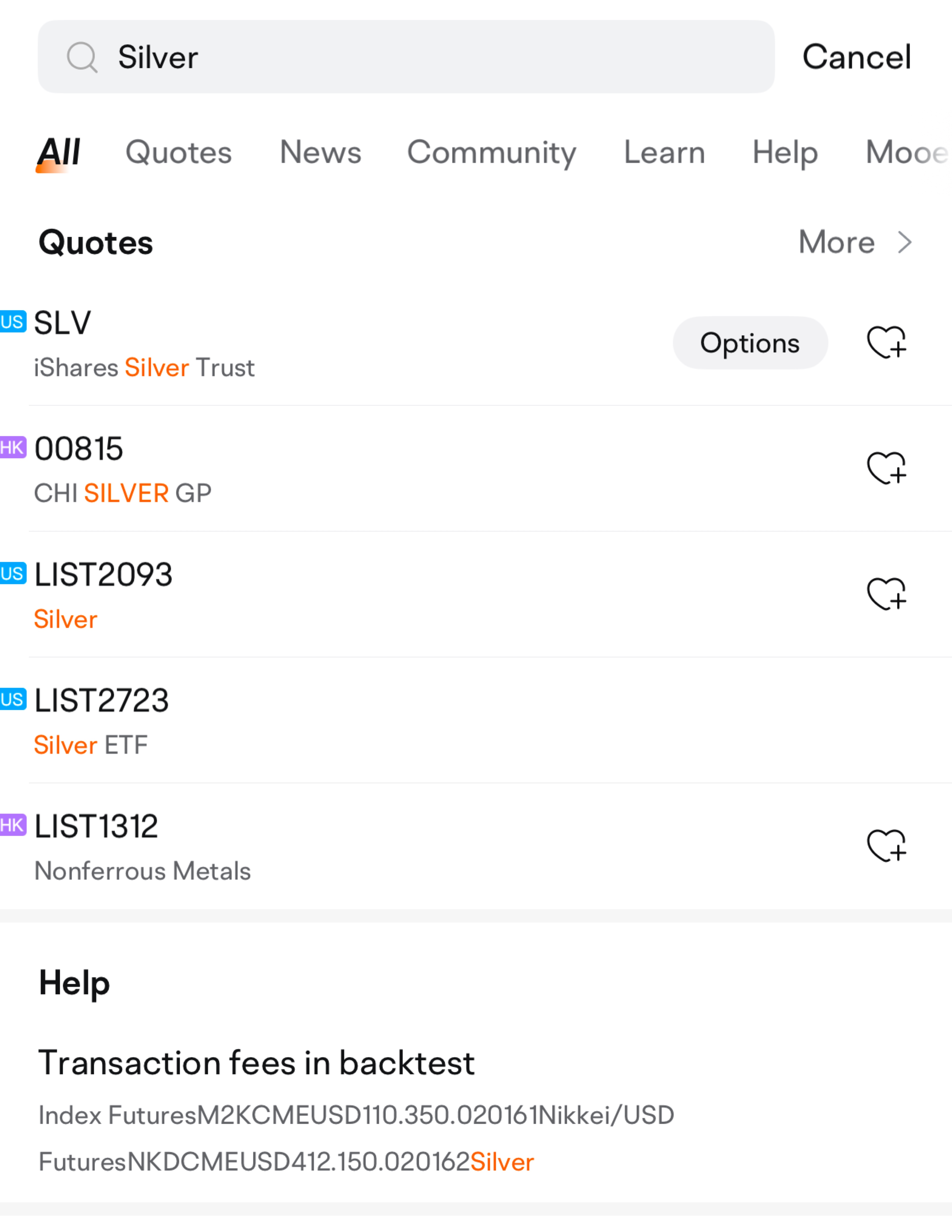
Investors can first look for quotes on different silver products. Go to the moomoo app on the home and type in "Silver" in the search bar.
There are two ways to place an order for silver stocks or ETFs.
In the moomoo app, tap a stock to access the Quotes page, tap Trade, enter order information, tap Buy or Sell, and enter your transaction password in the Unlock Trade pop-up window.
Go to the moomoo app, tap Accounts> Quick Trade, enter order information, tap Buy or Sell, and enter your transaction password in the Unlock Trade pop-up window.
Can help protect your portfolio from market downturns because it often moves in the opposite direction of stocks and bonds.
Historically has been a way to protect against inflation and preserve wealth over time.
Generally cheaper than gold, making it more accessible to investors.
A safe haven for centuries and increasingly seen as a hedge against geopolitical and financial risk.
Prices can be volatile, which can lead to significant price swings.
Silver bullion coins are not legal tender, so they can't be used for everyday purchases. If you need to sell silver quickly, you may need to find a buyer.
Can be speculative, so it's important to consider this when deciding if it's right for you.
Silver can be a good investment for certain types of investors, particularly those looking for a hedge against inflation, portfolio diversification, or exposure to industrial demand. The metal offers the advantage of being a tangible asset with a long history of preserving wealth in times of financial instability. Additionally, its relatively low cost compared to gold makes it more accessible for investors with limited budgets or those looking to build a larger position in a precious metal.
However, silver is not without its risks. The volatility of silver prices, dependence on industrial demand, and lack of yield can make it a challenging investment for those with low risk tolerance or short-term financial goals. Physical silver also involves added complexities such as storage and security concerns.
The best way to invest in silver depends on an investor's financial goals, risk tolerance, and preference for physical or paper-based investments. Here are some common methods:
Physical silver (coins, bars) is good for tangible ownership.
Silver ETFs are an option for convenience and liquidity.
Silver mining stocks offer higher return potential through rising silver prices and increased production by miners; these can potentially lead to greater corporate earnings.
Silver futures and options provide the opportunity for leverage but with high risk and are for experienced investors.
Silver coins can be good for those who want higher liquidity, legal tender status, and the potential for numismatic value, but be prepared to pay higher premiums and manage more complex storage for smaller quantities. With silver bars, this may be ideal for larger investors seeking a more cost-effective way to accumulate silver with lower premiums, especially for long-term storage. Bars may be more challenging to sell in smaller quantities and lack the collectible appeal of coins.
Ultimately, your investment goals and how you plan to store and liquidate your silver will determine the best option for you. A combination of both could provide a balanced approach, leveraging the strengths of each.
No, selling silver is not hard, but you should be careful when doing so. Keep these things in mind:
Look for a local or reputable dealer with a track record of fair prices.
Be cautious of deals that seem too good to be true, or offers that come from unsolicited sources.
Do your research to get an idea of your silver's value before you sell it.
Check if your silver is sterling silver (an alloy composed of 92.5% pure silver and 7.5% other metals, typically copper or zinc) and avoid high premiums for it.
This presentation is for informational and educational use only and is not a recommendation or endorsement of any particular investment or investment strategy. Investment information provided in this content is general in nature, strictly for illustrative purposes, and may not be appropriate for all investors. Read more
Recommend
How to Trade Volatility: Strategies & Tips for Success

How to File Taxes: 6 Steps for Beginners

Best AI Stock Trading Tools on moomoo Trading App

What is Algorithmic Trading | Benefits, Strategies & Future Trends
How to Diversify Your Portfolio: 6 Strategies to Consider
How to Invest in Dividend Stocks for Beginners
How to Invest in DeepSeek Stock: Easy Steps to Follow
How to Invest in Silver for Beginners
Meme Stocks: Definition, Examples, and Impact on the Market
What is an ACH Transfer: Definition, Types & Benefits
Stop-Limit Order: What it is in Stocks
How to Invest In OpenAI Stock in 2026
Fractional Shares: Definition & How to Buy
Cash Accounts: What Are They and How Do They Work
What Are International Stocks & American Stocks?
Margin Account vs Cash Account: Which is Right for You?
Volatility: Definition in Finance and How to Calculate
What is a Brokerage Account: Definition and How to Open
What Are Bitcoin ETFs and How to Trade
How to Transfer Stocks From One Broker to Another
New "T+1" Settlement Cycle | What You Need to Know
SEC Form 13F: Definition, Filling Requirements, and Examples
How to Choose a Good Online Brokerage for Stock Trading
Bitcoin Futures: What Are They and How to Invest
What Is 403(b) Plan? How Does It Work
Price Action Trading: A Guide to Understanding the Basics
Margin Trading: Strategies, Benefits, and Risks
How to Invest in Index Funds for Beginners
Pre-Market and After-Hours Trading: Definition & How It Works
What is the Stock Market: Key Concepts and Functions
Common Stock: Definition, Benefits, and vs. Preferred Stock
Stock Dividends vs. Capital Gains: What You Need to Know
What Is a Stock Split - Definitions, How It Works, & Examples
Institutional Investors: Definitions & How They Invest
How to Invest in the S&P 500 for Beginners
The Impacts of ChatGPT on the Stock Market
ETFs vs. Mutual Funds
How to Practice Trading Stocks with a Free Demo Account?
The Basics of Financial Literacy: Why You Should Care
Stocks vs. Bonds
Choosing the Best Trading Platform for You — moomoo vs. Webull vs. Robinhood
The Consumer Price Index (CPI) Explained For Investors
How to Use moomoo Paper Trading Online?
What Is the Price-to-Sales (P/S) Ratio?
What Is a Quarterly Report?
What Is the Price-to-Book (P/B) Ratio?
Margin Account Explained: Definition, Benefits, and How to Use It
What Is A 10-K?
What Is SEC Form 10-Q?
What Is Ethical Investing
What Is Earnings Season
What Is Socially Responsible Investment (SRI)?
What Is a Stop Order?
Reading the Annual Report
What Is Open Trade Equity (OTE)?
What Is Impact Investing
How to Use moomoo Paper Trading
What Is a Limit Order?
Margin Trading: How It Works, Risks and Benefits
What Is Initial Margin?
How to Invest in Stocks: From Basic to Advanced
Stock Market Courses that Seek to Empower Investment Goals
How Can You Calculate Margin Interest?
What is Intraday?
Retail Investors vs. Institutional Investors: What You Need to Know
What are Cyclical stocks?
How to Buy Stocks Online without A Broker
How to Trade Volatility: Strategies & Tips for Success
How to File Taxes: 6 Steps for Beginners
Best AI Stock Trading Tools on moomoo Trading App
What is Algorithmic Trading | Benefits, Strategies & Future Trends
How to Diversify Your Portfolio: 6 Strategies to Consider
How to Invest in Dividend Stocks for Beginners
How to Invest in DeepSeek Stock: Easy Steps to Follow
How to Invest in Silver for Beginners
Meme Stocks: Definition, Examples, and Impact on the Market
What is an ACH Transfer: Definition, Types & Benefits
Stop-Limit Order: What it is in Stocks
How to Invest In OpenAI Stock in 2026
Fractional Shares: Definition & How to Buy
Cash Accounts: What Are They and How Do They Work
What Are International Stocks & American Stocks?
Margin Account vs Cash Account: Which is Right for You?
Volatility: Definition in Finance and How to Calculate
What is a Brokerage Account: Definition and How to Open
What Are Bitcoin ETFs and How to Trade
How to Transfer Stocks From One Broker to Another
New "T+1" Settlement Cycle | What You Need to Know
SEC Form 13F: Definition, Filling Requirements, and Examples
How to Choose a Good Online Brokerage for Stock Trading
Bitcoin Futures: What Are They and How to Invest
What Is 403(b) Plan? How Does It Work
Price Action Trading: A Guide to Understanding the Basics
Margin Trading: Strategies, Benefits, and Risks
How to Invest in Index Funds for Beginners
Pre-Market and After-Hours Trading: Definition & How It Works
What is the Stock Market: Key Concepts and Functions
Common Stock: Definition, Benefits, and vs. Preferred Stock
Stock Dividends vs. Capital Gains: What You Need to Know
What Is a Stock Split - Definitions, How It Works, & Examples
Institutional Investors: Definitions & How They Invest
How to Invest in the S&P 500 for Beginners
The Impacts of ChatGPT on the Stock Market
ETFs vs. Mutual Funds
How to Practice Trading Stocks with a Free Demo Account?
The Basics of Financial Literacy: Why You Should Care
Stocks vs. Bonds
Choosing the Best Trading Platform for You — moomoo vs. Webull vs. Robinhood
The Consumer Price Index (CPI) Explained For Investors
How to Use moomoo Paper Trading Online?
What Is the Price-to-Sales (P/S) Ratio?
What Is a Quarterly Report?
What Is the Price-to-Book (P/B) Ratio?
Margin Account Explained: Definition, Benefits, and How to Use It
What Is A 10-K?
What Is SEC Form 10-Q?
What Is Ethical Investing
What Is Earnings Season
What Is Socially Responsible Investment (SRI)?
What Is a Stop Order?
Reading the Annual Report
What Is Open Trade Equity (OTE)?
What Is Impact Investing
How to Use moomoo Paper Trading
What Is a Limit Order?
Margin Trading: How It Works, Risks and Benefits
What Is Initial Margin?
How to Invest in Stocks: From Basic to Advanced
Stock Market Courses that Seek to Empower Investment Goals
How Can You Calculate Margin Interest?
What is Intraday?
Retail Investors vs. Institutional Investors: What You Need to Know
What are Cyclical stocks?
How to Buy Stocks Online without A Broker

