How to navigate market uncertainty: Investing in high-dividend ETFs for potentially steady income
For income-focused investors, high-dividend ETFs offer an excellent alternative to individual high-dividend stocks. These ETFs reduce single-stock risk through diversification and provide more stable dividend returns for investors who may not be skilled at stock picking.
In recent years, frequent geopolitical crises have increased economic and market volatility. During market downturns, high-dividend ETFs often demonstrate greater resilience and provide investors with a relatively stable income source, gaining recognition and popularity among many investors.
Using ETF screeners to find high-dividend ETFs
The moomoo ETF screener can help us filter high-dividend ETFs that meet specific criteria. We can set the following screening conditions:
Dividend Yield (TTM): ≥4%
Annual Return: ≥3% for the past 3 years
Total Expense Ratio: 0% to 1%
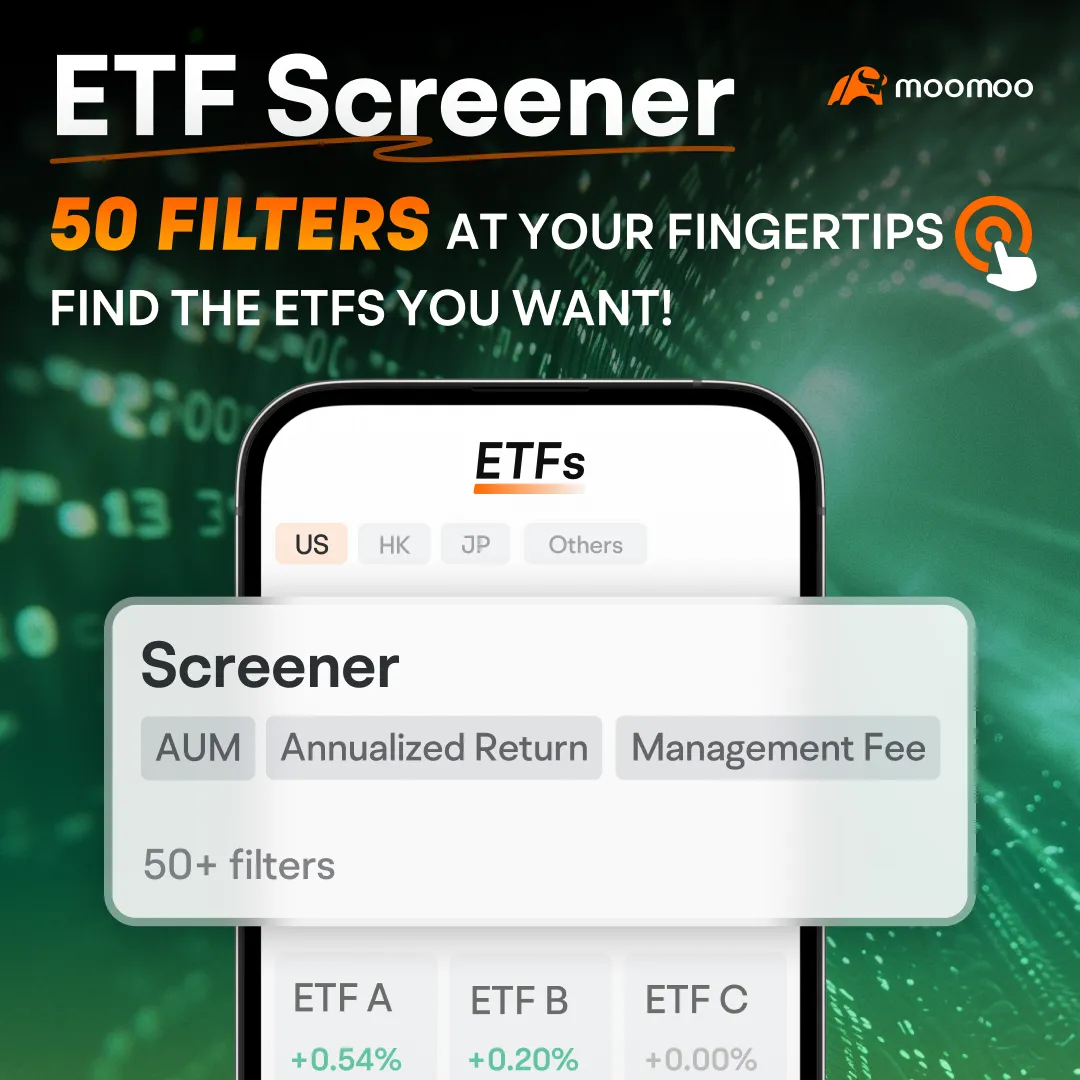
With numerous ETFs meeting these criteria, how should we choose? We can categorize the high-dividend ETFs into three types and then select based on factors such as fund size, expense ratio, and dividend stability:
Equity ETFs
Bond ETFs
Covered Call ETFs
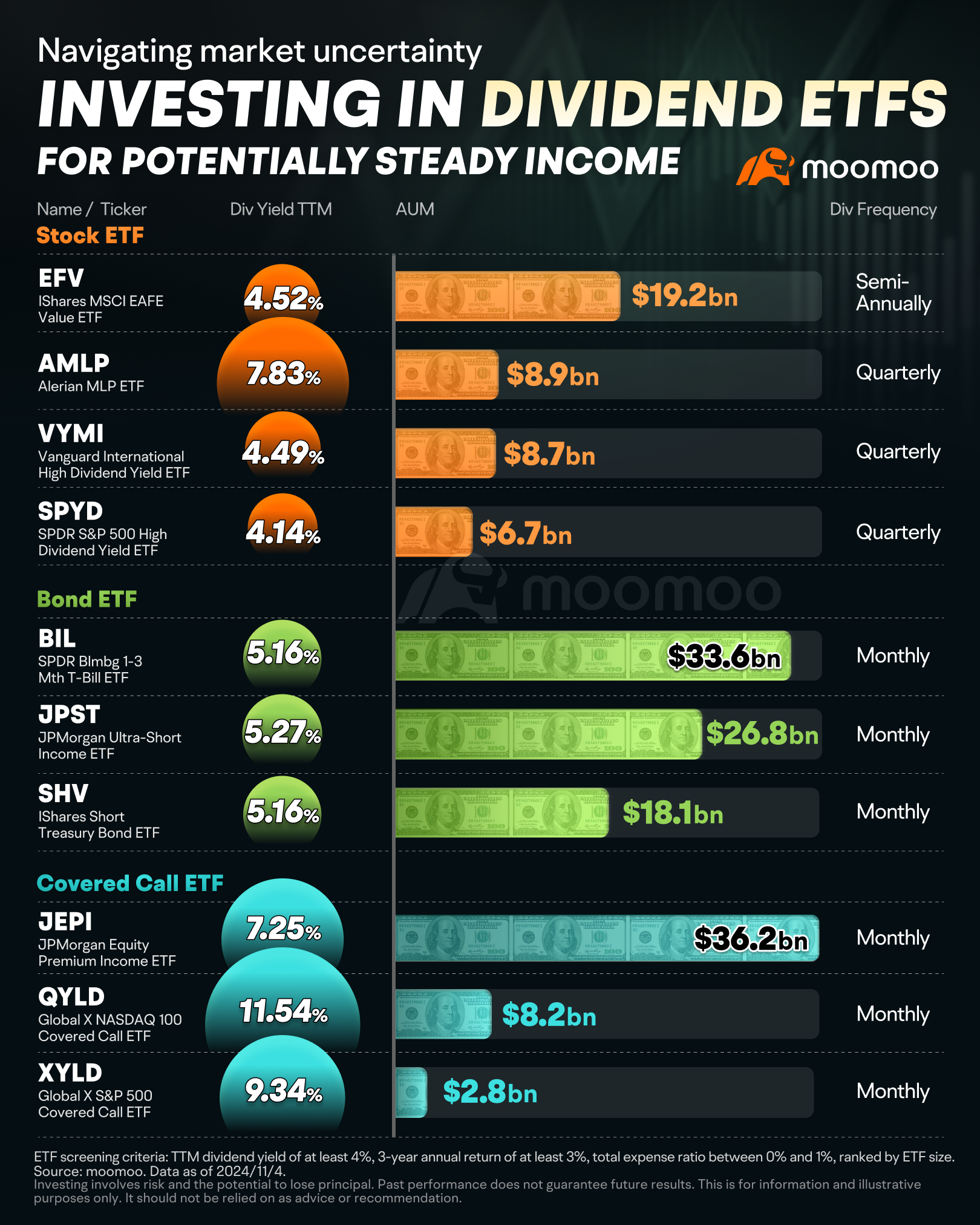
Type 1: Equity ETFs
These ETFs primarily invest in high-dividend stocks. They offer stable dividend income and potential capital appreciation but may face stock price declines and reduced dividends during economic recessions.
Examples of typical equity high-dividend ETFs include:
$EAFE Value Index MSCI Ishares (EFV.US)$ : Focuses on large and mid-cap value stocks in developed markets (excluding the US and Canada).
$Alerian MLP ETF (AMLP.US)$ : Primarily invests in energy pipeline companies.
$Vanguard International High Dividend Yield Etf (VYMI.US)$ : Tracks high-dividend yield stocks globally (excluding the US), offering an international high-dividend portfolio.
$Spdr Series Trust Spdr Portfolio S&P 500 High Dividend Etf (SPYD.US)$ : Tracks the 80 highest dividend-yielding stocks in the S&P 500 index, focusing on large US high-dividend companies.
Type 2: Bond ETFs
These ETFs mainly invest in short-term bonds, such as $SPDR Bloomberg Barclays 1-3 Month T-Bill ETF (BIL.US)$ , which invests in 1-3 month US Treasury bills. Short-term bond ETFs offer stable prices, high liquidity, and often pay monthly dividends due to the low risk of short-term bonds.
However, it's important to note that these ETFs' dividend yields are not always high. The recent surge in short-term bond yields is primarily due to the Federal Reserve's significant interest rate hikes since 2022. If the US continues to lower interest rates, these ETFs' dividend yields will likely decrease accordingly.
Type 3: Covered Call ETFs
These ETFs don't solely invest in options. Their main holdings are stocks, but unlike regular stock ETFs, they generate additional cash income by selling call options. This strategy is known as a covered call.
The premiums received from selling options provide these ETFs with ample cash for dividend distributions, resulting in typically higher dividend yields and monthly payouts. Examples include $JPMorgan Equity Premium Income ETF (JEPI.US)$ , $Global X Nasdaq 100 Covered Call ETF (QYLD.US)$ , and $Global X S&P 500 Covered Call ETF (XYLD.US)$ .
The largest among these is JEPI, a Covered Call ETF issued by JPMorgan. It tracks companies in the S&P 500 index while selling call options to generate additional income for investors.
Three key points for successful ETF investing
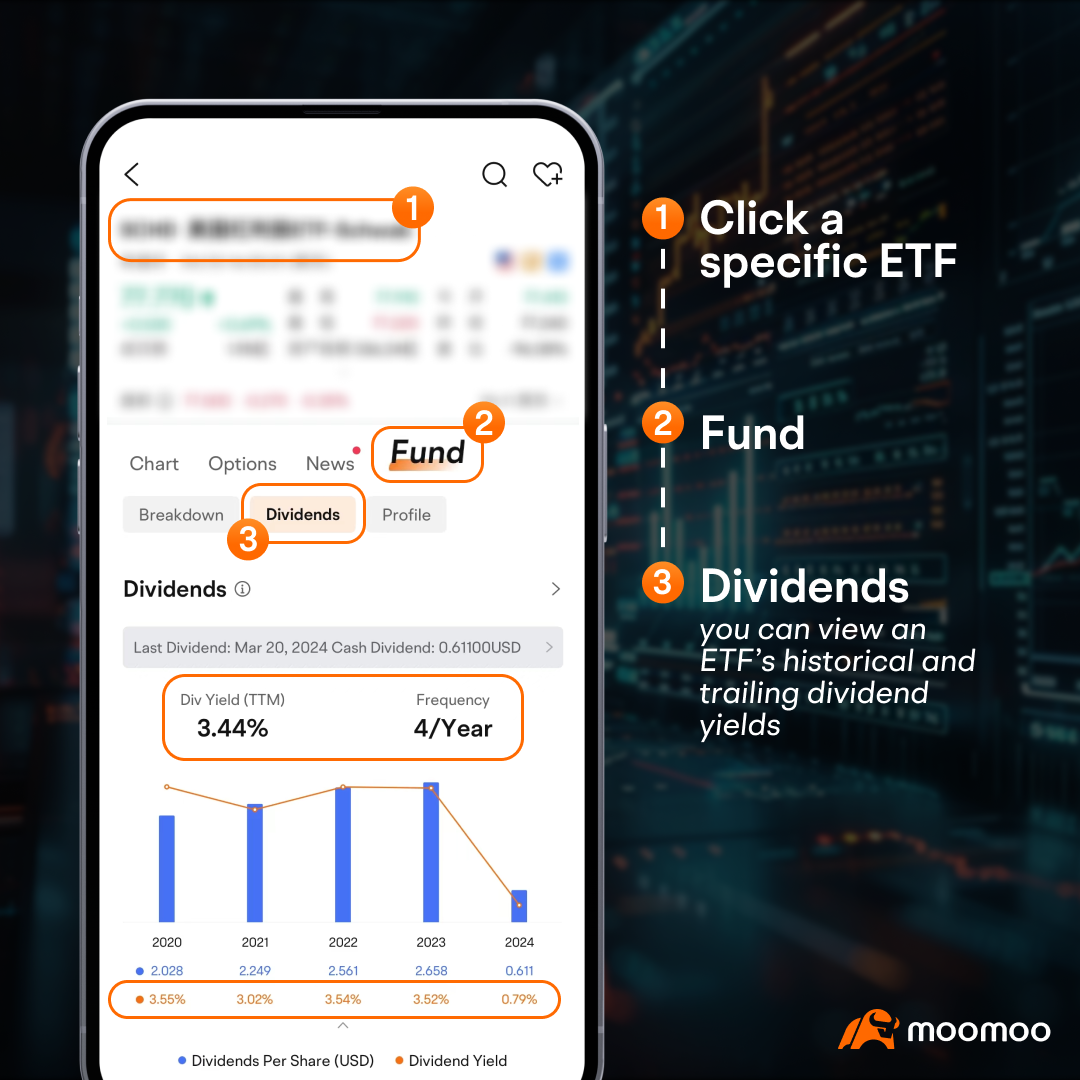
1. Check the dividend historyThe TTM dividend yield only reflects the last 12 months. An ETF might have a temporarily high payout that may not be sustainable. When selecting ETFs, review their dividend history and choose those with consistently high dividend yields over multiple years.
2. Extremely high dividend yields aren't always better. Very high dividend yields often lack sustainability and may impact the growth potential of the ETF's price.
3. Consider dividend reinvestment. Reinvesting dividends to purchase additional shares can create a compounding effect over time, potentially improving long-term returns.
DRIP (Dividend Reinvestment Plan) is a convenient tool that automatically reinvests cash dividends into additional ETF shares on the dividend payment date.
This presentation is for informational and educational use only and is not a recommendation or endorsement of any particular investment or investment strategy. Investment information provided in this content is general in nature, strictly for illustrative purposes, and may not be appropriate for all investors. Read more