Dividend Reinvestment Plan (DRIP): Compound Your Investment Returns

In investing, compounding is often seen as a key driver of long-term growth. A Dividend Reinvestment Plan (DRIP) is one approach that makes use of this effect by reinvesting dividends into the original investment. This can increase the number of shares held over time, though outcomes will vary depending on market conditions, company performance, and dividend payments.
In this article, we explain how DRIPs operate, their potential benefits and limitations, and why some investors include them as part of a broader investment approach.
Key takeaways
A Dividend reinvestment plan (DRIP) allows for the automatic reinvestment of dividends into additional shares with lower fees, making it a cost-effective way to grow investments.
By reinvesting dividends, investors could benefit from compounding growth over time. The ability to purchase fractional shares ensures the full dividend is reinvested.
On moomoo, investors have the option to set up DRIPs with minimal effort. This feature can support a long-term investment approach.
Reinvested dividends are still taxable in the year received, requiring careful tax planning. Additionally, DRIPs could lead to overexposure to certain assets and reduce diversification.
What is a dividend reinvestment plan (DRIP)?
A Dividend Reinvestment Plan (DRIP) is a service provided by publicly traded companies or stock brokers, allowing investors to automatically use their cash dividends or distributed earnings to purchase additional shares of stock or funds, rather than receiving these earnings in cash. By reinvesting dividends, investors may benefit from the effects of compounding over time, although outcomes will depend on factors such as dividend payments, market conditions, and the performance of the underlying investment.
>> Moomoo provides you with fully automated DRIP services, enabling you to make more efficient use of your cash dividends to potentially boost investment returns and achieve compound growth.
How do dividend reinvestment plans work?
In the operation of Dividend Reinvestment Plans (DRIPs), there are several key characteristics to be aware of:
Automatic Reinvestment: Investors participating in DRIPs agree to automatically convert their dividends or distribution proceeds into additional shares of stock or funds.
Price Discounts: Some companies or funds may offer discounts on stocks or shares purchased through DRIPs, typically ranging from 1% to 5%, but the specific discount rate varies by provider. Please note that discounts are not offered by all DRIPs.
Transaction Fees: When purchasing stocks or shares through DRIPs provided directly by companies or funds, participants usually do not have to pay transaction fees. However, DRIPs offered through brokers may have different fee structures.
Fractional Shares: Many DRIPs allow for the purchase of fractional shares, which means investors can fully utilize all dividends or distribution proceeds for additional investments, even if they are not enough to purchase whole shares.

What are the types of dividend reinvestment plans?
DRIP is mainly divided into three types, each with its own characteristics:
Company-operated DRIP
Company-operated dividend reinvestment plans are dividend reinvestment plans directly managed by the issuing company.
Direct Purchase: Shareholders can buy additional shares directly from the company, often bypassing the need for a broker.
Lower Cost: Companies may offer shares at a discount to the current market price. And these plans typically do not charge any brokerage or transaction fees, which can lower the cost over time.
Management Complexity: If your portfolio includes stocks from multiple companies that offer company-operated DRIPs, you will need to manage these plans separately. Moreover, this method usually involves a considerable amount of paperwork, as you need to apply directly to the company.
Broker-operated DRIP
These plans are facilitated by brokerage firms, allowing investors to reinvest dividends from stocks held in their brokerage accounts. This type of DRIP typically does not offer the same discounts as company-operated plans but provides convenience.
Flexibility: Investors can reinvest dividends from multiple companies within the same brokerage account, providing a centralized way to manage various DRIPs.
Discounted Rates: Modern mainstream online brokers typically offer preferential rates for implementing DRIP operations. On moomoo, the related fees for dividend reinvestment plans are executed according to fractional share orders, with no commission charged.
Potential Restrictions: Some brokerages may have restrictions on certain stocks or funds that are eligible for DRIP, limiting your options for reinvestment.
Third-party-operated DRIP
Third-party dividend reinvestment plans are managed by independent companies that specialize in investment management services. These companies partner with various corporations to provide expanded DRIP options to investors.
Diversity: They offer a wide selection of DRIP options from different companies, allowing for better diversification.
Higher Cost: Third-party providers may charge management or service fees, which can reduce the net returns on investment.
How to set up a dividend reinvestment plan for US stocks & ETFs?
The essence of DRIP (Dividend Reinvestment Plan) is to automatically use the cash dividends that investors are entitled to receive to purchase more shares of the company or other assets, instead of taking the cash directly.
The core advantage of DRIP is achieving compound growth:
The initial dividend is used to purchase more shares.
At the next dividend payment, you receive a larger total dividend amount because you hold more shares.
The new dividends are then used to purchase even more shares, and the cycle continues.
In the long term, if you choose the right assets, this 'compounding' effect may accelerate the growth of your shareholdings and wealth accumulation.
Dividend Reinvestment Plan is similar to Recurring Investments in that it involves regularly purchasing shares (at each dividend distribution) and leveraging the compounding effect through a continuous and disciplined investment mechanism.
The main difference is that DRIP operates entirely based on company dividends, with investment actions being passively triggered, whereas recurring investments rely on the investor to contribute new funds regularly.
>> Learn more: Recurring Investments: How to Automate Your Stock Investing
We can appreciate the power of DRIP through an example:
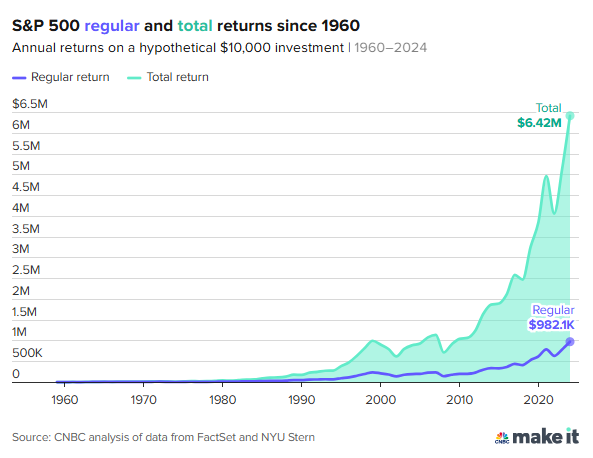
If you invested $10,000 in the S&P 500 in 1960, it would grow to $982,000 by 2024. However, if you chose DRIP, meaning reinvesting the dividends to purchase more of the S&P 500, the total return would exceed six million dollars, a difference of more than six times.
Past performance does not guarantee future results. This is for information and illustrative purposes only. It should not be relied on as advice or a recommendation.
We can see that U.S. assets, as represented by the S&P 500, have provided investors with remarkable returns over the long term, and DRIP helps to enhance these returns further.
Below, we will outline two methods for setting up a dividend reinvestment plan.
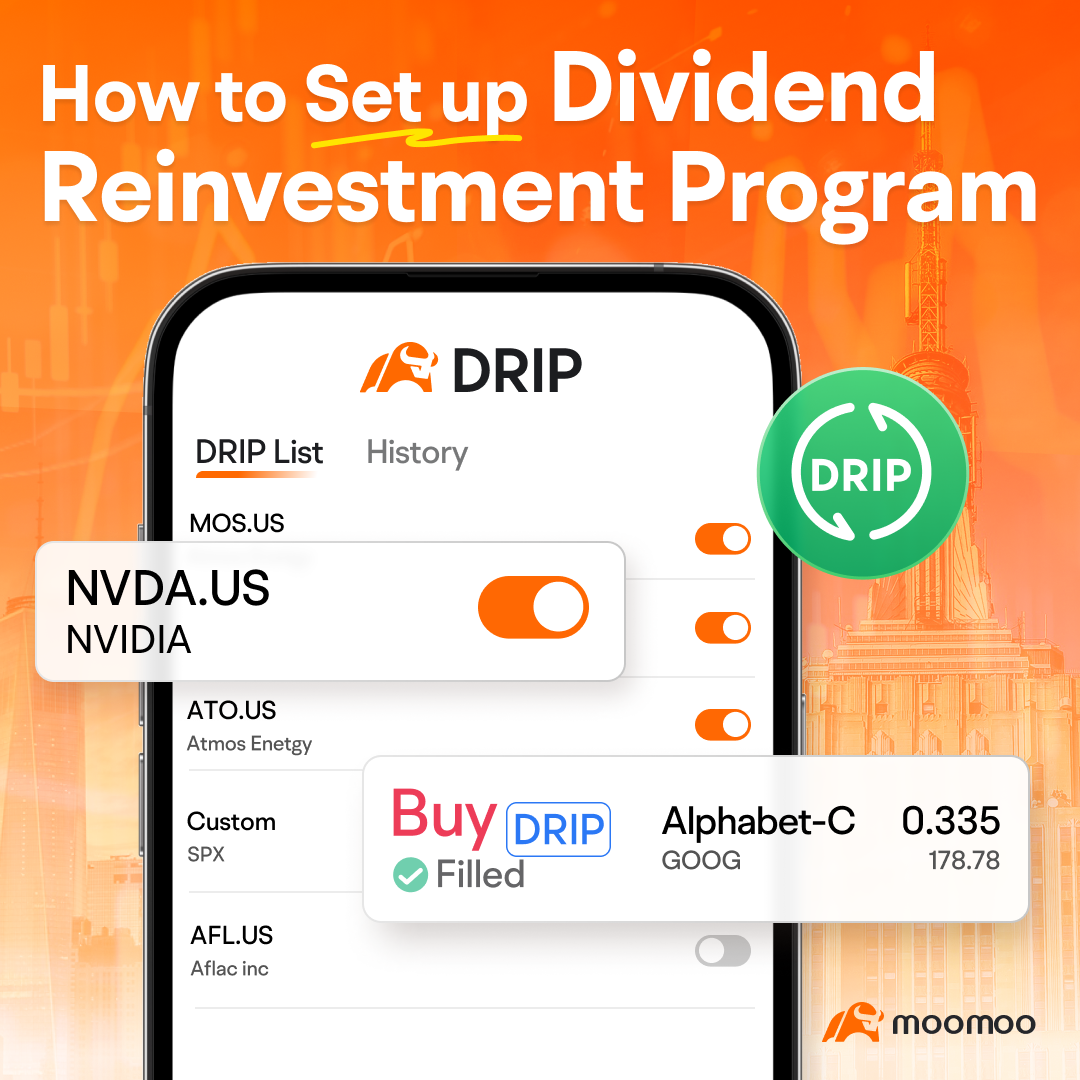
Dividend reinvestment via brokerage account
As we mentioned above, DRIP through a brokerage is relatively convenient. Once you enroll in a dividend reinvestment plan through your brokerage account, dividends are automatically used to purchase more shares of the target asset.
Most brokerages allow the purchase of fractional shares with dividend reinvestments, ensuring that the entire dividend amount is put to work.
As a leading stock trading platform, moomoo Australia provides you with an easy-to-use DRIP investment experience. Moomoo offers dividend reinvestment options for a variety of US stocks and ETFs in your portfolio, providing greater flexibility.
Here's a step-by-step guide on how to set up your DRIP on moomoo:
Step 1: Find DRIP
First, you need a universal account that supports fractional share trading. If you don't have one yet, joining Moomoo is very simple and can be done in just three easy steps.

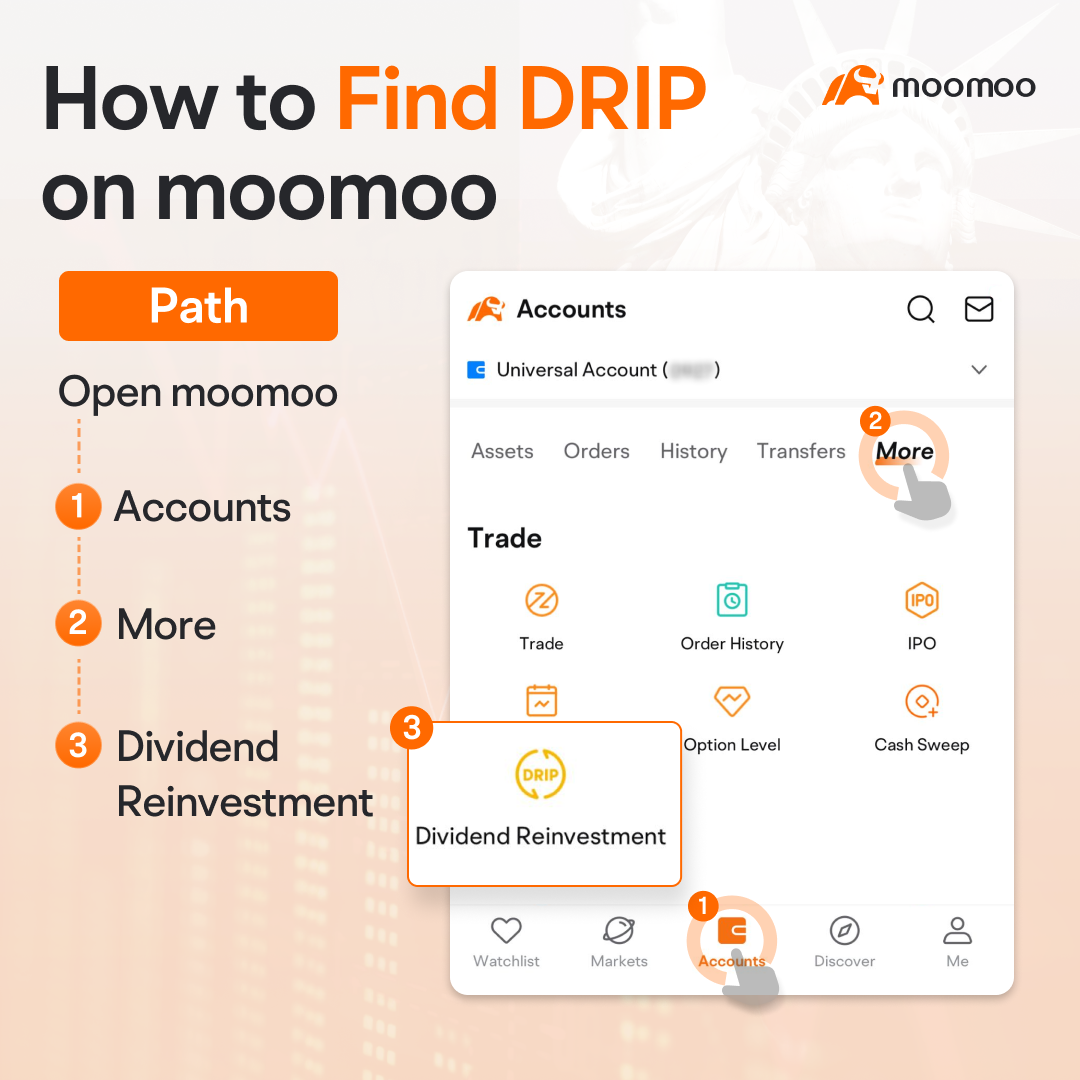
Once you have an account, you can easily access the DRIP feature. Just open your moomoo app, switch to Accounts, and tap More. Then you can find Dividend Reinvestment.
Step 2: Enable DRIP
After you discover the DRIP, you'll need to agree to the terms and conditions before you dive in.
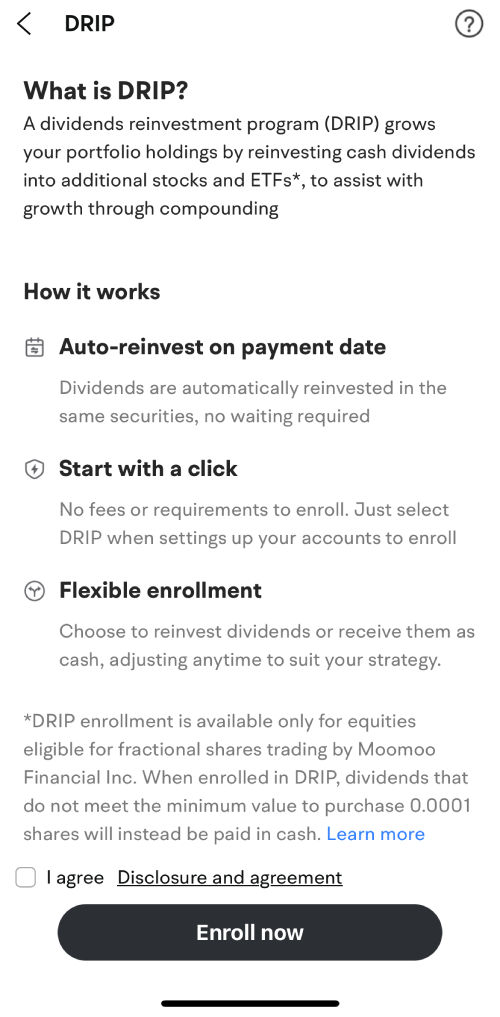
Please note that DRIP is only available for certain US-listed stocks that distribute cash dividends.
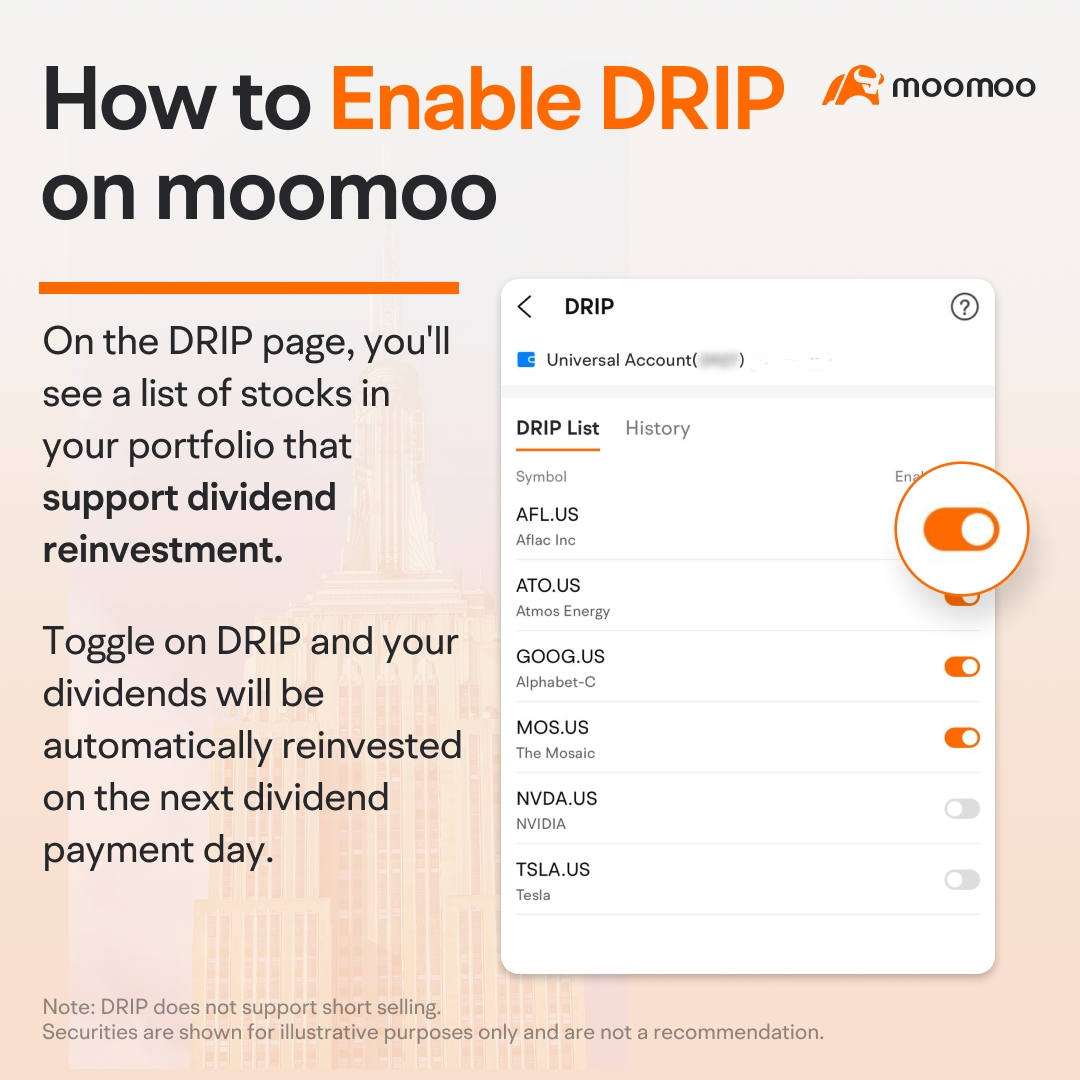
Entering the DRIP page, you'll see a list of stocks in your portfolio that support dividend reinvestment. Toggle on DRIP, and your dividends will be automatically reinvested on the next dividend payment day.
Step 3: View your purchase records
If you enroll in DRIP and register as a shareholder before the dividend payout date, your dividends will be automatically reinvested in the same stock using a Market on Close (MOC) order.
The cost per share will be based on the weighted average fill price of all MOC orders for the stock on that specific trading day.
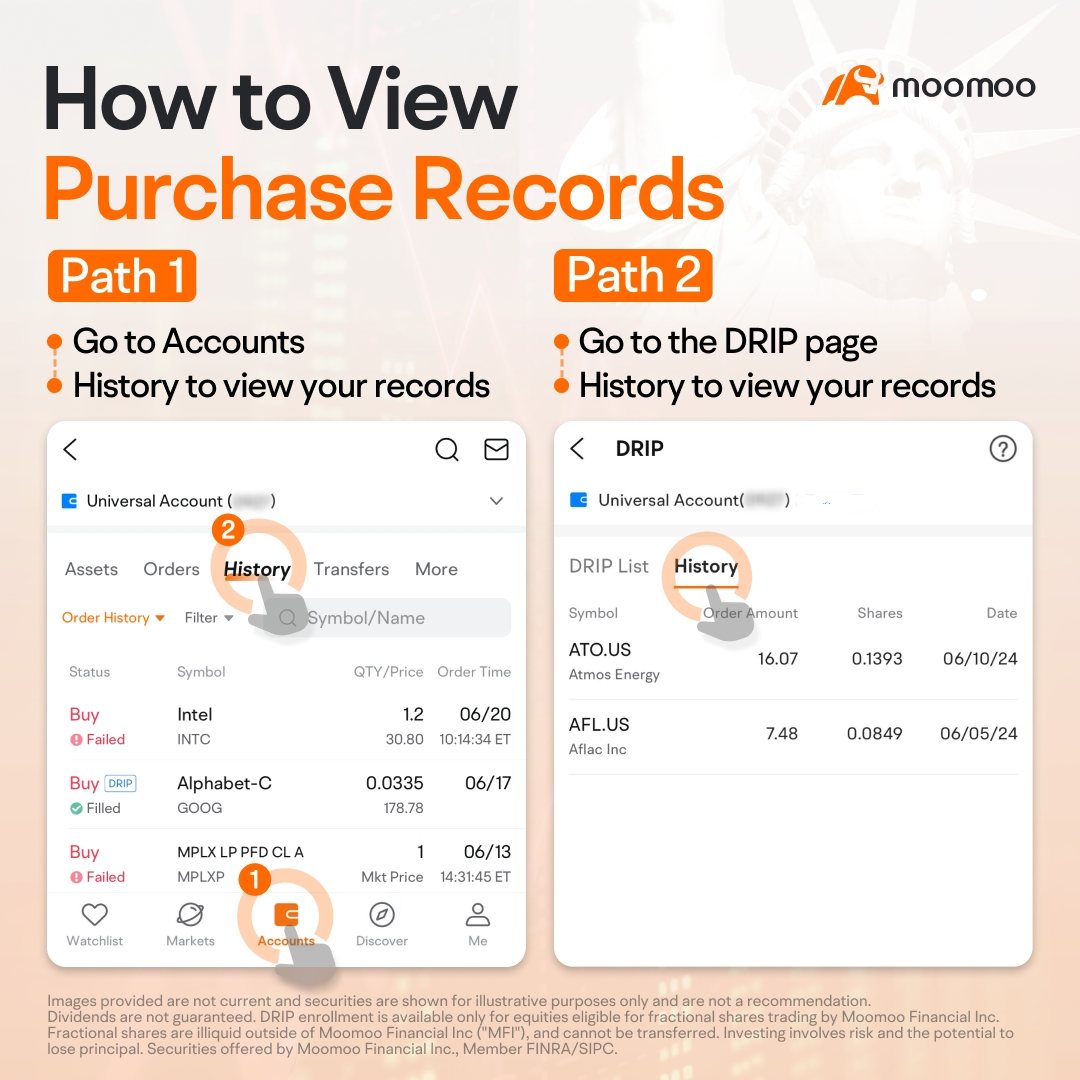
You can view your DRIP through the following two paths:
If a failed order ever appears in your DRIP records, no worries. It may be caused by one of the following issues. You can check and see where the problem lies:
A lack of liquidity in the market
Missing the DRIP enrollment deadline
Not meeting the margin requirement by making the dividend reinvestment
Not meeting the minimum purchase limit for fractional shares, i.e., 0.0001 share
If you have any further questions, please don't hesitate to contact our customer support team. We provide live customer service 24 hours a day, five days a week, and offer intelligent customer service around the clock. Moomoo's here to assist you whenever you need help!

Now, you might be wondering: with so many assets available in the market, how do you choose the right one to begin your DRIP?
Dividend reinvestment plans (DRIPs) allow investors to reinvest dividends back into additional shares, which can increase the overall number of shares held over time. The impact of this approach depends on the performance of the underlying securities. Some investors choose to apply DRIPs to high-dividend stocks due to the reasons listed below.
Stable Cash Flow: High-dividend stocks often represent financially stable companies that can generate sufficient cash flow to support high levels of dividend payments.
Accelerated Compound Growth: The higher dividend yield provided by high-dividend stocks means that investors can accumulate additional shares more quickly, thereby accelerating compound growth.
Risk Management: High-dividend stocks often belong to mature industries (such as utilities, consumer goods, and financial sectors), which can provide a certain level of defensiveness for the investment portfolio, helping to mitigate risk during market volatility.
Selecting suitable high-dividend assets requires a comprehensive evaluation of various factors to ensure that these assets not only offer high dividend yields but also possess good financial health and long-term growth potential.
Within the U.S. market, ‘Dividend Aristocrats’ refers to a group of S&P 500 companies that meet specific criteria, including:
The company must be a member of the S&P 500 Index.
Constituents must have increased dividend payments every year for at least 25 consecutive years.
Market capitalization must exceed US$3 billion.
The average daily trading volume over the past 3 months should be at least US$5 million.
These criteria are descriptive only and do not indicate future performance or guarantee dividend sustainability. Investors should carefully evaluate the financial health, diversification implications, and long-term potential of any asset before using a DRIP strategy.
The S&P developed the criteria and maintains the list of Dividend Aristocrats as part of their index offerings. On moomoo Australia, you can find them through Markets> Investment Themes> Dividend Aristocrats.

In addition to the 'Dividend Aristocrats' selected by S&P, you can also look at high-dividend companies across the entire market.
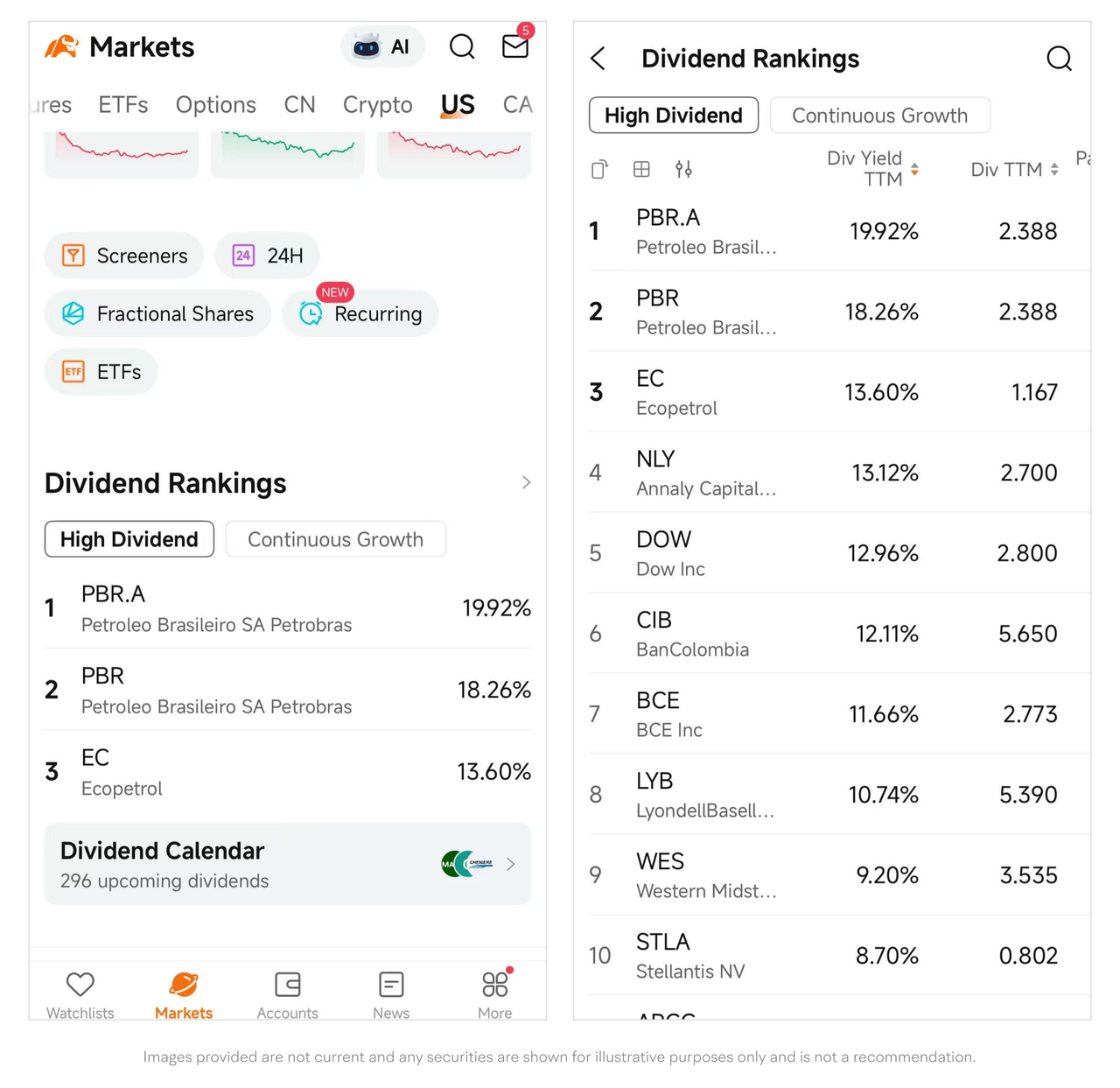
On moomoo, Dividend Rankings can help you identify high-dividend stocks in the market. Additionally, filters are available to adjust various criteria, which allows you to refine your search based on specific investment preferences and goals.
Stocks can be filtered by dividend yield, price, market capitalization, and dividend frequency to streamline the research process. A "Consistent Growth" list is also available to help identify stocks with stable and growing dividend payouts. You can find it by Markets> US> Dividend Rankings
For investors participating in a Dividend Reinvestment Plan (DRIP), knowing the dividend payment dates allows you to anticipate when you will receive dividends, enabling better management and prediction of cash flow.
On Moomoo, the dividend calendar is located right below the Dividend Rankings. It displays companies with upcoming or recent dividend payments in a calendar view. After checking high-dividend stocks in the market, you can conveniently see which companies are likely to pay dividends soon.
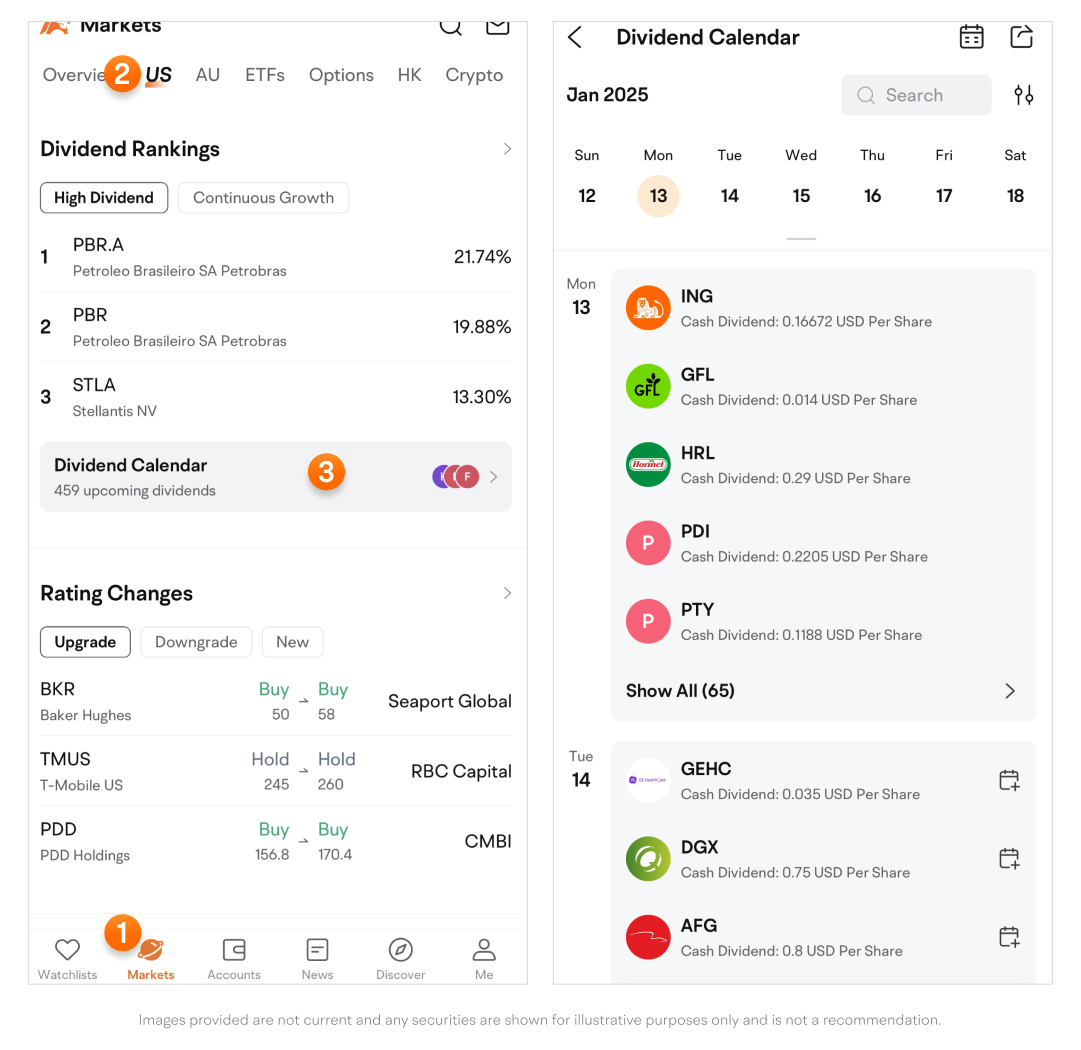
In the dividend calendar, clicking on a specific company name will take you directly to the detailed dividend page and give you more specific information.
If you already have a preferred asset for DRIP, you can also directly go to the quotes page to check its dividend details. Here's how: Quotes page> Company> Dividends
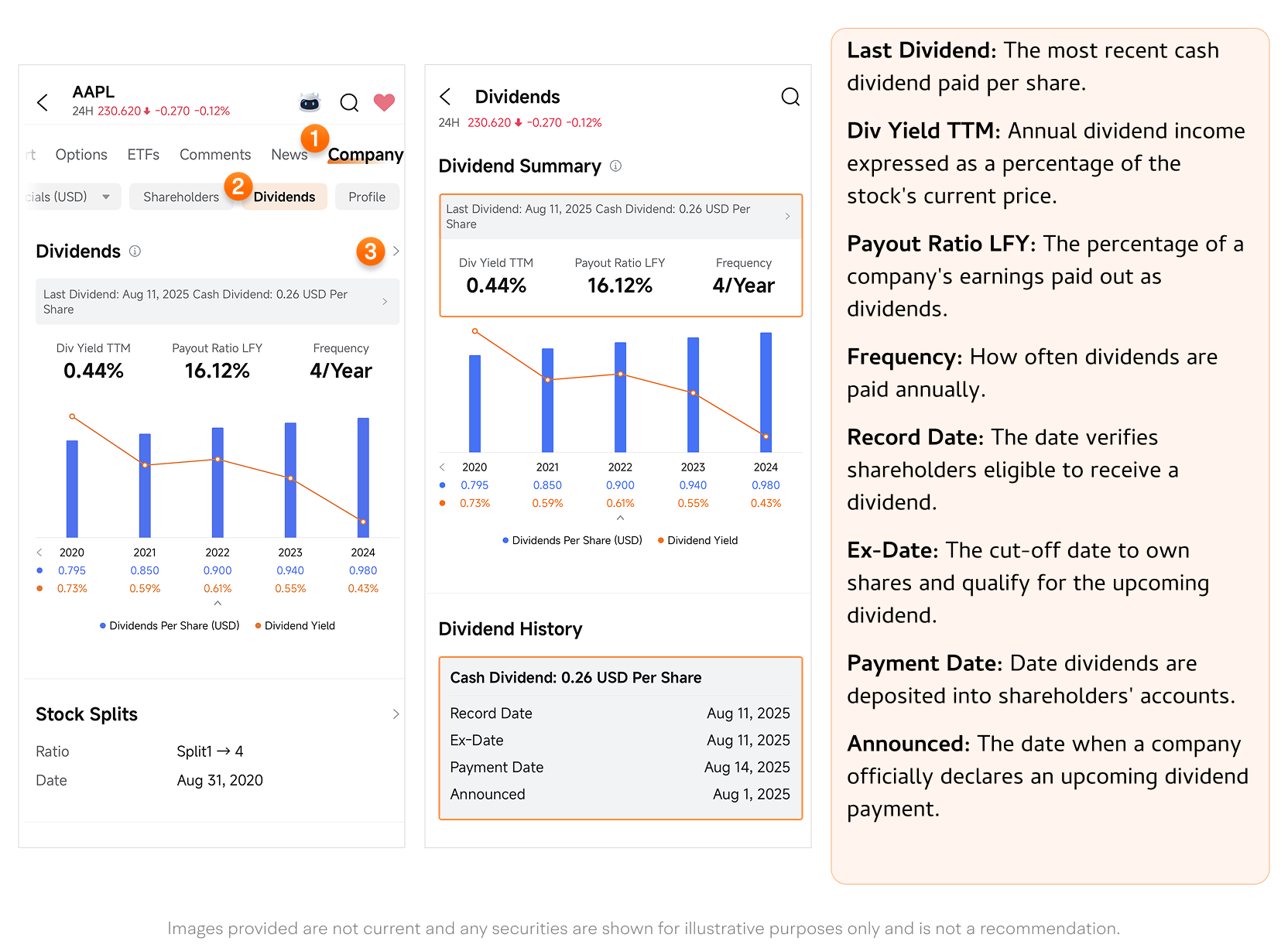
Let's use Apple as an example to highlight what you might keep an eye on:
You can see that Apple’s trailing twelve-month dividend yield stands at 0.41%, notably low compared to the Dividend Aristocrats. Its payout ratio is 16.12% for the last fiscal year, indicating Apple retains ~84% of earnings for reinvestment into R&D, share repurchases, and other actions.
The latest declared dividend of $0.25 per share (announced November 1, 2024) follows Apple’s established timeline: Investors must hold shares by November 7 to qualify. On November 11, 2024, it would verify eligible shareholders. And on November 14, the dividends are distributed.
Once you're familiar with all these features, you'll likely find managing your DRIP on moomoo to be a breeze. With the useful tools at your disposal, you can potentially navigate your DRIP strategy and make decisions that align with your financial goals.
Direct DRIP investment without brokerage
A direct Dividend Reinvestment Plan (DRIP) allows investors to buy shares directly from a company, also known as a company-operated DRIP.
To enroll in the plan, you must submit the required documents to the company, which include your personal information, bank account details, copies of identification, and any additional information.
You can contact the company’s transfer agent or access enrollment forms via the company's Investor Relations portal.
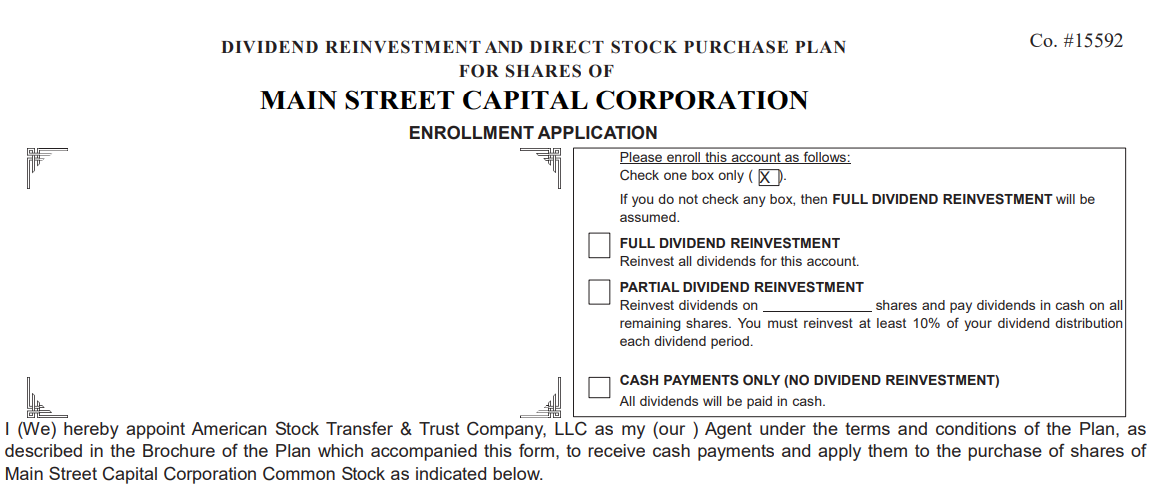
This is for information and illustrative purposes only. It should not be relied on as advice or a recommendation.
How to reinvest dividends for Australian stocks?
For Australian stocks, you can also reinvest dividends through a DRIP. Similar to DRIPs for U.S. assets, DRIPs allow you to use received dividends to purchase more shares, thereby potentially increasing your holdings and potential returns over the long term.
Top ASX-listed companies with high dividends
In Australia, a number of publicly traded companies offer Dividend Reinvestment Plans (DRIPs), including several large ASX-listed companies.
Symbol | Name | Market Cap | Dividend Yield % |
RIO | Rio Tinto Ltd | 184.38B | 5.47% |
BHP | BHP Group Ltd | 212.49B | 5.34% |
TCL | Transurban Group | 43.46B | 4.58% |
WBC | Westpac Banking Corp | 123.2B | 4.19% |
TLS | Telstra Group Ltd | 55.22B | 3.71% |
WOW | Woolworths Group Ltd | 39.68B | 3.20% |
CBA | CommBank | 279.55B | 2.84% |
CSL | CSL Ltd | 130.79B | 1.37% |
ALL | Aristocrat Leisure Ltd | 43.61B | 1.11% |
Data source: moomoo. Data as of Aug 14, 2025. | |||
The list is provided for informational purposes only to illustrate which companies currently offer DRIPs. This is not a recommendation to buy or sell any of these securities. Investors should carefully consider the financial position, dividend policy, and risks associated with each company before participating in a DRIP.
Mining giants like RIO and BHP have a dividend yield of over 5%, while TSL, which operates Australia's toll roads, offers a dividend return of over 4.5% due to its utility nature. The dividend distributions of major local banks such as WBC and CBA are also relatively stable.
>> Moomoo enhances your investment strategy by offering Dividend Rankings specifically for the Australian market

What are the benefits and drawbacks of a dividend reinvestment plan?
A Dividend Reinvestment Plan (DRIP) offers several benefits and drawbacks that investors should consider before enrolling.
Advantages | Disadvantages |
Cost Efficiency: Lower fees; possible discounts | Diversification: Increased asset concentration |
Compounding: Boosts long-term growth | Tax Implications: Still Taxable |
Fractional Shares: Full dividend reinvestment | Limited Control: Less flexibility in purchase timing and pricing |
Convenience: Minimal effort needed |
Benefits of a Dividend Reinvestment Plan
Cost Efficiency: Many DRIPs allow investors to reinvest dividends with lower fees or commissions, reducing the cost of accumulating additional shares. Some companies offer shares at a discount through their DRIP, allowing investors to buy shares below market price.
Compounding Effect: When dividends are reinvested to purchase additional shares, the total number of shares held can increase over time.
Fractional Shares: DRIPs often allow the purchase of fractional shares, ensuring that the entire dividend amount is reinvested, maximizing the efficiency of your investment.
Convenience: Once set up, the process is automatic and requires minimal intervention, making it a convenient way to grow your investment portfolio gradually.
Drawbacks of a Dividend Reinvestment Plan
Lack of Diversification: Continuously reinvesting in the same asset increases exposure, potentially leading to a lack of diversification in your portfolio.
Tax Implications: Even though dividends are reinvested, they are still taxable. This requires careful record-keeping for tax reporting purposes.
Limited Control: Automatic reinvestment means you have less control over when and at what price you purchase additional shares. Dividends are reinvested at market prices, which may not always be favorable.
Do you pay tax on reinvested dividends in Australia?
In Australia, reinvested dividends are subject to tax. When you receive dividends, whether you take them as cash or reinvest them through a Dividend Reinvestment Plan (DRIP), they are considered taxable income in the year they are paid. This means you must include them in your annual tax return.
Is it better to reinvest dividends or take the cash?
Choosing whether to participate in a Dividend Reinvestment Plan (DRIP) involves a decision between receiving cash dividends and reinvesting those dividends. Each option has its own advantages and disadvantages.
Cash dividends provide investors with immediate liquidity and flexibility, allowing them to allocate these funds freely to meet personal financial needs or seize other investment opportunities. This is particularly important for investors who rely on stable cash flow. However, opting for cash dividends also means forgoing the opportunity to accelerate wealth growth through the power of compounding, and the cash held may gradually lose purchasing power due to inflation.
Reinvesting dividends through automatic purchases of additional shares helps achieve capital growth through compounding, which is especially beneficial for long-term capital appreciation and is particularly suitable for those optimistic about the company's prospects. This strategy typically incurs lower costs, thereby reducing transaction costs. However, it also increases exposure to market risk and may lead to a decrease in liquidity in the short term.
Dividend reinvestment plan summed
A dividend reinvestment plan (DRIP) can be a powerful tool for long-term investors seeking to grow their investments through cost-effective and automatic reinvestment. However, they come with certain risks and tax implications that require careful consideration. Different types of DRIPs also have their distinct characteristics.
Investors should evaluate how a DRIP fits into their overall investment strategy and financial goals.

Frequency Asked Questions
2. Are reinvested dividends taxed as income?
Yes. Reinvested dividends are generally taxed as income in the year they are paid, even if they are automatically reinvested through a Dividend Reinvestment Plan (DRIP). You need to report them on your tax return for the year in which they are paid.
3. Can you reinvest dividends in an ETF?
Yes, you can reinvest dividends in an ETF through a DRIP. ETFs are similar to stocks in many ways; they can be traded in real time during market hours and also support fractional shares, which makes them eligible for DRIP as well. However, it is important to note that not all ETFs support DRIP. Many brokerages (including moomoo) allow the purchase of fractional shares with reinvested dividends.
This presentation is for informational and educational use only and is not a recommendation or endorsement of any particular investment or investment strategy. Investment information provided in this content is general in nature, strictly for illustrative purposes, and may not be appropriate for all investors. Read more