How to choose among the top 10 semiconductor ETFs amid the AI wave?
Since 2020, the semiconductor sector has witnessed two major bull runs, fueled by the COVID-19 pandemic and the AI boom, respectively. From 2020 to 2024, the Philadelphia Semiconductor Index (SOX), a prominent benchmark for the sector, surged by over 200%, making it one of the hottest sectors in the U.S. stock market.
During bullish periods for the semiconductor sector, the profitability of semiconductor ETFs becomes highly pronounced.
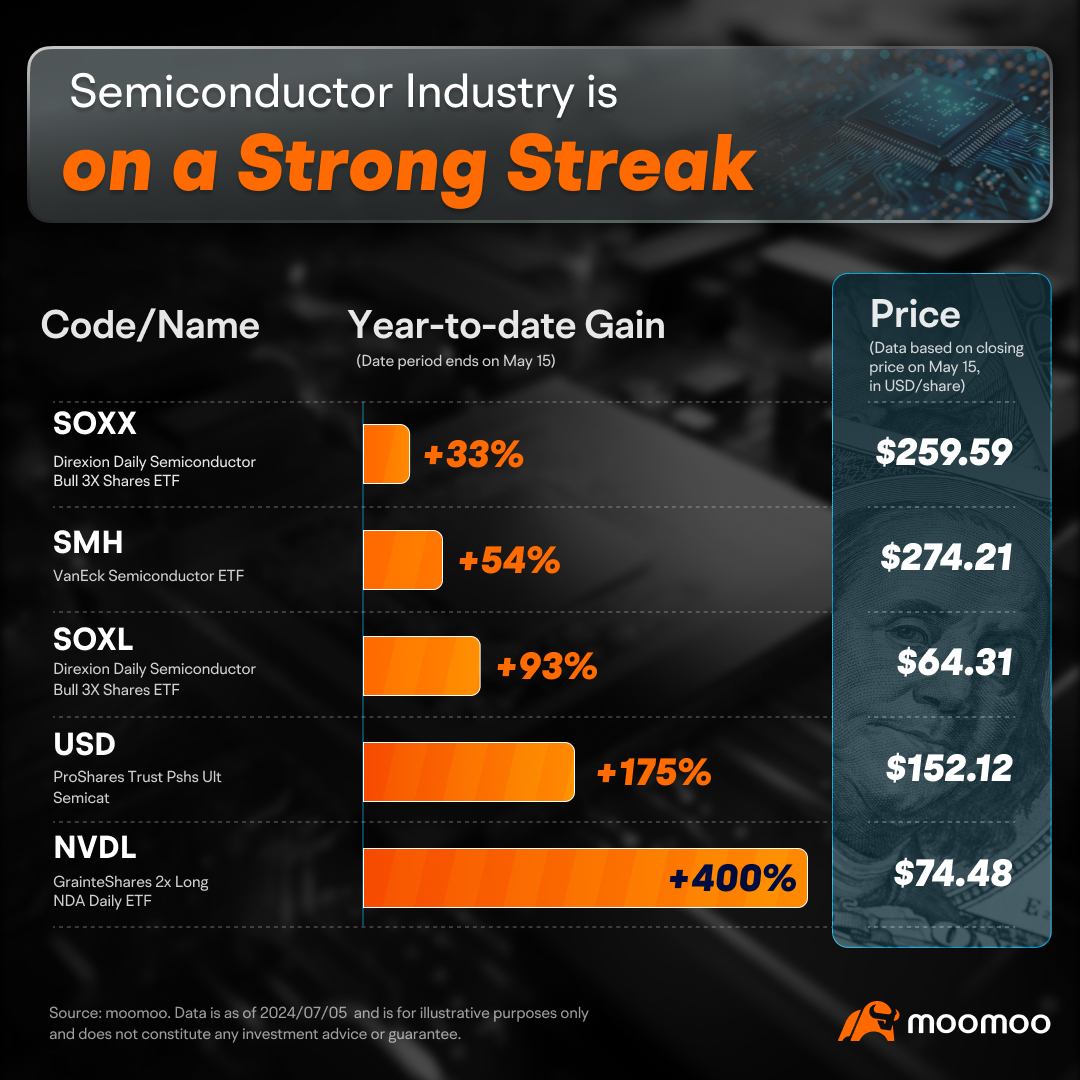
There's a myriad of ETFs tracking the semiconductor sector available in the market, but what sets them apart from each other? How should investors make a choice? This article delves into these questions.
Let's dive in!
A quick look at the top 10
Based on fund size and performance during the first half of 2024, we've curated a list of ten representative semiconductor ETFs:
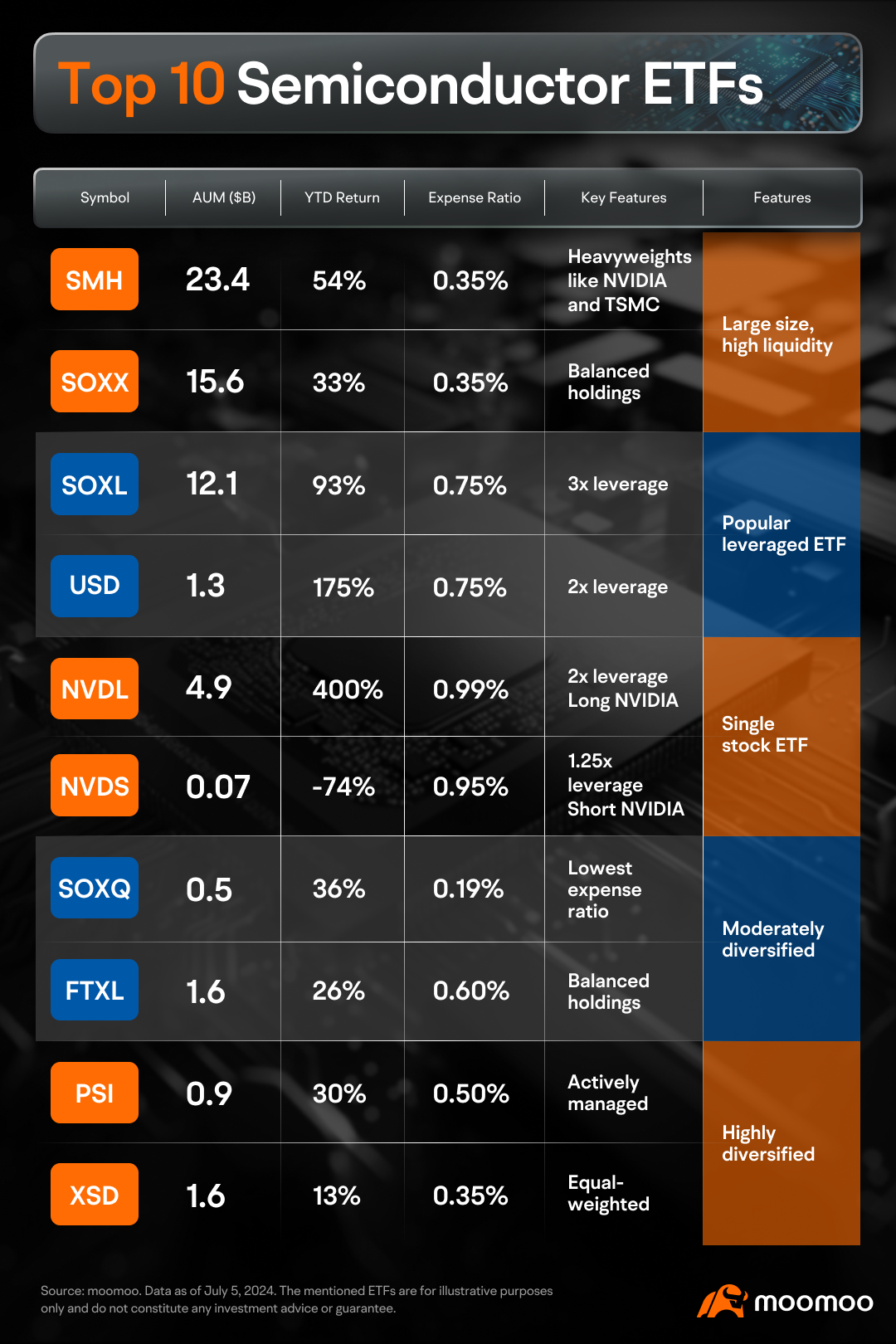
These semiconductor ETFs exhibit notable differences, catering to diverse investor types. To determine which one suits you best, first clarify whether you're aiming for short-term speculation or long-term investment.
The semiconductor sector embodies characteristics of both short-term and long-term opportunities.
Short-term: The sector experiences significant price volatility, with meteoric rises during bull markets and steep drops in bearish periods.
Long-term: Over the past few decades, the semiconductor industry has witnessed tremendous growth.
Next, we'll delve into the short-term and long-term prospects within the semiconductor sector and explore strategies for positioning yourself with ETFs.
Analysis of short-term trends
Since 2023, the semiconductor sector has soared on the back of the AI boom, with the markets hyping up compute chips and high-bandwidth memory (HBM) as top investment themes.
In the short term, the trajectory of the semiconductor sector will continue to be shaped by AI, necessitating investors to focus on the following:
Whether the AI capital expenditure plans (CAPEX) of major corporations align with market optimism.
Whether NVIDIA can sustain its impressive performance.
Beyond AI-related sectors, other sub-segments of the semiconductor industry have yet to fully enter a robust growth cycle. In fact, some semiconductor product prices are still declining, which could dampen the sector's overall performance. So investors should keep an eye on:
Price trends of non-AI-related semiconductor products.
Changes in the financial performances of non-AI-focused semiconductor companies.
In the market, many investors opt for leveraged ETFs to capitalize on the semiconductor sector's short-term trends. These products typically amplify the daily gains or losses of the benchmark through total return swaps, resulting in significant profits during rallies but equally devastating losses during downturns.
Leveraged semiconductor ETFs
There are primarily two types of leveraged semiconductor ETFs available in the market: one is benchmarked against industry indices, while the other is benchmarked against individual stocks. Here are a few examples to illustrate.
1. Leveraging industry indices
$Direxion Daily Semiconductor Bull 3x Shares ETF (SOXL.US)$
Advantages:
Large in size: Exceeding $10 billion in assets.
High liquidity: Ranking top in trading volume among semiconductor ETFs.
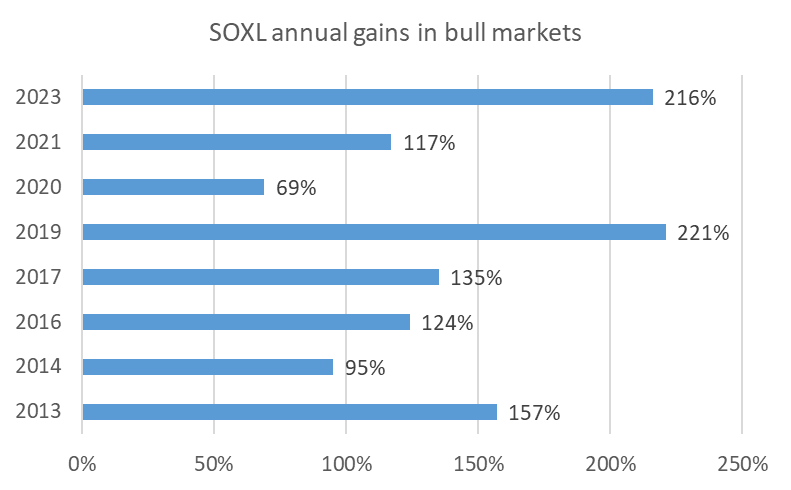
Robust bull market performance: Frequently achieving over 100% gains during bull markets.
Disadvantage:
The high demand during bull markets can lead to significant premium rates.
$Proshares Trust Pshs Ult Semicdt (USD.US)$
Advantages:
Robust bull market performance: The index it tracks often outperforms other semiconductor indices during bull markets.
Disadvantages:
Low liquidity: Offers only one-tenth of the liquidity compared to SOXL.
Small in size: Holds only one-tenth of the AUM compared to SOXL.
Both of these leveraged ETFs have an expense ratio of 0.75%.
2. Leveraging NVIDIA: NVDL and NVDS
$GraniteShares 2x Long NVDA Daily ETF (NVDL.US)$
$Tradr 1.5X Short NVDA Daily ETF (NVDS.US)$
For more detailed information on these single-stock ETFs, we have a dedicated analysis available:
NVDA or NVDL? Choosing Between Stocks and 2x Leveraged Single-Stock ETFs
Is long-term investment in semiconductors viable?
Having analyzed the short-term trends, let's delve into the long-term opportunities.
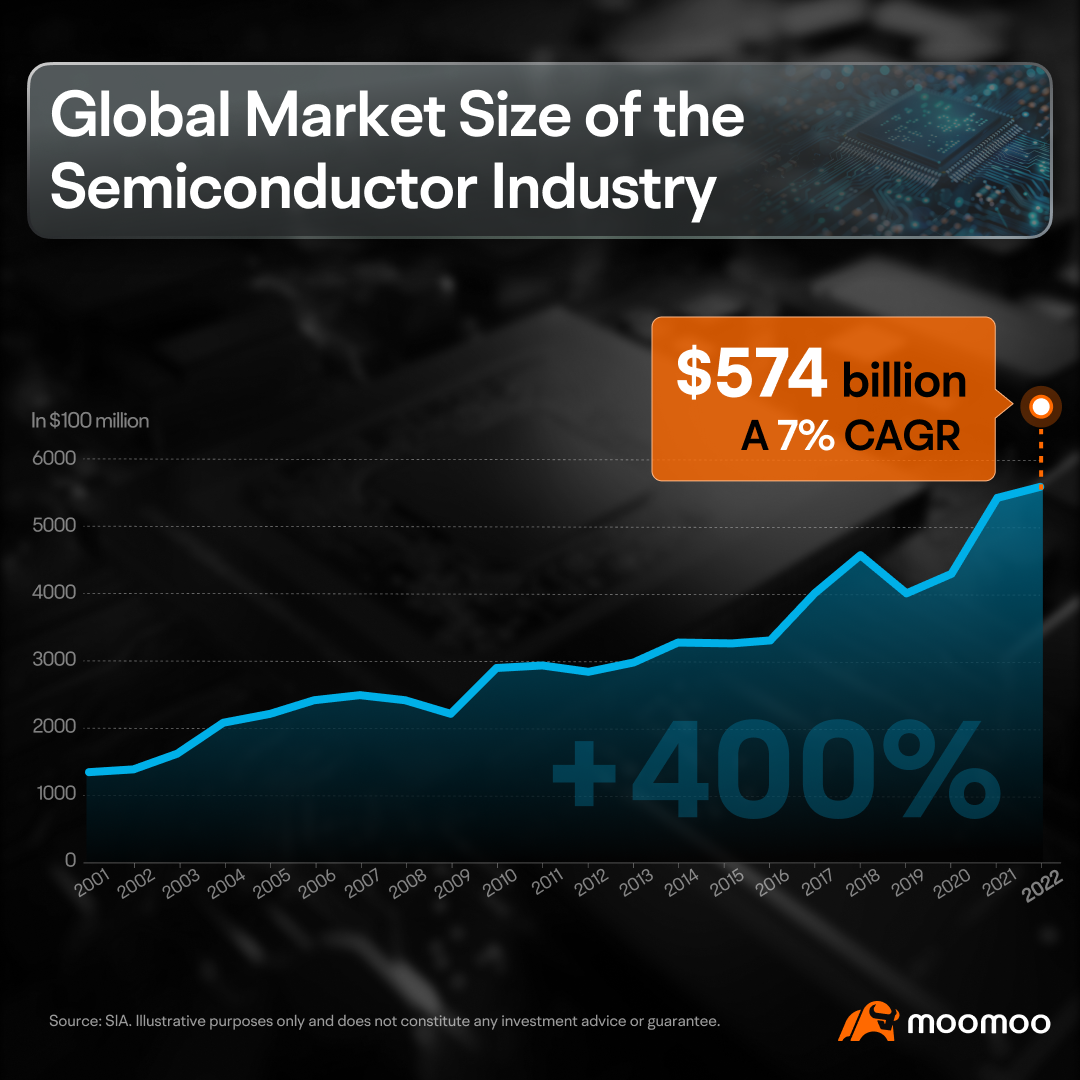
Historically, the semiconductor industry has experienced long-term, substantial growth, embodying a quintessential growth sector fueled by relentless technological innovation and boundless market demand. Today, semiconductor products permeate every aspect of human society.
In 2022, the global semiconductor industry's market size was approximately $574 billion, with some institutions forecasting this figure to potentially reach $1 trillion by 2030, representing an average annual growth rate of approximately 7%. This underscores the vast room for continued expansion within the industry.
However, investing in the semiconductor sector also comes with high risks due to its cyclical nature. Historically, after several years of rapid growth, the industry often experiences a slowdown or even a decline until the next cycle begins.
For example, during the most recent downturn in 2022, the Philadelphia Semiconductor Index saw a maximum drop of nearly 50%. Investors caught in such downturns could face substantial losses.
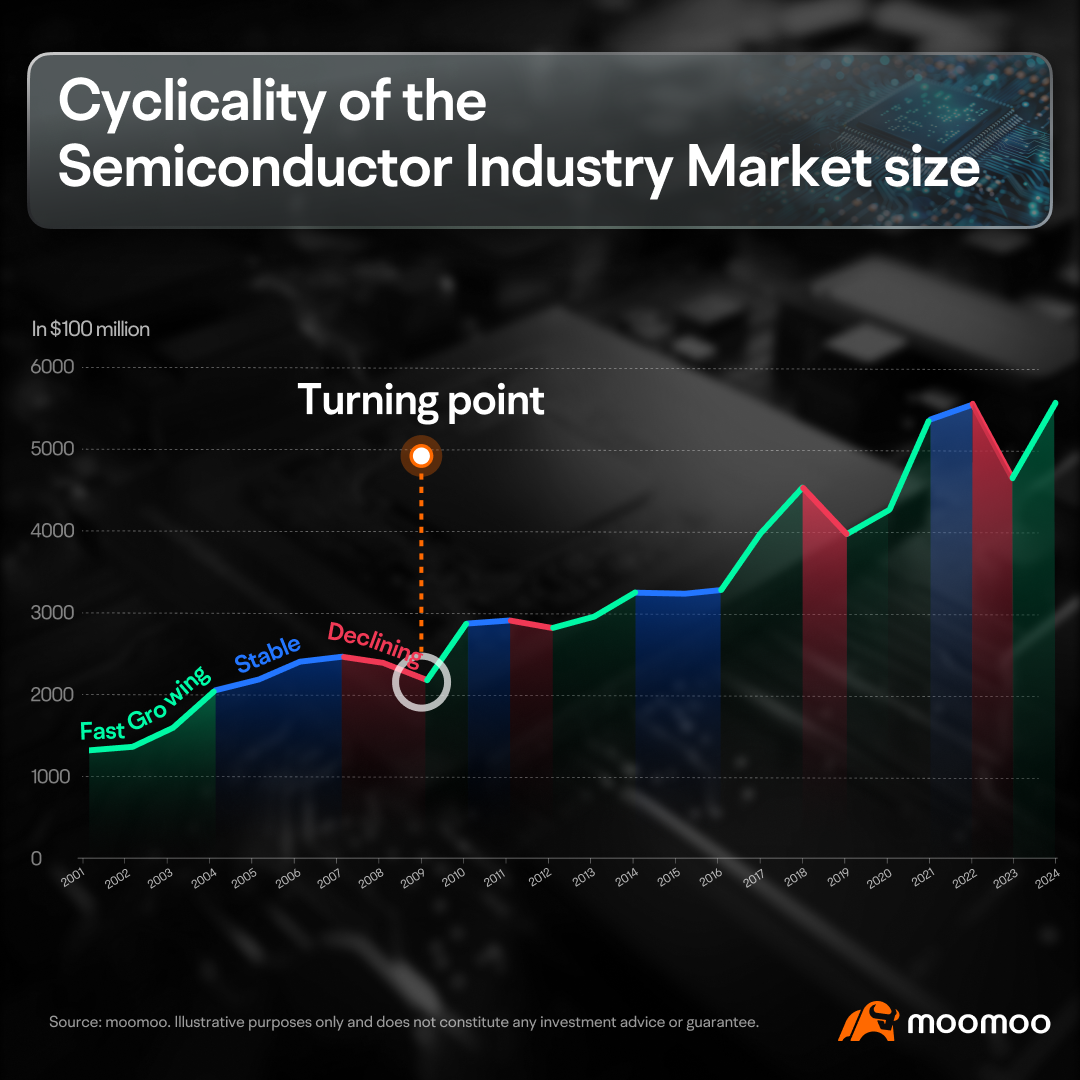
As such, when considering long-term investment in semiconductor ETFs, it's essential to evaluate factors such as fund size, portfolio diversification, and historical performance to mitigate investment risks. Additionally, leveraged ETFs should be avoided due to their potential for long-term tracking errors.
Below are some ETF cases.
Largest semiconductor ETFs in scale
$VanEck Semiconductor ETF (SMH.US)$
With an asset under management (AUM) of $23 billion and a low expense ratio of 0.35%, SMH is a favorite among institutional investors and consistently receives a 5-star rating from Morningstar.
In addition, SMH has performed better than its peers. This strong performance is driven by its significant holdings in leading companies: 20% in NVIDIA and 13% in TSMC, both of which have seen substantial gains.
$iShares Semiconductor ETF (SOXX.US)$
Like SMH, SOXX also boasts a large AUM of $15 billion and receives a 5-star rating from Morningstar.
However, SOXX's holdings differ noticeably from SMH. Its largest holding is Broadcom at 9%, followed by NVIDIA, AMD, Applied Materials, and Qualcomm.
Moderate and highly diversified ETFs
1. Moderate diversification
$INVESCO PHLX SEMICONDUCTOR ETF (SOXQ.US)$
SOXQ tracks the well-known PHLX Semiconductor Sector Index, with its top ten holdings accounting for 60% of the portfolio. It has the lowest expense ratio in its category at 0.19%.
$First Trust Exchange-Traded Fund VI First Trust Nasdaq Semiconductor ETF (FTXL.US)$
FTXL tracks the Nasdaq US Smart Semiconductor Index, with its top holdings similar to SOXQ. However, FTXL has a higher expense ratio of 0.6%.
2. Actively managed:
$Invesco Dynamic Semiconductors Etf (PSI.US)$
Unlike other passively managed ETFs, PSI is an actively managed Smart Beta fund. It selects 30 semiconductor stocks based on factors like momentum, value, and earnings quality, aiming to outperform passive ETFs.
3. A safer option for the cautious: XSD
$Spdr Series Trust Spdr S&P Semiconductor Etf (XSD.US)$
XSD tracks the S&P Semiconductor Select Industry Index, an equal-weight index. This structure allows for more exposure to mid-cap and small-cap stocks, reducing reliance on large-cap stocks. This means XSD is highly diversified.
How to find these ETFs on moomoo
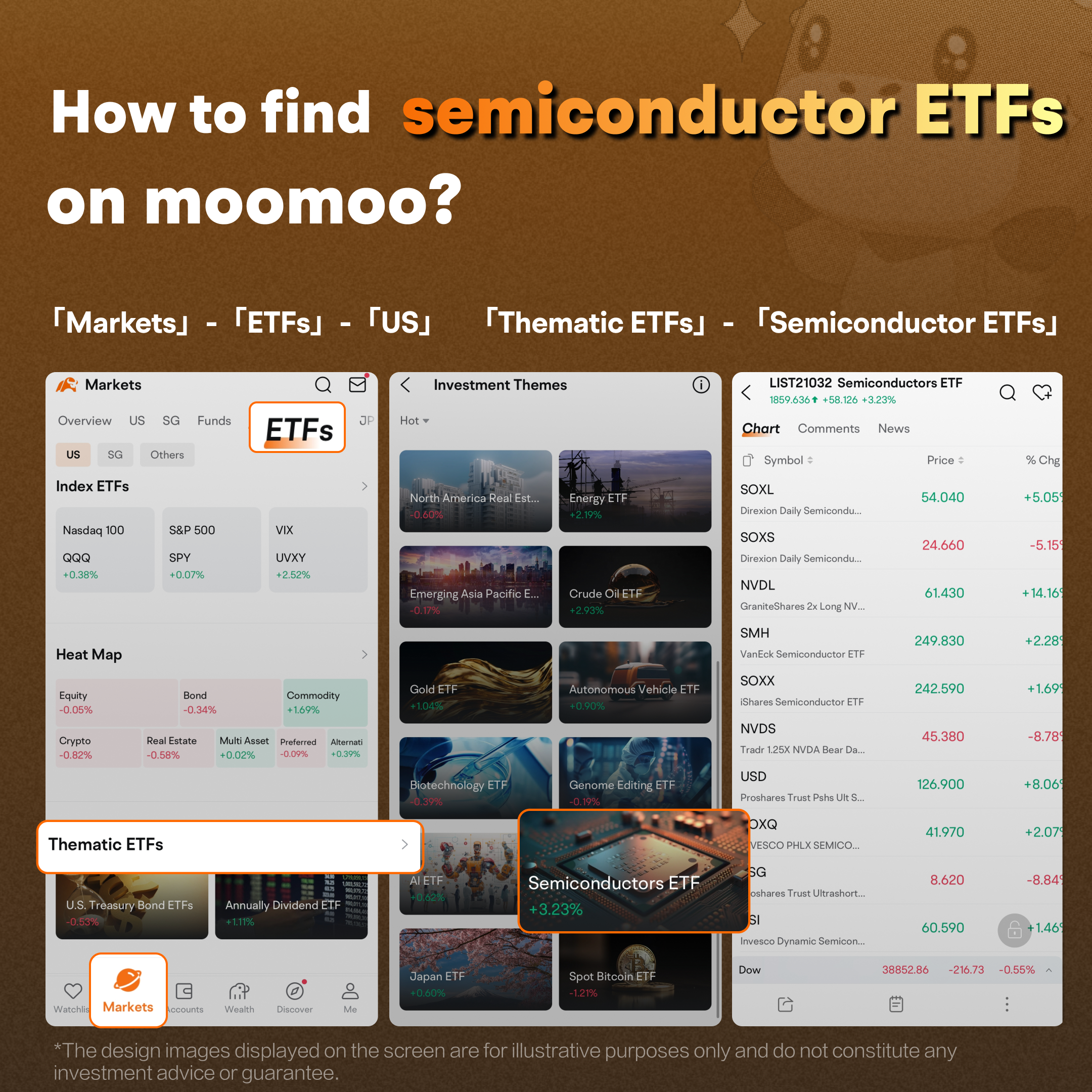
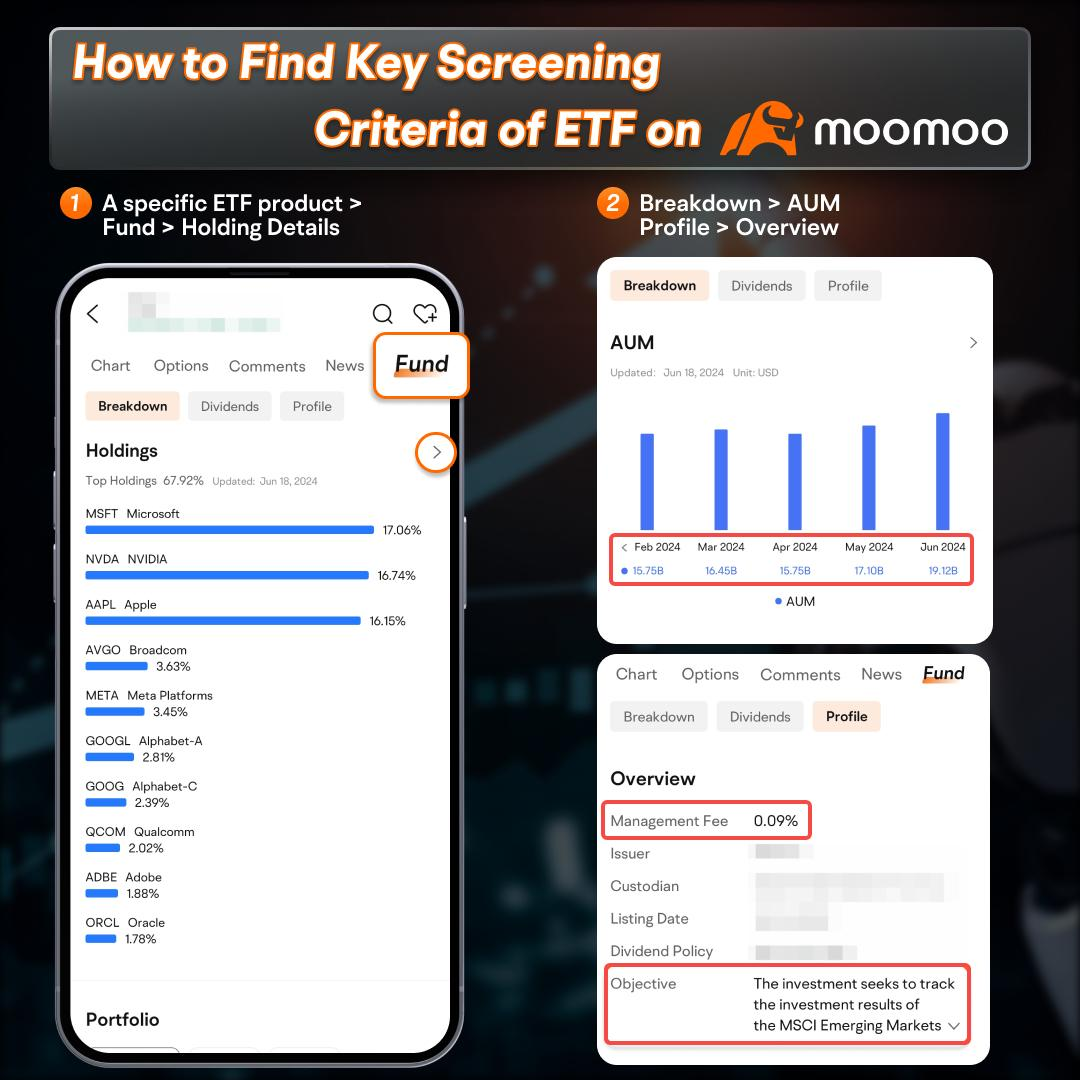
Tap on an ETF > Fund to check the key information about this ETF and quickly find the ETF you want.
This presentation is for informational and educational use only and is not a recommendation or endorsement of any particular investment or investment strategy. Investment information provided in this content is general in nature, strictly for illustrative purposes, and may not be appropriate for all investors. Read more