

Moomoo Insights
Jul 16 15:38
TSMC Earnings: AI Demand Is Stronger Than the Chip Selloff Suggests
Moomoo Insights
Sep 30 05:04
Live Take | Anthropic’s $518B Compute Bet: Who Wins From the AI Buildout?
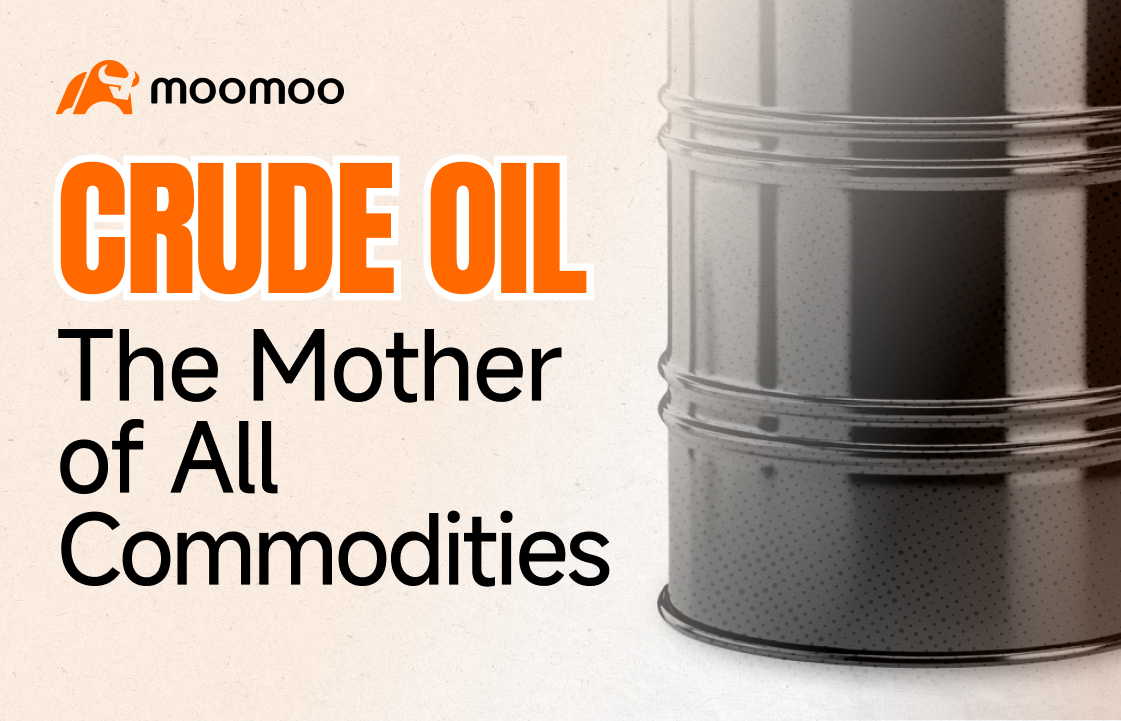
Oil is often dubbed the "lifeblood of industry"—it’s not only the go-to energy source globally but also the backbone of countless chemical products.
Every ripple in the oil market could send waves through the global economy, impacting everything from energy prices to inflation rates and economic policies across nations.
According to 2023 data from the USGS (United States Geological Survey), the oil market's annual value surpasses a whopping $2 trillion, dwarfing all other commodities combined.
In this macro lesson, we will dive into the basics of the oil market and why it holds such immense importance.
Takeaways:
Oil is a vital energy source and industrial raw material, profoundly influencing global inflation, economic policies, and commodity markets.
WTI and Brent are the primary oil futures contracts, serving as pricing benchmarks for North America and Europe/Middle East, respectively.
The U.S. has emerged as the leading oil producer, largely due to the development of shale oil, while OPEC+ continues to exert significant influence on the market.
The oil market isn’t just about trading a physical product—it's a major player in the financial trading arena. Oil futures markets are buzzing, where standardized contracts dictate future trades of specific quantities (usually 1,000 barrels) of a particular grade of oil at set prices.
Two primary futures contracts dominate the scene:
WTI (West Texas Intermediate): Originating from Texas and surrounding areas, it's the pricing benchmark for North America.
Brent: Sourced from the North Sea between the UK and Norway, it’s the standard for Europe and the Middle East.
While factors such as transportation costs and supply-demand dynamics cause slight price differences, their trends generally align.
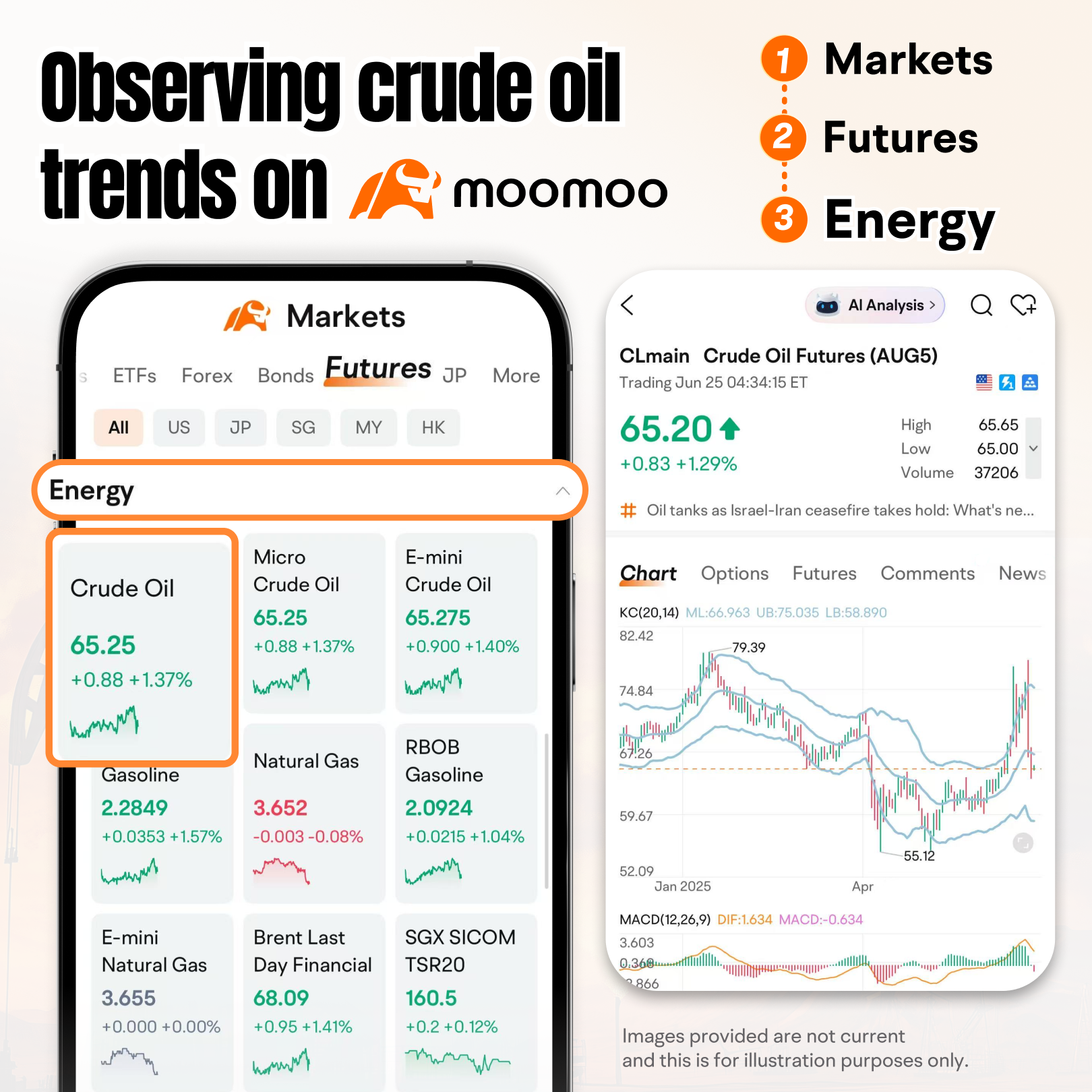
Want to check how oil futures are doing?
Moomoo's got you covered, head to Markets > Futures > Energy.
Sitting at the top of numerous industrial chains, oil price fluctuations directly sway key indicators like CPI and PPI, playing a crucial role in global inflation.
Imagine what happens when oil prices rise?
You might first think about paying more at the pump or airlines hiking ticket prices, but you might not know that over 90% of chemical products are produced using oil or oil byproducts.
We're talking about plastics, synthetic fibers, fertilizers, pesticides, and cosmetics—all seeing cost hikes.
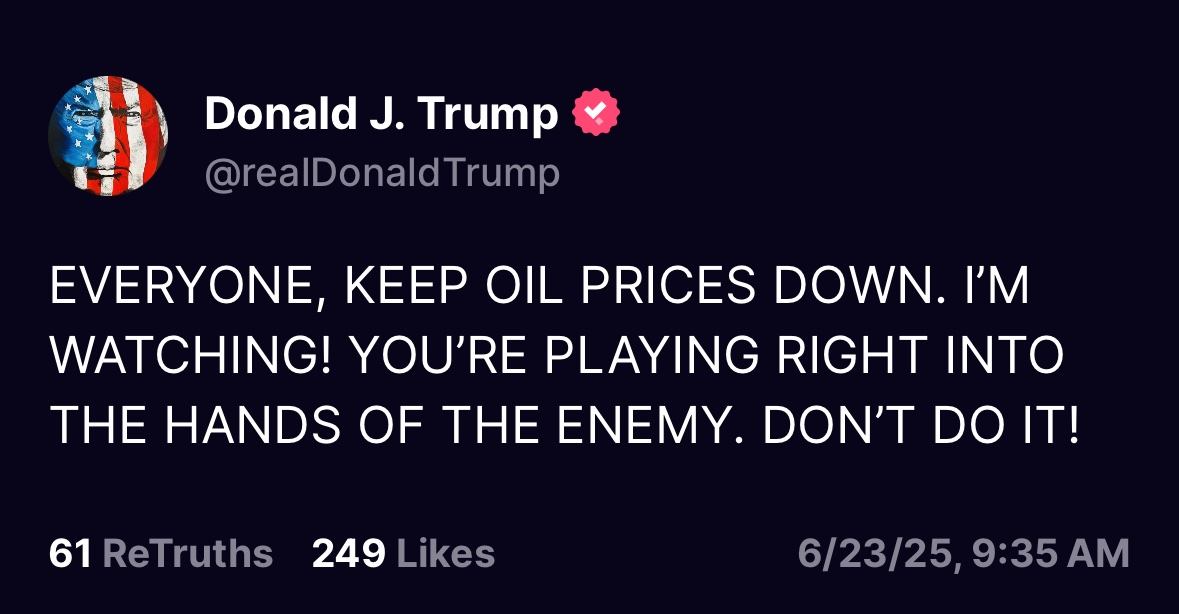
If you can control oil prices, you might have the secret recipe to tackling inflation. No wonder Trump was keen on it.
Source: TruthSocial. This is for information and illustrative purposes only.
Moreover, oil prices set the benchmark for the global commodity pricing system. Other energy commodities, such as natural gas, often use oil price ratios for reference.
Oil price swings also ripple out to precious metals, industrial metals, agricultural products, and even stock and bond markets. Analysts and investors frequently use ratios like the gold-to-oil or copper-to-oil ratios to gauge economic activity and market sentiment.
When you think of oil producers, the Middle Eastern deserts might come to mind.
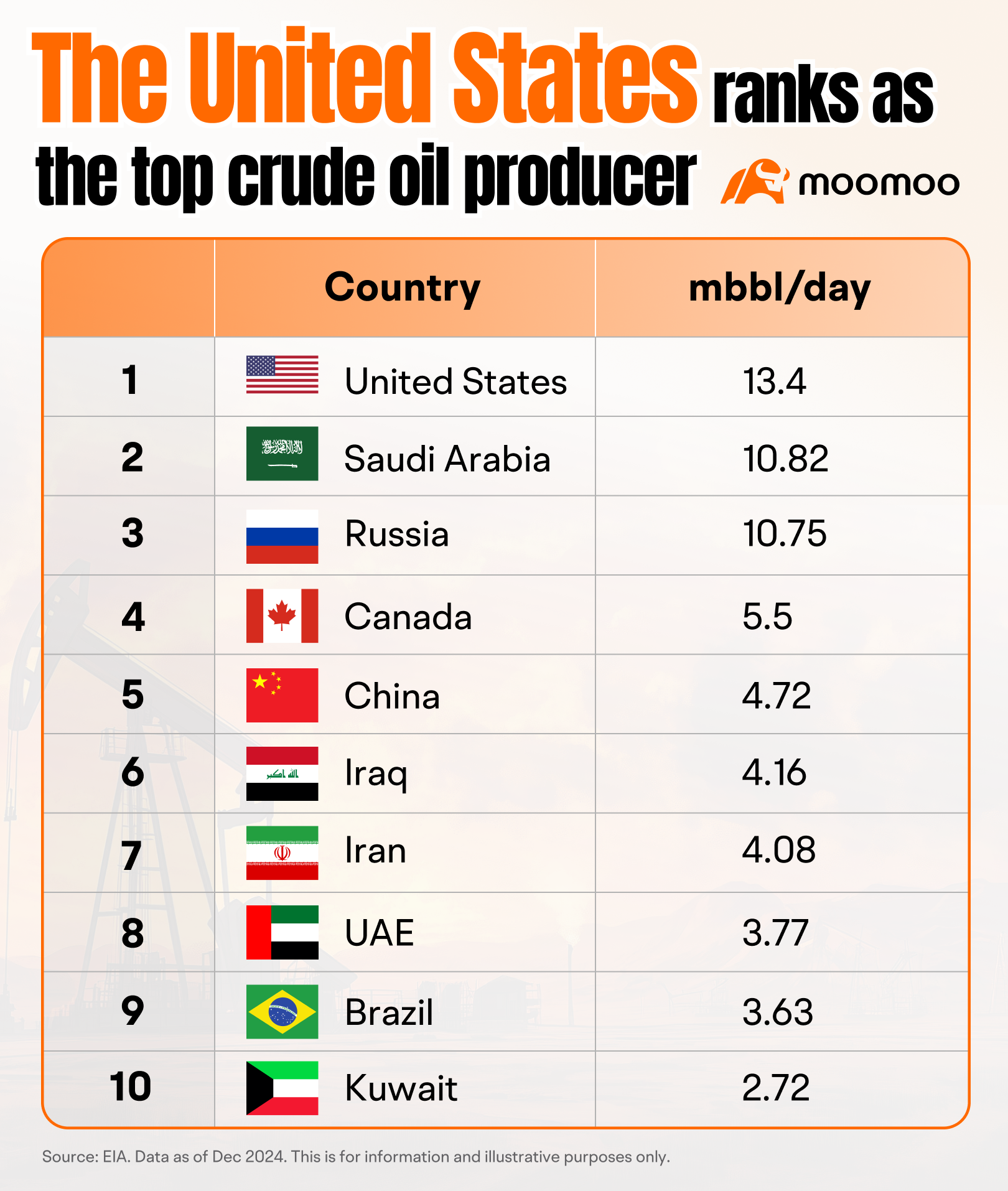
But guess what? The U.S. is currently the world's top oil producer. Once heavily reliant on imports, with 60% dependency at one point, the U.S. unlocked the potential of shale oil in the 21st century.
By 2014, shale oil had become so abundant that it significantly disrupted global oil prices. By 2018, the U.S. topped global production charts and even became a net exporter by 2020, contributing around 20% of the world's oil.
Founded in 1960, OPEC (Organization of Petroleum Exporting Countries), with key members such as Saudi Arabia, Iraq, and Iran, once dominated oil pricing decisions.
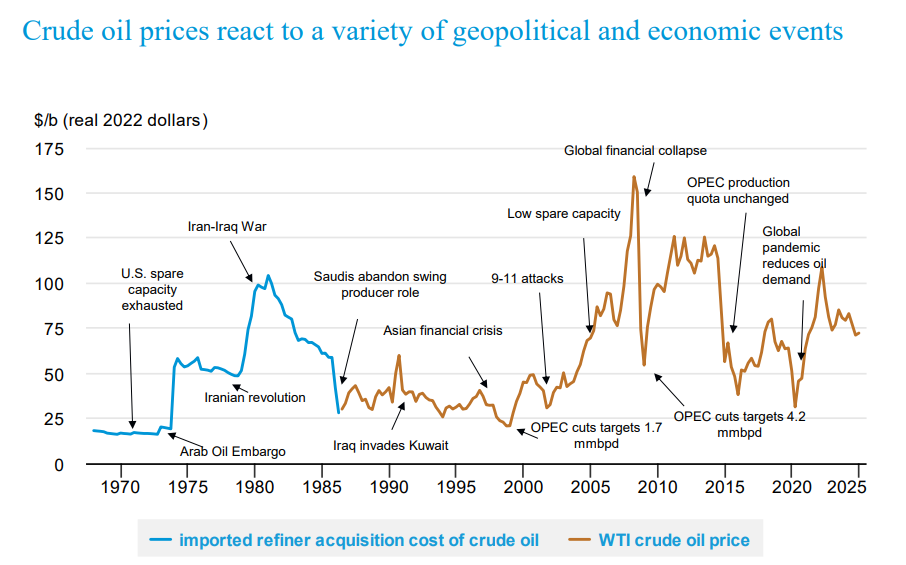
During the 1970s, they flexed their muscles with an oil embargo in response to U.S. support for Israel, exacerbating American stagflation.
With the shale oil boom, OPEC formed a partnership with non-member producers, including Russia and Kazakhstan, in 2016 to create OPEC+.
This alliance significantly influences the market, accounting for approximately 40% of global oil output in 2024.
Source: EIA. This is for information and illustrative purposes only.
Oil's economic significance means its demand closely correlates with economic growth. The U.S. and China are the largest consumers, while emerging markets, such as India, are rapidly increasing their demand.
Now you see, no other commodity has a greater impact on geopolitics, real economies, financial markets, and daily life than oil. But how do oil price fluctuations impact capital markets?
Stay tuned for our next session to find out!
This presentation is for informational and educational use only and is not a recommendation or endorsement of any particular investment or investment strategy. Investment information provided in this content is general in nature, strictly for illustrative purposes, and may not be appropriate for all investors. Read more
Recommend
Why does Warren Buffett say don't piggyback on his trades?

How does nonfarm payroll impact the global market?
Unveiling Inflation: Why is Your Wallet Shrinking?

Mastering the Dollar Cycle: How to invest in a changing economy
Gold vs. Gold Miners: A Comparison
Are U.S. Treasuries still a safe haven?
Meet Dr. Copper: Understanding the Copper Market
Do Oil Price Swings Rock the Stock Market?
How Tariffs Could Impact the Copper Landscape?
Why do oil ETFs lag behind oil prices in the long run?
Why is the US dollar so powerful worldwide, and how can we tell?
A look at employment: what other indicators are there?
GDP: The Barometer of National Prosperity
Understanding Treasury Auctions: A Step-by-Step Guide
Unpacking the U.S. Debt Issue
Why is Oil Called the "Mother of All Commodities"?
How Inflation Affects the Market
How to interpret the Fed dot plot?
How to Decode Inflation: CPI, PCE, and PPI
Understanding Bessent's Fiscal Blueprint
The Rise of the Fed: Can Trump Dismiss Powell?
What's in the Fed's Toolbox?
'Oracle of Omaha' Warren Buffett:ROE>20% is preferable
'Father of value investing' Benjamin Graham: Ten Stock Selection Criteria
Strong Consumer Spending Despite Economic Slowdown: Here's Why
Analyzing the manufacturing industry may help you grasp economic trends
What is the Debt Ceiling? A Deep Dive into US Fiscal Policy
How to Preserve Your Wealth in a High Inflation Environment
How to analyze the Federal Reserve's monetary policy?
Rapidly Rising US Housing Prices: Opportunity or Risk?
How Will the US Dollar Perform in 2024? A Closer Look into the US Dollar Index
Discussing the driving forces behind rises in gold prices
Investing and Labor Market Indicators
Discover the bond market: A quick and easy guide
The Underlying Conflicts Surrounding Crude Oil Prices
Understanding the relationship between the stock market and the bond market
Understanding the US Non-Farm Payroll Data
Understanding the Federal Reserve Interest Rate Decision
Understanding the CCI
Understanding the PPI
Understanding the Retail Sales
Understanding the US Crude Oil Inventories
Understanding the Durable Goods Orders
Listen to the Fed's speakers: Hawks or doves?
Open the Fed's monetary policy toolbox
The Fed Dot Plot explained: What it says about US interest rates
How does monetary policy steer our lives and investment
What the Federal Reserve does?
Understanding the GDP
A brief history lesson on the Fed and U.S. economy
08 Carl Icahn & Icahn Enterprises
09 Seth Klarman & Baupost Group
07 Howard Marks & Oaktree Capital
01 Using 13F filings to learn from big investors
03 How to Read Form 13F
02 Identify a fund's investment strategy
04 Warren Buffett & Berkshire Hathaway
06 Ray Dalio & Bridgewater Associates
05 Bill Ackerman & Pershing Square Capital
Why does Warren Buffett say don't piggyback on his trades?
How does nonfarm payroll impact the global market?
Unveiling Inflation: Why is Your Wallet Shrinking?
Mastering the Dollar Cycle: How to invest in a changing economy
Gold vs. Gold Miners: A Comparison
Are U.S. Treasuries still a safe haven?
Meet Dr. Copper: Understanding the Copper Market
Do Oil Price Swings Rock the Stock Market?
How Tariffs Could Impact the Copper Landscape?
Why do oil ETFs lag behind oil prices in the long run?
Why is the US dollar so powerful worldwide, and how can we tell?
A look at employment: what other indicators are there?
GDP: The Barometer of National Prosperity
Understanding Treasury Auctions: A Step-by-Step Guide
Unpacking the U.S. Debt Issue
Why is Oil Called the "Mother of All Commodities"?
How Inflation Affects the Market
How to interpret the Fed dot plot?
How to Decode Inflation: CPI, PCE, and PPI
Understanding Bessent's Fiscal Blueprint
The Rise of the Fed: Can Trump Dismiss Powell?
What's in the Fed's Toolbox?
'Oracle of Omaha' Warren Buffett:ROE>20% is preferable
'Father of value investing' Benjamin Graham: Ten Stock Selection Criteria
Strong Consumer Spending Despite Economic Slowdown: Here's Why
Analyzing the manufacturing industry may help you grasp economic trends
What is the Debt Ceiling? A Deep Dive into US Fiscal Policy
How to Preserve Your Wealth in a High Inflation Environment
How to analyze the Federal Reserve's monetary policy?
Rapidly Rising US Housing Prices: Opportunity or Risk?
How Will the US Dollar Perform in 2024? A Closer Look into the US Dollar Index
Discussing the driving forces behind rises in gold prices
Investing and Labor Market Indicators
Discover the bond market: A quick and easy guide
The Underlying Conflicts Surrounding Crude Oil Prices
Understanding the relationship between the stock market and the bond market
Understanding the US Non-Farm Payroll Data
Understanding the Federal Reserve Interest Rate Decision
Understanding the CCI
Understanding the PPI
Understanding the Retail Sales
Understanding the US Crude Oil Inventories
Understanding the Durable Goods Orders
Listen to the Fed's speakers: Hawks or doves?
Open the Fed's monetary policy toolbox
The Fed Dot Plot explained: What it says about US interest rates
How does monetary policy steer our lives and investment
What the Federal Reserve does?
Understanding the GDP
A brief history lesson on the Fed and U.S. economy
08 Carl Icahn & Icahn Enterprises
09 Seth Klarman & Baupost Group
07 Howard Marks & Oaktree Capital
01 Using 13F filings to learn from big investors
03 How to Read Form 13F
02 Identify a fund's investment strategy
04 Warren Buffett & Berkshire Hathaway
06 Ray Dalio & Bridgewater Associates
05 Bill Ackerman & Pershing Square Capital

