Trade more, pay less? Comparing Australia vs. US-listed ETFs
The Australian share market exhibits a notable concentration in certain industries, especially within the financial and resources sectors. Consequently, many Australian investors find their portfolios lacking adequate diversification, which has spurred a heightened interest in international markets.
While investors can access international ETFs on the ASX, there are numerous additional options available in the US, which offers over 3,000 ETFs known for their superior liquidity.
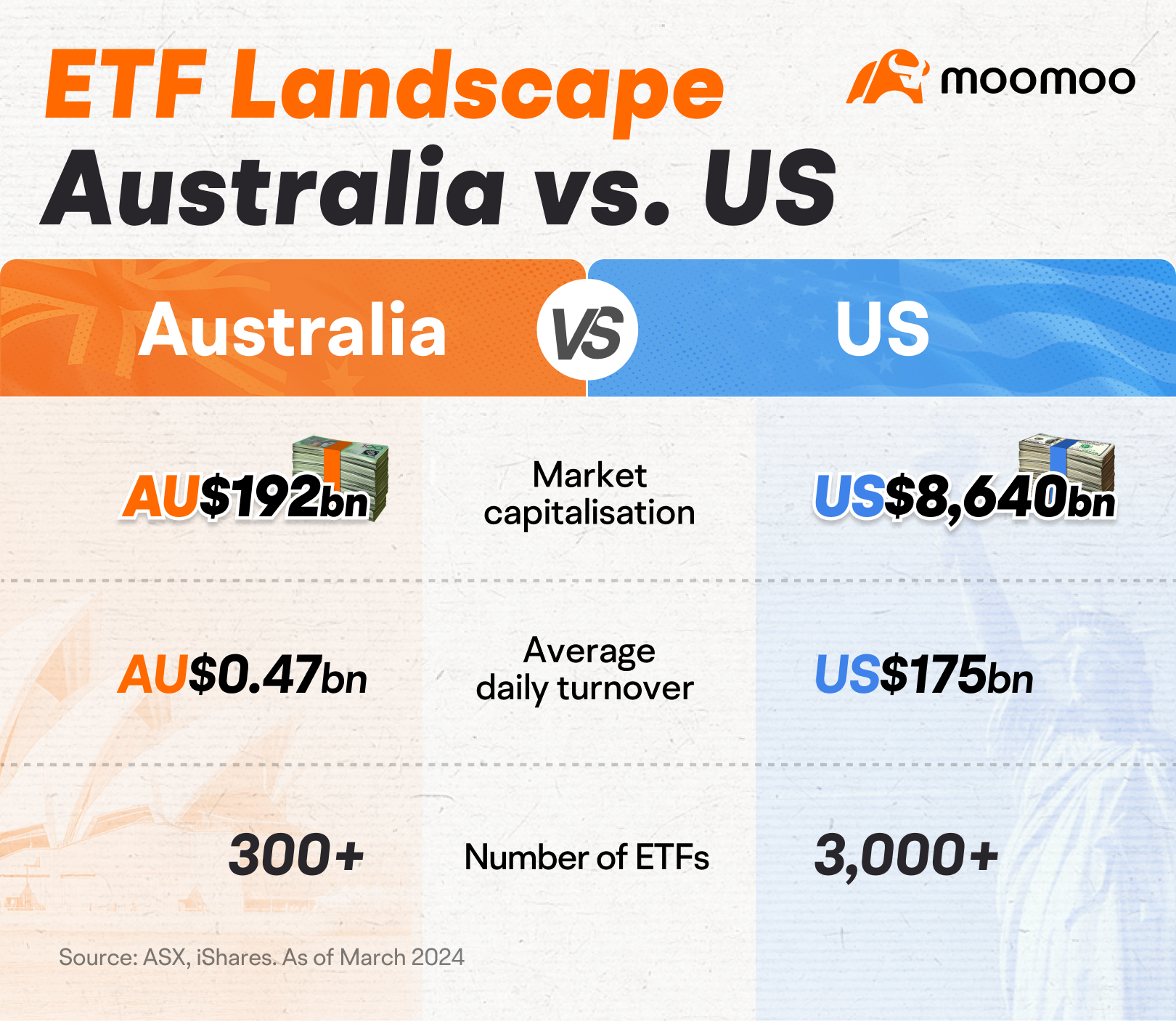
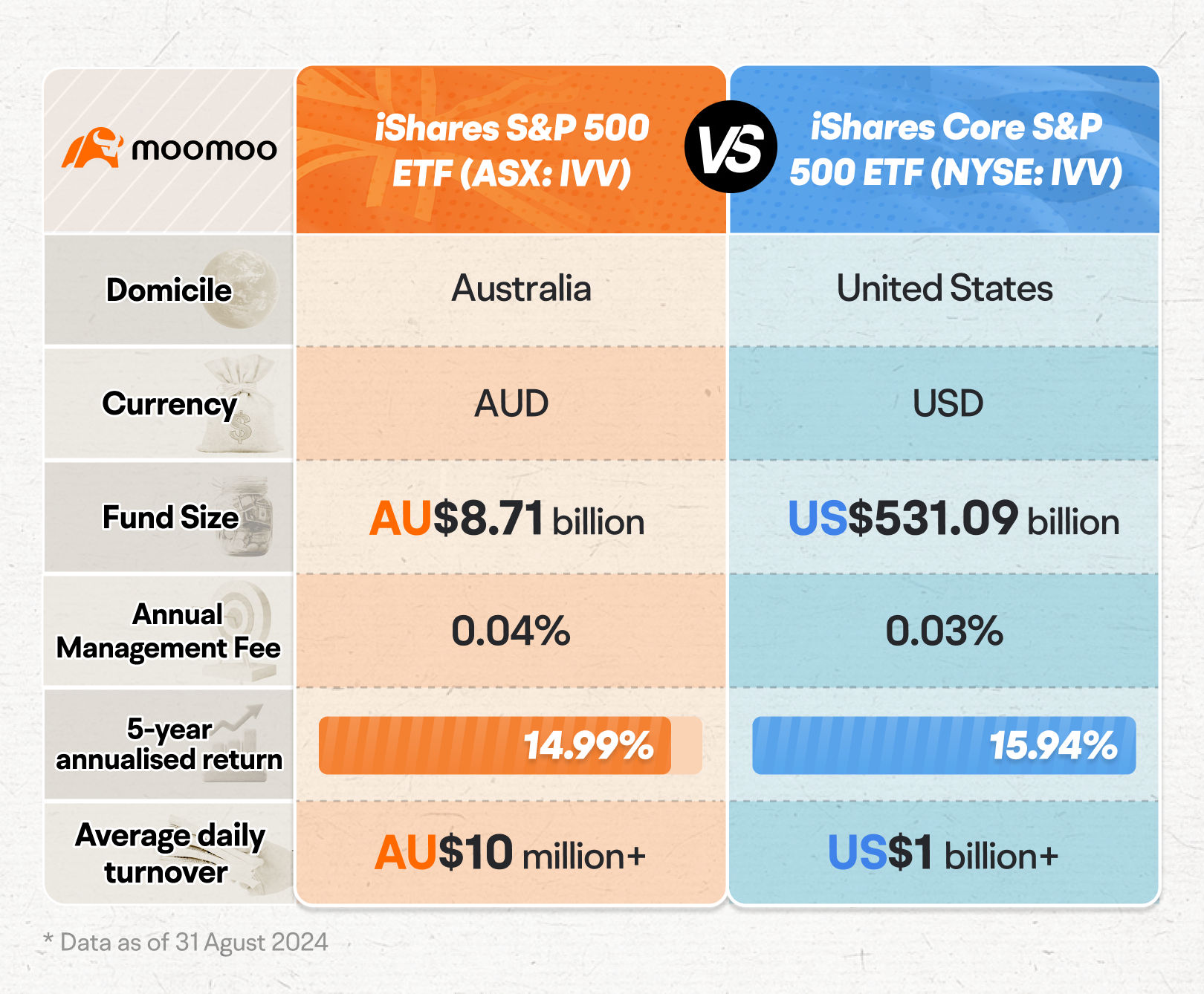
For example, if you want exposure to the performance of the S&P 500 index, composed of large-cap US companies, you have two potential choices:
● the iShares S&P 500 ETF (ASX: IVV), an Australia-listed fund;
● the iShares Core S&P 500 ETF (NYSE: IVV), a US-listed alternative.
What are the key differences between these two funds, and which one offers greater cost-effectiveness? In this article, we will delve into these questions.
Domicile matters
The domicile of an ETF refers to the legal jurisdiction in which it is registered. If an ETF is domiciled in Australia, it is legally registered in Australia and complies with Australian tax regulations. Conversely, if an ETF is domiciled in the US, it is registered in that country and is subject to US laws and tax rules.
It’s important to note that a few ETFs listed on the ASX are domiciled in other countries, particularly the US. This choice of domicile can affect your returns.
● Taxation
Taxation is a critical factor to consider when investing in an international ETF domiciled outside of Australia, as Australian investors may be subject to withholding tax.
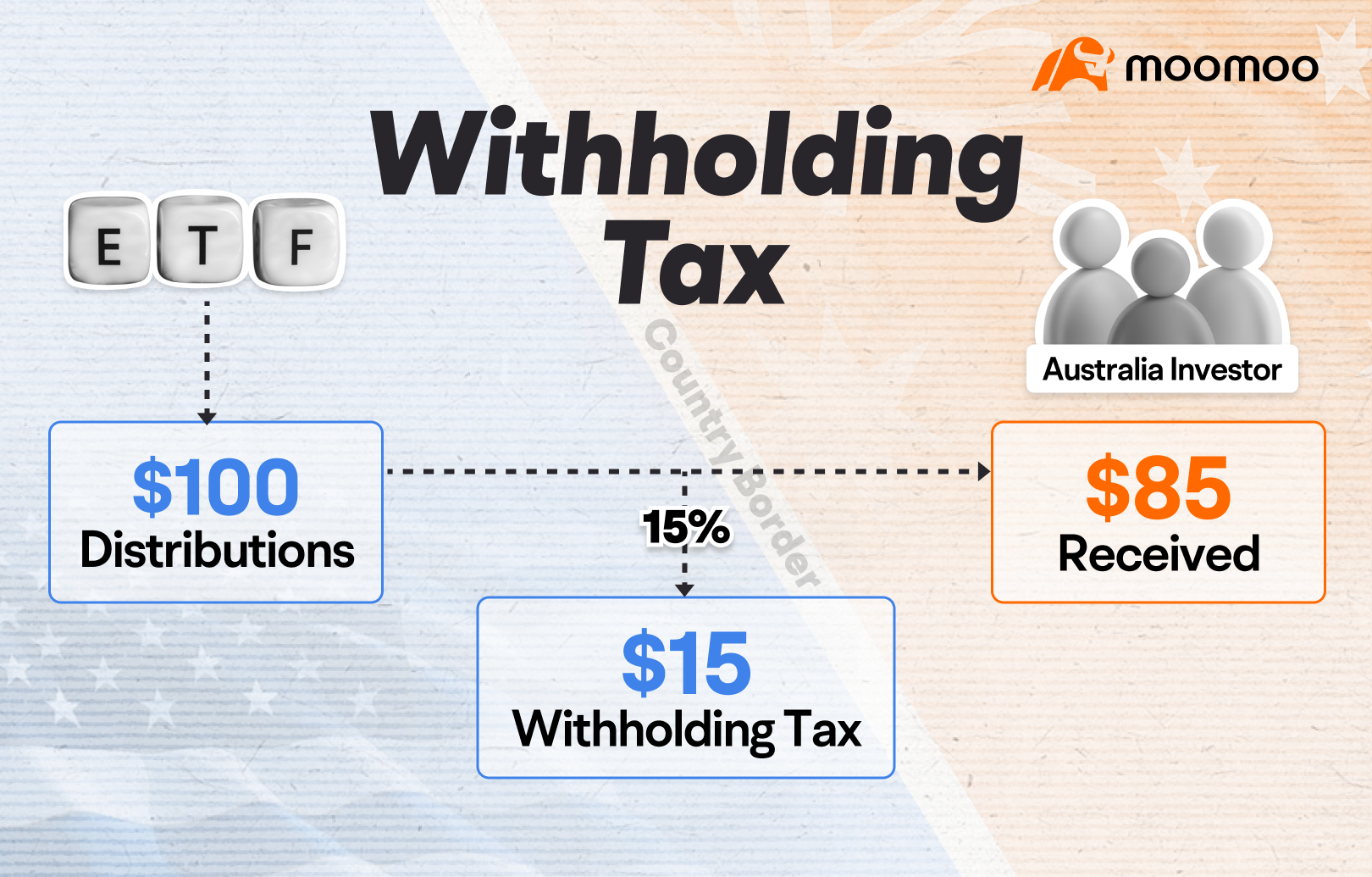
For instance, if you invest in a US-domiciled ETF that distribute cash dividends, a 15% of tax may be withheld (under the US-Australia tax treaty). Although this can be offset, it can pose challenges for tax-exempt and low-income investors.
Another important tax consideration is the financial year. Australia is one of the few countries with a financial year ending on June 30, while most countries align their financial tax year with the calendar year. This difference in timing and the receipt of income can have potential implications when it comes to completing your tax return.
● Administration
Many Australian investors keen to invest in US-domiciled ETFs may face challenges related to cumbersome paperwork, particularly the W-8BEN form, a legally required document for compliance with US tax regulations.
If investors in US-domiciled ETFs want to reduce their withholding tax from 30% to 15% under the Australia-US double tax treaty, they’re required to submit a W-8BEN form to the fund. This often complicated their investment experience.
Fortunately, moomoo simplifies this process. When you sign up and open an account, your W-8BEN form will be automatically completed at no additional cost, allowing you seamless access to international ETFs listed in the US, similar to those available in Australia.
Costs of owning
The total cost of owning an ETF can be roughly categorised into two components: holding costs and transaction costs. For long-term investors, holding costs tend to be more significant than transaction costs, while the reverse is true for those with shorter investment horizons.
● Holding costs
The most apparent holding cost for ETF investors is the management fee, which is calculated as a percentage of your stake in the ETF and charged by the fund manager. For example, an investor with a $10,000 investment in an ETF with a 1% management fee would incur annual fees of $100. As illustrated in the growth chart for a $10,000 investment, opting for low-fee products over high-fee alternatives is advisable in the long term.
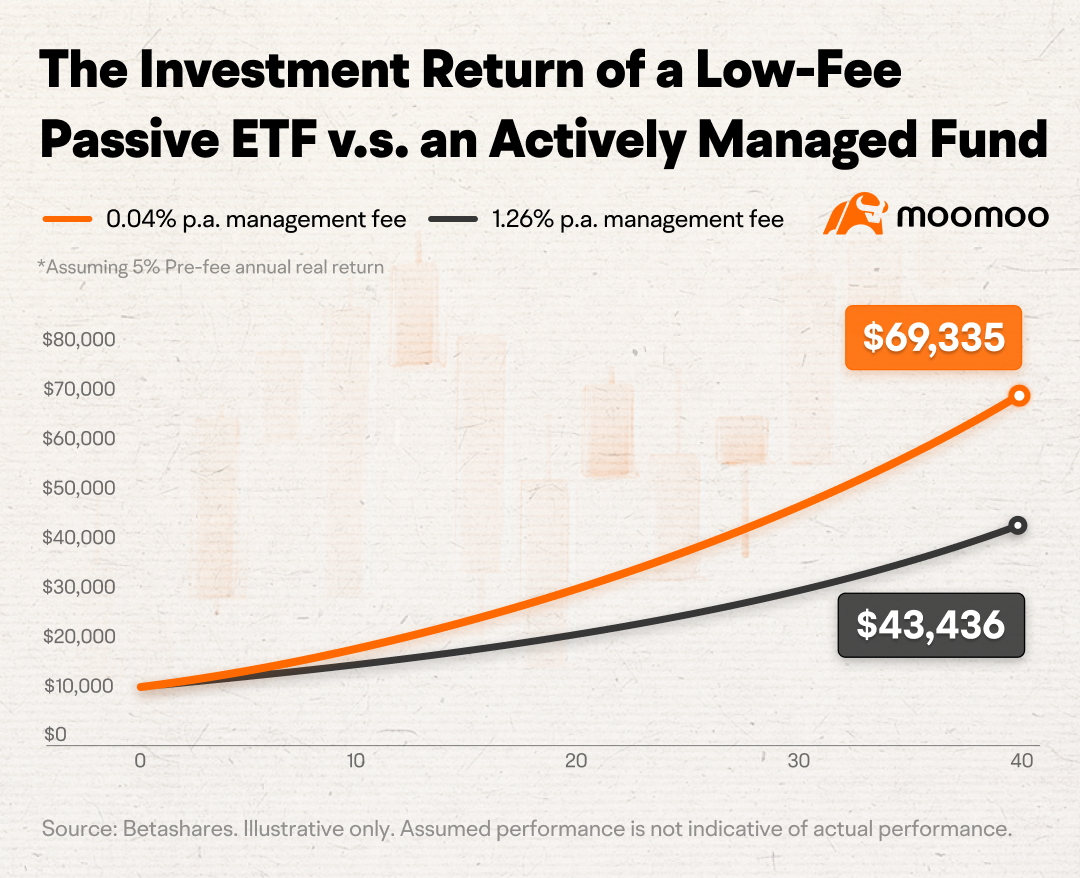
Management fees can vary widely based on the asset class or investment strategy, but they are generally lower for international ETFs listed in the US compared to those on the ASX. For instance, the iShares Core S&P 500 ETF (NYSE: IVV) charges a management fee of just 0.03% per annum, whereas the iShares S&P 500 ETF (ASX: IVV) charges 0.04% per annum.
In general, larger ETFs tend to have lower fees because some of these costs are fixed and can be distributed across a broader asset base.
● Transaction costs
The brokerage fee is the most prominent transaction cost that investors encounter when buying or selling an ETF. With Moomoo, investing in Australian ETFs incurs a fee of AU$3 per order or 0.03% of the transaction value, whichever is greater. In comparison, purchasing US ETFs costs US$0.99 (approximately AU$1.50) per order.
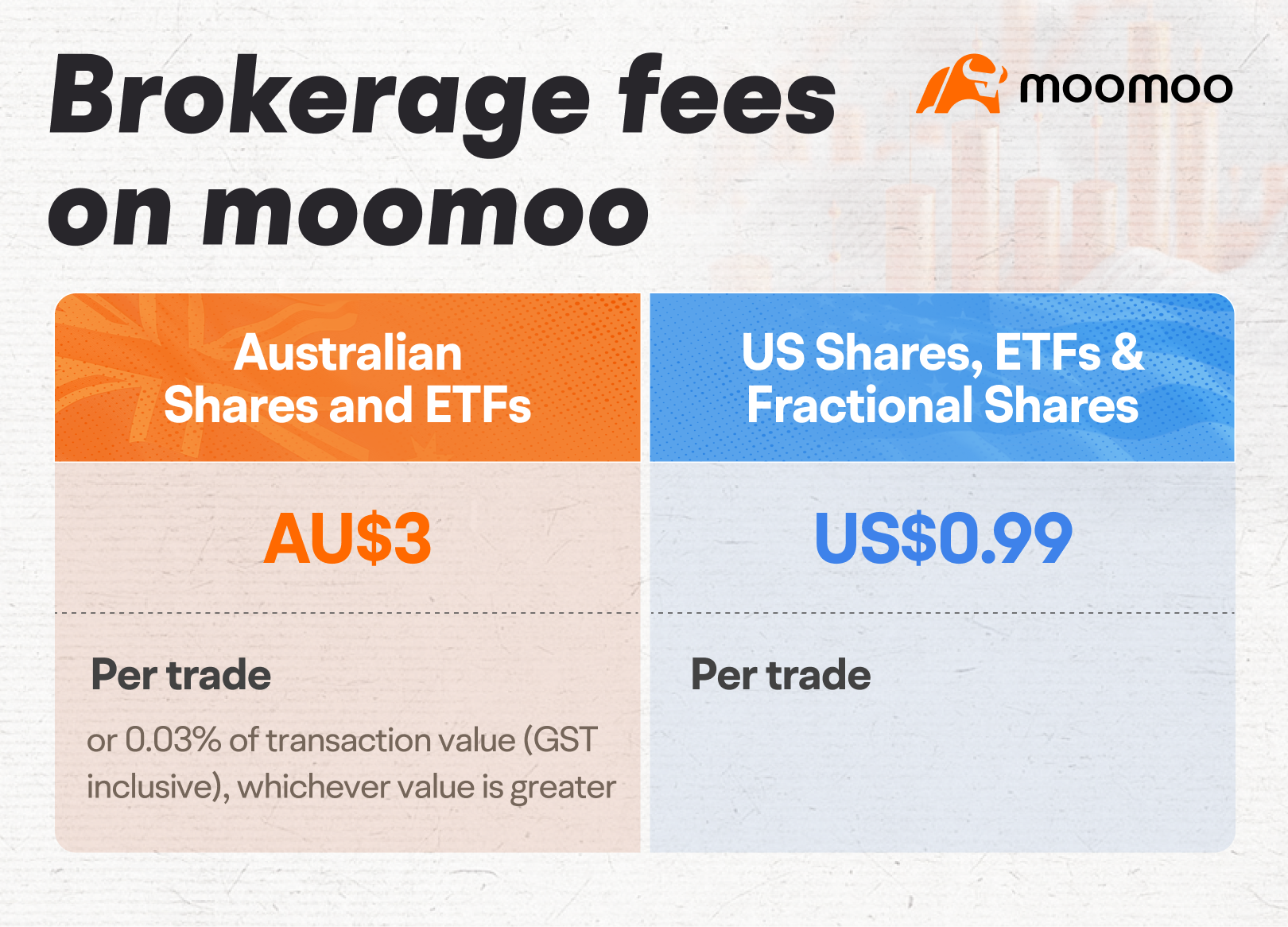
For investors who engage in frequent, smaller trades typically ranging from hundreds to thousands of dollars, US ETFs can be more cost-effective in terms of brokerage fees, allowing you to trade more while spending less.
For instance, if you invest AU$500 each month in an ASX-listed international ETF, your total brokerage fees would amount to AU$36 (AU$3×12) by year-end. Conversely, if you opted for a US-listed ETF, your total brokerage fees would be around US$12 (US$0.99×12, approximately AU$18).
Currency considerations
Australian ETFs enable you to invest in your local currency. You trade them in Australian dollars, and any dividends received are also paid in Australian dollars. In contrast, when you purchase US-listed ETFs without sufficient USD, a currency conversion is required, often resulting in added costs due to the spread.
Moreover, a depreciating AUD against the USD can enhance the returns on your US-listed ETFs portfolio, while an appreciating AUD may reduce those returns.
While some Australia-listed international ETFs provide currency-hedged options designed to mitigate the effects of currency fluctuations on returns, many remain unhedged, exposing investors to similar currency influences on the underlying return.
The impact of currency fluctuations can differ significantly based on your investment horizon. For long-term investors, short-term currency movements are likely to have a diminished impact on overall returns, as the market typically smooths out these fluctuations over time. In contrast, for short-term traders or those seeking rapid gains, currency volatility can present a substantial risk.
Liquidity and market hours
US-listed ETFs typically exhibit higher trading volumes and greater liquidity compared to many Australia-listed ETFs, resulting in tighter bid-ask spreads and facilitating smoother entry and exit for investors.
For instance, the daily turnover of the iShares Core S&P 500 ETF (NYSE: IVV) often exceeds US$1 billion, while the iShares S&P 500 ETF (ASX: IVV) typically registers just over AU$10 million.
Regarding market hours, US markets present unique challenges for Australian investors due to significant time zone differences. The US stock exchanges, including the NYSE and NASDAQ, operate from 9:30 AM to 4:00 PM Eastern Time (ET). In Australia, this translates to:
● Eastern Standard Time (EST): 1:30 AM to 8:00 AM AEDT (Australian Eastern Daylight Time).
● Eastern Daylight Time (EDT): 0:30 AM to 7:00 AM AEST (Australian Eastern Standard Time).
As a result, Australian investors often find themselves trading during early morning hours or overnight, which can be inconvenient and may impact their decision-making processes.
On moomoo, this inconvenience can be partially alleviated, as investors benefit from a 24/5 trading feature for US stocks and ETFs. With the inclusion of pre-market, post-market and overnight trading hours, the total trading window for select US-listed ETFs is expanded to a full 24 hours.
The bottom line
While both Australia and US-listed ETFs offer international exposure, US ETFs typically provide larger scales, higher liquidity and slightly lower fees. However, Australian investors may consider tax implications and currency risks associated with investing in US ETFs. Understanding these differences can help you make informed decisions that align with your investment goals and risk tolerance.
This presentation is for informational and educational use only and is not a recommendation or endorsement of any particular investment or investment strategy. Investment information provided in this content is general in nature, strictly for illustrative purposes, and may not be appropriate for all investors. Read more