Commodity ETFs: Combat inflation with targeted diversification
Australian investors are no strangers to commodities, with some of the biggest companies in Australia being from the resources sector. With inflation peaking, supply chain disruptions, and even market volatility, there has been a growing global interest in trading commodities.
Investors often turn to commodities for diversification in their portfolios, as these assets tend to move differently than traditional investments like stocks. Additionally, commodities, such as gold, are commonly utilised as a hedge against inflation, with their prices typically rising during periods of elevated inflation.
Although owning commodities directly can be complex and costly, investing in exchange-traded funds (ETFs) offers a more practical and convenient way to gain exposure to this asset class.
What are commodity ETFs?
Commodities are the raw materials and agricultural products that serve as the foundation for the production of various goods across multiple sectors of the economy. The commodity market is composed of four main sub-sectors: precious metals, energy commodities, agricultural commodities and industrial metals.
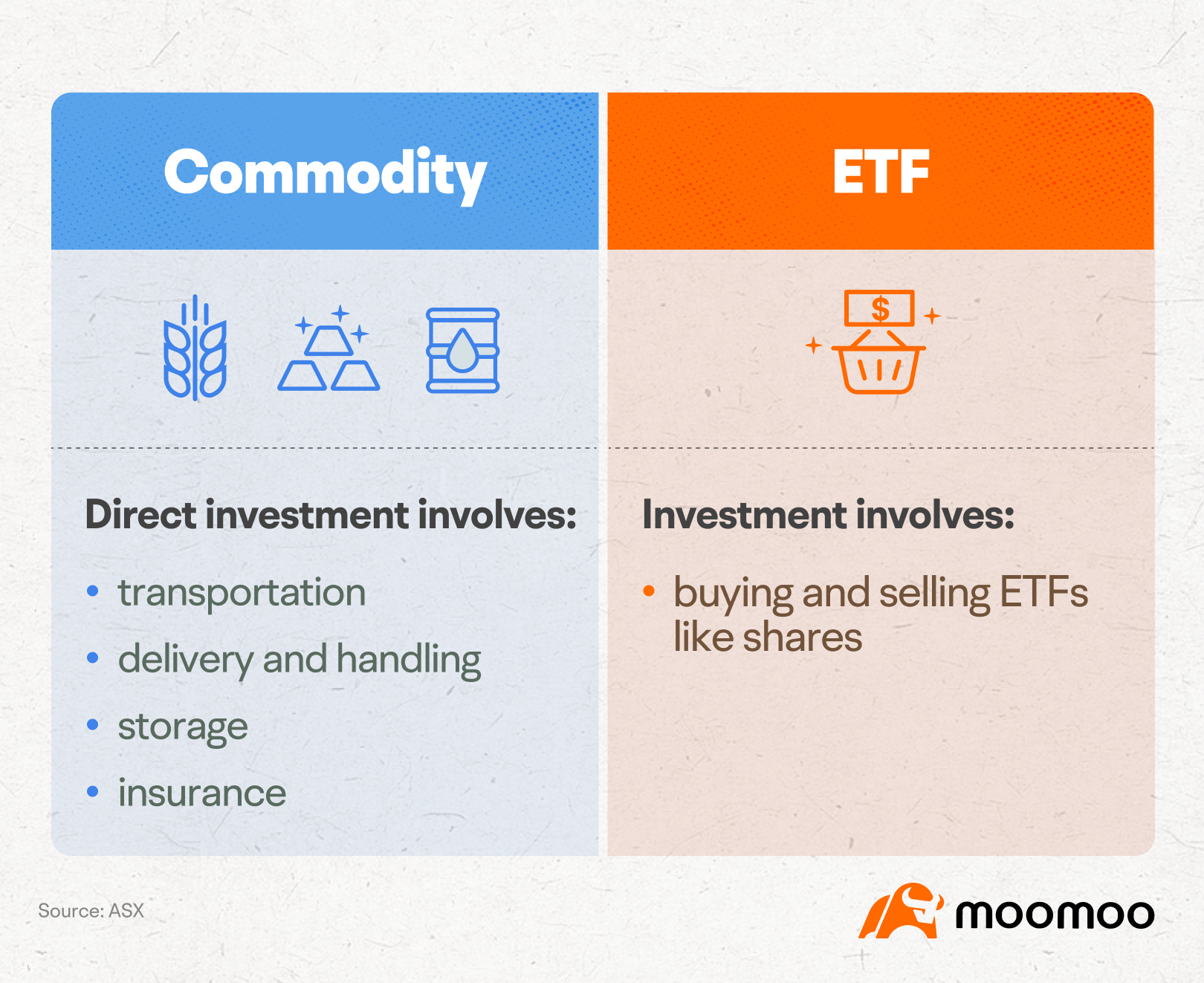
For most investors, owning commodities directly, whether it's a barrel of oil or physical gold bars, is typically impractical and expensive. As a result, commodity ETFs offer a simple and cost-effective way to access the performance of selected commodities, and are as straightforward as purchasing shares.
A commodity ETF is an exchange-traded fund (ETF) that tracks the price of individual commodities or a basket of commodities. The ETF structure allows individual investors to gain exposure to commodities without the need to navigate complex financial instruments.
Why invests in commodity ETFs?
● Portfolio diversification
Commodity prices, which can be impacted by various factors like weather conditions and geopolitical events, typically exhibit a low correlation with equities and a negative correlation with fixed income.
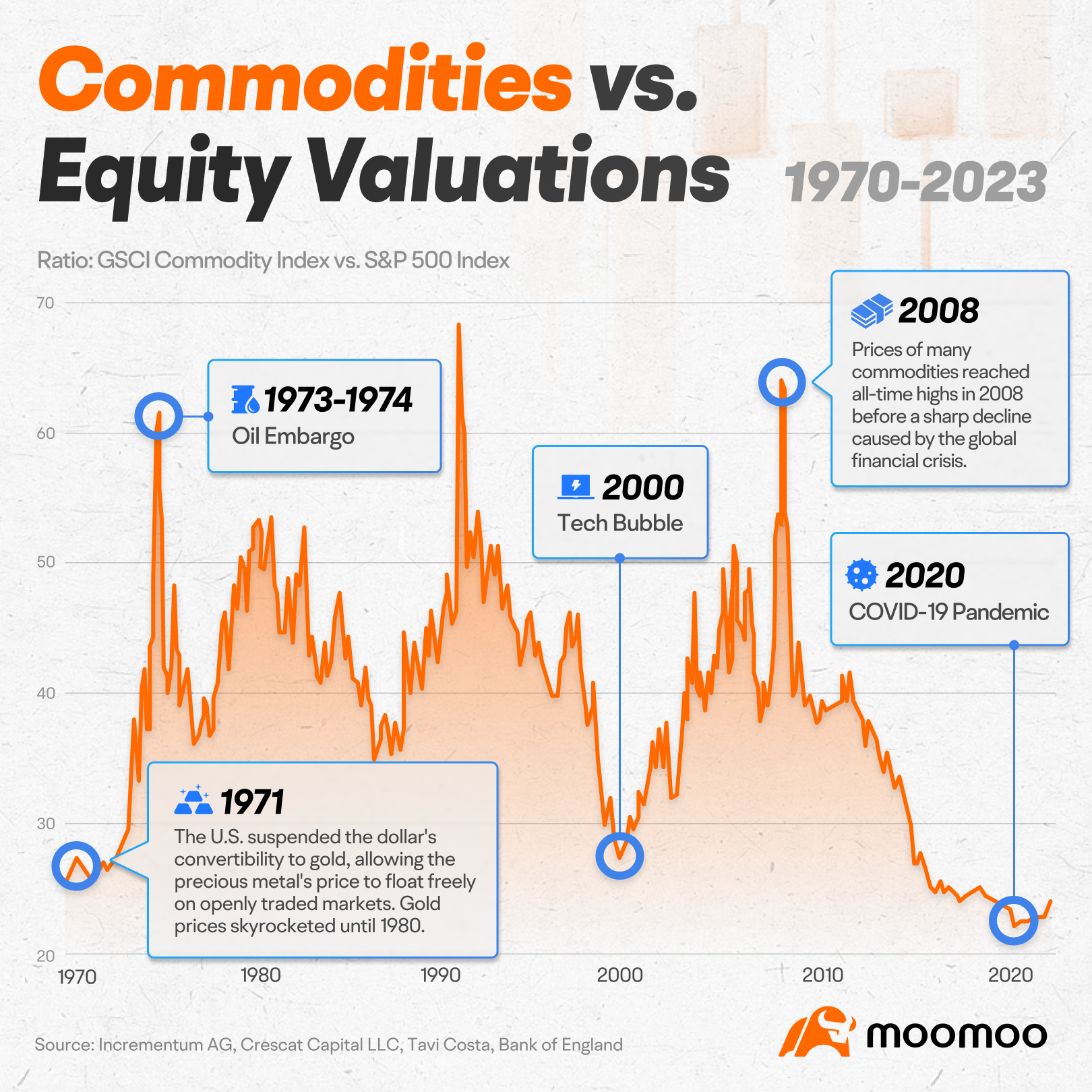
By investing in commodities, investors can diversify their portfolios, manage risk and potentially profit from supply and demand imbalances. This is particularly advantageous when the prices of precious metals, oil, agriculture, and other natural resources experience an upward trajectory.
● Inflation hedge
Inflation is characterised by a general rise in prices for goods and services over time. Commodity prices tend to increase in tandem with inflation. This is attributable to the fact that commodities serve as essential raw materials utilised in sectors such as housing, transportation and food production, all of which contribute to the Consumer Price Index (CPI).
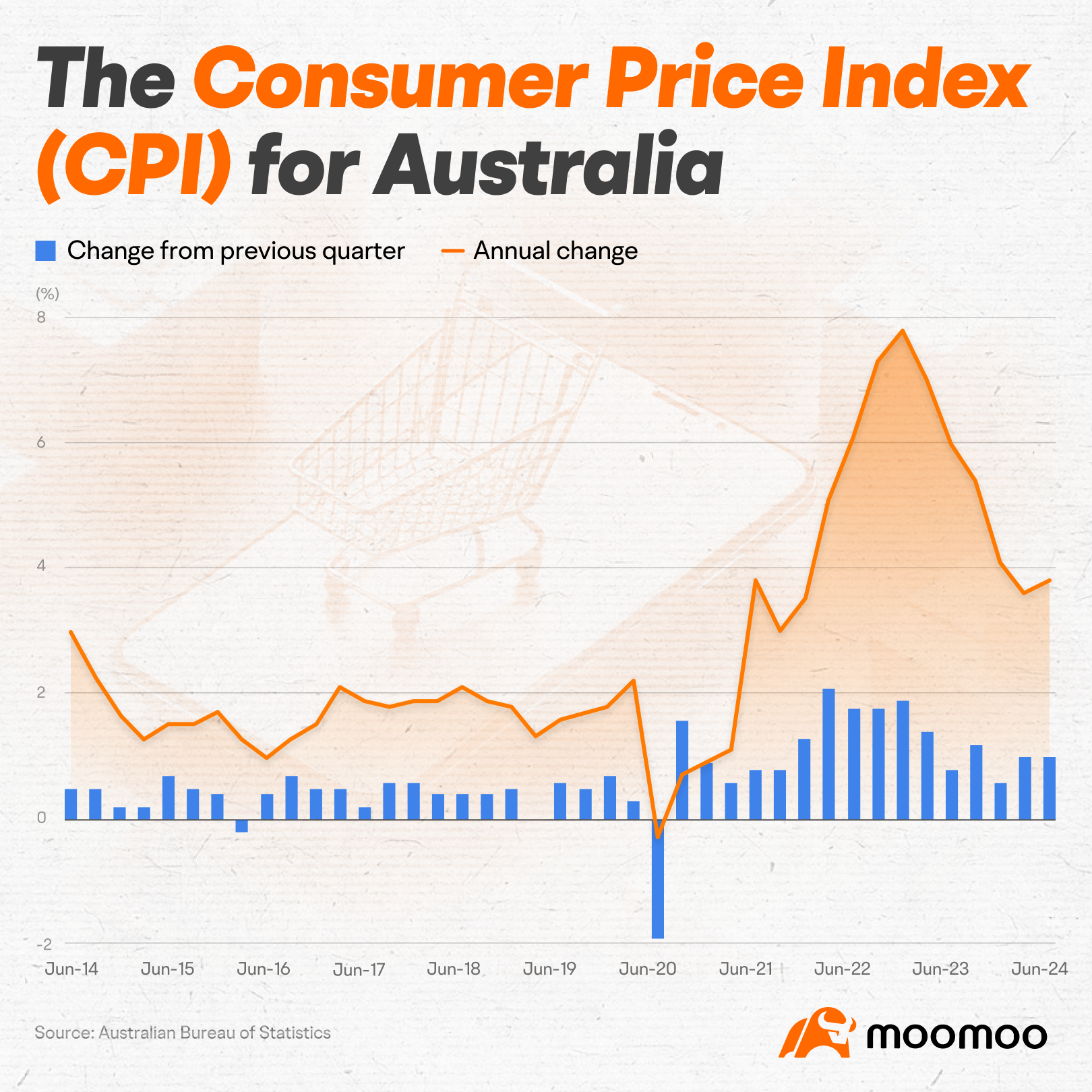
Historically, commodities have proven to be a compelling hedge against inflation in comparison to major asset classes including commonly used inflation-fighting instruments like Treasuries and real estate. Consequently, commodities become particularly appealing during periods of elevated inflation, as they have the potential to preserve or even enhance their value.
● Easy access
Commodity ETFs provide a convenient means to directly access the price fluctuations of commodities, eliminating the necessity of physically acquiring the assets or engaging in futures contracts.
Moreover, commodity ETFs are traded on exchanges just like stocks, making them accessible to retail investors who can trade in smaller amounts with increased liquidity and reduced costs.
Key considerations before investing in commodity ETFs
Before investing in commodity ETFs, investors need to have a good understanding of the underlying commodity market and how the ETFs provide exposure to that commodity. A key question to consider is whether the ETF is backed by physical assets or futures contracts.
Some precious-metal ETFs physically acquire commodities like gold and silver, storing them in secure vaults. These ETFs closely mirror the spot price since the metals can be easily retrieved and sold on the spot market.
However, most commodities, such as oil and natural gas, are invested in through futures contracts due to storage constraints. Futures contracts allow investors to buy commodities at a future date for a set price, with the aim of selling the contract before it expires rather than taking possession of the commodity. While changes in futures prices generally serve as a good proxy, they may not perfectly align with spot prices.
It's worth noting that commodity ETFs are not all created equal, and they are typically fall into three types:
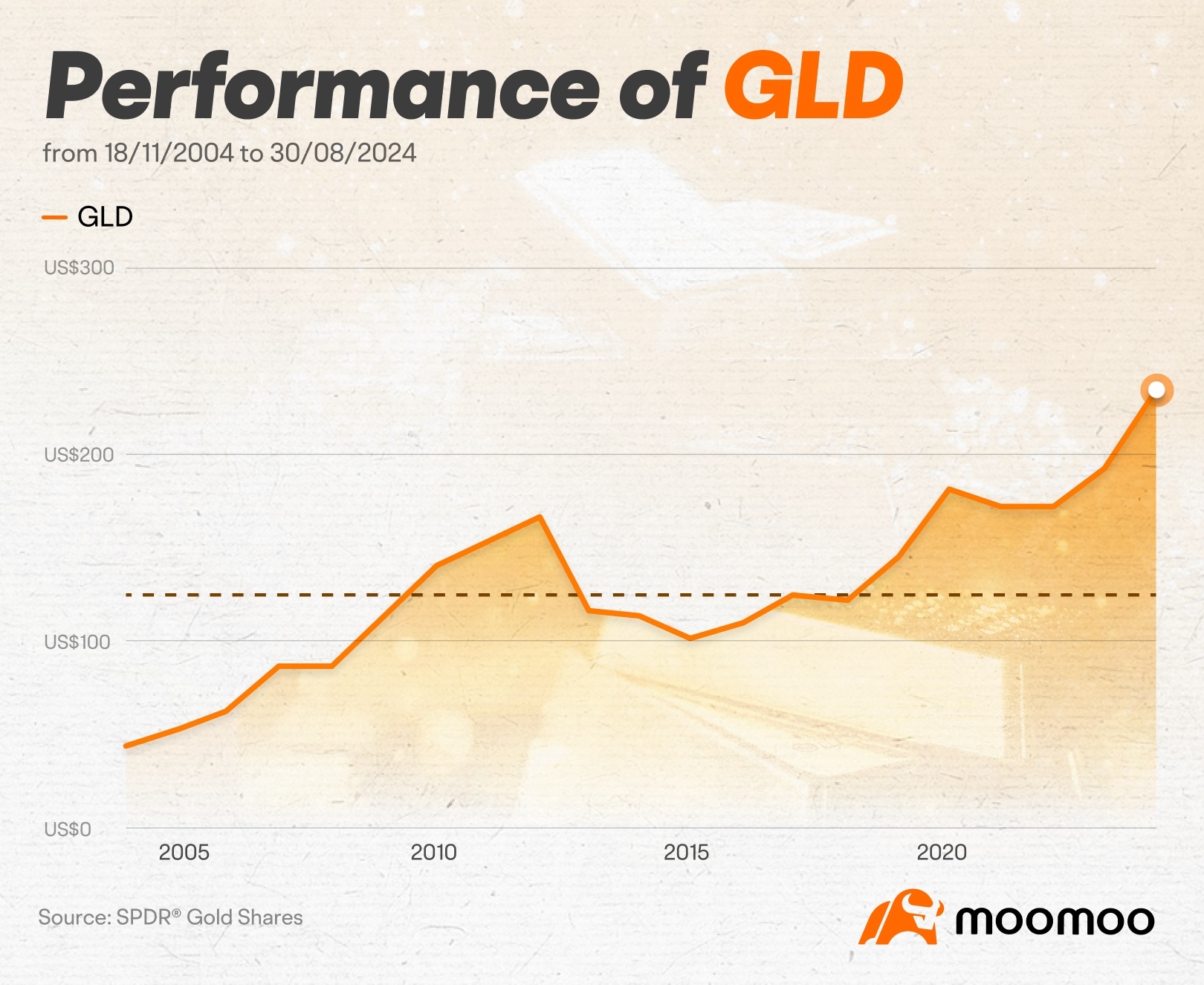
1. Physically-backed commodity ETFs: As the name implies, physically-backed commodity ETFs directly hold the underlying commodity and aim to track the spot price of the commodity. One prominent example is the world's largest physically-backed gold ETF, $SPDR Gold ETF (GLD.US)$ . By investing in this type of ETF, investors obtain a share in the fund's gold bullion reserves without the need to handle physical delivery and storage.
2. Futures-based commodity ETFs: This type of commodity ETFs are designed to provide exposure to the targeted commodity by utilising futures contracts, forward contracts and swaps. Futures-based commodity ETFs will have to frequently sell out of expiring contracts and move to the following futures contracts, leading to investment uncertainty as this process can greatly influence futures prices.
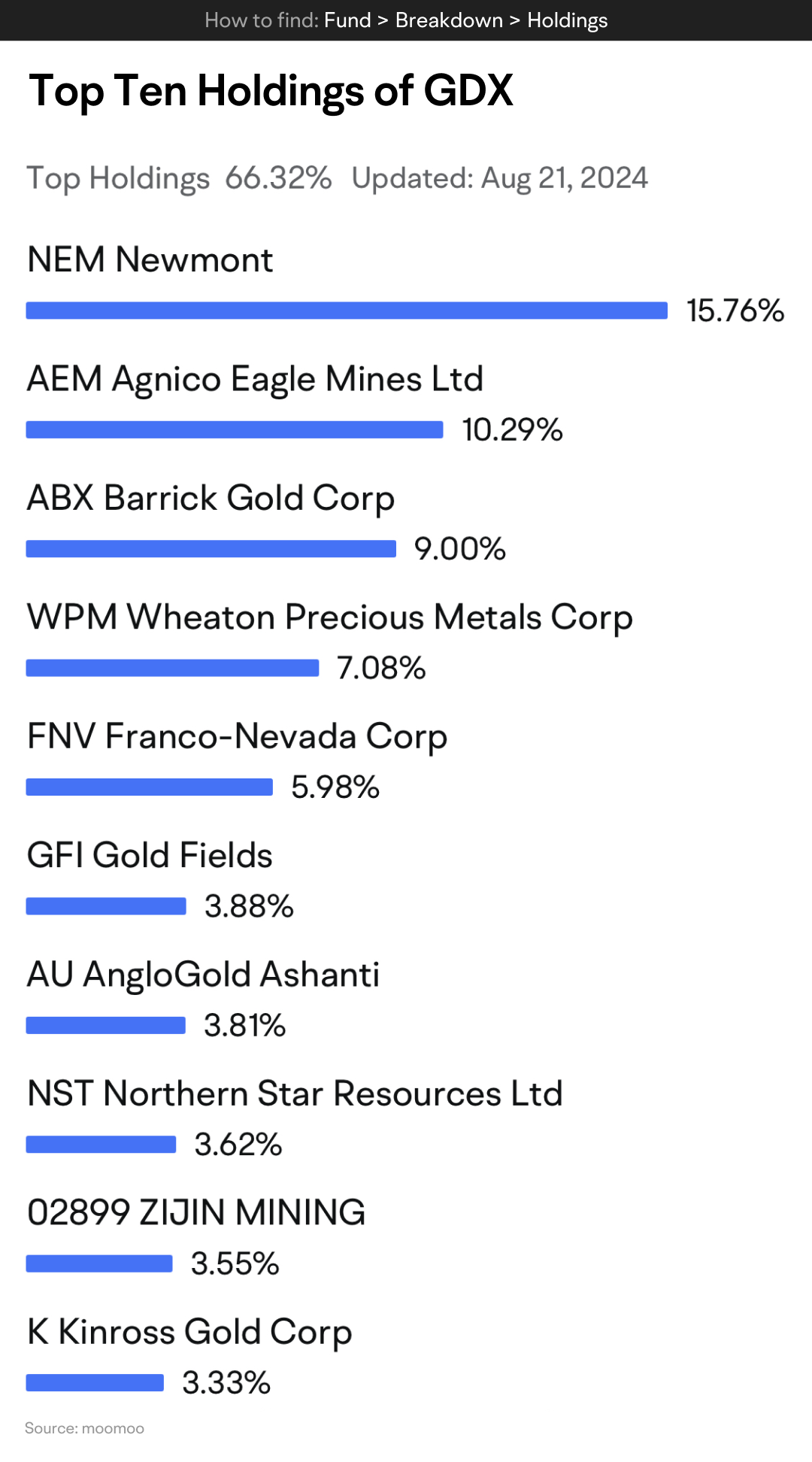
3. Equity-based commodity ETFs: This type of commodity ETFs provide “leverage-like” exposure to commodities by investing in commodity-related shares. For instance, investors seeking exposure to gold may consider equity-based options such as $VanEck Gold Miners Equity ETF (GDX.US)$ , which focuses on companies within the gold mining industry.
What are the most popular commodity ETFs?
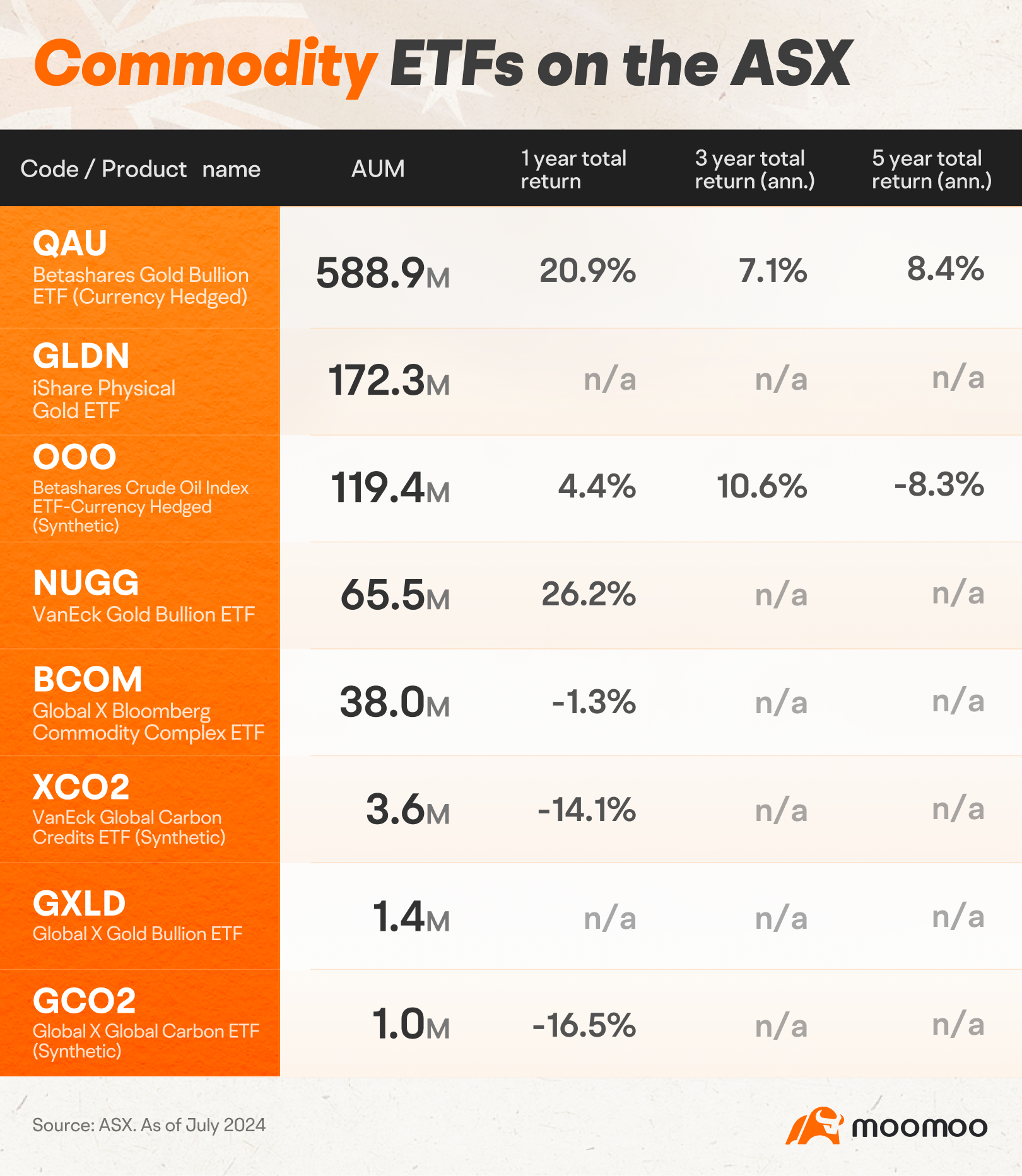
Australian investors can acquire commodity ETFs on the ASX, with a primary focus on gold and crude oil.
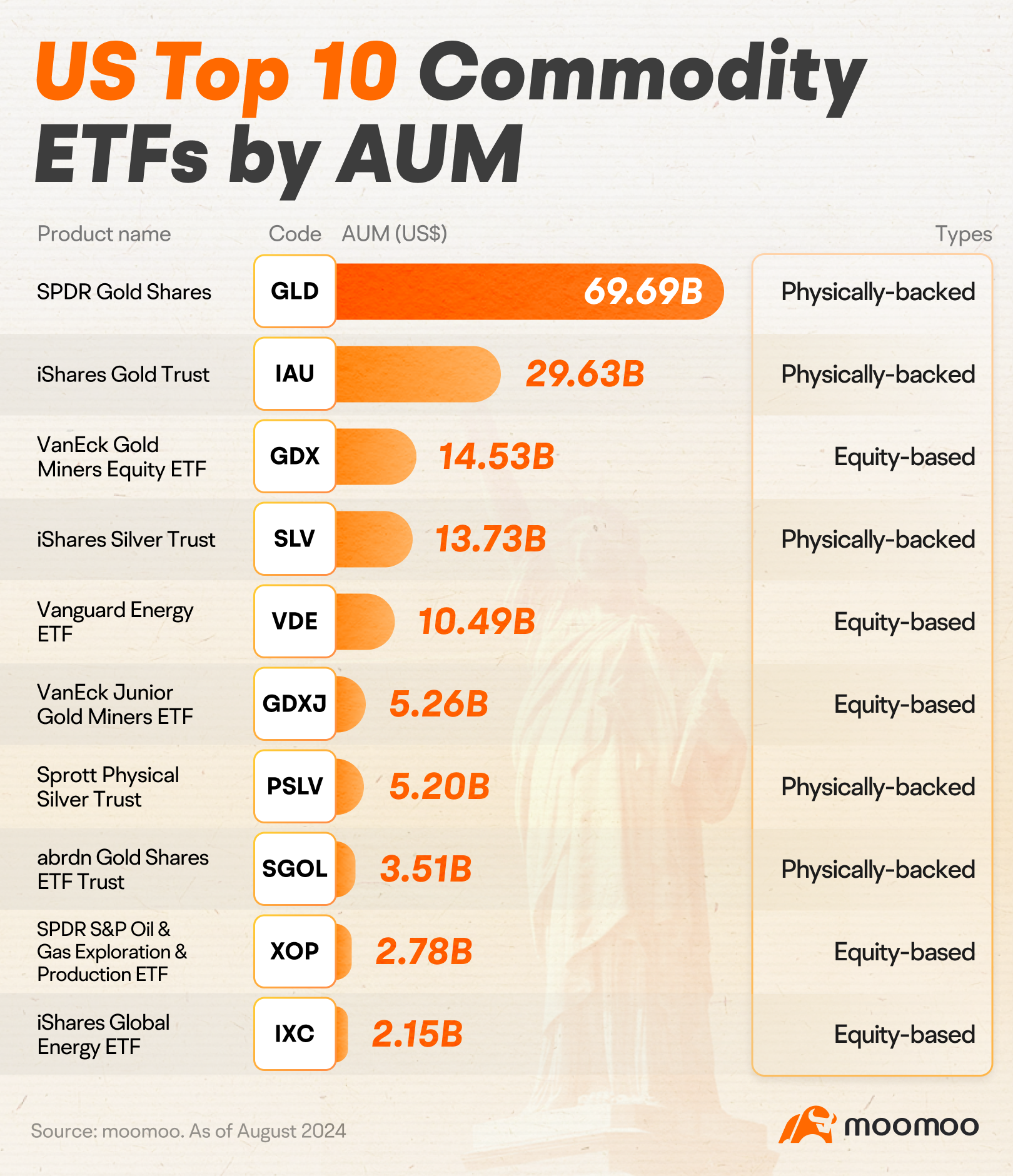
In the US, a wider array of investment options is accessible. Among single-commodity ETFs, the most substantial ones in assets under management (AUM) are physically-backed and track precious metals, exemplified by popular choices like $SPDR Gold ETF (GLD.US)$ , $iShares Silver Trust (SLV.US)$ and $Graniteshares Platinum Trust Shs Beneficiary Investment (PLTM.US)$ .
The bottom line
Commodity prices are influenced by various factors, including weather patterns, crop yields and the availability of natural resources on the supply side, and economic conditions, consumer behaviour and government regulations on the demand side.
In addition to these fundamental factors, geopolitical issues and speculative trading can also influence commodity prices. Geopolitical events such as trade disputes and political unrest can have a significant impact, while speculative trading can increase market volatility.
Investing in commodity ETFs provides investors with a dynamic way to access the commodities market, offering diversification and a hedge against inflation for investors due to their low correlations with stocks and bonds.
While commodity ETFs are a compelling investment option, they typically focus on capital appreciation rather than providing regular dividend income, which may be less attractive for investors seeking passive income.
This presentation is for informational and educational use only and is not a recommendation or endorsement of any particular investment or investment strategy. Investment information provided in this content is general in nature, strictly for illustrative purposes, and may not be appropriate for all investors. Read more