Investing in ETFs: achieving higher returns with managed risk
Investors often spend many hours trying to determine which stocks to buy to achieve good returns.
However, many people, especially beginners, struggle to find a clear answer and end up with disappointing results.
An alternative approach is to consider the ‘big picture’ by investing in the market as a whole, rather than trying to pick individual stocks.
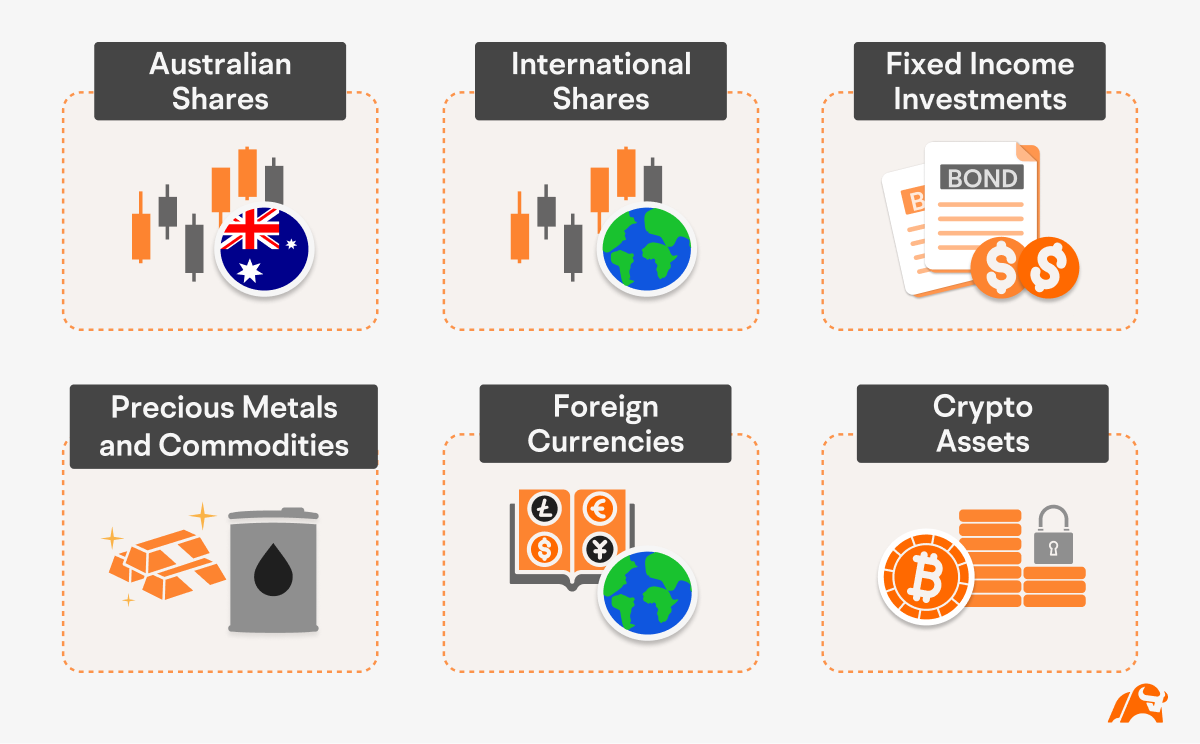
Exchange-traded funds (ETFs) provide a way to achieve this big-picture investment strategy with instant diversification and exposure to specific industries, themes and multiple assets.
ETF trends in Australia
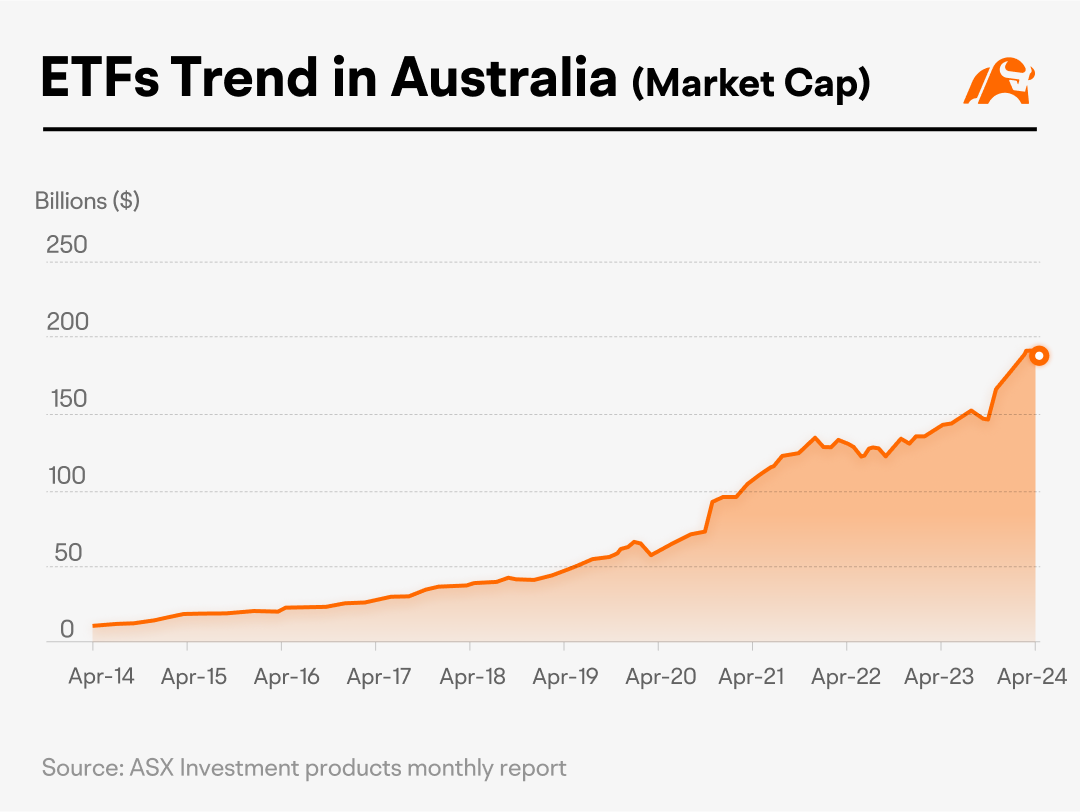
The ETF industry in Australia has grown rapidly in recent years. There is over $190 billion held in ETFs as of April 2024, representing a 33.7% year-over-year growth. This is a stark contrast to the less than $10 billion held in ETFs a decade ago.
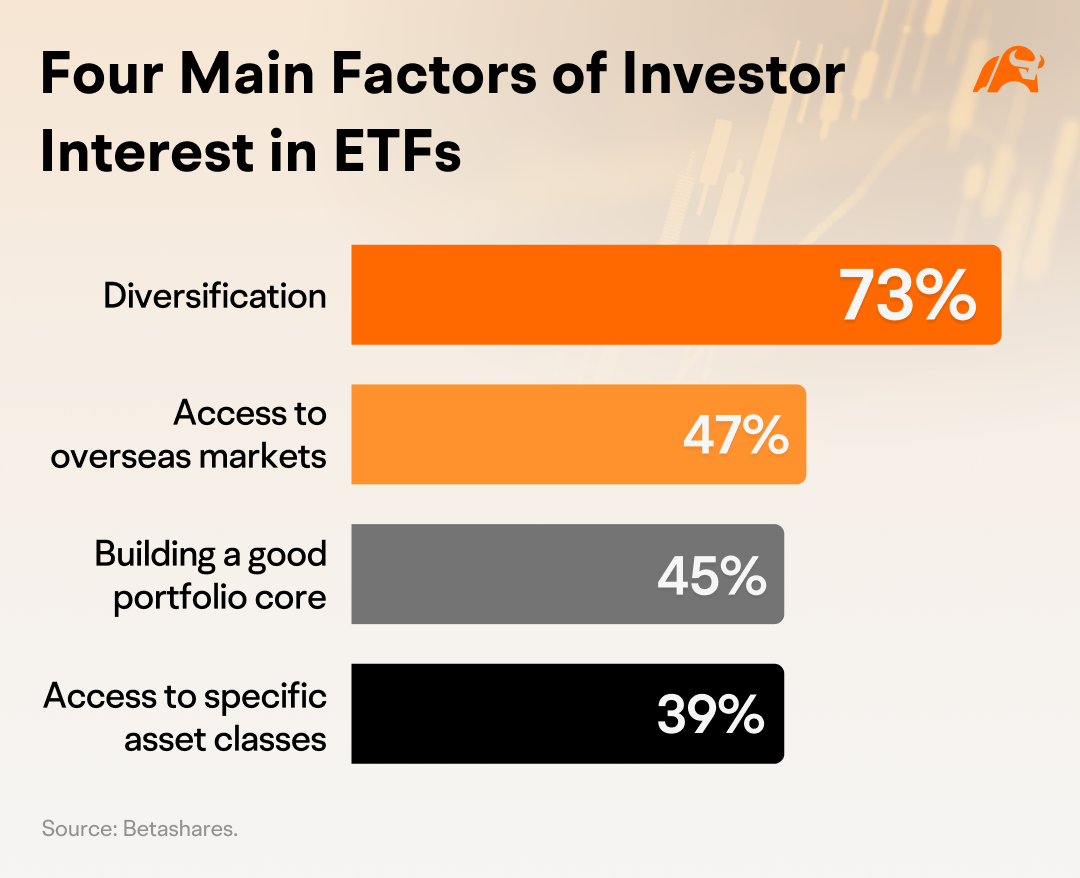
As of 2023, there are 2 million investors in Australia holding ETFs in their portfolio. Australian investors are motivated by the following four factors to use ETFs, with portfolio diversification being the top reason.
Why are index-tracking ETFs so popular?
Passive ETFs that track a sharemarket index is the most popular type.
According to BetaShares, the two largest ETFs by market cap in Australia are both index tracking—the Vanguard Australian Shares Index ETF (VAS) and Vanguard MSCI Index International Shares (VGS). They track the S&P/ASX 300 and an index of around 1,500 global shares in 23 countries, excluding Australia, respectively.
Legendary investor Warren Buffett advocates for a simpler yet effective approach to investing: putting money into index funds.
‘In my view, for most people, the best thing to do is own the S&P 500 index fund’. Buffett told the audience during the Berkshire Hathaway annual meeting in 2020.
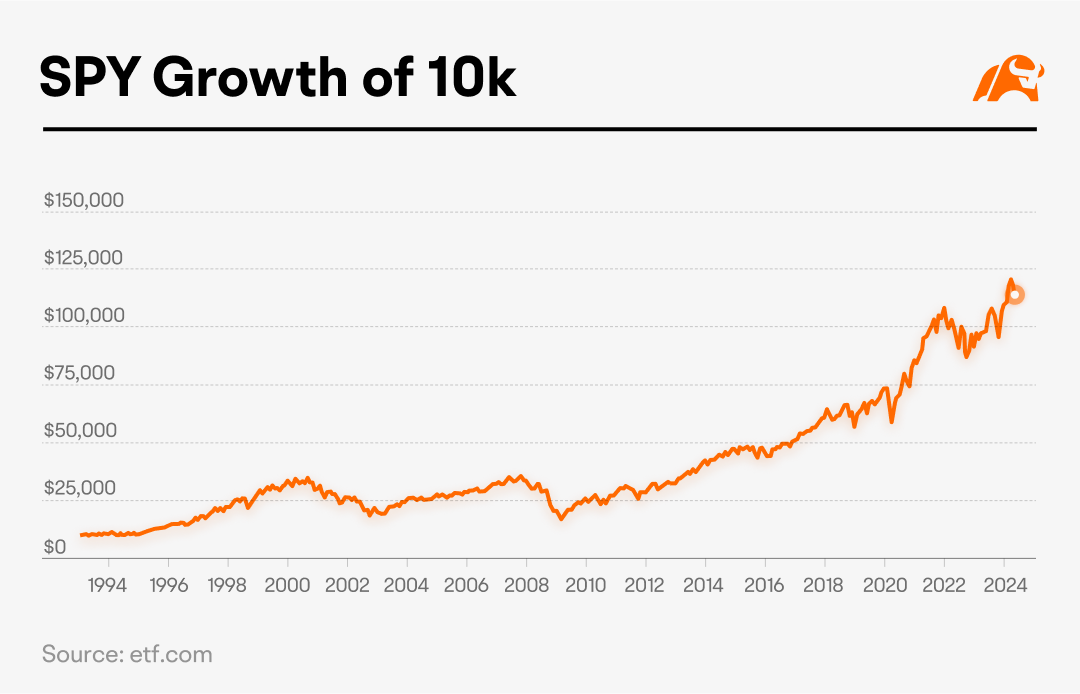
This suggests that Buffett believes investing in index funds is a way to help mitigate the risks that come with choosing individual stocks.
For many Australian investors, investing in ETFs that track the domestic S&P/ASX 200 or the U.S. S&P 500 index could be a good option if they are unsure about which individual stocks to invest in.
ETFs that track indices do not carry the risk of permanent capital loss associated with a single stock crashing in value. Additionally, they tend to offer the lowest fees in the ETF sector, around 0.2% per annum.
What are the differences between ETFs and managed funds?
Both ETFs and managed funds are managed by professional fund managers. They choose and monitor the funds' holdings.
However, ETFs combine the best features of stocks and managed funds.
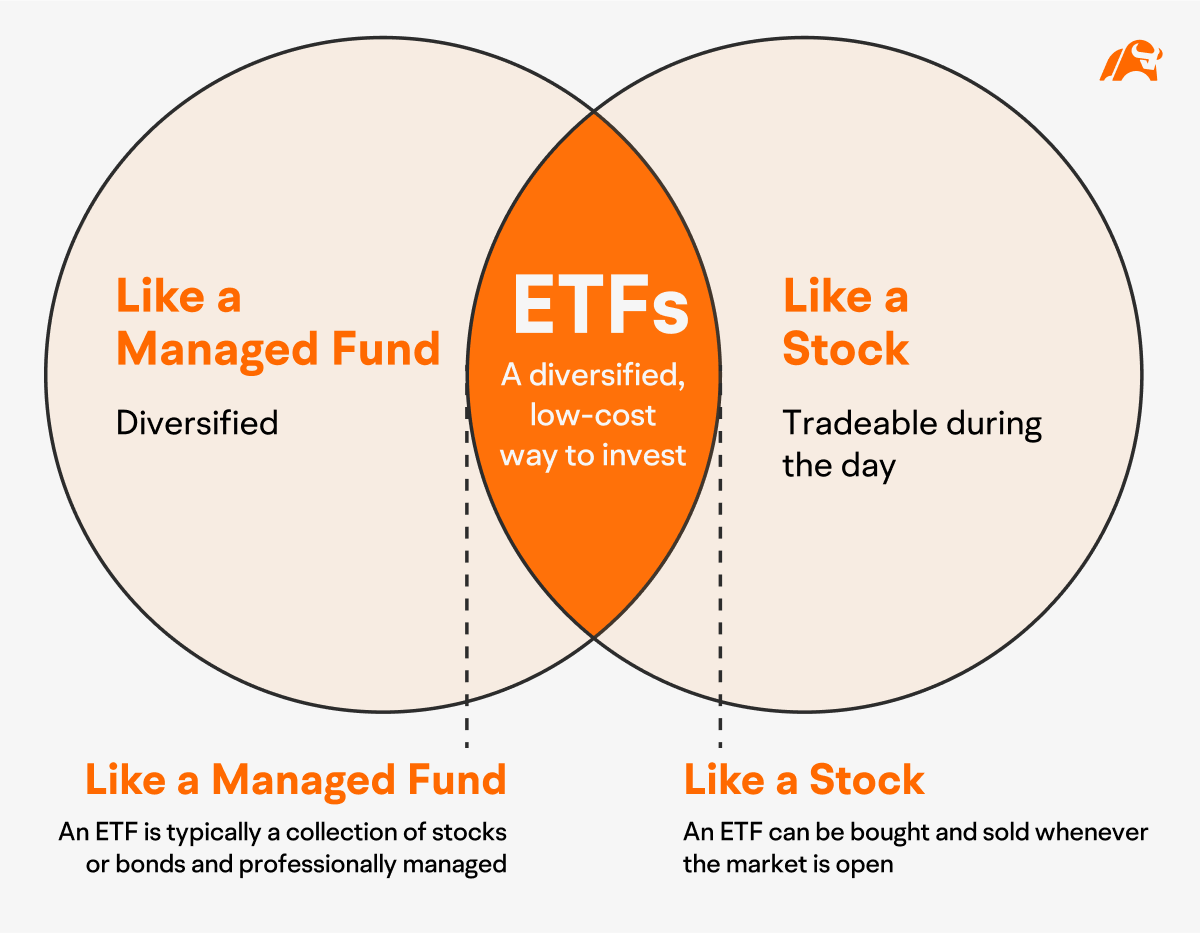
ETFs are easy to buy and sell like shares on a stock exchange at any point during market hours. This makes it easy for investors to trade and adjust their investments as needed.
ETFs also save your money directly. Annual management fees on ETFs are typically between 0.2% and 0.8%, which is less than active fund managers that typically charge 1% to 1.2%.
The chart below compares the investment return of a low-fee passive ETF (management fee of 0.04% p.a.) with an actively managed fund (management fee of 1.26% p.a.) that has a similar investment strategy (Australian shares), assuming a starting balance of $10,000 and pre-fee returns of 5% p.a. for both funds.
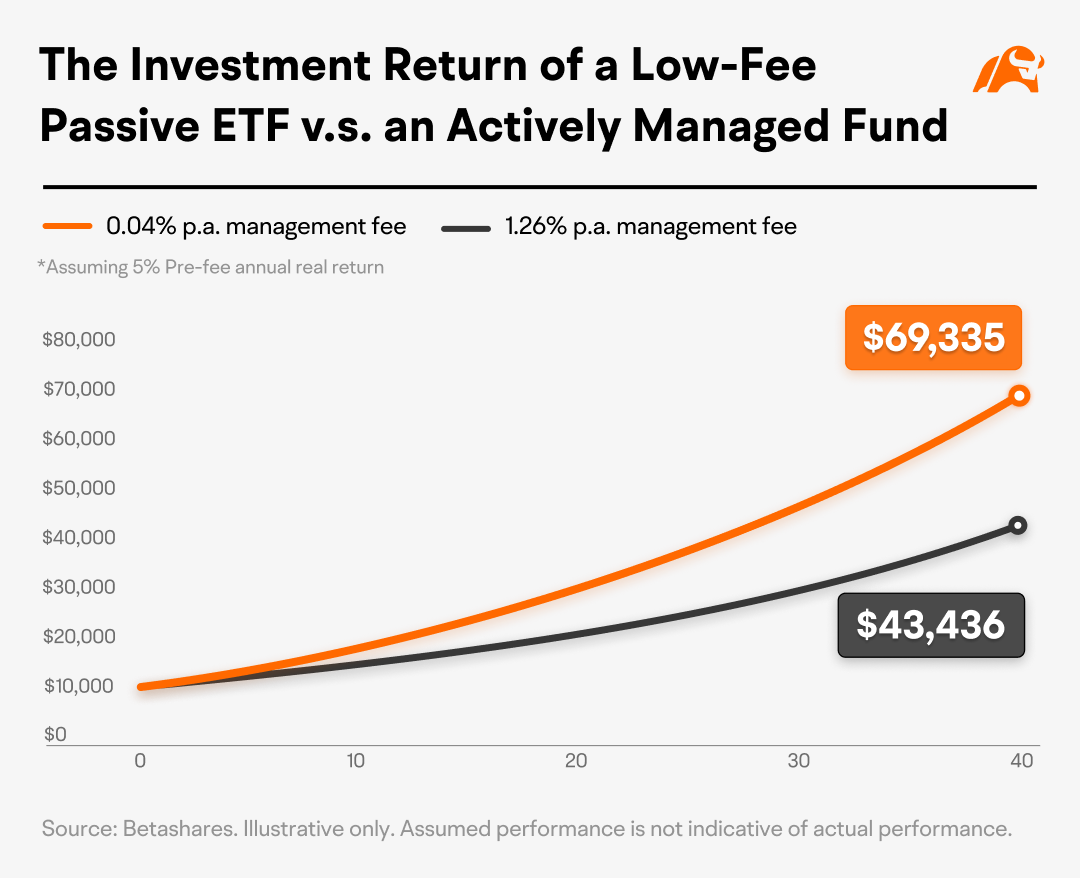
Over 40 years, the lower-fee ETF investment would grow to $69,335, while the higher-fee managed fund investment would only grow to $43,436. This means the lower-fee option would be worth about $25,899 more than the higher-fee option, a difference of approximately 59%.
Pros and cons of ETFs
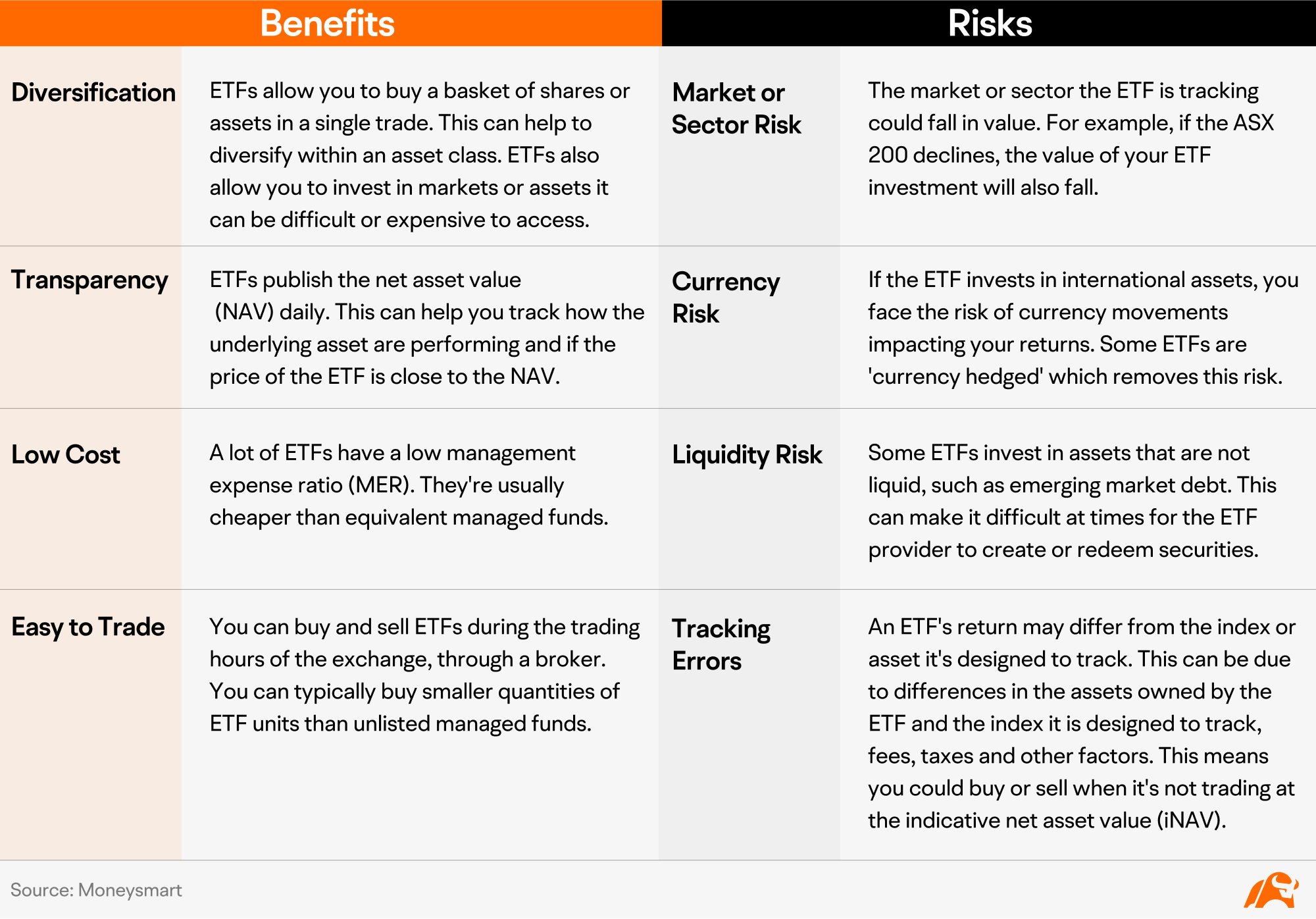
Like all investments, ETFs involve risk. They offer exposure to a diverse range of assets, so the risk profiles can vary significantly between different ETFs.
ETFs on moomoo
Moomoo offers trading for a wide range of ETFs listed on the ASX and U.S. markets.
To explore ASX ETFs, simply tap on Markets > AU > ETFs.
Investors can choose from a variety of ETFs that invest in different classes, including index, equity, fixed income, property, and more. Each category includes numerous ETFs that can be tailored to investors' specific preferences.
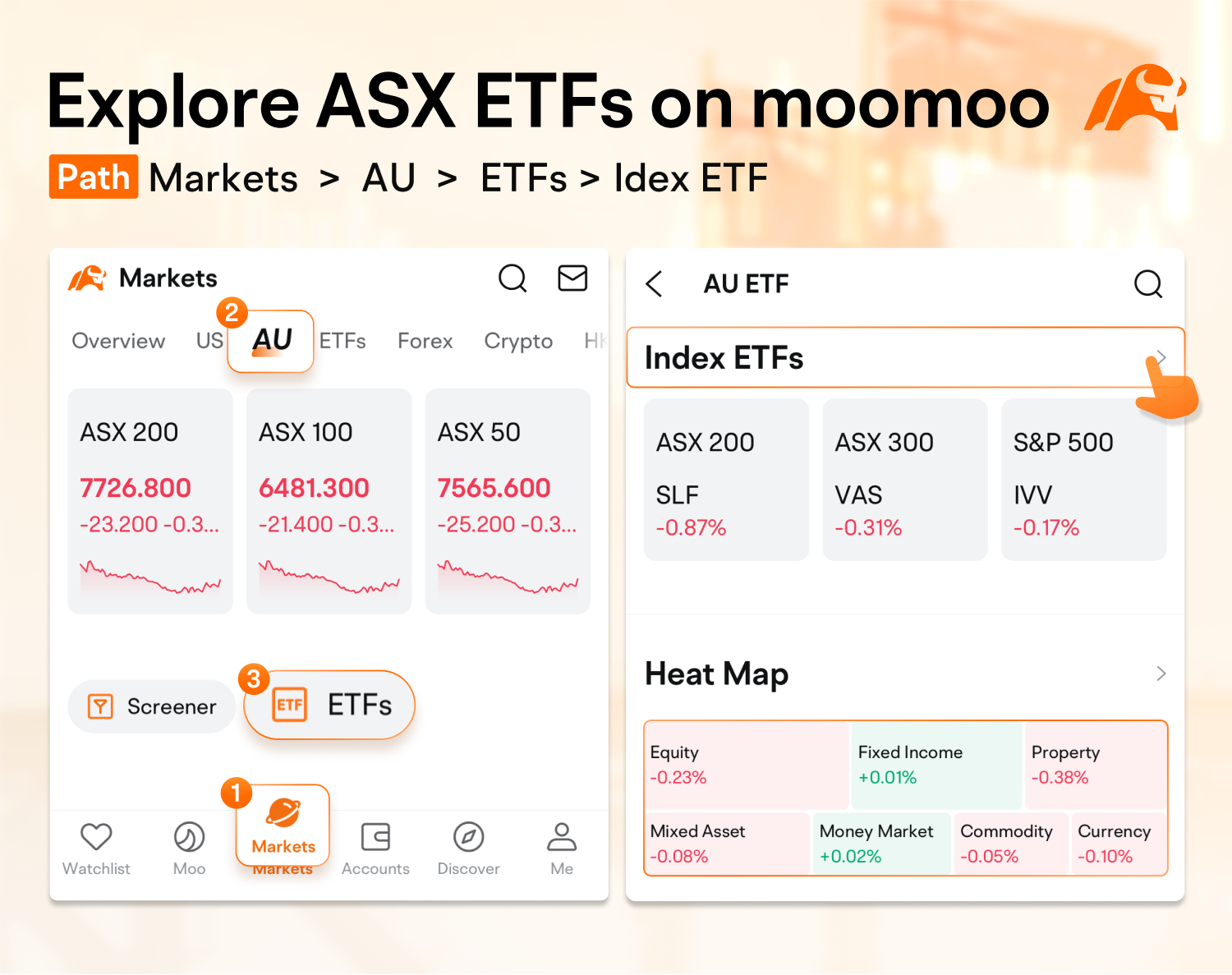
To explore ETFs that track a particular index, such as the S&P/ASX 200, simply tap on ASX 200 and sort the ETFs by a variety of criteria, such as asset under management (AUM).
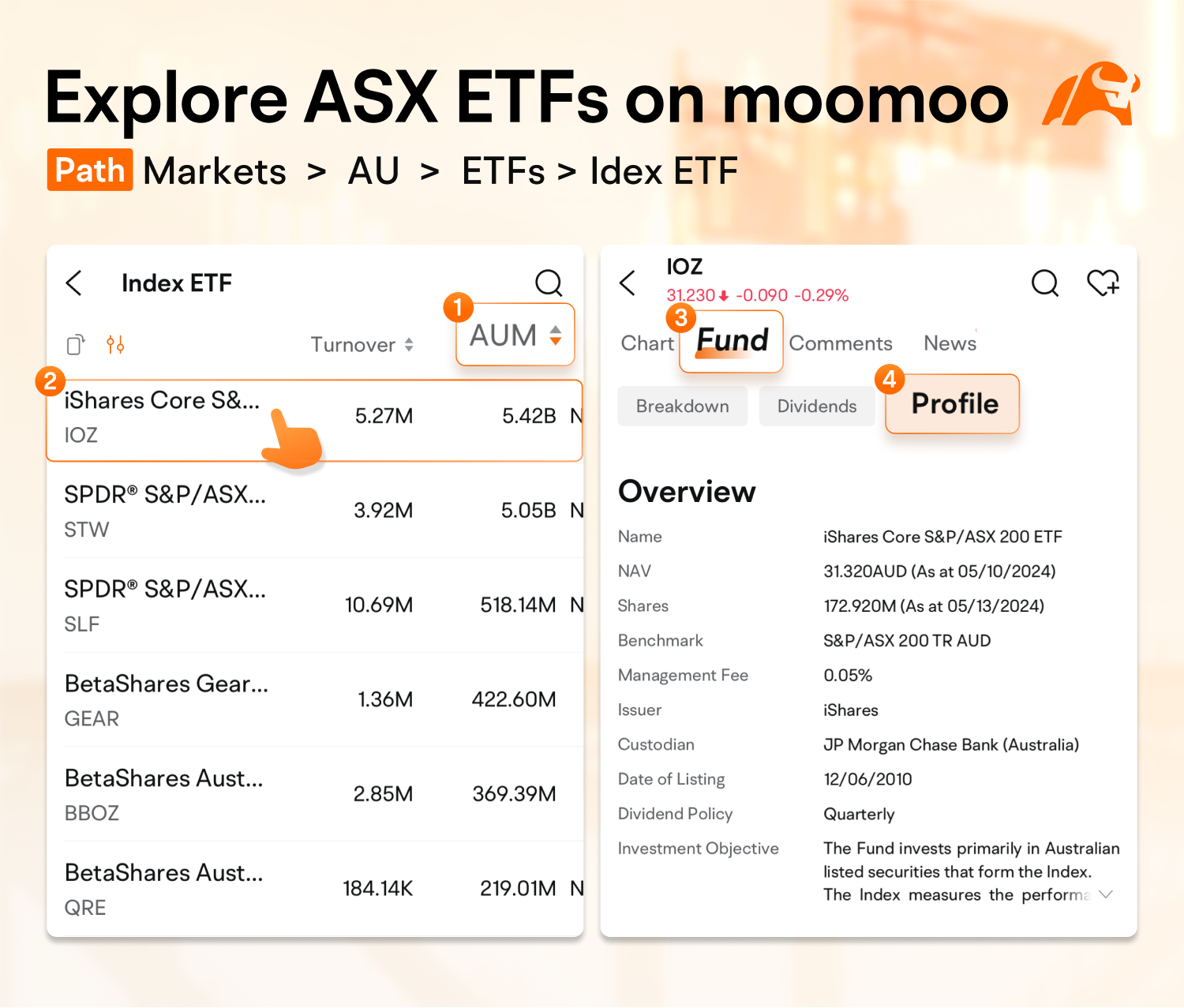
Investors can easily access detailed information about each ETF by tapping on Fund > Profile.
This presentation is for informational and educational use only and is not a recommendation or endorsement of any particular investment or investment strategy. Investment information provided in this content is general in nature, strictly for illustrative purposes, and may not be appropriate for all investors. Read more