Things to know before investing in mining shares
Everything comes from somewhere. If it didn’t grow, it was mined.
The mining industry is essential to the global economy as it supplies crucial resources to various sectors. Nearly every product used on a daily basis contains elements that originated underground.
Therefore, mining will remain an indispensable industry.
Why invest in mining shares?
Australia is a country abundant in resources, ranking among the top producers of iron ore, lithium, gold, zinc, nickel, and cobalt.
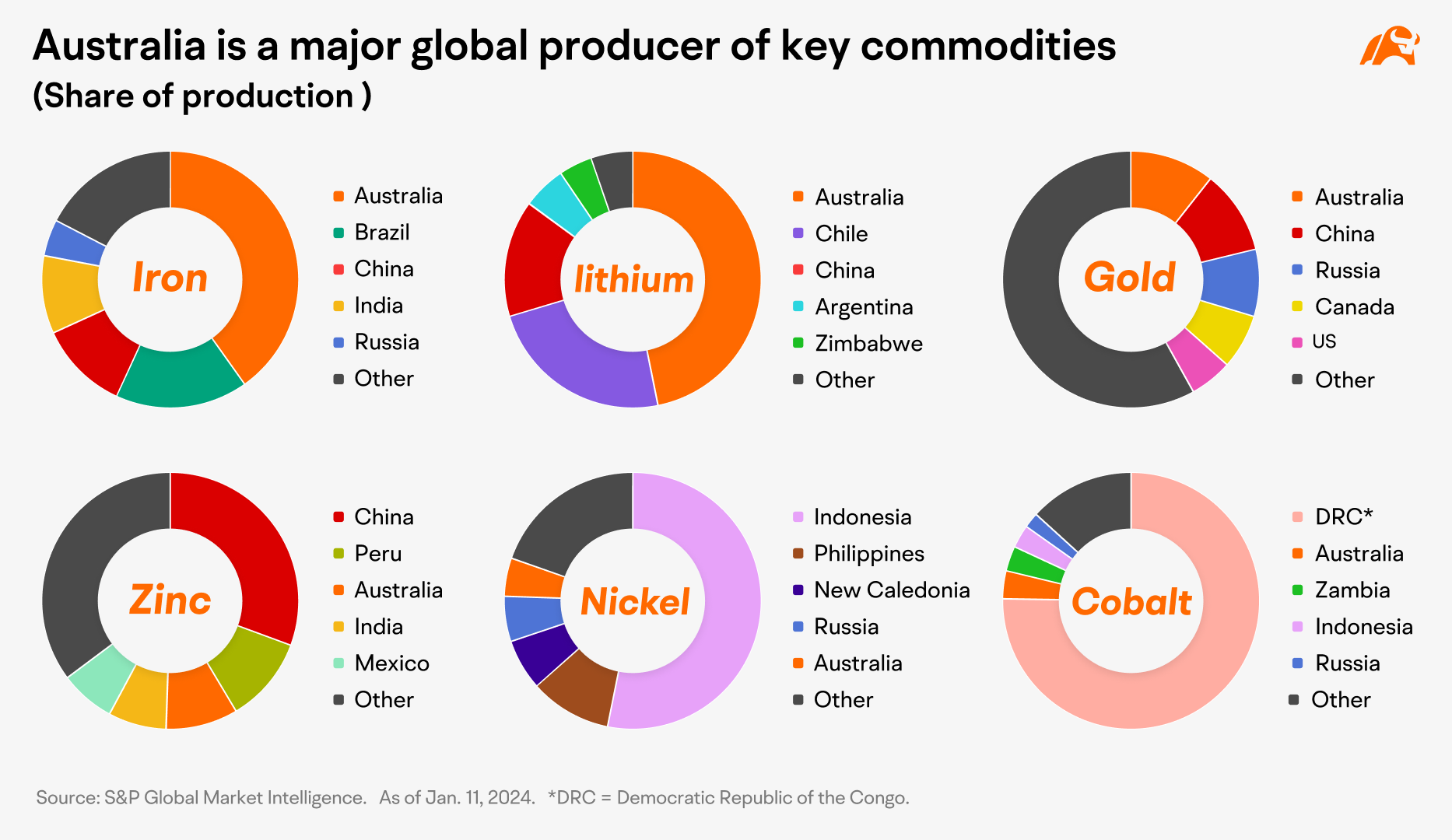
The mining industry has long been a cornerstone of the Australian economy, contributing around 13.6% to the total GDP in 2023. With the arrival of the critical minerals era, opportunities for miners have reemerged.
Home to some of the largest mining firms globally, Australia offers investors easy access to mining shares through the ASX.
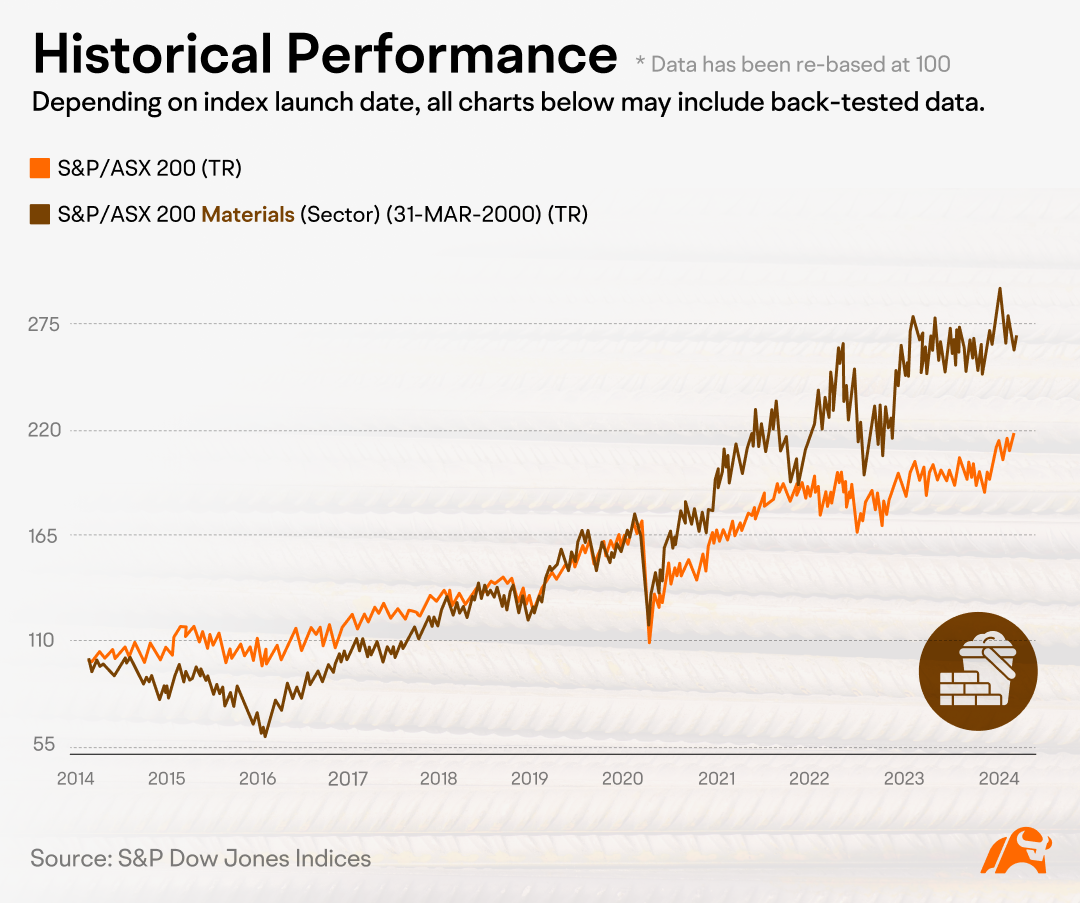
These shares not only diversify a portfolio but also align it with commodity market trends, offering substantial return potential. In the last ten years, the mining-heavy S&P/ASX 200 materials sector delivered an annualized total return of 10.17%, surpassing the overall S&P/ASX 200 index.
The suitability of mining shares for an investor hinges on their investment objectives, risk tolerance, and understanding of the sector. Those looking to incorporate mining into a diversified portfolio might consider ETFs like $VanEck Australian Resources ETF(MVR.AU)$, $SPDR® S&P/ASX 200 Resources ETF(OZR.AU)$, or $Global X Battery Tech & Lithiu(ACDC.AU)$ to gain exposure to this industry.
What are the largest mining shares?
As of December 31, 2022, eight Australian-based companies rank among the world's 40 largest mining companies by market capitalization, with BHP Group Limited and Rio Tinto Group leading the pack.
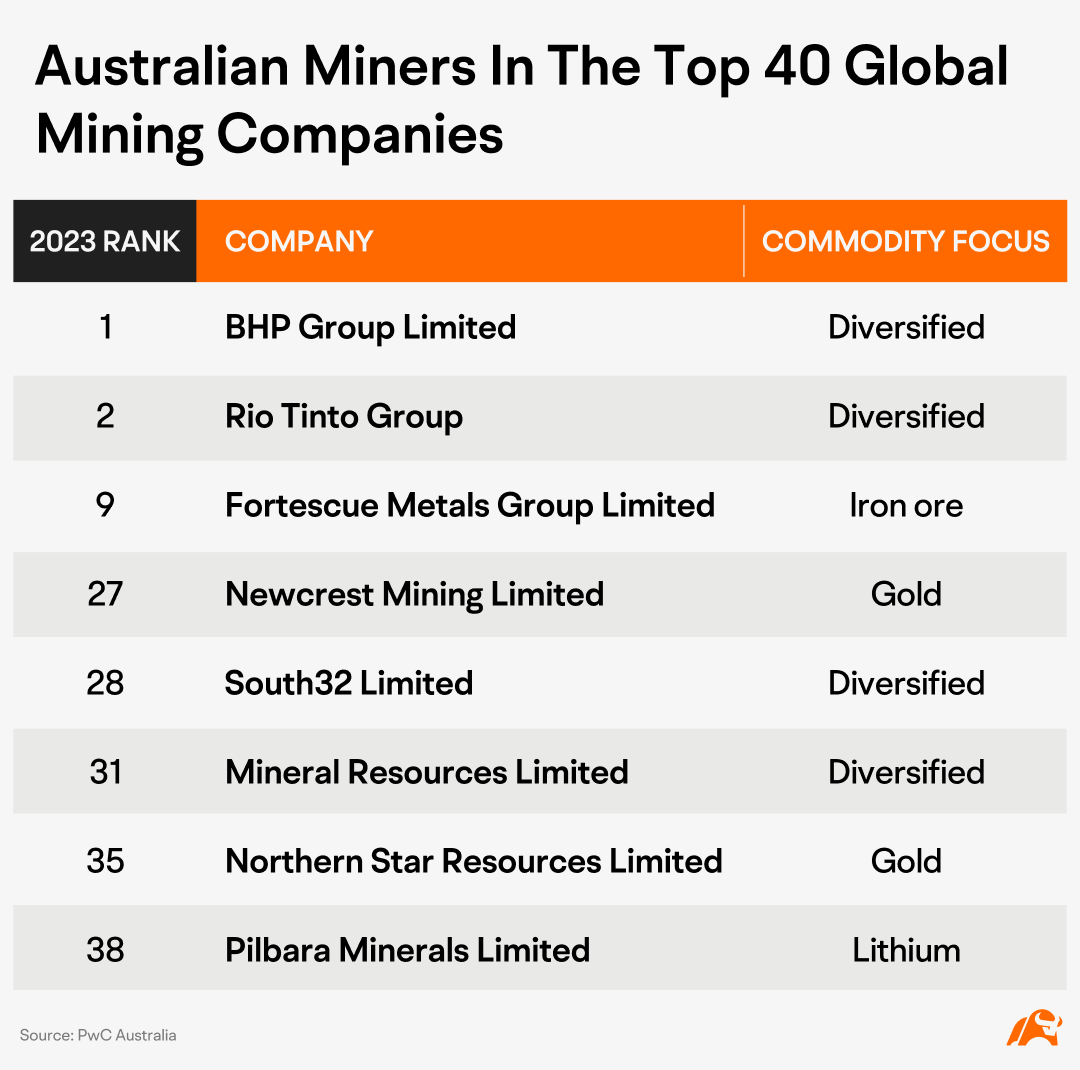
While the largest mining companies may not always be good investments, they typically offer regular dividend payments and exhibit less volatility, making them appealing to income-seeking investors.
What are junior mining shares?
Mining shares can generally be divided into two categories: majors and juniors.
Majors are well-established mining companies with a global presence, proven methods, and stable production and revenue.
Juniors, on the other hand, are smaller companies in the exploration or development stages, often operating at a loss due to lack of production.
Some Australian investors prefer juniors for their high growth potential, especially if they strike a sizeable resource deposit. However, juniors are riskier investments than majors, with limited capital, brief track records, and uncertain resource quantities that can lead to volatile valuations.
Investing in junior mining shares is speculative, offering high potential returns but equally high risk.
The Lassonde Curve, popularized by professional engineer and financier Pierre Lassonde, illustrates the typical lifecycle of a junior mining company from its inception to eventual acquisition. Although each project is unique, the curve provides a useful mental model for investing in junior mining companies.
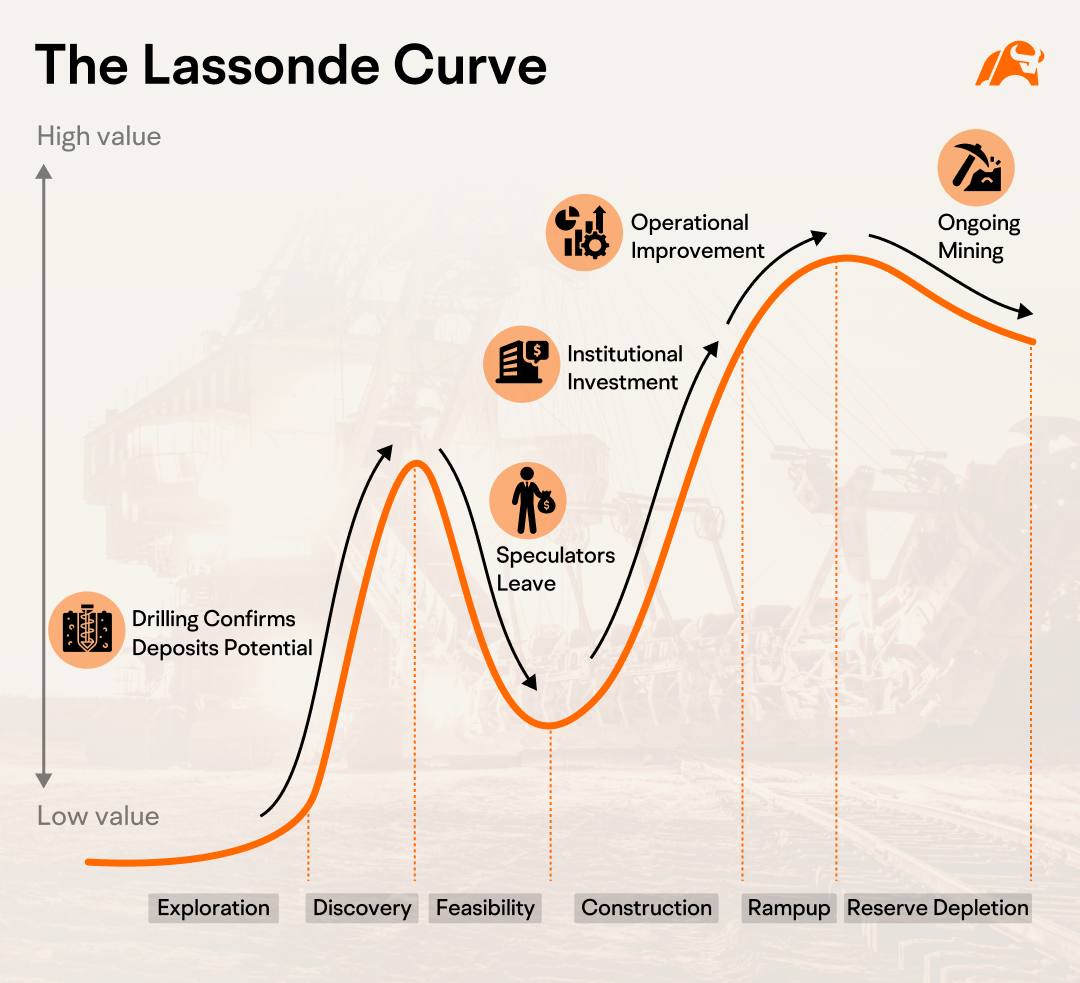
Investors considering junior mining shares should perform comprehensive due diligence and establish a risk management strategy. Critical factors to evaluate include the political stability of regions where mining occurs, the financial health of the company, prospects for production and associated costs, and the robustness and duration of the mineral reserves.
China is in focus
Australia's mining sector is heavily dependent on exporting commodities, with demand from China being a crucial driver.
Shifts in the Chinese economy can swiftly and substantial impact Australian mining companies.
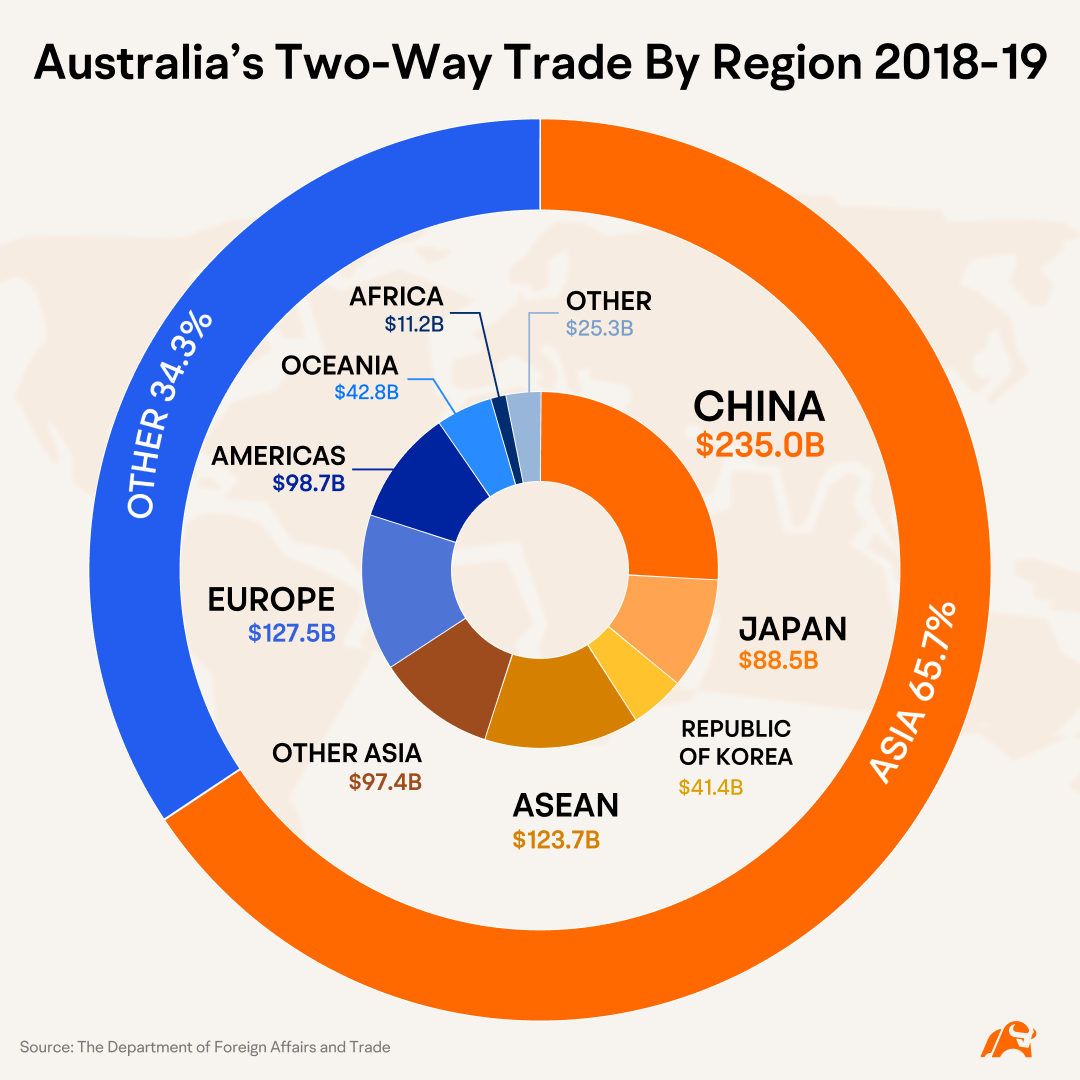
For example, iron ore is Australia's top export, with the country possessing the largest known reserves in the world and producing half of the world's iron ore exports. Major mining companies such as $BHP Group Ltd(BHP.AU)$, $Rio Tinto Ltd(RIO.AU)$, and $Fortescue Ltd(FMG.AU)$ generate significant revenue from iron ore exports.
The Australian economy benefits significantly from iron ore, yet this also creates a dependency that leaves it vulnerable to global price shifts.
With over 80% of Australian iron ore exports purchased by China, the world’s largest consumer, the Chinese economy profoundly influences iron ore prices. Consequently, positive economic trends from China tend to lift iron ore prices and bolster the value of mining shares, with adverse effects when the data signal economic downturns.
What are the risks?
Investing in Australian mining shares comes with several risks, including economic recessions, commodity price volatility, operational uncertainties, regulatory changes, and environmental considerations.
Mining shares can be highly cyclical, performing well during global economic boom but suffering during downturns.
The capital-intensive nature of the industry means that mining companies frequently carry substantial debt to finance their operations. A decline in commodity prices or operational disruptions can jeopardize their ability to service this debt, leading to potential financial distress.
Furthermore, mining process carry inherent dangers, including the risk of catastrophic accidents. Environmental impacts, such as pollution and habitat destruction, can lead to costly legal liabilities and efforts to remediate damages.
This presentation is for informational and educational use only and is not a recommendation or endorsement of any particular investment or investment strategy. Investment information provided in this content is general in nature, strictly for illustrative purposes, and may not be appropriate for all investors. Read more