Oracle stock jumps to an all-time high. What you need to know? (06/12/2024)
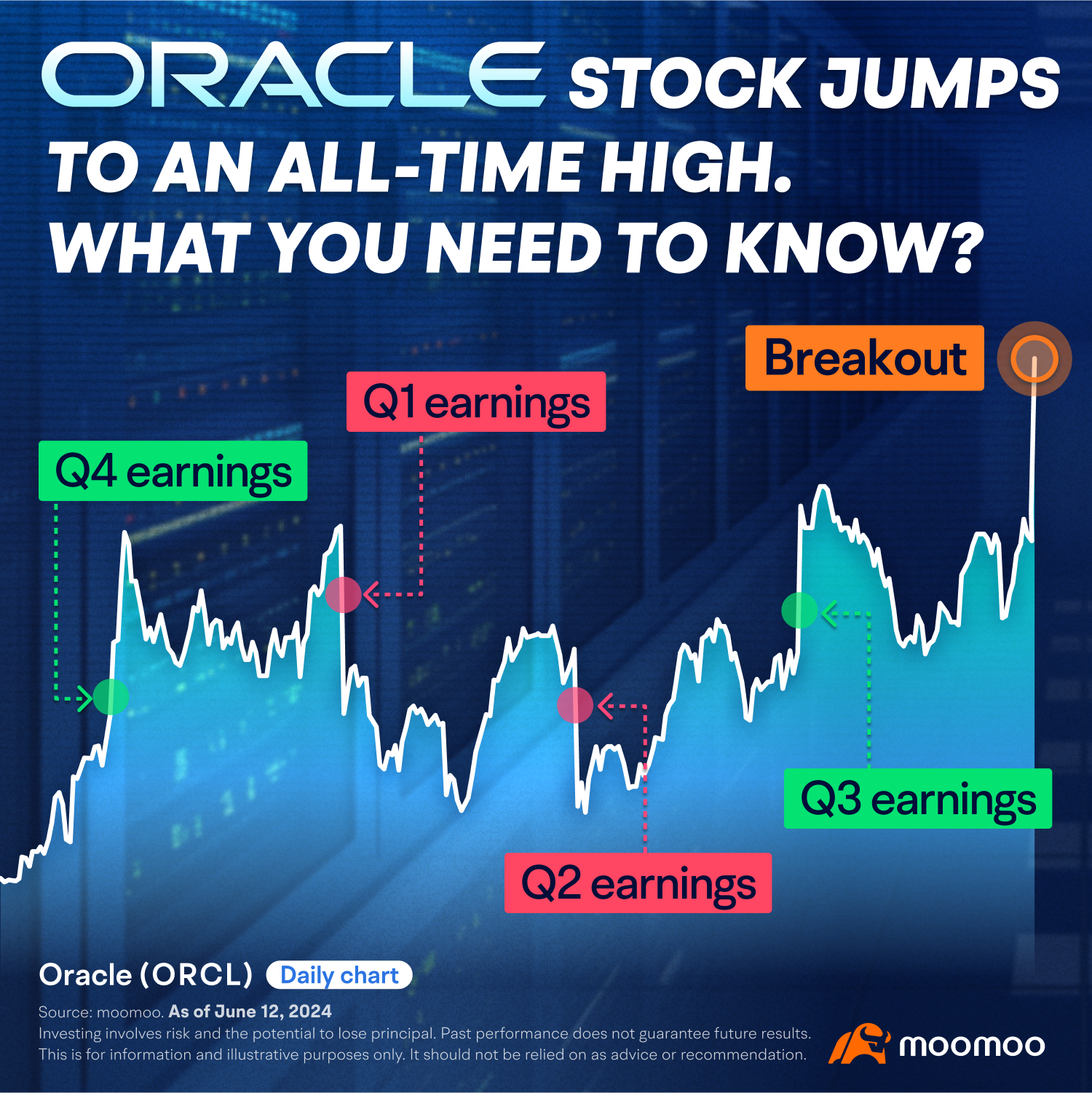
Hello, everyone! This week we turn our spotlight on Oracle Corporation $Oracle(ORCL.US)$, a prominent cloud technology company that offers computing infrastructure and software solutions for organizations around the world. We’ll explore the latest trends and take a close look at the company’s recent market activity.
What’s new?
On June 12, 2024, Oracle’s shares jumped over 13%, hitting a record high, after the company announced cloud deals with Google and OpenAI, despite its fiscal fourth-quarter results falling slightly short of Wall Street expectations.
For the quarter ended May, 2024, Oracle reported a revenue of $14.29 billion, reflecting a 3.3% YoY increase. However, this figure fell short of the expected $14.55 billion, according to LSEG consensus. Additionally, the adjusted earnings per share (EPS) came in at $1.63, also slightly below the expected $1.65.
Despite reporting the weakest revenue growth in three years, Oracle’s remaining performance obligations (RPO) witnessed an impressive 44% YoY rise to $98 billion, surpassing the $85 billion expected by analysts for the period, according to consensus estimates from Visible Alpha. RPO tracks contracted revenue not yet recognized, and is thus a closely watched metric for companies selling subscription-based cloud software services.
Oracle also indicated that a large portion of these new deals were related to AI training, and projected a double-digit revenue growth for the new fiscal year, beating the 8.6% growth expectation.
The latest jump has propelled Oracle’s stock to a year-to-date gain of about 34%, outpacing most other large-cap cloud software providers, which are facing a slowdown in major deals as corporate software budgets tighten and funds shift to AI projects.
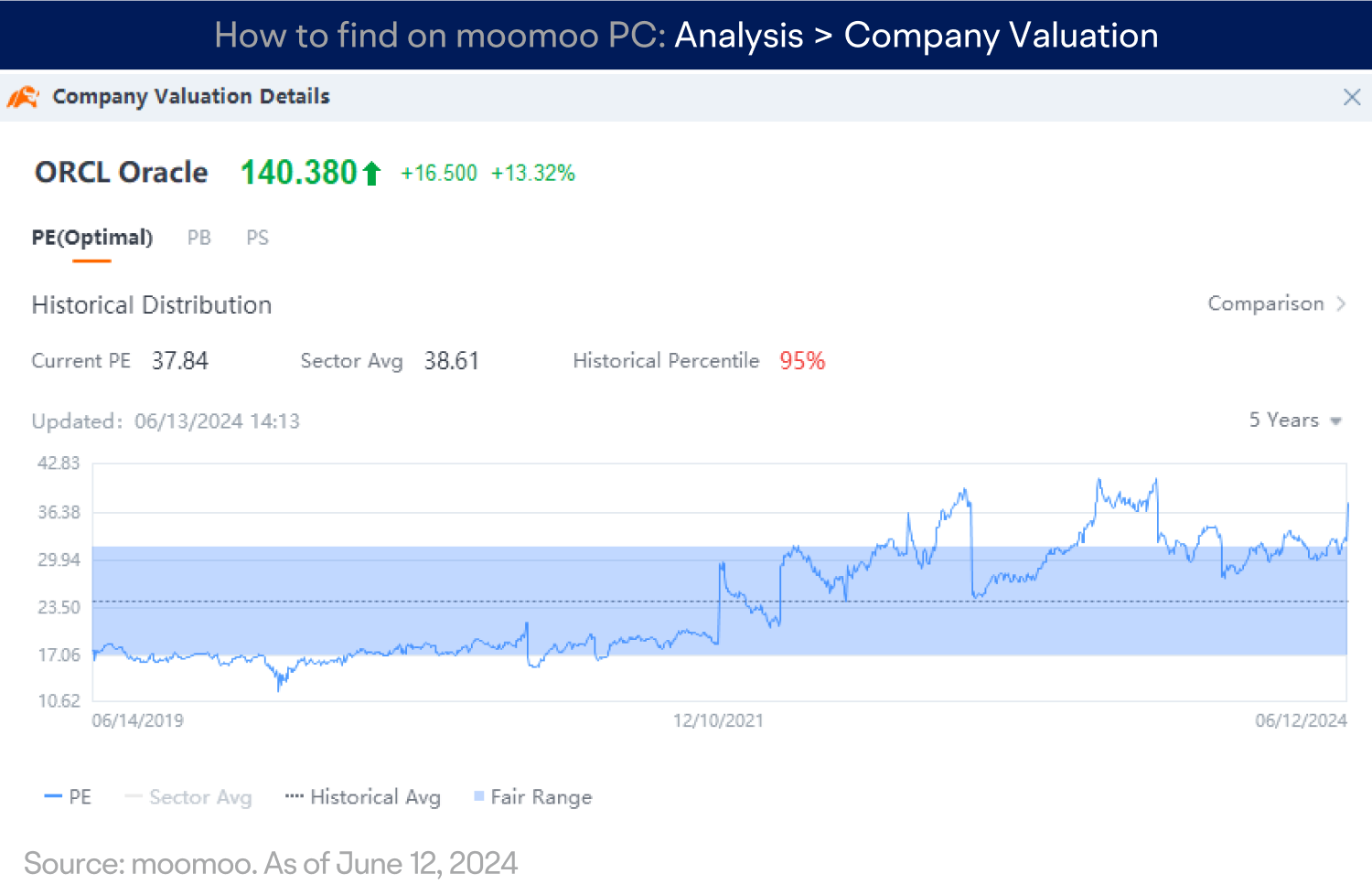
Oracle’s stock now trades at over 22 times projected earnings, relatively cheap compared to many cloud peers. However, this is its highest multiple in nearly 20 years and 40% above its five-year average, according to FactSet data.
Chart of the day
Trend analysis:
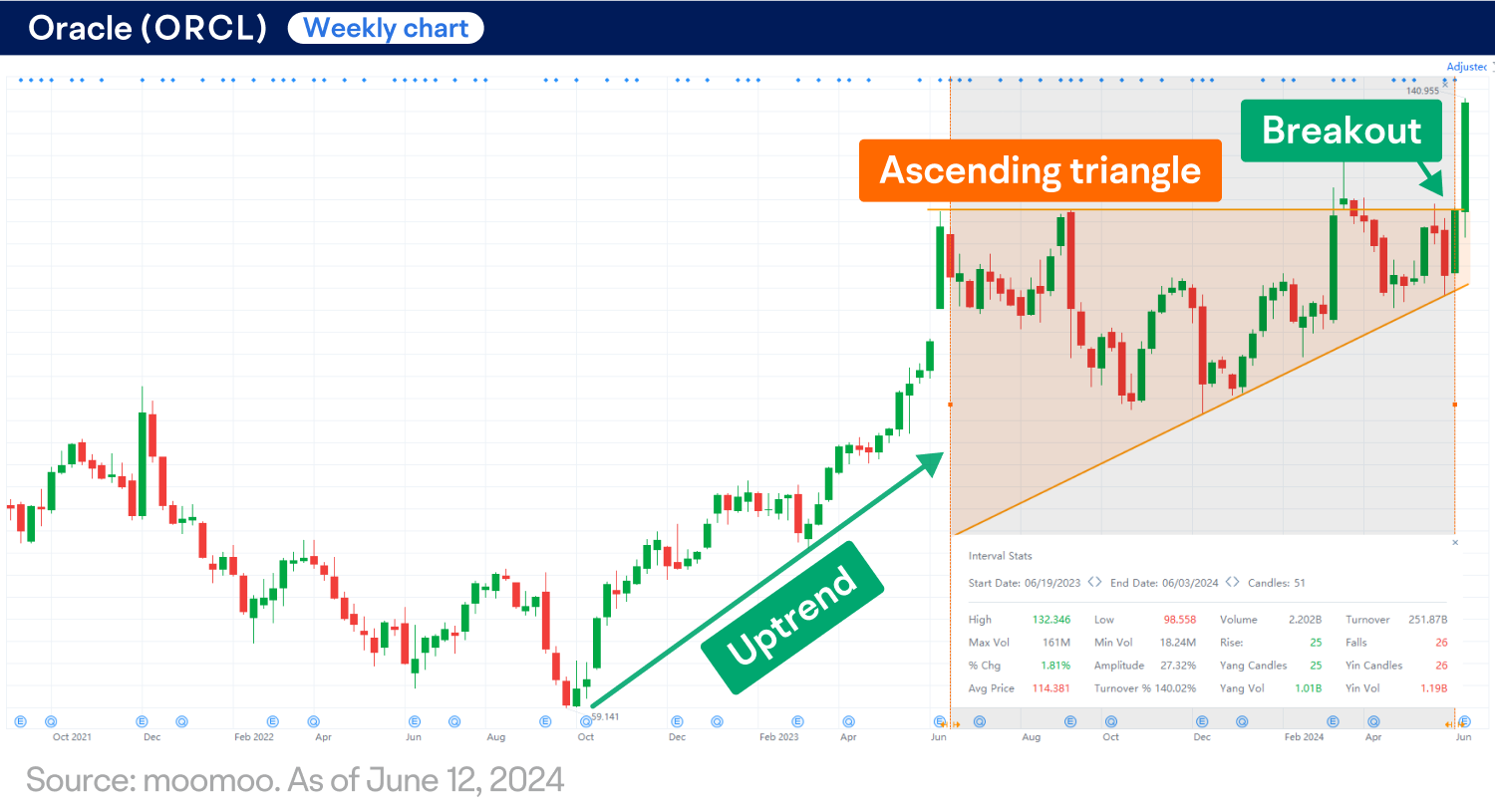
Oracle’s shares (ORCL) have remained relatively stagnant over the past 12 months, trading within a triangle-like range before the latest jump that propelled the price to an all-time high, as depicted in the weekly chart. Prior to the formation of the triangle, the stock had more than doubled from its low of $59.14 in September 2022.
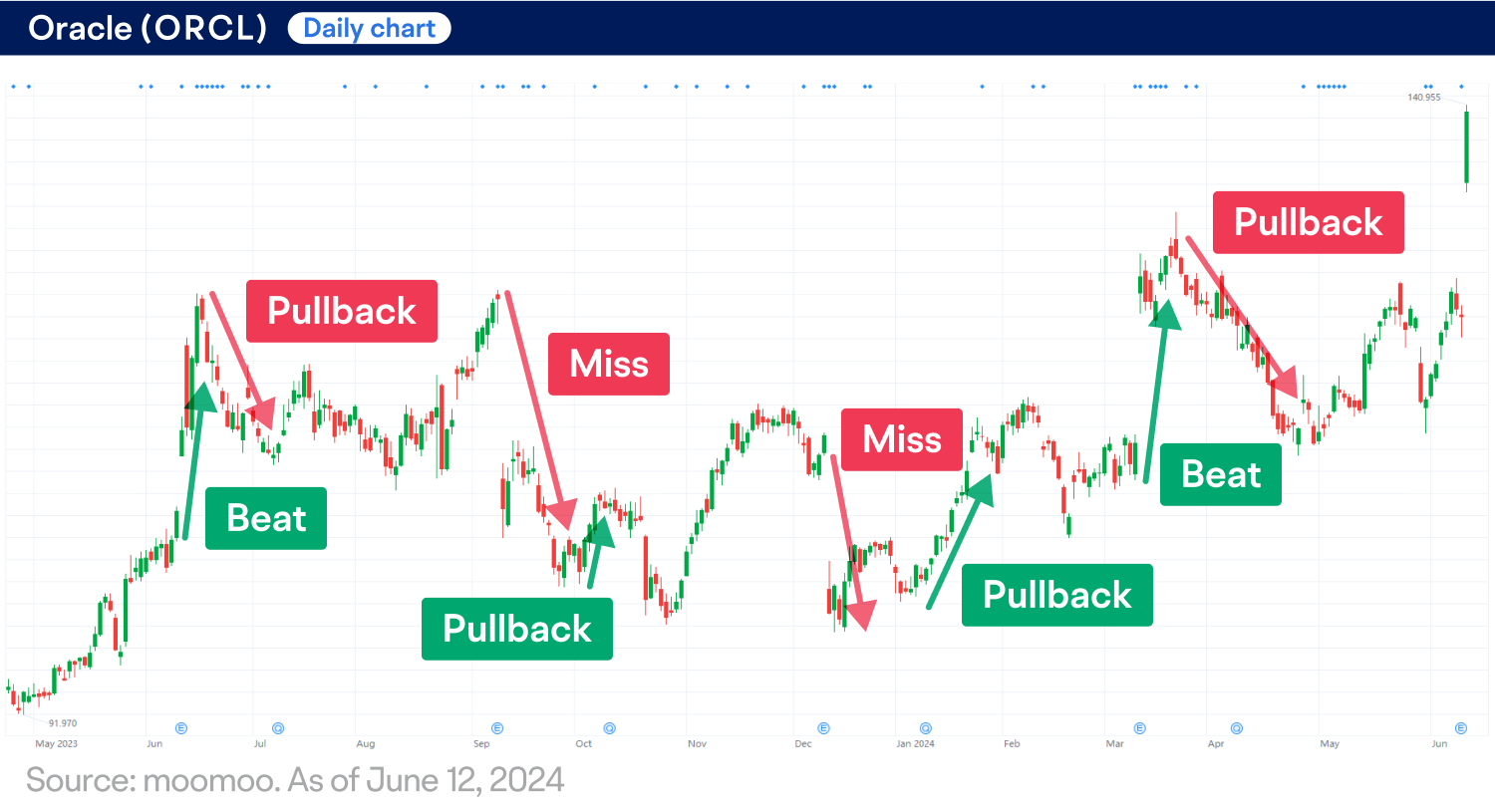
The daily chart above highlights that ORCL’s significant fluctuations following its past four quarters’ earnings reports. Nonetheless, the stock tended to retrace much of these moves, resulting in a relatively flat performance over the past year.
Technical indicators:
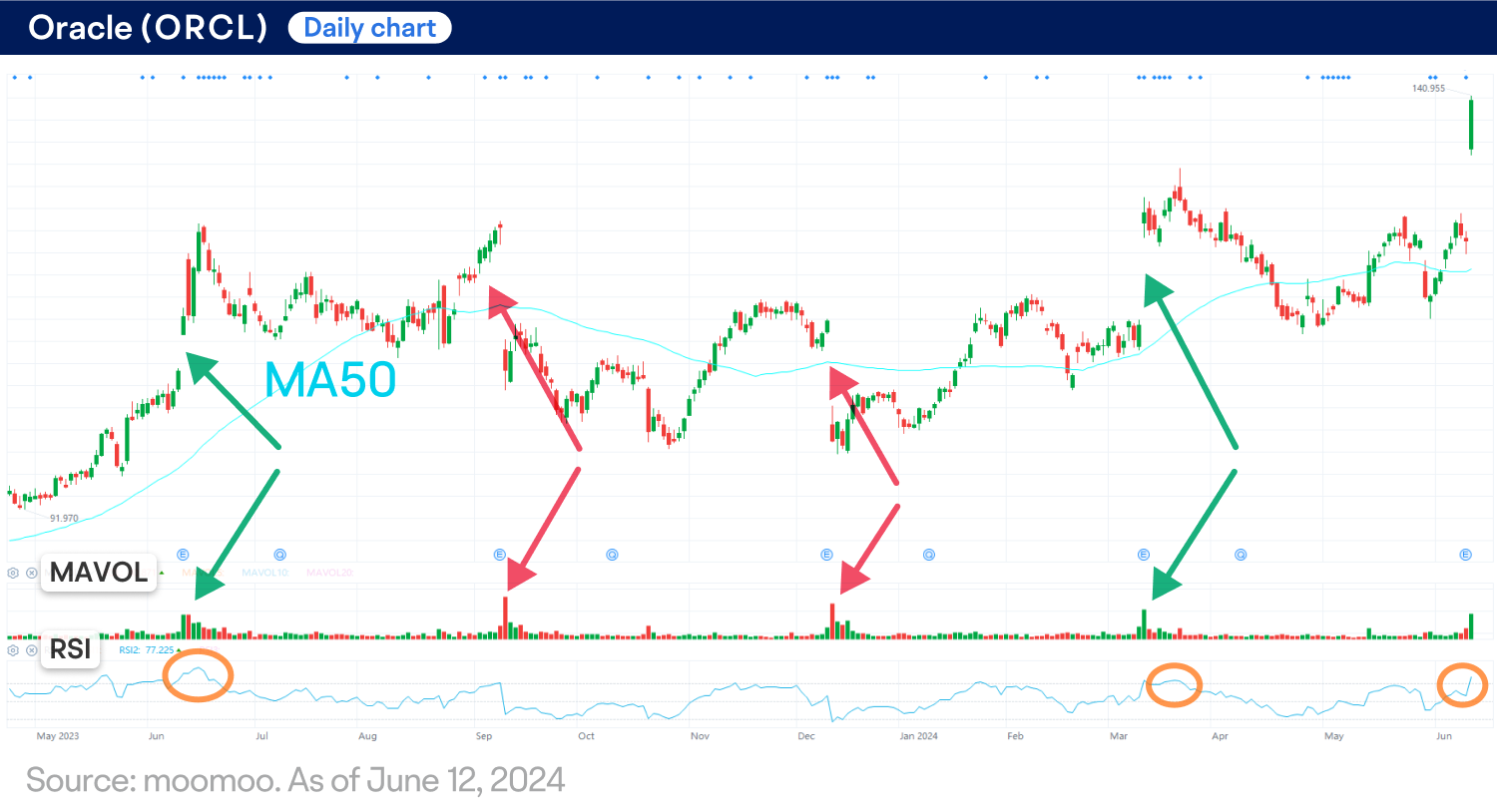
ORCL’s trading volume has seen a significant surge following its earnings reports over the past few quarters, accompanied by considerable fluctuations in price, and the relative strength index (RSI) tended to move into overbought (>70) or oversold (<30) territory, as depicted in the daily chart. A potential sell signal might occur if the RSI moves back below 70.
Next move?
Currently, ORCL is trading at an all-time high, with a potential support level around $126, where the price broke above the triangle formation in the weekly chart. Traders can monitor several momentum oscillators, such as the RSI, to seize the opportunity of a potential price pullback in the near term.
This presentation discusses technical analysis, other approaches, including fundamental analysis, may offer very different views. The examples provided are for illustrative purposes only and are not intended to be reflective of the results you can expect to achieve.
All investing involves risk, including the potential loss of principal, and there can be no guarantee that any investing strategy will be successful.
This presentation is for informational and educational use only and is not a recommendation or endorsement of any particular investment or investment strategy. Investment information provided in this content is general in nature, strictly for illustrative purposes, and may not be appropriate for all investors. Read more