How to invest in small-cap stocks amid rate cut expectations
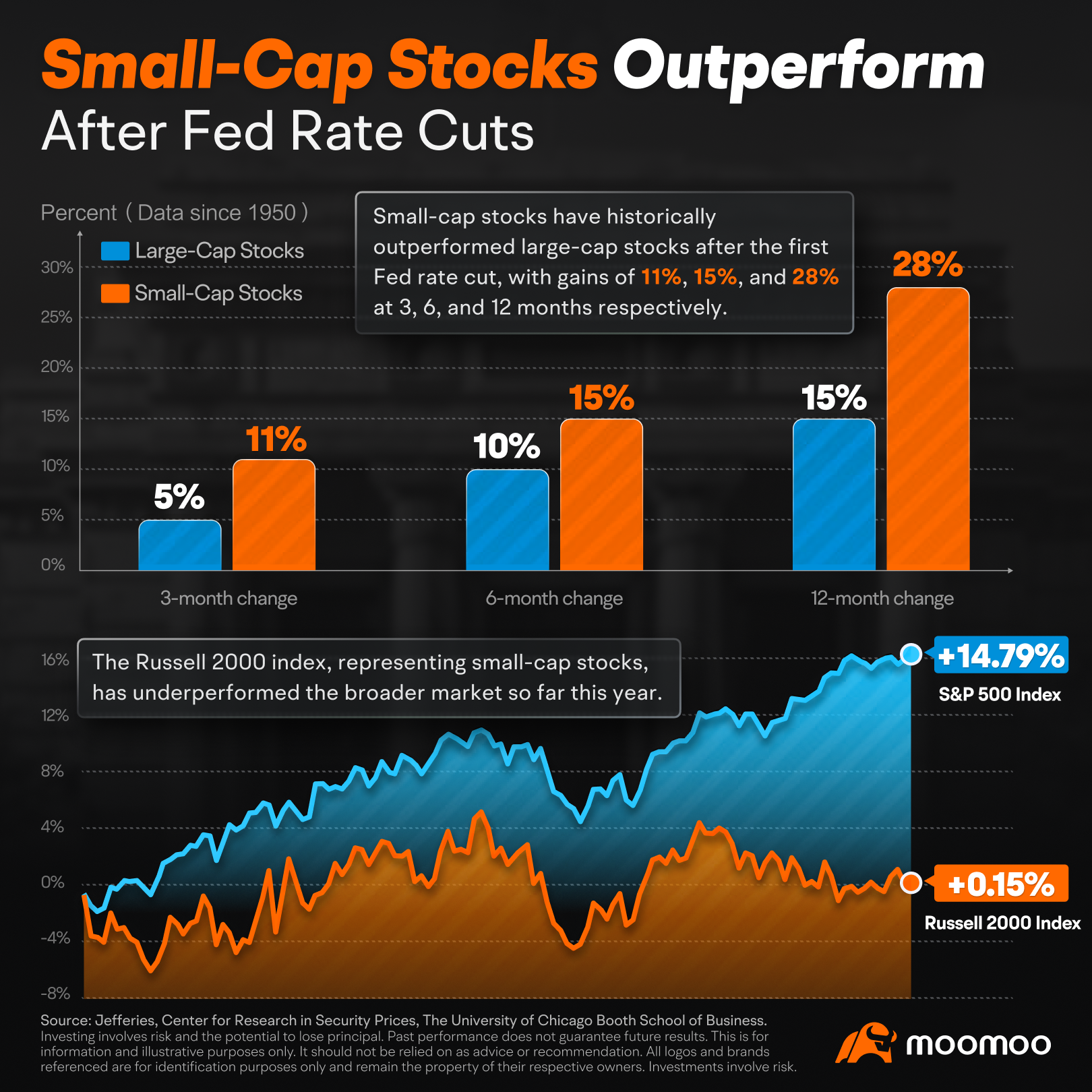
With the Federal Reserve entering a rate-cutting cycle, small-cap stocks may capture the market's attention. This article explores how to invest in U.S. small-cap stocks amid such expectations.
Why have small-cap stocks underperformed in 2024?
In the stock market, investors often classify stocks by market capitalization. Generally, stocks with a market cap between $250 million and $2 billion are considered small-cap, while those with a market cap above $10 billion are deemed large-cap.
Investors distinguish between small-cap and large-cap stocks because these two categories exhibit markedly different characteristics. Large-cap stocks typically refer to well-established, mature companies with limited growth potential but greater stability. In contrast, small-cap stocks represent smaller companies with higher growth potential but also higher risk.
In the U.S. market, the Russell 2000 Index is the most commonly used benchmark for tracking the overall performance of small-cap stocks.
This year, the Russell 2000 Index, representing small-cap stocks, has shown lackluster performance, up only 0.15% year-to-date, significantly underperforming the S&P 500 Index's 14.61% gain (Data as of July 2, 2024). Morningstar analysts attribute this underperformance to persistently high interest rates and the market's fervor for AI stocks.
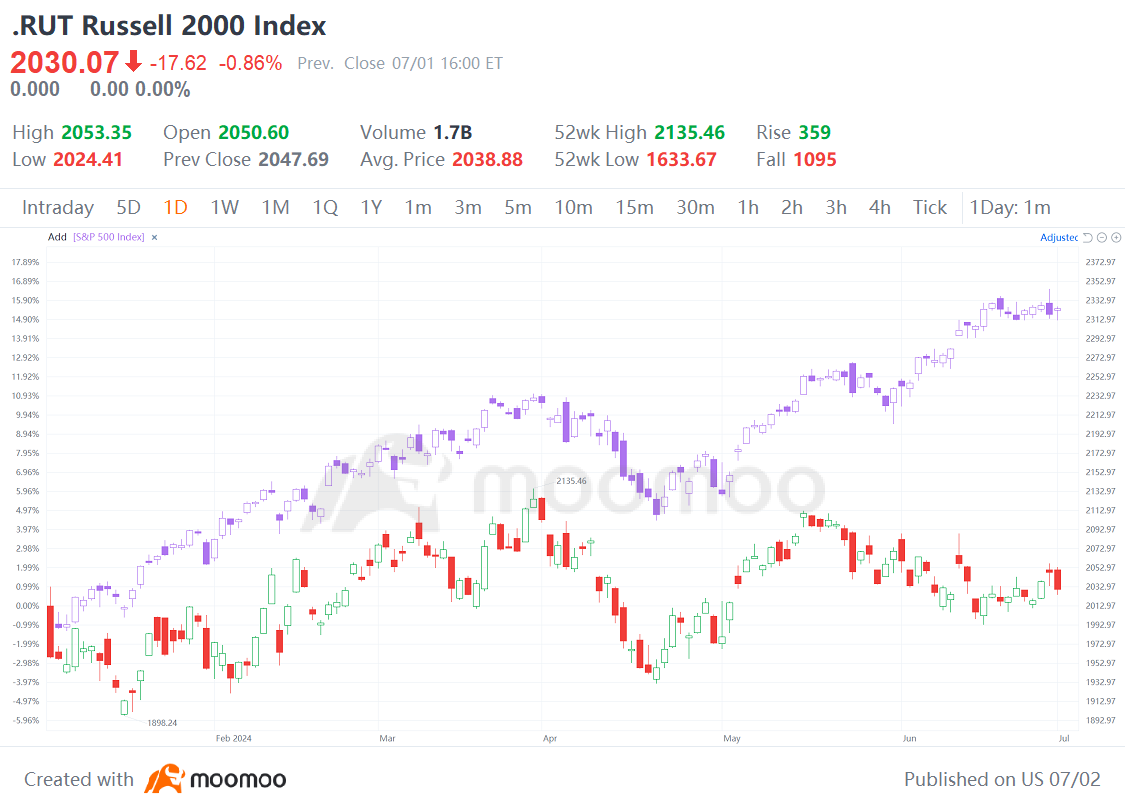
The Indexes mentioned is for illustration purposes only, and any statement involved does not constitute investment advice.
Can small-cap stocks benefit from Fed rate cuts?
Typically, small-cap stocks tend to benefit more than large-cap stocks in a rate-cut environment due to their higher sensitivity to interest rate changes.
Small companies tend to rely more heavily on debt than larger enterprises. In a rate-cut environment, small companies benefit from reduced borrowing costs, which can lower their financial costs and improve profit margins. This is particularly true for small companies that depend on bank loans and variable-rate debt.
Historically, small-cap stocks have performed well in rate-cutting environments. Examining the historical performance of small-cap stocks following Fed rate cuts can provide valuable insights for investors.
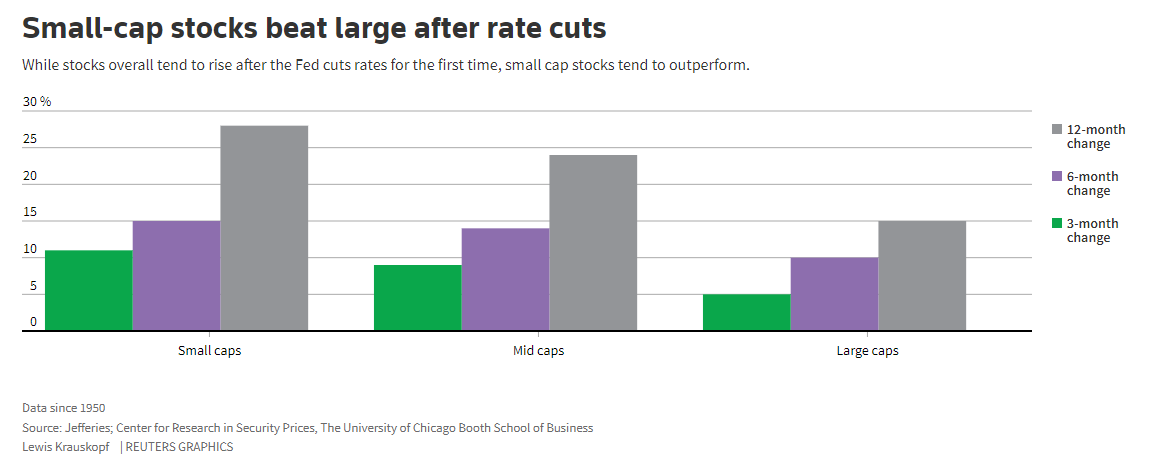
According to Reuters, Jefferies analyzed data since 1950 and found that after the Fed's initial rate cut, small-cap stocks outperformed large-cap stocks. Following the Fed's first rate cut, small-cap stocks increased by 11%, 15%, and 28% over the subsequent 3, 6, and 12 months, respectively, outperforming large-cap stocks' 5%, 10%, and 15% gains. This suggests that small-cap stocks may be more significantly impacted by rate cuts.
How to invest in small-cap stocks
There are two ways to approach investing in small-cap stocks: one is to identify high-quality potential individual stocks, and the other is to invest in the entire sector through exchange-traded funds.
Investors can use moomoo to review the components of the Russell 2000 Index and identify promising stocks based on industry prospects, financial health, and valuations.
Below are the top ten constituents of the Russell 2000 Index by market cap. The top three are hot AI stock Super Micro Computer ($Super Micro Computer(SMCI.US)$), Bitcoin-themed stock MicroStrategy ($MicroStrategy(MSTR.US)$), and used car retailer Carvana ($Carvana(CVNA.US)$).
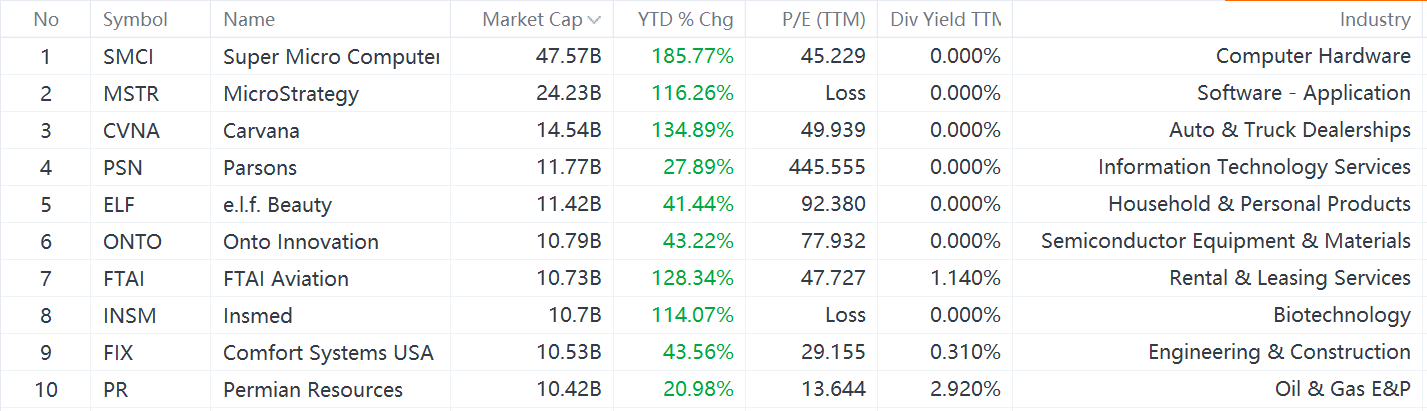
Source: moomoo. Data as of market close on July 1, 2024. The company mentioned is for illustration purposes only, and any statement involved does not constitute investment advice.
While investors can identify high-quality stocks, investing in a single stock carries significant risk. Diversification is essential to mitigate this risk. One effective way to achieve this is through ETFs that cover a broad range of small-cap stocks and industries.
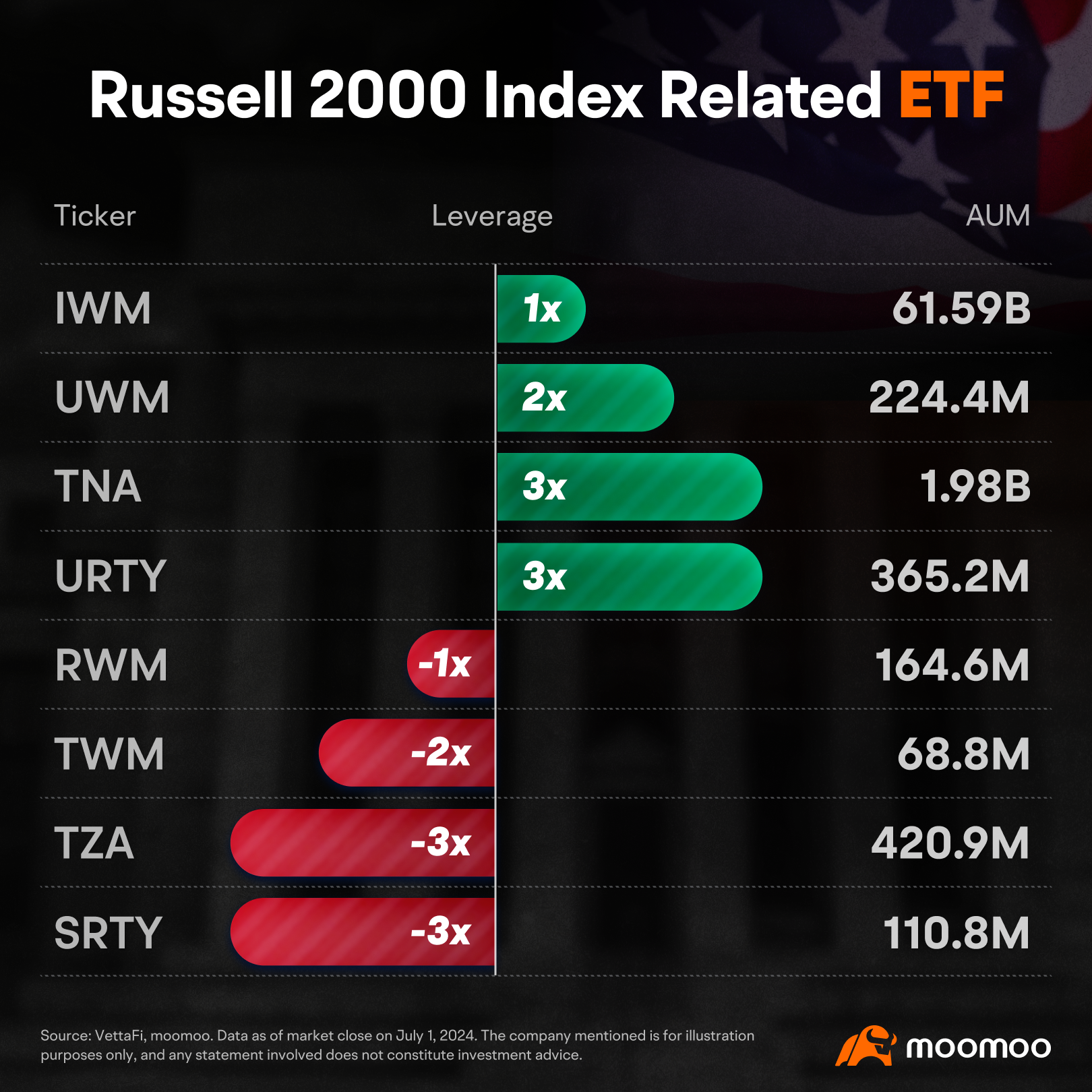
The Russell 2000 Index is one of the most popular small-cap stock indices, with numerous ETFs tracking it, the largest by assets management being $iShares Russell 2000 ETF(IWM.US)$.
Other options include leveraged and inverse ETFs, such as $Proshares Trust Pshs Ultruss2000(UWM.US)$ (2x leveraged long ETF) and $Direxion Daily Small Cap Bull 3X ETF(TNA.US)$ (3x leveraged long ETF).
However, investors should note that while leveraged ETFs can provide higher returns, they can also amplify losses and may experience decay. Therefore, careful consideration is necessary when selecting these investment products.
Here is a list of ETFs tracking the Russell 2000 Index, including leveraged and inverse ETFs, for reference.
Risks of investing in small-cap stocks
1. High Volatility: Small-cap stocks are generally more volatile than large-cap stocks, and many small-cap companies are still unprofitable. As a result, the Russell 2000 Index, which tracks small-cap stocks, tends to exhibit more significant fluctuations than large-cap indices, making small-cap investments riskier.
2. Low Exposure to Technology Sector: The Russell 2000 Index is diversified across various sectors, primarily industrials, financials, healthcare, and consumer discretionary. The technology sector, one of the hottest in the market, constitutes a smaller portion of the Russell 2000 Index. If future investments continue to focus on technology themes like AI, cloud computing, and semiconductors, the Russell 2000 Index may miss out on the gains from these sectors.
In conclusion, while small-cap stocks offer higher growth potential and can benefit from rate cuts, they come with higher risks and volatility. Investors should weigh these factors carefully and consider diversifying their investments to align with their risk tolerance and investment goals.
Additional Disclosures: This content is also not a research report and is not intended to serve as the basis for any investment decision. The information contained in this article does not purport to be a complete description of the securities, markets, or developments referred to in this material. The information has been obtained from sources considered to be reliable, but we do not guarantee that the foregoing material is accurate or complete. Furthermore, there is no guarantee that any statements, opinions or forecasts provided herein will prove to be correct.
This presentation is for informational and educational use only and is not a recommendation or endorsement of any particular investment or investment strategy. Investment information provided in this content is general in nature, strictly for illustrative purposes, and may not be appropriate for all investors. Read more