AI Investment in 2024 - Cybersecurity
As mentioned in the previous article, AI PCs may be a noteworthy investment theme in 2024.
However, according to analysts at Barclays, there's another area that could benefit from AI – cybersecurity.
If you're not familiar with cybersecurity stocks, don't worry.
This article will explore the topic of cybersecurity stocks, including what they are, why investing in them is worth considering, their characteristics, leading companies in the industry, how to invest in them, and potential risks associated with these stocks.
What are cybersecurity stocks?
Cybersecurity is like a shield for a company's IT systems, providing defense through hardware, software, and consulting services.
Just as people can get sick from viruses, digital viruses are trying to invade business computers and disrupt their normal operations. To keep businesses running smoothly, protective measures are needed—similar to how the human body uses specific cells to resist and eliminate viruses.
Cybersecurity stocks are public companies that offer these protective services and help safeguard the networks, systems, and data of businesses.
It's clear that various industries, such as finance, retail, beverages, manufacturing, and government, all need cybersecurity.
Looking at the highest market share, the Banking, Financial Services, and Insurance (BFSI) sector is in the lead, followed by the government and the healthcare industry.
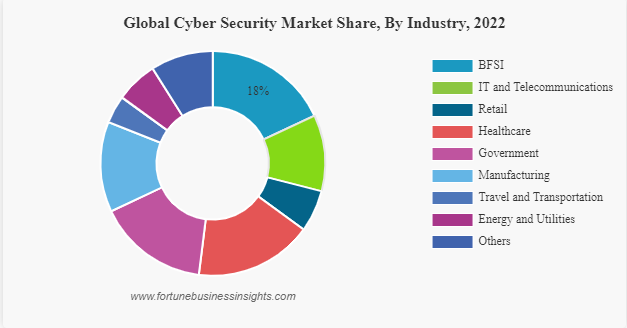
Source: Fortune Business Insights
Why consider investing in cybersecurity stocks?
In the last few years, cybersecurity stocks have gained more attention, and two main factors contribute to this:
1. Digital Boom:
The digital world has sped up, especially after the pandemic. Digital lifestyles are now closely linked to our daily lives. Remote work is common, video calls have replaced face-to-face meetings, and many businesses operate in the cloud. As life embraces digitalization, the demand for cybersecurity has sharply risen.
2. AI's Impact:
However, AI in cybersecurity can be a double-edged sword. On one hand, an increasing number of hackers are utilizing AI to carry out cyber attacks. On the other hand, cybersecurity companies are increasingly relying on AI to detect suspicious data and defend against hacker attacks. Overall, AI provides positive empowerment for cybersecurity companies, such as more effectively identifying and preventing cyber attacks, while also reducing the IT costs for businesses.
Based on these two factors, many industry reports suggest that the cybersecurity industry is experiencing rapid growth with significant potential scale.
According to a report by Precedence Research, the global cybersecurity market was $211.48 billion in 2022, projected to rise to $691.64 billion by 2032, with a compound annual growth rate (CAGR) of 12.58% each year.
Moreover, some reports specifically analyze AI in cybersecurity. According to a report by Allied Market Research, the global AI in cybersecurity market was $19.2 billion in 2022, expected to rise to $154.8 billion by 2032, with an impressive annual CAGR of 23.6%.
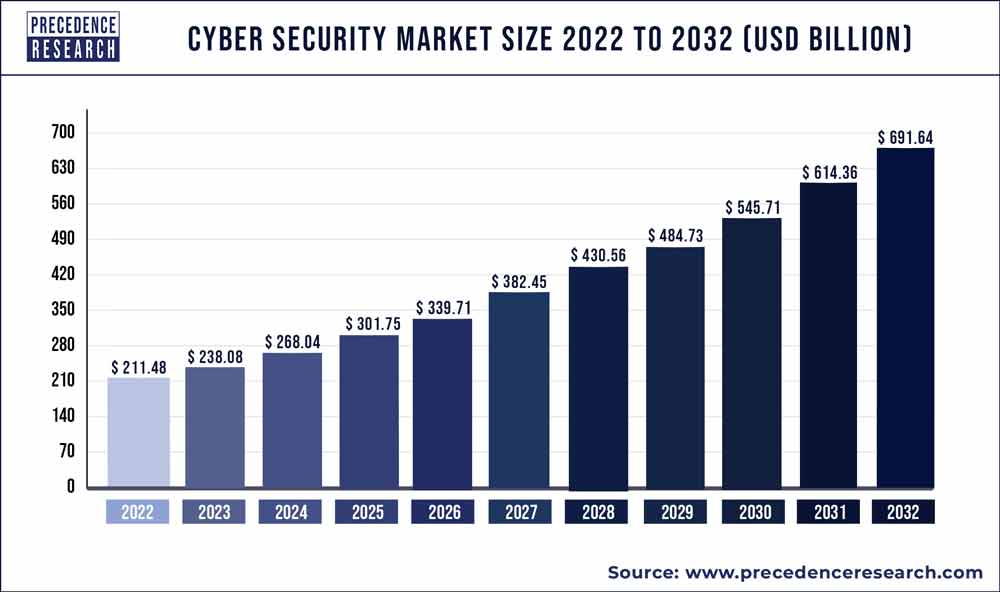
Source: Precedence Research
What are the characteristics of cybersecurity stocks?
Many cybersecurity stocks are essentially software companies, and most of them follow a business model known as Software as a Service (SaaS). This means that these stocks often share traits commonly associated with SaaS stocks.
SaaS stocks are known for their distinctive financial features. They tend to grow rapidly, but they consistently show losses or have slim profit margins. When you look at their stock prices using the Price-to-Earnings (P/E) ratio, you'll find that these stocks often carry high valuations, with some still operating at a loss. The reasons for this are as follows:
Growth Outlook: SaaS companies invest heavily in advertising to get new customers and expand their market share. This strategy leads to fast revenue growth but can result in low or negative profits. However, some investors believe that this high growth can pave the way for future profitability as the company expands.
Delayed Revenue: SaaS companies typically employ subscription-based models, meaning revenue is recognized over time as customers use the service. This may lead to delayed revenue recognition, making the company's profits appear low or negative. Profitability is often achieved only when the user base reaches a certain scale.
So, even if certain cybersecurity stocks are in a loss-making state, you might notice their stock prices performing well, mainly due to these factors.
Which are the leading companies in the cybersecurity industry?
In this booming industry, who are the major players?
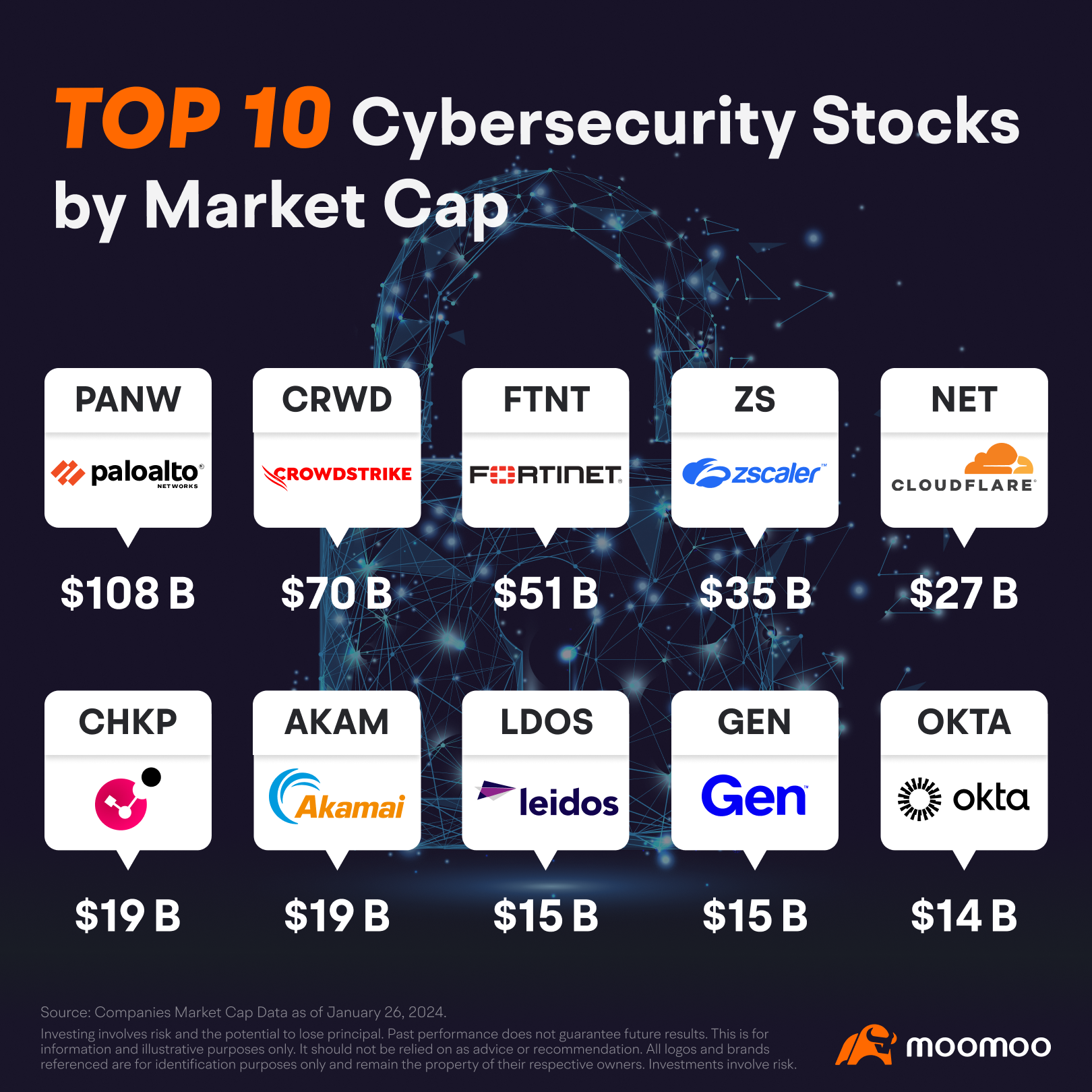
According to Companiesmarketcap, here are the top ten market cap leaders in the cybersecurity sector and a glimpse into the top three:
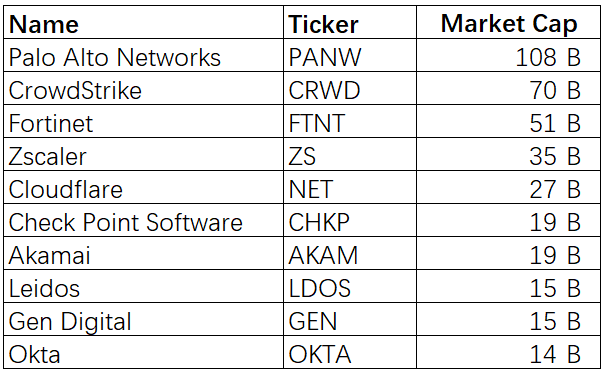
Source: Companies Market Cap. Data as of January 26, 2024.
Palo Alto Networks (PANW):
Palo Alto is a well-established cybersecurity company founded in 2005, and headquartered in Santa Clara, California.
They launched their first in-house developed enterprise firewall in 2007 and have since maintained a leading position in the enterprise firewall market. The company went public on the NYSE in 2012 and transferred to the NASDAQ market in October 2021.
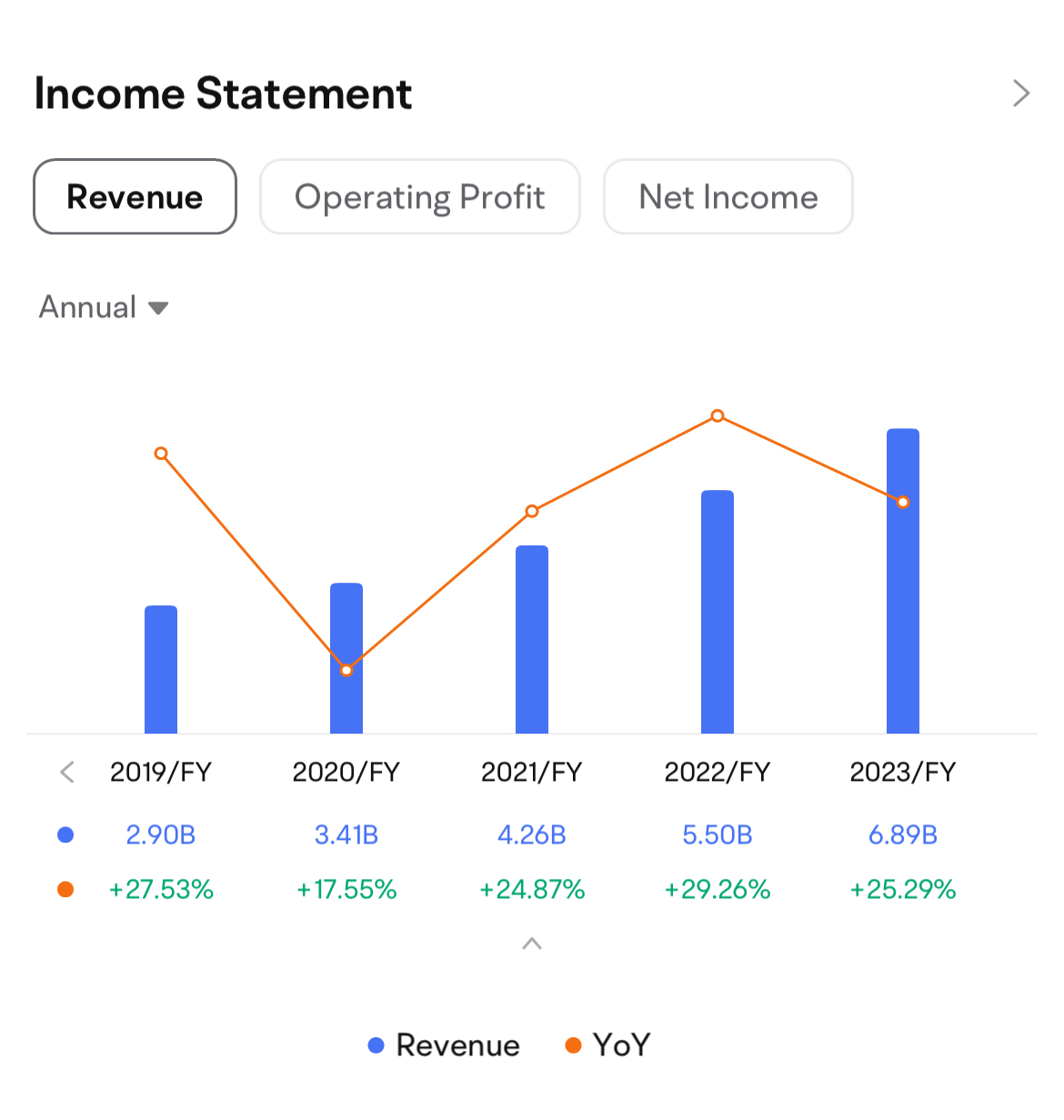
In terms of revenue, Palo Alto is undoubtedly a major player. In the fiscal year 2023, their revenue reached $6.893 billion, a 25% YoY increase. Over the past five fiscal years, Palo Alto has consistently achieved revenue growth rates exceeding 20%, showcasing its stable and rapid expansion.
Source: moomoo
CrowdStrike (CRWD):
CrowdStrike is a relatively new player in the cybersecurity field, founded in 2011 and headquartered in Sunnyvale, California. The company went public on the NASDAQ market in 2019.
Unlike traditional cybersecurity companies, CrowdStrike focuses on reshaping security in the cloud era. Their flagship product, Falcon, is a security threat intelligence platform launched in 2012. Additionally, in 2019, they introduced the PaaS security platform, CrowdStrike Store, creating a complete "SaaS+PaaS" security ecosystem.
CrowdStrike gained prominence by participating in various well-known cyberattack responses, including the Sony hack and the 2016 "Trump-Russia" incident.
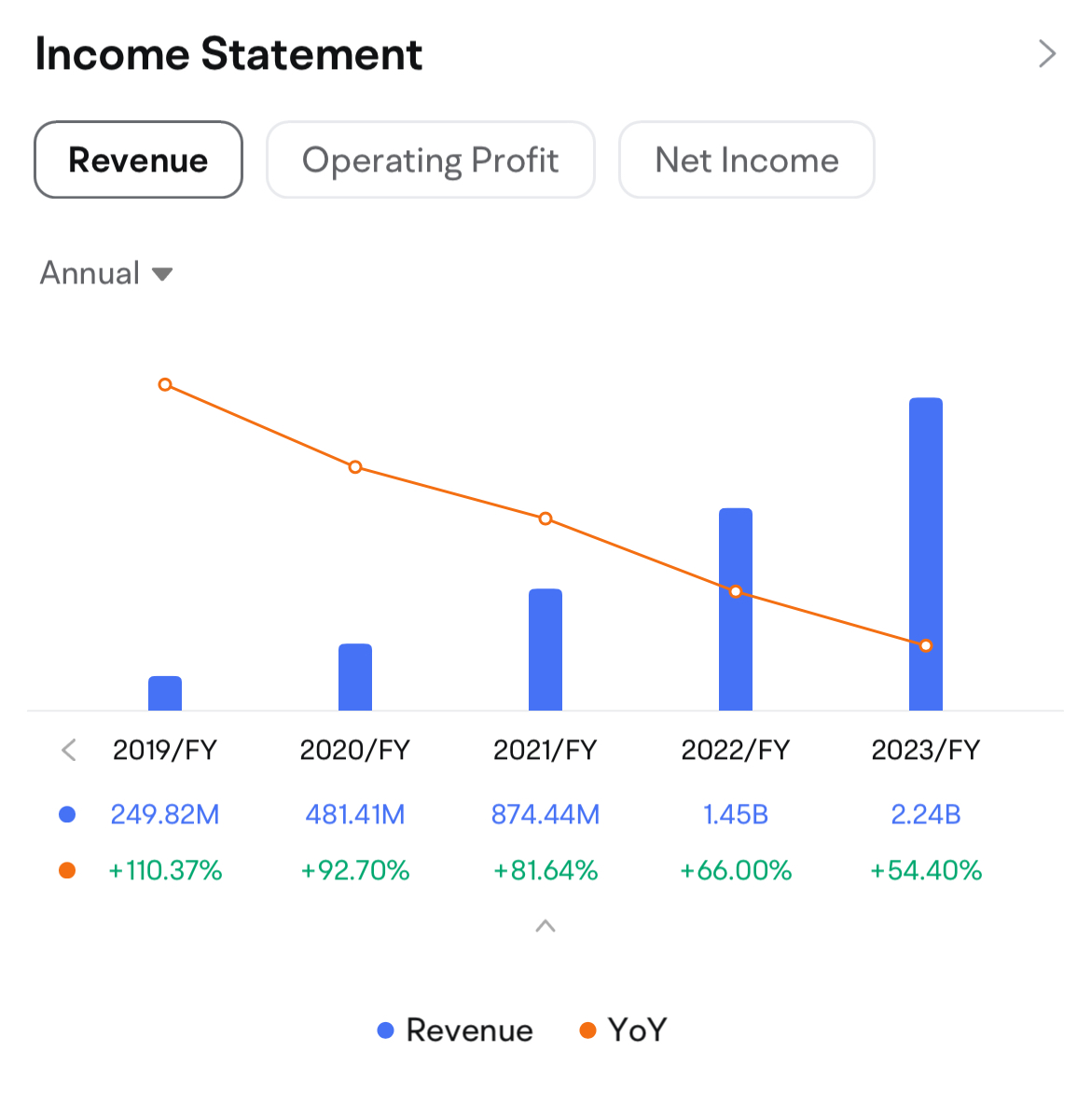
In the fiscal year 2023, CrowdStrike's revenue reached $2.241 billion, a 54% YoY increase. Although CrowdStrike's revenue is lower than Palo Alto's, CrowdStrike has a faster revenue growth rate, consistently exceeding 50% over the past five fiscal years. However, as the company expands its scale, the growth rate has slightly slowed.
Source: moomoo
Fortinet (FTNT):
Fortinet is another longstanding cybersecurity company, founded in 2000 and headquartered in Sunnyvale, California.
Unlike Palo Alto and CrowdStrike, Fortinet not only provides software but also complements it with hardware sales to enhance security effectiveness.
Distinct from the other two companies, Fortinet balances profitability and growth potential, showing stronger profit capabilities.
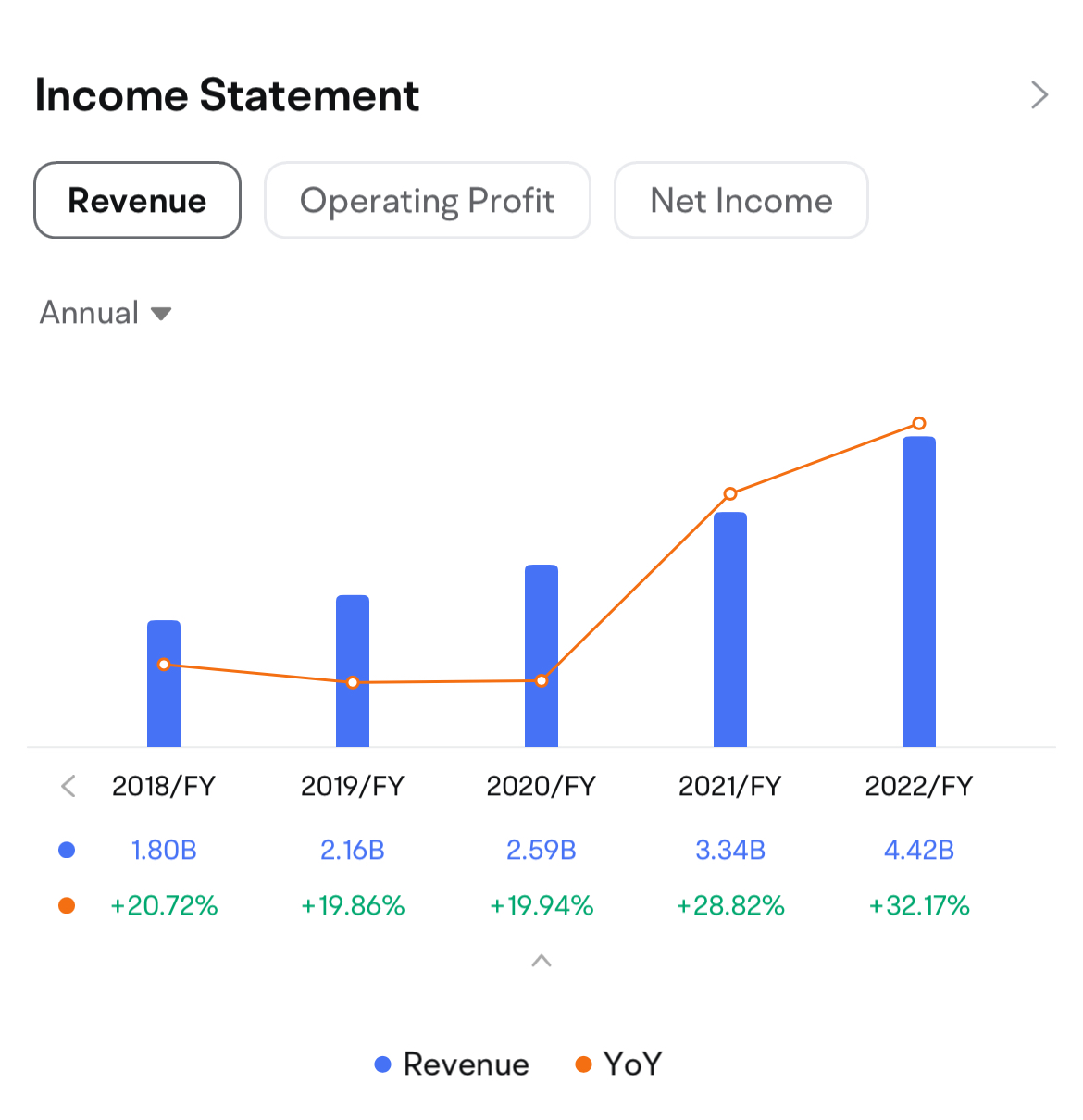
In the fiscal year 2022, Fortinet achieved revenue of $4.417 billion, a 32% YoY increase. Over the past two fiscal years, its revenue growth has exhibited an accelerating trend.
Source: moomoo
How to invest in Cybersecurity Stocks?
If you're looking to invest in cybersecurity stocks, it's not just about picking individual winners. Consider tracking Cybersecurity Exchange-Traded Funds (ETFs) to get a broader picture of the industry.
Here are the top five Cybersecurity ETFs by asset size, according to ETF Database:
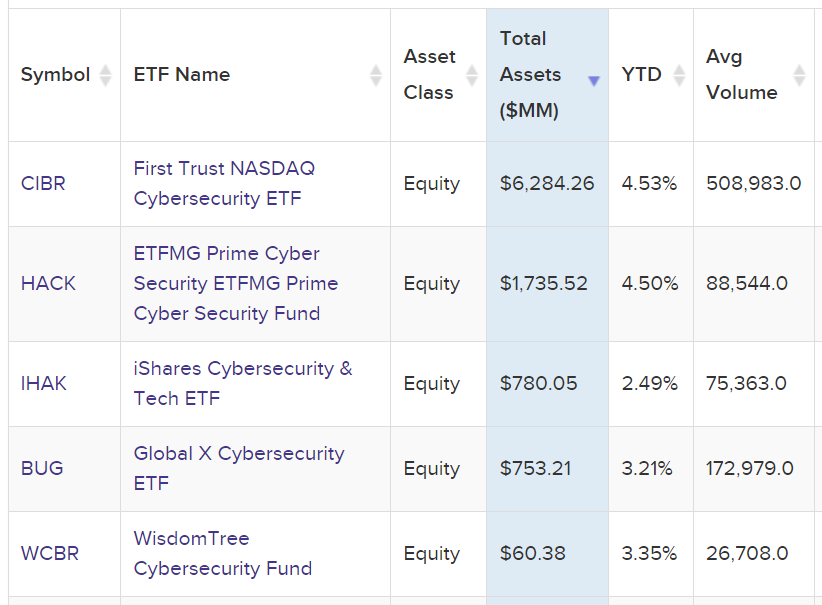
Source: ETF Database. Data as of January 29, 2024.
While these ETFs all follow cybersecurity stocks, their components may vary due to different tracking methods. This diversity means they can show different performance trends.
In the past year (January 26, 2023, to January 26, 2024), WCBR stood out with a gain of 57.7%, surpassing the other four ETFs, which had gains ranging from 36% to 39%.
But remember, past performance isn't the only factor. Consider liquidity, fees, and various elements for a complete analysis. And keep in mind, what happened before doesn't guarantee future results – always approach investments with caution.
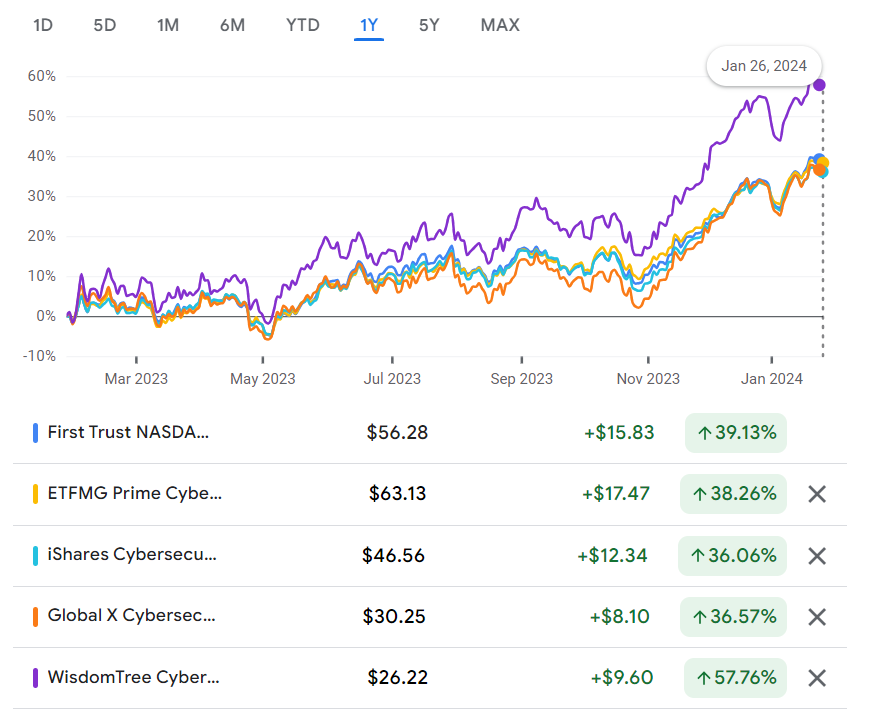
Source: Google Finance. Data as of January 26, 2024.
Potential risks of cybersecurity stocks:
Certainly, like any investment, investing in cybersecurity stocks comes with its own set of risks.
High Valuations: Due to the industry's growth potential, many cybersecurity stocks carry high valuations. Changes in market sentiment or failure to meet growth expectations could make them susceptible to significant price adjustments.
Intense Competition: The cybersecurity industry is highly competitive, with numerous companies vying for market share. Intense competition may lead to price wars, eroding profit margins and making sustaining growth more challenging.
Technological Obsolescence: The fast-paced nature of the cybersecurity industry means companies must continually innovate to stay ahead. However, this also implies that technologies can quickly become obsolete, and companies failing to keep up may lose market share.
High Price Volatility: Cybersecurity stocks fall under the tech stock category, resulting in larger price fluctuations compared to blue-chip stocks. For instance, many cybersecurity stocks experienced significant pullbacks during the bear market in the U.S. stock market in 2022.
Summary:
Cybersecurity stocks refer to publicly traded companies providing security measures for IT systems, encompassing hardware, software, and consulting services.
The cybersecurity industry is sizable and experiencing rapid growth, primarily driven by the accelerated digitization process and the influence of AI.
Many cybersecurity stocks share characteristics with Software as a Service (SaaS) stocks. They exhibit rapid growth, but their profit margins are often low.
The top three leading companies in the cybersecurity industry by market capitalization are Palo Alto Networks, CrowdStrike, and Fortinet.
Key points for investing in cybersecurity stocks involve focusing on industry leaders, tracking cybersecurity ETFs, and considering performance history, liquidity, fees, and exercising caution in dealing with market risks.
Potential risks in cybersecurity stocks include high valuations, intense competition, technological obsolescence, and significant price volatility.
This presentation is for informational and educational use only and is not a recommendation or endorsement of any particular investment or investment strategy. Investment information provided in this content is general in nature, strictly for illustrative purposes, and may not be appropriate for all investors. Read more