How Eli Lilly Became the World's Most Valuable Drugmaker
This year, one of the most impressive stocks in the healthcare industry is Eli Lilly (NYSE: LLY), a leading American pharmaceutical firm.
In May, Eli Lilly's market value surpassed that of Johnson & Johnson (NYSE: JNJ), making it the world's most valuable pharmaceutical company. Over the subsequent months, Eli Lilly's market value continued to climb, crossing the $500 billion mark and firmly establishing itself as the top pharmaceutical company.
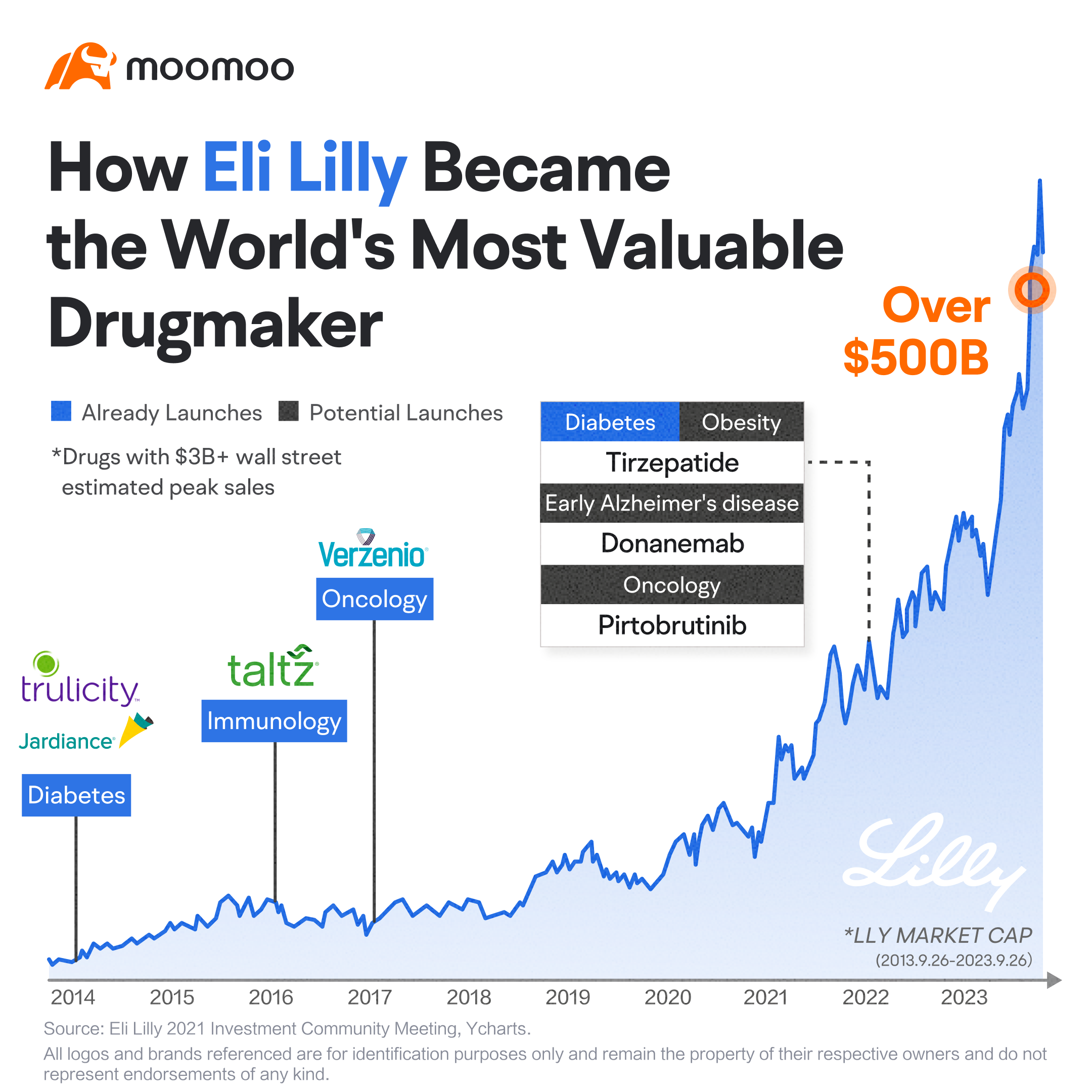
What factors have contributed to the company's recent stellar growth and what are the prospects for further expansion in the future? Additionally, what potential risks should investors be aware of?
This article will explore Eli Lilly from multiple angles, including its product lineup, research and development strength, financial data, potential growth prospects, and potential risks.
01 Company Introduction
Eli Lilly's product strategy emphasizes diversification, recognizing the benefits of not relying too heavily on any one area.
Unlike some companies that specialize in a single field, Eli Lilly has a product portfolio that spans multiple therapeutic areas, including diabetes, oncology, immunology, and neuroscience.
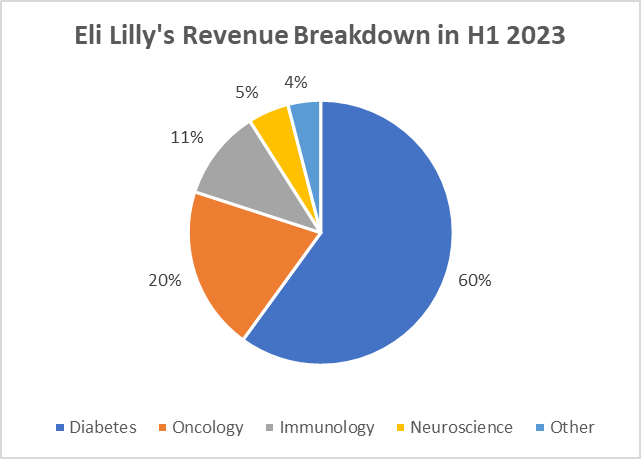
Their top performer is the diabetes division, generating $9.2 billion in H1 2023, constituting 60% of the total revenue. The revenue for their new diabetes drug, Tirzepatide (marketed as Mounjaro), skyrocketed by a staggering 9,576% year-over-year, hitting $1.5 billion in H1 2023. While the drug is currently approved only for diabetes treatment, there is potential for its use in obesity treatment as well. If approved, this could position Tirzepatide as a strong contender in future pharmaceutical leadership and further fuel Eli Lilly's growth in the diabetes market.
Additionally, the oncology division is gaining momentum, contributing $3 billion in revenue during the first half of 2023 and accounting for 20% of the total revenue.
Meanwhile, Eli Lilly is nurturing its neuroscience division, characterized by treatments of Alzheimer's disease, which has the potential to become a major growth driver in the future.
In essence, Eli Lilly's diversified approach is paying off, cementing its leadership in the diabetes market and uncovering promising opportunities across other fields.
02 R&D Capability: Introducing 20 New Drugs in 10 Years
One significant factor contributing to Eli Lilly's growth is its robust research and development (R&D) capabilities.
According to Investopedia, bringing a new drug to the market typically takes up to a decade and can cost as much as $2.6 billion. Successful drug development can yield profits during the 20-year patent period, while failures can result in substantial financial losses.
Investors closely evaluate a pharmaceutical company's ability to consistently launch new drugs, as this is a key indicator of research and development (R&D) strength.
Despite facing challenges over the past decade, Eli Lilly has demonstrated relative success in R&D. Between 2005 and 2013, progress was sluggish, with just two new drugs introduced over eight years. The expiration of several blockbuster drug patents in 2016 led to a significant decline in its revenue.
To address these challenges, David Ricks was appointed as CEO in May 2016, initiating substantial reforms to the company's underperforming R&D model. By selling a 20% stake in its animal health unit, Eli Lilly raised $1.7 billion in cash to fund research. The company focused on five therapeutic areas: diabetes and obesity, neurodegeneration, cancer, immunology, and pain management.
Following these changes, Eli Lilly's R&D efficiency substantially improved.
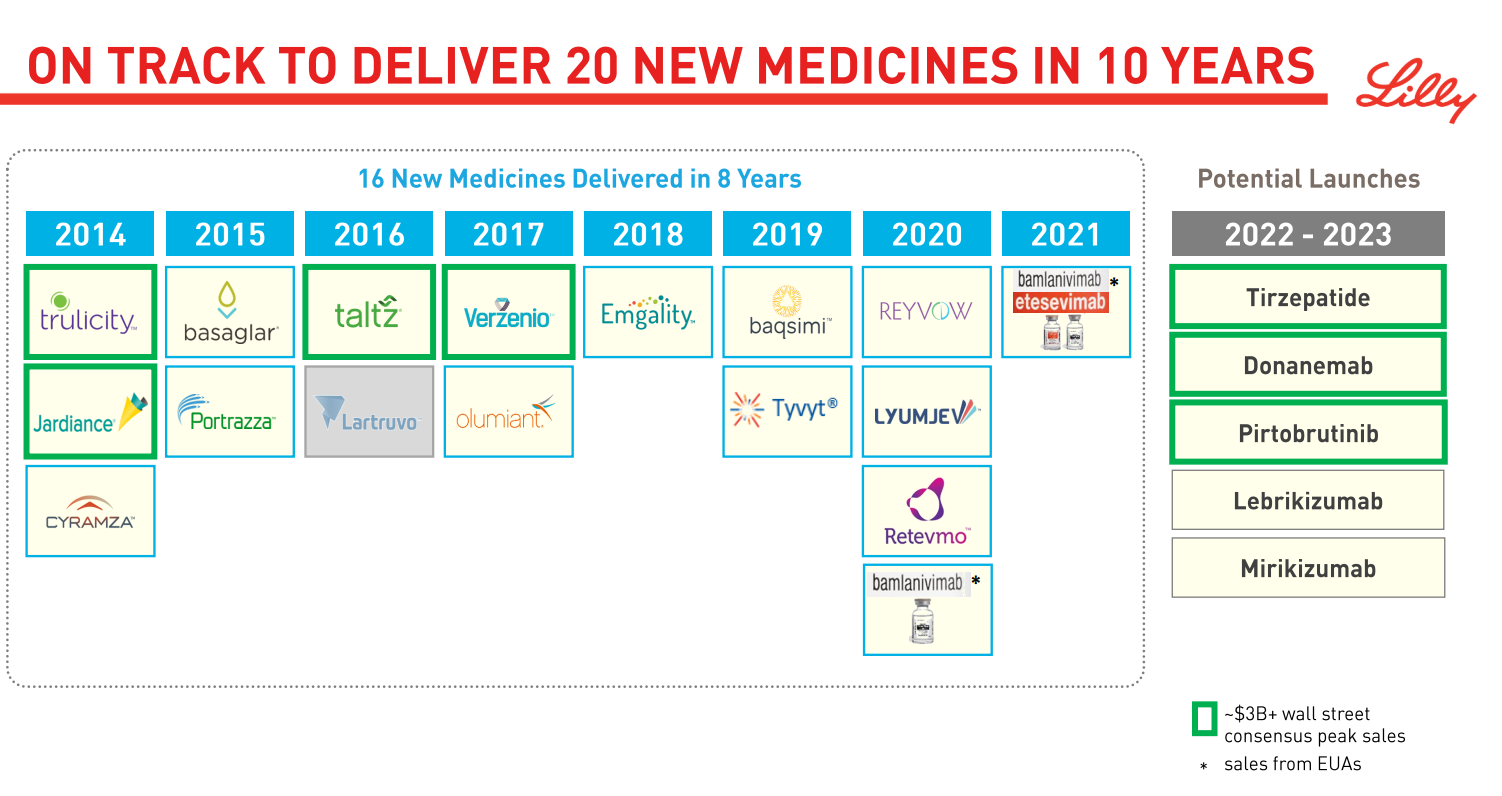
According to Eli Lilly's 2021 Investment Community Meeting, from 2014 to 2021, the company successfully launched 16 new drugs over eight years, steadily progressing toward its goal of launching 20 new drugs within a decade. Furthermore, the company made strategic investments in several areas, with multiple new drugs forecasted by Wall Street analysts to potentially achieve peak sales exceeding $3 billion.
03 Potential Opportunities: Obesity + Alzheimer's + Pain Management
In the future, Eli Lilly may have significant growth potential in three high-potential areas, according to an analysis by The Motley Fool. These areas include obesity, Alzheimer's disease, and pain management.
Obesity: Weight loss medications are currently in the spotlight. Novo Nordisk (NYSE: NVO) currently dominates this field with its successful weight loss drug, Wegovy. However, Eli Lilly also has a robust portfolio in this field, aiming for a substantial market share. Eli Lilly's diabetes drug, Mounjaro (Tirzepatide), is undergoing regulatory review to broaden its applications, including obesity treatment. Since its launch in May of the previous year, it has emerged as one of Eli Lilly's flagship products.
Alzheimer's Disease: Alzheimer's disease, once deemed incurable, has seen renewed hope with Biogen's (NASDAQ: BIIB) introduction of two Alzheimer's drugs in recent years. Research firm GlobalData predicts the Alzheimer's disease treatment market could reach $13 billion by 2030. Eli Lilly stands as a potential strong contender, with four Alzheimer's drugs in various stages of clinical trials, most notably donanemab, slated for release by the end of 2023.
Pain Management: The pain management field is also gaining attention. Allied Market Research projects the global analgesics market to reach $51 billion by 2030. While Eli Lilly currently lacks pain management drugs in its portfolio, the company has four ongoing pain management projects, with two in phase II clinical trials and two in phase I clinical trials.
With a diverse drug pipeline, as illustrated below, Eli Lilly is well-positioned for growth.
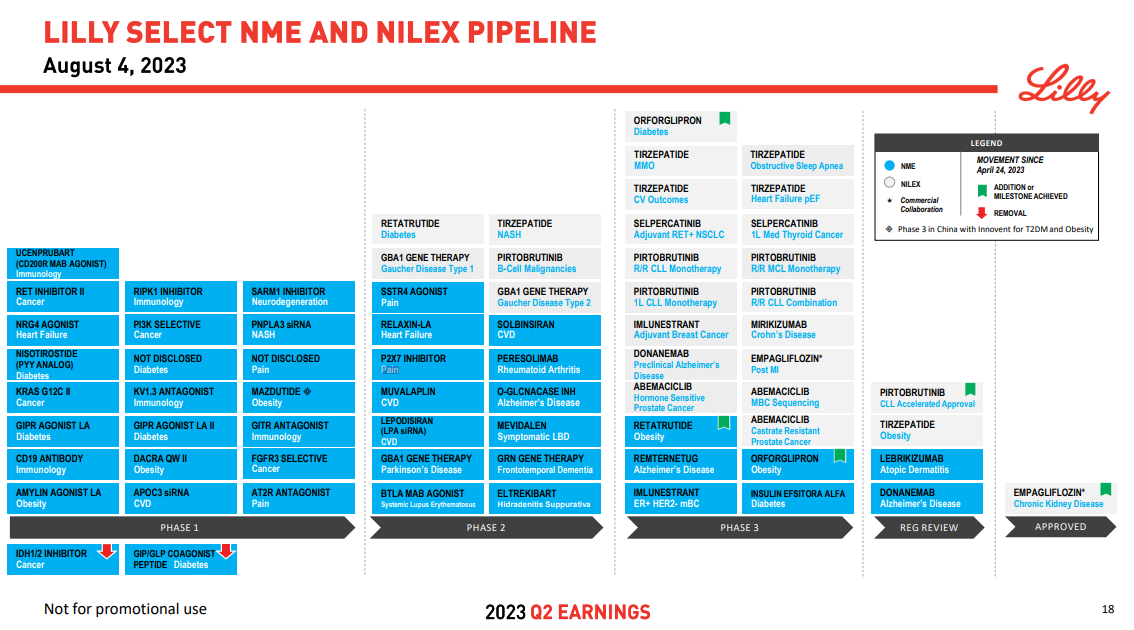
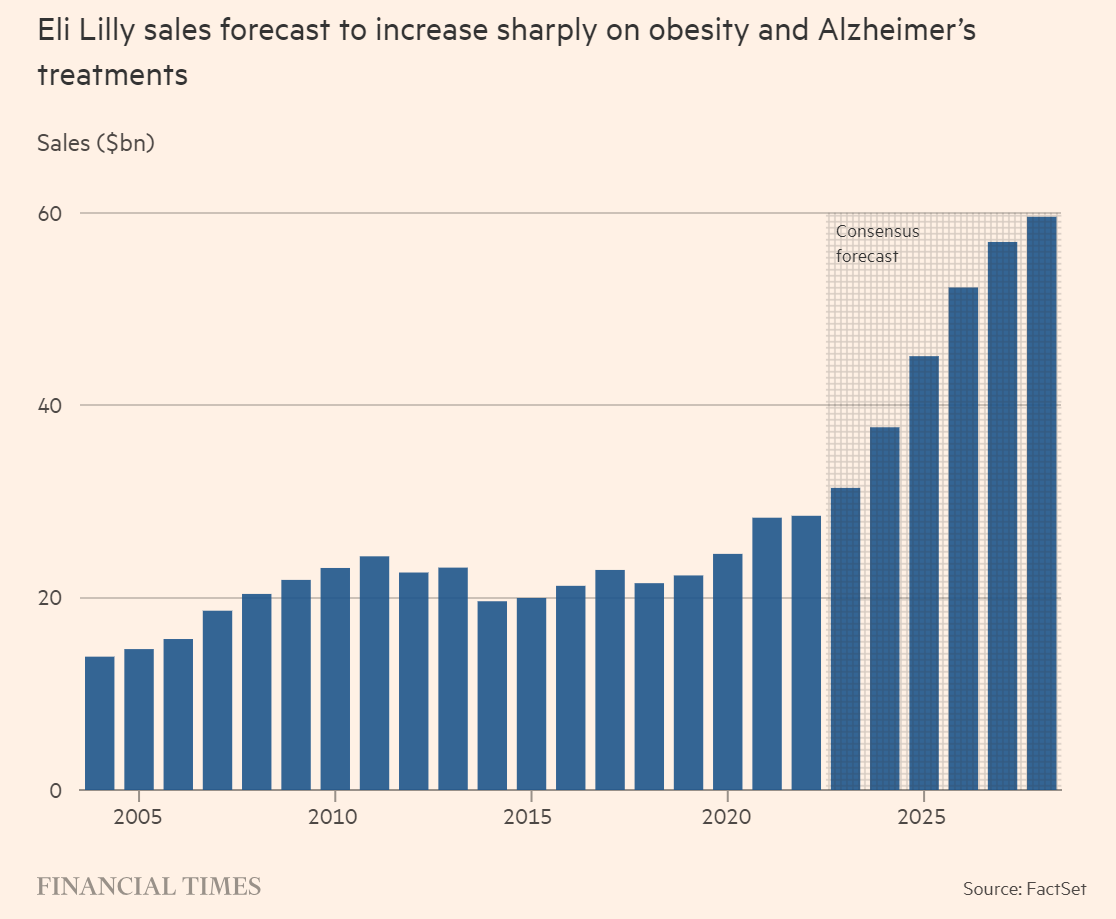
FactSet analysts forecast that Eli Lilly's forthcoming weight loss and Alzheimer's drugs could potentially double the company's revenue. With total revenue at $28.5 billion in 2022, FactSet anticipates Eli Lilly's revenue could approach $60 billion by 2028.
04 Financial
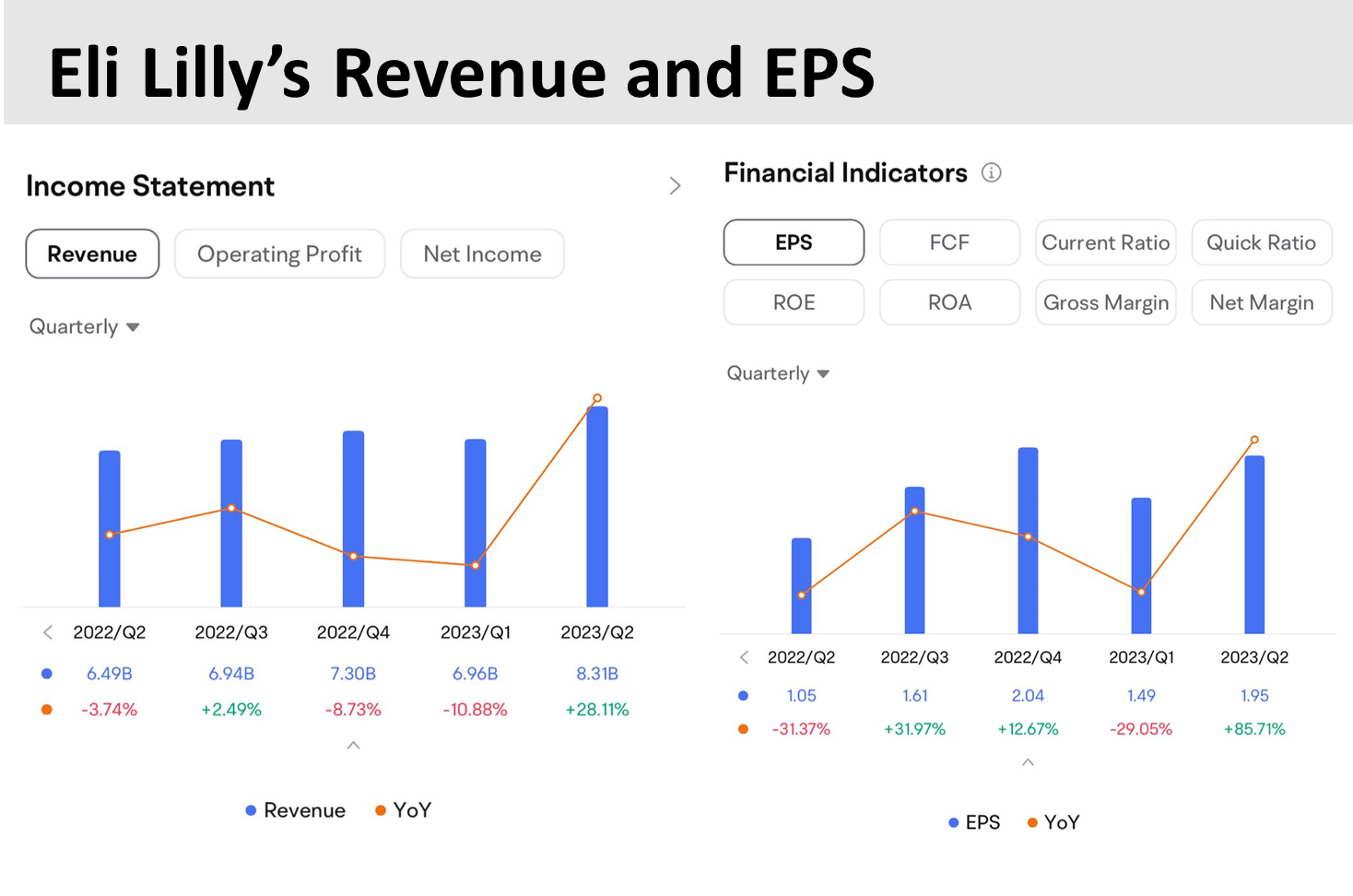
Eli Lilly reported impressive figures in its Q2 2023 earnings.
The company achieved a 28% year-on-year increase in Q2 revenue, reaching a total of $8.3 billion. Furthermore, the earnings per share (EPS) saw an 85.7% year-on-year surge, amounting to $1.95 per share.
Looking ahead, Eli Lilly's growth prospects remain promising. Analysts attribute this positive outlook to the company's robust drug product pipeline, expected to drive sustained growth over the next five years.
According to The Motley Fool analyst's projections, Eli Lilly's adjusted diluted EPS is forecasted to grow at an annual compound rate of 24.8% in the next five years, significantly outpacing the pharmaceutical manufacturing industry's average growth rate of 9.3%.
05 Potential Risks: High Valuation
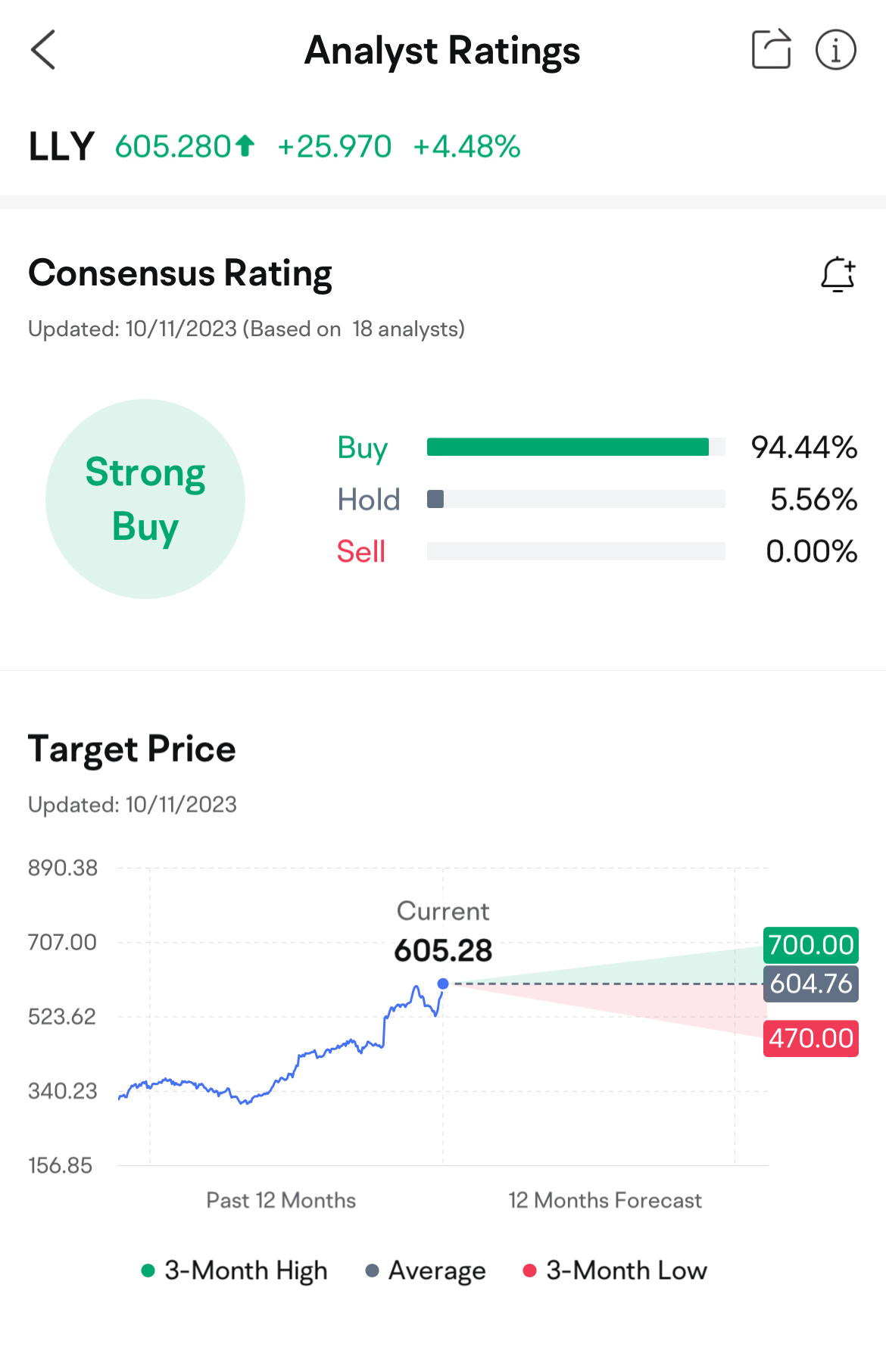
Eli Lilly's stock surged by 65.83% in 2023 as of October 11, reaching $605.28, fueled by bullish growth expectations.
According to moomoo's data, out of 18 analysts covering the stock, 94.44% have given a 'Buy' rating, while 5.56% have assigned a 'Hold' rating. The average target stock price for Eli Lilly over the next 12 months is $605.28, with the highest target price being $700 and the lowest target price being $470, according to analysts.
However, Eli Lilly's stock Price-to-Earnings (PE) ratio has soared to 84.30 times as of October 12, 2023, significantly above the industry average of 23.19 times and the overall market's average valuation of 17.86 times.
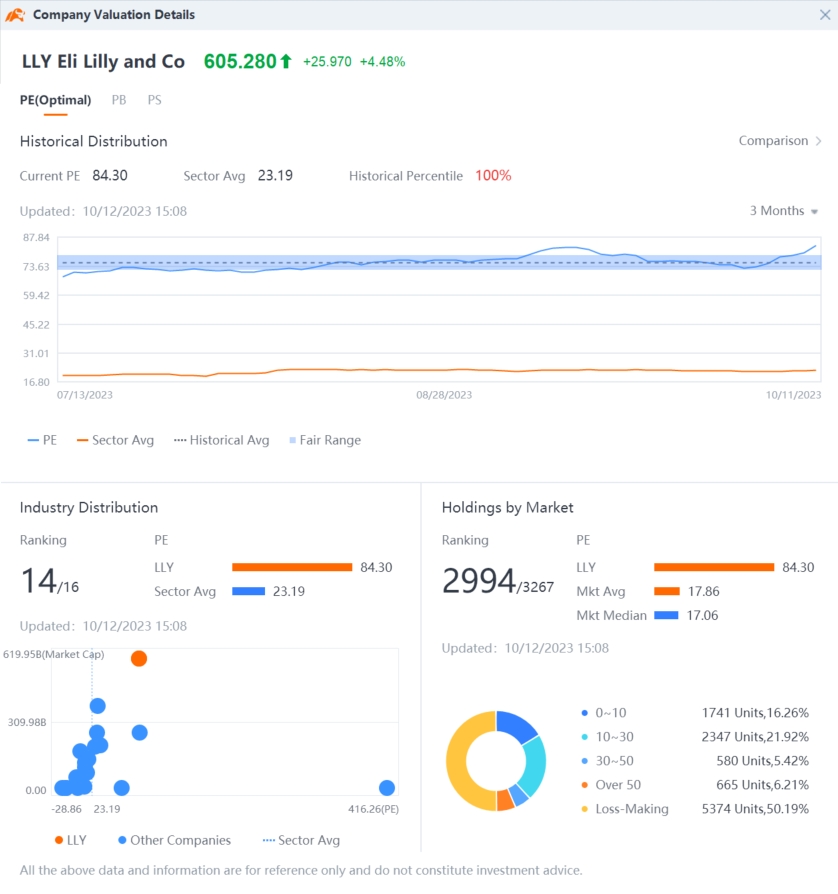
This may suggest that the risk for Eli Lilly is that its high growth expectations may already be fully reflected in its stock price, leaving limited room for further stock price growth.
Therefore, investors need to carefully assess these risks and make decisions based on their risk preferences and investment strategies.
This presentation is for informational and educational use only and is not a recommendation or endorsement of any particular investment or investment strategy. Investment information provided in this content is general in nature, strictly for illustrative purposes, and may not be appropriate for all investors. Read more