Beyond the AI boom: US sectors every investor should be watching

The artificial intelligence rally continued to fuel global sharemarkets in the first half of 2026. However, market leadership noticeably shifted away from the traditional mega-cap technology stocks – the so-called ‘magnificent seven’ – toward more specialised segments of the AI supply chain.
In particular, memory chip and central processing unit manufacturers took centre stage. And that rotation saw companies such as Micron Technology, SanDisk, Advanced Micro Devices and Intel surge between 100% and 700% by late June.
Looking ahead, we have a note of caution. Given their lofty valuations and the massive capital expenditure required to build out global AI infrastructure, these high-growth technology stocks may become increasingly vulnerable. Their primary headwinds are persistent inflation and expectation of further interest rate hikes. The economic logic is straightforward: higher interest rates reduce the present value of future earnings through a higher discount rate, disproportionately affecting high-multiple growth companies.
So, instead of chasing extended tech names, investors may be better off looking at sectors that are more resilient during a tighter monetary policy environment, which is often accompanied by slower economic growth. And it’s defensive sectors and value stocks which have historically outperformed under these conditions.
Higher inflation, higher interest rates
Following the surge in global energy prices caused by the Iran conflict, inflation has accelerated sharply since March. The headline US consumer price index rose to 4.2% year-on-year in May from 2.4% in February. Meanwhile, the latest US Personal Consumption Expenditures inflation data for May climbed to 4.1% – the highest level in three years. Although peace talks between the US and Iran were under way in late June, the economic effects of higher energy prices are likely to linger across the global supply chain well into the second half of 2026.
The US central bank reacted by raising its 2026 inflation projection to 3.6% from 2.7% at its June meeting, while money markets are pricing in a possible rate hike as early as September. These hawkish expectations have already supported the US dollar, with the US dollar index rising 6.5% to above 101 at the end of June – its highest level since May 2025.
Notably, US first-quarter gross domestic product growth was revised up by 0.5 percentage points to 2.1% quarter-on-quarter. This adjustment was largely due to a downward revision in imports, which offset weaker consumer spending. Household spending has also been supported by expanding credit and elevated asset prices, particularly in equity markets.
While the current economic backdrop does not yet constitute stagflation (given ongoing growth in GDP and a relatively resilient labour market) higher interest rates are likely to challenge the rich valuations of AI-related stocks. At the very least, the sector appears due for a healthy correction as investors lock in profits.

Sector rotation may have already begun
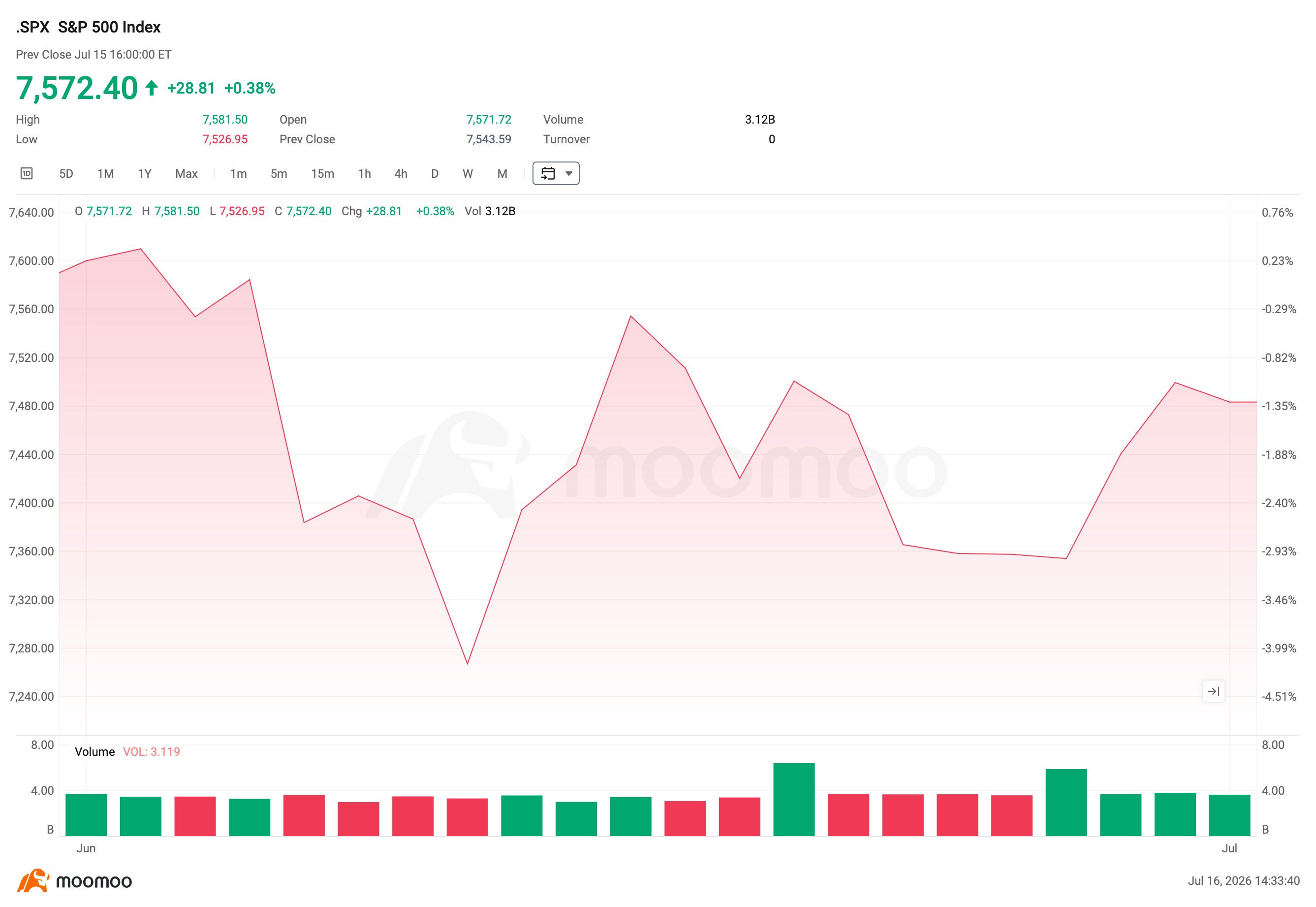
In fact, semiconductor stocks have retreated from their recent highs over the past month, weighing on market sentiment. During June, the tech-heavy Nasdaq Composite fell 5%, the S&P 500 declined 2.2%, while the Dow Jones Industrial Average gained 2.5%. (And this accelerated in July, with semiconductor stocks falling 5% in the month’s first two trading days.)
The divergence between the three major US indices tells an important story: investors appear to be rotating out of growth stocks and into value and defensive sectors. Unlike the Nasdaq, which is dominated by high-growth technology companies, the Dow Jones comprises established industrial and financial businesses such as 3M, American Express and Caterpillar, which are generally regarded as value stocks.
S&P 500 sector performance
Source: Moomoo, June 2026
The data shows that industrials, healthcare and financials outperformed the broader market during June, while consumer discretionary, communication services and energy were the weakest-performing sectors. Meanwhile, technology – home to many of the AI-driven chipmakers – were broadly flat over the period. (Consumer discretionary and communication services, which include Amazon, Tesla, Meta and Alphabet, experienced notable sell-offs.)
The trend suggests investors are shifting capital into value stocks, which tend to perform better during periods of higher inflation and elevated interest rates, while reducing exposure to growth sectors that are more sensitive to higher valuation multiples and borrowing costs.
Industrial stocks continue to outperform
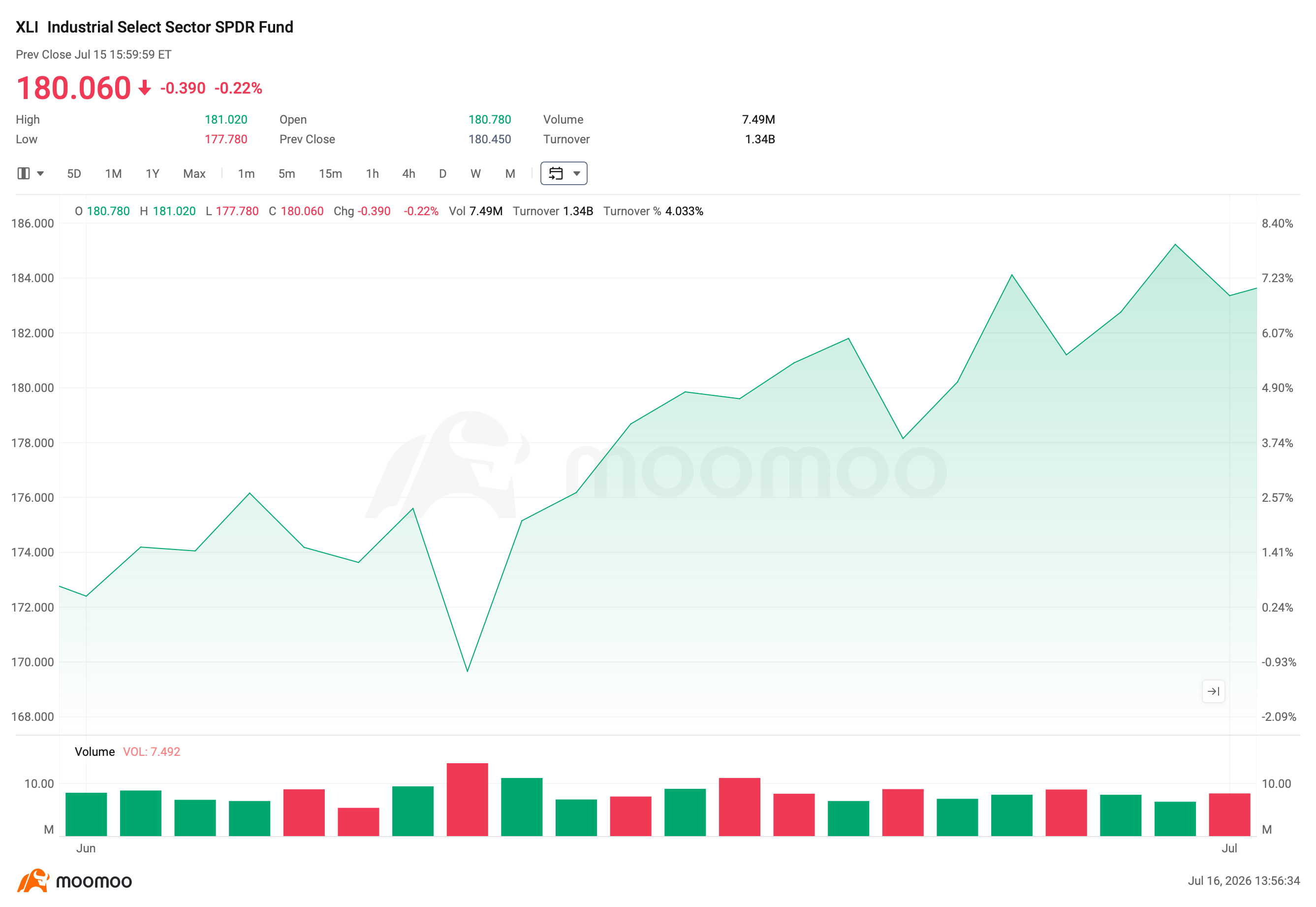
One notable observation is that industrial stocks have recently outperformed the broader market. The Industrial Select Sector SPDR Fund rose 6% during June, while the S&P 500 finished the month in negative territory. The ETF's three largest holdings – Caterpillar, GE Aerospace and GE Vernova – all traded near record highs, in contrast to the significant pullbacks seen across many high-profile technology stocks.
Source: Moomoo, June 2026
Industrial companies, including construction firms and aerospace manufacturers, are generally considered cyclical businesses because their earnings are closely tied to economic activity. However, many are relatively resilient during periods of higher inflation and interest rates because demand for infrastructure, transport and industrial equipment remains essential.
In addition, many industrial companies benefit from long-term government contracts, which provide greater earnings visibility and help offset higher borrowing costs and input prices. The ongoing expansion of AI infrastructure is also driving demand for industrial equipment, cooling systems and power-related projects. Overall, industrial companies tend to have more stable long-term earnings profiles, providing a stronger foundation during periods of economic uncertainty.
Banking stocks benefit from higher interest rates
Banks have traditionally been among the biggest beneficiaries of higher interest rates. Major US banks such as JPMorgan Chase, Citigroup and Bank of America derive a significant proportion of their earnings from net interest income – the difference between lending rates and deposit rates. During the early stages of a tightening cycle, banks typically increase lending rates faster than deposit rates, widening their net interest margins.
Large banks also generate substantial free cash flow, enabling them to conduct sizeable share buybacks and pay attractive dividends to shareholders. In addition, banks invest a significant portion of their capital in interest-bearing assets such as government bonds and Treasury securities, which generally offer higher yields as interest rates rise, partially offsetting slower loan demand.
Finally, banks typically have relatively stable earnings histories and trade on lower price-to-earnings multiples than many growth stocks, making them more defensive during periods of market volatility.
Healthcare: the classic defensive sector
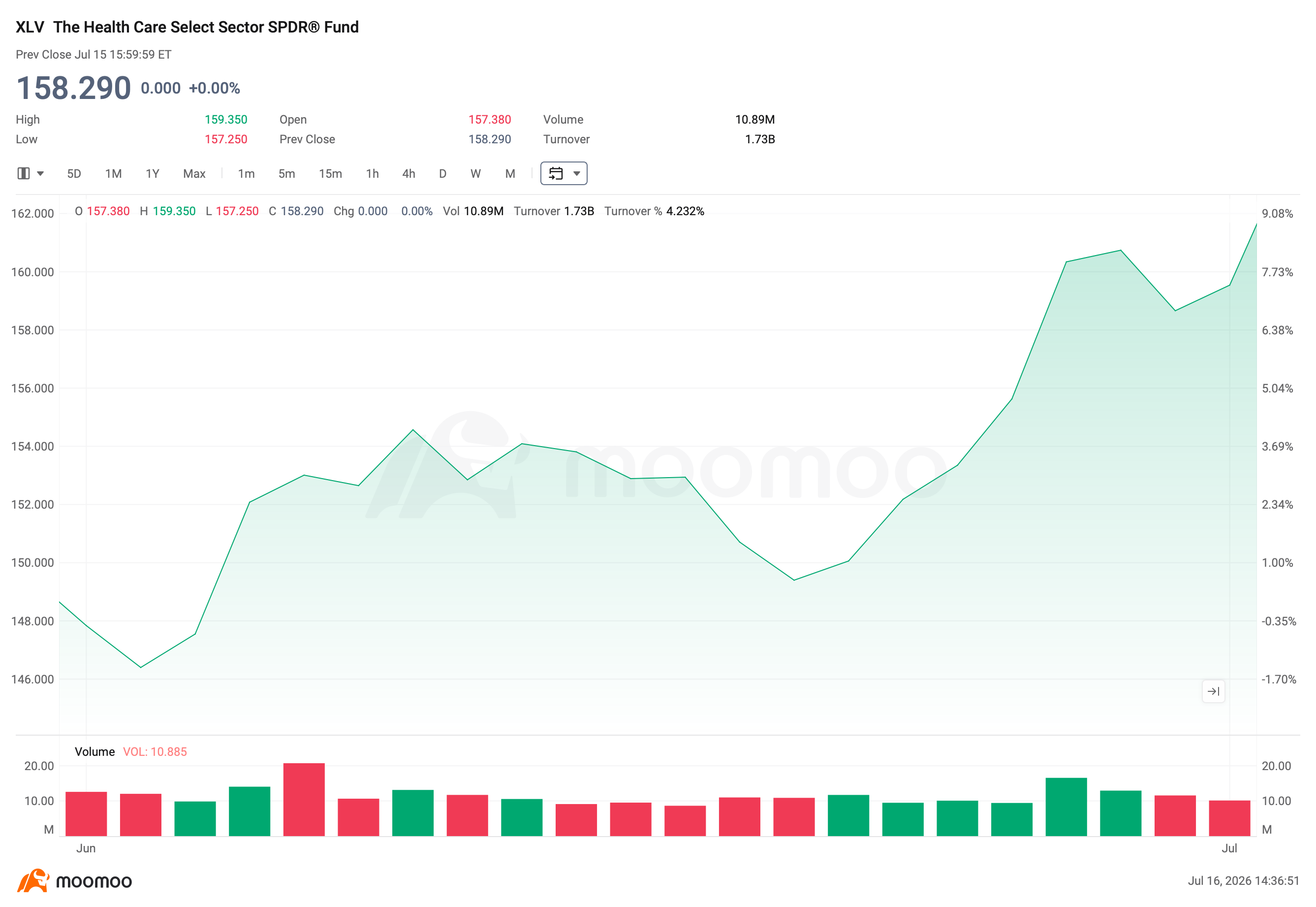
Healthcare has long been regarded as one of the sharemarket's most defensive sectors because demand for medical care, pharmaceuticals and critical services remains relatively stable regardless of the economic cycle. The Health Care Select Sector SPDR Fund was among the best-performing sectors during the final week of June, while many growth sectors experienced broad-based selling.
Shares of major healthcare companies, including Eli Lilly, Johnson & Johnson and UnitedHealth Group, traded largely sideways throughout June, suggesting investors were seeking safety in these stocks amid heightened market volatility. Pharmaceutical and biotechnology companies also tend to generate strong cash flows, allowing many to pay relatively attractive dividends compared with growth-oriented businesses.
Source: Moomoo, June 2026
What this means for investors
As the rest of 2026 unfolds, the shifting economic landscape means the old playbook of simply buying popular tech names might not work as well as it used to. With inflation remaining sticky and interest rates likely to stay higher for longer, the market is punishing companies that trade on promise rather than profit. For investors this doesn't mean exiting the sharemarket altogether, it means looking closely at what actually drives a company's earnings.
Value and defensive sectors are showing resilience because they provide goods and services that people and businesses cannot do without, regardless of how high interest rates go. When looking at a portfolio, it is worth considering how well investments can weather a slower growth environment.
Companies with low debt, strong cash flows and a history of paying steady dividends can provide a solid cushion when market volatility picks up. Balancing out high-growth sectors with stable performers in banking, healthcare and industrials can help keep an individual’s investment journey on a steadier path.
Diversification is not about missing out on the next big tech wave, but ensuring a correction in one single sector does not derail investors’ broader long-term financial goals.
When navigating sector rotations, having the right tools can help you track where institutional money is moving. On the moomoo platform, users can monitor shifting market trends through features designed to bring clarity to complex market movements:
Stock screener is useful to filter global companies by sector, dividend yield, price-to-earnings ratios and cash flow to identify potential value opportunities.
Institutional Tracker is a tool that tracks the portfolio adjustments of large asset managers and institutional investors to see how they are positioning their portfolios for the second half of 2026.
Heat maps visually scan sector performance in real time to spot emerging trends and capital flows across Australian, US and Hong Kong markets.
As monetary policy remains tight, diversifying beyond highly concentrated growth sectors into resilient, cash-generating areas like industrials, banking and healthcare may provide a steadier path forward.
Tina Teng is a market analyst with Moomoo Australia and New Zealand, based in Auckland.
This presentation is for informational and educational use only and is not a recommendation or endorsement of any particular investment or investment strategy. Investment information provided in this content is general in nature, strictly for illustrative purposes, and may not be appropriate for all investors. Read more