NZ economic outlook: recovery under way but a growth trap ahead

For much of the past two years, New Zealand's economic story has been dominated by inflation, rising interest rates, and a stubborn domestic recession. Households aggressively tightened their spending, businesses delayed major capital investment, and policymakers focused almost entirely on restoring price stability. The broader conversation among market participants was distinctly defensive. Investors routinely worried about exactly how much economic pain would be required to bring inflation back under control, and whether the Reserve Bank of New Zealand could successfully engineer a elusive ‘soft landing’.
As the second half of 2026 begins, that debate is pretty much over.
Inflation has fallen substantially from its post-pandemic highs and sits comfortably within target zones. Monetary policy interest rates have moved steadily lower. Positive economic growth has returned to the headline figures. Tourism continues its multi-year recovery, and global export prices remain broadly supportive of our primary industries. The RBNZ believes the economic recovery is broadening, while economists across the major commercial banks expect domestic activity to strengthen further through the remainder of the year.
Yet beneath this improving cyclical picture lies a far more important question. Can New Zealand finally solve the structural problems that have constrained its productivity, business investment, and long-term living standards for more than a decade? This is the central message of the Organisation for Economic Co-operation and Development in its 2026 Economic Survey of New Zealand, and it may ultimately become the defining economic issue of both this election year and the decade ahead.
The cyclical turning point: what the data shows
The OECD assessment of New Zealand is striking because it deliberately shifts focus away from the short-term noise of weekly economic data. In its report, the organisation acknowledges the local economy has successfully entered the early stages of a cyclical recovery. Lower retail interest rates are beginning to support aggregate demand, household spending is showing early signs of improvement, and labour market conditions are starting to stabilise.
Monetary policy relief trickles down
The central bank has already done much of the heavy lifting. After executing one of the most aggressive monetary tightening cycles in New Zealand's modern history – which saw the official cash rate peak at restrictive levels to combat post-pandemic inflation – the monetary authorities have shifted gears. Inflation has largely returned to its 1% to 3% target band, meaning monetary policy is no longer acting as an intentional brake on domestic economic activity.
The RBNZ noted in its recent commentary that lower interest rates are encouraging households to normalise spending patterns and businesses to dust off deferred investment plans. Residential and commercial construction activity is also beginning to show signs of bottoming out. Demand is finally broadening beyond international tourism and primary commodity exports, flowing back into parts of the domestic service and retail economy that remained deeply subdued for much of 2024 and 2025.
This shift is precisely what macroeconomic research teams across the major local trading banks – ANZ, ASB, BNZ, Westpac and Kiwibank – have been anticipating. While their specific quarterly forecasts differ in the finer details, corporate economists broadly agree that gross domestic product growth should strengthen through the second half of 2026. This trend is driven by lower wholesale borrowing costs gradually flowing through to retail mortgage holders and commercial business lines.
Source: Stats NZ, RBNZ Monetary Policy Statements
Labour market stabilisation
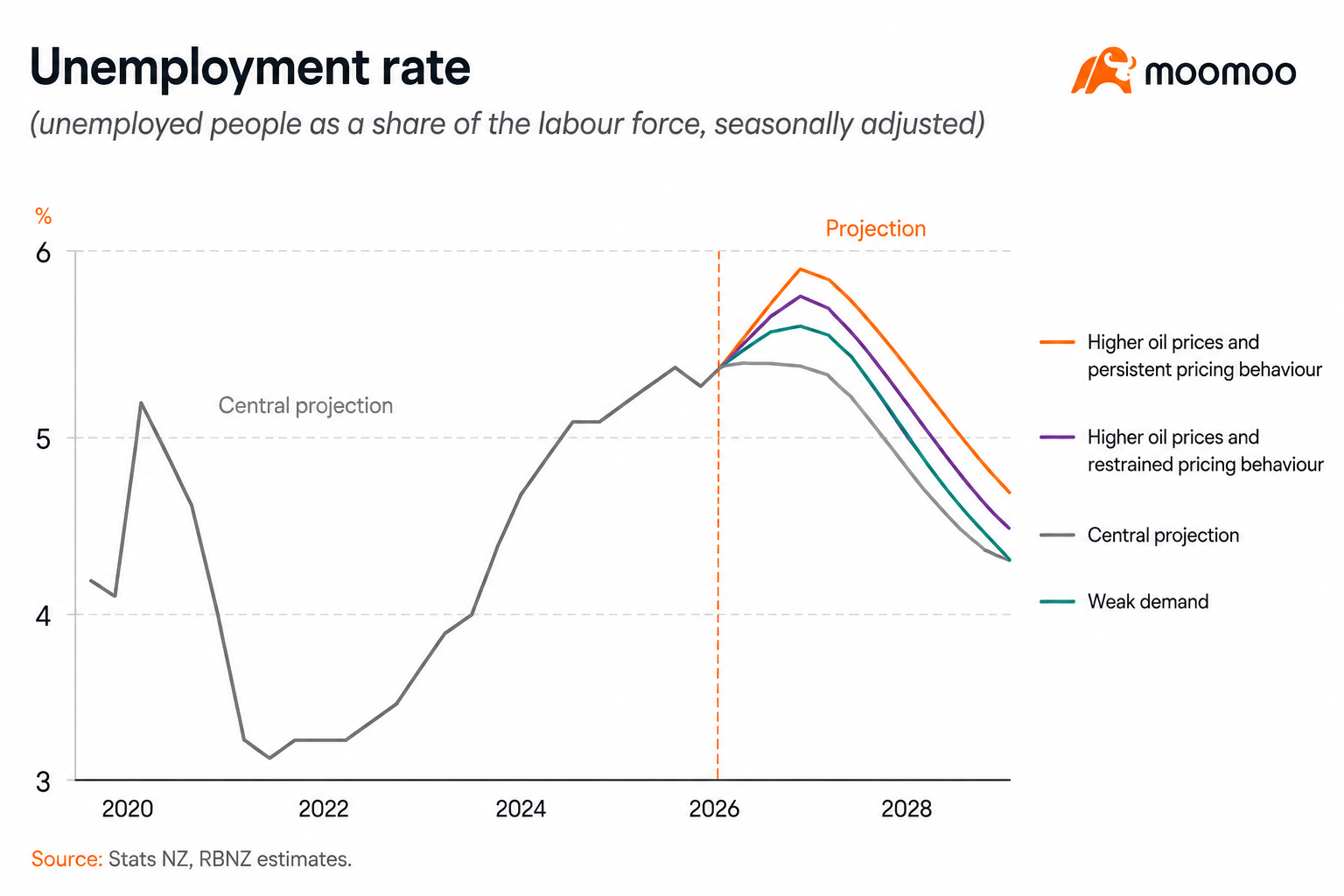
The labour market remains a critical, lagging piece of this recovery story. The rise in the national unemployment rate during 2024 and 2025 was one of the unavoidable, painful consequences of bringing aggregate demand back into balance with the economy's supply capacity. Higher interest rates directly reduced consumer demand, businesses became highly cautious regarding headcount, and aggregate employment growth slowed to a crawl.
Yet history shows that labour markets tend to lag macroeconomic turning points by six to nine months. By the time headline employment data visibly improves, the underlying economic recovery is often already well under way. Most local economists believe that inflection point may now be approaching. While the unemployment rate remains elevated compared with the ultra-low levels seen during the immediate post-pandemic boom, underlying conditions appear to be stabilising, and the pace of labour market deterioration has slowed markedly.
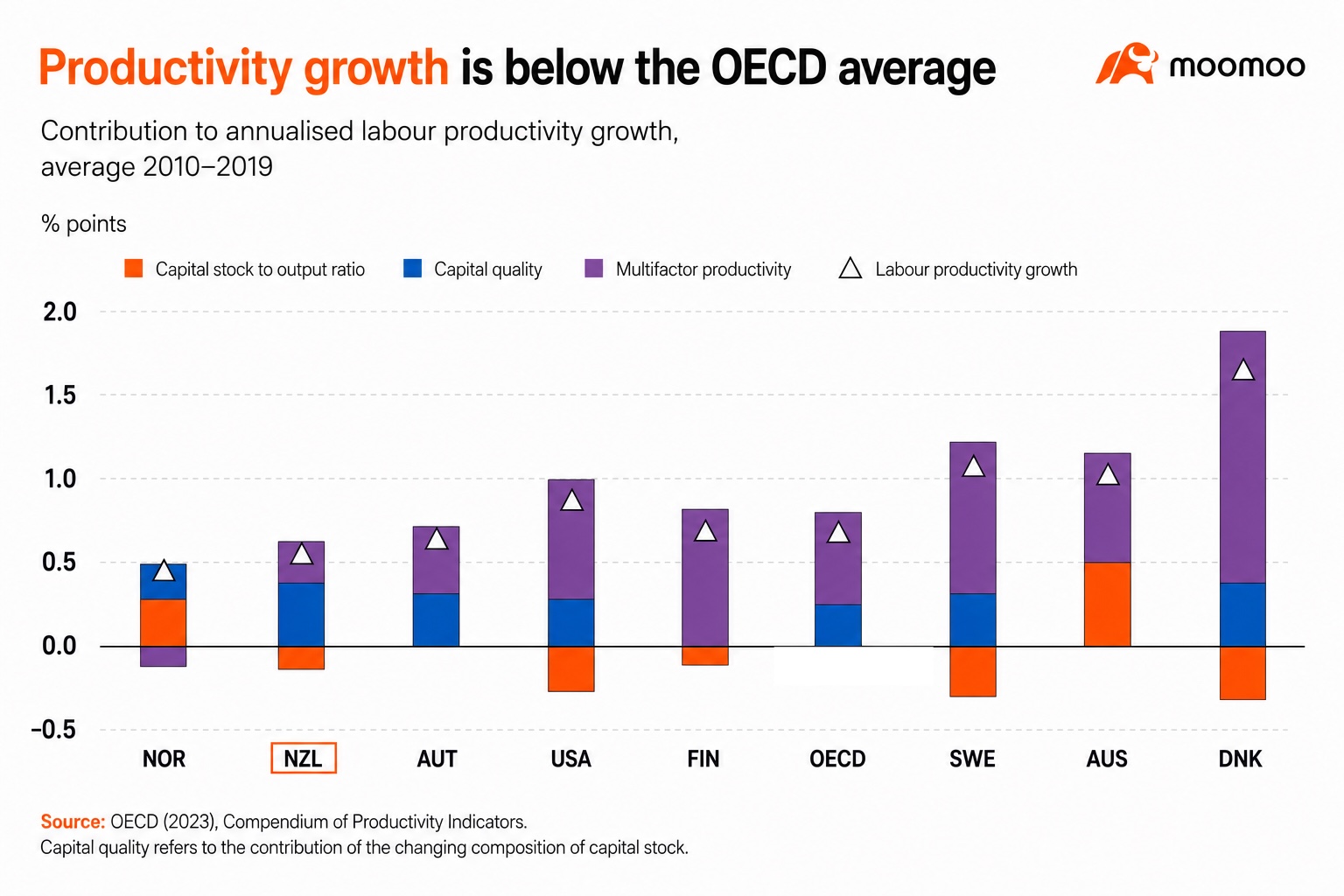
OECD Labour Productivity Growth: New Zealand versus Australia, OECD Average and Selected Small Advanced Economies. Source: OECD Economic Survey of New Zealand 2026
The chronic problem: New Zealand’s productivity trap
The fundamental issue confronting New Zealand today is not whether headline GDP grows by 1.5% or 2.5% over the next 12 months. The real issue is why structural productivity growth has remained so weak for so long, and what concrete policy levers can be pulled to change it.
For decades, New Zealand has struggled to generate the structural productivity growth needed to lift real incomes and living standards in line with other highly advanced economies. While the country enjoys world-class public institutions, high political stability, abundant natural resources, and a highly educated workforce, our economic output per hour worked has consistently lagged behind many of our international peers.
Economic growth in New Zealand has relied far too heavily on raw population growth via net migration, rising residential property values, and volume-led commodity exports, rather than sustained improvements in our underlying productive capacity.
It comes down to a lack of capital intensity, meaning workers do not have access to the same level of advanced machinery, digital tools, and infrastructure as their overseas counterparts. And so New Zealanders work longer hours just to produce the same economic output as workers in more productive economies.
This structural challenge is best understood by looking at how capital is allocated across the domestic economy. One of the OECD's strongest structural criticisms of New Zealand is our systemic tendency for investment capital to flow disproportionately into residential property rather than productive business enterprise.
For decades, the domestic housing market has generated highly attractive, low-risk, and historically tax-advantaged returns for everyday investors. Concurrently, innovative businesses seeking expansion capital have routinely struggled to access funding. The result has been a persistent, multi-decade imbalance between property investment and productive business investment.

Capital markets: the missing engine of business growth
This misallocation of capital sits at the heart of another major structural concern raised by the OECD: the distinct lack of depth in New Zealand's capital markets. While the country has no shortage of early-stage entrepreneurs and innovative start-ups, it has historically struggled to provide sufficient growth capital to help these successful businesses scale up significantly.
Many local companies can access initial seed funding from angel investors, and mature firms with massive hard assets can readily obtain standard commercial bank finance. However, a major funding gap routinely emerges in the middle of a business's lifecycle. This occurs when growing enterprises require substantial equity capital to fund international market expansion, invest in large-scale research and development, or acquire competing technologies.
The OECD argues that New Zealand's broader financial system remains heavily dependent on traditional bank lending, which is inherently risk-averse and requires property security. In contrast, our public equity markets remain relatively small, and domestic venture capital markets are far less developed than those in peer small advanced economies such as Denmark, Ireland or Singapore.
Public market listings on the New Zealand sharemarket have declined over recent years. Initial public offering activity has been extremely limited, and domestic institutional savings pools (outside of the mandated KiwiSaver ecosystem) remain modest relative to countries such as Australia with its comprehensive superannuation system. For long-term equity investors, this structural lack of market depth and the ongoing shortage of domestic listings may be the most important structural investment theme of the decade.
Source: OECD Economic Survey of New Zealand 2026
The energy bottleneck: electricity and infrastructure
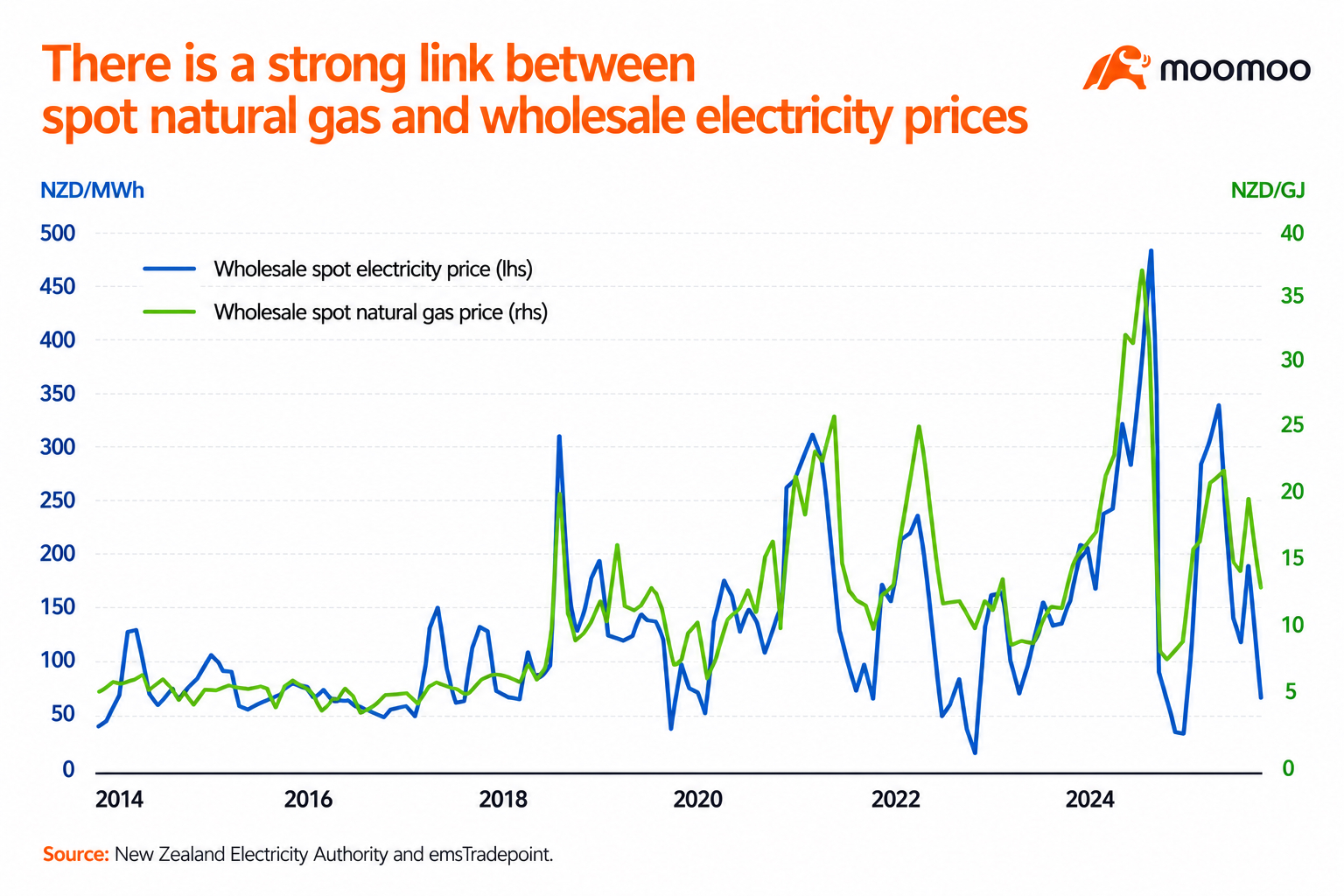
Perhaps the most surprising and urgent aspect of the latest OECD assessment is its heavy emphasis on the domestic electricity sector. While energy policy rarely features prominently in standard cyclical economic outlooks, the organisation explicitly identifies electricity infrastructure as one of the most critical structural constraints on New Zealand's future economic growth potential.
Over the past few years industrial electricity prices have risen significantly, domestic natural gas supplies have declined faster than anticipated, and concerns about national security of supply
Future economic drivers (high energy intensity)
- Artificial intelligence and data centres
- Cloud computing infrastructure
- Advanced automated manufacturing
- Electrification of transport and process heat
- Artificial intelligence and data centres
- Cloud computing infrastructure
- Advanced automated manufacturing
- Electrification of transport and process heat
during dry hydro years have become increasingly prominent in corporate boardrooms. This matters immensely because the next phase of global and domestic economic growth is going to be far more energy-intensive than the last.
The rapid adoption of artificial intelligence, localised cloud computing infrastructure, regional data centres, advanced manufacturing automation, and the necessary electrification of industrial process heat all require vast, uninterrupted amounts of highly reliable, affordable electricity.
Without rapid, massive investment in new renewable generation and national transmission infrastructure, New Zealand risks directly undermining its own international economic competitiveness. If innovative digital firms cannot secure long-term, cost-effective power contracts within New Zealand, they will simply locate their data infrastructure and high-paying jobs in markets that can.
Ultimately, national productivity, business capital investment, digital technology adoption, and international competitiveness all depend on a foundation of reliable and affordable energy. The transition away from fossil fuels cannot succeed if the replacement electricity system is prone to supply shortfalls or pricing spikes that render domestic manufacturing unviable.
The structural reform roadmap
The upcoming election campaign is likely to bring these deeper structural issues into much sharper focus, even if the daily political debate remains predictably focused on immediate concerns. Public debate will naturally concentrate on headline cost-of-living pressures, funding for public healthcare, short-term housing affordability, and adjustments to personal taxation brackets. These are the immediate, highly visible issues that directly influence voters at the ballot box.
Yet long-term investors should pay equal attention to the competing political policies aimed at lifting structural productivity, deepening domestic capital markets, and encouraging genuine corporate investment. The OECD report effectively provides a clear, bipartisan roadmap for many of these necessary structural economic reforms. It highlights several key pillars that require sustained policy focus regardless of which political parties form the next government.
Infrastructure investment: Moving beyond traditional Crown balance sheet funding to utilise public-private partnerships, value-capture funding models, and long-term institutional capital to address the multi-billion-dollar infrastructure deficit in transport, water, and regional resilience.
Deepening local capital markets: Creating regulatory environments that encourage the growth of local venture capital, simplifying compliance requirements for mid-sized companies listing on public markets, and exploring ways to leverage KiwiSaver funds into productive, high-growth domestic equities.
Accelerating technology adoption: Promoting the rapid diffusion and commercial adoption of new digital technologies across the broader economy, particularly artificial intelligence and cloud-based business tools, to lift the output of our traditional service and administrative sectors.
Enhancing workforce skills: Ensuring the domestic education and vocational training systems are tightly aligned with the rapidly evolving needs of a high-tech, digital-first economy, alongside immigration settings that attract high-value global talent.
Conclusion: changing the economic conversation
The OECD is certainly not pessimistic about New Zealand's economic future. Quite the opposite. The international body explicitly highlights numerous foundational strengths that many other nations would envy: a resilient and adaptable economy, robust democratic and legal institutions, a world-class agricultural sector, an appealing international tourism brand, an educated workforce, and significant geographic opportunities to leverage digitalisation and artificial intelligence.
Yet the report also makes it undeniably clear these natural advantages alone are no longer sufficient to guarantee growing prosperity. The primary challenge for New Zealand in the second half of 2026 is no longer about engineering a cyclical economic recovery. The economy is already recovering.
The real challenge is securing sustainable, long-term, productivity-led growth.
The central bank believes domestic demand is broadening. The major commercial banks expect overall economic activity to strengthen. Inflation is largely back under control, and the country has emerged from its prolonged cyclical downturn. These developments are positive, highly important, and should not be underestimated by participants in our financial markets.
But the most critical question facing New Zealand in the second half of 2026 is whether the country can finally muster the political consensus and economic ambition to address the structural issues that have limited our productivity growth for more than a decade.
The ultimate answer to this challenge will not be found in the next quarterly consumer price index inflation report, nor will it be found in the next cash rate decision from the RBNZ. It will be found in whether New Zealand can successfully build deeper capital markets, significantly increase productive business investment, resolve its infrastructure bottlenecks, secure affordable and reliable electricity, and create a macroeconomic environment where innovative, export-focused businesses can scale up and thrive on the global stage.
The second half of 2026 may therefore mark far more than just the welcome technical beginning of an economic recovery. It may mark the critical beginning of a much-needed national conversation about how New Zealand actually creates sustainable wealth and lifts its living standards over the next decade. For long-term investors, following and understanding that conversation will prove far more important than reacting to any short-term economic forecast.
This presentation is for informational and educational use only and is not a recommendation or endorsement of any particular investment or investment strategy. Investment information provided in this content is general in nature, strictly for illustrative purposes, and may not be appropriate for all investors. Read more