How to choose and invest in U.S. bond ETFs
The bond market tends to benefit when the market expects interest rate cuts or panics, as bond prices usually rise in response to falling market rates or safe-haven demand.
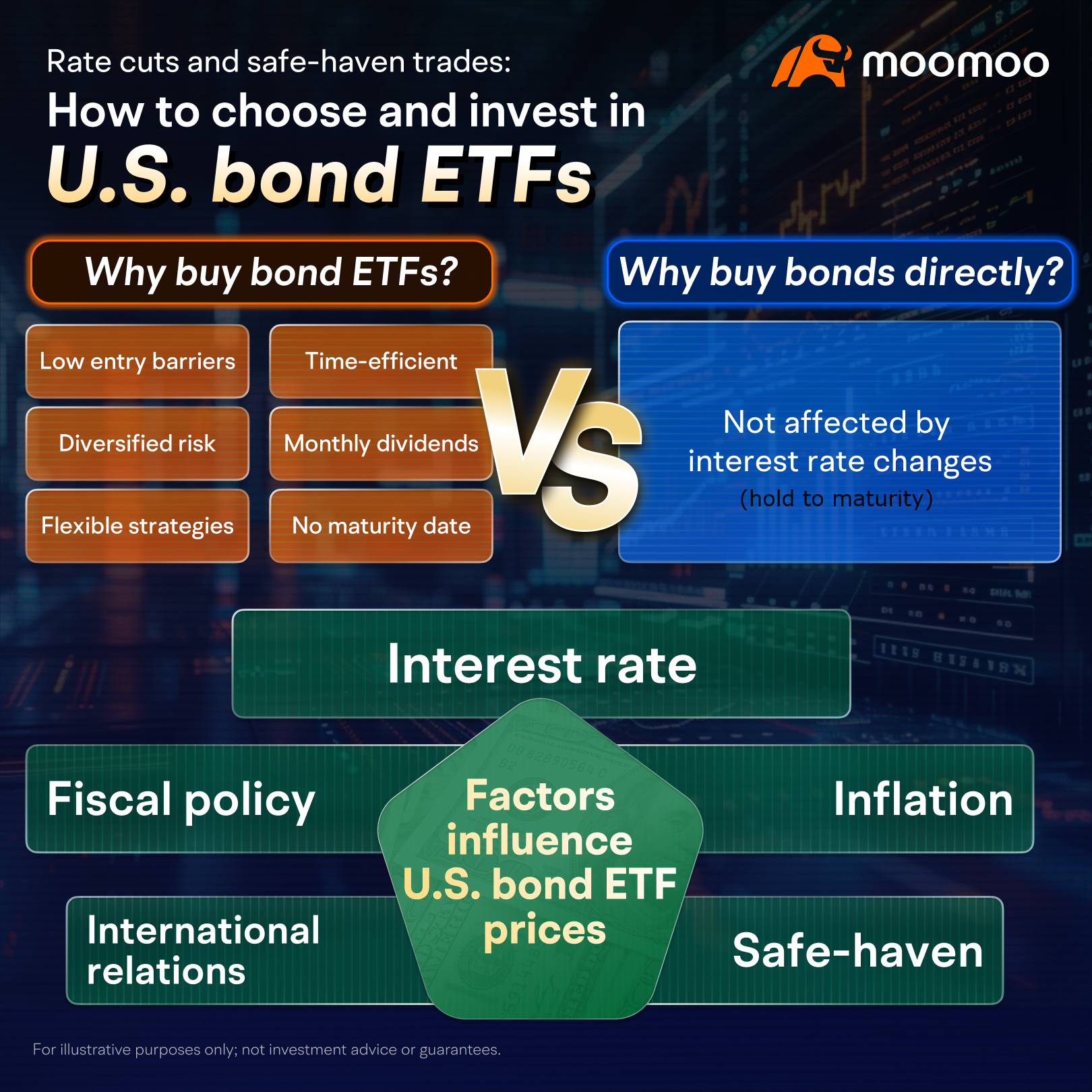
Bonds are quite different from stocks, and many investors may lack experience in trading them or understanding their investment strategies. In fact, you don't need to buy bonds directly to invest in them. Many investors use ETFs to gain exposure to the U.S. bond market.
This article will discuss the advantages, investment logic, and selection methods for U.S. bond ETFs.
How to choose a U.S. bond ETF
With over 600 U.S. bond ETFs available as of 2024, selecting the right one can be overwhelming. Here's a streamlined approach:
1. Types of U.S. bond ETFs:
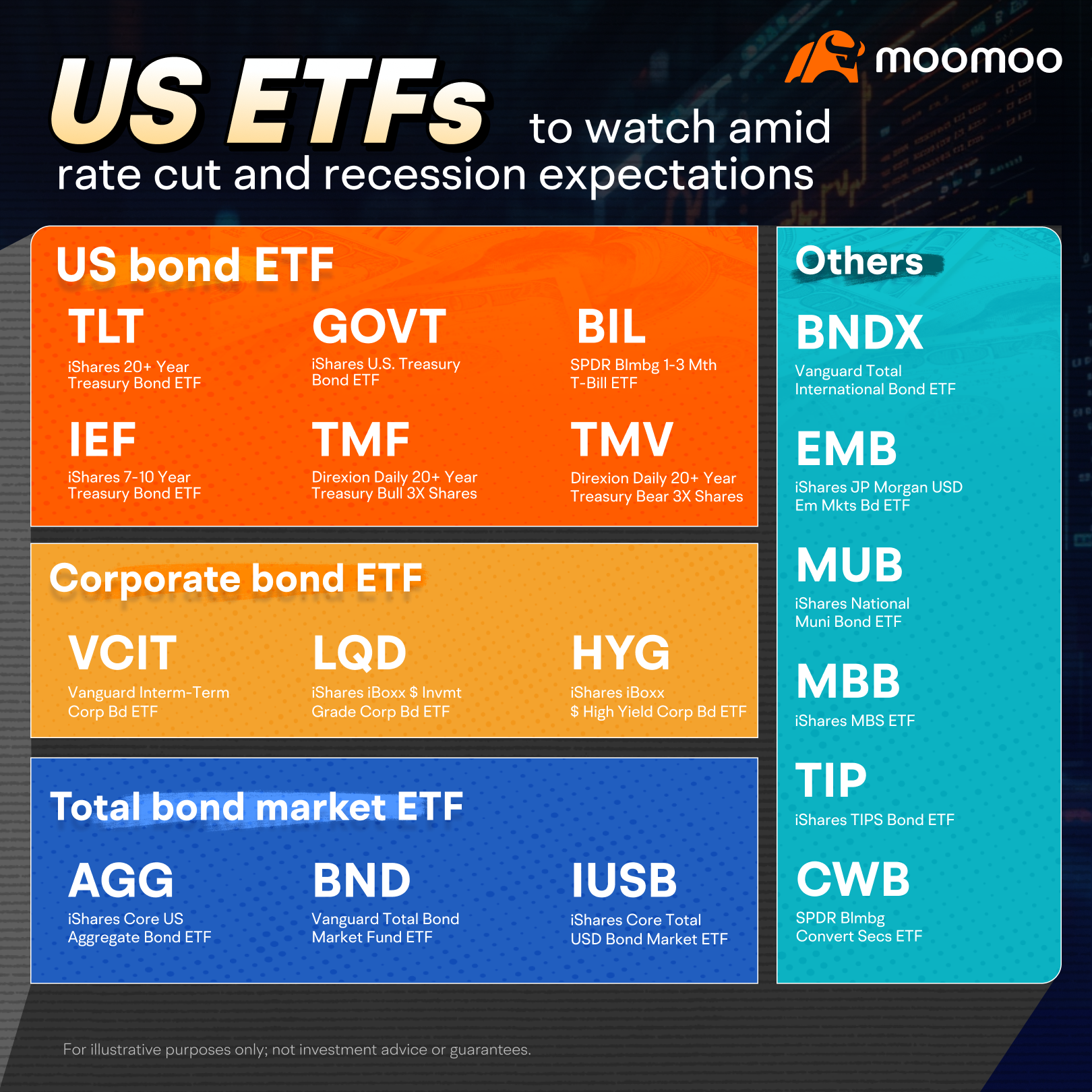
U.S. bond ETFs fall into categories like:
1. Treasury ETFs
2. Corporate bond ETFs
3. Total bond market ETFs
4. Inflation-protected ETFs
5. Asset-backed securities (ABS) ETFs
6. Convertible bond ETFs.
Treasury, total bond market, and corporate bond ETFs are the most common, making up about 80% of the market.
2. Key metrics for analysis:
Focus on these key metrics when evaluating U.S. bond ETFs:
1. Historical performance
2. Expense ratio
3. Dividend yield and payout frequency
4. Holdings rating distribution
5. Holdings maturity distribution
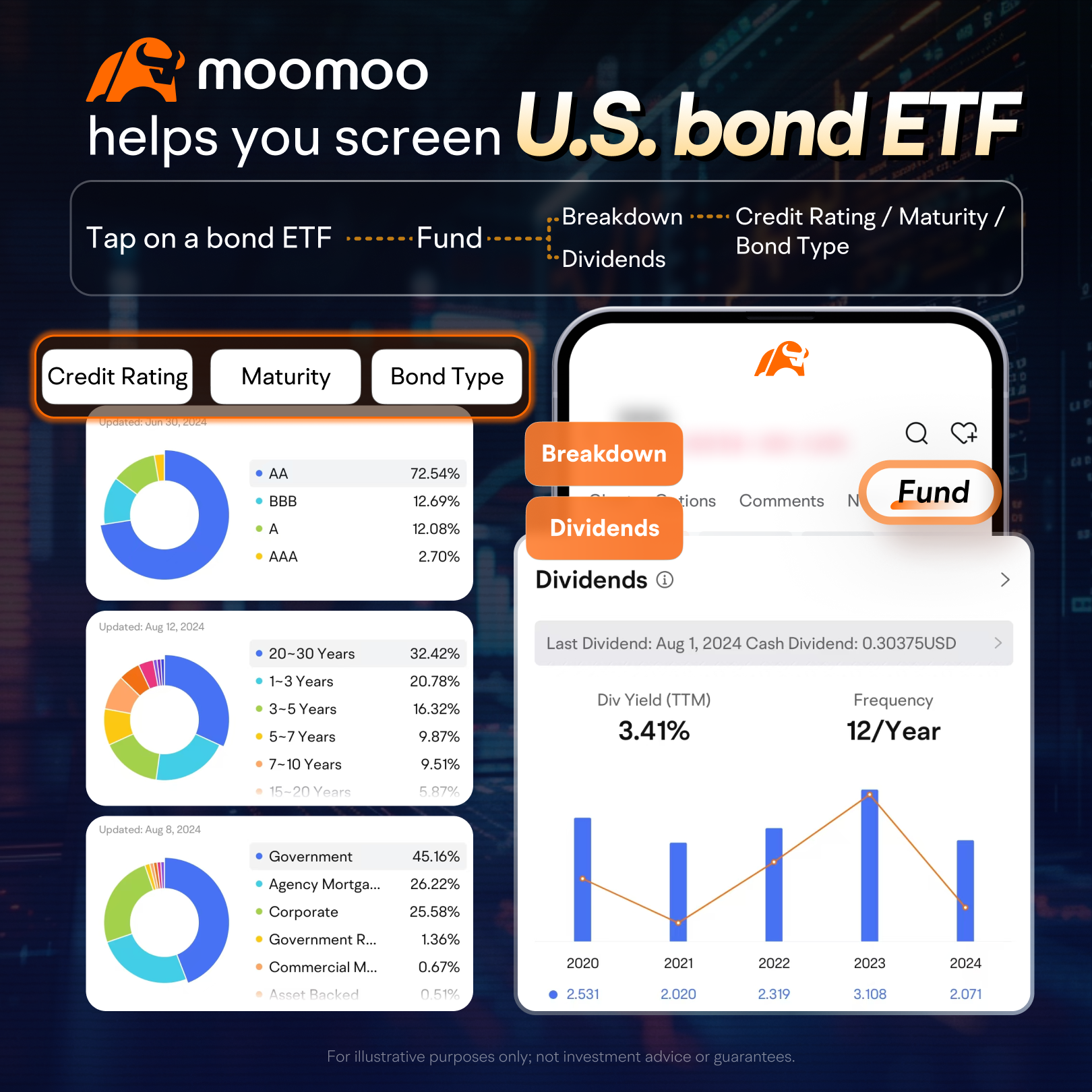
On moomoo, after entering a bond ETF's detailed quotes page, you can tap Fund> Breakdown/Dividends /Profile to find these metrics.
U.S. Treasury ETFs: the most popular chioce
U.S. Treasury bonds are issued by the federal government and are considered one of the safest investments worldwide. They offer good liquidity and help diversify risk.
Some of the most actively traded Treasury ETFs include:
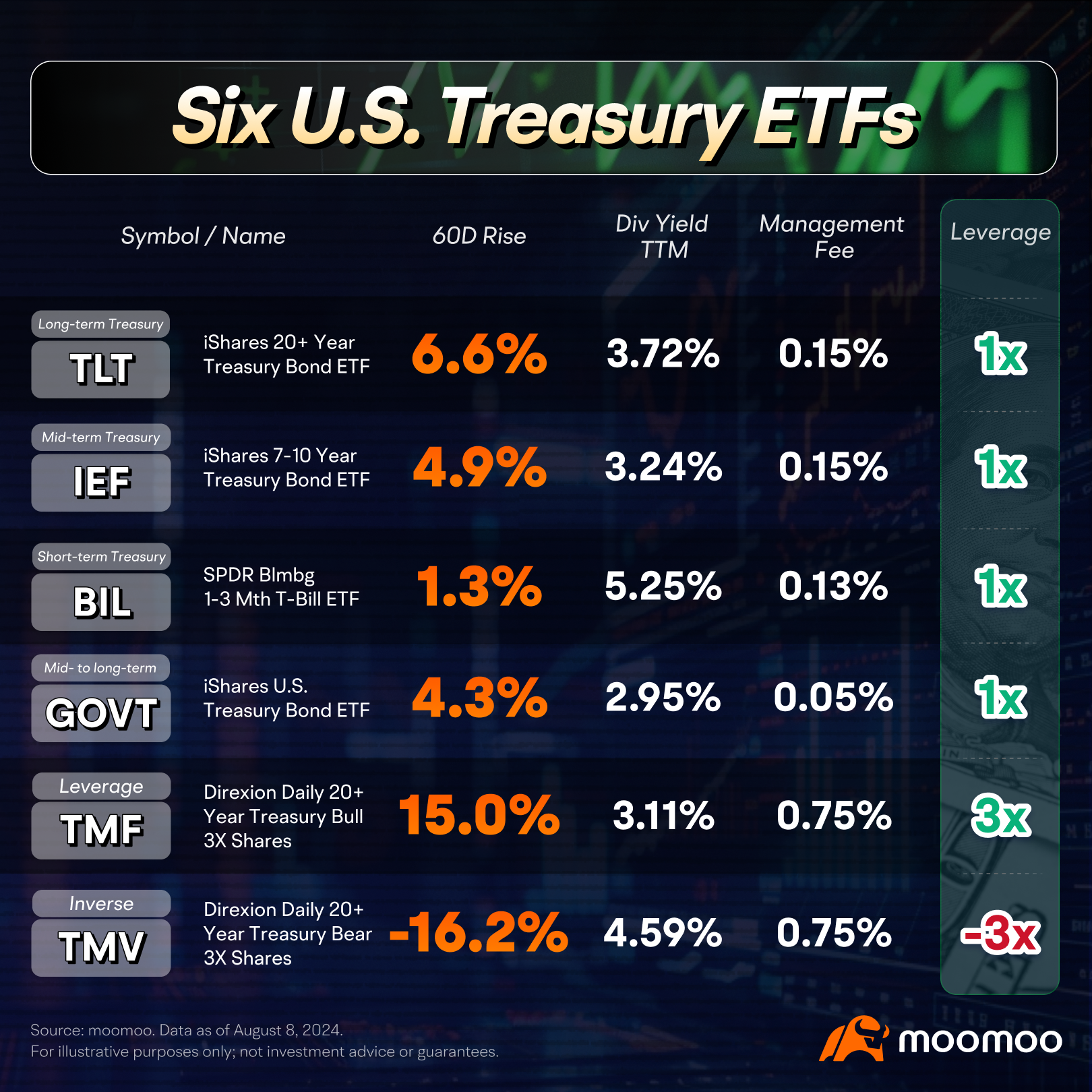
U.S. Treasury bonds come in three main types based on maturity: short-term (T-Bills), medium-term (T-Notes), and long-term (T-Bonds). Their respective maturities are under 1 year, 2-10 years, and 10-30 years. Each category has ETFs that specialize in these maturities. For example:
$iShares 20+ Year Treasury Bond ETF (TLT.US)$ focuses on bonds with maturities over 20 years.
$SPDR Bloomberg Barclays 1-3 Month T-Bill ETF (BIL.US)$ targets bonds with 1-3 month maturities.
Generally, longer maturities mean higher price volatility.
Leveraged and inverse ETFs are unique, using financial derivatives to amplify or inversely amplify the price movements of Treasury bonds. They are suitable for short-term speculation, not long-term investment. For instance:
$Direxion Daily 20+ Year Treasury Bull 3X Shares ETF (TMF.US)$ triples the returns of long-term bonds, making it highly volatile and favored by short-term traders.
$Direxion Daily 20+ Year Treasury Bear 3x Shares ETF (TMV.US)$ inversely triples the returns of long-term bonds, often used during bond market downturns or for hedging."
How to choose:
Short-term speculators typically opt for ETFs focused on medium- to long-term Treasury bonds, or even leveraged ETFs.
Investors seeking low risk and stable returns usually prefer short-term Treasury bond ETFs.
Short-term speculators typically opt for ETFs focused on medium- to long-term Treasury bonds, or even leveraged ETFs.
Investors seeking low risk and stable returns usually prefer short-term Treasury bond ETFs.
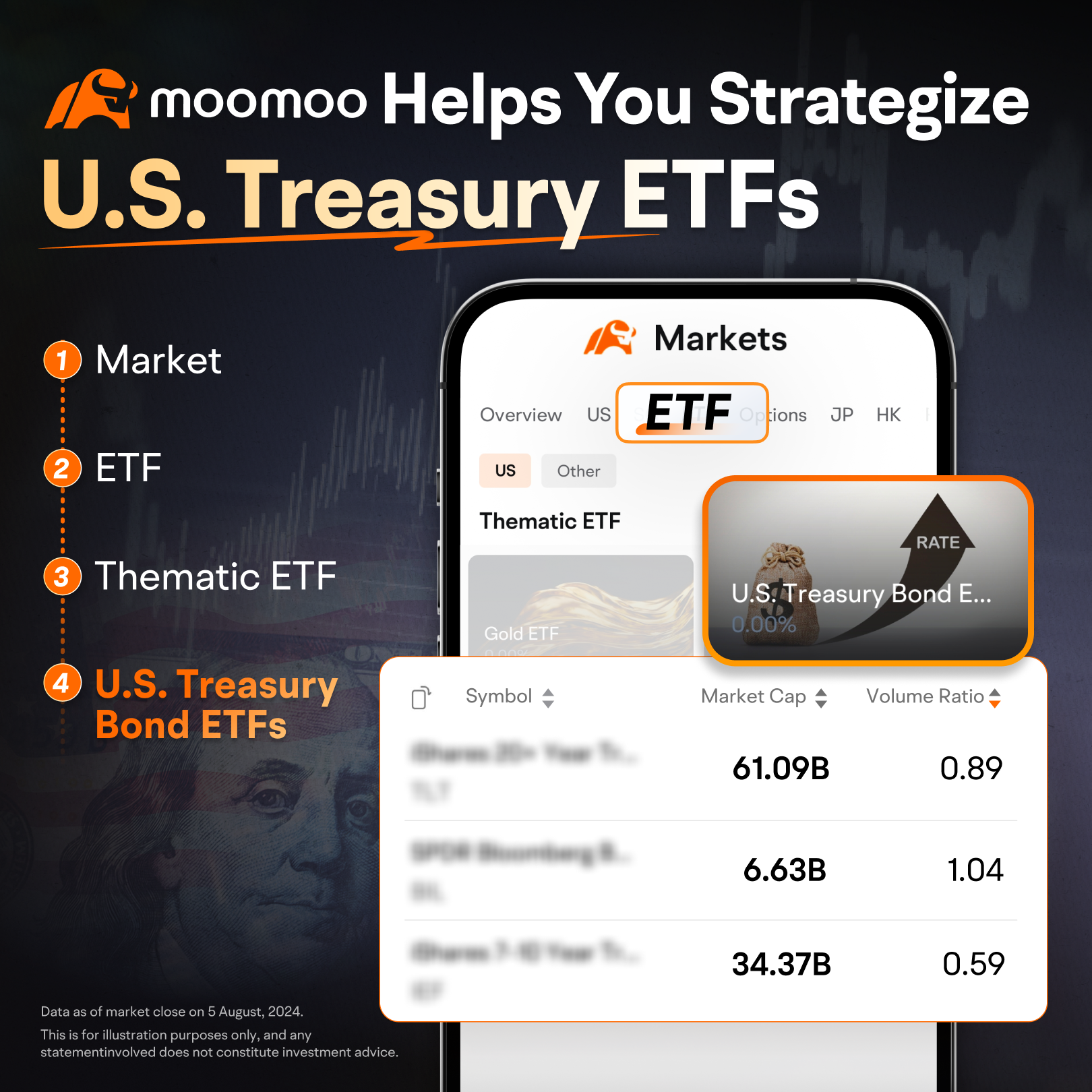
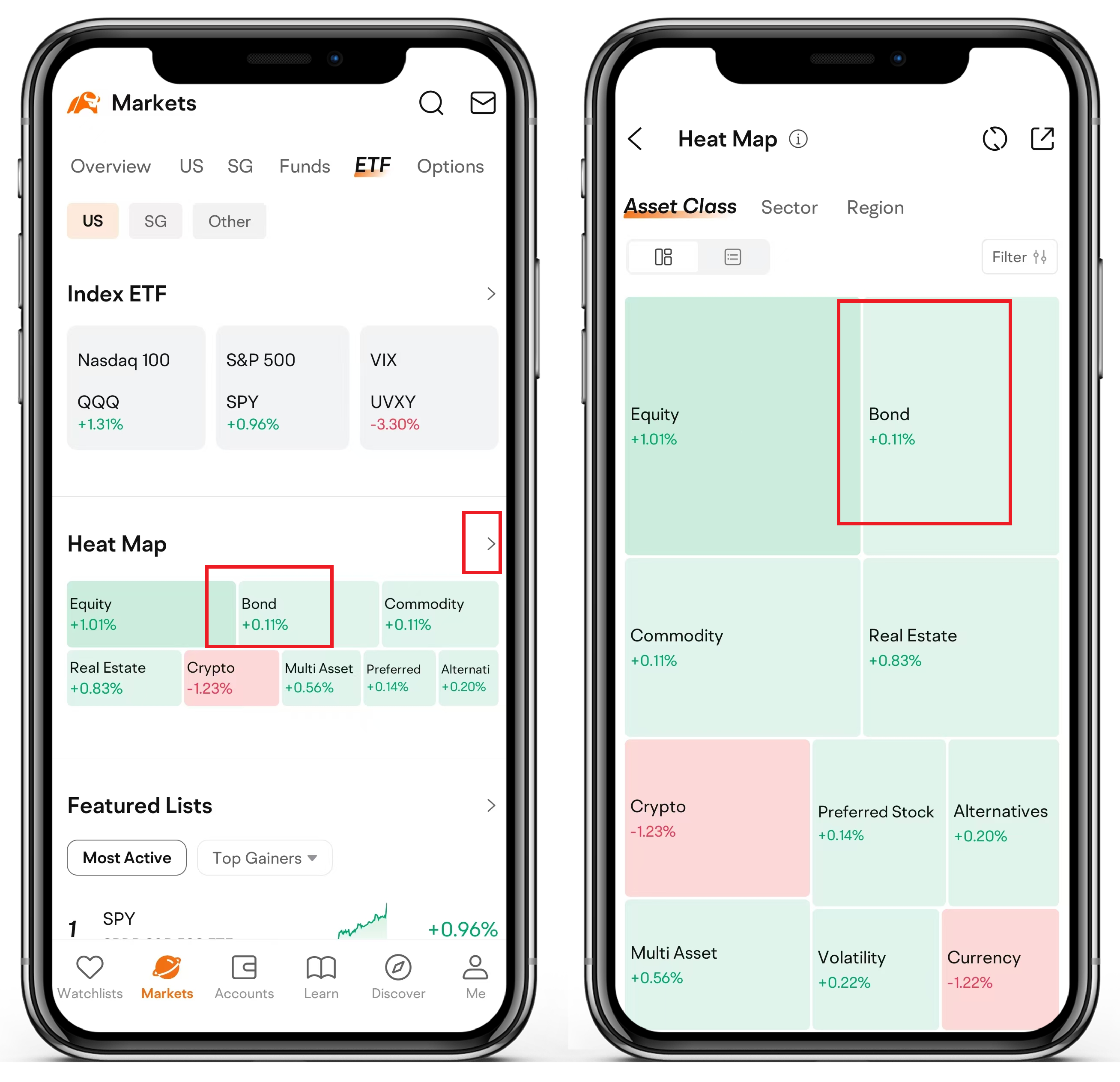
On moomoo, go to Markets > ETF > Thematic ETF > U.S. Treasury Bond ETF for a detailed list.
Corporate bond ETFs: enhancing yield
Unlike Treasury bonds, corporate bonds come from a variety of issuers with different credit ratings, mainly in sectors like utilities, energy, healthcare, and banking.
Investment-grade U.S. Corporate bonds have yields similar to Treasury bonds, influenced by interest rates and liquidity.
High-yield Corporate bonds offer higher returns and are less sensitive to interest rate changes but more vulnerable to risk events.
Some of the larger Corporate bond ETFs are:
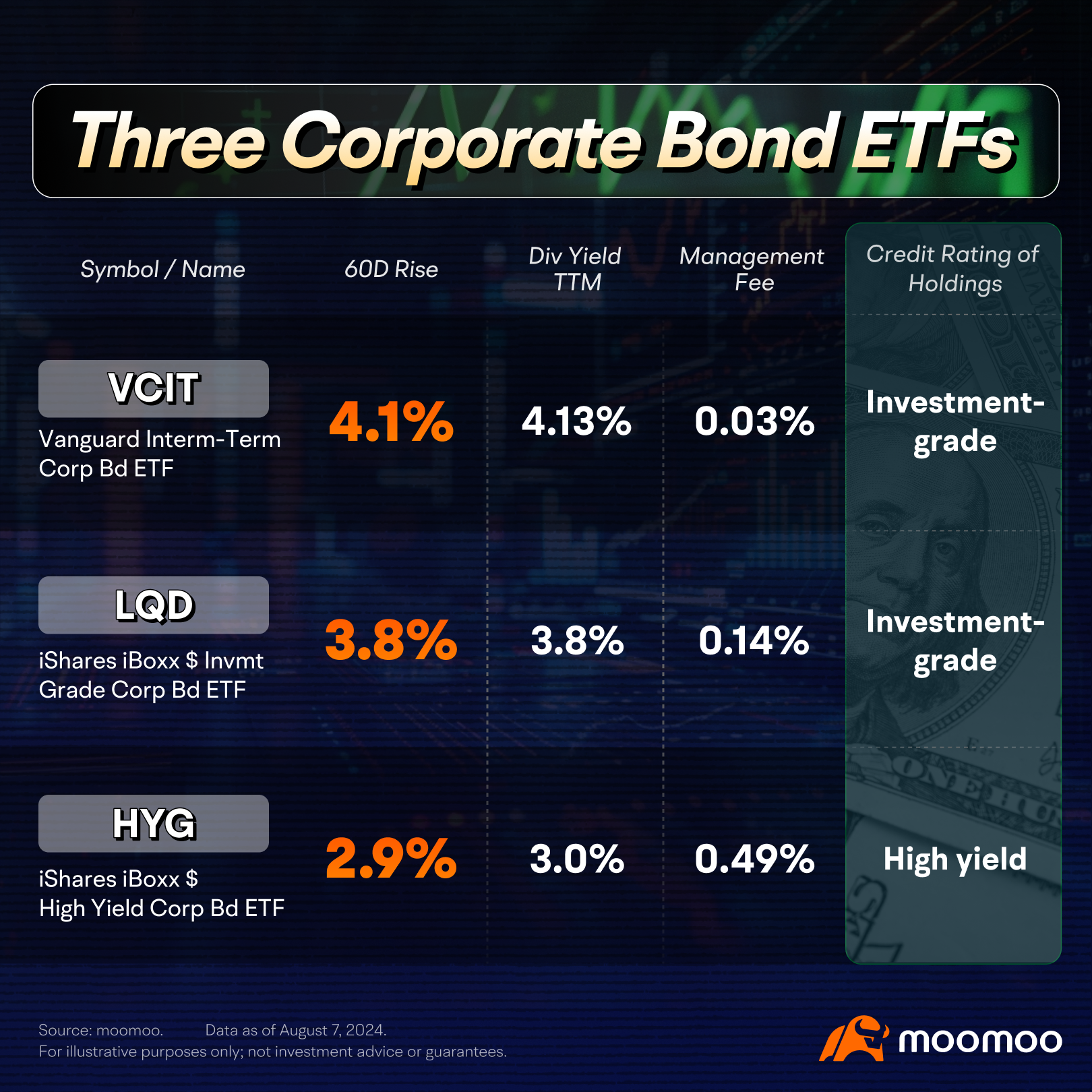
ETFs for investment-grade and high-yield corporate bonds show different performance. For example,
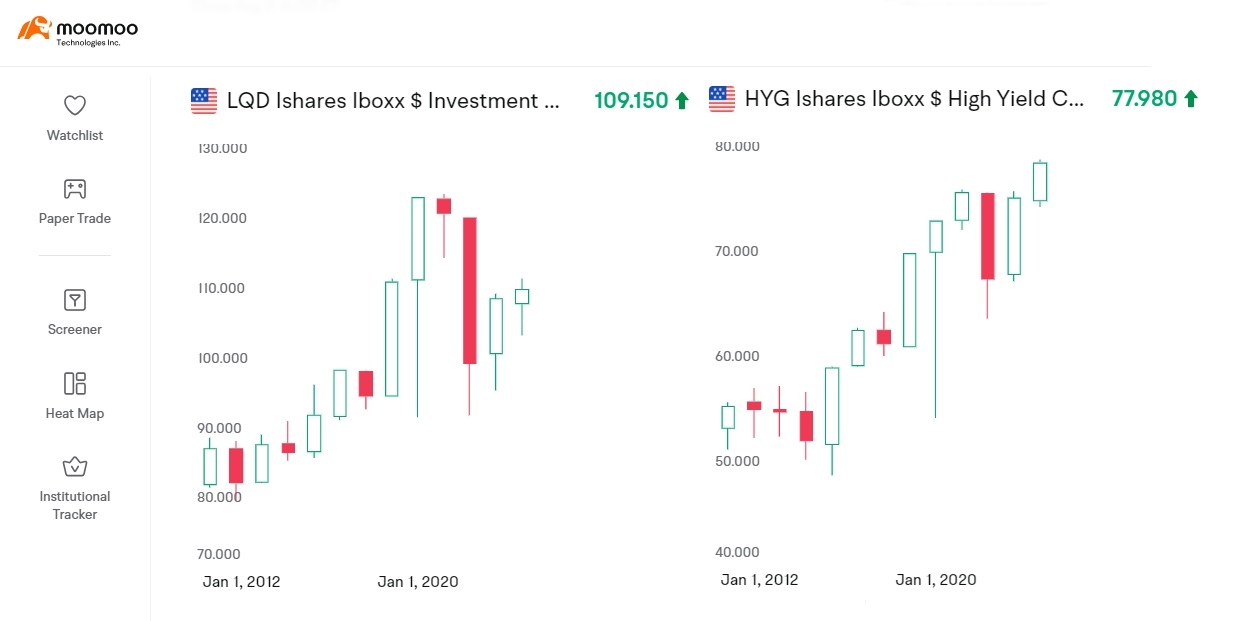
$Ishares Iboxx $ High Yield Corporate Bond Etf (HYG.US)$ has higher historical returns and lower volatility than $Ishares Iboxx $ Investment Grade Corporate Bond Etf (LQD.US)$ but saw bigger drawdowns in early 2020.
How to choose:
For stable yields slightly above similar-term Treasuries, opt for investment-grade corporate bond ETFs.
For higher yields with less interest rate sensitivity, choose high-yield corporate bond ETFs.
For stable yields slightly above similar-term Treasuries, opt for investment-grade corporate bond ETFs.
For higher yields with less interest rate sensitivity, choose high-yield corporate bond ETFs.
Total bond market ETFs: tracking overall bond market
The U.S. bond market offers a wide variety of securities. Some investors prefer to invest in the overall bond market rather than a specific type. Total bond market ETFs are ideal for this, as they are typically large, low-cost, and stable, making them suitable for long-term investment.
Some of the larger total bond market ETFs include:
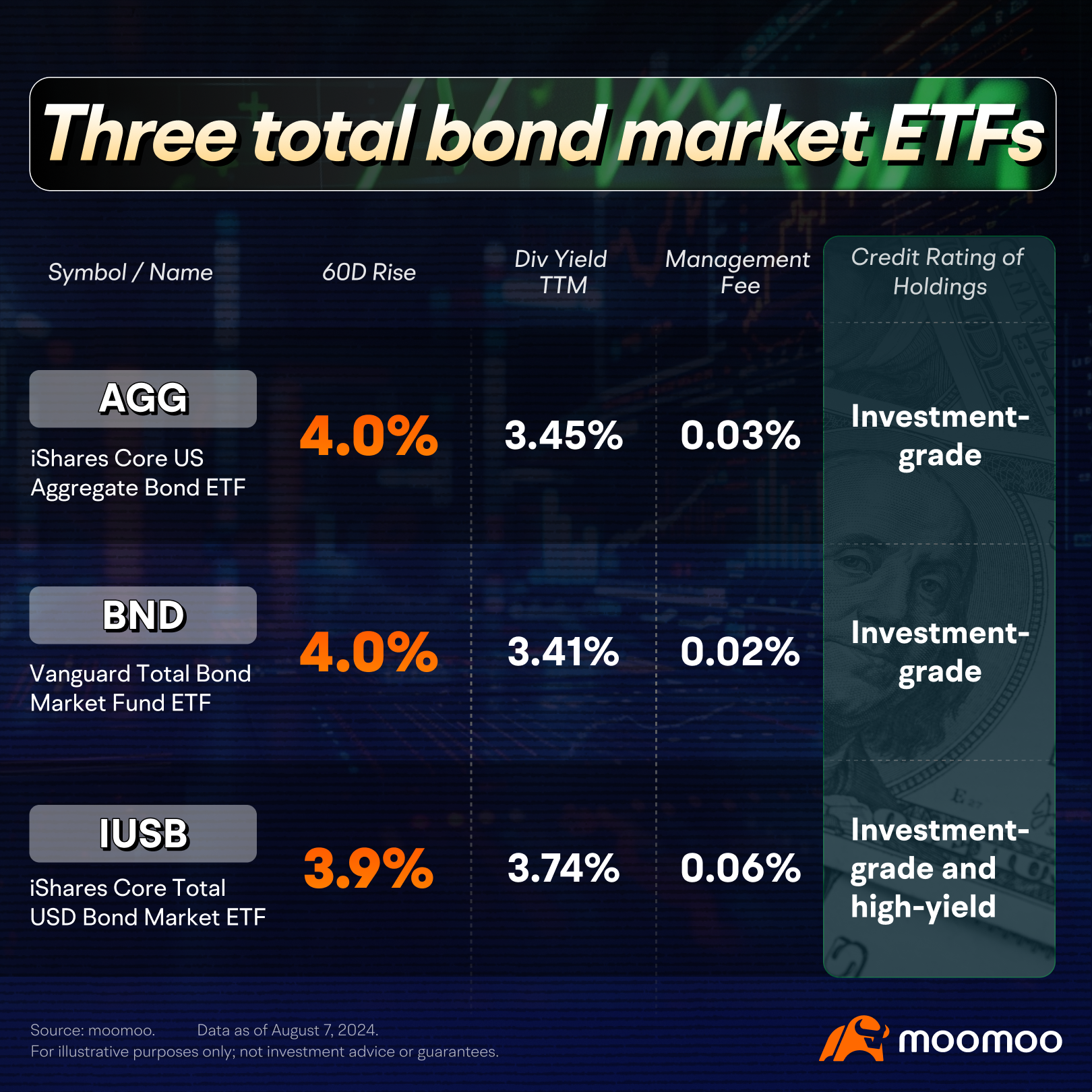
Treasuries, corporate bonds, and asset-backed securities (ABS) dominate the U.S. bond market, making up the bulk of total bond market ETFs. For example:
As of early August 2024, $iShares Core US Aggregate Bond ETF (AGG.US)$ 's holdings are 45.2% Treasuries, 26.3% ABS, and 25.5% corporate bonds.
Other types of U.S. bond ETFs
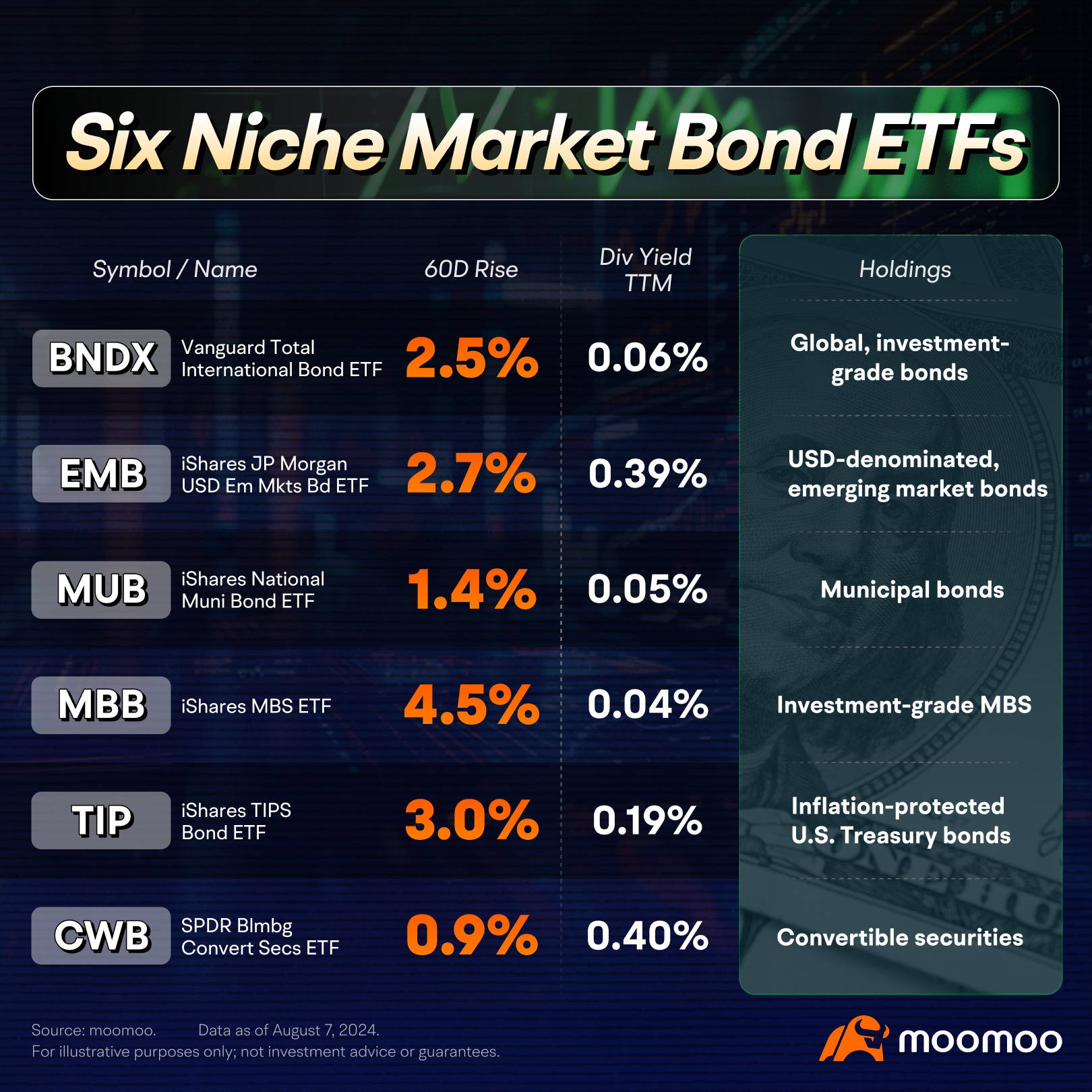
Beyond the three types mentioned, the market offers a variety of options. Here are some representative examples based on fund size:
What factors influence U.S. bond ETF prices?
U.S. bond ETF prices are mainly influenced by the bond market and, to some extent, the stock market.
1. Interest rates greatly impact bond prices
The Federal Reserve’s actions and market interest rate expectations are crucial. Lower rates increase bond prices, and higher rates decrease them.
Additionally, longer-term bonds are more sensitive to interest rate changes. They rise more during rate cuts but fall more during rate hikes.
2. Other factors
- U.S. fiscal policy: Increased government borrowing can lower bond prices by increasing supply.
- Inflation: Affects nominal interest rates and real returns.
- International relations: Foreign central banks are major buyers of U.S. Treasuries, so international dynamics can affect demand and prices.
- Stock market: When stocks fall, especially sharply, investors might shift to bond ETFs for safety.
Summary
Investors can choose long-term or short-term bond ETFs based on risk tolerance, with long-term bonds generally having higher interest rate risk.
High-risk investors seeking higher returns might prefer high-yield corporate bond ETFs or emerging market bond ETFs.
Those without specific preferences or who prefer simplicity might opt for total bond market ETFs.
How to find U.S. bond ETF on moomoo
This presentation is for informational and educational use only and is not a recommendation or endorsement of any particular investment or investment strategy. Investment information provided in this content is general in nature, strictly for illustrative purposes, and may not be appropriate for all investors. Read more