Exploring Gold ETF and Selection Tips
Under the influence of the Federal Reserve's interest rate cuts, gold has continuously reached new historical highs. As of intraday on October 21, 2024, gold has risen by 32.18% for the year.
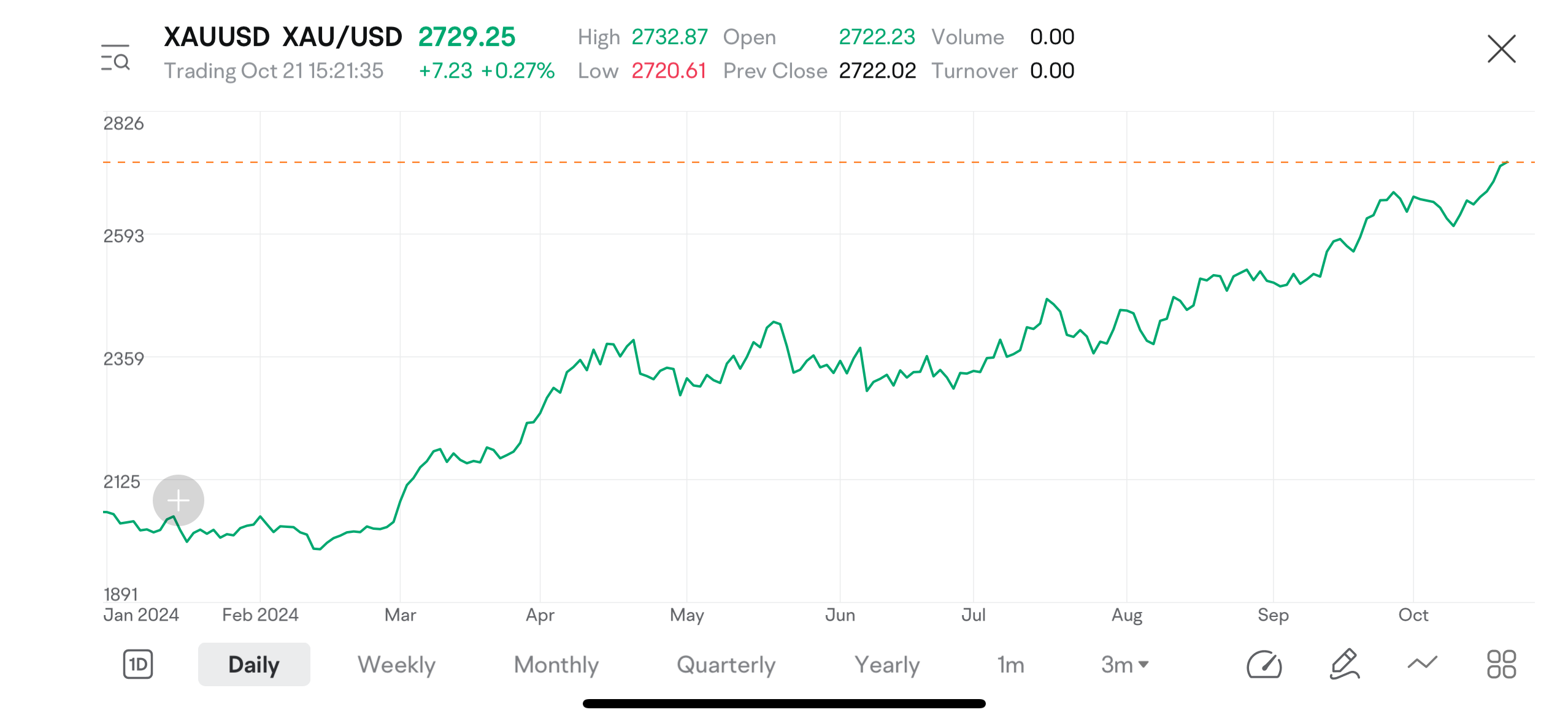
Along with the rise in gold prices, investment demand for gold has also grown stronger. According to the World Gold Council's analysis report, global gold ETFs have experienced net inflows for five consecutive months as of September 2024, and gold trading volume in September increased by 7% month-on-month.
Traditionally, investing in gold has been to preserve wealth. Many people's first reaction might be to buy physical gold, such as gold bars, gold nuggets, or gold coins.
As investment objectives and needs become more diverse, many people choose to invest in gold through other means, such as ETFs.
Investing in gold through ETFs not only avoids the "hassle" of storage and sale but also offers more flexibility and convenience in trading, helping investors seize investment opportunities arising from rising gold prices.
Advantages and Considerations of Gold ETFs
ETFs have several potential advantages over physical gold, including:
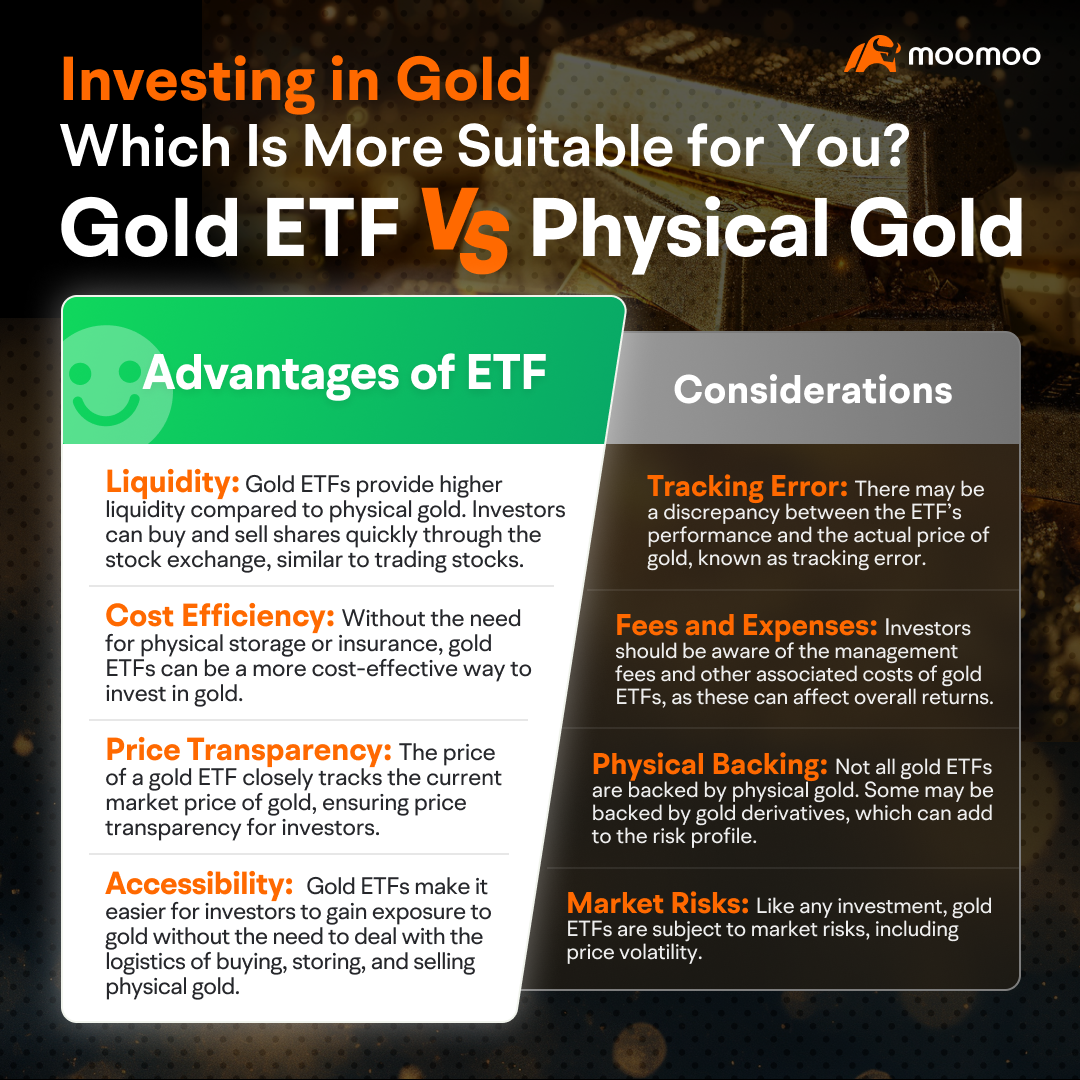
Which is more suitable for you when investing in gold?
Are you deciding whether to invest in ETFs or physical gold? The answer depends on your investment goals.
If you are concerned about global financial market risks, don't plan to trade frequently, or have inheritance needs, then investing in physical gold may be more appropriate.
On the other hand, if you want to diversify your asset allocation or hedge against short-term stock market volatility, ETFs could offer a more flexible and convenient option.
Different categories of gold ETFs
Before investing, you need to know that based on the tracking objectives and underlying assets, the ETFs that invest in gold can be divided into two categories:
Gold ETFs: Track the price of gold.
Gold Miner ETFs: Track the stock prices of mining companies.
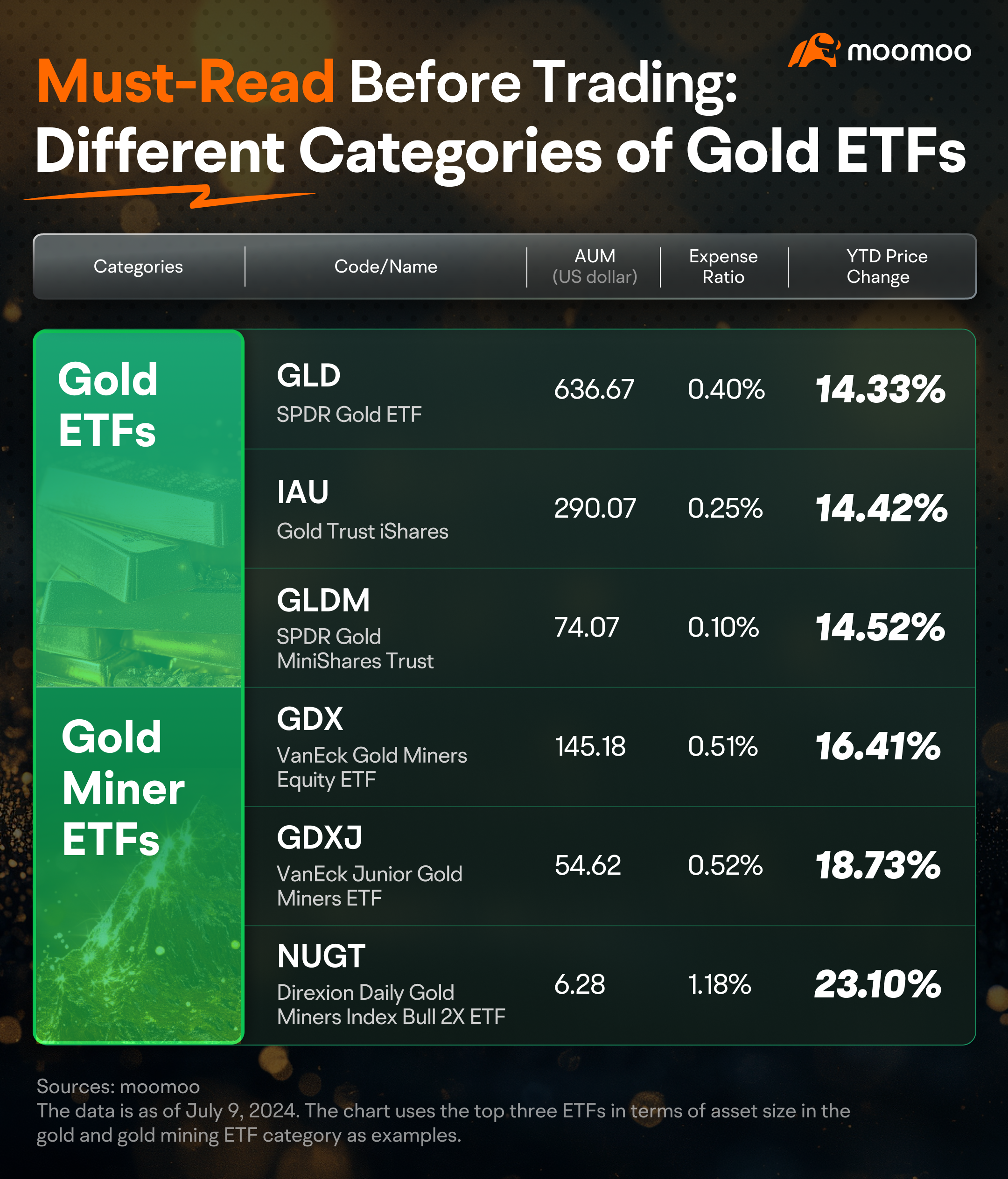
Gold ETFs: What are they? Who are they suitable for?
Gold ETFs track the price of gold. To stay in line with the fluctuations of gold prices, the underlying assets of Gold ETFs are gold bars or gold futures. When gold prices rise, the price of Gold ETFs increases as well, allowing investors to potentially profit from the price differential without actually owning physical gold bars. Most Gold ETFs track the London Gold Fixing Price (LBMA Gold Price PM USD), which is one of the benchmark prices for trading physical gold.
For example, the $SPDR Gold ETF (GLD.US)$ , currently the world's largest by market value, was launched in 2004 as the first ETF to invest in physical gold, with a fee of 0.4%. GLD holds a large amount of physical gold, and each day it buys or sells the corresponding quantity of physical gold based on the ETF's latest net asset value. Each gold bar in their reserve even has a unique serial number. Interested investors can visit the issuer's official website to check the updated list of inventory gold bar numbers daily.
If you think the 0.4% fee for GLD is high, you can also consider other ETFs that track the spot price of gold, such as the $Gold Trust Ishares (IAU.US)$ issued by iShares with a fee of 0.25%, and the $Spdr Gold Minishares Trust (GLDM.US)$ from the same company, State Street Global Advisors, with a fee of 0.10%. However, these two have different market capitalizations. Typically, the larger the market capitalization of the ETF, the more active the trading, and the smaller the bid-ask spread. For those planning to hold the ETF for the long term, fees are an important consideration. But for those who trade frequently, the impact of the bid-ask spread is greater. You can compare these based on your investment objectives and risk tolerance.
Additionally, there are leveraged or inverse Gold ETFs, which primarily achieve their leveraged or inverse effects through instruments like gold futures contracts.
However, it's important to note that Gold ETFs do not pay dividends to investors. If you are looking to receive dividends, you might want to consider gold mining ETFs.
Gold miner ETFs: What are they? Who are they suitable for?
In theory, the trend in gold prices is positively correlated with changes in the stock prices of gold mining companies. An increase in gold prices can also help drive up the stock prices of gold mining companies, and vice versa.
However, there is an essential difference between gold miner ETFs and gold ETFs. If a gold ETF is backed by a basket of physical gold or gold futures, then a gold miner ETF is backed by a basket of stocks from gold mining companies.
For instance, $VanEck Gold Miners Equity ETF (GDX.US)$ is currently the largest by market capitalization and trading volume among gold mining ETFs. It was launched in 2006 with the aim of tracking the stocks of large global gold mining companies (tracking index: NYSE Arca Gold Miners Index), with a fee of 0.51%.
On moomoo, we can view its latest constituents. As of July 12, 2024, the top holding in GDX is $Newmont (NEM.US)$ , which is also the largest gold mining company by market capitalization in the world. In addition to investing in US-listed gold mining companies, it also invests in gold mining companies listed in other countries/regions, such as Agnico Eagle Mines Ltd., Barrick Gold Corporation, and Zijin Mining, among others.
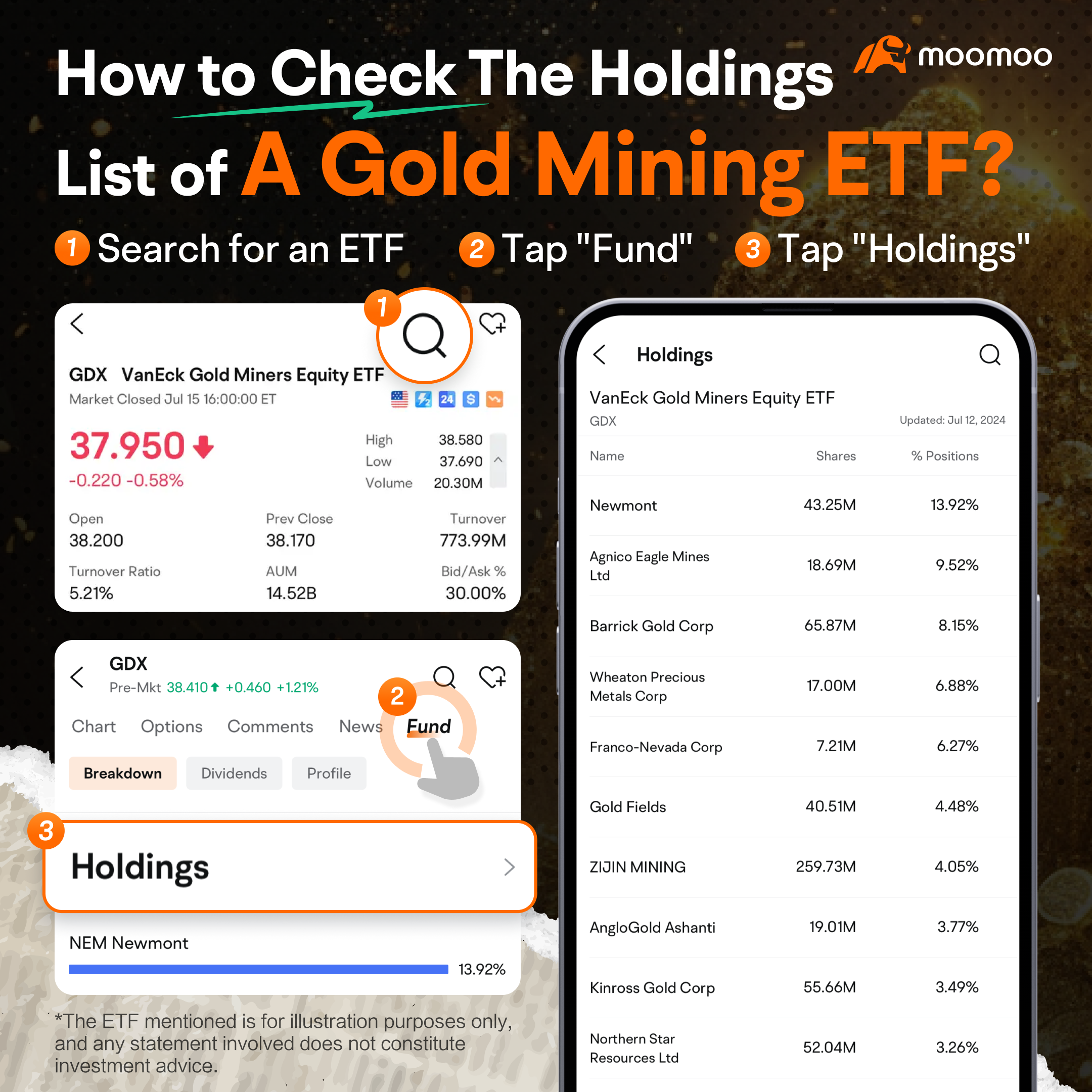
Due to the different tracking targets, different gold mining ETFs have different focuses. Some may concentrate on large-cap companies while others might invest exclusively in small-cap companies. This can lead to variations in the performance of these gold mining ETFs during the same period. For example, $VanEck Junior Gold Miners ETF (GDXJ.US)$, which the same company also issues, is an ETF specifically tracking global small-cap gold mining stocks. If you open the holdings list, you will find a significant difference from the holdings of $VanEck Gold Miners Equity ETF (GDX.US)$. Therefore, although the overall trend may remain consistent, there are still some differences.
Before investing in a gold mining ETF, you need to be aware that gold mining stocks are also affected by market sentiment, company operations, and other comprehensive factors. Generally, gold mining stocks are more volatile compared to the price of gold, thus a gold mining ETF might not necessarily be suitable for investors who aim to invest in gold over the long term.
How to find gold ETFs on moomoo?
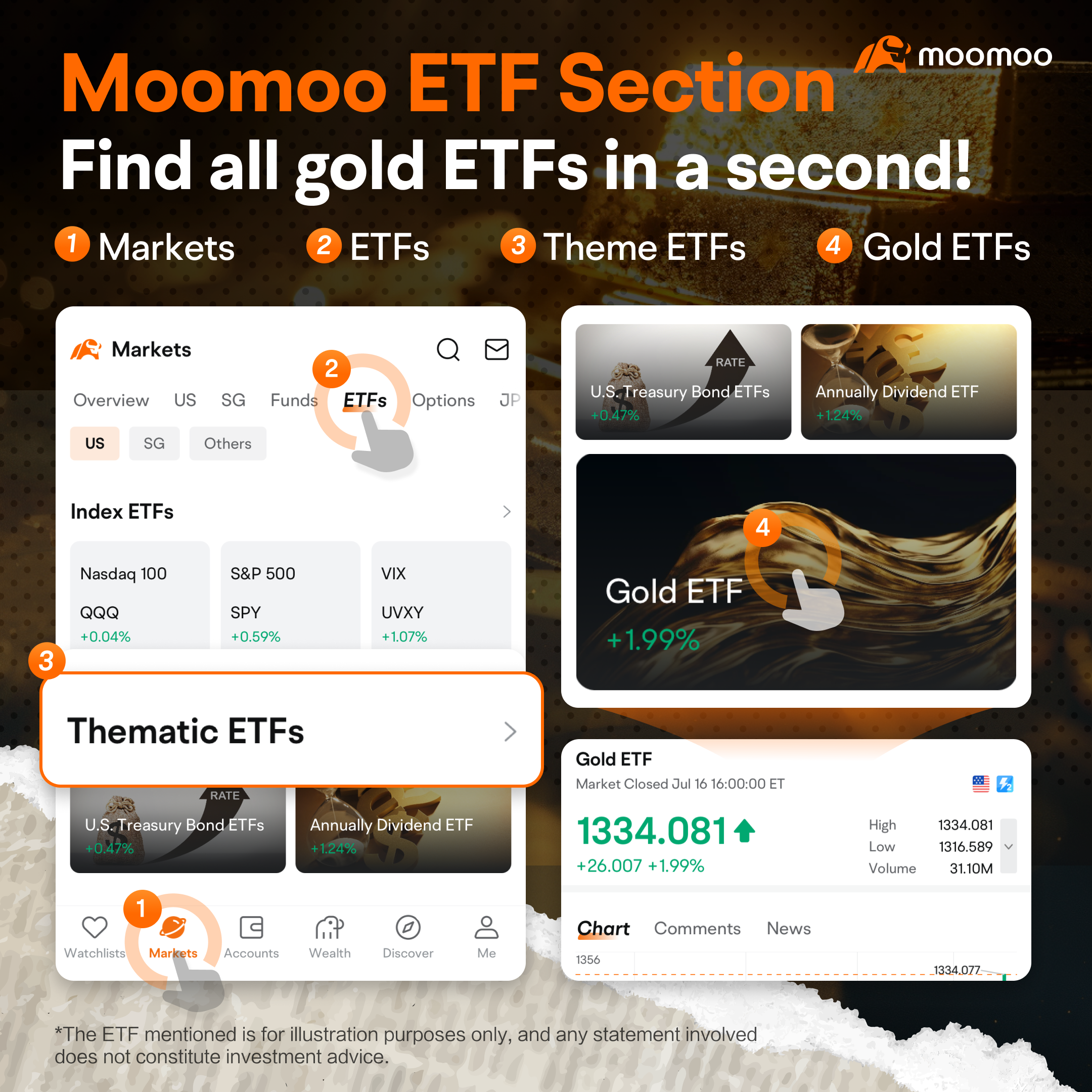
Open moomoo and tap Markets - ETFs.
Find "Theme ETFs", and tap on the arrow on the right side of the column.
Tap into the "Gold ETFs", and you can find the list.
Summary
Investing in gold through ETFs is usually more convenient, transparent, and cheaper than investing in physical gold directly. However, it comes with higher price volatility, additional costs, no physical metal, and may face counterparty risks.
ETFs invested in gold can be divided into two categories according to their underlying assets: gold ETFs and gold miner ETFs, which are essentially different.
Gold ETFs track gold prices, are linked to physical gold, and do not pay dividends.
Gold miner ETFs track a basket of gold mining stock prices, which are related to the price of gold but can also be affected by other factors. They have greater volatility than gold ETFs and may pay dividends periodically.
With moomoo, you can quickly find gold and gold miner ETFs and view detailed information on each ETF.
Which approach do you think is better when investing in gold? If you had to choose between gold ETFs or gold miner ETFs, which would you select and why? Share your unique perspective and discuss it with everyone.
This presentation is for informational and educational use only and is not a recommendation or endorsement of any particular investment or investment strategy. Investment information provided in this content is general in nature, strictly for illustrative purposes, and may not be appropriate for all investors. Read more