Investing in an energy ETF in Canada
As global energy demand rises and market prices fluctuate, traditional energy remains a cornerstone of the economy.
For Canadian investors, energy ETFs (Exchange-Traded Funds) provide a convenient way to access both Canadian and global oil and gas markets. If you’re interested in the energy sector and want to explore how ETFs can help you invest in it, this guide is a great place to start.
What is an energy ETF?
An energy ETF is an investment fund designed to hold a diversified mix of assets related to the energy sector, including both stocks of energy companies and commodity futures with direct exposure to commodity price changes. Rather than investing in a single energy company, an energy ETF offers broad industry exposure, encompassing companies involved in various aspects of energy production, refining, and distribution. This can include traditional resources like oil and natural gas as well as renewable energy sources, providing investors with a well-rounded approach to the energy market.
Types of energy ETF
Energy ETFs come in different types, depending on their investment focus and management style.
By asset class:
Equity ETFs: These hold shares in energy companies.
Commodity ETFs: These focus on physical commodities, like crude oil or natural gas, often through futures contracts.
By management style:
Active ETFs: Managed by professionals aiming to outperform a benchmark by carefully selecting and managing assets.
Passive ETFs: These track an index, providing a more hands-off approach for investors.
By leverage:
Leveraged ETFs: Use financial leverage to amplify returns, which can lead to higher rewards but also comes with increased risk.
Unleveraged ETFs: These avoid leverage and offer returns that closely follow the index, making them suitable for investors who prefer a safer approach.
By geographic focus:
Canadian energy ETFs: Focus on Canadian energy companies, a great choice for those who want to support the Canadian industry and reduce exposure to foreign exchange risk.
U.S. energy ETFs: Provide access to a larger selection of energy companies, including major players listed in the U.S.
Why invest in Canadian energy ETFs?
Low management costs: Canadian energy ETFs typically have a low management expense ratio (MER). For example, a MER of 0.25% translates to an annual fee of just $25 on a $10,000 investment—making them cost-effective compared to other managed funds.
Dividend income: Many Canadian energy companies pay dividends, and energy ETFs pass these dividends on to investors. This means you can enjoy a steady income stream, which is appealing for those looking for regular cash flow.
Top Canadian energy equities ETF
Some well-known Canadian energy equities ETFs available in CAD include:
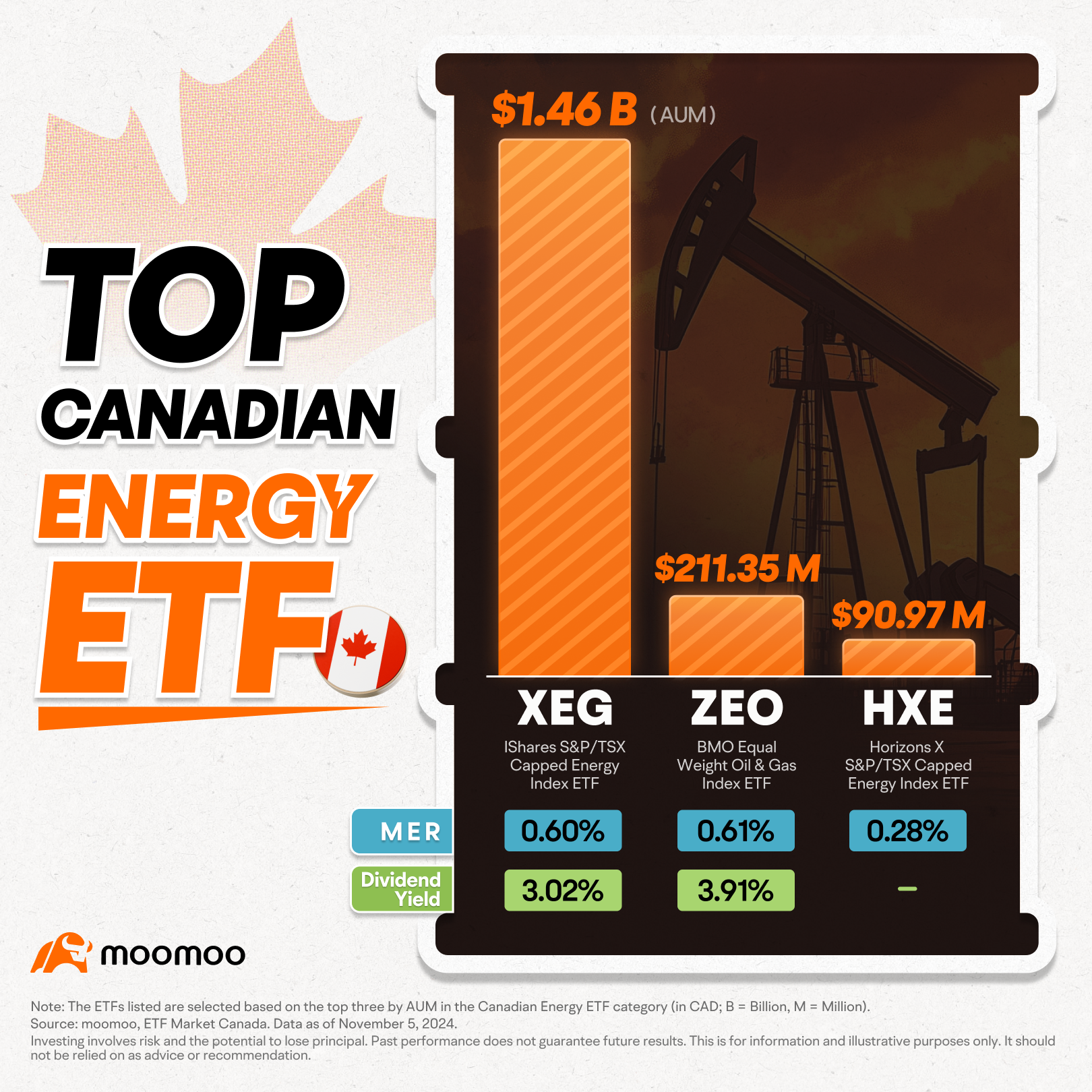
$ISHARES S&P/TSX CAPPED ENRG IND ETF UNIT (XEG.CA)$ : Provides exposure to Canadian oil and gas companies. XEG is market-cap weighted, so larger companies like Suncor and Canadian Natural Resources have a greater influence on the ETF’s performance.
$BMO EQUAL WEIGHT OIL & GAS IDX ETF CAD UNITS (ZEO.CA)$ : Invests evenly across major Canadian oil and gas firms. ZEO uses an equal-weight approach, meaning each company in its portfolio has a similar weight. This reduces reliance on any single large company, providing balanced exposure across the Canadian oil and gas sector.
$GLOBAL X S&P TSX CAPPED ENRGY INDEX ETF SHS (HXE.CA)$ : Follows the S&P/TSX Capped Energy Index, covering a broader range of Canadian energy stocks.
Each ETF has unique benefits, so it's essential to consider factors like management fees, company holdings, and performance history before deciding.
Top U.S. energy equities ETFs for Canadians
For Canadians looking to access U.S. energy markets, some key U.S.-based energy ETFs traded in USD include:
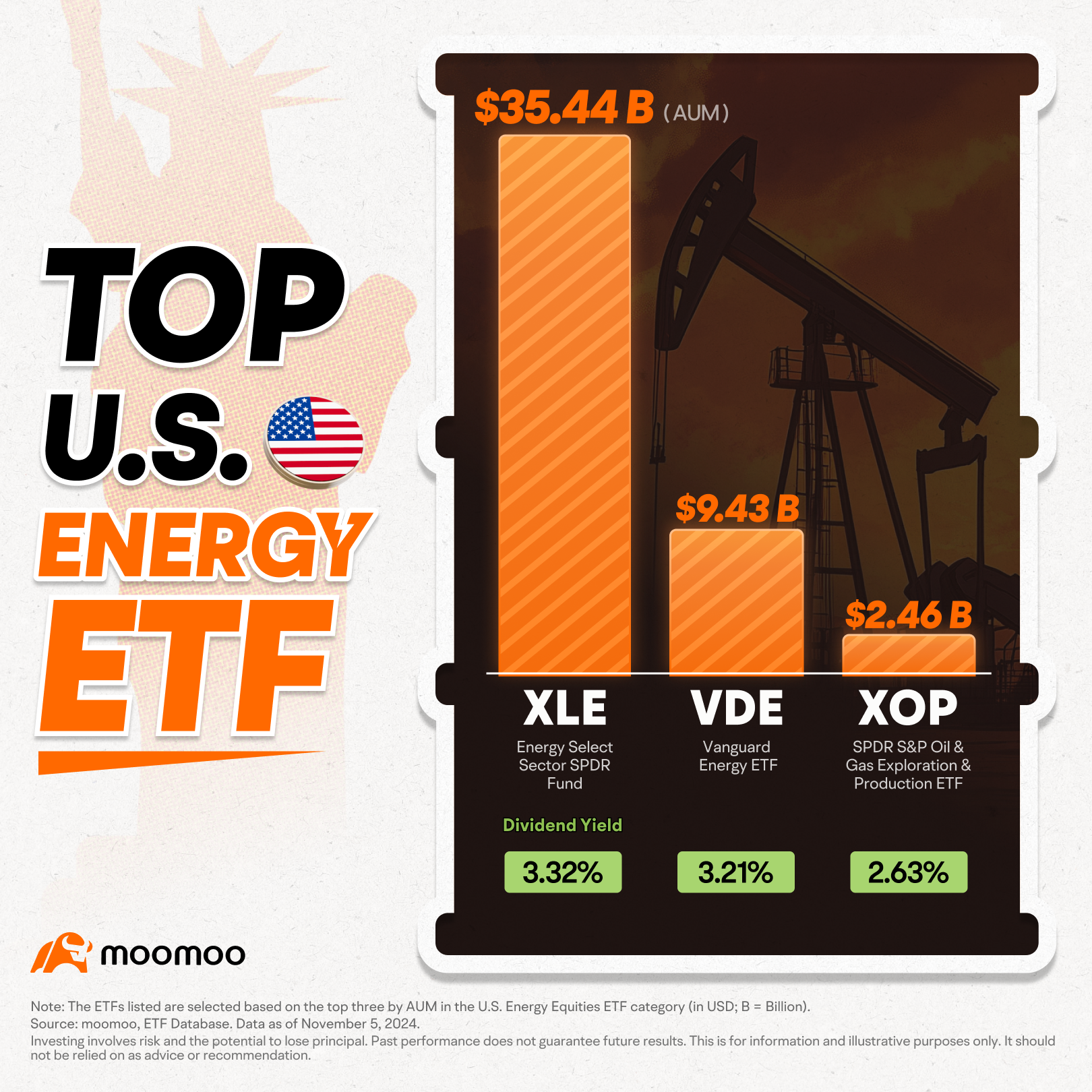
$Energy Select Sector SPDR Fund (XLE.US)$ : The XLE is one of the most widely held U.S. energy ETFs. Its portfolio includes major players in the American energy industry, including Chevron and ExxonMobil.
$Vanguard Energy Index Fund ETF (VDE.US)$ : This ETF offers a diversified investment in U.S. energy stocks, covering stocks from exploration to distribution.
$SPDR S&P Oil & Gas Exploration & Production ETF (XOP.US)$ : Focuses more on companies involved in exploration and production, XOP provides a high-risk, high-reward profile for those comfortable with volatility.
Top commodity ETFs and leveraged ETFs
If you're interested in ETFs or leveraged ETFs that track commodity prices, here are some options:
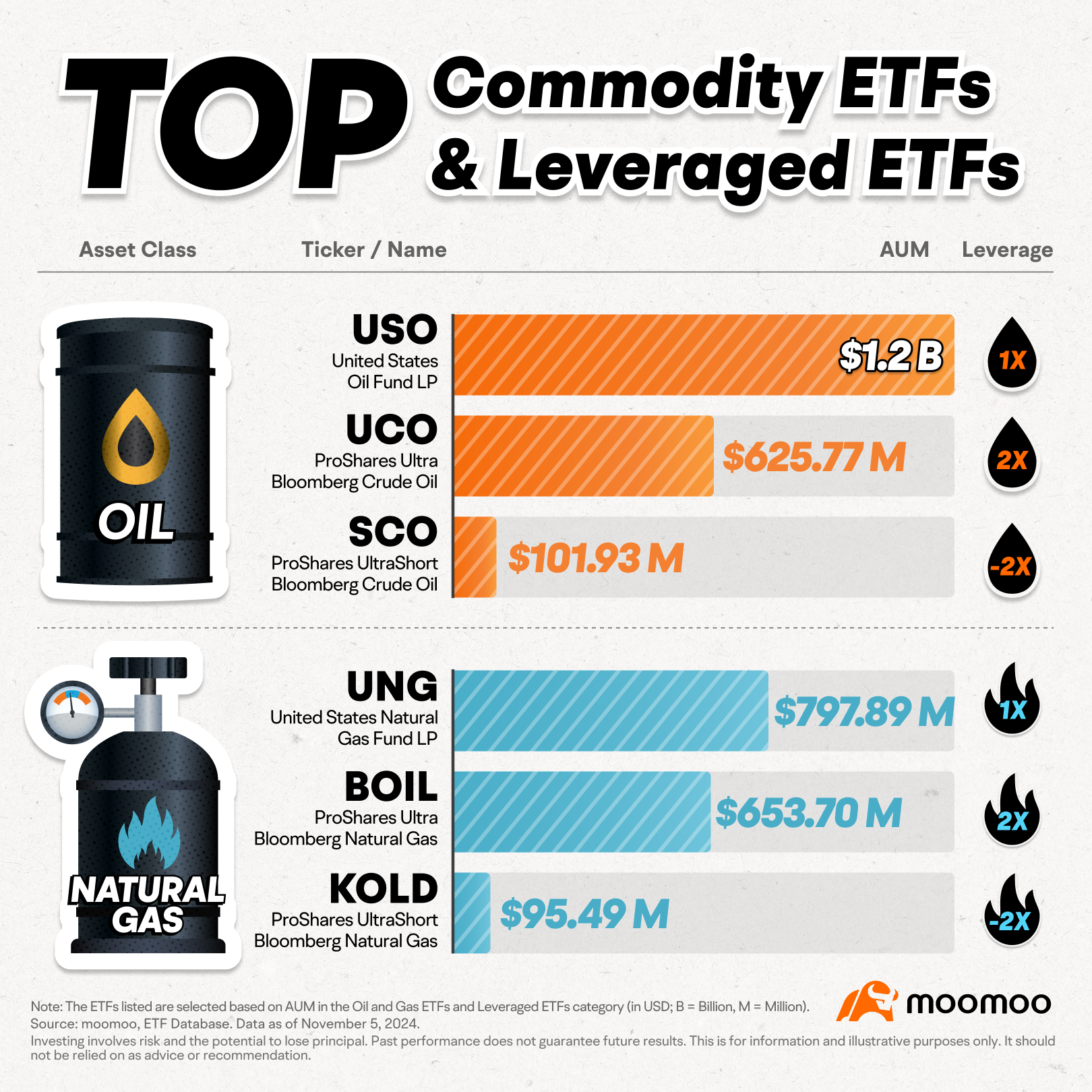
Oil ETFs
$United States Oil Fund LP (USO.US)$ : Tracks daily changes in crude oil prices—ideal for investors looking for straightforward oil exposure.
$ProShares Ultra Bloomberg Crude Oil ETF (UCO.US)$ : Offers twice (2x) the daily performance of oil prices. Suited for short-term investors with a bullish outlook on oil.
$ProShares UltraShort Bloomberg Crude Oil ETF (SCO.US)$ : Provides twice (2x) the inverse daily performance of oil prices, appealing to short-term investors who expect oil prices to fall.
Natural Gas ETFs
$United States Natural Gas (UNG.US)$ : Follows daily natural gas price movements for investors wanting exposure to this commodity.
$ProShares Ultra Bloomberg Natural Gas (BOIL.US)$ : Gives twice (2x) the daily return on natural gas prices, suited to those bullish on natural gas in the short term.
$ProShares UltraShort Bloomberg Natural Gas (KOLD.US)$ : Offers twice (2x) the inverse daily return of natural gas prices, targeting investors who expect short-term declines.
Note: Leveraged ETFs come with high volatility and are best suited for experienced investors focused on short-term price moves.
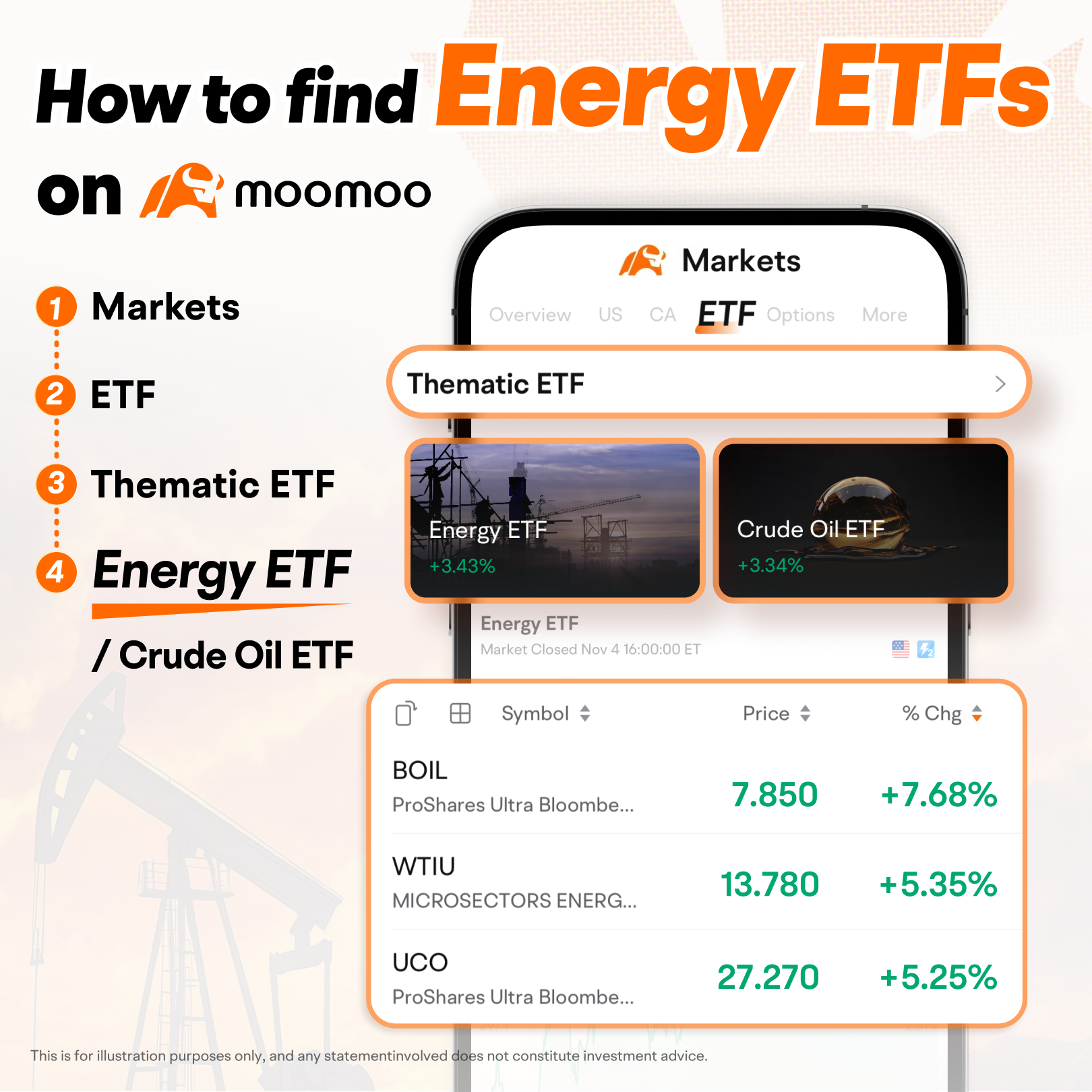
How to find Energy ETFs on moomoo
Open the moomoo App: Launch the app and navigate to the “Markets” tab.
Select "ETF": Look for the "ETF" section and click on it.
Choose Thematic ETFs: Under the ETF options, select "Thematic ETF" to find Energy ETFs and Crude Oil ETFs.
Sort and Filter: On the detailed list page, you can sort the ETFs based on various criteria, including price changes, trading volume, transaction value, and market capitalization.
Pros of investing in energy ETFs
Investing in energy ETFs has several advantages:
Diversification: ETFs offer exposure to multiple companies within the energy sector, reducing reliance on any single stock.
Stability: Traditional energy sectors tend to be resilient in economic downturns, providing steady income through dividends.
Cost-Effectiveness: ETFs often come with lower fees than mutual funds, which can increase your net returns over time.
Cons of investing in energy ETFs
While energy ETFs are appealing, there are also some drawbacks:
Market volatility: Energy stocks can be sensitive to geopolitical events and changes in oil and gas prices, which could lead to fluctuating returns.
Environmental concerns: Traditional energy investments may be less favorable in a world increasingly moving toward renewable energy.
Concentration risk: Many energy ETFs are heavily invested in a few large companies, meaning poor performance by these companies can impact the ETF’s overall returns.
Conclusion
Traditional energy ETFs offer Canadians an accessible way to invest in a historically strong sector. With options to invest in Canadian and U.S. energy markets, investors can choose ETFs that align with their financial goals and risk tolerance.
However, it's essential to stay informed and consider the long-term outlook of the energy sector, especially as renewable energy continues to grow. By balancing these factors, Canadians can use energy ETFs as a strategic part of their investment portfolio.
This presentation is for informational and educational use only and is not a recommendation or endorsement of any particular investment or investment strategy. Investment information provided in this content is general in nature, strictly for illustrative purposes, and may not be appropriate for all investors. Read more