How to Budget Money: Your Step-by-Step
Most people need some way of seeing where their money is going each month. A budget allows you to take control of your finances by tracking income, managing expenses, and ensuring you have enough for savings and investments. Here's a step-by-step guide to help you budget your money effectively.
What is a budget?
A budget is a financial plan that outlines an individual's or an organization's expected income and expenditures over a specific period. It serves as a roadmap for managing money, helping to ensure that there is enough income to cover all expenses, as well as to allocate funds for savings, debt repayment, and other financial goals. Simply put, a budget is plan for what’s coming in and what’s going out.
Why make a budget?
Making a budget can help you align your income with your savings and expenses. It guides your spending to help you to meet your financial objectives.
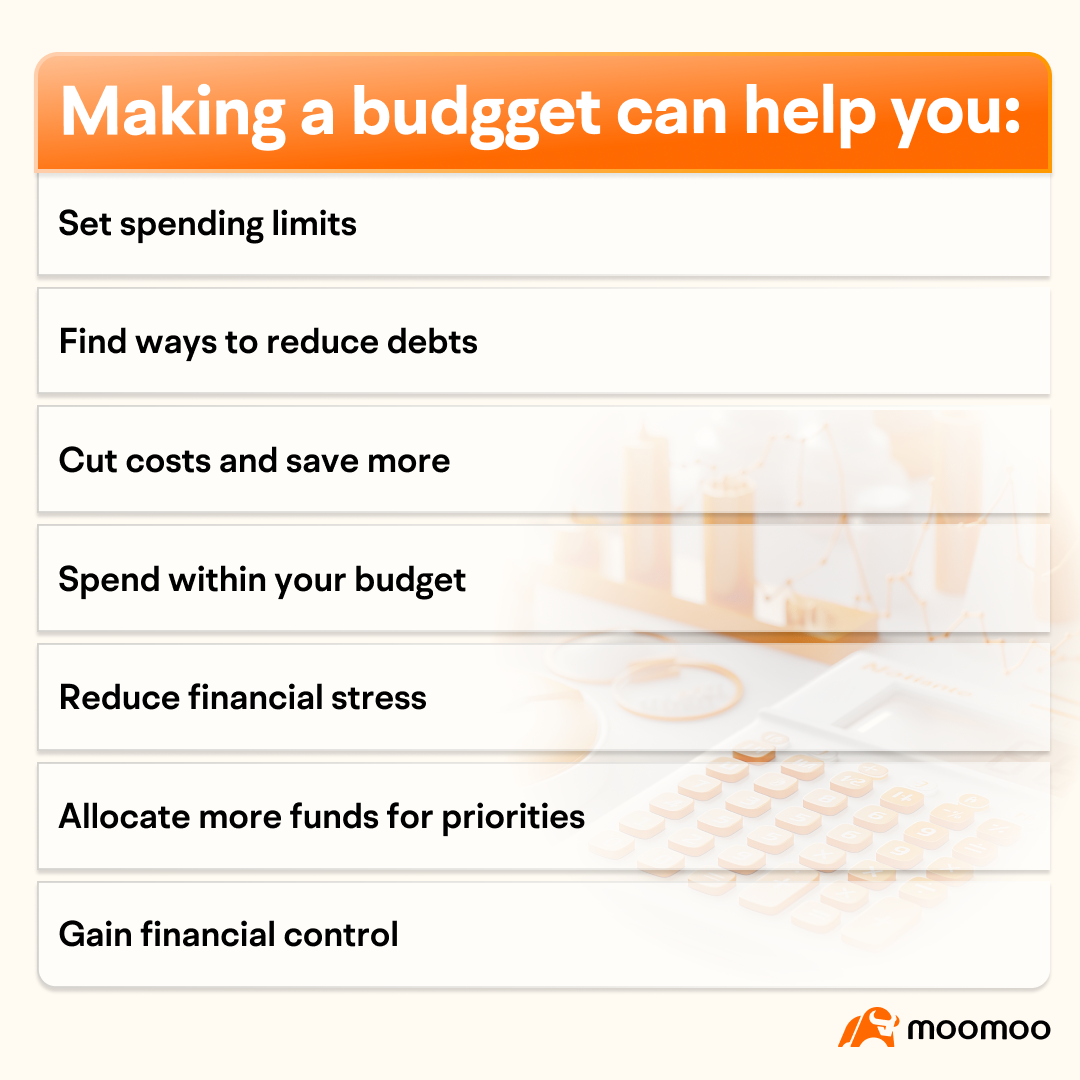
Making a budget can help you:
Set spending limits
Find ways to reduce debts
Cut costs and save more
Spend within your budget
Reduce financial stress
Allocate more funds for priorities
Gain financial control
Steps to make a budget
Step 1: Calculate your net income
When starting to budget your money, the first step is to calculate your income. Add up all the money you regularly receive, such as your salary, side jobs, and any other consistent cash flows, after taxes and deductions. Use this net figure as the basis to plan your spending, savings, and investments. If your income fluctuates, consider using an average or the lowest monthly income for a conservative approach. Factor in any dividend income from investments as well.
Step 2: Understand your spending
In this step, you should divide your income into three parts: necessities (such as mortgage or student loans), variable expenses (like entertainment or dining), and savings. Decide on a savings percentage to set aside monthly and consistently follow this plan.
Figure out your monthly spending on necessities
Make a list of all of your monthly bills: rent, water, electricity, gas, mortgage payments, car payments, your phone bill, health insurance, etc. These are referred to as "fixed" spendings, which are recurring monthly payments that typically remain consistent.
Figure out your variable spendings
These are expenses that aren’t necessarily fixed and aren’t necessary for keeping a roof over your head and the lights on. For example, these can include costs for dining out, entertainment, groceries, and gas, among others. It's important to track these expenses regularly to understand your spending patterns and identify areas where you can potentially cut back. By categorizing and monitoring your variable expenses, you can gain better control over your budget and make more informed financial decisions.
Determine the saving percentage
After adding up all of fixed and variable expenses, the rest of your income can be used for saving or other diversified investment purposes.
Step 3: Set your financial goals
Before implementing your budget planning, it's better to list your short- and long-term goals. Achieve short-term goals, like creating an emergency fund or reducing credit card debt, within one to three years. Long-term goals, like retirement or education savings, could require years to achieve. Remember, your goals don’t have to be set in stone, but identifying them can help motivate you to stick to your budget. For example, it may be easier to cut spending if you know you’re saving for a vacation.
Step 4: Make a plan
This is where everything comes together: What you’re actually spending vs. what you want to spend. Analyze your fixed and variable expenses to project future spending, then align this with your net income and priorities, setting realistic limits for each expense category.
You might choose to break down your spendings even further, between things you need to have and things you want to have. For example, gasoline is a necessity for daily commuting, whereas a music subscription is a luxury. This distinction is crucial for reallocating funds towards your financial goals.
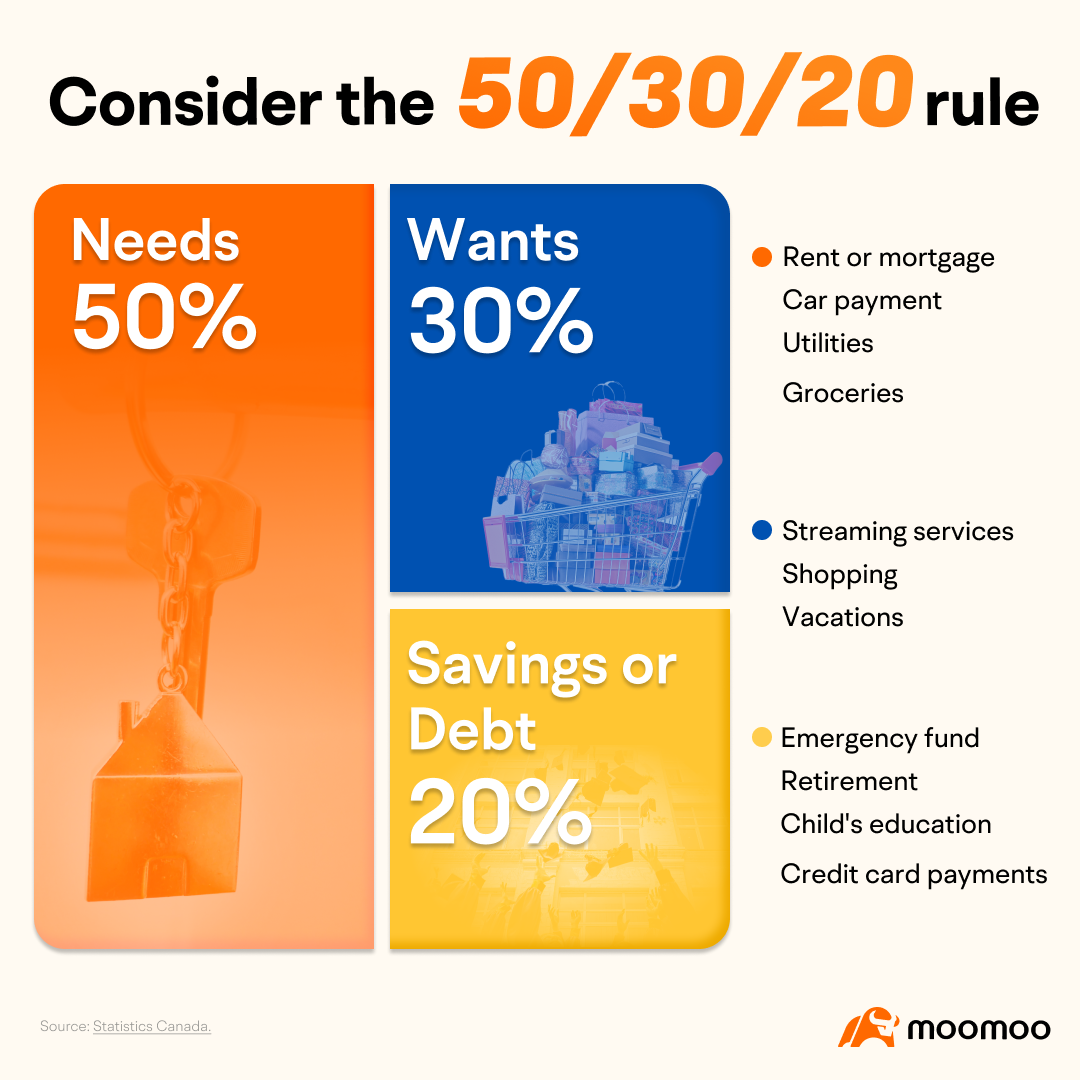
Consider the 50/30/20 rule
Consider this a flexible guideline rather than a strict rule: Allocate about 50% of your income to essential expenses such as rent, utilities, and car payments, covering mostly fixed costs. Use 30% for variable expenses, where you can adjust to save or reduce costs. The final 20% should ensure your financial health, covering debt repayment, savings, and investments. These percentages can adjust based on your income, additional financial needs, and debt, serving as a general benchmark. Here's the more detailed breakdown:
Step 5: Track and adjust your spending to stay on budget
Having tracked your income and expenses, you can adjust to avoid overspending and save for your goals. Consider targeting your “wants” for initial reductions. Can you skip movie night in favor of a movie at home? If you've made adjustments to your spending on wants, scrutinize your recurring monthly costs. On close inspection, what seems like a necessity might actually be a “hard to part with.”
Step 6: Review your budget regulary
Regularly reviewing your budget and spending is crucial to ensure you're on course. Consider budgeting as a marathon and not a sprint. Once your budget is set, it’s important to review it and your spending on a regular basis to be sure you are staying on track. Elements of your budget will inevitably change: You may get a raise, your expenses may change or you may reach a goal and want to plan for a new one. For any reason, get into the habit of regularly checking in with your budget following the steps above.
How to stick to your budget?
There are tons of tips and tricks to sticking to your budget every month. But following “tons” of suggestions is hard. Here are some tips on how to make the whole thing less painful all around:
1. Keep it real
If you want to succeed, you have to push yourself—but you also have to be realistic. The same is true with your budget. Push yourself to spend better and save more—but be realistic when you set up every single budget line.
2. Set up auto draft
It's quite convenient and has great rewards for you. You could set up automatic bank drafts so some of your bills and savings deposits are paid straight out of your paycheck.
In this way, you don’t even touch the money—so you won’t be tempted to put that $200 for your emergency fund toward anything you want but don’t need.
3. Use cash
Paying with cash for everyday purchases will help you keep track of how much money you’re spending way easier than when you’re just mindlessly using your credit card. Take out a certain amount of cash weekly, and once that amount is gone, you’re done. This approach also encourages you to think about your spending much more carefully.
This presentation is for informational and educational use only and is not a recommendation or endorsement of any particular investment or investment strategy. Investment information provided in this content is general in nature, strictly for illustrative purposes, and may not be appropriate for all investors. Read more