15 Best Australian Finance Books Every Investor Should Read

In the complex realm of finance, knowledge is the greatest asset at the disposal of investors. For investors in Australia, the right resources can be crucial for uncovering new opportunities and successfully navigating intricate markets. This is why we've created a compilation of essential financial books that every investor should think about including in their reading collection.
Whether you're an experienced investor or a beginner, the right books can offer essential insights and actionable strategies to assist investors in navigating intricate markets. Leading financial books go beyond mere theory; they encapsulate the valuable insights and experiences of experts who have navigated this journey before.
This article features 15 essential finance books that every Australian investor should think about reading. The books address topics ranging from foundational investing principles to sophisticated techniques that can provide investors with a competitive advantage in the market. Every book demonstrates how knowledge can influence financial achievement.
Top 15 finance books you should read
1. Rich Dad Poor Dad
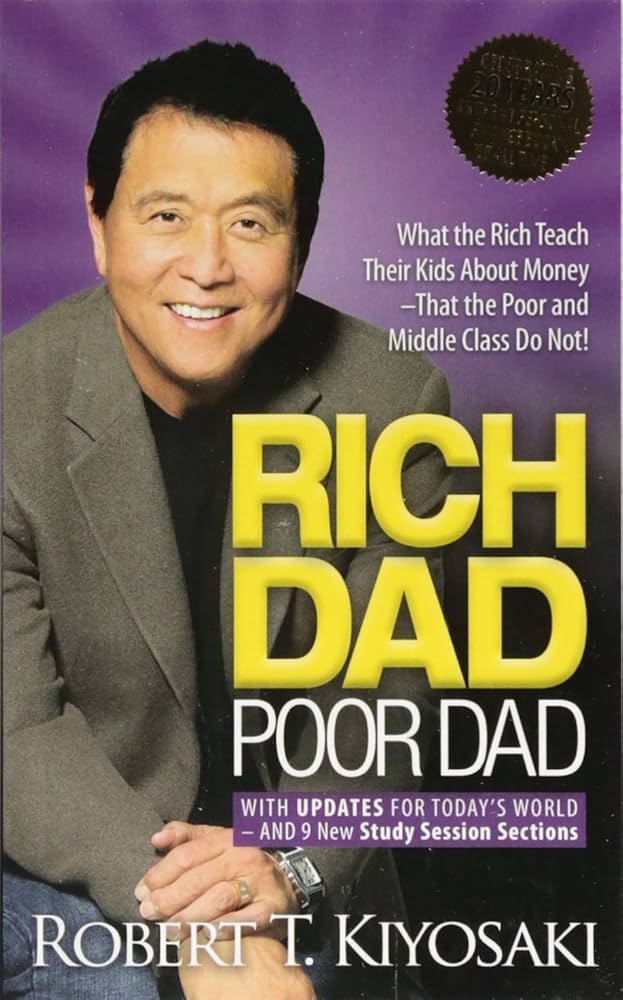
In this book, author draws on the life lessons he learned from two significant mentors: his own father, a well-educated academic known as "Poor Dad," and his best friend's father, a prosperous businessman and real estate investor referred to as "Rich Dad." By comparing these two contrasting perspectives, the author delves into the difference between earning money through conventional means and leveraging money to generate wealth. The book underscores the value of financial knowledge, the importance of asset investment, and the potential of entrepreneurship as a path to financial freedom, rather than depending solely on traditional jobs. It inspires readers to critically evaluate their financial education and strive for financial independence.
Key points:
Understanding assets and liabilities: Assets are the things that put money in your pocket, and liabilities are the things that take money out of your pocket.
The importance of financial literacy: Understanding accounting, investing, markets, and the law in order to make informed financial decisions.
Entrepreneurship and investing: Readers are encouraged to build passive income through entrepreneurship and investing rather than relying solely on income from work.
Overcoming fear and self-doubt: Success requires courage and a sense of adventure; don't be afraid to fail.
Financial freedom: Break free from the cycle of working for money and achieve financial freedom through financial education and smart investments.
2. She's on the Money

This book offers a range of practical financial advice, teaching readers how to set a budget, clear debt, build savings, start investing, buy a property and much more, with a range of templates and activities and a twelve-month plan to get you started right away. The authors emphasise the importance of taking control of your finances and building a solid financial foundation.
Key points:
Understanding your financial situation: The authors encourage readers to take a close look at their financial situation, including income, expenses, and debt. By having a clear understanding of their financial situation, they can make informed decisions and set realistic goals.
Investing for growth: The author explains how to create a budget, clear debt, build savings, and highlight the benefits of investing for the long term.
Building financial confidence: Understand the psychology of money and establish values, habits and confidence to help build wealth over time.
Planning for the future: The book covers topics such as retirement planning, insurance, and estate planning.

3. The Barefoot Investor

This book offers an easy-to-follow ten-step plan to help readers eliminate debt, build wealth, and ultimately achieve financial freedom by providing practical, easy-to-follow financial advice. The author stresses the importance of avoiding living beyond one's means and advocates saving and investing to achieve long-term financial security.
Key points:
Create a simple financial plan: Allocate your income into different ‘savings buckets’ for daily expenses, short-term savings, and long-term investments.
Learning how to get out of debt: Making a clear plan to pay off your debts one by one, with the exception of your mortgage.
Strategies to increase your income: Such as getting a promotion or a raise on a job performance evaluation to fill your savings bucket faster.
How to buy a property: Including avoiding common home-buying mistakes and how to save enough for a down payment quickly.
Cultivating long-term investments: Including strategies for increasing your retirement contributions and investing in stocks and bonds.
4. The Intelligent Investor
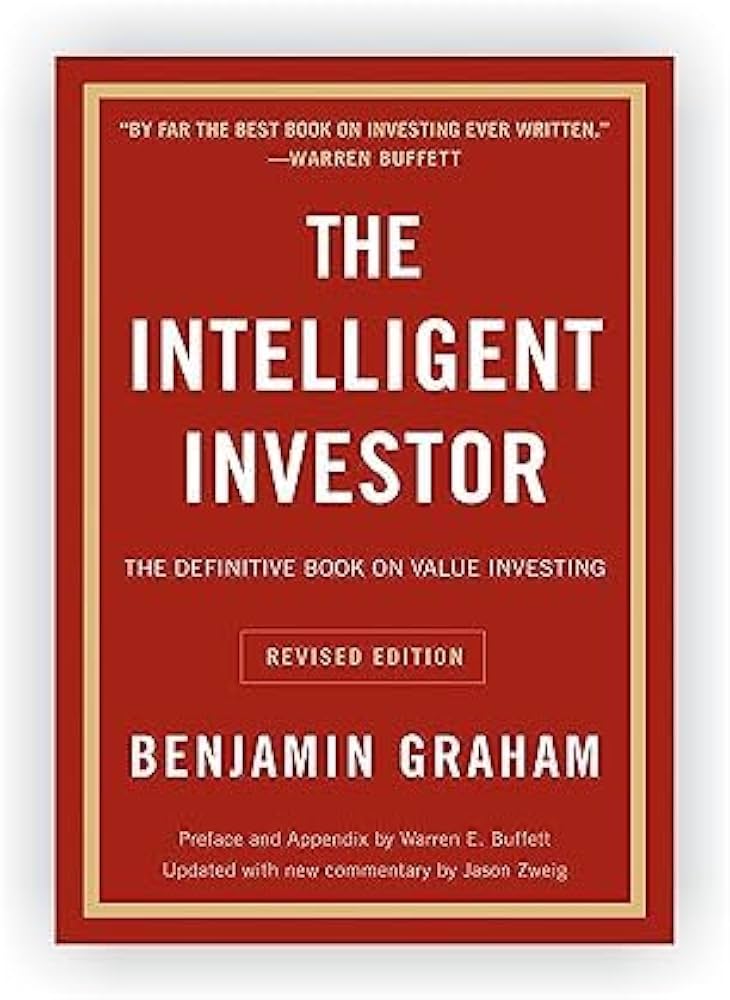
This book serves as a resource for long-term investors, outlining the fundamental principles and mental discipline required for value investing. Through the metaphor of 'Mr. Market,' the author instructs investors on managing market fluctuations and differentiating between investing and speculation. The book highlights the significance of having a margin of safety and urges investors to cultivate their own investment principles while steering clear of emotional choices.
Key points:
Distinguish between investing and speculating: Investors are based on keen observation and quantitative analyses of the value of a business, whereas speculators rely on sudden thoughts or conjecture.
The margin of safety: The authors emphasise that investors should protect themselves from losses by ensuring that the value of the shares they buy is much greater than the market price.
Mr Market: A classic metaphor used to illustrate market volatility and investor sentiment, teaching investors not to be swayed by short-term market fluctuations.
Emotional discipline for investors: Successful investing requires self-control and self-awareness to understand your own behaviour and control your emotions.
5. Your Money Or Your Life
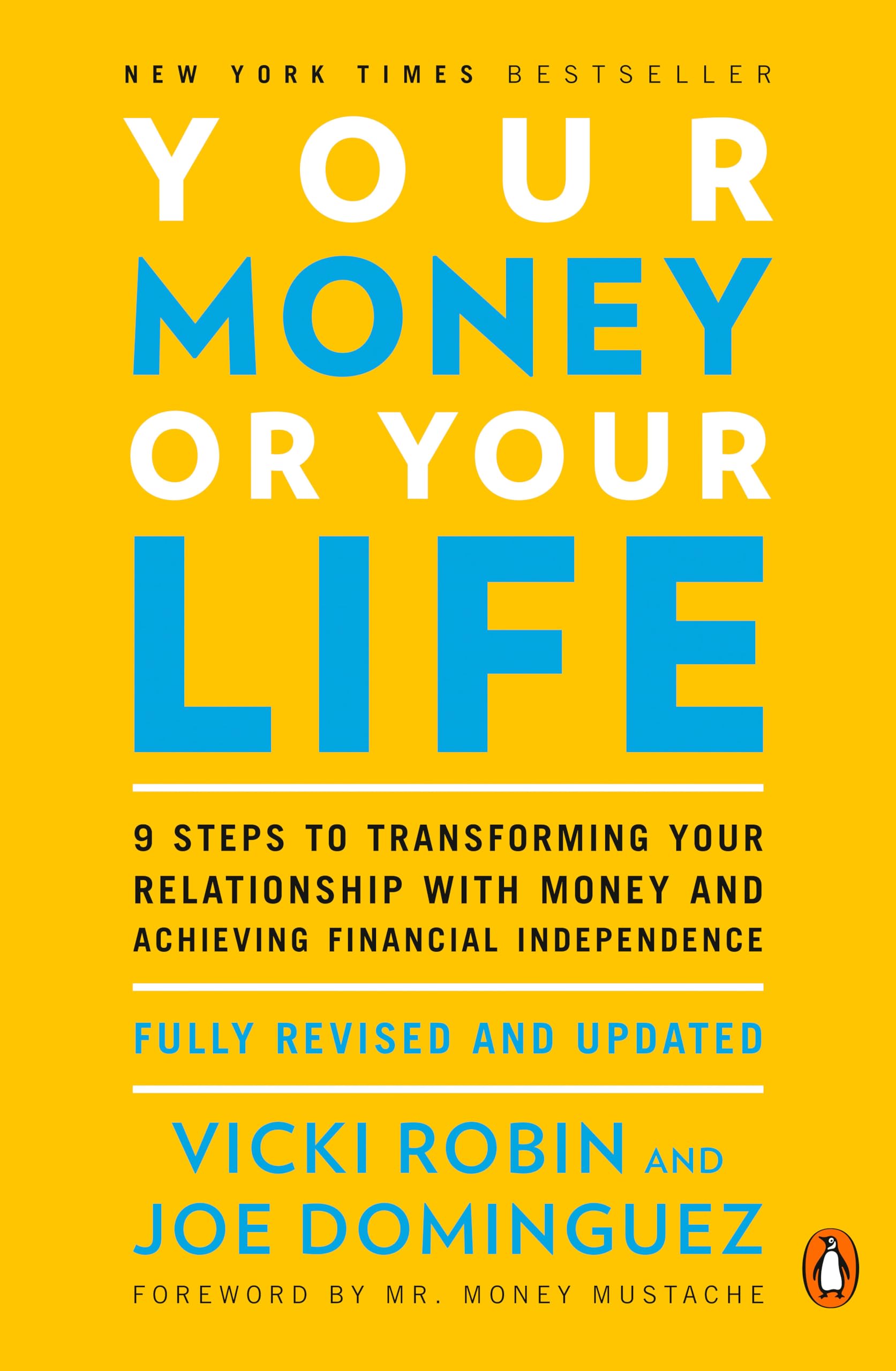
This book is a comprehensive nine-step guide that helps readers organise their personal finances, evaluate their spending behaviors, and understand how to make their money work effectively for them. It highlights the significance of attaining financial independence through cutting down on unnecessary expenses, boosting savings and investments, and reshaping personal life objectives. The book advocates for financial independence alongside a life philosophy that inspires individuals to seek greater meaning rather than becoming trapped by their finances.
Key points:
The relationship between money and life: Redefine the role of money in one's life and break free from consumerism.
Financial self-awareness: Understanding your income and expenditure through bookkeeping and analysing your personal finances.
Budgeting: Create and follow a personal budget to effectively control spending.
Saving and investing: Learn how to save and invest for asset appreciation.
Life purpose and meaning: Identify personal life goals and values and make money work for those goals.
Time and money: Recognise that time is a real asset and optimise its use.

6. A Random Walk Down Wall Street
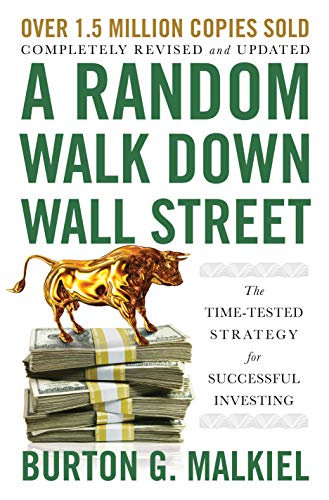
This book illustrates, through extensive historical data and empirical analyses, the random walk nature of stock prices, which means that in the short term stock price movements are unpredictable. The authors advocate passive investing using index funds, arguing that in the long run, most active investors will have difficulty outperforming the market average. The book also discusses portfolio theory, risk management, and personal investment strategies for investors of all levels.
Key points:
Market efficiency: Stock markets are efficient and price movements are unpredictable in the short term.
Passive investment: Long-term investment through index funds is recommended to capture average market returns.
Investment strategy: Emphasises the importance of diversification and regular investment plans.
Risk management: Teaches investors how to invest according to their risk tolerance.
7. The Millionaire Next Door
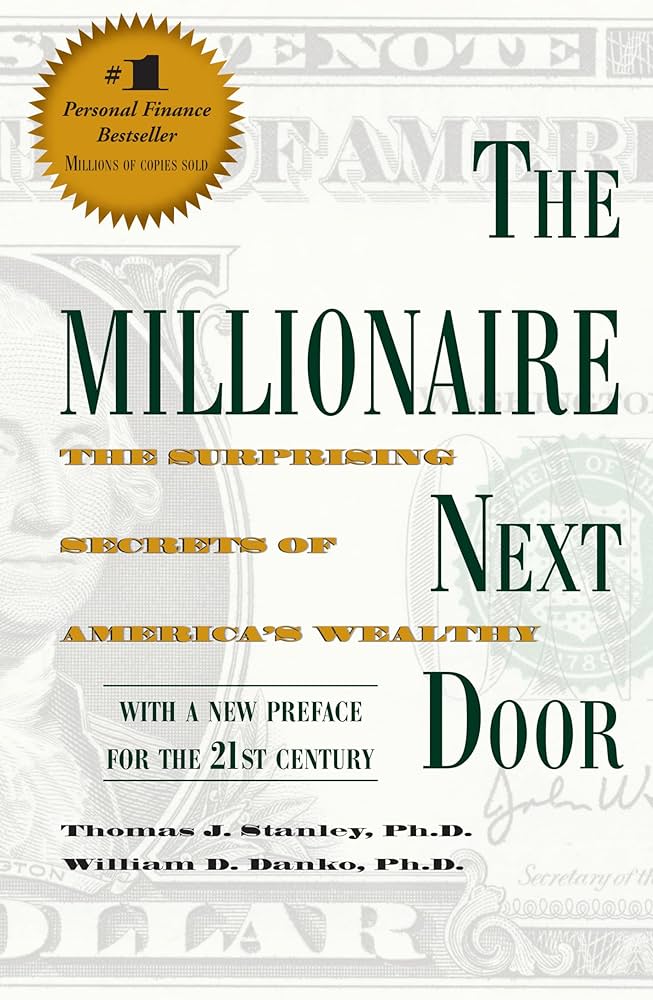
Based on interviews and questionnaires with more than 14,000 wealthy people who started from nothing, this book shows how they built their wealth through frugality, investing, and financial self-discipline. The authors found that many millionaires do not live extravagantly, but rather choose to live a low-key lifestyle and focus their energies on creating and growing their wealth. The book overcomes challenges such as market volatility, high cost of living, and limited investment options by creating a long-term financial plan, spending wisely, investing aggressively, and educating the next generation about financial literacy.
Key points:
Frugal living: Millionaires tend to live a frugal lifestyle one level below their income level.
Investing for appreciation: They usually invest a portion of their income in assets that can increase in value.
Financial planning: The rich spend a lot of time researching their financial planning and investments.
Educating their children: The rich tend not to provide too much financial assistance to their children so that they do not lose the motivation to struggle.
8. The Total Money Makeover
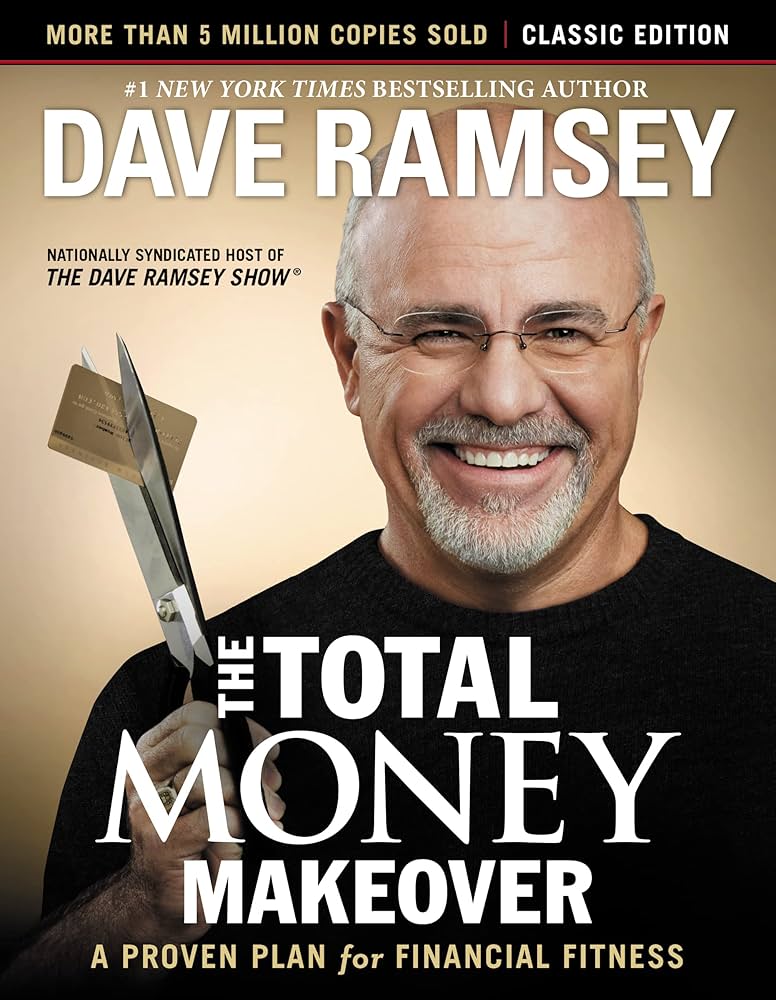
In this book, the author challenges traditional money concepts and spending habits and encourages readers to take real action to improve their financial situation. The author presents a seven-step plan that includes creating a budget, reducing debt, building an emergency fund, investing in retirement accounts, and more, designed to help readers gradually build a sense of financial security and ultimately achieve financial independence.
Key Points:
Step-by-Step: The author describes a seven-step process for achieving financial health, guiding readers through the process of getting out of debt, building savings, and investing for the future.
Reduce Debt: The authors suggest using a ‘snowball’ approach to paying down debt, i.e., paying down debt from smallest to largest, regardless of the interest rate.
Build an emergency fund: The authors recommend starting with a small emergency fund and gradually building it up to cover three to six months of expenses.
Investing for the future: Once debt is paid off and an emergency fund is established, the authors recommend focusing on long-term investments and avoiding high-risk, high-return strategies.
Protecting your wealth: This book covers topics such as insurance and estate planning.
9. Broke Millennial
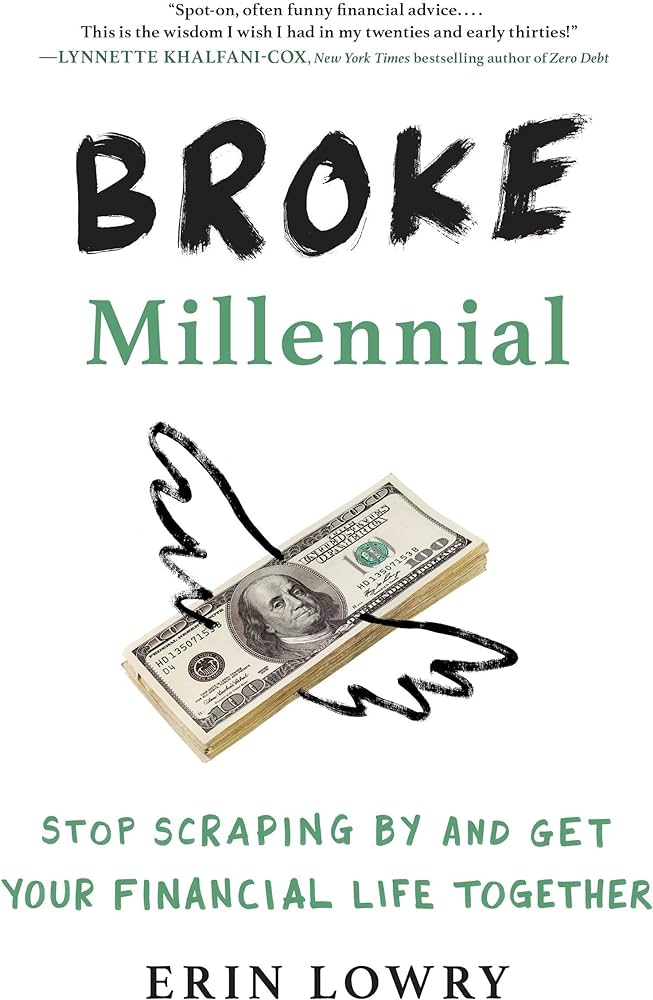
This book is aimed at people in their twenties and thirties who are facing financial difficulties. The author provides readers with a detailed guide to help them transition from financial difficulties to financial mastery. The book not only covers basic financial topics such as credit card debt, investing and budgeting, but also delves into more complex financial issues that you may face in real life. These include understanding one's relationship with money, dealing with student loans, budgeting for social activities, and ensuring financial transparency with your partner.
Key points:
Understanding your relationship with money: Evaluate whether you see money as a fleeting companion or a long-term partner.
Handling student loans: Navigating student loans without inciting major anxiety.
Social spending: Solutions for managing situations when you can’t divide the bills evenly.
Financial openness: Being truthful with your partner regarding each other's debts.
10. I Will Teach You To Be Rich
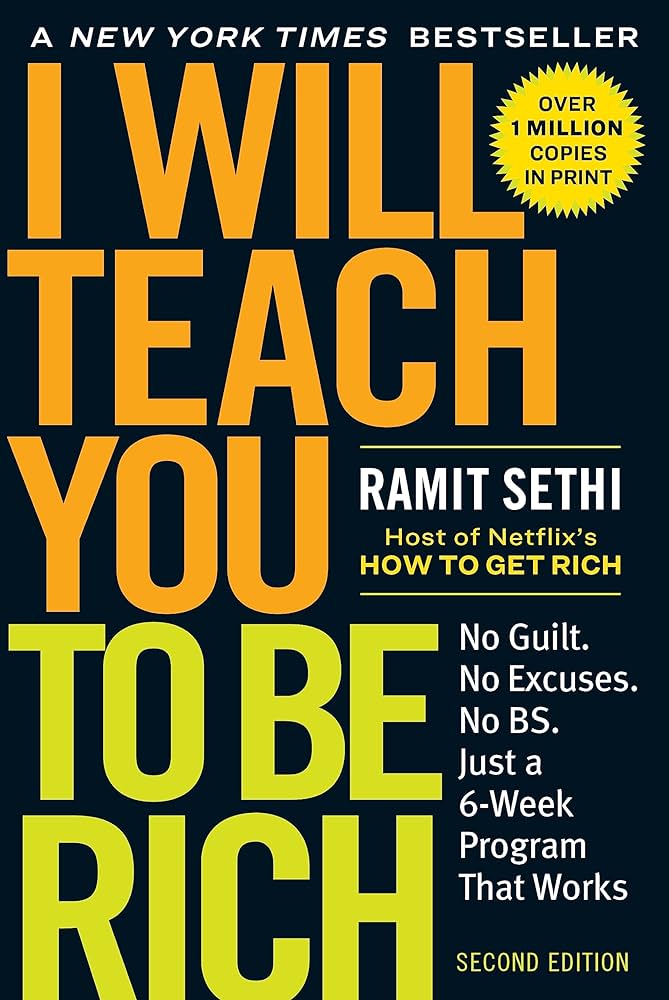
This book provides an extensive guide to managing money, addressing topics such as saving time, dispelling credit card misconceptions, mastering negotiation skills, and offering other useful advice for effective financial management. The book explores prevalent misunderstandings about taxes and offers advice on maximising the effectiveness of your savings. The book also explains how to optimise your savings to outperform your efforts and how to practice frugality without being stingy in your expenditures.
Key points:
Automate your savings and investments: The authors suggest establishing automatic transfers to your savings and investment accounts to maintain steady contributions.
Savour life: As they strive for financial independence, the authors urge readers to embrace life, make the most of the present, and participate in affordable travel and social activities.
Customise your financial guidelines: The authors recommend that readers establish financial rules tailored to their individual situations. This involves opening bank accounts, setting up automatic payments, and developing a method for monitoring financial progress.

11. The Richest Man In Babylon
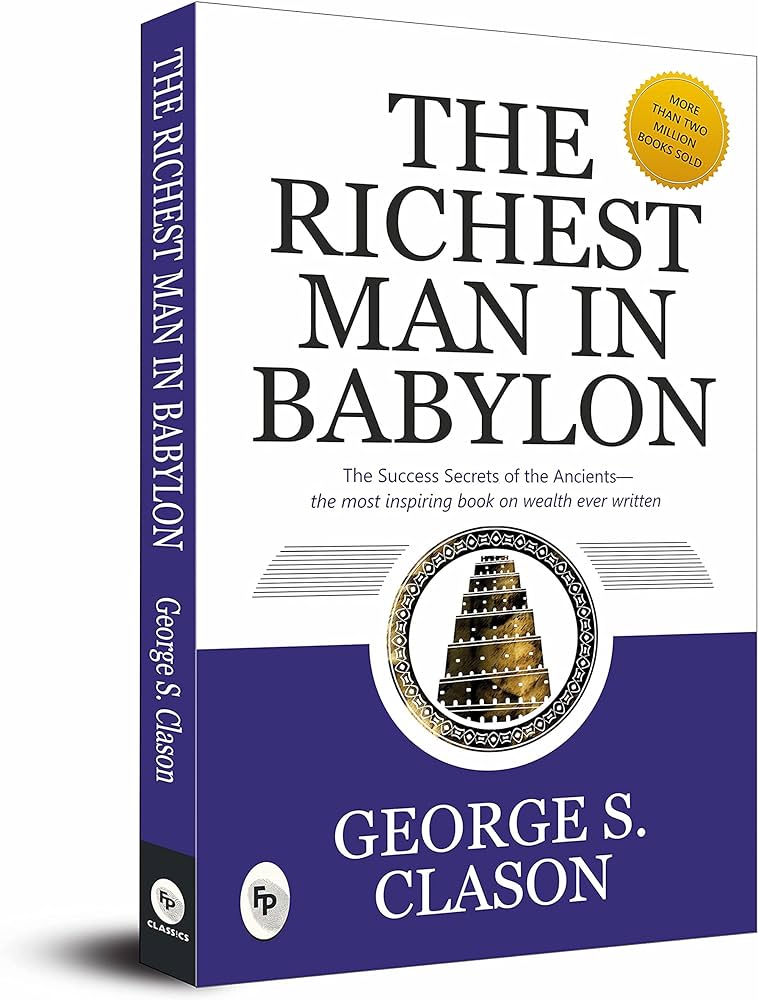
This book shows readers how to build wealth through wise financial management through the story of ancient Babylon. It emphasises the importance of saving, investing and self-discipline in personal finance. The author's engaging narrative translates complex financial concepts into principles that are easy to understand and apply, enabling readers to build a solid financial foundation for their future.
Key points:
Setting aside a portion of your income: The author emphasises the importance of saving a portion of your income before making expenditures. He recommends setting aside at least 10 per cent of income and using that money to create wealth.
Managing expenses: The author suggests managing expenses by distinguishing between necessary and unnecessary. He advises readers to focus on necessary expenses while avoiding unnecessary ones.
Safeguarding wealth: The writer emphasises the significance of securing wealth through careful investments and steering clear of high-risk ventures. He also talks about the importance of insurance and estate planning to safeguard assets.
12. Money: Master The Game
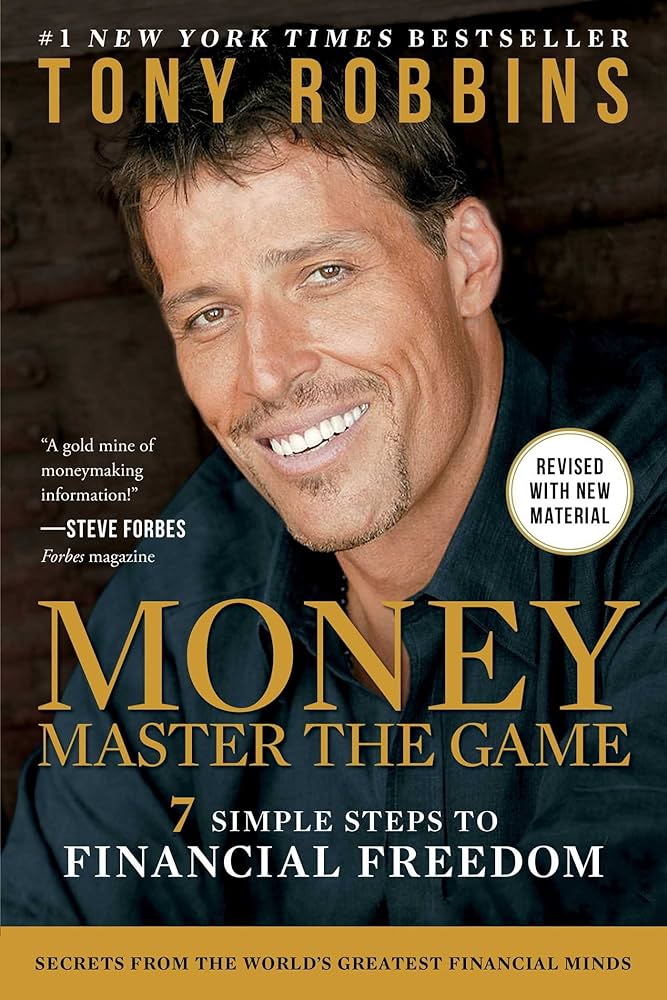
This book is the author's thorough examination of personal finance and investing. By conducting interviews with more than 50 billionaires, Nobel Prize recipients, investment experts, and financial icons, the author has created a seven-step framework designed to assist individuals in attaining financial independence. The writer highlights that by establishing an automated savings and investment system, anyone, including everyday individuals, can earn money effortlessly while they sleep and slowly develop their own 'money machine'.
Key points:
Seven steps: The author describes seven simple steps to achieving financial freedom. These steps are designed to help readers take control of their finances, reduce debt, and build wealth.
Understanding the markets: The author provides an in-depth analysis of how the financial markets work, including stocks, bonds, and mutual funds.
Protecting and growing your money: The author discusses strategies for protecting wealth, such as insurance and estate planning.
Retirement planning: The book covers the basics of retirement planning, including the importance of starting early, maximising contributions to retirement accounts and choosing the right investment vehicles.
13. The Little Book of Common Sense Investing
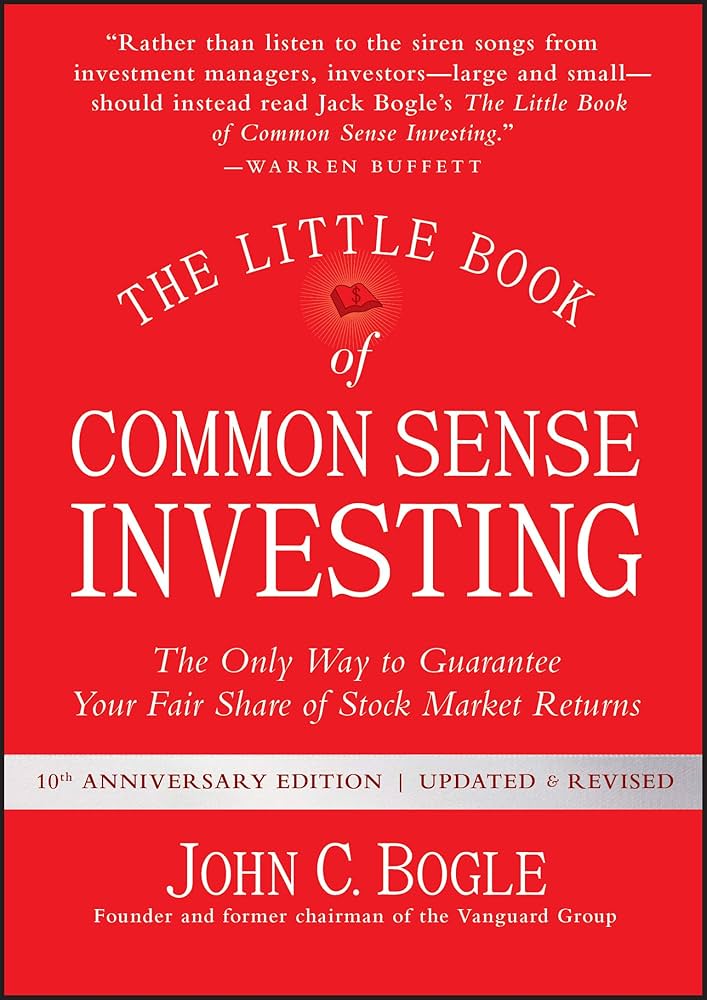
This book serves as a resource for individual investors, centered around the fundamental concept that by purchasing and holding affordable index funds, investors can achieve returns similar to market averages, while minimising the risks associated with individual stocks, selecting fund managers, or shifting between sectors. The authors highlight the significance of compound interest and the advantages of long-term investing, while also stressing the importance of minimizing investment costs to enhance returns.
Key points:
Benefits of index funds: The authors argue that index funds represent an excellent investment option due to their low costs, ease of use, and broad diversification across numerous stocks.
Long-term investing: Focuses on maintaining investments over an extended period to take advantage of compounding and grow wealth.
The significance of expenses: Elevated investment fees can diminish profits, so it is advisable to reduce costs in order to enhance returns.
Risk management: Mitigating risk by diversifying.
14. Secrets of the Millionaire Mind: Mastering the Inner Game of Wealth
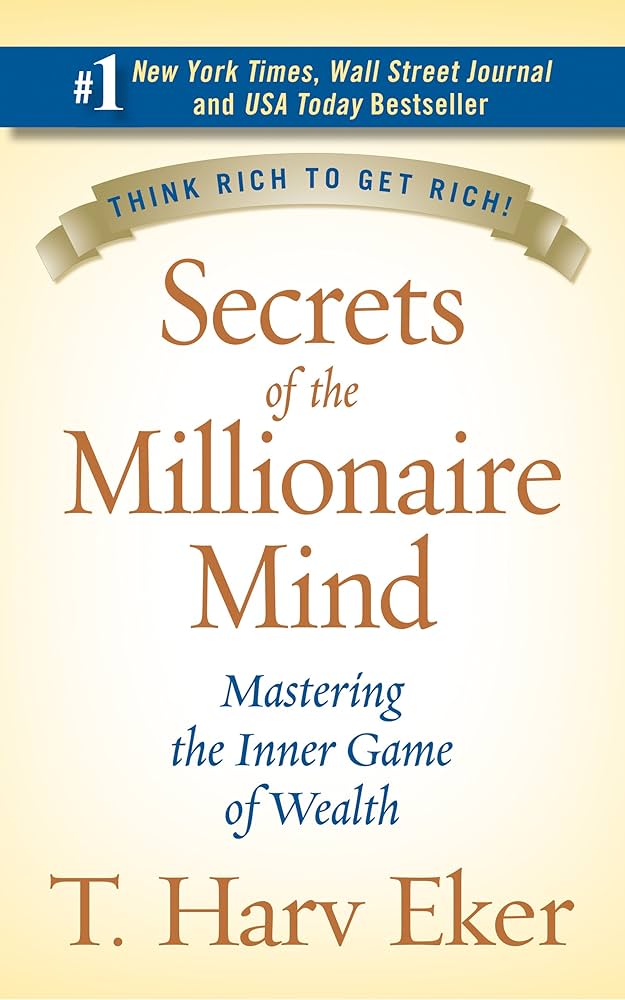
This book confronts conventional wisdom about wealth, suggesting that financial success stems from an individual's internal mindset and belief system, rather than external factors. The author introduces the concept of the ‘wealth profile’ and explores the psychology behind accumulating and maintaining wealth, emphasising the very different mindset of the rich compared to the average person.
Key points:
Changing perspective: The author emphasises the importance of changing your financial mindset. He claims that your financial success is largely influenced by your subconscious beliefs and attitudes about wealth.
Wealth profile: The authors introduce the concept of a ‘wealth profile’, which includes a set of positive beliefs and behaviours typically exhibited by millionaires.
The saboteur: The author explores saboteurs , which are self-sabotaging behaviours that prevent individuals from achieving financial success. He offers ways to identify and address these patterns.
Achieving financial success: This book outlines viable strategies for achieving financial success, such as establishing financial goals, creating a budget, and making wise investment choices.
15. The Automatic Millionaire
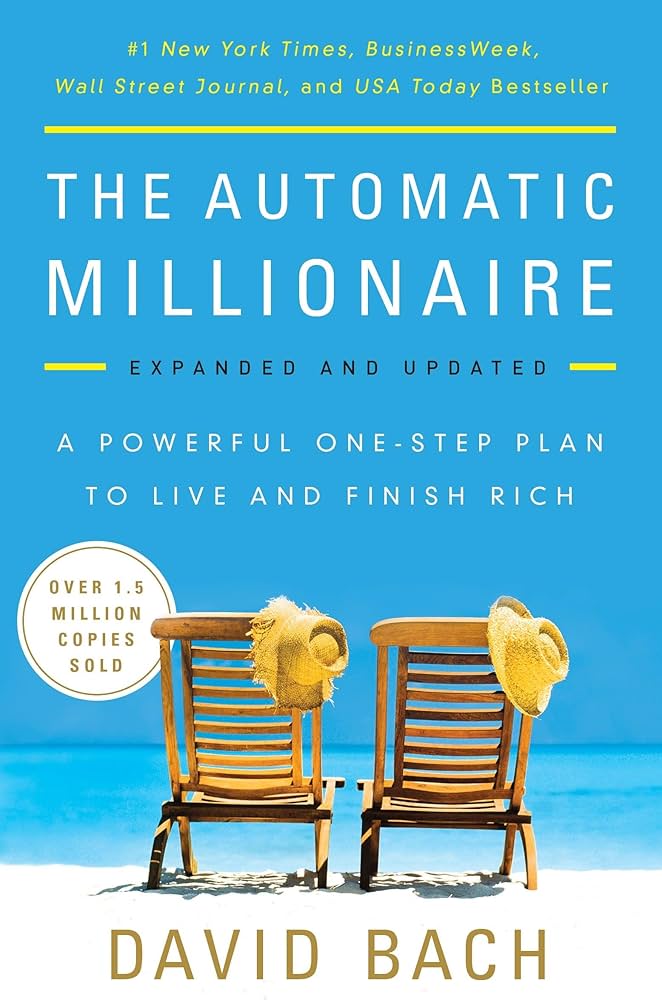
The book highlights the benefits of automated savings, particularly the compounding effect that comes from letting money accumulate over time through a specified saving percentage or consistent small investments. The writer presents the idea of the Latte Factor, highlighting how minor daily expenditures, like a daily coffee or a pack of cigarettes, can accumulate to a significant total over time. When these minor expenses are placed into income-generating accounts, they can ultimately grow into substantial wealth.
Key points:
The latte factor: The authors introduce the concept of the ‘Latte Factor,’ which refers to small daily expenses that can be accumulated over time.
Automate your finances: The authors recommend setting up automatic transfers to savings and investment accounts to ensure ongoing savings and investments.
The power of starting early: The book emphasises the power of compound interest and the importance of starting to save and invest early.
Building home equity: The author discusses the role of home ownership in building wealth. He provides guidance on purchasing a home, paying off a mortgage faster, and using home equity for further investments.

Final thoughts on top finance books
Investing in yourself through education is one of the best investments an investor can make. These books provide a wealth of knowledge and insight that can help investors navigate the often complex world of finance. By reading and applying the principles outlined in these books, investors will be better able to make informed decisions, manage risk and achieve financial goals. Whether you are new to investing or a seasoned professional, there is always something to learn. Choose a few books that match an investor's current level of expertise and interest, and start building financial literacy today. Remember, the path to financial success begins with knowledge and a willingness to continually learn and adapt.
You can also read the moomoo investment courses to learn investment knowledge for free and improve your trading strategies.
This presentation is for informational and educational use only and is not a recommendation or endorsement of any particular investment or investment strategy. Investment information provided in this content is general in nature, strictly for illustrative purposes, and may not be appropriate for all investors. Read more