10 Best Bank Shares to Invest in Australia 2025

In 2025, Australian investors are navigating a volatile global market, intensified by former U.S. President Donald Trump's recent tariffs on Australian exports, including a 10% levy on all goods and a 25% duty on steel and aluminium . These protectionist measures have unsettled trade relationships and introduced economic uncertainty. However, amidst these challenges, bank shares on the ASX have demonstrated resilience, offering stability and consistent dividends.
Unlike sectors heavily impacted by geopolitical tensions, national Australia bank shares have maintained steady performance. Major banks like Commonwealth Bank of Australia (CBA) and Westpac continue to deliver reliable returns, supported by strong capital positions and prudent risk management.
This article will explore 10 best bank shares to invest in Australia. For investors seeking dependable income streams and a buffer against global market fluctuations, bank shares remain a compelling choice in 2025.
Overview of the Australian banking sector
The Australian banking sector significantly contributes to the country's economy, providing vital support for financial stability and growth. The sector has a reputation for soundness, resilience, and regulatory oversight. Its key features can be summarised as follows:
Highly concentrated market share
The bank sector in Australia is distinguished by a highly concentrated market share, with the "Big Four" banks holding a dominant position. The four largest banks in Australia are CBA (Commonwealth Bank of Australia), NAB (National Australia Bank), WBC (Westpac Banking Corporation), and ANZ (Australia and New Zealand Banking Group). These large banks have a significant market share and offer a wide range of financial services. They operate not only domestically but also have significant international branches in New Zealand and the Asia-Pacific region. In addition to the Big Four, there are small and medium-sized regional banks serving niche markets and specific communities, as well as credit unions.
Strict regulatory framework
In terms of regulation, the Australian banking sector operates under a strict regulatory framework, with enforcement by the Australian Prudential Regulation Authority (APRA) and the Australian Securities and Investments Commission (ASIC). These agencies guarantee that participants in the Australian banking industry maintain sufficient capital, adhere to rigorous risk management practices, and comply with consumer protection laws.
Digital transformation
The industry has undergone significant changes over the years, most notably the adoption of advanced digital technologies and the introduction of open banking programs designed to increase competition and improve the customer experience. Banks increasingly prioritise digital transformation to streamline operations, enhance the user experience, and expand their range of services.
In short, despite the challenges of increased regulatory scrutiny, evolving consumer preferences, and emerging fintech competitors, the Australian banking industry is demonstrating resilience in adapting and innovating to maintain its position as a global financial industry leader.

What is the future of bank shares in Australia for 2025?
During periods of market volatility triggered by Trump's tariff strategies, bank stocks—both in the U.S. and Australia—have shown resilience compared to other sectors. For example, while U.S. bank stocks experienced some declines amid tariff fears, banking shares also advanced on certain days, supported by strong earnings reports, indicating that banks can be less affected by geopolitical uncertainties than sectors like technology or pharmaceuticals. This trend is relevant to Australian banks as well, which tend to exhibit relatively stable performance amid global uncertainties due to their strong regulatory frameworks and conservative balance sheets.
For 2025 specifically, Australian banks are expected to underperform the broader market slightly, with UBS forecasting a roughly 5% decline in bank shares compared to an approximate 5% gain for the ASX 200 index overall. This underperformance is partly due to pressures on earnings, including cost increases and narrowing net interest margins as interest rates are expected to gradually decline following the Reserve Bank of Australia's anticipated rate cuts starting in May 2025.
Despite these challenges, Australian banks continue to offer consistent dividends, which remain attractive to investors seeking income stability. Dividend forecasts for major banks like Commonwealth Bank (CBA), ANZ, NAB, and Westpac suggest mostly flat or modestly increased dividend payouts in 2025, with yields ranging roughly between 3% and 5.7% depending on the bank. For instance, ANZ is expected to pay the highest dividend yield among the big banks at about 5.6%, while CBA is forecasted to increase its dividend slightly by around 2.8%. However, payout ratios are already stretched, limiting the potential for significant dividend growth in the short term.
10 best bank shares to buy in Australia
Investing in bank shares has consistently proven to be an effective financial strategy in Australia. The 10 Best Bank shares to buy in Australia include a list of leading financial institutions that provide investors with a gateway into Australia's robust banking sector. These top stocks have been rigorously selected based on performance, stability, and growth potential, making them the optimal banking shares for investors to consider for their Australian portfolios.
Company Name | Symbol | Market Cap | Dividend yield |
COMMONWEALTH BANK OF AUSTRALIA | CBA | 264.21 billion AUD | 3.01% |
NATIONAL AUSTRALIA BANK LIMITED | NAB | 103.13 billion AUD | 5.00% |
WESTPAC BANKING CORPORATION | WBC | 105.18 billion AUD | 4.95% |
ANZ GROUP HOLDINGS LIMITED | ANZ | 81.95 billion AUD | 7.75% |
BENDIGO AND ADELAIDE BANK LIMITED | BEN | 5.90 billion AUD | 6.08% |
BANK OF QUEENSLAND LIMITED | BOQ | 4.28 billion AUD | 5.23% |
BSP FINANCIAL GROUP LIMITED | BFL | 3.40 billion AUD | 8.54% |
JUDO CAPITAL HOLDINGS LIMITED | JDO | 1.89 billion AUD | / |
HEARTLAND GROUP HOLDINGS LIMITED | HGH | 612.28 million AUD | 7.14% |
AUSWIDE BANK LTD | ABA | 207.51 million AUD | / |
(Data as of 16 Apr, 2025) | |||
COMMONWEALTH BANK OF AUSTRALIA(CBA)
As Australia's largest bank, Commonwealth Bank provides a comprehensive and specialised range of banking and financial services, including lending, consumer finance, deposit products, and related services to personal customers, corporate customers, and institutional users. It has branches in New Zealand and Asia, providing banking, fund management, and insurance services.
P/B: 3.158
Div Yield: 3.27%
Shares Float: 1.67 billion
Founded Date:1991
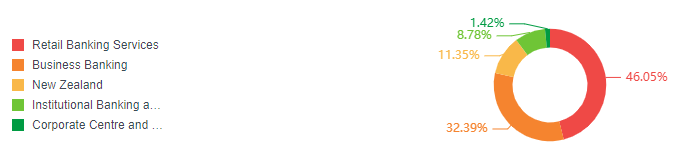
Revenue Breakdown:
NATIONAL AUSTRALIA BANK LIMITED(NAB)
National Bank is the second largest bank in Australia by market capitalisation. It has the largest share of commercial lending, and NAB's UBank is one of the largest purely digital banks in Australia. The bank is very business-oriented and is involved in banking, credit, wealth management, fund management, and general finance. It serves a diverse client base, including individuals, small and medium-sized businesses, large corporations, and professional organisations.
P/B: 1.945
Div Yield: 4.33%
Shares Float: 3.08 billion
Founded Date:1893
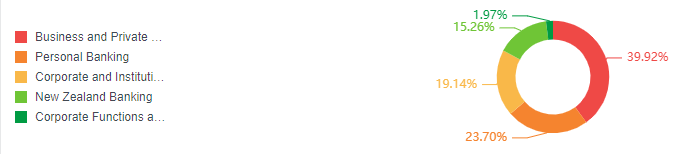
Revenue Breakdown:
WESTPAC BANKING CORPORATION(WBC)
Westpac Banking Corp is Australia's longest-established banking and financial services group, with a significant market share in Australia and a nationwide branch network. The group offers a comprehensive range of banking products, financial products, and related wealth management services, with a particularly strong presence in home loans and retail deposits.
P/B: 1.425
Div Yield: 4.77%
Shares Float: 3.43 billion
Founded Date:2002
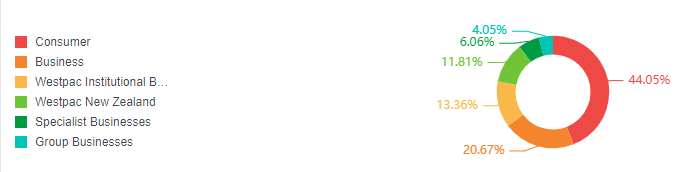
Revenue Breakdown:
ANZ GROUP HOLDINGS LIMITED(ANZ)
The ANZ Banking Group has a presence in not only Victoria, but also New Zealand and the Asia-Pacific region. The group's strategic focus is on high-return segments in Australia and New Zealand. It offers a comprehensive suite of banking and financial products and related services to both retail and commercial customers.
P/B: 1.24
Div Yield: 6.02%
Shares Float: 2.96 billion
Founded Date:1835
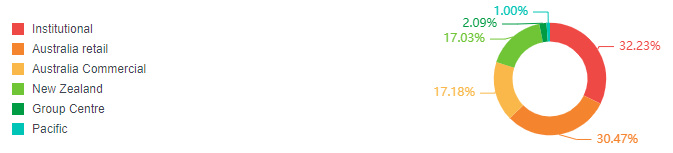
Revenue Breakdown:

BENDIGO AND ADELAIDE BANK LIMITED(BEN)
Bendigo has been a leading regional bank in Australia since the late 1990s and early 2000s, building a strong community reputation by opening branches where major banks had vacated. The bank operates primarily in the personal, small business and rural banking sectors and has a well-respected retail franchise and strong customer loyalty. Following its merger with Adelaide Bank, Bendigo moved into diversified banking.
P/B: 1.008
Div Yield: 4.88%
Shares Float: 561.53 million
Founded Date:1995
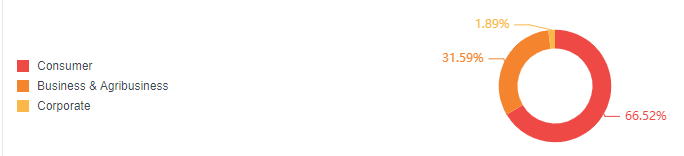
Revenue Breakdown:
Uranium stocks are also a worthwhile investment option to consider. Check out "Top 10 ASX Uranium Stocks to Watch 2025" for insights on promising investments in the uranium sector.
BANK OF QUEENSLAND LIMITED(BOQ)
BOQ provides a range of specialised banking and financial services, including deposits, loans (mainly business and home loans), private finance, and cash flow financing. The company has a significant presence in Australia, with numerous branches across the country. Its Virgin Money and Me Bank subsidiaries have become prominent players in the Australian financial sector.
P/B: 0.69
Div Yield: 6.5%
Shares Float: 645.81 million
Founded Date: 1887
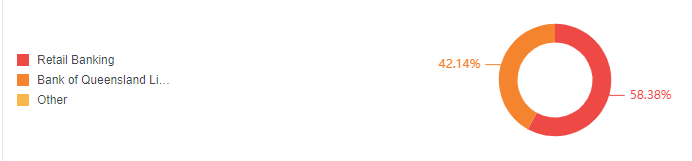
Revenue Breakdown:
BSP FINANCIAL GROUP LIMITED(BFL)
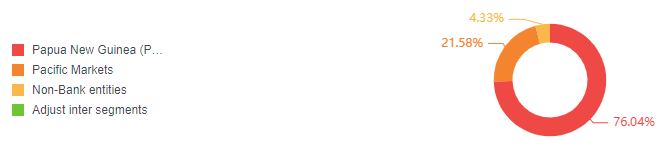
BSP Financial Group Ltd is a diversified financial services business with operations spanning Bank of PNG (the largest revenue-generating division), offshore banks, and other non-banking entities. The enterprise's business activities encompass banking, financing, fund management, and life insurance.

P/B:1.888
Div Yield: 9.25%
Shares Float: 296.7 million
Founded Date:2021
Revenue Breakdown:
JUDO CAPITAL HOLDINGS LIMITED(JDO)
Judo Capital is a well-established company with a strong reputation among small and medium-sized businesses in Australia. The company specialises in providing loans to small and medium-sized businesses in Australia. The bank offers a wide range of loan products, including home loans, business loans, equipment finance and lines of credit. It is primarily funded by fixed deposits from individual and institutional customers.
P/B: 0.994
Div Yield: /
Shares Float: 546.15 million
Founded Date:2016
Revenue Breakdown:

HEARTLAND GROUP HOLDINGS LIMITED(HGH)
Heartland Group Holdings Ltd offers a comprehensive range of reverse mortgage services, including personal loans, business loans, home loans, rural loans, car loans, and more. The company is also engaged in savings and deposit operations, equipment financing, and agricultural asset financing. In addition to Australia, Heartland Group Holdings Ltd has an extensive presence in New Zealand.
P/B: 0.788
Div Yield: 10.61%
Shares Float: 735.55 million
Founded Date:2018
AUSWIDE BANK LTD(ABA)
Auswide Bank Ltd. is a domestic financial institution operating exclusively within the Commonwealth of Australia. Its primary business is providing financing solutions, including a range of loan products such as commercial, home, automobile, and personal loans, bank guarantees, commercial lines of credit, and equipment financing. Additionally, it engages in retail deposits, financial investments, insurance, and foreign exchange.
P/B: 0.715
Div Yield: 9.66%
Shares Float: 177.49 million
Founded Date:1979
*Please note that the data used above is as of Apr 16, 2025. Share prices and market capitalization are subject to change with time and market conditions. For the latest information, please refer to SGX-ST or Moomoo for the latest updates.

How to buy bank shares in Australia?
Investing in Australian bank shares is a popular choice for those seeking stable returns and consistent dividends. With the right platform, the process is straightforward and accessible.
Moomoo is a regulated online trading platform in Australia, offering a user-friendly interface and access to a wide range of Australian and international stocks. It's an excellent choice for both beginners and experienced investors.
Step-by-step guide to buying bank shares on moomoo
1. Open an account: Download the moomoo app or visit their website to sign up. You'll need to provide personal details and verify your identity to comply with Australian financial regulations.

2. Fund your account: Once your account is set up, deposit funds using methods like PayID or bank transfer. Moomoo supports multiple currencies, making it convenient for Australian investors.
3. Search for bank shares: Use the search function to find the bank shares you're interested in, such as Commonwealth Bank (CBA), Westpac (WBC), ANZ (ANZ), or National Australia Bank (NAB).
4. Place an order: Select the stock, choose the number of shares, and decide on the order type—market order for immediate purchase or limit order to set a specific price.
5. Confirm and monitor: Review your order details and confirm the purchase. You can monitor your investments and access real-time data through the moomoo platform.
How to select bank stocks?
Selecting the right bank stocks involves evaluating three key aspects: fundamentals, valuation, and dividends. Here's how to approach each:
1. Fundamentals
Assessing a bank's financial health is crucial. Some key metrics include:
Return on Equity (ROE): Indicates how effectively a bank uses shareholders' equity to generate profits.
Net Interest Margin (NIM): Measures the difference between interest income generated and interest paid out, reflecting profitability.
Efficiency Ratio: Calculates operating expenses as a percentage of revenue; a lower ratio suggests better efficiency.
Loan-to-Deposit Ratio: Evaluates liquidity by comparing a bank's total loans to its total deposits.
These indicators help determine a bank's operational performance and financial stability.
2. Valuation
Understanding a bank's market value relative to its financials aids in identifying investment opportunities. You should consider:
Price-to-Earnings (P/E) Ratio: Compares a bank's share price to its earnings per share; a lower P/E may indicate undervaluation.
Price-to-Book (P/B) Ratio: Compares market value to book value; a P/B below 1 can suggest the stock is undervalued.
Dividend Discount Model (DDM): Estimates a stock's value based on its dividend payments and expected growth.
These metrics provide insight into whether a bank's stock is priced appropriately in the market.
3. Dividends
Dividends offer a steady income stream and reflect a bank's profitability. Some key factors include:
Dividend Yield: Shows annual dividends as a percentage of the stock price; higher yields can be attractive but may also indicate risk.
Payout Ratio: Represents the proportion of earnings paid as dividends; a sustainable ratio suggests consistent dividend payments.
Dividend Growth: Consistent increases in dividends over time indicate financial health and commitment to returning value to shareholders.
Evaluating these aspects helps in selecting bank stocks that align with income and growth objectives.
What are the benefits of buying bank stocks?
Bank stocks have long been a cornerstone for investors seeking a blend of income, stability, and exposure to the financial sector. Known for their consistent dividend payouts and essential role in the economy, these shares often appeal to those looking for reliable returns even during periods of market uncertainty.
Here are several benefits of buying bank stocks:
Passive income through dividends: Many bank shares, especially in Australia, have a long history of paying attractive and consistent dividends. This provides investors with a reliable stream of passive income, which is particularly appealing for income-focused portfolios.
Stability and resilience: Despite market fluctuations, bank stocks tend to be relatively stable, especially large, well-established banks like the big four in Australia. Their size, regulatory oversight, and integral role in the economy contribute to this stability.
Benefiting from interest rate rises: Banks generally perform well when interest rates rise because they can pass on rate increases to customers, boosting net interest margins. This is especially relevant in environments where rate rises support margins, as seen in recent years.
Long-term growth potential: Banks benefit from economic growth, increased lending, and expanding financial services. Their ability to generate profits from lending activities and fee-based services can provide long-term capital appreciation.
Final thoughts on the best bank shares in Australia
As we conclude our analysis of the top bank shares to invest in Australia in 2025, it is evident that Australian bank shares present an array of investment opportunities. From the stability and strength of the Big Four banks, to the innovation and agility of regional banks and specialist financial institutions. The diversity of the market presents a wealth of prospects for those seeking to build a solid portfolio.
When considering an investment in Australia's best bank shares, it is essential to assess each institution's financial health, growth prospects, and strategic direction. The big four banks—CBA, WBC, NAB, and ANZ—remain the dominant players in the sector, offering robust fundamentals and well-established brand recognition. Australian bank shares, such as BEN and BOQ, provide investors with access to niche markets and innovative approaches to banking services.
In conclusion, the optimal investment in Australian bank shares for 2025 is in those institutions that demonstrate a commitment to innovation, customer service, and sustainable growth. Investors should consider a combination of large and mid-sized institutions to achieve a balanced portfolio and capitalise on the diversification opportunities available within the Australian banking sector. Any financial investment carries inherent risks, including the potential for principal depreciation. The information provided herein is for educational purposes only and does not constitute direct investment advice. Always perform due diligence before you make any investment decision.

FAQs on investing in Australian bank shares
Which are the best bank shares to buy in Australia?
As of April 2025, several Australian bank shares stand out for investors seeking stability, consistent dividends, and strong market positions. Here are some of the top bank stocks to consider:
1. Commonwealth Bank of Australia (ASX: CBA)
CBA remains Australia's largest bank by market capitalisation, with a dominant presence in retail banking. In the first half of FY2025, CBA reported a cash profit of $5.13 billion, reflecting its robust mortgage portfolio and strong net interest margins. The bank's shares have surged over 40% in the past year, underscoring investor confidence.
2. National Australia Bank Ltd (ASX: NAB)
NAB is recognised for its significant exposure to business banking, distinguishing it from peers more focused on residential mortgages. With a market capitalisation of approximately $107.83 billion, NAB continues to be a key player in Australia's financial sector.
3. Westpac Banking Corporation (ASX: WBC)
As Australia's oldest bank, Westpac offers a comprehensive range of financial services across the region. Despite facing challenges in recent years, Westpac's commitment to restructuring and modernisation positions it for potential long-term growth.
4. Macquarie Group Limited (ASX: MQG)
Macquarie stands out as a global investment bank with diversified operations, including asset management and infrastructure financing. Its unique business model and international exposure make it an attractive option for investors seeking diversification beyond traditional banking.
What arе thе kеy factors influеncing Australian bank stock pricеs?
Australian bank stock prices are influenced by a combination of macroeconomic conditions, regulatory environments, and internal financial health. Interest rates play a pivotal role; when the Reserve Bank of Australia (RBA) adjusts the cash rate, it directly affects banks' net interest margins—the difference between interest earned on loans and interest paid on deposits. Higher interest rates can enhance profitability, but they may also lead to increased loan defaults if borrowers struggle with repayments. For instance, in early 2025, ANZ reported a significant rise in impaired assets, reaching A$1.90 billion, the highest since September 2021, which led to a 3% decline in its shares.
Economic indicators such as GDP growth, inflation, and employment rates also impact bank stocks. A robust economy typically boosts consumer and business confidence, leading to increased borrowing and banking activities. Conversely, economic slowdowns can reduce loan demand and increase default risks. Additionally, global economic trends and policies, especially from major economies like the United States, can influence investor sentiment and capital flows into Australian banks.
Regulatory policies and the banks' internal financial health are equally crucial. Changes in regulations, such as adjustments in capital requirements or lending standards, can affect banks' operational costs and risk profiles. Internally, metrics like asset quality, loan-to-deposit ratios, and capital adequacy ratios provide insights into a bank's financial stability. For example, the RBA's Financial Stability Review highlights how higher interest rates can reduce the value of collateral held by banks, potentially leading to increased credit losses.

Are bank shares a good investment now?
As of April 2025, investing in Australian bank shares presents both opportunities and risks. While these stocks have historically offered stability and consistent dividends, current market conditions suggest a more cautious approach. Analysts indicate that banks may provide limited earnings growth in 2025, with returns primarily stemming from dividends rather than capital appreciation. Additionally, the Reserve Bank of Australia's anticipated interest rate cuts could compress net interest margins, potentially impacting profitability.
Global economic factors add further complexity. Recent tariff policies introduced by former U.S. President Donald Trump have escalated trade tensions, notably with China, leading to significant market volatility. The imposition of tariffs as high as 145% on Chinese imports and subsequent retaliatory measures have disrupted global supply chains and investor confidence. These developments have contributed to a decline in the U.S. dollar and increased concerns about a potential global recession. While Australian banks are relatively insulated from direct trade impacts, the broader economic uncertainties necessitate a vigilant investment approach.
Which bank pays the best dividends in Australia?
Based on the data provided (as of 16 April 2025), BSP Financial Group Limited (ASX: BFL) offers the highest dividend yield among Australian-listed banks, with a yield of 8.54%.
Following closely behind are:
ANZ Group Holdings Limited (ASX: ANZ) with a 7.75% dividend yield
Heartland Group Holdings Limited (ASX: HGH) with a 7.14% yield
Bendigo and Adelaide Bank (ASX: BEN) at 6.08%
These figures suggest that investors looking for strong dividend returns might consider these banks, particularly BFL, as potential candidates for income-focused portfolios.
Learn more: Top 10 ASX High Dividend Stocks to Consider in 2025>>
This presentation is for informational and educational use only and is not a recommendation or endorsement of any particular investment or investment strategy. Investment information provided in this content is general in nature, strictly for illustrative purposes, and may not be appropriate for all investors. Read more