The Ultimate Guide to Passive Investing in Australia

In Australia, there is a wide variety of investment strategies to choose from, and among these diverse options, passive investing has firmly established its place, becoming the preferred choice for investors seeking to minimise costs and maximise convenience. In today's rapidly changing and uncertain global economic environment, Australian investors are increasingly turning to passive investing as an effective way to accumulate wealth.
This article focuses on passive investment strategies, aiming to provide Australian investors with a clear guide to passive investing, helping them to better understand this investment approach.
What is passive investing?
Passive investing is an investment strategy designed to reduce transaction costs through minimal trading activity while achieving returns that closely align with market performance. Unlike active investment strategies, where investors analyse the market to select stocks and time trades to achieve returns that exceed market performance, passive investors do not aim for excess returns but instead accept the market's average performance as their investment outcome. Therefore, in this strategy, investors tend to buy and hold a broadly diversified portfolio for the long term, such as funds that track a specific market index.
The core philosophy and theoretical foundation of passive investment strategy stem from the Efficient Market Hypothesis, which suggests that in a market with high information efficiency, asset prices have already factored in all available information, making it impossible for any investor to consistently achieve excess returns by analysing past price trends or public information.
For investors, the key to passive investing lies in the importance of diversification and long-term asset holding, avoiding the additional costs associated with frequent trading, such as transaction fees, commissions, and potential capital gains taxes. Over time, markets tend to exhibit a positive growth trend, which is the basis on which passive investors anticipate gradual wealth accumulation.
Potential pros and cons of passive investing
Based on the concept of passive investing, here is a summary of its potential pros and cons:
Pros
Low cost: Regardless of the method used, passive investment strategies and management models tend to have relatively low investment costs. For instance, if you construct your own portfolio, infrequent trading will result in fewer transaction fees compared to active investment strategies. If you purchase passively managed funds, their management expense ratios are also relatively smaller compared to actively managed funds.
Broad diversification: By tracking a broad market index, passive investing naturally achieves asset diversification, reducing the impact of poor performance by individual companies on the overall investment portfolio.
Long-term return potential: Over the long term, the market tends to grow, so passive investment strategies that aim to follow market performance can provide investors with reasonable and relatively stable returns.

Cons
Unable to outperform the market: Since passive investing aims to replicate the performance of market indices, it does not seek to achieve returns that exceed the market average. For investors who hope to gain excess returns through smart stock picking or market timing, this could be a disadvantage.
Exposure to market volatility: The market also experiences volatility, and investors following a passive investment strategy will bear this volatility, potentially facing greater losses when the market is in a downturn.
Lack of flexibility: Under passive investment strategies, investors do not need to actively predict market trends and industry hotspots, which may cause them to miss some investment opportunities and be unable to flexibly adjust their portfolios to achieve excess returns.
Examples of a passive investment portfolio
The key to constructing a passive investment portfolio is to select investment instruments that can represent the performance of a broad market to achieve cost-effectiveness and risk diversification. A typical passive investment portfolio can include the following components:
Pursuing growth and returns: Investors can gain exposure to the overall performance of the local stock market by purchasing index funds or ETFs that track local stock indices. To diversify the risks associated with a single market, investors can opt for products that track international market indices, such as the MSCI World ex Australia Index and the MSCI Emerging Markets Index.
Seeking stable income: A healthy asset portfolio requires fixed-income instruments, and the bond market is a great choice for passive investment strategies to allocate fixed-income tools. Investors can simultaneously allocate to lower-risk government bonds and higher-risk corporate bonds that may offer higher yields. The bond market is large, and the market provides related market indices and index funds and ETFs that track them, making it easier for investors to manage their investments passively.
Balancing returns and risks: Investing in REITs and related assets is a good choice for balancing returns and risks. REITs have a low correlation with stocks and bonds, so adding them to an investment portfolio can help achieve diversification. REITs provide relatively stable and predictable cash flows, and their prices may fluctuate due to secondary market trading sentiment and macroeconomic conditions, thus offering potential capital appreciation and market risks.
These investment tools have different risk levels and can bring varying degrees of potential returns to investors. When constructing a passive investment strategy, investors should allocate the investment weights according to their own risk tolerance and preferences. In actual investment, investors can gain exposure to these financial assets through ETFs or index funds. Here is a simple example of a passive investment portfolio (for reference only and does not constitute investment advice):
60% Equities
40% Australian Equities (e.g., Vanguard Australian Shares Index ETF)
20% International Equities (e.g., iShares MSCI World ex Australia Quality ETF)
30% Bonds
20% Government Bonds (e.g., BetaShares Australian Government Bond ETF)
10% Corporate Bonds (e.g., Betashares Australian Investment Grade Corporate Bond ETF)
10% REITs (e.g., Vanguard Australian Property Securities Index ETF)
How to start passive investment with moomoo?
Using moomoo for passive investing is a convenient and efficient method. Moomoo is a platform that offers stock, ETF, and other securities trading services, providing users with a variety of tools and services to support passive investment strategies. Here are some steps and suggestions for using moomoo for passive investing:
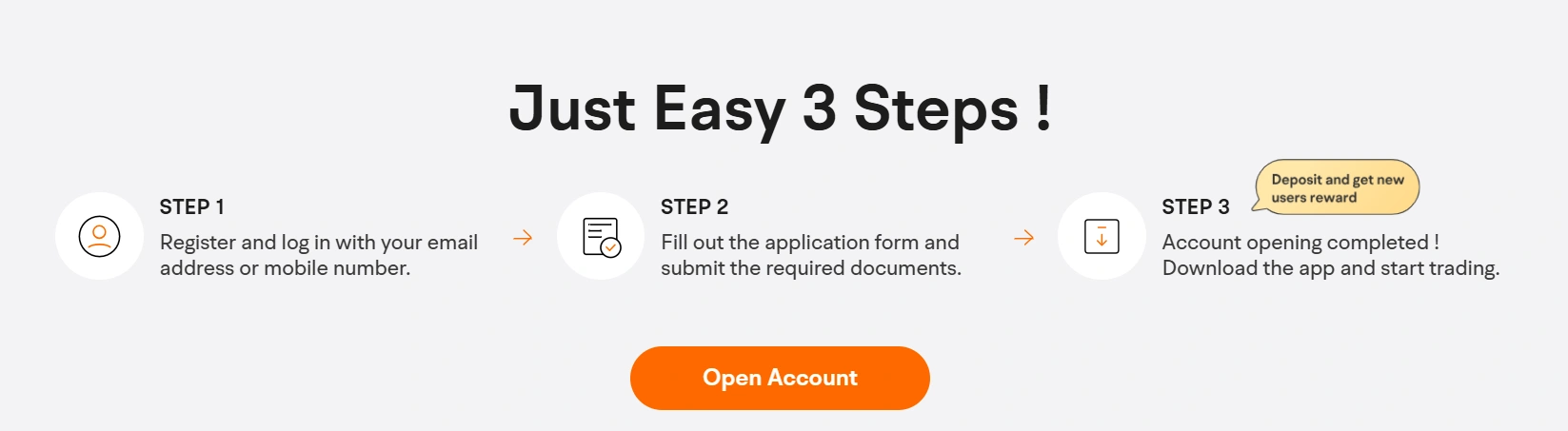
Step 1: Open an account
First, you need to register and have a moomoo account. Visit the moomoo official website or download its application, and follow the prompts to complete the registration process. Upload the necessary documents as required to complete identity verification, ensuring that the account complies with local regulations.
Step 2: Learn and research
Moomoo provides investors with numerous learning materials, target information, and real-time news. Investors can first study the functions of moomoo, learn more about passive investing knowledge, and become familiar with the use of moomoo.
Step 3: Choose the right investment targets
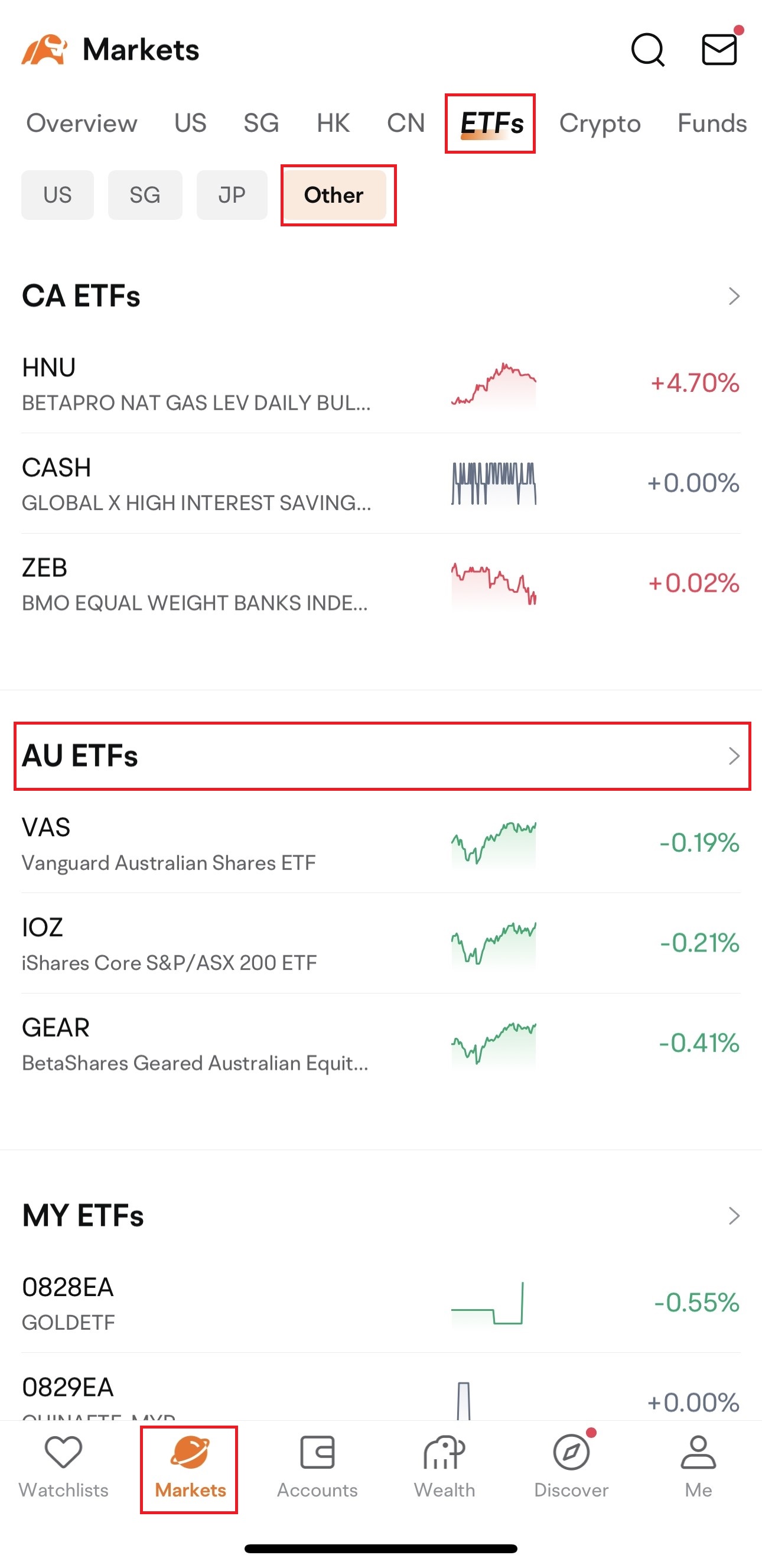
You can find many ETFs that track different market indices on the moomoo platform. These products are an ideal choice for achieving passive investing. Investors need to consider their own risk tolerance, investment objectives, and time horizon to select a suitable ETF portfolio.
Moomoo also provides investors with an "AU ETF" column to help investors better choose investment targets and complete the creation of their own passive investment portfolio.
Popular passive investments in Australia
In the market, investing in Exchange-Traded Funds (ETFs) is a widely used and convenient investment tool for passive investment strategies. ETFs track a specific market index while offering tradability on the secondary market, allowing investors to easily trade ETF shares.
Additionally, ETFs provide investors with a multitude of options. Through ETFs, investors can invest in Australian stock indices, U.S. stock indices, and even global stock market indices, as well as other financial assets and related indices (such as bonds). Here are some examples of different types of ETFs listed on the ASX:
Ticker | Name | Benchmark |
Vanguard Australian Shares Index ETF | S&P/ASX 300 Index | |
iShares Core S&P/ASX 200 ETF | S&P/ASX 200 Index | |
iShares S&P 500 ETF | S&P 500 Index | |
BetaShares Nasdaq 100 ETF | NASDAQ-100 Notional Net Total Return Index | |
VanEck 10+ Year Australian Government Bond ETF | S&P/ASX Government Bond 10-20 Year Index |
For a deeper understanding of passive investing using ETFs, you can explore "Active vs Passive ETFs Australia: Which Investment Approach Fits Your Financial Goals".

What is the difference between passive vs active investing?
Corresponding to passive investment strategies is active investment strategies. Simply put, active investment strategies involve investors or fund managers conducting in-depth analysis of the market, selecting undervalued stocks or other assets, or adjusting the investment portfolio by predicting market trends.
In summary, the differences between active and passive investments are as follows:
Investment Objectives:
Active Investing: The goal is to achieve returns that exceed the market average, typically through stock selection and market timing.
Passive Investing: The goal is to replicate the market average return, usually by purchasing index funds or ETFs.
Risk:
Active Investing: The risk may be higher because it relies on the choices and judgments of individuals or teams, and incorrect decisions can lead to losses.
Passive Investing: The risk is lower because the investment portfolio is diversified across the entire market or a part of it, reducing the impact of individual stocks or assets.
Time and effort:
Active Investing: Requires more time and effort to research the market and individual securities, as well as frequent adjustments to the investment portfolio.
Passive Investing: Requires less time and effort since the investment portfolio usually does not need to be adjusted frequently.
Market Influence:
Active Investing: May be affected by market sentiment and irrational behavior.
Passive Investing: Not influenced by personal emotions, it is more stable and objective.
Which type of management style is right for you?
Choosing between passive and active investing depends on several factors, including but not limited to:
Investment experience: New investors may be better suited to start with simple passive investments, while those with more experience and resources might consider active investing.
Time commitment: If you don't have much time to monitor market changes, passive investing might be a better choice; on the contrary, those willing to spend time and effort on research can opt for active investing.
Risk tolerance: Passive investing tends to offer more stable returns, while active investing may involve greater volatility and potential for higher returns or losses.
Investment horizon: For long-term investors, passive investing is often more appealing due to its low cost and simplicity; short-term investors or those who wish to quickly respond to market opportunities might prefer active investing.
Cost sensitivity: If you are very sensitive to investment costs, then low-cost passive investing will be an important consideration.
How to combine passive and active investing?
For investors, combining passive and active investing to optimise their portfolio is also feasible. This approach is known as the "core-satellite" strategy.
Core Component: A majority of the funds are used to build a passively managed portfolio, which can be held through low-cost index funds or ETFs. This part is responsible for providing broad market exposure and stable long-term returns.
Satellite Component: A smaller proportion of funds is used for active investing, selecting some individual stocks, industries, or thematic funds with potential to capture additional alpha, which is the part that exceeds the average market performance.
Passive investing summed up
Passive investing aims to achieve returns close to the market average, rather than outperforming the market. Based on the efficient market hypothesis, this approach relies on broad diversification and long-term holding, avoiding the additional costs associated with frequent trading. At the same time, passive investors should also be aware that the returns from this investment strategy typically will not exceed the market, and investors will bear the potential losses brought about by market volatility. Before choosing this strategy, please assess your personal risk tolerance and consider seeking professional financial advice.
FAQs about passive investing
How much of the market is passive investing?
In 2024, the proportion of passive investment in the global market has grown significantly. In Australia, the market share of passive investment continues to expand, especially in the fields of ETFs and index funds. According to data from Global X, as of the end of September, the total assets of Australia's 394 ETF products rose to 226.6 billion Australian dollars (approximately 152.4 billion US dollars), a 48.6% increase from 152.2 billion Australian dollars in the same period last year.
How do I start with passive trading in Australia?
To start passive investing in Australia, first choose a reliable trading platform (such as moomoo), register and open an account, and complete identity verification. Then, based on your risk tolerance and investment objectives, select low-cost ETFs or index funds that typically track broad market indices (such as the S&P/ASX 200). Finally, set up a regular fixed investment plan, maintain a long-term holding strategy, and fully leverage the market's long-term growth potential.
This presentation is for informational and educational use only and is not a recommendation or endorsement of any particular investment or investment strategy. Investment information provided in this content is general in nature, strictly for illustrative purposes, and may not be appropriate for all investors. Read more