How to Invest in AI in Australia?

In recent years, artificial intelligence has made remarkable strides, capturing global attention as a groundbreaking innovation. The rise of AI tools like OpenAI's ChatGPT and the recent surge in popularity of DeepSeek have spotlighted the disruptive potential of AI across various sectors, from IT and finance to healthcare and transportation. As AI continues to gain momentum, Australian investors have a prime opportunity to be part of this transformative journey.
With Australia's strong tech ecosystem and growing focus on innovation, there are numerous avenues for investors to explore. The recent buzz around DeepSeek, known for its cutting-edge advancements, underscores the potential for significant returns in the AI sector. Investors can consider direct stock purchases, exchange-traded funds (ETFs), or venture capital opportunities in AI startups to capitalize on this trend.
This article will introduce how to invest in AI in Australia and explore more extended AI investment directions. Let's get into it!
What is artificial intelligence(AI)?
Artificial intelligence (AI) involves creating computer systems capable of tasks that usually need human intelligence. These tasks include learning, reasoning, problem-solving, understanding language, and even recognizing patterns or making decisions. In simpler terms, AI enables machines to think and act in ways that mimic human capabilities.

As researchers look for more applications and opportunities for this game-changing technology, billions of dollars are being invested in AI research and development. It is expected that investment on AI will reach US$300 billion in 2026.
As AI applications become more advanced and their adoption grows across mainstream business sectors, these technologies have the potential to significantly transform the world around us. Naturally, this raises the question of how Australian investors can tap into this new wave of AI, automation, and robotics?
What are some ways to invest in AI?
For Australian investors looking to invest in AI, there are several pathways to consider:
1. Investing in ASX-listed AI stocks
Investing directly in companies that are leaders in AI technology is a common approach, which enables investors to select specific companies they believe have significant growth potential within the AI industry.
While many businesses are poised to benefit from artificial intelligence, the AI market in Australia remains relatively small. Currently, only a handful of ASX-listed companies are actively engaged in developing AI technology, though this number is expected to increase as the industry expands.
Here are some top-performing AI stocks listed on the ASX that Australian investors may be of interest.
WiseTech Global Ltd (ASX: WTC)
Market cap: 41.14 billion (AUD)
WiseTech Global (WTC), headquartered in Australia, is a leading provider of global logistics solutions. Its flagship product, CargoWise, is extensively used in global supply chain management. The company employs AI to enhance logistics and transportation processes through automation and data analytics, improving efficiency and reducing costs. WiseTech Global's AI applications include intelligent routing optimization, cargo tracking, and predictive analytics, all crucial for modern logistics.
Therefore, WiseTech Global holds a significant place in the AI investment theme, with its AI-driven innovative solutions progressively transforming the global logistics industry, making it a noteworthy consideration for investors.
Brainchip Holdings Ltd (ASX: BRN)
Market cap: 817 million (AUD)
BrainChip Holdings Ltd (BRN) is an Australian company focused on developing advanced artificial intelligence technologies. Their flagship product, the Akida Neural Network Processor, mimics the human brain's functionality, enabling fast and efficient data processing and learning. This positions BrainChip Holdings uniquely in the AI sector, especially in applications requiring rapid decision-making and extensive data handling, such as autonomous vehicles, IoT, and smart home devices. For investors interested in the AI investing theme, BrainChip Holdings offers a unique opportunity to engage with cutting-edge AI technology.
Appen Ltd (ASX: APX)
Market cap: 699 million (AUD)
Appen Ltd (APX) is an Australian company that specializes in providing high-quality data for training machine learning and artificial intelligence algorithms. Through its extensive crowdsourcing platform, Appen supplies essential datasets to global tech companies, aiding the improvement of AI applications such as voice recognition systems, search engines, and social media platforms. Therefore, Appen plays a crucial role in the AI sector by offering robust data support, accelerating the practical application of AI technologies.
Xero Ltd (ASX: XRO)
Market cap: 25.617 billion (AUD)
Xero Ltd (XRO), based in New Zealand, is a cloud accounting software company primarily serving small and medium-sized enterprises. The company's software solutions leverage artificial intelligence and machine learning to automate accounting processes, enhancing data processing speed and accuracy. With AI, Xero provides intelligent financial reporting and forecasting, helping business owners better understand their financial status and make wiser business decisions.

If you want to learn more AI stocks, you can read this article: 10 Best AI stocks on the ASX for 2024
2. Investing in US-listed AI stocks
For Australian investors interested in international markets, the NASDAQ in the United States hosts some of the world's largest tech companies that are pioneering the AI revolution. These companies are actively developing and implementing AI-driven technologies and applications. By investing in these global leaders, Australians may gain exposure to the latest innovations and potential growth opportunities in the AI sector.
NVIDIA Corporation (NASDAQ: NVDA)
Market cap: 3.36 trillion (USD)
NVIDIA (NVDA) is a global leader in graphics processing units (GPUs), with products widely used in gaming, professional visualization, data centers, and automotive markets. NVIDIA's GPUs are particularly crucial in the field of artificial intelligence due to their high-performance computing capabilities, especially in deep learning and machine learning applications. NVIDIA's CUDA technology platform enables developers to leverage GPUs to accelerate various applications, including AI training and inference tasks.
Alphabet Inc (NASDAQ: GOOGL)
Market cap: 2.37 trillion (USD)
Alphabet Inc (GOOGL), the parent company of Google, is a leading global technology giant with significant investments and innovations in the field of Artificial Intelligence. Alphabet is not only known for its powerful search engine but also for its advancements in voice recognition, image processing, and autonomous driving technologies among other AI domains. The company's dedicated AI research division, Google AI, focuses on developing cutting-edge AI technologies and promoting their commercial applications, making Alphabet a compelling choice in the AI investment theme.
Microsoft (NASDAQ: MSFT)
Market cap: 3.20 trillion (USD)
Microsoft (MSFT) is a globally renowned software and technology services company with significant investments in Artificial Intelligence. Through its cloud computing service, Azure, Microsoft offers robust AI tools and services that support businesses and developers in building, deploying, and managing AI solutions.
Additionally, Microsoft's AI research division is among the leading AI research institutions, dedicated to developing cutting-edge AI technologies and applications. Microsoft's AI technologies are extensively integrated into its office software, operating systems, and cloud services, enhancing product intelligence and user experience.
Amazon.com Inc (NASDAQ: AMZN)
Market cap: 2.35 trillion (USD)
Amazon.com Inc (AMZN) is a global giant in e-commerce and cloud computing, playing a significant role in the field of Artificial Intelligence. Amazon leverages AI to enhance its logistics and customer experience, improving the accuracy of its recommendation systems. Through its subsidiary, Amazon Web Services (AWS), it also offers AI solutions that support digital transformation for businesses of all sizes. AWS provides machine learning services and tools, such as SageMaker, which help developers and data scientists quickly build, train, and deploy machine learning models.

DeepSeek Beneficiaries
Market cap: 15.78 trillion (USD)
DeepSeek's advancements in low-cost, open-source AI models have the potential to significantly enhance the scalability of AI applications, spurring long-term growth in sectors such as enterprise services, data infrastructure, cloud computing, and collaboration tools. This curated list of stocks spans the entire AI value chain, from development to deployment (encompassing data, computing power, and applications), and highlights potential beneficiaries of DeepSeek's movement towards making AI more accessible to all.
3. Investing in AI ETFs
Investing in AI-focussed ETFs is another way for Australian investors to invest in AI. AI ETFs offer a way to invest in a diversified portfolio of companies engaged in AI. These funds can include both international and Australian firms, providing exposure to different aspects of the AI sector.
Investing in AI ETFs offers several advantages over individual AI stocks, primarily through diversification, which reduces the risk associated with holding a single company by providing exposure to a broad range of businesses involved in AI. This diversification leads to a more balanced risk profile, as it mitigates potential losses if a specific company underperforms.
AI ETFs also simplify the investment process, offering convenience by investing in the AI industry without the need to research and select individual stocks. They are often cost-effective, typically have low expense ratios, and may reduce transaction fees.
If you're an Australian investor interested in AI ETFs, there are plenty of options available. In the U.S. market alone, there are 17 ETFs that focus mainly on AI and machine learning. Here are three funds that have recently gained investor interest:

Global X Robotics & AI ETF(BOTZ)
The Global X Robotics & Artificial Intelligence ETF (BOTZ) focuses on investing in companies that are set to gain from the increasing adoption and utilization of robotics and AI. This includes firms engaged in industrial robotics and automation, as well as those developing non-industrial robots and autonomous vehicles.
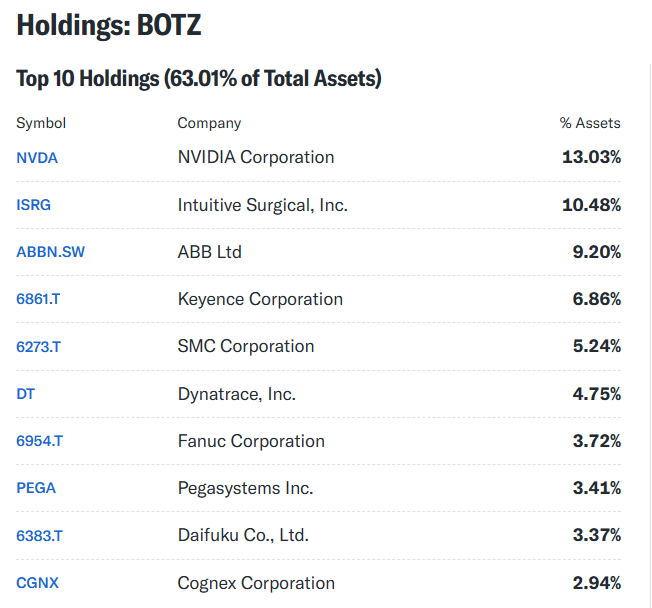
Source: yahoo finance
iShares Future AI & Tech ETF (IRBO)
IRBO seeks to track the investment results of the NYSE FactSet Global Robotics and Artificial Intelligence Index. The fund aims to invest in companies that are expected to benefit from the development and application of AI and other innovative technologies.
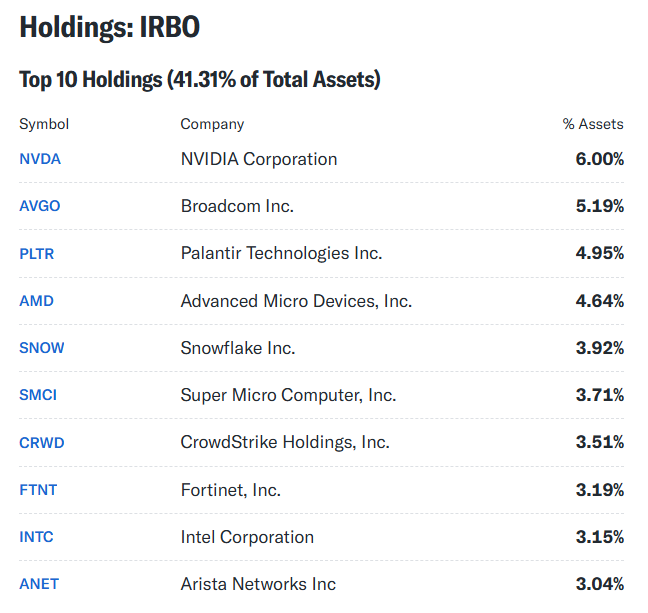
Source: yahoo finance
BetaShares Glb Rbtc & Artfcl Intlgc ETF (RBTZ)
RBTZ aims to track the performance of an index that includes global companies focused on robotics, automation, and AI technologies. The fund seeks to capitalize on the growth and innovation within these fields by investing in companies that are leaders or emerging players in these areas.
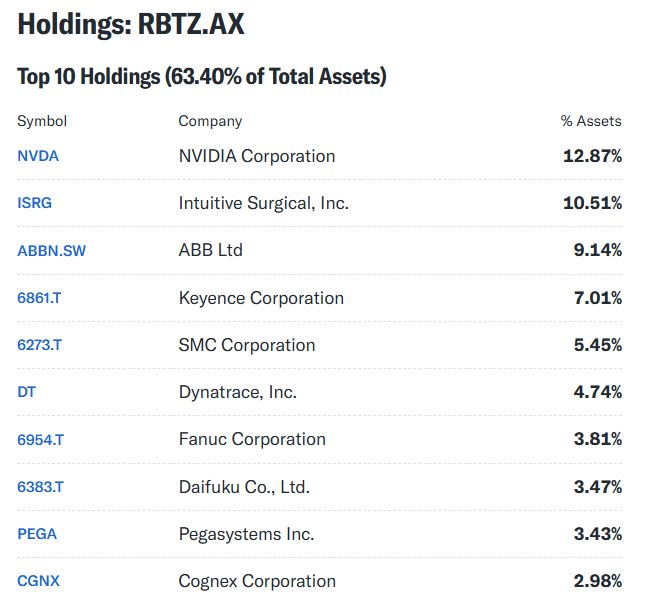
Source: yahoo finance
You may also like: 10 Best AI ETFs to Watch in Australia 2024
How to invest in AI in Australia?
Now that you know you can invest in AI by investing in AI stocks and AI ETFs, the question is, which platforms in Australia support investors trading AI stocks and ETFs? We have prepared the answer for you!
moomoo Australia is an online trading platform that offers a wide range of investment options, including stocks, ETFs, and more. It is known for its user-friendly interface, advanced trading tools, and educational resources. moomoo provides access to both Australian and international markets, which allows investors to buy shares in companies leading in AI technology across the globe.
Here are the simple steps to use moomoo investing AI:
Step 1. Open an account
Firstly, you need to open an account on moomoo Australia. You will need to provide personal information and complete identity verification as part of the account setup process.

Step 2. Fund your account
Once you've logged into your account, click on the "Deposit" option and follow the prompts to select a suitable payment method, such as a bank transfer.
Step 3. Research AI investment
You can utilize moomoo’s research tools and educational resources to identify AI-focused stocks or ETFs. Looking for companies that are heavily investing in AI technologies or ETFs that provide diversified exposure to the AI sector.
Step 4. Place an order
Once you’ve done your research and decided which AI stocks or ETFs to invest in, you can place your order.
Step 5. Monitor your investment regularly
Remember to track the performance of your AI investments on moomoo’s positions page. Adjust your positions promptly based on market conditions and your personal investment strategies, such as increasing, reducing, or closing positions as needed.
Are there more extended AI investment opportunities?
Edge AI Applications: While traditional cloud-based models remain essential, edge solutions are gaining traction by processing data directly on local devices. This shift is driven by the need to reduce latency, enhance data privacy, and optimize power use. By 2025, Edge AI is expected to see rapid growth across various devices, including smartphones, PCs, wearables, smart homes, and electric vehicles, offering significant investment opportunities.
Cybersecurity and Energy: As proprietary data becomes more valuable, AI-driven cybersecurity solutions are attracting increased investment, with global spending projected to reach $215 billion in 2024. Additionally, the demand for energy-efficient solutions is rising due to the expansion of data centers. With electricity consumption projected to exceed 1 PWh by 2026, small modular reactors could become a key power source for AI data centers, presenting a promising avenue for investment in energy innovation.
What are the pros and cons of investing in AI?
Investing in artificial intelligence offers a unique set of opportunities and challenges for Australian investors. As AI continues to revolutionize industries worldwide, it presents substantial growth potential and the chance to diversify portfolios across various sectors. However, the rapidly evolving nature of AI also brings some risks, including market volatility and regulatory uncertainties.
Below are some key pros and cons of investing in AI:
Pros of investing in AI
High Growth Potential: The AI industry is in a rapid development phase, with increasing market demand. Companies in this sector aim to achieve growth by continuously launching innovative products and services, which could present potential returns for investors.
Diversification of Risks: AI spans various sectors, including healthcare, finance, and transportation, allowing investors to diversify their portfolios across multiple industries.
Technology Leadership: Australia has several top-tier universities and research institutions that have developed a rich pool of AI experts. This strong talent base enables local companies to lead in research and development. For investors, this means that their investments may benefit from continuous innovation, a technological edge, competitive advantages, and long-term stable growth.
Cons of investing in AI
Impact of Macroeconomic Fluctuations: Changes in the macroeconomic environment significantly affect AI stocks. During economic downturns, companies may reduce their investments in AI, leading to fewer orders, declining performance for related companies, and falling stock prices. Additionally, as investors' risk appetite decreases, they may reduce allocations to high-risk assets, including AI stocks, further increasing downward pressure on stock prices.
Impact of Policy Changes on Stock Prices: Government policy adjustments in the AI industry can directly affect AI stocks. If stringent regulatory policies are introduced, limiting the application of AI technologies in certain areas, it can negatively impact the stock prices of related companies. For example, if data privacy protection policies become more stringent, AI companies relying on large amounts of data may face increased compliance costs, affecting their performance and stock prices.
Final thoughts on AI investing
In conclusion, understanding how to invest in AI in Australia presents promising opportunities for those keen on technological advancements and growth in this dynamic sector. By focusing on thoroughly researched AI companies, employing diversified investment strategies, and staying informed about industry trends and regulatory developments, investors can navigate the landscape effectively and make well-informed decisions.
FAQs about investing in artificial intelligence
How to search for AI investments?
To search for AI investments as an Australian investor, begin by conducting thorough research on local AI companies and startups, using resources like the Australian Securities Exchange (ASX) to identify publicly listed entities. You can consider investing in technology-focused mutual funds or exchange-traded funds (ETFs) that offer diversified exposure to the AI sector, including Australian companies. Stay informed about industry trends by following Australian tech news, joining AI-focused groups, and attending local industry events to discover new opportunities.
Is it a good time to invest in AI?
Determining whether it's a good time to invest in AI depends on several factors, especially for Australian investors. Currently, AI technology is advancing rapidly and is being integrated across various industries, offering numerous opportunities for growth. In Australia, the government and private sector are actively investing in AI, which is fostering innovation and opening up new markets. This supportive environment can make it an attractive time to consider investing in AI.
However, it's important to be mindful of market volatility and economic conditions both globally and within Australia. The AI sector, like any emerging technology, can be subject to fluctuations. It's crucial to conduct thorough research and perhaps consult with a financial advisor to understand the risks.
This presentation is for informational and educational use only and is not a recommendation or endorsement of any particular investment or investment strategy. Investment information provided in this content is general in nature, strictly for illustrative purposes, and may not be appropriate for all investors. Read more