What is a Self-managed Super Fund(SMSF)?

Self-managed super funds (SMSFs) have become an increasingly popular option among Australians looking for greater control over how their super is managed. As part of the broader superannuation system, SMSFs provide a structure that allows members to tailor investment decisions in line with their individual goals, preferences and circumstances
But what exactly is a self-managed super fund? In this comprehensive guide, we'll delve into the intricacies of self-managed super funds, exploring how they work, the pros and cons and who regulates them in Australia. Let's break it down!
What is a Self-managed Super fund(SMSF)?
A self-managed super fund (SMSF) is a special type of super fund that is controlled by its members. It allows individuals to take direct control of their retirement savings, unlike other types of superannuation funds that are managed by trustees or professionals. An SMSF can have up to six members, all of whom are trustees responsible for managing the fund in accordance with Australian Taxation Office (ATO) rules, as well as the fund's investment strategy, reporting and compliance. In essence, a self-managed super fund is a private super fund under your own responsibility.
Who regulates self-managed super funds in Australia?
The Australian Taxation Office (ATO) is the primary regulator of self-managed super funds (SMSFs), responsible for ensuring compliance with the requirements set out in the Superannuation Industry (Supervision) Act 1993 (SIS Act). This includes making sure SMSFs operate within the law and meet their obligations, such as keeping accurate records, preparing financial statements and conducting independent audits. The Australian Securities and Investments Commission (ASIC) also plays a role, primarily regulating SMSF auditors and financial services relating to SMSFs.
How does an SMSF Work?
It is important for potential trustees to understand how an SMSF operates. This involves establishing a trust deed, appointing trustees to manage the fund in accordance with ATO regulations and developing an investment strategy that meets members' retirement goals.
Establishing a Trust Deed
The first step in running an SMSF is to establish a trust deed, which sets out the legal framework and rules for running the fund. This deed defines the rights and responsibilities of members and trustees, outlines how benefits will be paid and sets out the process for managing the fund. It is imperative that the trust deed complies with superannuation legislation and can be adapted to meet the specific requirements and objectives of individual SMSF members.
Appointing Trustees
Once the trust deed is established, members must appoint trustees who are responsible for operating the fund in accordance with the trust deed and applicable Australian Taxation Office (ATO) regulations. In an SMSF, all members must be trustees or directors of a corporate trustee to ensure direct control over the operation of the fund. Trustees have a fiduciary duty to act in the best interests of the members of the fund, including making sound investment decisions and complying with all legal requirements.
Developing an Investment Strategy
The next step is to develop an investment strategy that is consistent with the financial objectives and risk tolerance of its members. The strategy should outline the types of investments the fund will make, the expected returns and the diversification of assets to manage risk.It must also meet the 'sole purpose test', meaning that all investments are made for the benefit of members during their retirement.Regular review of the investment strategy ensures that it remains relevant and effective in changing market conditions.
Contributions and Investment Management
Members contribute to the SMSF through concessional and non-concessional contributions, subject to a cap set by the government.Once a contribution is received, the Foundation invests the money on behalf of the member in accordance with the investment policy.Investments must be kept separate from any personal or business assets of the trustees, emphasising the need to maintain clear boundaries between personal finances and fund assets.
Payment of Benefits
Ultimately, the operation of an SMSF culminates in the payment of benefits to members when they meet the conditions for withdrawal, usually on reaching superannuation age or retirement. The method of payment of these benefits, whether a lump sum, an annuity or a combination of the two, is set out in the trust deed and agreed by the member. Ensuring that benefits are paid correctly and in accordance with the law is another important responsibility of trustees.
By understanding these operational processes, potential trustees can better understand what is involved in managing a self-managed super fund and make an informed decision about whether an SMSF is the right choice for their superannuation.
What can SMSF invest in?
With some limited exceptions, an SMSF gives you access to a wide range of investment options.
Related Reading: SMSF Investment Options in Australia (2026 Guide)

Key considerations for permissible investments in an SMSF include:
Investments must be consistent with the fund's written investment policy and meet the 'sole purpose test', meaning the investment must be made solely for the purpose of providing superannuation benefits to members.
All investments in the SMSF must be made on an arm's length basis.
The purchase and sale prices of the fund's assets must reflect true market values and the income from the fund's assets must reflect true market returns.
Self managed super fund Advantages & Disadvantages
While a Self-Managed Super Fund (SMSF) offers unparalleled control over your retirement wealth, it also demands time and active management. Here is a quick snapshot to help you decide if an SMSF fits your financial goals:
Key Benefits:
1、Control & Flexibility: Direct what, when, and how your super is invested.
2、Broader Investment Choice: An SMSF lets you invest directly in a wide range of assets, including international shares and ETFs.
3、Tax Efficiency: Enjoy capped 15% tax rates on investment income and 0% tax in the retirement phase.
Key Considerations:
1、Time & Responsibility: Trustees are legally liable for compliance and must manage active investment portfolios.
2、Residency Rules: Trustees must maintain Australian permanent residency status.
Discover our guide on the【SMSF Advantages & Disadvantages】to get a better understanding of all the advantages and disadvantages of starting your own fund.

How to start SMSF investing with moomoo?
If you don't have an SMSF account:
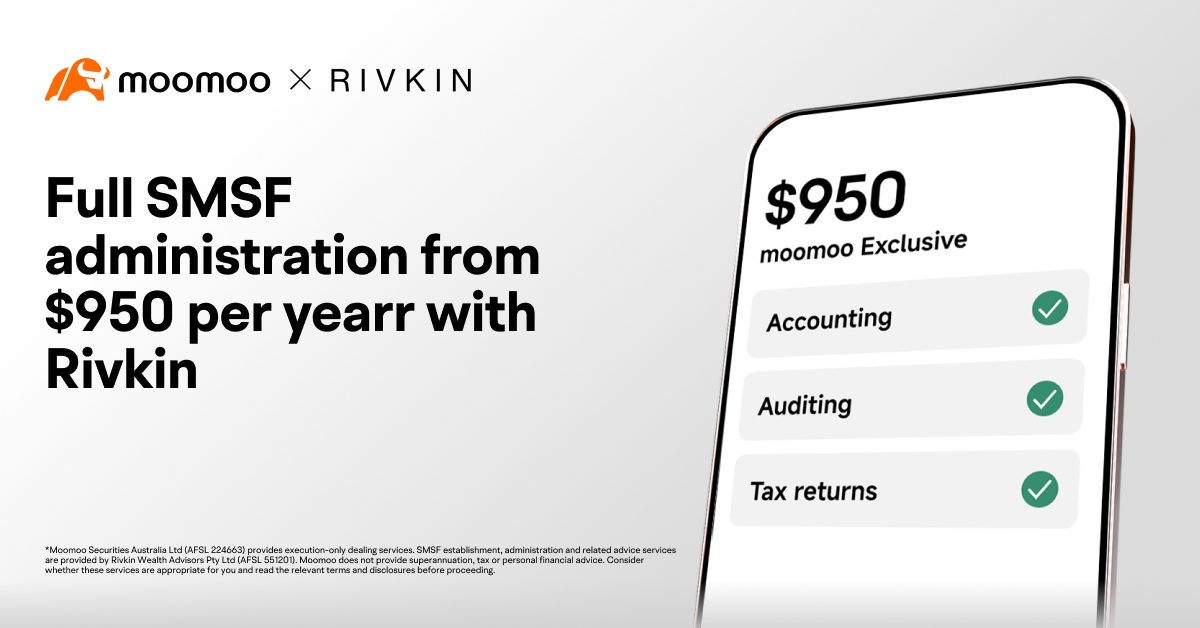
To provide comprehensive SMSF support, we partner with Rivkin, a trusted Local-based SMSF specialist with more than 40 years of industry experience.
1. Trusted local expertise
Partner with local SMSF specialists with more than 40 years of experience helping Australian manage their investments.
2. Streamlined all-in-one setup
It's all covered in one simple procress, from setting up a trust to opening your moomoo trading account.
3. Competitive pricing
Exclusive SMSF pricing for moomoo clients, whether you're setting up a new SMSF or need ongoing support for an existing one. Annual service fees from $950.*
Open an SMSF account->
Automate your SMSF data flow
Moomoo has partnered with Class to enable an automated data feed for moomoo SMSF accounts. With your consent, your transaction and portfolio data can be securely shared with the Class software widely used by your accountant or SMSF administrator, helping reduce manual data entry and improve reporting efficiency.
If you already have an SMSF account:
To open an SMSF trading account, you are required to provide the following information: the full name of the SMSF trust, Australian Business Number (ABN), Tax File Number (TFN), and identity verification documents. For more details, please visit: How to open and manage an SMSF trading account with moomoo
Once you have prepared the above documents, you can open your moomoo SMSF Account via the following 3 methods:
Option 1: Open directly in 4 simple steps by clicking the link:
New users:opening an moomoo SMSF Account.
Existing moomoo users:add an moomoo SMSF Account.
*You can also contact support anytime through the moomoo app.
Option 2: Book a 1-on-1 consultation
Book a 1-on-1 consultation with moomoo’s SMSF specialist team, where you can learn about moomoo SMSF account opening procedures and relevant investment strategies.
Option 3: Visit team moomoo in personOpen your moomoo SMSF account at our Chatswood store with in-person support.
Address: Shop 66, 427–441 Victoria Avenue, Chatswood NSW
please include disclaimer when refering the above pricing $950.
*Fees are Inclusive of GST. Moomoo AU may receive fees from the above third-party SMSF administrators for referrals that result in the purchase of their services. Moomoo AU does not provide any advice or recommendations with regard to the providers' services or the suitability of establishing an SMSF in general. Please seek professional advice from a qualified financial adviser and/or accountant where necessary.
Moomoo Securities Australia Ltd (AFSL 224663) provides execution-only dealing services. SMSF establishment, administration and related advice services are provided by Rivkin Wealth Advisors Pty Ltd (AFSL 551201). Moomoo does not provide superannuation, tax or personal financial advice. Consider whether these services are appropriate for you and read the relevant terms and disclosures before proceeding.
Frequency Asked Questions
Is an SMSF right for you?
In theory, anyone can set up an SMSF, but there are some important things to assess when considering an SMSF, including personal circumstances, financial goals and investment knowledge.Remember that running a self-managed pension fund successfully requires investment strategy, knowledge of the law and pensions, and administrative skills, or the ability to get help from someone who has these skills.
How long does it take to set up a self-managed super fund?
Setting up a self-managed superannuation fund usually takes a few weeks. The process includes selecting a trustee, drafting a trust deed, registering for an Australian Business Number (ABN) and Tax File Number (TFN), opening a bank account, transferring existing superannuation balances and developing an investment strategy. The time taken may vary depending on individual circumstances and how efficiently each step is completed.
This presentation is for informational and educational use only and is not a recommendation or endorsement of any particular investment or investment strategy. Investment information provided in this content is general in nature, strictly for illustrative purposes, and may not be appropriate for all investors. Read more