What are the Best Oil ETFs in Australia (2026)

For Australian investors, oil exchange-traded funds (oil ETFs) provide a convenient and accessible way to invest in oil without trading futures contracts or selecting individual energy stocks. Oil ETFs allow investors to track oil price movements or gain exposure to energy companies through a single investment traded on the stock exchange.
This article delves into various aspects of oil ETFs, including an overview of what they are, a discussion of some notable oil ETFs.
Introduction
Oil remains one of the most important commodities in the global economy, powering industries such as transportation, manufacturing, and energy production. Because oil prices are closely linked to economic activity and global supply conditions, many investors look for ways to gain exposure to the oil market as part of a diversified portfolio.
According to the International Energy Agency (IEA), oil demand is projected to grow through 2030, underscoring its relevance in the investment landscape. However, directly investing in oil stocks can be challenging due to the inherent volatility of oil prices. Oil ETFs provide an alternative, offering a more diversified to gain exposure to the oil market.
Why invest in oil ETFs?
Investors often use oil ETFs to gain exposure to the energy sector without the complexity of trading oil futures or selecting individual oil stocks.
One reason investors consider oil ETFs is the global demand for energy. Oil remains a key resource for transportation, manufacturing, and power generation, making it a major driver of global economic activity. Oil ETFs can also help investors diversify their portfolios. Energy markets often move differently from traditional sectors such as technology or consumer goods, which means oil-related assets may provide diversification benefits.
For investors who want exposure to oil price movements or the broader energy industry, oil ETFs offer a straightforward and flexible investment option.

What are oil ETFs?
Oil ETFs (Exchange-Traded Funds) are investment funds traded on stock exchanges, similar to stocks. These ETFs are structured to mirror the performance of oil prices or related indexes. By investing in an oil ETF, investors can access a broad range of the oil industry, including sectors such as production, exploration, and services, without needing to invest in individual stocks.
Top oil ETFs to watch
When it comes to selecting potential oil ETFs for diversification, several options stand out due to their performance, holdings, and management. Here are some of the top oil ETFs to consider: This list include commodities ETFs and leveraged oil ETFs that track the price of oil through benchmarks such as Brent Crude Oil or West Texas Intermediate.
Oil ETF | Price | Total Assets | Expense Ratio |
United States Oil Fund (USO) | $105.03 | 2.12 Billion | 0.70% |
ProShares Ultra Bloomberg Crude Oil (UCO) | $34.18 | 590 Million | 0.95% |
ProShares UltraShort Bloomberg Crude Oil (SCO) | $10.19 | 555 Million | 0.95% |
Invesco DB Oil Fund (DBO) | $18.53 | 387 Million | 0.75% |
SPDR S&P Oil & Gas Exploration & Production ETF (XOP) | $159.31 | 3.06 Billion | 0.35% |
Data as of March 12, 2026 | |||
United States Oil Fund (USO)
The United States Oil Fund (USO) is one of the most popular oil ETFs. The contract for West Texas Intermediate is traded on the New York Mercantile Exchange. It aims to track the daily price movements of West Texas Intermediate (WTI) light, sweet crude oil.
This equity-based ETF provides exposure to a diverse range of oil stocks, including smaller, growth-oriented oil and gas companies. XOP is known for its equal-weighted approach, which can help mitigate the risk of concentration in any single stock.
ProShares Ultra Bloomberg Crude Oil (UCO)
For investors looking for leveraged exposure, the ProShares Ultra Bloomberg Crude Oil (UCO) offers twice the daily performance of the Bloomberg Commodity Balanced WTI Crude Oil Index. Some ETFs, like the United States Brent Oil Fund LP, focus on Brent Crude futures. This ETF is designed for short-term trading and can be a powerful tool for experienced investors looking to capitalize on short-term movements in oil prices.
ProShares UltraShort Bloomberg Crude Oil (SCO)
SCO is an inverse leveraged ETF designed to provide twice the opposite (–2x) of the daily return of the Bloomberg WTI Crude Oil Subindex. The fund uses futures contracts and derivatives to profit when oil prices decline. Due to its daily reset and leveraged structure, SCO is typically intended for short-term tactical trading.
Invesco DB Oil Fund (DBO)
DBO is an ETF that tracks the performance of crude oil through futures contracts across multiple maturities rather than focusing only on front-month contracts. This strategy is designed to help reduce the impact of contango or backwardation in the futures curve. By selecting contracts with potentially better roll yields, the fund aims to more efficiently track long-term movements in oil prices.
SPDR S&P Oil & Gas Exploration & Production ETF (XOP)
XOP is an equity-based oil ETF that invests in companies involved in oil and gas exploration and production. The fund follows an equal-weight index methodology, giving similar weight to each company rather than concentrating on the largest firms. This approach provides diversified exposure to the upstream energy sector and allows smaller exploration companies to contribute more significantly to overall performance.

How to Invest in Oil ETFs
Step 1: Open a share trading account
To invest in oil ETFs, you first need a brokerage account that supports ETF trading. Moomoo offers different types of accounts depending on investors investment needs.
Individual accounts: The most common account type for retail investors. Opening an account typically requires basic personal information and identity verification.
Company accounts: Allows investors to trade ETFs under a company structure, which may provide asset separation and corporate tax considerations.
Trust accounts: Often used for asset protection and tax planning, allowing income to be distributed among beneficiaries.
SMSF (Self-Managed Super Fund) accounts: Designed for retirement investing through superannuation, enabling long-term portfolio growth within the superannuation framework.

Step 2: Fund your account
While standard bank transfers may take several business days, moomoo supports PayID for faster funding. PayID allows near-instant transfers from your bank account, with funds typically arriving within minutes when account names match, helping you act quickly on investment opportunities.
If you plan to buy U.S.-listed oil ETFs, you’ll also need USD in your account. Instead of using traditional banks with slower processing and less competitive rates, you can convert AUD to USD directly in the moomoo app with transparent FX costs. Simply go to Accounts > Transfer > Currency Exchange, select the currencies, enter the amount, and confirm the conversion.

Step 3: Evaluate oil ETFs before investing
For many beginners, researching oil ETFs can be the most challenging part of the investing process. When looking into oil ETFs, you may encounter large amounts of market news, price charts, and analyst opinions that can be difficult to interpret. This can make it hard to decide which ETF to choose or when to invest.
Moomoo AI can help simplify this process. You can ask questions such as “How has this oil ETF performed recently?” or “What factors are driving oil prices?” and receive clear charts and structured insights to help you better evaluate oil ETFs and make more informed investment decisions.
Step 4: Place your order
Once you decide to invest in an oil ETF, timing can become the next challenge, especially when trading U.S.-listed ETFs from Australia. Because U.S. markets often operate overnight for Australian investors, major price movements or news events may occur while you’re asleep, making it easy to miss potential opportunities.
This is where moomoo’s 24/5 U.S. trading access can be helpful. Instead of being limited by time-zone differences, you can place orders almost anytime—before the market opens, after it closes, or when important market news breaks—allowing you to respond to market movements whenever it fits your schedule.
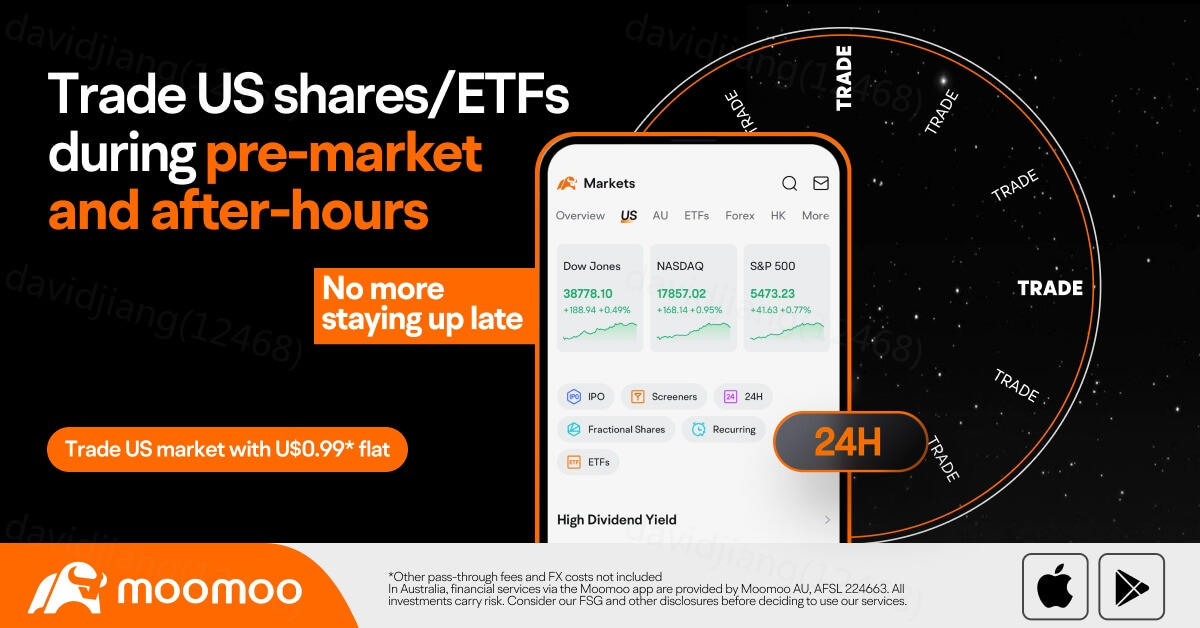
*Disclaimer: Extended Hours Trading is available for selected securities only and entails additional risks due to lack of liquidity and other factors.
Type of oil ETFs
Oil ETFs can be categorized based on how they gain exposure to the oil market. Understanding these structures helps investors choose funds that align with their investment strategy and risk tolerance.
Commodity-based oil ETFs
Commodity-based oil ETFs track crude oil prices by investing in futures contracts linked to benchmarks such as West Texas Intermediate (WTI) or Brent crude. These funds aim to mirror oil price movements but may be affected by market conditions like contango, where futures prices are higher than spot prices.
Equity-based oil ETFs
Equity-based oil ETFs invest in companies across the oil and gas industry, including exploration, production, refining, and transportation. Their performance is influenced not only by oil prices but also by company earnings and broader stock market conditions.
Leveraged and inverse oil ETFs
Leveraged and inverse oil ETFs are designed primarily for short-term trading strategies. Leveraged funds attempt to deliver multiple times the daily return of oil price movements, while inverse funds aim to generate returns that move in the opposite direction of oil prices.
*Disclaimer: Leveraged and inverse ETFs are not designed for buy and hold investors or investors who do not intend to manage their investments on a daily basis. The use of leverage by an ETF increase the risk and are not suitable for all investors and should be utilised only by sophisticated investors who understand leverage risk, consequences of seeking daily leveraged or daily inverse leveraged investment results, and intend to actively monitor and manage their investment.
Subsector-Specific oil ETFs
Subsector-focused oil ETFs concentrate on specific segments of the energy industry, such as oilfield services, energy infrastructure, or pipeline operations, allowing investors to target particular areas within the broader oil sector.
Benefits of investing in oil ETFs
Diversification
One of the primary benefits of investing in oil ETFs is diversification, as it allows you to invest in a range of oil and gas companies. Instead of putting all your money into a single oil stock, an ETF allows you to spread your investment across a basket of oil-related assets. This can help reduce risk and improve the stability of your portfolio.
Liquidity
Crude oil ETFs are traded on major stock exchanges, providing high liquidity. This means you can easily buy and sell shares of oil ETFs throughout the trading day at market prices, just like any other stock. High liquidity also ensures that you can enter and exit positions quickly, which is crucial in the often volatile oil market.
Lower Costs
Investing in individual oil stocks often requires significant research and analysis, which can be time-consuming and costly. Oil ETFs, on the other hand, are classified by the ETF Database based on their exposure to commodities. Oil ETFs are managed by professional fund managers who handle the research and portfolio management. This can result in lower costs for individual investors, as the expense ratios of ETFs are generally lower than the costs associated with actively managing a portfolio of individual stocks.
Accessibility
Oil ETFs provide an accessible way for retail investors to gain exposure to the oil market. The list excludes leveraged and inverse ETFs and focuses on commodities ETFs that track the price of oil through benchmarks such as Brent Crude Oil or West Texas Intermediate. You don’t need a large amount of capital to invest in these ETFs, and they are available through most brokerage accounts. This accessibility makes it easier for individual investors to participate in the oil market without needing to trade oil futures or invest in oil stocks directly.
Income potential
Some oil and gas ETFs pay dividends, providing a potential source of income for investors. These dividends are typically generated from the earnings of the oil and gas companies included in the ETF’s portfolio. While not all oil ETFs offer dividends, those that do can provide an additional return on investment, making them attractive to income-focused investors.
Conclusion
Investing in oil ETFs can be a smart way to diversify your portfolio and gain exposure to the oil market without the complexities and risks associated with directly investing in oil stocks or commodities. Some ETFs, like the United States Brent Oil Fund LP, focus on Brent Crude futures.
With benefits such as diversification, liquidity, lower costs, accessibility, risk management, and potential income, oil ETFs offer a compelling option for investors looking to enhance their portfolios. Whether you are a seasoned investor or just starting, understanding the advantages and selecting the right oil ETFs can help you achieve your financial goals while navigating the dynamic world of oil investments.
By staying informed and making strategic investment choices, you can harness the power of oil ETFs to diversify your portfolio and capitalize on the opportunities presented by the ever-evolving oil market.
FAQs about oil ETFs
Is an oil ETF a good investment?
Oil ETFs can be a useful investment for those looking to gain exposure to the energy sector without buying individual oil stocks or trading crude oil futures. Because oil prices are closely tied to global economic activity, oil ETFs may benefit during periods of strong energy demand or supply disruptions. They can also help diversify a portfolio, as energy markets often move differently from other sectors. However, oil prices can be highly volatile due to factors such as geopolitical tensions, production changes, and economic cycles. Investors should consider their risk tolerance and long-term strategy before investing in oil ETFs.
What is a good oil and gas ETF?
A good oil and gas ETF typically offers diversified exposure to the energy sector, low management fees, and strong liquidity. Some popular oil and gas ETFs track energy companies involved in exploration and production, while others focus on oil price movements through futures contracts. Well-known examples include energy-sector ETFs that invest in large global oil companies, as well as commodity-based funds that track crude oil benchmarks like WTI or Brent. Investors may consider whether they prefer direct exposure to oil prices or broader exposure to energy companies.
What is the largest oil ETF?
The Energy Select Sector SPDR Fund (XLE). As of 2026, the fund manages roughly $28 billion in assets, making it one of the biggest ETFs providing exposure to the oil and gas sector.
XLE tracks the Energy Select Sector Index, which includes major energy companies from the S&P 500 such as large integrated oil producers and energy service firms. Because of its large asset base, strong liquidity, and low expense ratio, it is widely used by investors seeking broad exposure to the energy sector.
This presentation is for informational and educational use only and is not a recommendation or endorsement of any particular investment or investment strategy. Investment information provided in this content is general in nature, strictly for illustrative purposes, and may not be appropriate for all investors. Read more