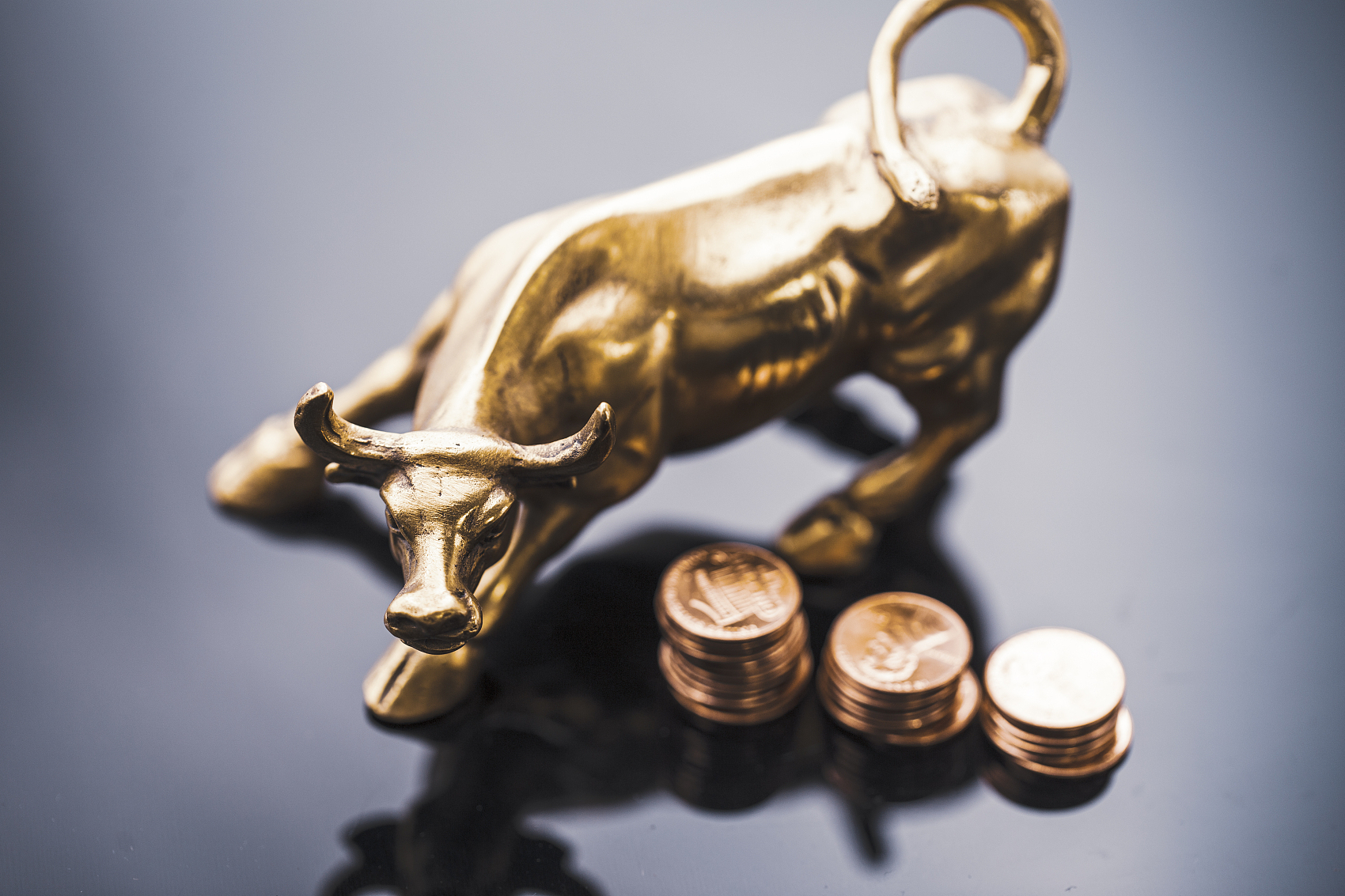
Introduction to the US Securities Market
The US securities market is one of the most developed securities markets in the world, attracting many outstanding companies and a large number of global investment funds. This section will introduce the development of the US securities market, major exchanges, and major stock indexes.
1. Development Overview
The US securities market originated at the end of the 18th century. In 1790, the first stock exchange in the United States, the Philadelphia Stock Exchange, was founded, marking the official form of the US capital market.
Since then, the US securities market has risen along with the strong growth of the US economy, becoming the world’s largest capital market. By the end of 2021, the number of listed companies on major stock exchanges has exceeded 5,000, and the total stock market value has exceeded $ 50 trillion.
In addition, the US securities market also has almost all financial products, such as ETFs, bonds, derivatives, foreign exchange, and digital currencies. The investment scope covers almost the world’s major capital markets.
2. Major Exchanges
There are two major exchanges in the US securities market: the New York Stock Exchange (NYSE) and the Nasdaq.
NYSE
The NYSE dates back to 1792 and is one of the earliest exchanges in the United States. According to the total market value of listed companies as of the end of 2021, the NYSE is the world's largest stock exchange, with a total of more than 2,400 stocks and a total market value of more than $27 trillion.
Some of the companies listed on the NYSE are well-known companies with a long history, large scale, and relatively stable development, such as Coca-Cola, Wal-Mart, and IBM.
Nasdaq
The Nasdaq exchange is an electronic stock exchange in the United States. Founded in 1971, it is now the second-largest stock exchange in the world.
As of the end of 2021, over 3,700 companies are listed on Nasdaq with a combined market capitalization of over $24 trillion. The Nasdaq exchange was previously the go-to place for listings for fast-growing tech stocks. Many tech giants such as Apple, Google, and Amazon have chosen to be listed on Nasdaq.
3. Major Stock Indexes
Presently, there are three major indexes in the U.S. stock market, including the Dow Jones Industrial Average, the S&P 500, and the Nasdaq Composite.
The $Dow Jones Industrial Average(.DJI.US)$ was created more than 120 years ago, in May 1896.
The Dow Jones Industrial Average originally included 12 of the most representative stocks in the American industrial sector. It has continuously updated ever since and now includes the 30 most prominent listed companies in the United States, spanning various sectors. Most of these companies have nothing to do with heavy industry but are distributed in food, finance, pharmaceutical, software, and other industries. Many well-known companies such as Apple, Boeing, Disney, and McDonald’s are Dow’s constituent stocks.
Since the Dow was first recorded at 40.94 points in May 1896, it has risen to 36,338 points at the end of 2021, marking an increase of 887.6 times in 125 years, with an average annual return of 5.58%.
Compiled by S&P Dow Jones Indices in 1957, the $S&P 500 index(.SPX.US)$ is a stock index that records the stock performance of the 500 major listed companies in the United States.
The stocks covered by the S&P 500 are almost the 500 most actively traded stocks in the United States. Many well-known industrial stocks such as Boeing and General Motors, consumer stocks, such as Coca-Cola and Procter & Gamble, and technology stocks such as Apple and Google are among them.
From its founding in 1957 to the end of 2021, the S&P 500 has averaged more than 12% annual gains. Warren Buffett once said that for most people, the best way to invest is to invest in the S&P 500.
The $Nasdaq Composite Index(.IXIC.US)$ is one of the most influential indexes in the US securities market. It is calculated based on securities of all domestic and foreign public companies listed on the Nasdaq market. Nasdaq’s constituents are primarily fast-growing advanced technology, telecommunications, and biotech companies. Well-known high-tech companies such as Microsoft, Intel, and Amazon are Nasdaq’s constituent stocks.
Since its establishment in February 1971, the Nasdaq has risen from an initial value of 100 points to 15,645 points at the end of 2021, an increase of about 156.5 times in 51 years, with an average annual return of about 10.4%.
The above is a brief introduction to the US securities market. The US securities market is large, and there are many investment opportunities, but at the same time, there are also investment risks. Investors should make investment decisions based on their own circumstances or seek professional advice before investing in the US securities market.
This presentation is for informational and educational use only and is not a recommendation or endorsement of any particular investment or investment strategy. Investment information provided in this content is general in nature, strictly for illustrative purposes, and may not be appropriate for all investors. Read more
Recommend

Gen Z's investment revolution
Stocks with Josh talks 2024 market moves (Part 2)
Understanding stock market seasonality

Housing's hot streak — rates, inflation, and why it persists
The biggest IPO flops in recent history
Year in review – 2023 market triumphs, trials, and trends
Student loan repayment restart — what it means for you
Procrastinators unite — unpacking the next phase of fast delivery in America
Bitcoin ETFs — everything you need to know
The economics of Super Sunday
Stocks with Josh talks 2024 market moves (Part 1)
What Are Soft, Hard, or No Landings?
Love & stocks: Navigating Valentine's Day investments
Investing across borders: Trends in Singaporean and US markets
The Short Sale Philosophy of George Soros
Contrarian Investor John Templeton
Roy Neuberger: The Art of Investing
Dividend Stocks: How to Invest?
Peter Lynch's 25 Golden Rules
Learn Value Investing with Benjamin Graham
The Investment Strategy of Philip Fisher
Jim Rogers: Invest Only in What You Have Knowledge about
Warren Buffett's TOP5 Ground Rules
How to invest in HK stocks on moomoo?
What is Enterprise Value (EV)?
Trade Like Jesse Livermore
What are the opportunities and risks with China concepts stocks?
Chinese stocks extend rally. Will it last?
Introduction to the Australian Securities Market
Common valuation mistakes made by beginners
Trading Rules in the US stock market
Introduction to the US Securities Market
What is Liquidation Value?
Key financial ratios
Trading Rules in the Australian Market
Warren Buffett: "People are the most important thing about business"
Ray Dalio raises inflation concerns over federal spending
Howard Marks: Buy the best stocks, sell the losing stocks, and avoid the worst stocks
Peter Lynch: Know what you own, and know why you own it
George Soros: Speculation is a high-stakes game
Charlie Munger: The big money is in the waiting
Warren Buffett's TOP5 Ground Rules
Jeremy Grantham: The legendary investor published "Waiting for the Last Dance"
What is the parabolic SAR?
How to customize technical indicators in moomoo?
10 Buffett quotes that teach us about investing
What is the EMA?
What is the Volume-Weighted Average Price (VWAP)?
What is the MA?
Buy the best stocks, sell the losing stocks, and avoid the worst stocks
A Millionaire's tip: Your biggest edge as an individual investor
Know what you own, and know why you own it
How to invest like Warren Buffett?
The big money is in the waiting, Charlie Munger says
Legendary investor: waiting for the last dance
Gen Z's investment revolution
Stocks with Josh talks 2024 market moves (Part 2)
Understanding stock market seasonality
Housing's hot streak — rates, inflation, and why it persists
The biggest IPO flops in recent history
Year in review – 2023 market triumphs, trials, and trends
Student loan repayment restart — what it means for you
Procrastinators unite — unpacking the next phase of fast delivery in America
Bitcoin ETFs — everything you need to know
The economics of Super Sunday
Stocks with Josh talks 2024 market moves (Part 1)
What Are Soft, Hard, or No Landings?
Love & stocks: Navigating Valentine's Day investments
Investing across borders: Trends in Singaporean and US markets
The Short Sale Philosophy of George Soros
Contrarian Investor John Templeton
Roy Neuberger: The Art of Investing
Dividend Stocks: How to Invest?
Peter Lynch's 25 Golden Rules
Learn Value Investing with Benjamin Graham
The Investment Strategy of Philip Fisher
Jim Rogers: Invest Only in What You Have Knowledge about
Warren Buffett's TOP5 Ground Rules
How to invest in HK stocks on moomoo?
What is Enterprise Value (EV)?
Trade Like Jesse Livermore
What are the opportunities and risks with China concepts stocks?
Chinese stocks extend rally. Will it last?
Introduction to the Australian Securities Market
Common valuation mistakes made by beginners
Trading Rules in the US stock market
Introduction to the US Securities Market
What is Liquidation Value?
Key financial ratios
Trading Rules in the Australian Market
Warren Buffett: "People are the most important thing about business"
Ray Dalio raises inflation concerns over federal spending
Howard Marks: Buy the best stocks, sell the losing stocks, and avoid the worst stocks
Peter Lynch: Know what you own, and know why you own it
George Soros: Speculation is a high-stakes game
Charlie Munger: The big money is in the waiting
Warren Buffett's TOP5 Ground Rules
Jeremy Grantham: The legendary investor published "Waiting for the Last Dance"
What is the parabolic SAR?
How to customize technical indicators in moomoo?
10 Buffett quotes that teach us about investing
What is the EMA?
What is the Volume-Weighted Average Price (VWAP)?
What is the MA?
Buy the best stocks, sell the losing stocks, and avoid the worst stocks
A Millionaire's tip: Your biggest edge as an individual investor
Know what you own, and know why you own it
How to invest like Warren Buffett?
The big money is in the waiting, Charlie Munger says
Legendary investor: waiting for the last dance