How Tariffs Could Impact the Copper Landscape?
In July 2025, President Trump announced a 50% tariff on imported copper, designating copper as a critical material of strategic importance.
Beyond its traditional applications, copper is now the backbone of the energy transition and a key player in AI-driven data centers.
The U.S. isn't exactly a copper powerhouse, and it heavily relies on imports. According to the USGS, about half of the copper used in the U.S. comes from abroad.
In 2024, the world mined 23 million tons of copper, but the U.S. managed to dig up 1.1 million tons—less than 5%. As for refineries, the U.S. is running on fumes with just two in operation.
What's the impact of these tariffs on the copper industry? Let's dive into this macro lesson.
Takeaways:
Rising U.S. copper tariffs are disrupting the global market, increasing uncertainty.
Tariffs aim to boost domestic production by increasing import costs, but supply chain complexities may limit the immediate impact.
Investors could consider companies with significant exposure to the copper industry and U.S. operations, as they may benefit.
1. The Rush to Stock Up
Even before the July tariff announcement, the market was buzzing with anticipation.
In February, President Trump signed an executive order directing the Department of Commerce to investigate whether foreign copper products pose risks to the U.S. economy and national security.
"American industries depend on copper, and it should be made in America. No exemptions, no exceptions," said Commerce Secretary Howard Lutnick.
This is for information and illustrative purposes only.
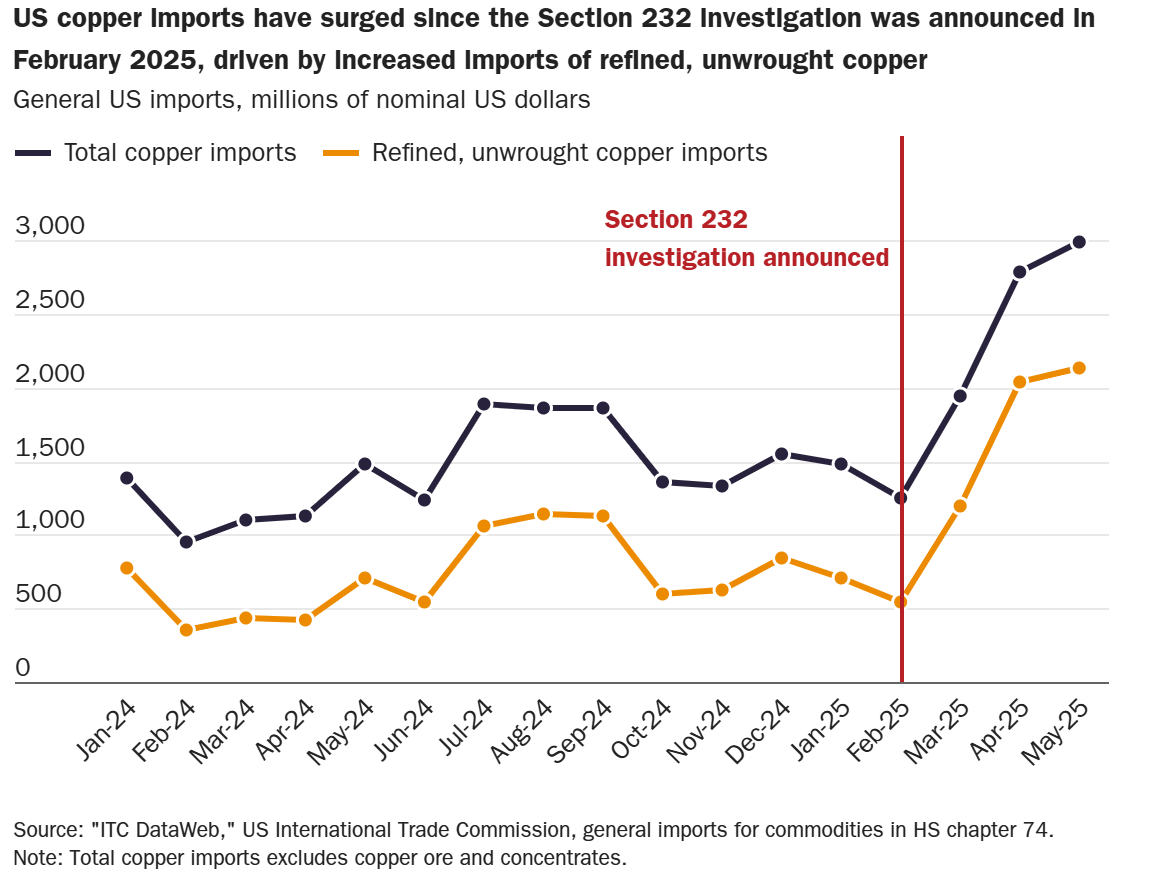
Since the review began, importers have scrambled to beat the tariff clock, resulting in a surge in U.S. copper imports.
The influx of copper products like rods and bars jumped over 50% year-on-year. In April and May alone, the U.S. imported over 200,000 tons of refined copper each month, setting new records.
Comex copper inventories hit their highest levels in over a decade. By July 2025, according to S&P Global, the U.S. had enough copper in stock to cover 9-12 months of expected consumption.
As tariffs take effect, the global copper supply-demand balance is expected to stabilize.
2. A New Dawn for U.S. Copper?
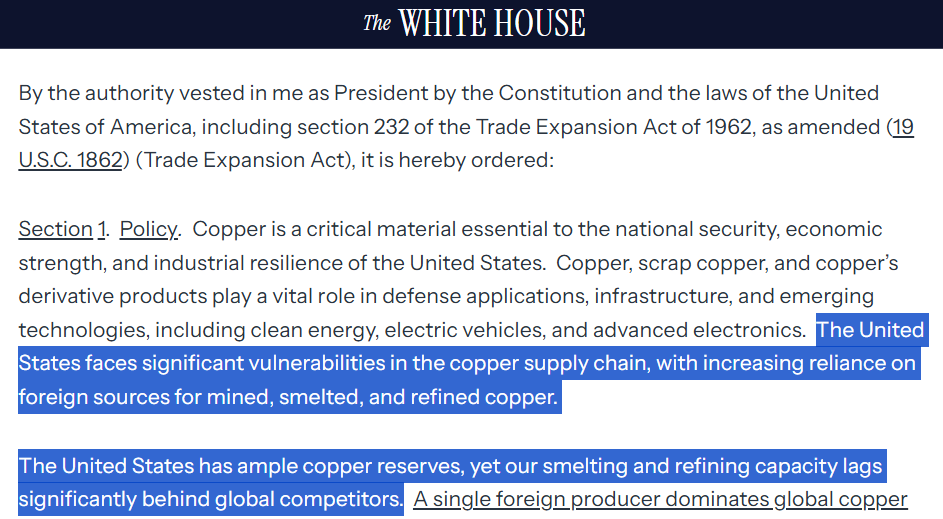
Trump's executive order highlighted "significant vulnerabilities in the copper supply chain, with increasing reliance on foreign sources... The United States has ample copper reserves, yet our smelting and refining capacity lags significantly behind global competitors."
This is for information and illustrative purposes only.
Currently, the U.S. has only two copper refineries: one run by $Freeport-McMoRan (FCX.US)$ in Arizona and another by $Rio Tinto (RIO.US)$ in Utah. With 25 mines mainly in Arizona, the U.S. copper scene is sparse.
By raising tariffs, domestic copper producers are expected to gain a competitive edge, spurring local production and attracting investment in mining and refining.
But remember, Rome wasn't built in a day. America's lack of investment in copper mining and refining is a long-standing issue that tariffs alone won't fix overnight.
Building refineries is quicker, taking a few years, but it demands hefty capital and energy. Mining is a slow beast, averaging 29 years in the U.S., one of the longest cycles globally.
"We do not believe it is possible for the U.S. to become self-sufficient in copper from a 'mine-to-customer' basis over the next decade," a Jefferies analyst noted.
3. Investing in Copper
Given copper's relatively low unit value, ETFs tracking copper prices can struggle with roll yield, failing to outperform spot prices over time. We've covered this in our oil ETF lesson.
>> Learn more: Why do oil ETFs lag behind oil prices in the long run?
Owning shares in copper companies might be a more viable way to participate in any future copper price increases.
If you decide to invest in mining stocks, knowing the industry and the companies is crucial.
Note that some companies have other metal-related businesses in addition to copper. For example, Rio Tinto and BHP are two of the world's largest iron ore giants. Additionally, the copper tariff policy primarily benefits domestic U.S. producers.
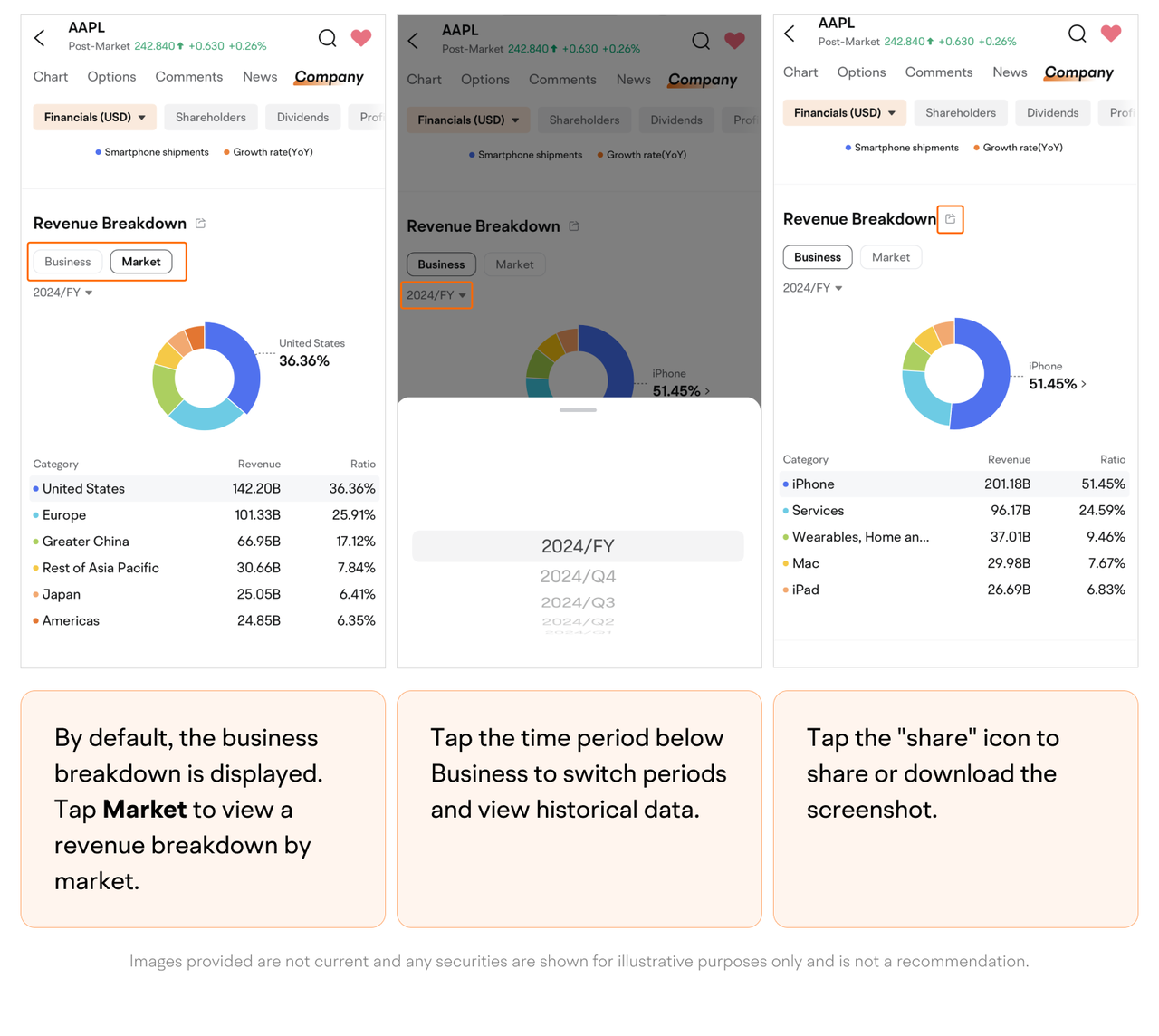
You can use moomoo's "Revenue Breakdown" feature to examine a company's business and regional exposure, aiding your investment decisions.
For those who prefer not to dive into individual mining stocks, copper company ETFs offer a diversified approach, though they can't shield you from industry-wide issues.
This presentation is for informational and educational use only and is not a recommendation or endorsement of any particular investment or investment strategy. Investment information provided in this content is general in nature, strictly for illustrative purposes, and may not be appropriate for all investors. Read more
Recommend

How Tariffs Could Impact the Copper Landscape?
Understanding Treasury Auctions: A Step-by-Step Guide
Why is Oil Called the "Mother of All Commodities"?

Gold vs. Gold Miners: A Comparison
Mastering the Dollar Cycle: How to invest in a changing economy
Meet Dr. Copper: Understanding the Copper Market
Why is the US dollar so powerful worldwide, and how can we tell?
Do Oil Price Swings Rock the Stock Market?
How does nonfarm payroll impact the global market?
Unveiling Inflation: Why is Your Wallet Shrinking?
How Inflation Affects the Market
How to Decode Inflation: CPI, PCE, and PPI
A look at employment: what other indicators are there?
The Rise of the Fed: Can Trump Dismiss Powell?
Are U.S. Treasuries still a safe haven?
GDP: The Barometer of National Prosperity
Unpacking the U.S. Debt Issue
What's in the Fed's Toolbox?
Understanding Bessent's Fiscal Blueprint
How to interpret the Fed dot plot?
Discussing the driving forces behind rises in gold prices
Rapidly Rising US Housing Prices: Opportunity or Risk?
Discover the bond market: A quick and easy guide
Analyzing the manufacturing industry may help you grasp economic trends
How to Preserve Your Wealth in a High Inflation Environment
What is the Debt Ceiling? A Deep Dive into US Fiscal Policy
Strong Consumer Spending Despite Economic Slowdown: Here's Why
The Underlying Conflicts Surrounding Crude Oil Prices
Investing and Labor Market Indicators
Understanding the relationship between the stock market and the bond market
How to analyze the Federal Reserve's monetary policy?
'Oracle of Omaha' Warren Buffett:ROE>20% is preferable
How Will the US Dollar Perform in 2024? A Closer Look into the US Dollar Index
'Father of value investing' Benjamin Graham: Ten Stock Selection Criteria
Understanding the US Non-Farm Payroll Data
Understanding the Retail Sales
Understanding the Federal Reserve Interest Rate Decision
Understanding the US Crude Oil Inventories
Understanding the Durable Goods Orders
Listen to the Fed's speakers: Hawks or doves?
The Fed Dot Plot explained: What it says about US interest rates
How does monetary policy steer our lives and investment
Understanding the GDP
What the Federal Reserve does?
A brief history lesson on the Fed and U.S. economy
Understanding the CCI
Open the Fed's monetary policy toolbox
Understanding the PPI
03 How to Read Form 13F
01 Using 13F filings to learn from big investors
08 Carl Icahn & Icahn Enterprises
07 Howard Marks & Oaktree Capital
02 Identify a fund's investment strategy
05 Bill Ackerman & Pershing Square Capital
06 Ray Dalio & Bridgewater Associates
Why does Warren Buffett say don't piggyback on his trades?
09 Seth Klarman & Baupost Group
04 Warren Buffett & Berkshire Hathaway
How Tariffs Could Impact the Copper Landscape?
Understanding Treasury Auctions: A Step-by-Step Guide
Why is Oil Called the "Mother of All Commodities"?
Gold vs. Gold Miners: A Comparison
Mastering the Dollar Cycle: How to invest in a changing economy
Meet Dr. Copper: Understanding the Copper Market
Why is the US dollar so powerful worldwide, and how can we tell?
Do Oil Price Swings Rock the Stock Market?
How does nonfarm payroll impact the global market?
Unveiling Inflation: Why is Your Wallet Shrinking?
How Inflation Affects the Market
How to Decode Inflation: CPI, PCE, and PPI
A look at employment: what other indicators are there?
The Rise of the Fed: Can Trump Dismiss Powell?
Are U.S. Treasuries still a safe haven?
GDP: The Barometer of National Prosperity
Unpacking the U.S. Debt Issue
What's in the Fed's Toolbox?
Understanding Bessent's Fiscal Blueprint
How to interpret the Fed dot plot?
Discussing the driving forces behind rises in gold prices
Rapidly Rising US Housing Prices: Opportunity or Risk?
Discover the bond market: A quick and easy guide
Analyzing the manufacturing industry may help you grasp economic trends
How to Preserve Your Wealth in a High Inflation Environment
What is the Debt Ceiling? A Deep Dive into US Fiscal Policy
Strong Consumer Spending Despite Economic Slowdown: Here's Why
The Underlying Conflicts Surrounding Crude Oil Prices
Investing and Labor Market Indicators
Understanding the relationship between the stock market and the bond market
How to analyze the Federal Reserve's monetary policy?
'Oracle of Omaha' Warren Buffett:ROE>20% is preferable
How Will the US Dollar Perform in 2024? A Closer Look into the US Dollar Index
'Father of value investing' Benjamin Graham: Ten Stock Selection Criteria
Understanding the US Non-Farm Payroll Data
Understanding the Retail Sales
Understanding the Federal Reserve Interest Rate Decision
Understanding the US Crude Oil Inventories
Understanding the Durable Goods Orders
Listen to the Fed's speakers: Hawks or doves?
The Fed Dot Plot explained: What it says about US interest rates
How does monetary policy steer our lives and investment
Understanding the GDP
What the Federal Reserve does?
A brief history lesson on the Fed and U.S. economy
Understanding the CCI
Open the Fed's monetary policy toolbox
Understanding the PPI
03 How to Read Form 13F
01 Using 13F filings to learn from big investors
08 Carl Icahn & Icahn Enterprises
07 Howard Marks & Oaktree Capital
02 Identify a fund's investment strategy
05 Bill Ackerman & Pershing Square Capital
06 Ray Dalio & Bridgewater Associates
Why does Warren Buffett say don't piggyback on his trades?
09 Seth Klarman & Baupost Group
04 Warren Buffett & Berkshire Hathaway