Snacks: How does the Options Price Change?
Do you always find it hard to forecast options price changes? What are the reasons behind their fluctuations? Today, let's unravel the mysteries of options price changes.
Before we start, here is an options pricing model you must know - the Black-Scholes Model (B-S Model).
You don't need to master how it's calculated due to the complex formula. But remember, this model includes six input variables that might affect the options price:
The underlying stock price.
The options strike price.
The time until expiration.
The implied volatility.
The dividend rate of the underlying stock.
The risk-free interest rate.
Now let's begin our exploration. We will look at how one and multiple factors affect the options price and how to take a comprehensive view in real trading.
Single Factor
In the following discussion, only one factor is variable in each case. It assumes all other factors remain the same.
1. Underlying Stock Price
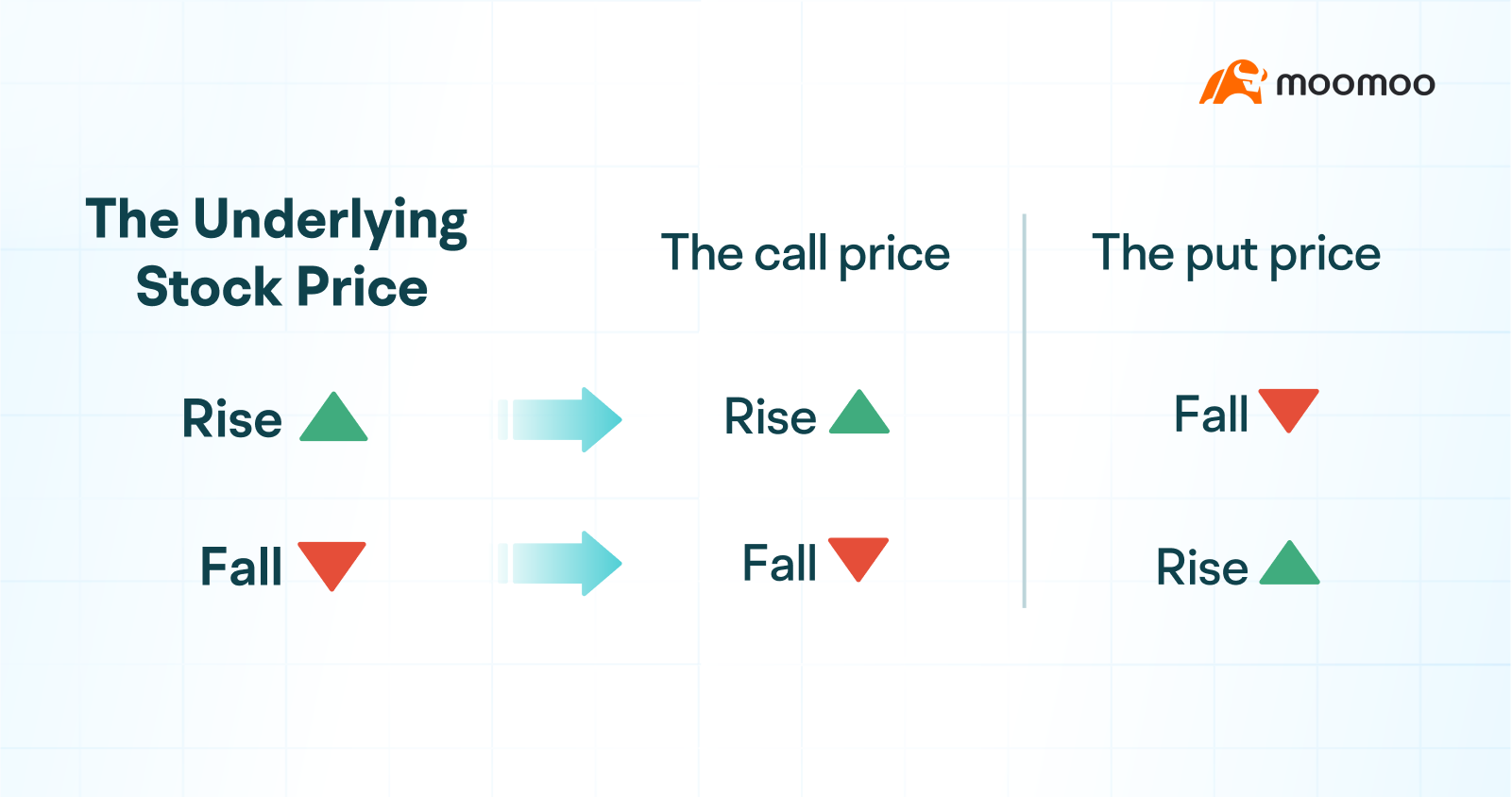
A long-call strategy indicates investors are bullish on the underlying stock price, and a long-put strategy suggests the opposite.
Therefore, in general, the higher the underlying stock price, the higher the call's price, and the lower the put's price.
2. Options Strike Price
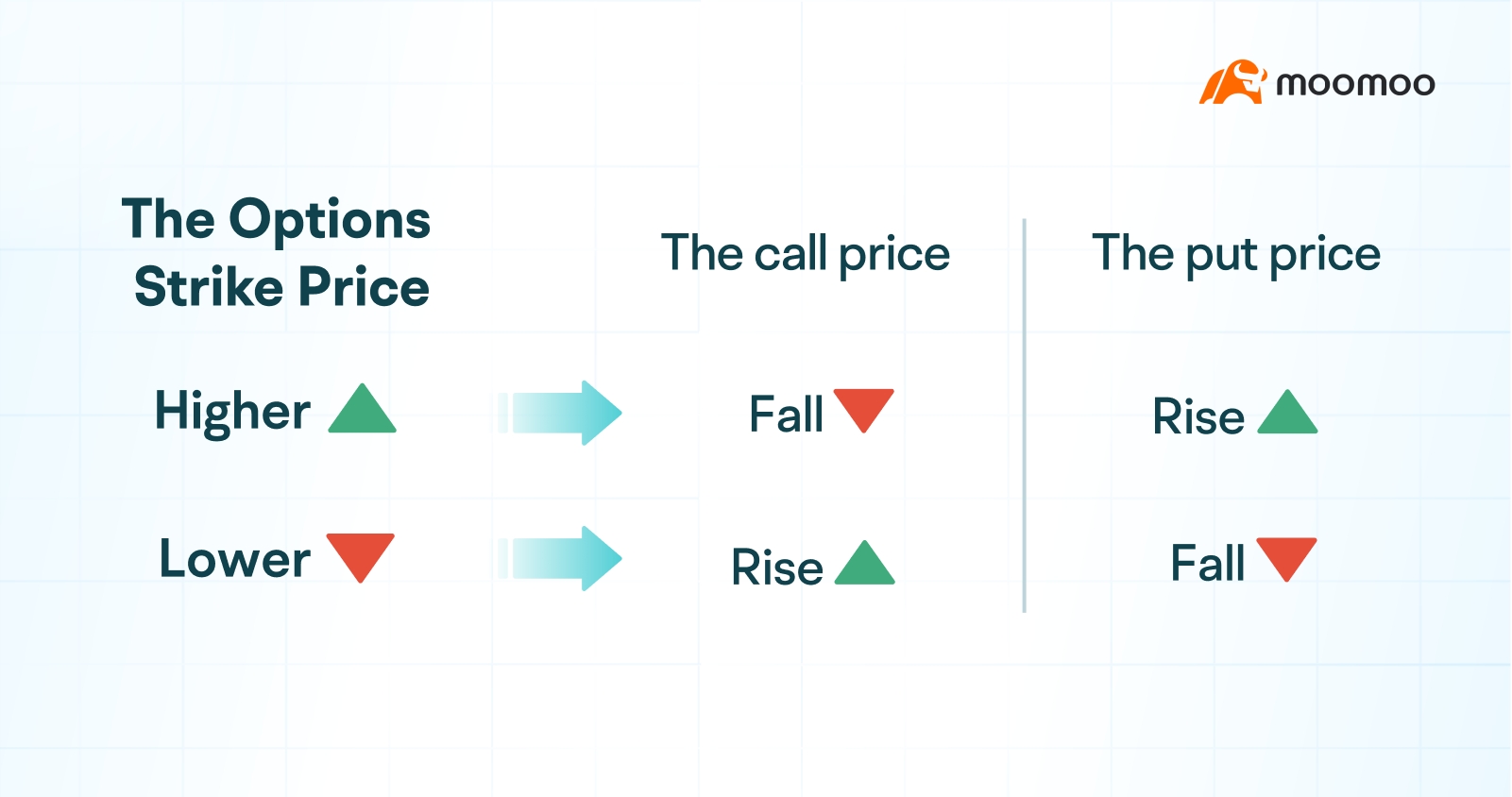
Suppose there are two calls: A with a strike price of $100 and B with a strike price of $200 (other variables are the same). Which one will be more expensive?
The answer is A because you will invest fewer funds to exercise the right to buy the underlying.
But if it is the case for puts, B is more expensive because you may receive more funds if B is exercised to sell the underlying.
In general, the higher the strike price, the cheaper the call and the more expensive the put.
3. Time Until Expiration
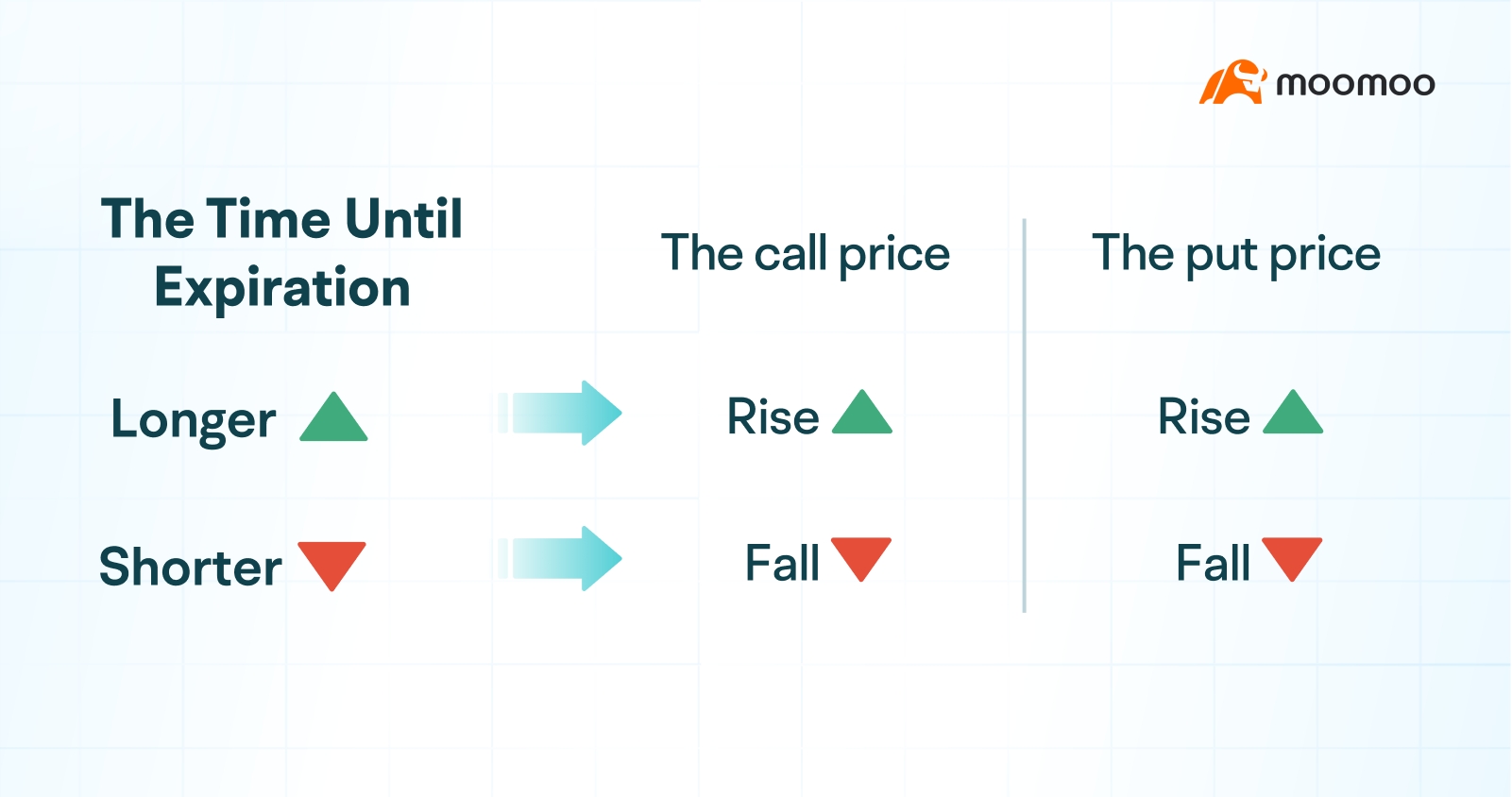
Suppose there are two options: C expires in 90 days and D in 360 days (other variables are the same). Which one will you pay more for?
The better choice is D because the underlying stock price of D will fluctuate during a longer time frame. If both options can't make a profit on Day 90, D still has the time to turn the table until expiration, while C will expire worthless.
Generally, the longer the time until expiration, the higher the options price, regardless of the option types.
4. Implied Volatility
Suppose there is a stock E. In which scenario will you typically pay more for its options, with high or low volatility?
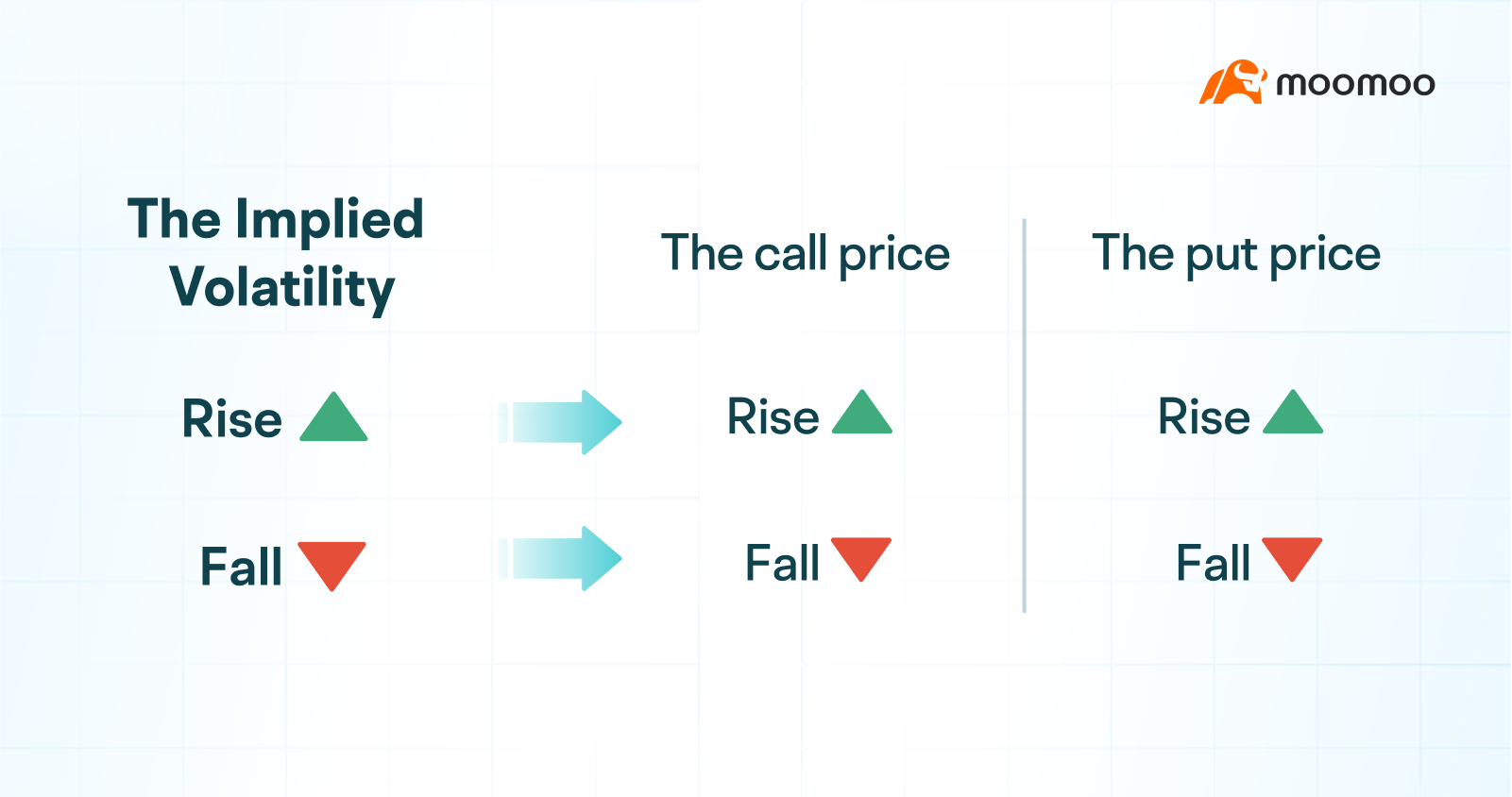
The answer is the scenario of high volatility. A high volatility indicates a larger range of fluctuations, which means the underlying stock price will have more of a possibility to rise above the call's strike price or fall below the put's strike price.
Therefore, the higher the implied volatility, the higher the options price, regardless of the option types.
5. Dividend Rate of the Underlying Stock
The corresponding amount will be subtracted from the stock price if the underlying stock pays dividends before options expiration.
As we mentioned above, the lower the underlying stock price, the lower the call's price, and the higher the put's price.
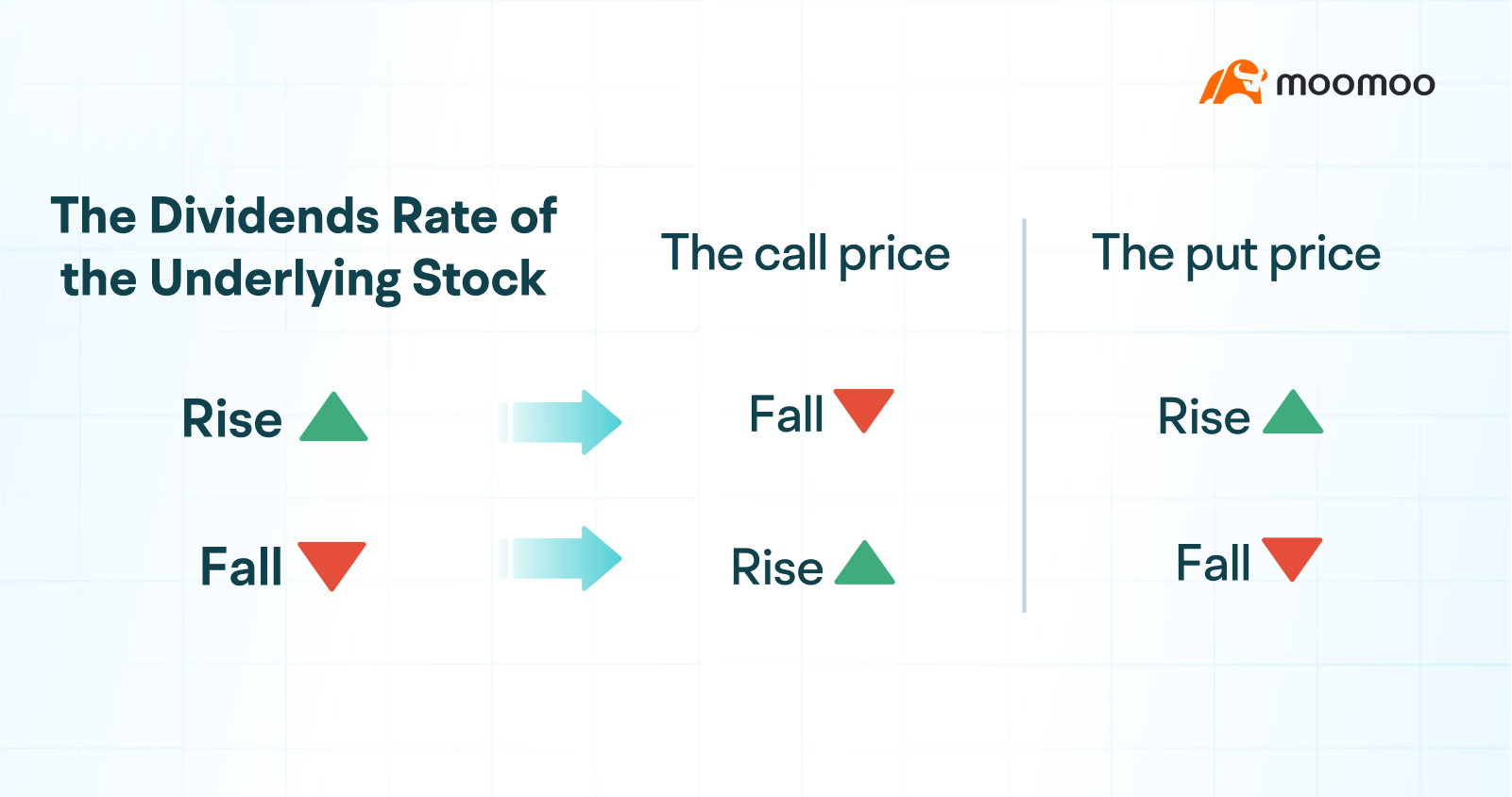
Therefore, in theory, the higher the dividend rate of the underlying stock, the lower the call options price, and the higher the put options price assuming all other factors remain the same.
6. Risk-free Interest Rate
The risk-free interest rate is the return an investor would get by investing in low-risk short-term government bonds.
How does the rate affect options prices?
The higher the risk-free rate, the more interest you will get when putting the same amount of money in the same deposit products with the same maturity. Conversely, a fixed amount of money in the future will be less valuable when discounted to the present.
In that case, the money a call requires to buy the underlying in the future is less valuable now, leading to a higher call price. Conversely, the put options price is lower.
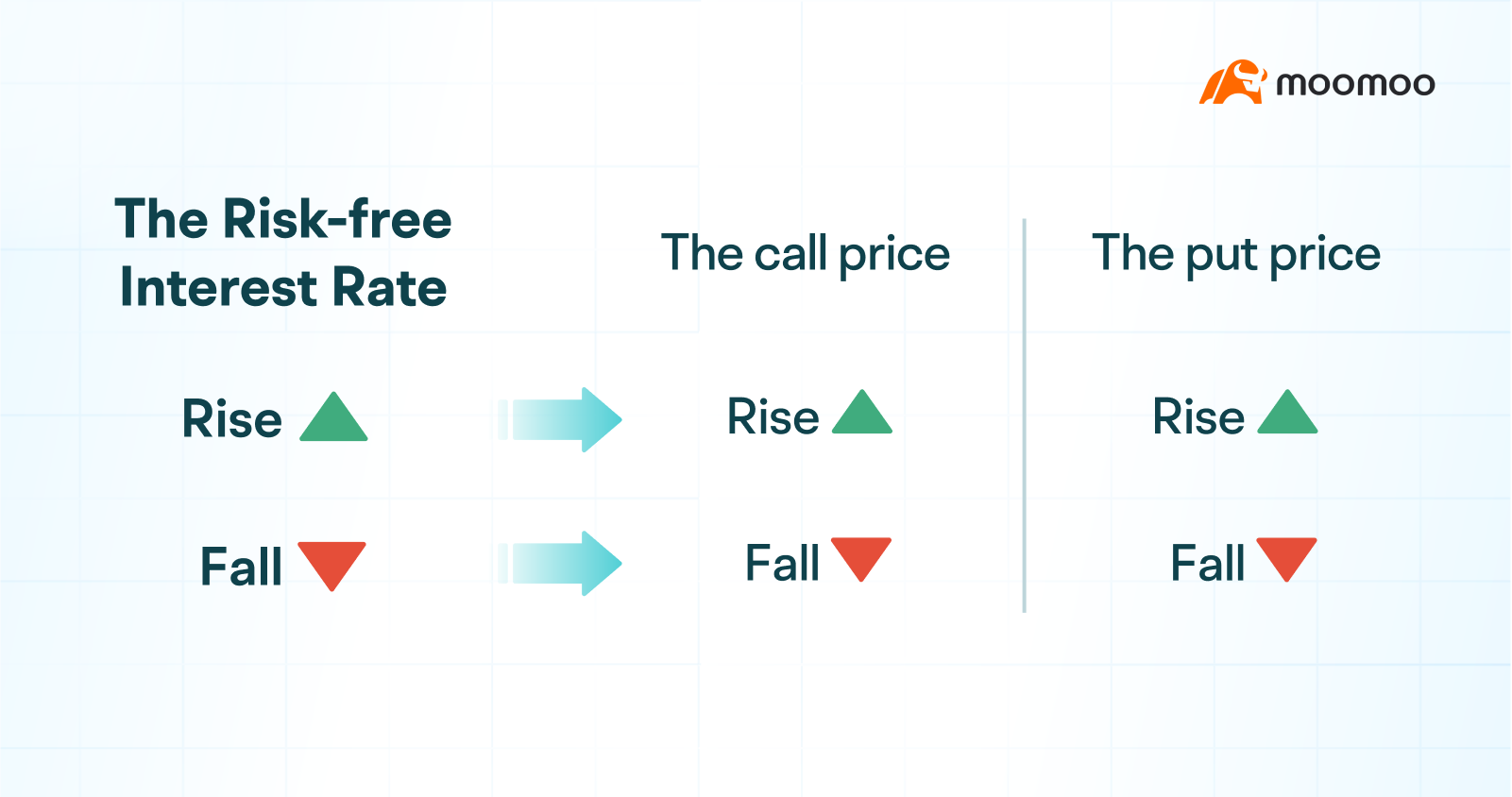
Therefore, the higher the risk-free interest rate, the higher the call price, and the lower the put price.
Summary

Among all six variables, the first four are more important, and the latter two usually have little impact on the options price.
However, this model has its limitations and may not apply to all cases. Here are some exceptions. If the underlying stock has high dividends, its dividend rate may significantly affect the options price; if the underlying stock is about to pay dividends, investors may avoid buying options long until expiration.
The Black-Scholes options pricing model provides theoretical estimates. However, there are several limitations to the model that an investor should be aware of (e.g., this model only works with European-style options rather than American-style options; it does not take into account taxes and transaction costs). Actual results will vary.
Multiple Factors
What if the options price is impacted by multiple factors?
An option's value comprises intrinsic and extrinsic value (or time value). Let's see how they are affected respectively.
1. Intrinsic Value
The intrinsic value of an option is the difference between the underlying stock price and the option's strike price.
A call option has an intrinsic value when its underlying stock price is higher than its strike price (in-the-money); a call option has no intrinsic value when its underlying stock price is equal to or lower than its strike price (out-of-the-money). For a put option, the intrinsic value only exists when its underlying stock price is lower than its strike price.
We can see that the intrinsic value is affected by two factors: the underlying stock price and the options strike price.
How will the options price change under their impact?
When the underlying stock price rises, a call with a lower strike price is typically more expensive, and a put with a lower strike price is cheaper.
We can't directly judge whether a call or a put with a higher strike price is more expensive or cheaper when the underlying stock price rises.
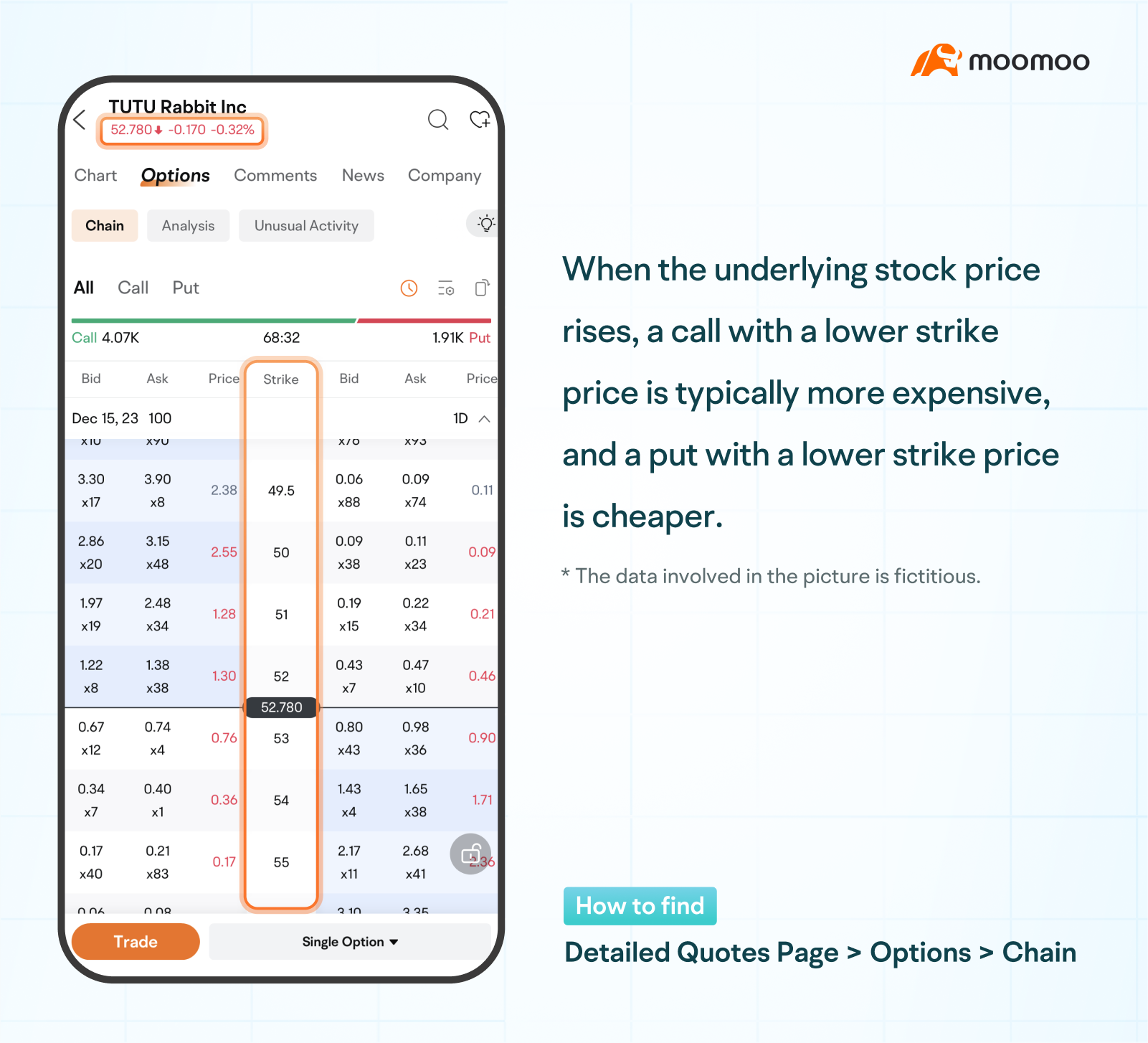
Let's take a look at the Options Chains on moomoo. We can calculate the intrinsic value at a particular moment with the current underlying stock price and the options strike price. But the value is constantly changing with the underlying stock price.
We can also see that in-the-money options have a lighter background color. So it's easy for you to distinguish them from out-of-the-money options.
2. Extrinsic Value (Time Value)
When it comes to time value, we have more factors to consider.
We regard time value as the amount we pay for the uncertainty of whether an option has any intrinsic value before expiration.
There is no specific formula for time value, but we can calculate it by subtracting the intrinsic value from the options price. Suppose a call's price is $10, its underlying stock price is $38, and the options strike price is $35. In this case, the call's intrinsic value is $38-$35=$3. Thus the time value is $10-$3=$7.
What are the factors affecting time value?
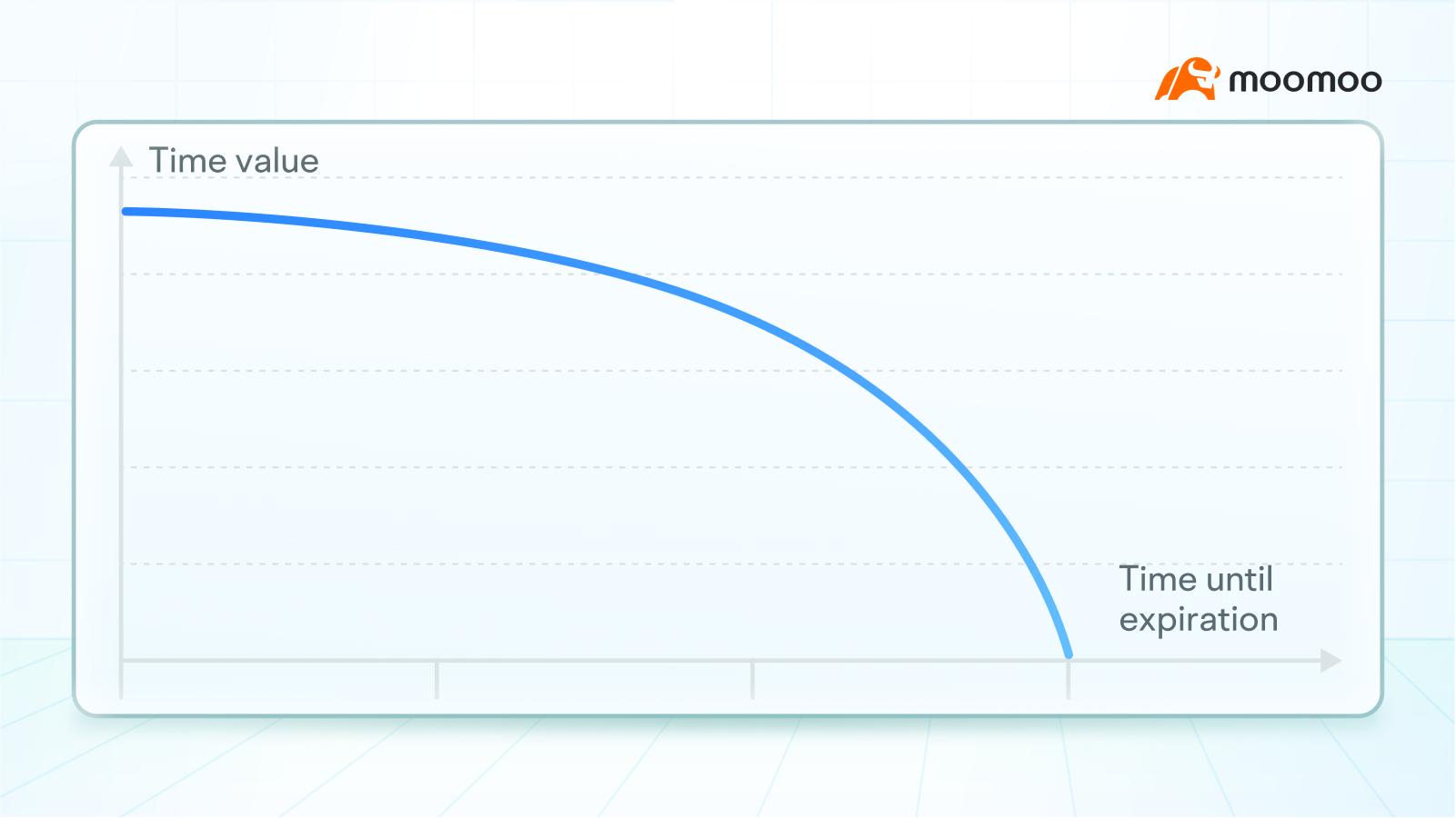
The first one that comes to our minds may be the time until expiration. Generally, an option decreases in time value as time goes by. The closer it is to expiration, the faster the time value decays.
However, investors may overlook another influencing factor: implied volatility. As we've mentioned before, the time until expiration and the implied volatility both affect the underlying stock's volatility before expiration, which is closely related to the time value.
Some unusual short-term fluctuations of the options price, if not resulting from the underlying stock price change, are probably related to implied volatility. Extreme market sentiments may have a significant impact on implied volatility.
You can view options with different expiration dates and their implied volatility on moomoo.
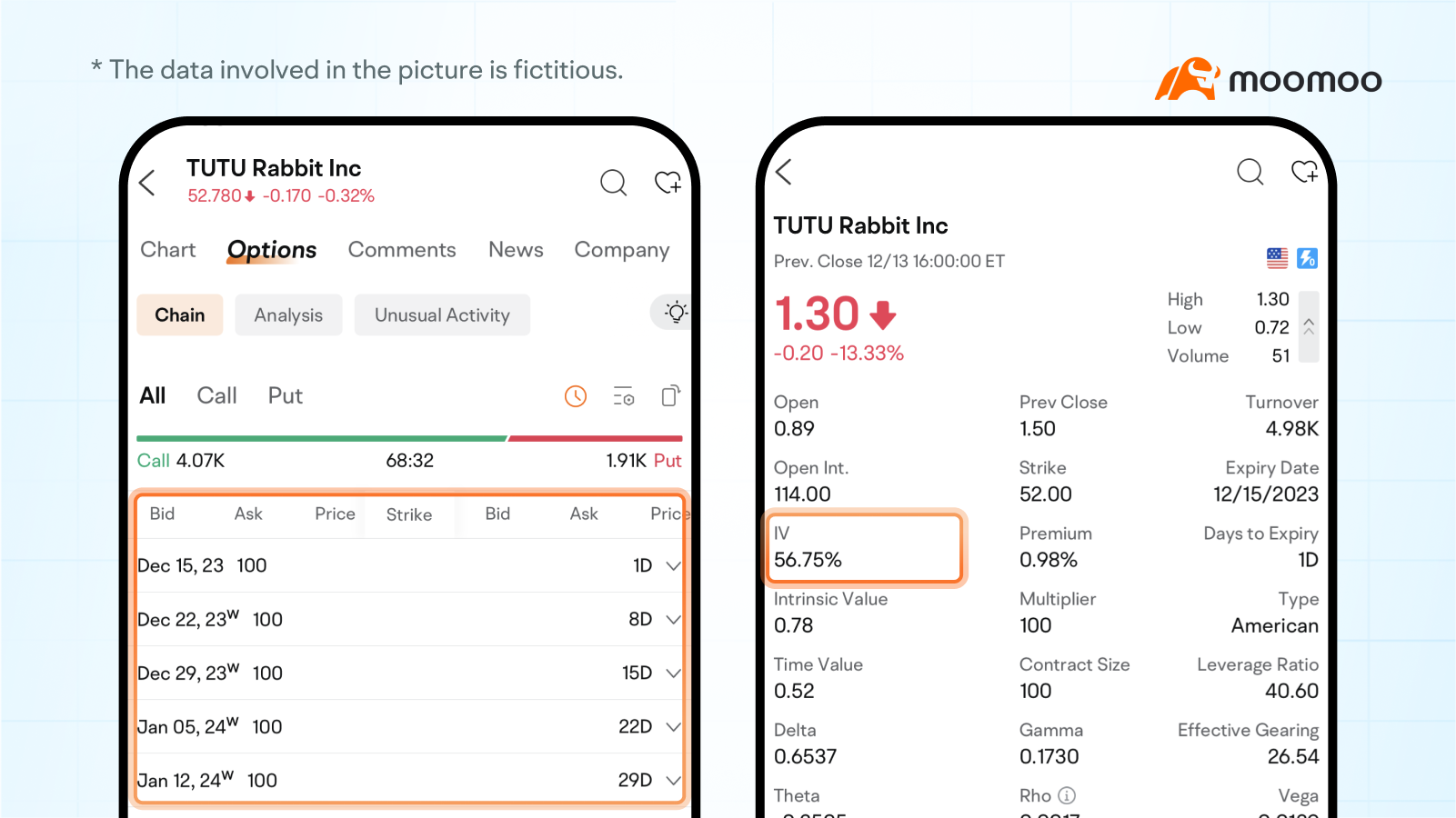
Another factor we need to consider for time value is the distance between the underlying stock price and the options strike price.
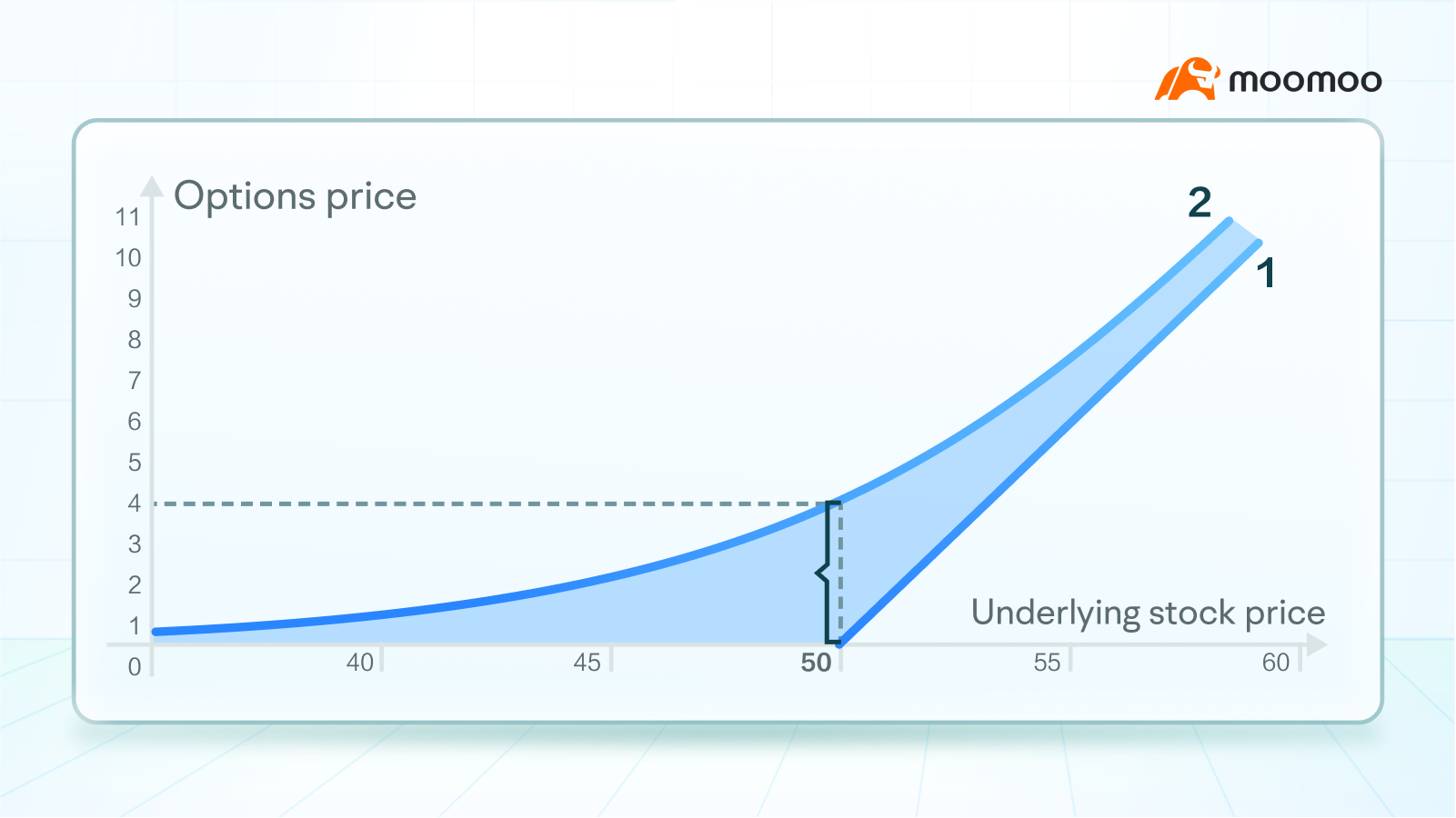
Let's take a look at this example. The chart demonstrates a call option of TUTU stock with a strike price of $50. Line 1 represents the intrinsic value (straight), line 2 represents the options price (curve), and the shaded part between the two lines is its time value.
We can see that the time value is the largest when the underlying stock price equals the options strike price (at-the-money).
Why is that? It is because the option has the greatest uncertainty about whether it will end up in-the-money at expiration.
The further to the left part of the chart, the less likely the option will have an intrinsic value; the farther to the right, the more likely it will have an intrinsic value; both have relatively high certainty. We have mentioned above that the time value is the payment for uncertainty.
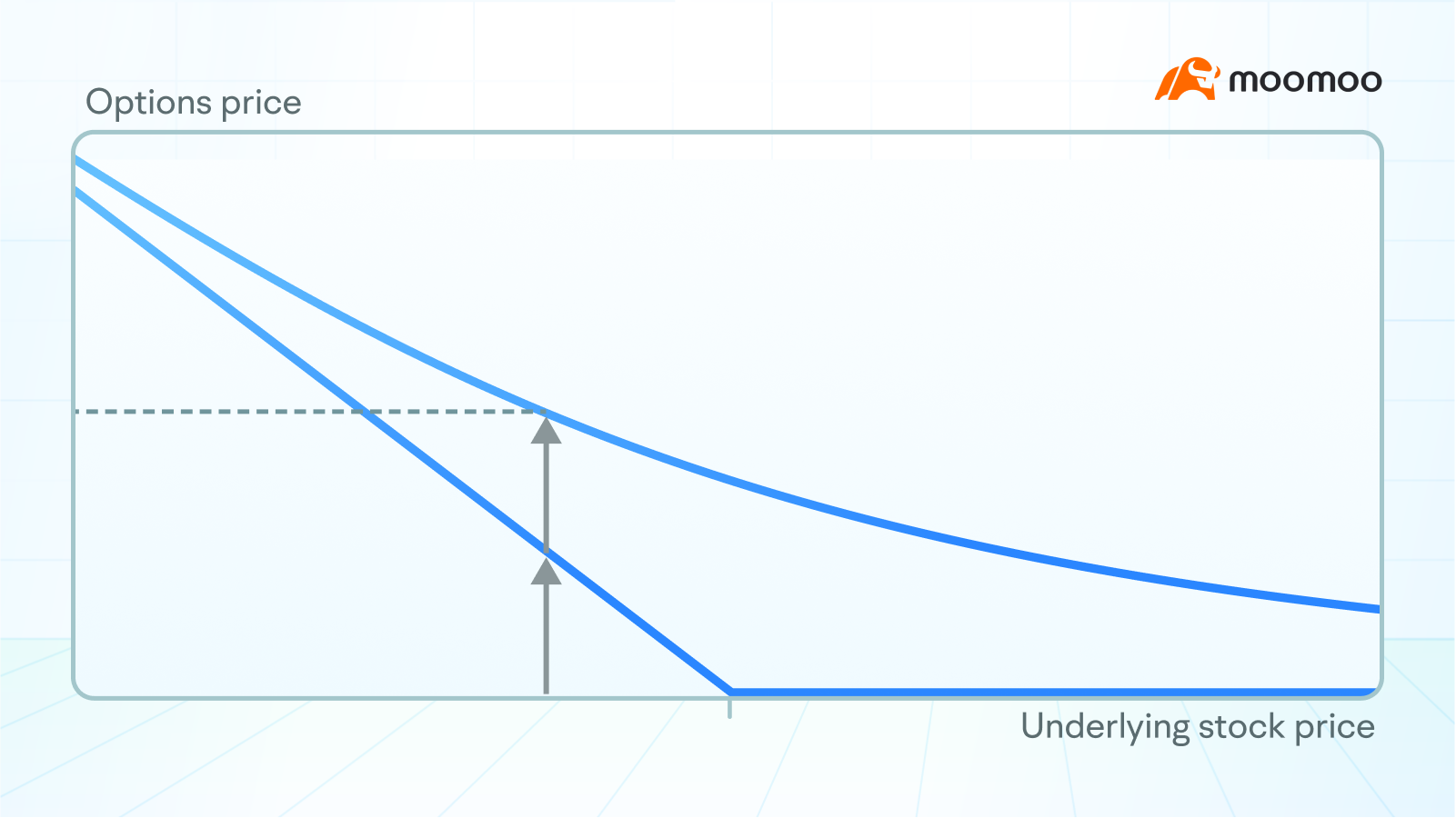
The rules also apply to put options.
A Comprehensive View
We've learned about how different variables affect option values. But to make more informed decisions in real trading, we should take a more comprehensive view.
For example, the dividend rate of the underlying stock and the risk-free interest rate, which we didn't get into detail in previous parts, may also impact the underlying stock price, the option's intrinsic value and time value.
Option values and influencing factors have complicated relationships. For example, the rise of the underlying stock price may increase a call's intrinsic value. But if the time decays or the implied volatility decreases, which erodes the call's time value, the call's price may fall rather than rise.
Therefore, we must comprehensively consider all factors when valuing the options price.
We've covered a lot here. What did you learn about options price changes? Share your thoughts in the Comments.
This presentation is for informational and educational use only and is not a recommendation or endorsement of any particular investment or investment strategy. Investment information provided in this content is general in nature, strictly for illustrative purposes, and may not be appropriate for all investors. Read more