Considerations for Buying a Call or Selling a Put: Learn with ARM
During September 2023, the US stock market experienced significant activity and buzzed with news of ARM's IPO. The first day of trading saw ARM's value surge by up to 30%, exceeding $65 billion overnight. However, the stock's value began dropping consistently in the following days, eventually falling below the issue price. In this situation, is there a potential opportunity for options?
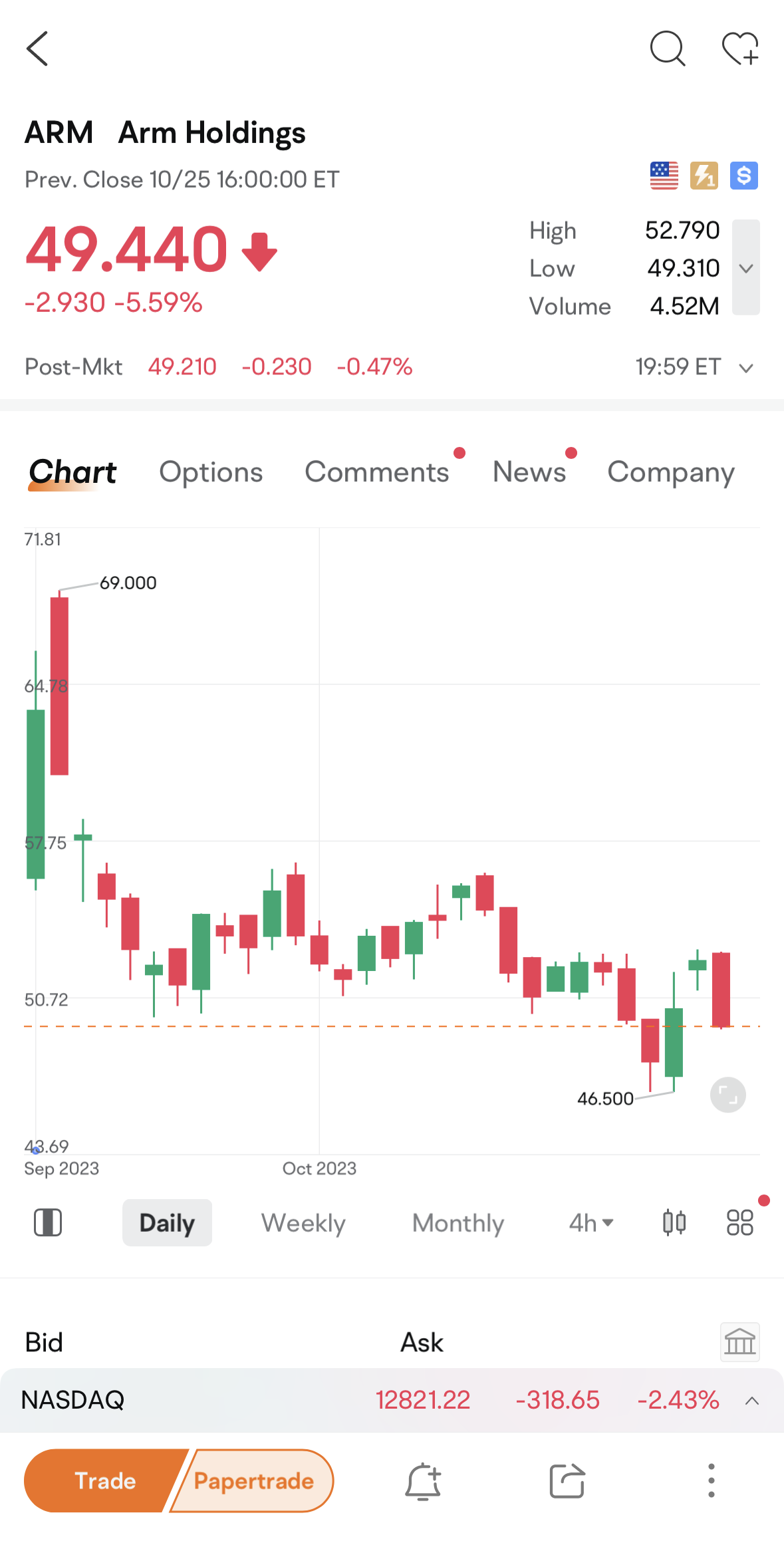
Suppose Alice believes the stock has reached its bottom and is bullish about it. Should she buy a Call or sell a Put option?
For those new to options trading, understanding the difference between being a buyer and seller is crucial. Generally, options buyers have unlimited profit potential and limited risk, while options sellers have limited profit potential but unlimited risk. Based on this, many beginners may choose to be buyers, as the risk is limited while the potential profit is unlimited. However, the pros and cons of these positions are not as simple as they appear.
Let's conduct a random comparison between a call option and a put option with the same expiration date and strike price. Suppose Alice decides to sell a put option with a strike price of US$49 and an expiration date of November 3. In this case, she would receive a maximum profit of US$135 (assuming that the bid price is accurate) in option premium. Afterward, three potential scenarios could occur.
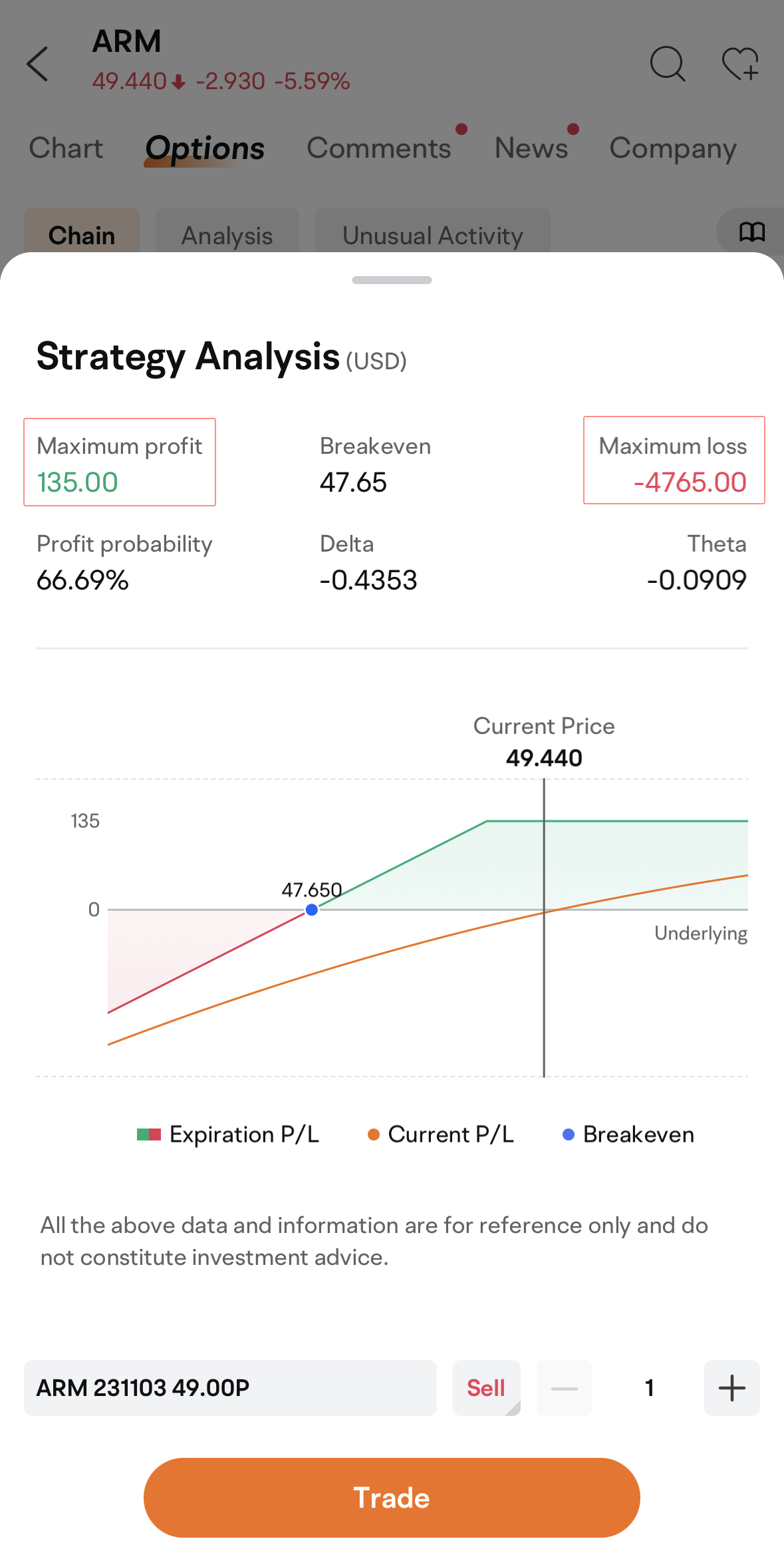
Scenario 1: The stock price rises on the expiration date, the option expires worthless.
As the situation meets Alice's expectations, Alice will earn a profit of US$135 in option premium.
Scenario 2: The stock price remains unchanged until the expiration date.
In this scenario, Alice still has the potential to earn part of the option premium. If the stock price remains stagnant, the time value of the option will decay over time, causing the put option previously valued at US$135 to potentially depreciate to around US$100 or even US$80.
What options does Alice have?
She can choose to buy the same put option to close out her position and earn the difference in option premiums. However, it's crucial to note that the put option purchased for closing cannot be sold since the seller's contract made at the very beginning cannot be canceled. She is essentially buying to close her previously open options position.
Alternatively, if Alice decides not to buy the same put option, she may still make a profit. If the buyer exercises the option, Alice will be required to purchase 100 shares of ARM at the agreed-upon rate of US$49. After deducting the option premium she received earlier, her net cost per share may be lower than the market price. However, since the option writer was assigned, they now have the downside risks of owning the stock.
Scenario 3: The stock price drops on the expiration date.
Whether Alice needs to return the option premium depends on how much the stock drops. If the price only decreases slightly on the expiration date, Alice will have to purchase 100 shares of ARM for US$49, minus the option premium she received earlier. In this case, her cost price may still be lower than the market price, which would allow her to make a profit (assuming she sells the stock after getting assigned the shares). However, if the stock price drops significantly, Alice's option premium may not cover the extent of the decline, and she could start losing money.
Therefore, in these three scenarios, Alice will experience losses when the stock price drops sharply and her option premium cannot cover the decrease and margin interests(If margin is used). Otherwise, she will likely either make a profit or break even.
Next, let's examine what happens when Alice buys a Call option. If Alice chooses to purchase a Call option with a strike price of US$49 and an expiration date of November 3, she will pay an initial option premium of US$195 (assuming that the ask price is accurate), which represents her maximum loss.
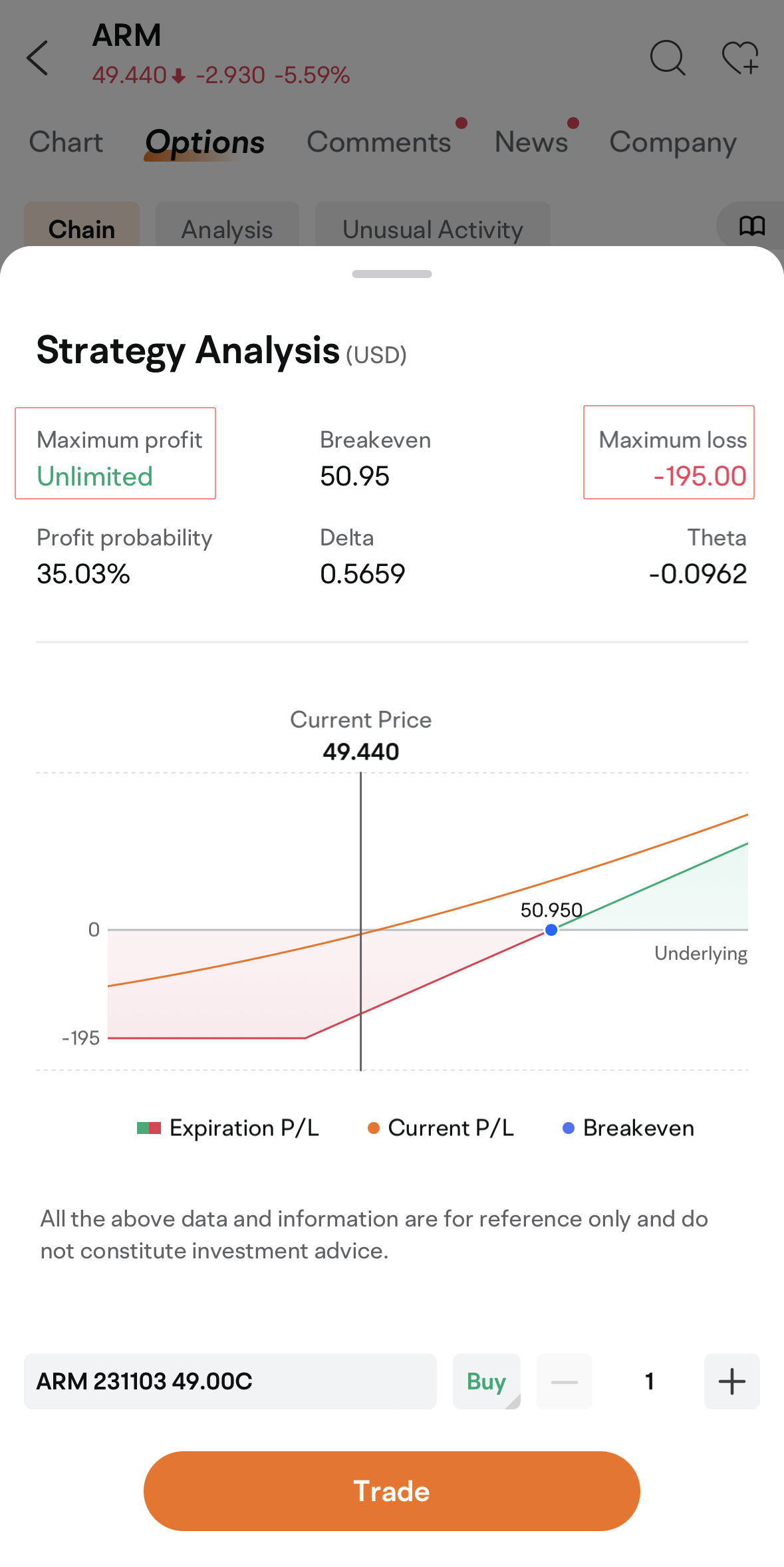
In this case, Alice will also encounter three scenarios:
Scenario 1: The stock price drops on the expiration date
As the situation falls short of her expectations, she will lose US$195 in option premium.
Scenario 2: The stock price remains unchanged
In this instance, Alice still faces losses. Why? If she exercises the option, she will purchase 100 shares of ARM at the price of US$49, which is equivalent to the market value of the stock. Moreover, she spent US$195 on option premium when opening the position, making purchasing the stock through the option more costly than buying it directly. Alternatively, if she chooses not to exercise the option, she loses the option premium of US$195 for nothing.
Scenario 3: The stock price rises before or on the expiration date
Whether Alice makes a profit depends on how much the stock price increases. If the market price exceeds US$50.95—the sum of the strike price and the option premium—Alice earns a net profit. However, if the market price doesn't exceed this threshold, Alice will face losses.
In summary, Alice will only make a profit if the stock price rises past her breakeven point by expiration in these three scenarios. Thus, selling Put options seems advantageous due to it having more favorable scenarios of ending with a potential profit.
However, we cannot conclude that selling Put options is better than buying Call options based solely on the success rate. We must also consider the costs and risks involved with trading options. While selling Put options may be more versatile when compared to being long options, it can be riskier for those who are new to the world of options. Put option sellers must prepare sufficient margin and face considerably greater potential losses than buyers, particularly during sharp drops in stock prices. Therefore, investors must weigh their objectives and risk tolerance before making a final decision.
Lastly, I want to remind you that options are high-risk investments. In uncertain economic times, protecting your capital should be the top priority. That brings us to the end of today's Options ABC. If you have any thoughts or comments, please feel free to share them below.
This presentation is for informational and educational use only and is not a recommendation or endorsement of any particular investment or investment strategy. Investment information provided in this content is general in nature, strictly for illustrative purposes, and may not be appropriate for all investors. Read more