Snacks: Four Basic Options Strategies You Should Know
Since you have grasped the fundamentals of options trading, you may be eager to venture into the real trading world. However, before jumping into any trades, it's critical to decide which investment strategies to use and how to use them effectively.
We've learned that there are two types of options, namely, calls and puts. Investors can either long or short an option to establish a position. Therefore, there are four basic strategies for opening positions with options: Long Call, Long Put, Short Call, and Short Put.
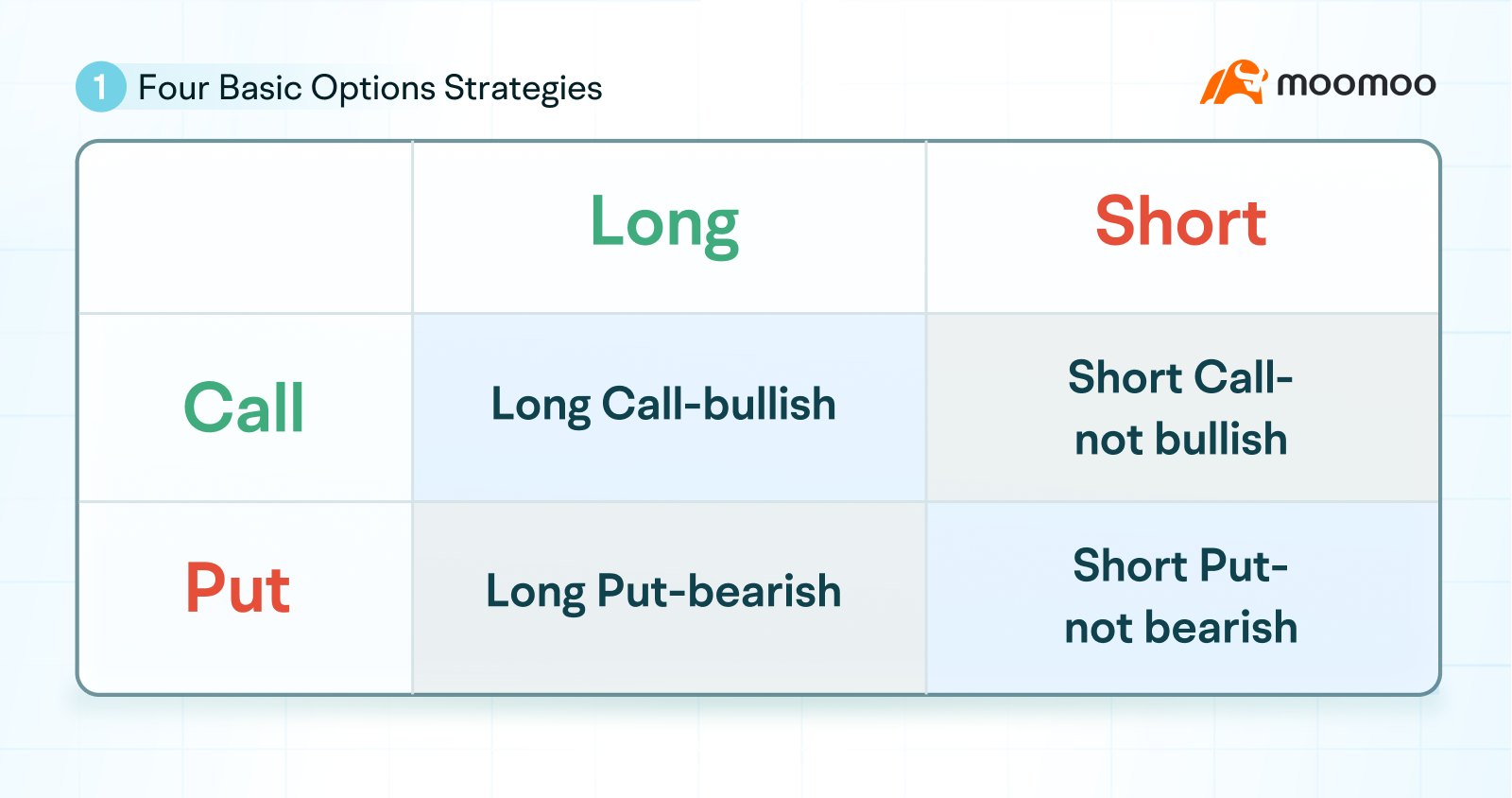
The four options strategies can be grouped into two categories: bullish (not bearish) and bearish (not bullish). The bullish category includes Long Call and Short Put, while the bearish category includes Long Put and Short Call.
We will walk you through each strategy to help you understand and distinguish between them.
Long Call
Brief Introduction
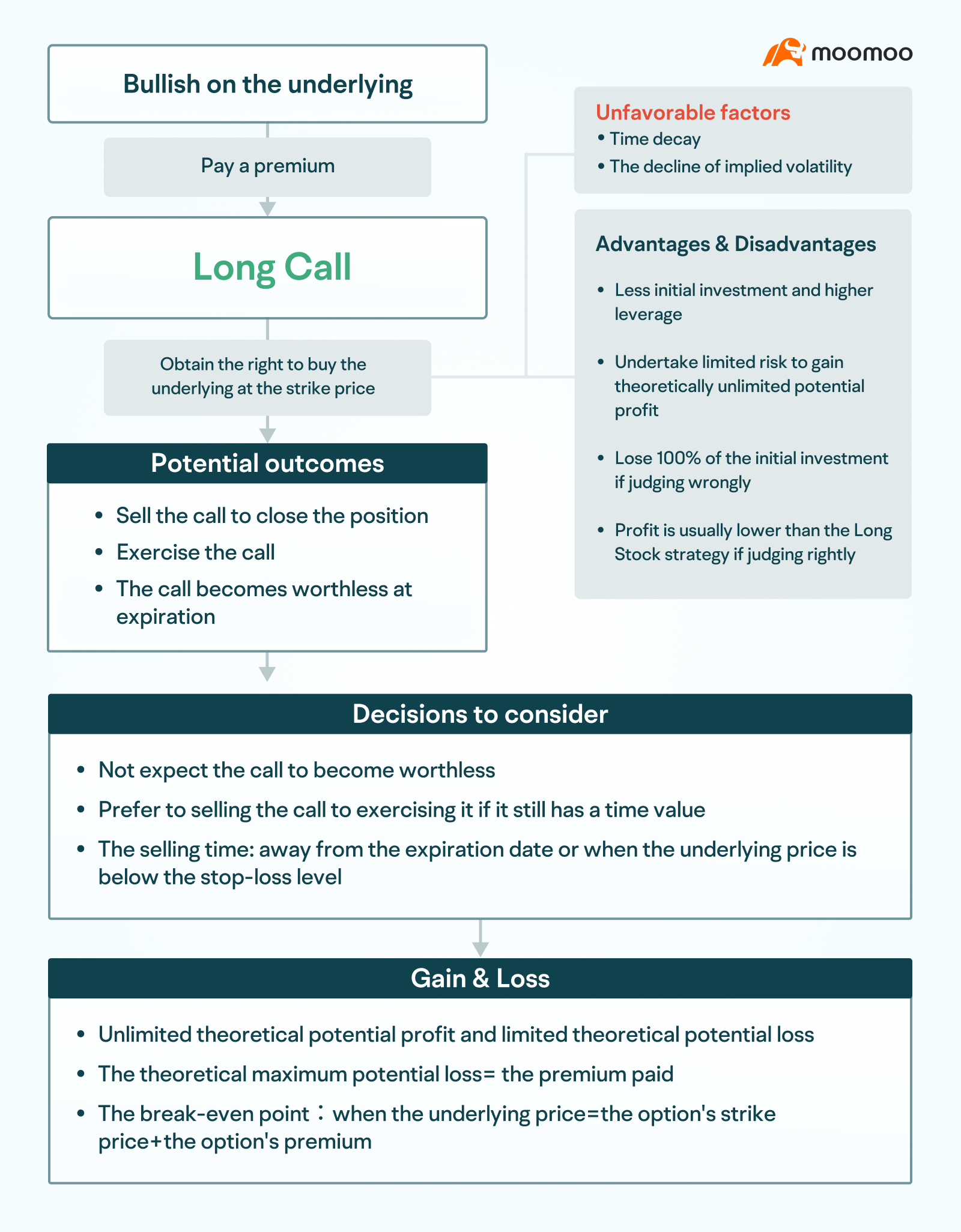
The Long Call strategy involves paying a premium upfront to obtain the right to purchase a specific quantity of an underlying asset at the strike price within a defined period.
Strategy Motivation
This strategy is used when the investor expects the price of the asset to rise.
Gain & Loss(Commissions and other charges are not included)
If the asset moves up as expected by expiration and the option is exercised, investors can potentially profit from buying the underlying asset at a lower cost than the market price. The call's price often rises as the asset's price rises. Alternatively, suppose the investor decides not to exercise the Long Call option. In that case, they might also profit from closing their position early by selling the call option back on the options market.
The Long Call strategy can theoretically lead to unlimited gains as the underlying price can rise indefinitely by expiration.
However, if the stock price falls, the investor will likely make a loss. The maximum loss is limited to the premium paid upfront for the call option.
The strategy breaks even when the underlying price equals the strike price plus the premium.

Impact of Time and Implied Volatility
All else being equal, the longer the time left till expiration, the higher the option premium. Similarly, the higher the implied volatility, the higher the option premium.
Therefore, Long Call investors should be aware that time decay and declining implied volatility are not favorable to this strategy. They may consider options with a longer-term expiration and avoid those with high implied volatility.
How to Exit
There are three ways to exit this strategy: selling the call, exercising it, or allowing it to expire worthless.
Allowing the option to expire worthless is not a favorable outcome for call option holders. If the call still has time value, it's better for investors to sell it rather than exericise it or letting it expire worthless.
To avoid significant time decay, the sale should occur well before the expiration date. Investors may also choose to sell the call if the underlying asset's price falls below the stop-loss level.
Advantages & Disadvantages
Compared to the Long Stock strategy, the Long Call strategy requires less initial investment and provides higher leverage while undertaking limited risk to gain theoretically unlimited potential profit.
However, wrong judgment can result in a 100% loss of the initial investment. The strategy's profit potential is usually lower than the Long Stock strategy because of time decay, even if the investor's judgment is correct.
Long Put
Brief Introduction
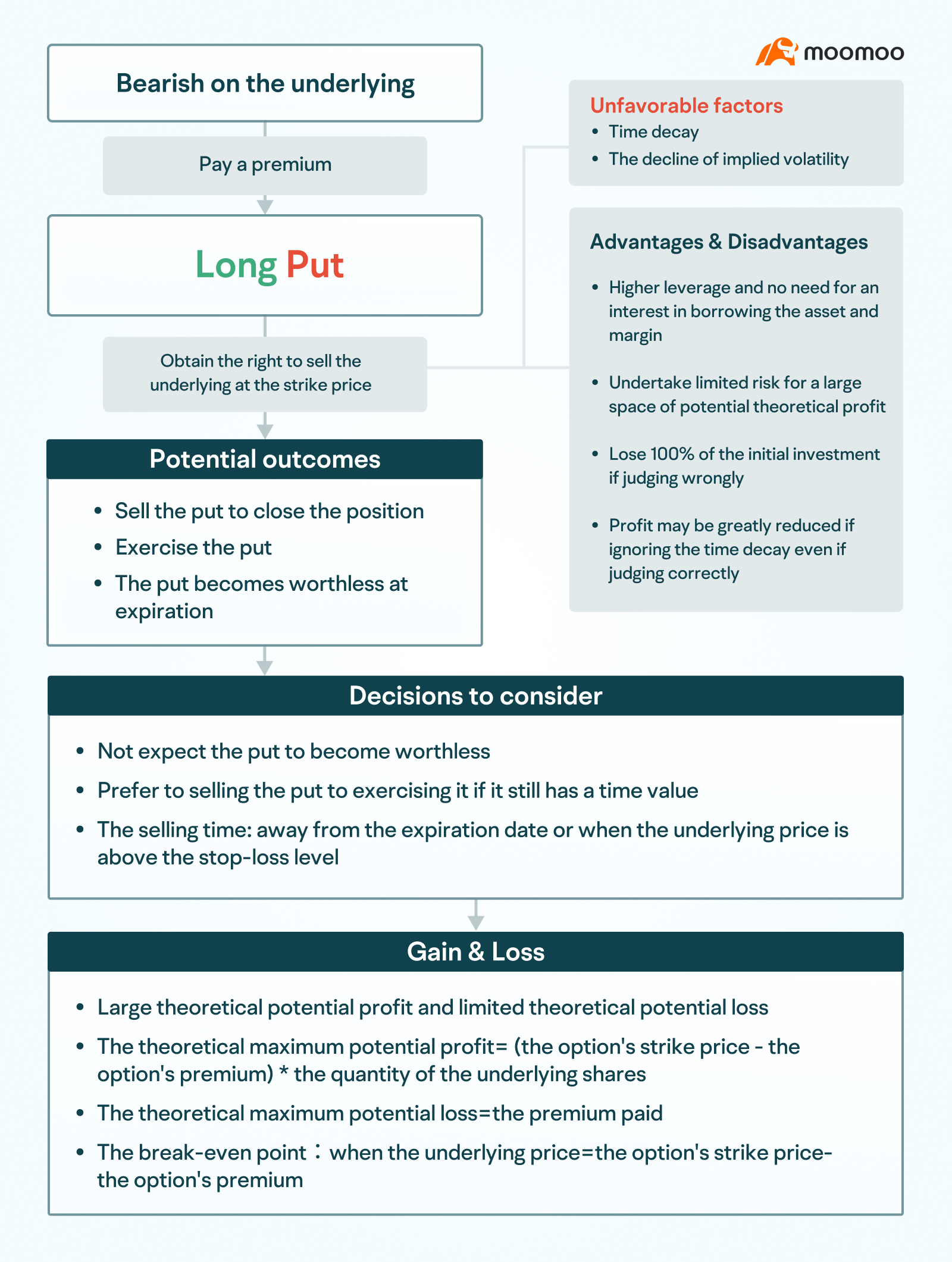
The Long Put strategy involves paying a premium upfront to obtain the right to sell a specific quantity of an underlying asset at the strike price within a defined period.
Strategy Motivation
This strategy is used when the investor expects the asset's price to fall. Sometimes investors use it to hedge the downside risks of the underlying when holding the underlying.
Gain & Loss(Commissions and other charges are not included)
If the asset moves down as expected by expiration and the option is exercised, investors can potentially profit from selling the underlying asset at a higher cost than the market price. The put's price often rises as the asset's price falls. Alternatively, suppose the investor decides not to exercise the Long Put option. In that case, they might also profit from closing their position by selling (assuming it's gained in value) the same put option back to the options market.
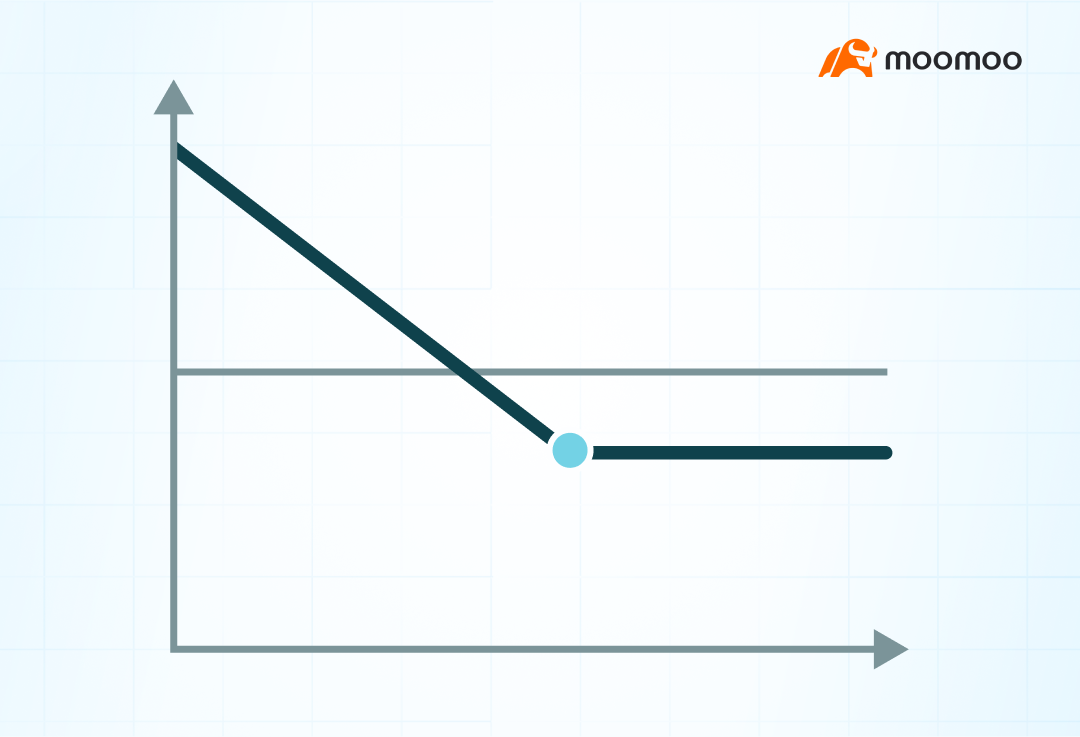
The Long Put strategy can potentially generate significant gains if the underlying asset's price falls close to zero by expiration. The potential theoretical profit is maximum if the underlying price is 0, which equals (the option's strike price - the option's premium) * the quantity of the underlying shares.
The maximum loss is limited to the premium paid upfront to obtain the put option when the asset moves up.
The strategy breaks even when the underlying price equals the strike price minus the premium.
Impact of Time and Implied Volatility
Like the Long Call strategy, time decay and the decline of implied volatility work against the Long Put strategy. Investors may consider options with a longer-term expiration and avoid those with high implied volatility.
How to Exit
There are three ways to exit this strategy: selling the put, exercising it, or allowing it to expire worthless.
However, allowing the option to expire worthless is not desirable for investors. If a put still has time value, it's better to sell it than to exercise it or letting it expire worthless.
To avoid significant loss in time value, investors should sell the put well before the expiration date. Investors may also choose to sell the put option if the underlying asset's price rises above their stop-loss level.
Advantages & Disadvantages
Compared to a short-selling strategy, the Long Put strategy does not require borrowing the asset or margin interest. It provides higher leverage while undertaking limited risk for potentially significant profit if the underlying asset's price falls.
However, wrong judgment can result in a 100% loss of the initial investment. The strategy's potential profit may also be significantly reduced due to the impact of time decay, even if the investor's judgment is correct.
Short Call
Brief Introduction
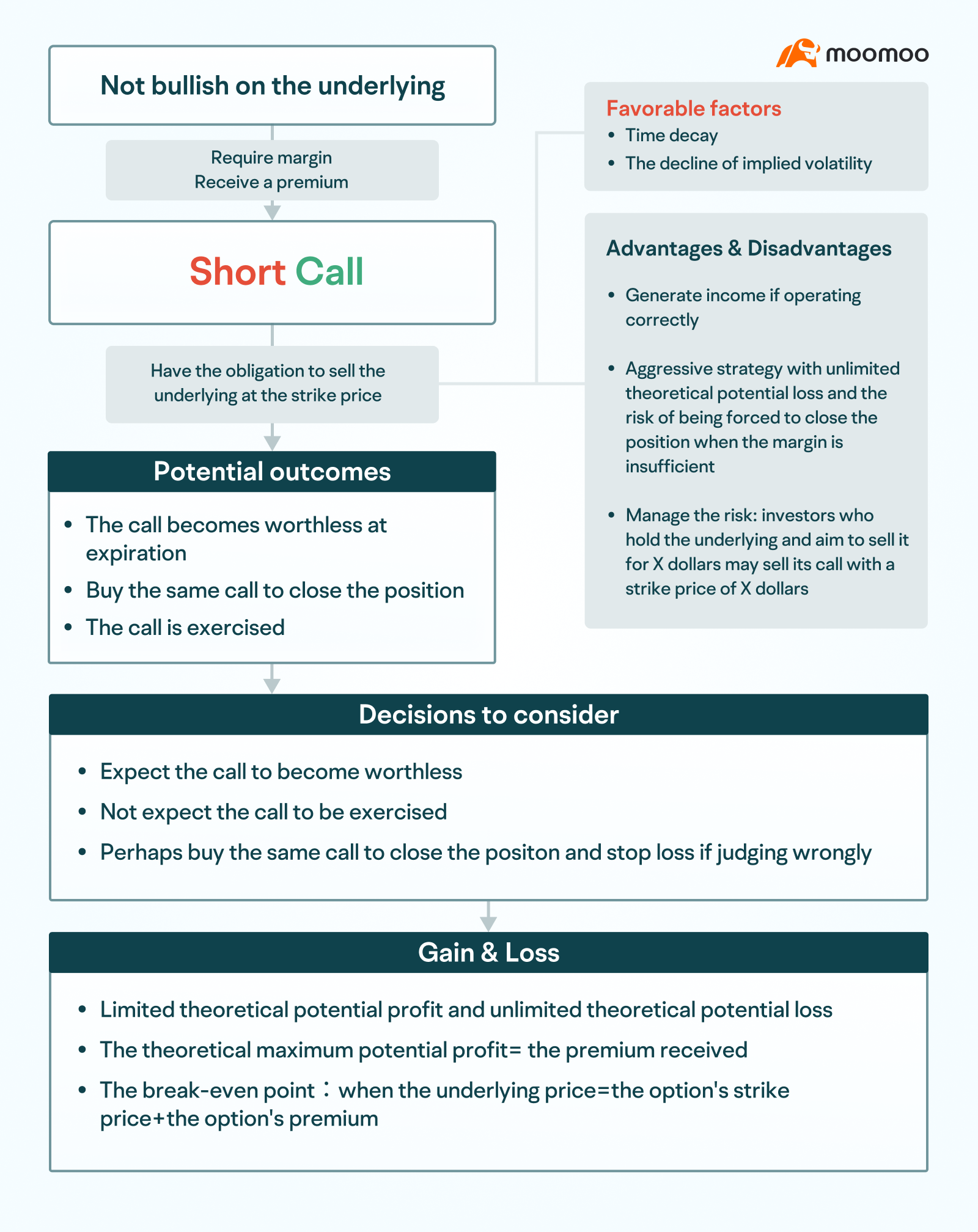
The Short Call strategy involves receiving a premium upfront. If the call option is exercised by the holder, the call writer has an obligation to sell the agreed quantity of the underlying asset at the strike price within a specific period. To manage credit risks associated with this obligation, the exchange requires the call writer to post margin in advance.
Strategy Motivation
Investors usually use the strategy when they are not bullish on the underlying asset, expecting the underlying price to fall or remain stable.
Gain & Loss(Commissions and other charges are not included)
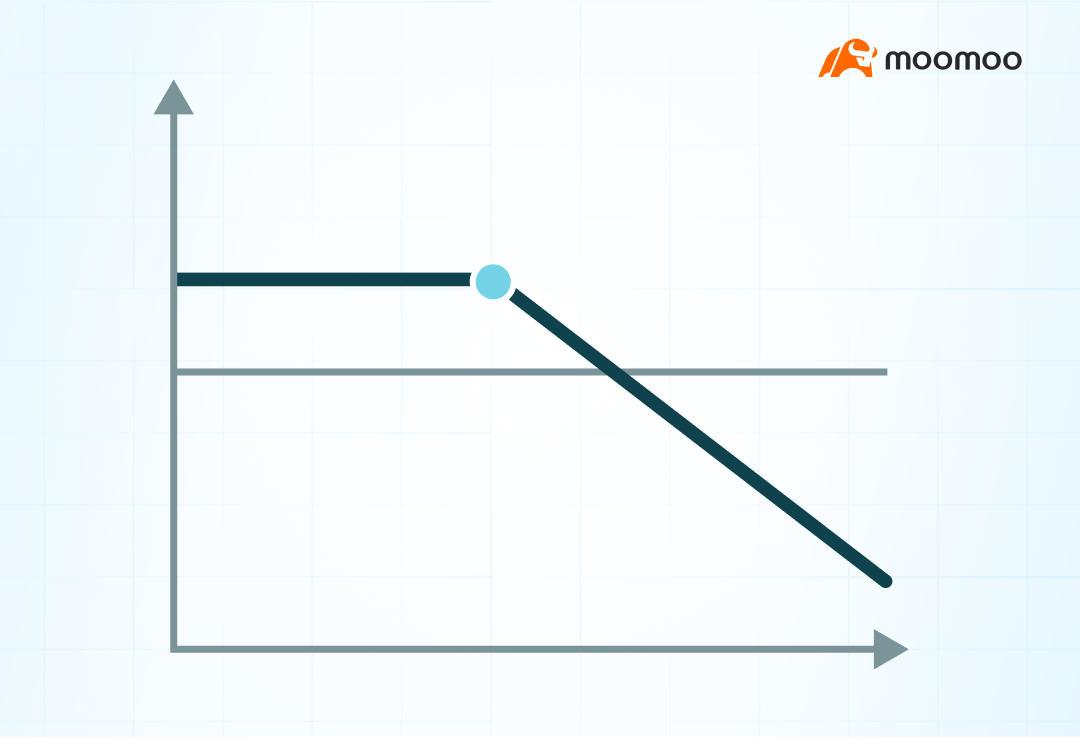
Theoretically, the maximum profit is realized when the underlying price falls or remain unchanged, making the option expire worthless. The maximum profit equals the premium received.
The strategy breaks even when the underlying price equals the strike price plus the premium.
The potential loss is unlimited as the underlying can rise indefinitely.
Impact of Time and Implied Volatility
Time decay and the decline of implied volatility work in favor of the Short Call strategy.
Investors who adopt the strategy may choose options that will expire within a short time or have high implied volatility.
How to Exit
There are three ways to exit this strategy: the option expiring worthless, the seller buying to close, or the option being exercised. Traders of this strategy generally prefer the first scenario.
However, if the judgment is wrong, investors may buy the same call to stop loss when the underlying price is above a certain level to avoid higher losses.
Advantages & Disadvantages
Investors who adopt the strategy can profit from the underlying price's fall or slight swing.
However, it is not a good idea for beginner investors to use it as a stand-alone strategy because the potential loss is theoretically unlimited and investors face the risk of forced liquidation.
Investors may use it along with other strategies to help manage the risk. For example, investors who hold the underlying asset and want to sell it at a price target of X may consider selling a call option with a strike price of X. In that way, if the option is assigned, they can sell it at the expected price and receive the premium.
Short Put
Brief Introduction
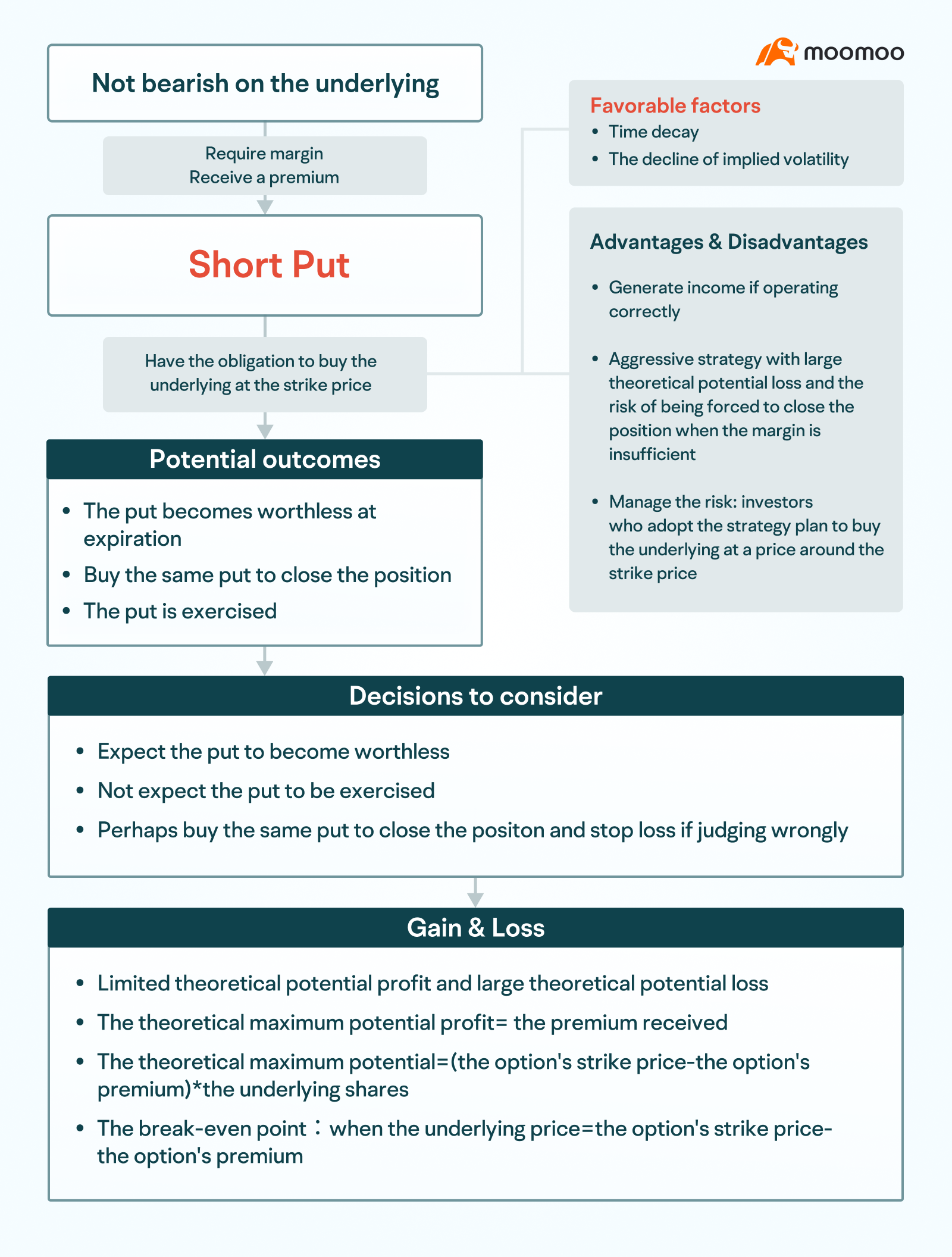
The Short Put strategy involves receiving a premium upfront. If the put option is exercised by the holder, the put writer has an obligation to buy the agreed quantity of the underlying asset at the strike price within a specific period. To manage credit risks associated with this obligation, the exchange requires the put writer to post margin in advance.
Strategy Motivation
Investors usually use the strategy when they are not bearish on the underlying asset, expecting the underlying price to rise or remain stable.
Gain & Loss(Commissions and other charges are not included)
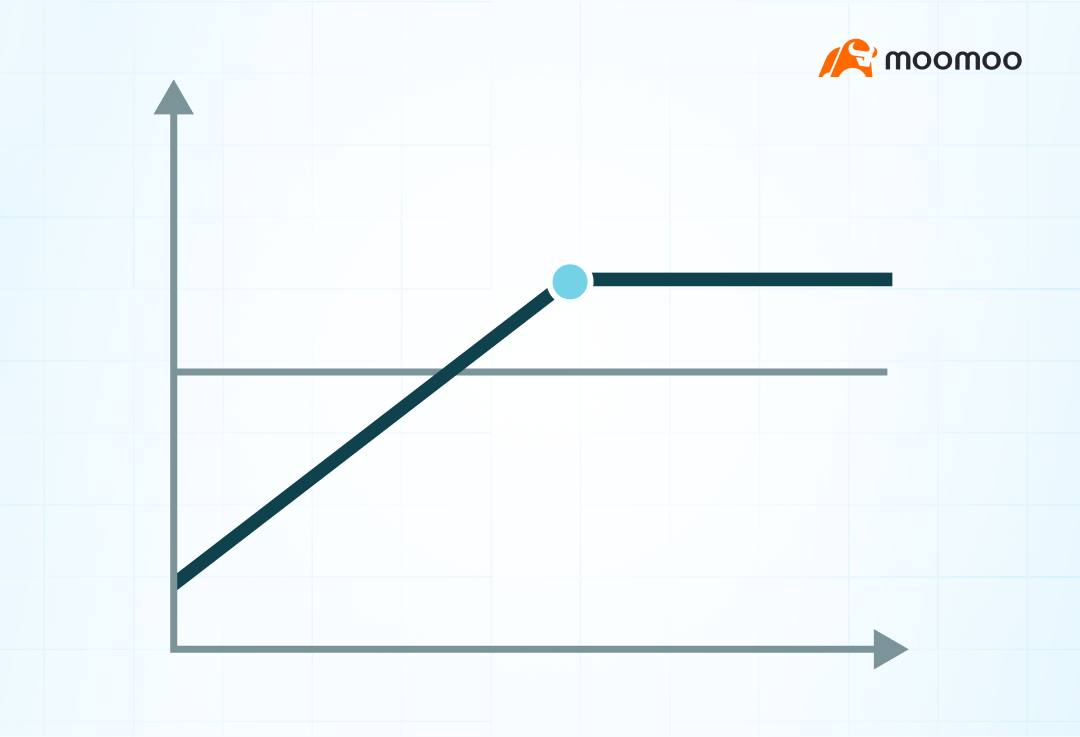
Theoretically, the maximum profit is realized when the underlying price rises or remain unchanged, making the option expire worthless. The maximum profit equals the premium received.
The strategy breaks even when the underlying price equals the strike price minus the premium.
The potential loss can be substantial as the underlying could drop to zero.
Impact of Time and Implied Volatility
Time decay and the decline of implied volatility work in favor of the Short Put strategy.
Investors who adopt the strategy may choose options that will expire within a short time or have high implied volatility.
How to Exit
There are three ways to exit this strategy: the option expiring worthless, the seller buying to close, or the option being exercised. Traders of this strategy generally prefer the first scenario.
However, if the judgment is wrong, investors may buy the same put to stop loss when the underlying price is trading below a certain level to avoid higher losses.
Advantages & Disadvantages
The Short Put strategy is profitable when the underlying price rises or swings slightly by expiration.
However, it is not a good idea for beginner investors to use the strategy alone because the potential loss can be substantial and investors face the risk of forced liquidation.
The strategy may be appropriate for traders who plan to buy the underlying at a price around the strike price. However, the trader should set aside the financial resources to take ownership of the stock at any time if assigned.
Summary
Let's recap what we've covered today to help you refresh your memory.
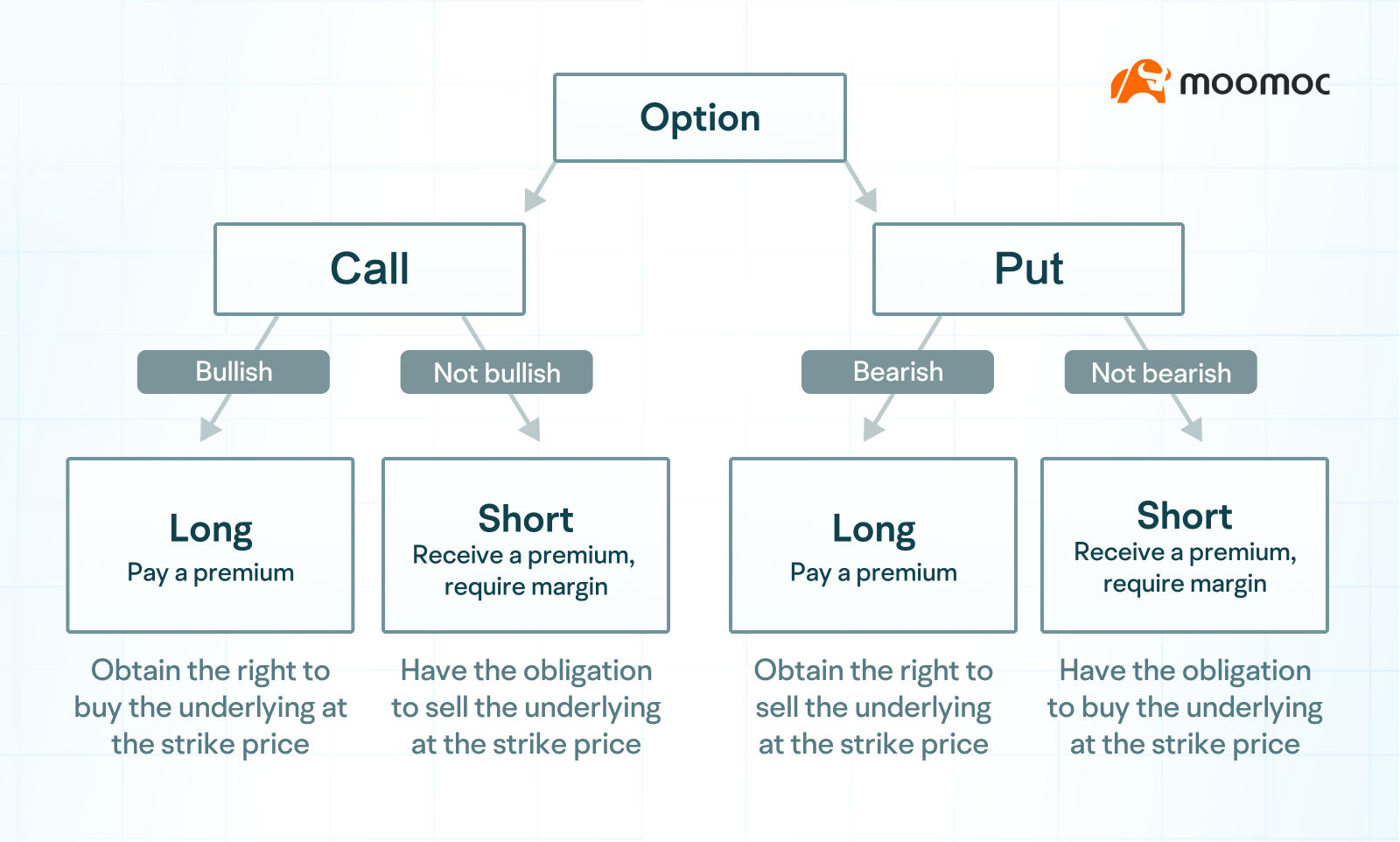

Do you have any other ideas about the four strategies we've talked about today? Please share your thoughts with us in the Comments.
This presentation is for informational and educational use only and is not a recommendation or endorsement of any particular investment or investment strategy. Investment information provided in this content is general in nature, strictly for illustrative purposes, and may not be appropriate for all investors. Read more