How Does Implied Volatility Affect Your Options Price?
We'll be taking a look at Implied Volatility, explore option prices and implied volatility in the most straightforward way possible to help demystify this complex topic together.
1.Option Price
Options are different from stocks in that their price consists of two parts: intrinsic value and extrinsic value.
Option Price (Premium) = Intrinsic Value + Extrinsic Value (Time Value)
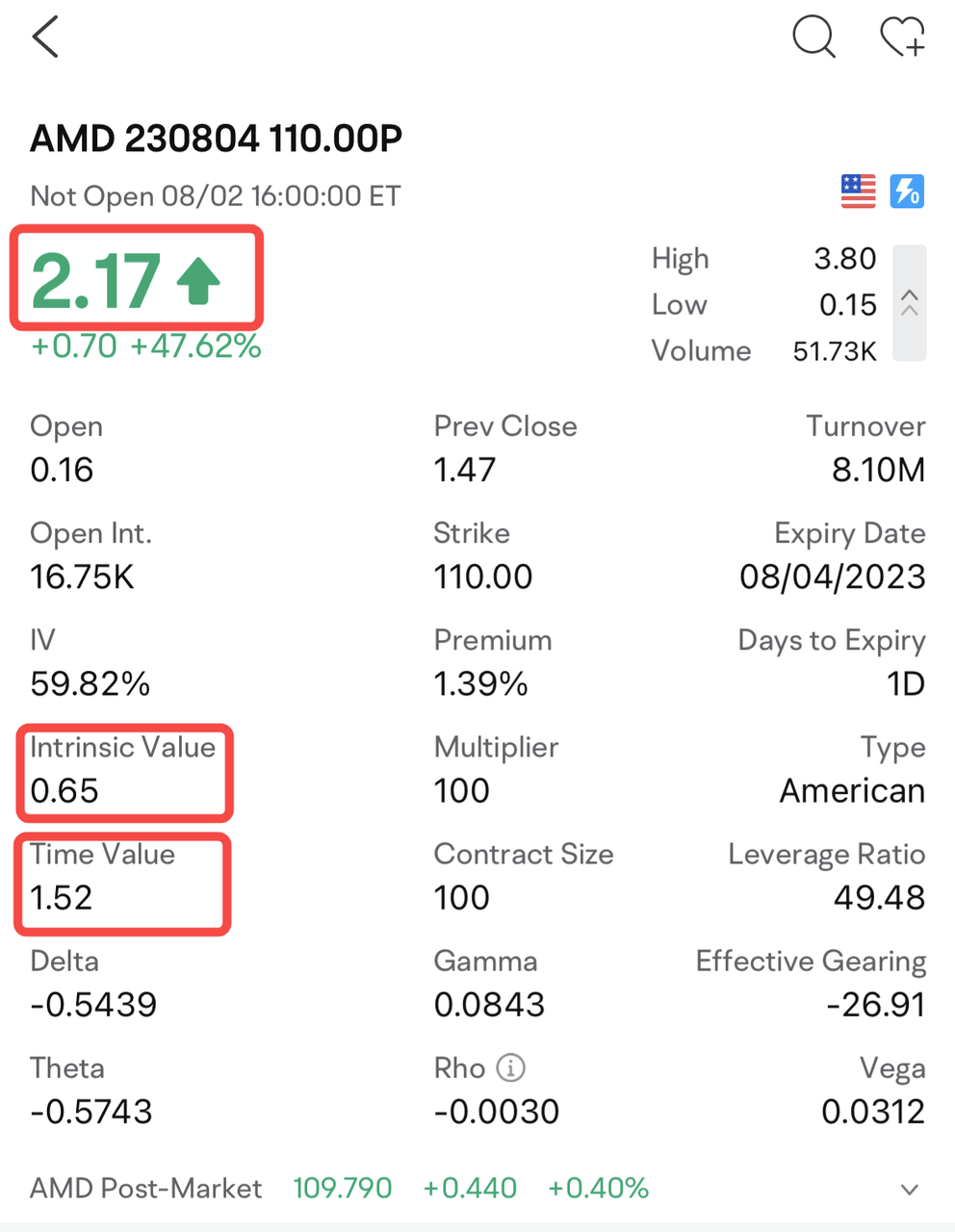
(Any app images provided are not current and any securities shown are for illustrative purposes only and is not a recommendation.)
Let's break it down and start with intrinsic value first.
1.1 Intrinsic value
Intrinsic value is solely determined by the price of the underlying asset. Specifically, it is determined by the difference between the option's strike price and the current market price of the underlying asset, which shows the value one would gain from exercising the option immediately.
In other words, when the intrinsic value is greater than zero, exercising the option will be profitable. When the intrinsic value is zero, exercising the option will either result in a break-even or a loss-making situation.
To help you understand this concept better, let's say Alice purchased a call option of AMD with a strike price of US$115. In this case, the intrinsic value of the option is determined by the current market price of AMD stock.
If AMD stock is currently trading at US$110, the call's strike price is higher than the stock price, making it a losing position. In this case, the intrinsic value of the option is zero.
If the current market price of AMD stock is US$120, the call's strike price is lower than the stock price, making it a profitable position. In this case, the option has intrinsic value.
Now, think about this:
If Alice buys a put option of AMD with a strike price of US$110, when will the intrinsic value of the put option be greater than zero?
The short answer is when the market price of AMD stock is less than US$110, this put option will have intrinsic value.
1.2 Extrinsic Value (Time Value)
Now that we understand intrinsic value, let's take a look at extrinsic value. Extrinsic value, also known as time value, measures the amount of time remaining till expiration.
Why is time value vital for options trading?
Remember, options are contracts that have an expiration date. If the market price of the underlying asset is below (for call options) or above (for put options) the strike price by the expiration date of the option, the option will expire out-of-the-money and become worthless. Hence, in the options market, time is money.
Many factors will affect the time value of options, such as expiration date, strike price, and risk-free interest rates. However, implied volatility has the most significant impact on it.
Implied volatility (IV) is a crucial parameter in the option pricing model used to obtain theoretical option prices that seek to match market prices. If you find this concept overwhelming, don't worry. Let me explain it to you step by step.
To start with, the option pricing module estimates the theoretical price of an option, which is constantly changing before its expiration date. To do so, it needs inputs, including the strike price, current market price, time to expiration, interest rate, and IV.
To understand how IV fits into this formula, let's take a closer look at the Black-Scholes model, one of the most widely used models for pricing options:


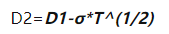
This formula calculates the theoretical option price C using six variables:
S: current market price of the underlying asset
L: option strike price
d: cash dividend rate
T: option time to expiration
y: risk-free interest rate
σ: implied volatility
With this formula, you can get a good sense of how those six variables influence the option's price.
Some of you may be overwhelmed by the complexity of the formula and the need for extensive calculations.
But don't worry - I've got your back!
Moomoo provides a handy option pricing calculator that performs these calculations. By inputting data such as the underlying asset price, IV, risk-free interest rate, and expiration date, you can quickly compute the theoretical price of an option. This tool makes it easier to determine whether an option may be expensive or not, saving you time and effort in your trading.
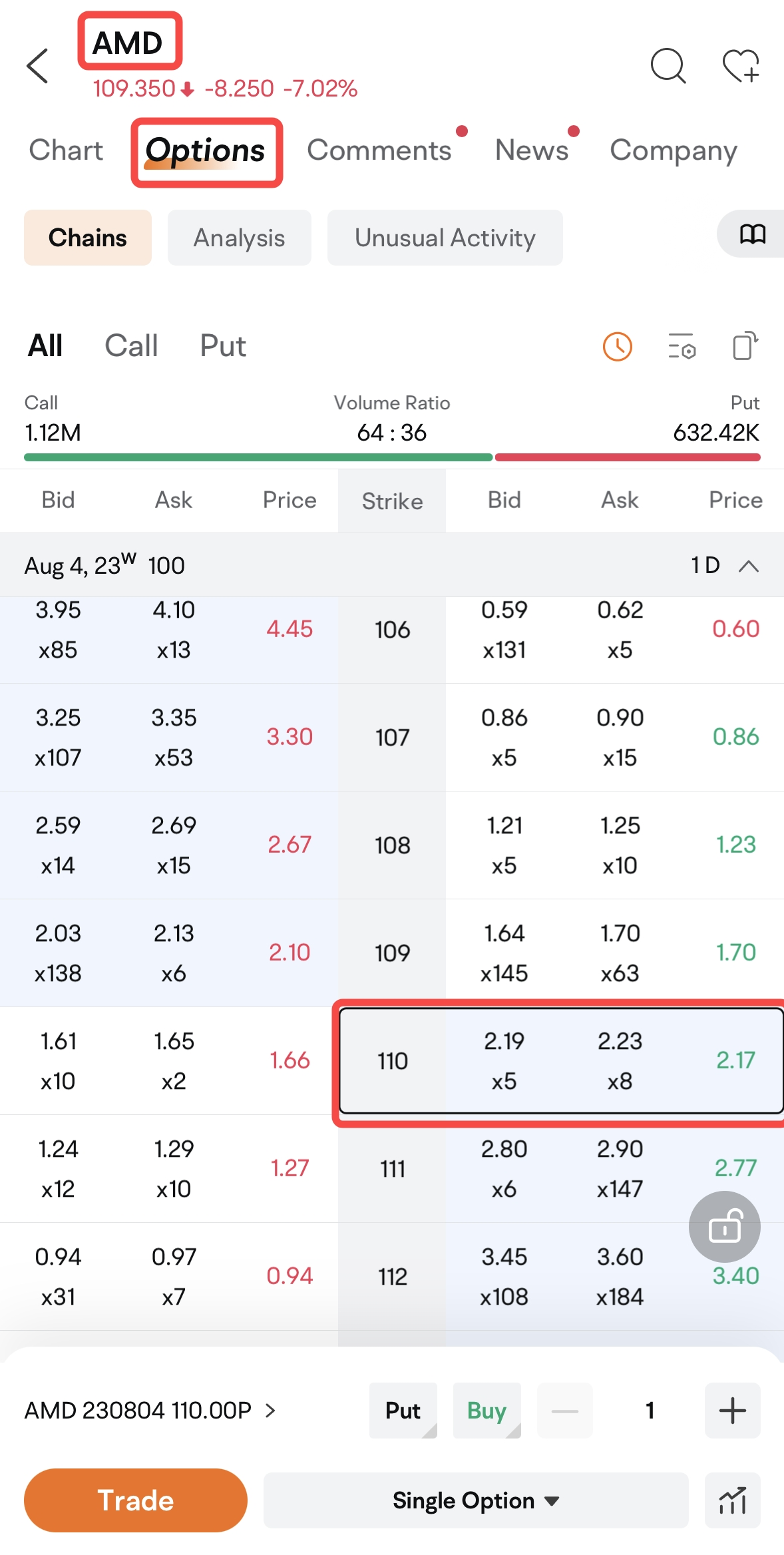
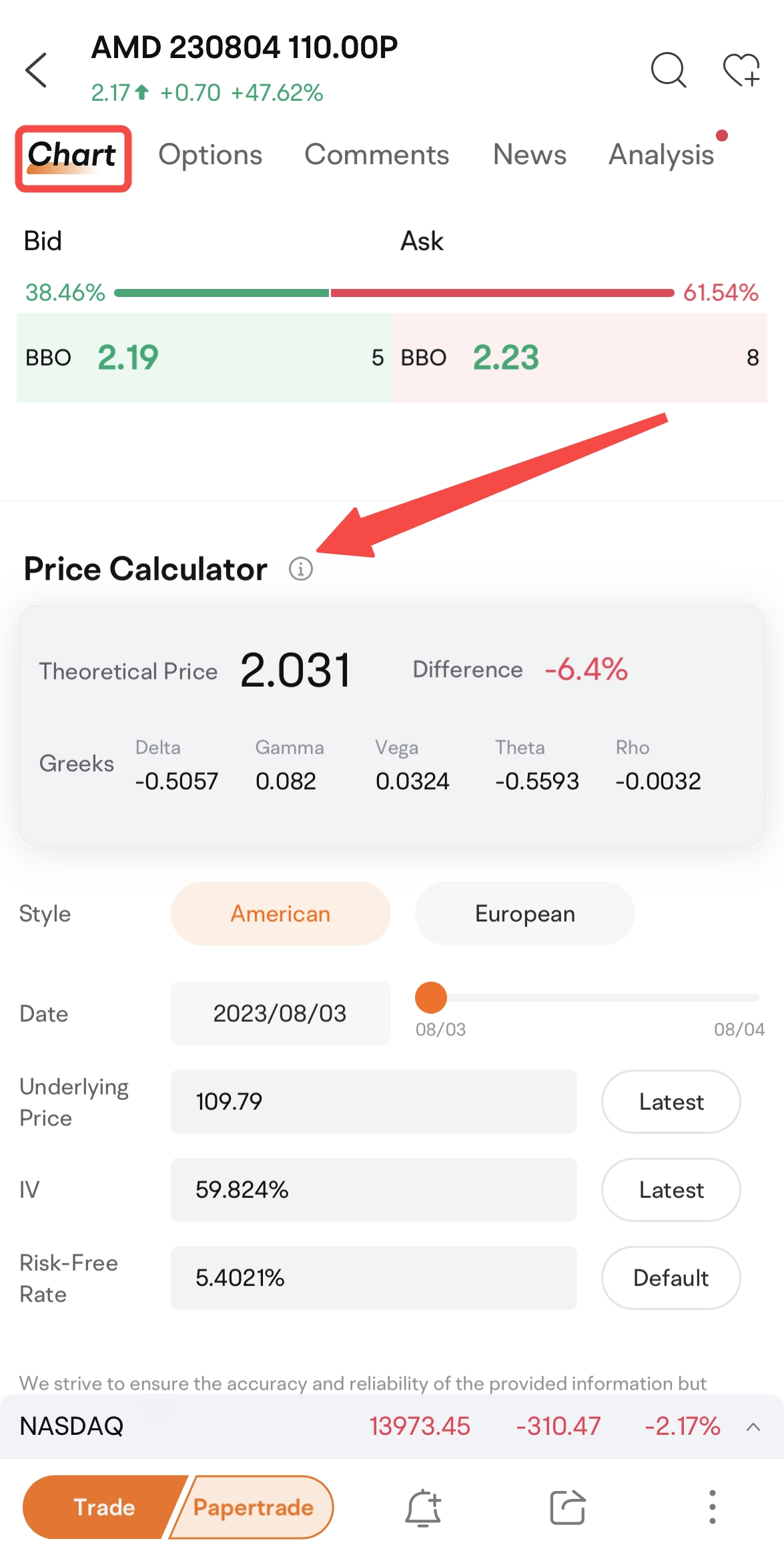
(Any app images provided are not current and any securities shown are for illustrative purposes only and is not a recommendation.)
2. Implied Volatility: expectations for future market volatility
2.1 What is implied volatility(IV)?
Now that we've covered the option pricing module, understanding implied volatility will be much easier. As previously mentioned, implied volatility (IV) is the volatility parameter that must be entered into the option pricing model to obtain theoretical option prices that attempt to match market prices. In simpler terms, IV represents the market's expectation for future volatility.
If implied volatility is high, it suggests that most traders believe the underlying stock will experience significant fluctuations in the future. Some option traders may see these fluctuations as potential opportunities to earn a profit. As a result, options with high levels of implied volatility tend to have higher-priced premiums and are also typically associated with greater trading risks.
2.2 When to sell and when to buy?
One of the most important questions for options traders is when to sell and when to buy. Generally speaking, option traders are more likely to sell options when implied volatility is high and buy options when implied volatility is low.
Why is this the case? As we discussed earlier, implied volatility presents potential opportunities for options trading. Being an option buyer is equivalent to taking a long position on implied volatility, while being an option seller is equivalent to taking a short position on implied volatility.
Buying options when the option price is relatively low, i.e., when implied volatility is low, may offer more profit potential. On the other hand, selling options when the option price is relatively high, i.e., when implied volatility is high, increases the probability of volatility decreasing which can lead to lower option prices, all other things being equal.
There is also an apparent mean-reversion effect on the implied volatility of the options market, which means that if implied volatility rises too high, it tends to fall back down, and if it falls too sharply, it tends to rise again. In this case, shorting implied volatility at high levels generally aligns well with the mean-reversion effect of implied volatility.
Let's do a quick recap: options with low IV may signal a potential buying opportunity, and options with high IV may signal a potential selling opportunity.
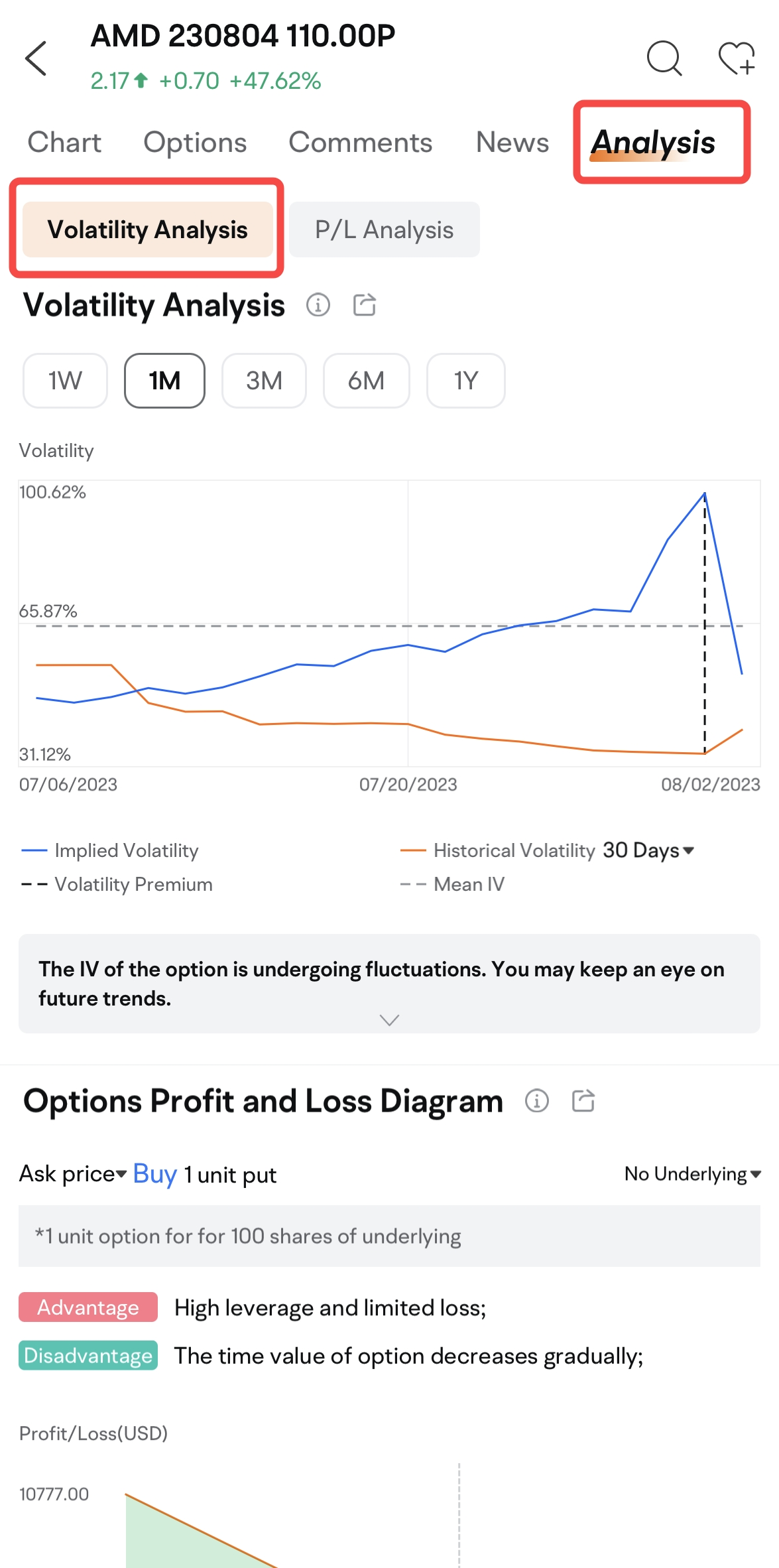
On moomoo, you can easily find an option's volatility analysis by going to the Analysis tab, where both the implied volatility and historical volatility are presented in detail. It's convenient, easy-to-use, and definitely worth a try!
(Any app images provided are not current and any securities shown are for illustrative purposes only and is not a recommendation.)
However, implied volatility should not be the only criterion for options trading since it is based on expectations about the future, which may not necessarily come true.
Therefore, it is not wise for traders to simply sell when volatility is high or buy when it is low. Other factors affecting the option's price should also be considered, such as the underlying asset's price and its expected future movement, the strike price, and the expiration date.
3. IV Crush: Why Your Calls Can Lose Money Even When the Stock Goes Up
Now that we understand how implied volatility (IV) works, let's take a closer look at IV crush.
As we mentioned earlier, traders can buy calls if they expect the stock to rise or sell them if they don't.
However, sometimes even when the stock price goes up, the call option we buy can still lose money, and this is due to IV crush.
IV crush occurs when an option's premium drops because of a decrease in its implied volatility, often after corporate earnings reports. This can be frustrating for traders who are not aware of the impact of IV on options trading.
But why does IV crush happen?
Implied volatility represents traders' expectations for future market volatility. Before an uncertain event occurs, expectations are particularly high. Some traders speculate on price increases, while others speculate on decreases, resulting in a lively and volatile market. But once everything is settled, implied volatility declines as uncertainty decreases, leading to an IV crush.
If you want to trade options during earnings season, it's important not to overlook implied volatility. Traders who want to buy a call before earnings should identify whether the option's implied volatility is currently at a high level. If it is, traders need to be cautious.
That's all for today. Please leave a comment if you have any questions or thoughts about it. Don't forget to follow us to stay up-to-date on all things related to options trading. For more information of options learning, you can click on the image below to follow me immediately!
This presentation is for informational and educational use only and is not a recommendation or endorsement of any particular investment or investment strategy. Investment information provided in this content is general in nature, strictly for illustrative purposes, and may not be appropriate for all investors. Read more