How Can Long Straddle Potentially Hedge Risks? A Case Study of Tesla
A long straddle can be used when you expect a security's price to make a big move but are not sure of the direction of the price movement.
Today we'll take Tesla as an example and look at how this strategy could be used in real trading.
Strategy Introduction
1. Construction of the strategy
Buy Call + Buy Put
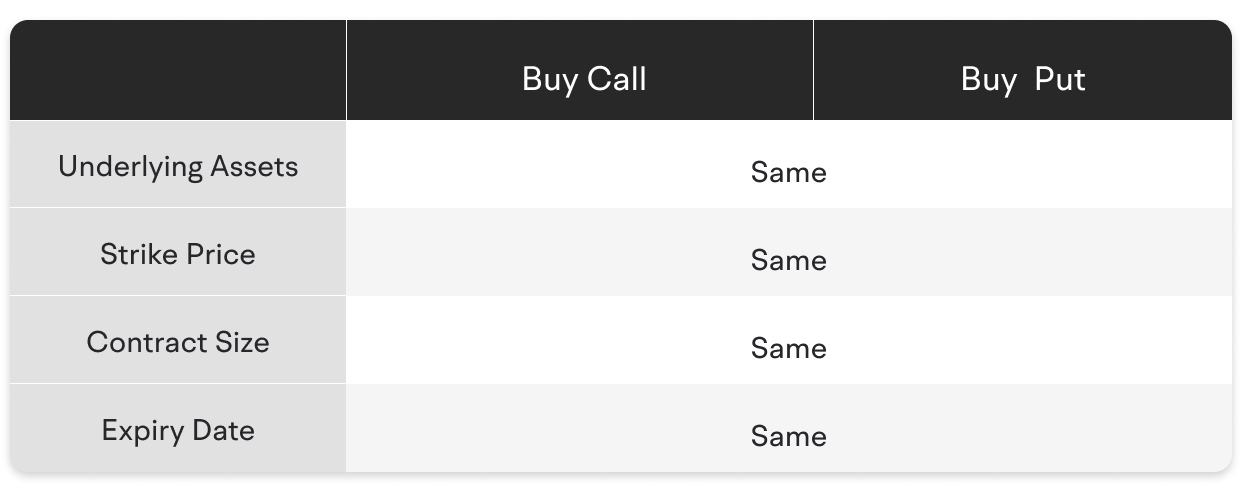
2. Practical Scenarios
A long straddle can be used when you expect a security's price to make a big move but are not sure of the direction of the price movement. These expectations can be based on big events, such as the release of the Fed's interest rate decision, corporate earnings, and CPI data.
Case Study
Let's go over a hypothetical case study to help illustrate how this strategy could work.
Suppose today is March 10, 2023. The Federal Reserve is expected to announce its interest rate decision on March 22, 2023. Bob expects the market to fluctuate significantly on that day, and a stock he's watching, Tesla will follow the market. However, he does not know whether its price will go up or down.
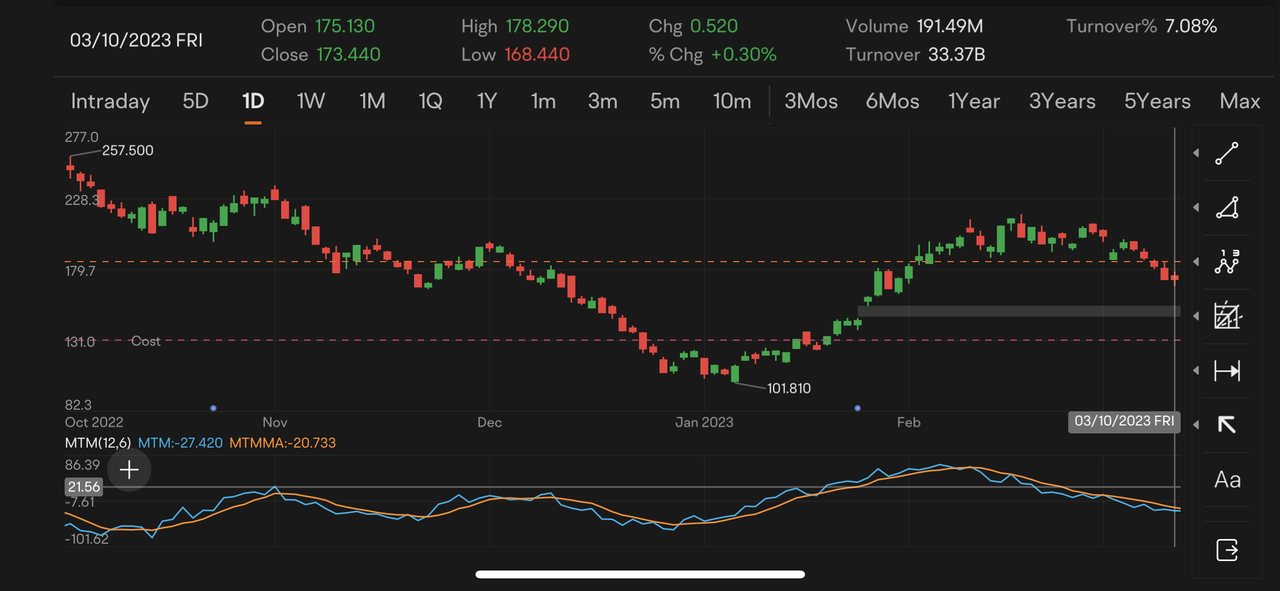
(Any app images provided in the content are not current and any securities shown are for illustrative purposes only and is not a recommendation.)
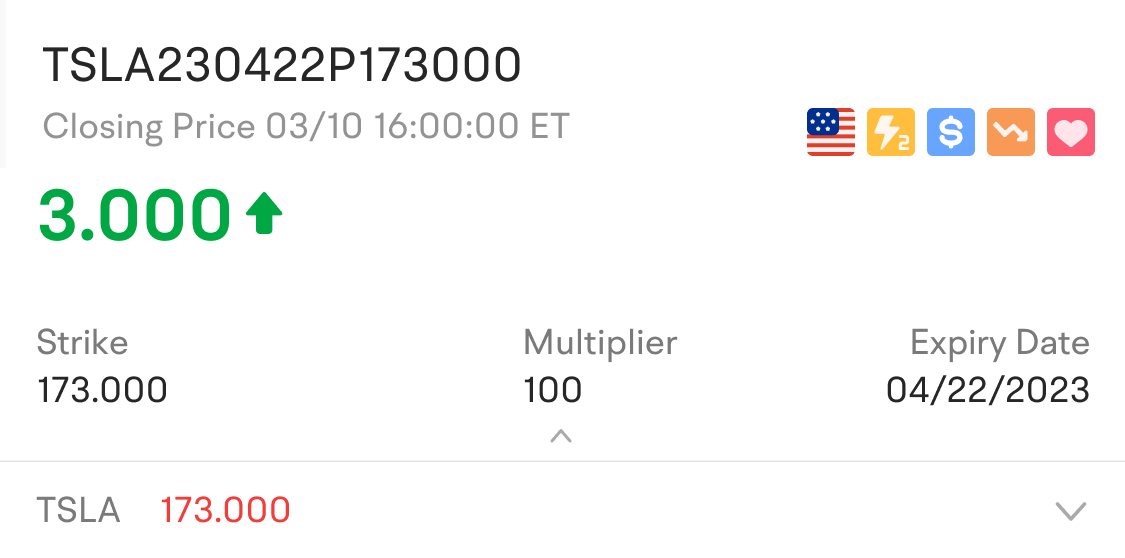
As is shown above, the current price of Tesla is US$173. Considering the possible sharp fluctuations between March 10 and March 22, Bob may use the Long Straddle strategy.
1. Open position
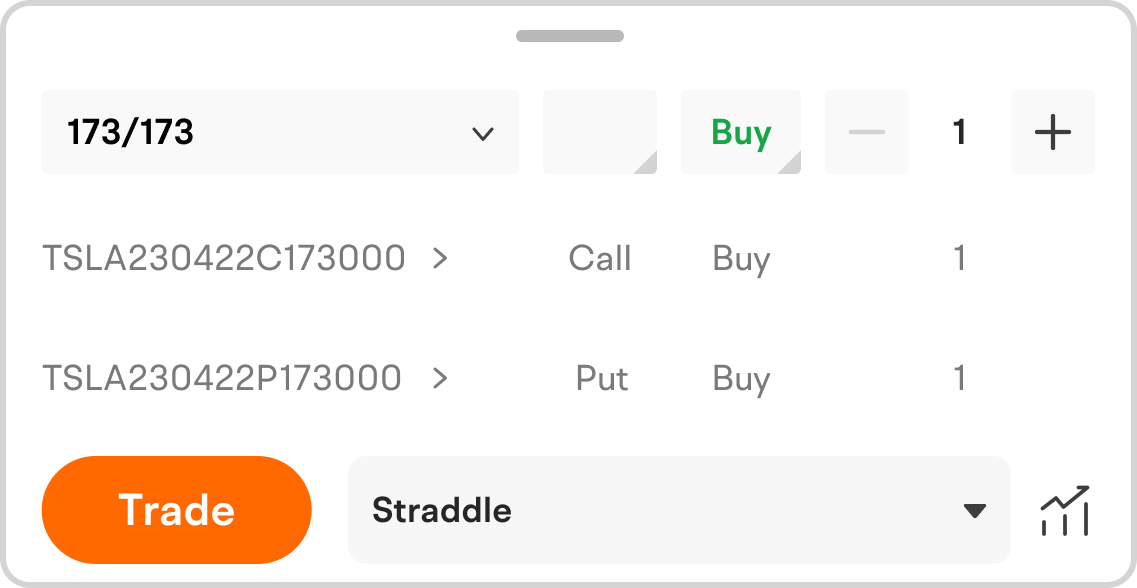
This strategy contains two parts. Let's discuss separately.
(Note: All data used is for educational purposes only and does not constitute any investment suggestions. Past performance is not indicative of future results.)
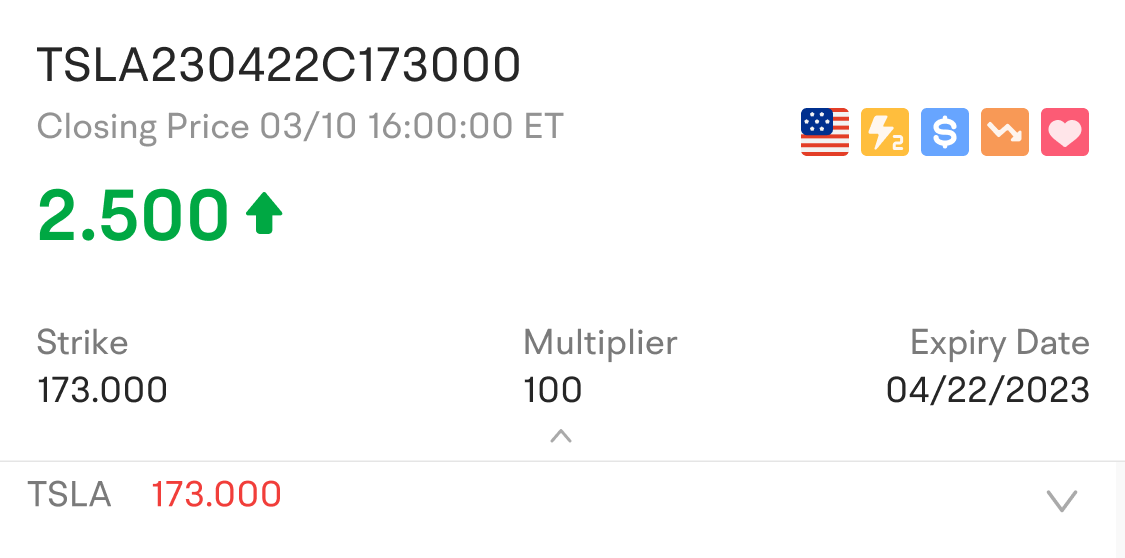
①Buy a Call
For the Call, the strike price is US$173.00, the expiry date is April 22, 2023, the multiplier is 100, and the premium is US$2.50.
Total Premium Paid Per Contract = US$2.5 x 100 = US$250.00
②Buy a Put
For the Put, the strike price is US$173.00, the expiry date is April 22, 2023, the multiplier is 100, and the premium is US$3.00.
Total Premium Paid Per Contract = US$3.00 x 100 = US$300.00
Hence,
Total Cost of Long Straddle = Premium Paid for 1 Call Option * Number of Call Option + Premium Paid for 1 Put option * Number of Put Option = US$250.00 * 1 + US$300.00 * 1 = US$550.00.
2. Strategy Analysis
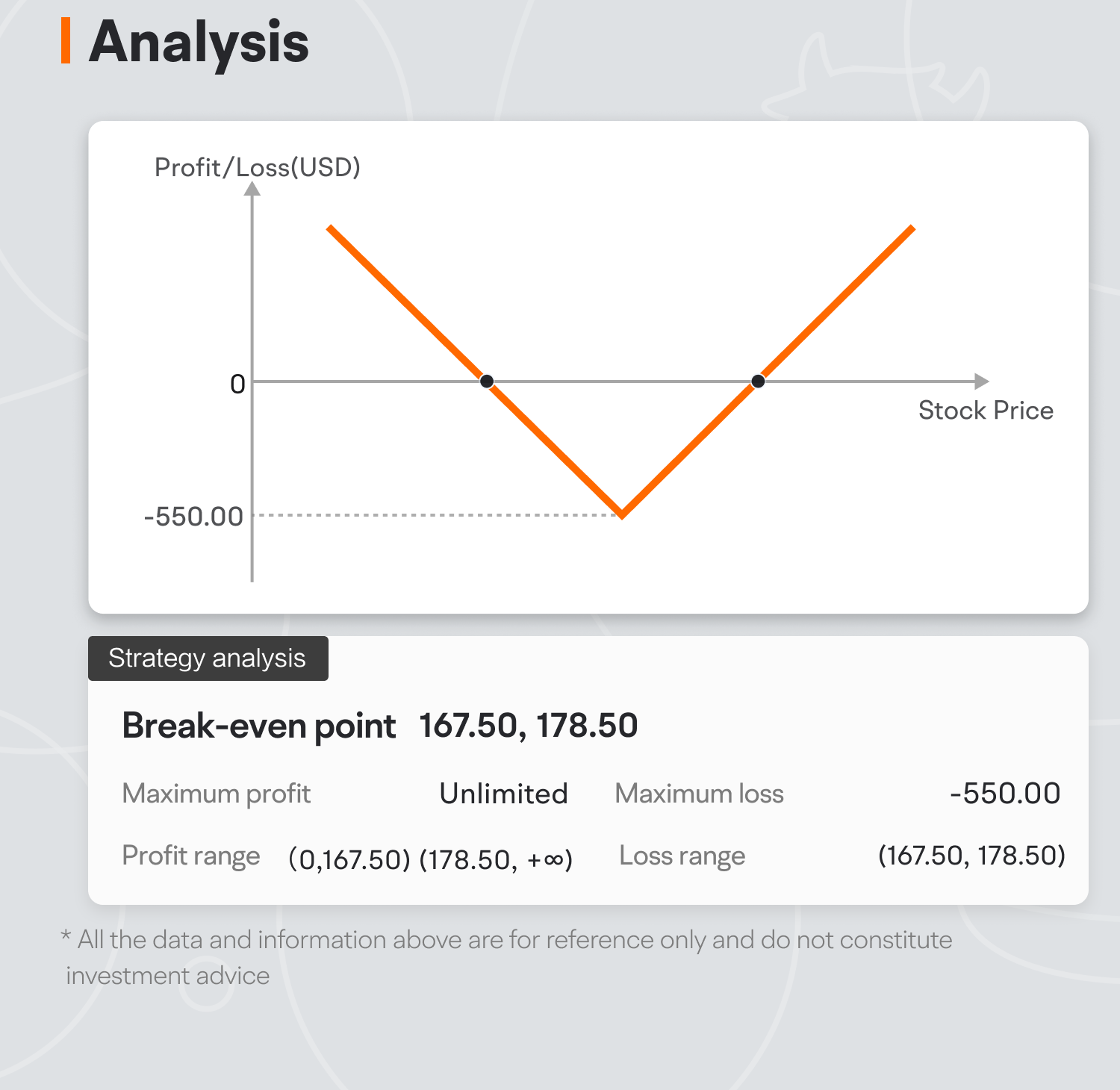
Here is the P/L diagram of the strategy.
We can see from the chart that theoretically the maximum profit is infinite, while the maximum loss is -US$550.00.
(Note: All profits and losses below are calculated based on the assumption that you choose to exercise the option at expiration, excluding commissions and other charges. In real trading, you can either exercise your option or close your position before expiration, and the actual profit or loss will vary.)
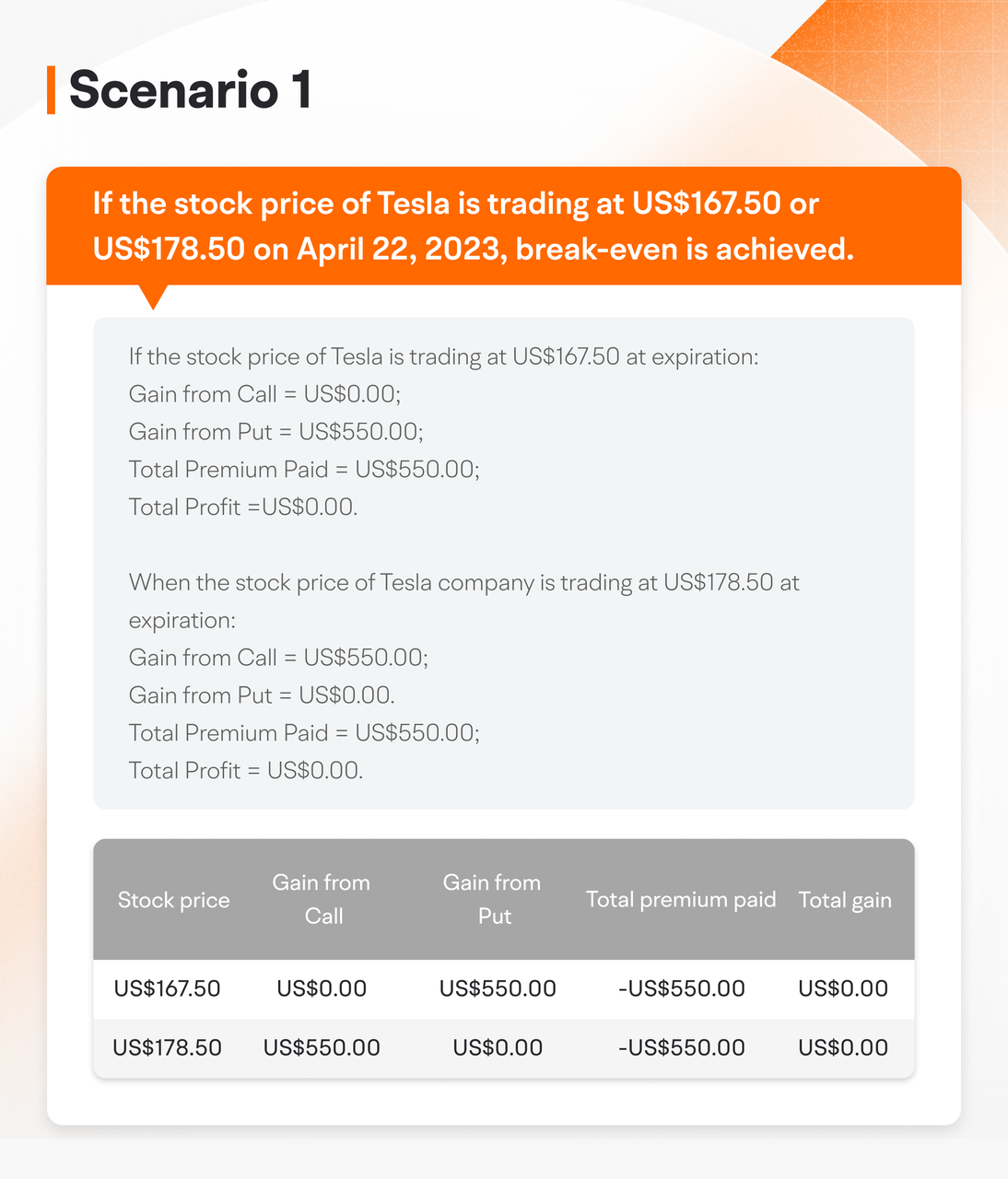
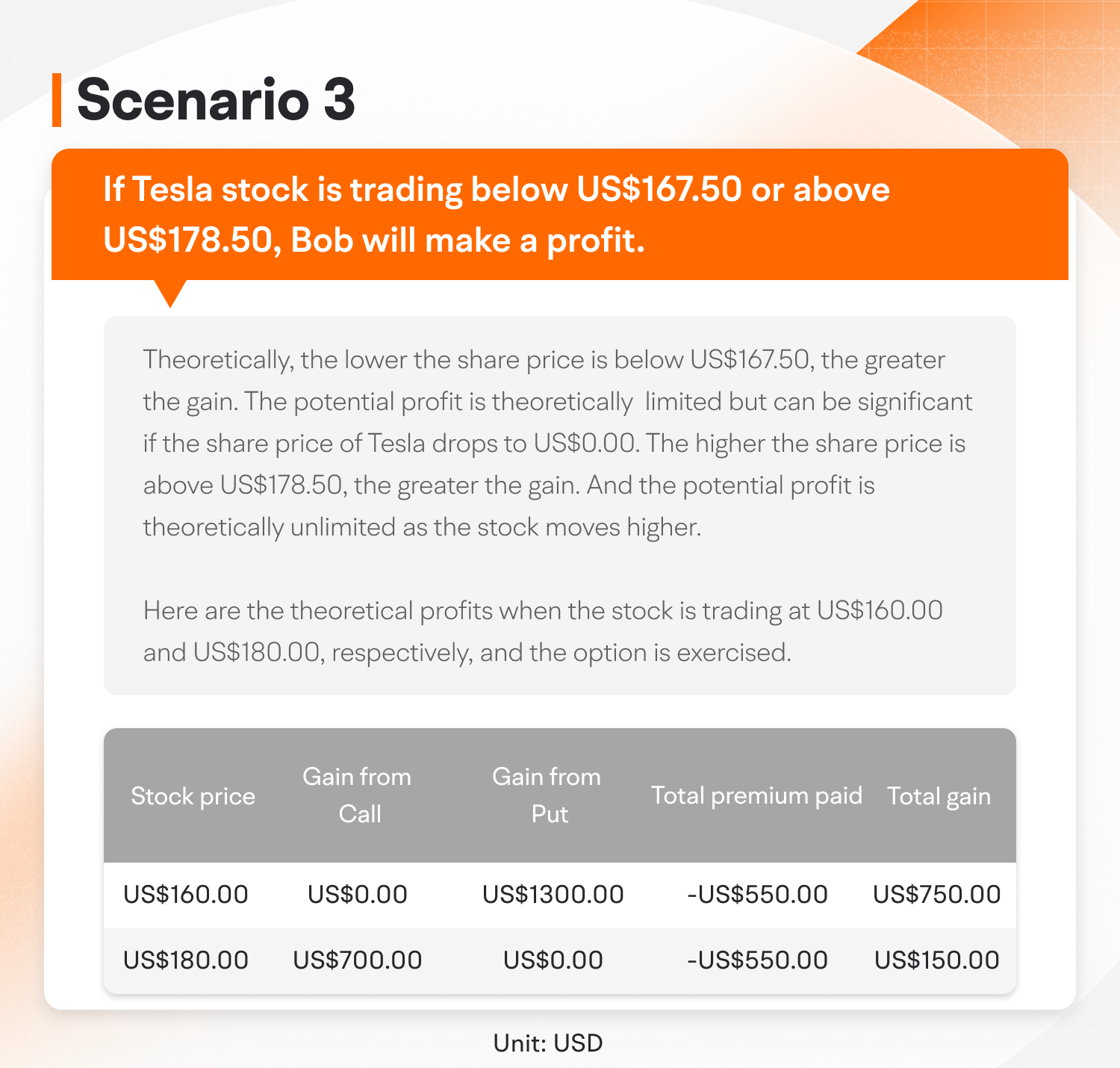
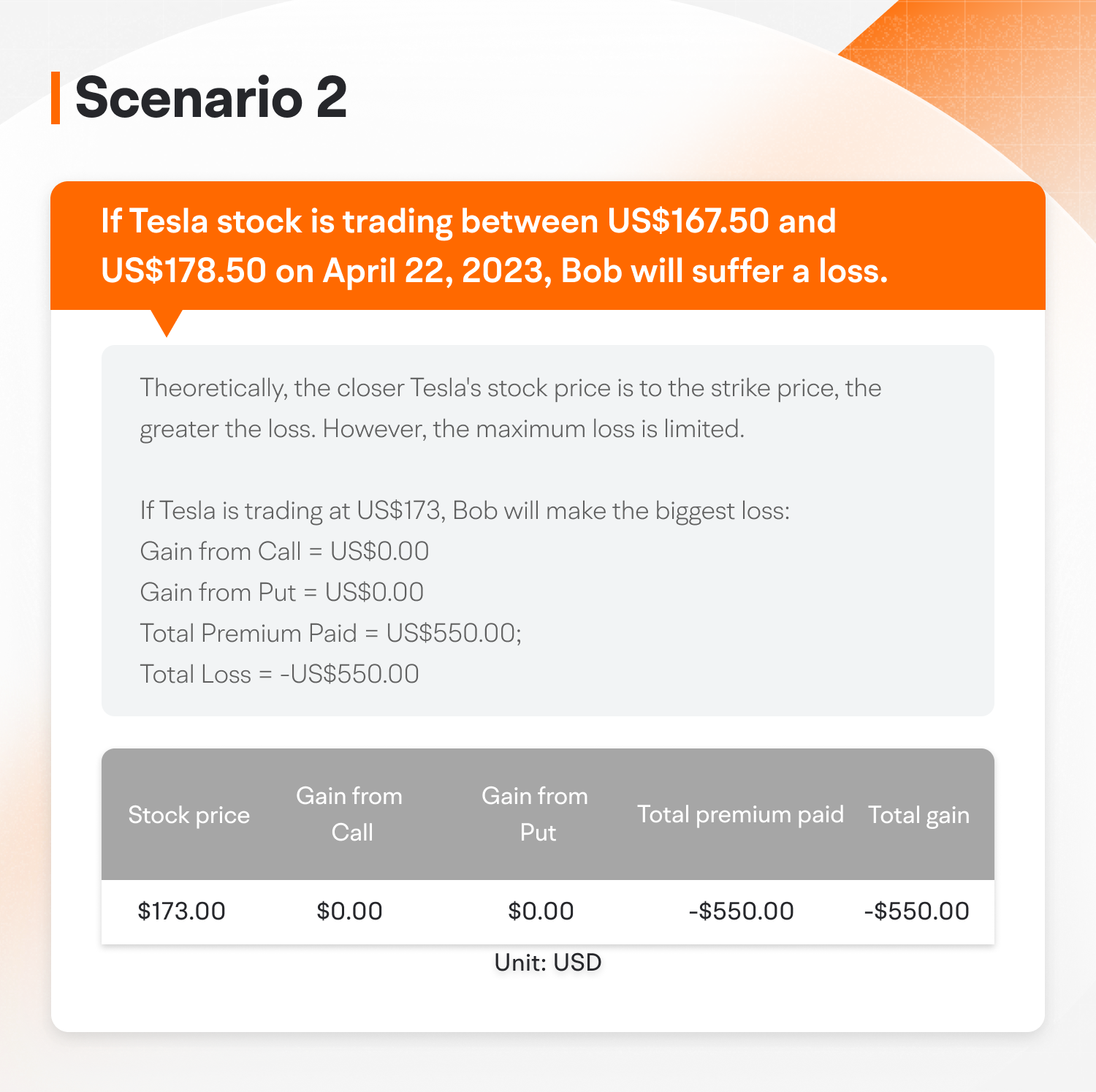
Let's discuss the three possible scenarios with this options strategy: break-even, a loss, and a gain.
3. Gain & Loss
Maximum Loss = Premium Paid for a Put Option * Number of Put Options + Premium Paid for a Call Option * Number of Call Options
Maximum Potential Gain = Unlimited
Higher Breakeven Point = Strike Price + Total Premium Paid Per Option
Or
Lower Breakeven Point = Strike Price - Total Premium Paid Per Option
(Note: Total Premium Paid Per Option= Call Premium Paid Per Option + Put Premium Paid Per Option; Total Premium = Total Premium Paid Per Option * Contract Multiplier * Contract Size)
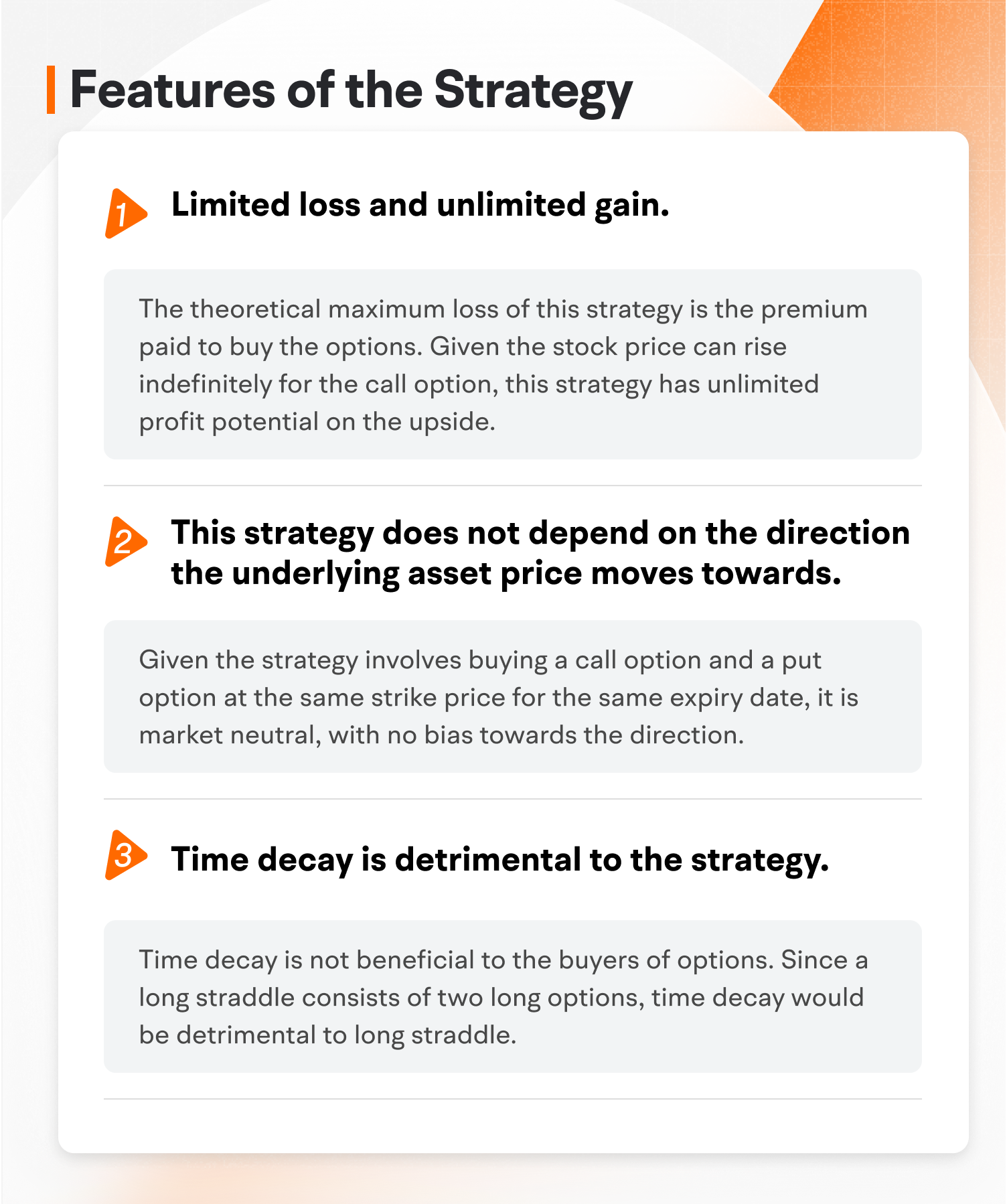
4. Features of the Strategy
5. Factors to Consider
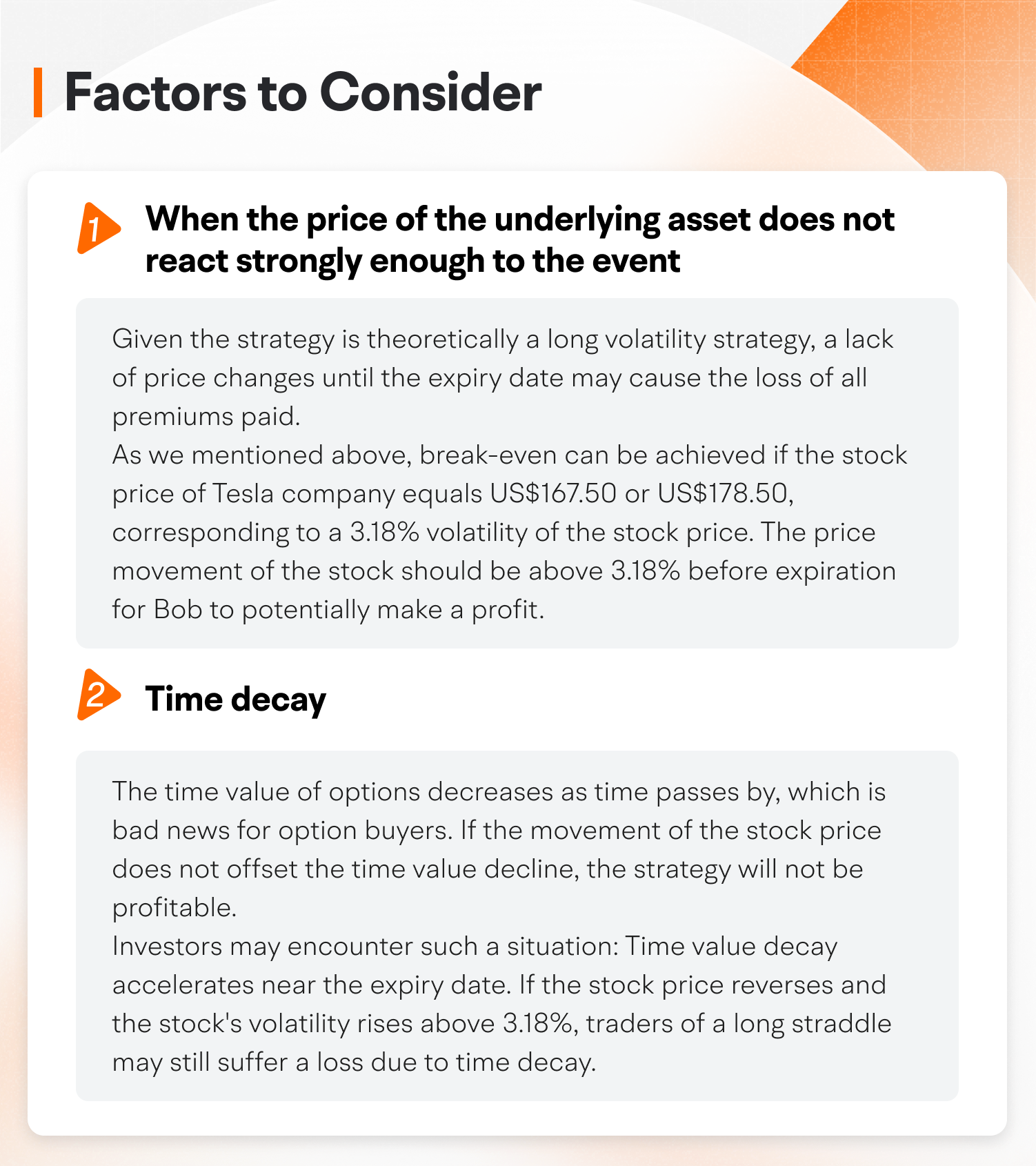
When using this strategy, you should bear in mind that it may not be applicable to all underlying assets and any investment involves risks.
 Tap Below for a quick experience of the Papertrade tool!
This presentation is for informational and educational use only and is not a recommendation or endorsement of any particular investment or investment strategy. Investment information provided in this content is general in nature, strictly for illustrative purposes, and may not be appropriate for all investors. Read more