NVIDIA Options | How to Trade NVIDIA Options in Canada?
Investing in NVIDIA options has become increasingly accessible to Canadian investors, especially with the Montreal Exchange (MX) launching options trading on Canadian Depositary Receipts (CDRs) of major U.S. companies, including NVIDIA, as of March 3, 2025. This development allows investors to trade options on fractional shares of NVIDIA in Canadian dollars, facilitating easier access without the need to manage currency conversions.
For Canadian investors, trading NVIDIA options involves understanding the options chain, selecting the right strategies, and managing risks. This article provides a comprehensive guide on how to trade NVIDIA options, covering the basics of options trading, the specifics of NVIDIA's options chain, and the steps to start trading in Canada. It also discusses the advantages and disadvantages of investing in NVIDIA options to help investors make informed decisions.
NVIDIA options overview
As of April 7, 2025, NVIDIA (NVDA) options are showing active trading interest and relatively high implied volatility. The 30-day implied volatility sits at 73.04%, indicating expectations of significant price movement in the near future. With a daily options volume of over 4.5 million contracts—128.84% above the 30-day average—market participation is strong. The put-call ratios for both volume and open interest are close to 1, suggesting a neutral sentiment among traders.
Here’s a breakdown of the key metrics:
Metric | Value | Notes |
Implied Volatility (30d) | 73.04% | Elevated; signals expected price movement |
IV Rank | 69.80% | Indicates current IV is higher than most of the past year |
Historical Volatility | 62.64% | Slightly lower than implied volatility |
IV High / Low | 90.26% / 33.24% | High on Aug 5, 2024; Low on Dec 4, 2024 |
Open Interest | 19,725,916 contracts | Below 30-day average (89.01%) |
Put-Call Ratio (Open Interest) | 0.97 | Neutral sentiment |
Option Volume (Today) | 4,595,017 contracts | Above average (128.84%) |
Put-Call Ratio (Volume) | 0.86 | Slight tilt toward calls, still considered neutral |
Source from: https://optioncharts.io/options/NVDA | ||
This data suggests a vibrant options market for NVIDIA, with balanced bullish and bearish positioning. Canadian investors can use these metrics to time entries or choose strategies based on volatility levels and market sentiment.
Understanding the NVIDIA options chain
Before trading NVIDIA options, it’s important to understand how to read an options chain. The options chain provides real-time data on available call and put contracts, including pricing, volume, and expiry dates. For Canadian investors looking to take advantage of market movements, learning to analyze this data is key to building effective options strategies.
Key components of the NVIDIA options chain
The NVIDIA options chain is a table that displays all available options contracts for NVIDIA stock. It includes critical data points that help traders make informed decisions:
Strike price: This is the price at which the option can be exercised. For example, if you purchase a call option with a strike price of $110, you have the right to buy NVIDIA shares at $110, regardless of the current market price.
Expiration date: This indicates when the option contract expires. Traders can choose from short-term weekly options or longer-term contracts lasting months or years.
Bid and ask prices: The bid price represents the highest price a buyer is willing to pay for an option, while the ask price is the lowest price a seller is willing to accept. The difference between these prices is known as the bid-ask spread, which can indicate the option's liquidity.
Volume and open interest: Volume refers to the number of contracts traded during a given period, reflecting current trading activity. Open interest indicates the total number of outstanding contracts that have not been settled, providing insight into market sentiment and liquidity.
Implied Volatility (IV): This metric reflects the market's expectations of future volatility for the underlying stock and influences the option's premium. Higher IV generally leads to higher option premiums.
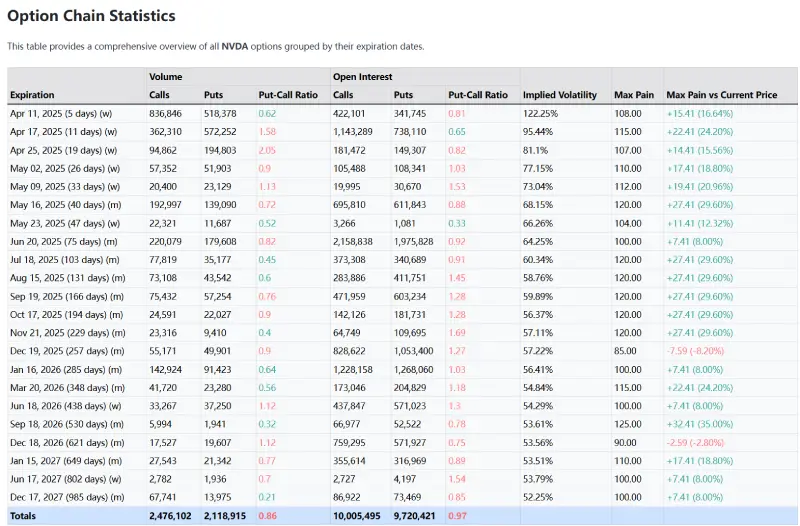
Source from: https://optioncharts.io/options/NVDA
How to read and analyze the NVIDIA options chain?
Reading and analyzing the NVIDIA options chain is essential for investors aiming to make informed trading decisions. An options chain provides a comprehensive list of available call and put options for NVIDIA Corporation (NVDA), organized by parameters such as expiration dates and strike prices. By understanding how to interpret this data, traders can assess market sentiment, evaluate potential price movements, and identify strategic opportunities that align with their investment objectives.
To effectively interpret the NVIDIA option chain, you need to consider the following points:
Select the expiration date: Begin by choosing an expiration date that aligns with your trading strategy, whether it's short-term or long-term.
Evaluate strike prices: When evaluating strike prices, consider which options align with your market outlook. In-the-money options, where the current stock price exceeds the strike price for call options or falls below it for put options, possess intrinsic value due to their favorable position relative to the stock's price. Conversely, out-of-the-money options lack intrinsic value since their strike price is less favorable compared to the current market price.
Analyze bid-ask spreads: Narrow spreads typically indicate higher liquidity, making it easier to enter or exit positions. Wider spreads may suggest lower liquidity and higher trading costs.
Assess volume and open interest: High volume and open interest can signal strong market interest and potentially more favorable trading conditions. Conversely, low figures may indicate less interest or liquidity.
Consider Implied Volatility: Understanding IV helps in assessing the potential price movement of the underlying stock and the relative cost of options. Options with higher IV are generally more expensive due to the anticipated volatility.
By thoroughly analyzing these components, Canadian investors can gain valuable insights into market sentiment and potential price movements, enabling them to make informed decisions when trading NVIDIA options.
Should I buy NVIDIA options?
Investing in NVIDIA options can be an appealing strategy for Canadian investors seeking to capitalize on the company's position in the technology sector. However, it's essential to weigh the potential advantages and disadvantages before proceeding.
Pros of buying NVIDIA options:
Leverage and capital efficiency: Options allow investors to control a larger position in NVIDIA stock with a relatively small capital outlay, potentially amplifying returns if the stock moves favorably.
Flexibility in strategies: Options offer various strategic possibilities, such as hedging against potential losses in your existing portfolio or generating additional income through covered calls.
Potential for high returns: Given NVIDIA's prominence in sectors like AI and gaming, options traders may benefit from significant stock price movements, leading to substantial profits.
Defined risk: When buying call or put options, your maximum loss is limited to the premium paid, making it a defined-risk strategy.
Access to U.S. market: Canadian investors can easily access NVIDIA options through Canadian brokers, like moomoo that offers trading on U.S. exchanges.
Cons of buying NVIDIA options:
High volatility: NVIDIA's stock is known for its volatility, which can lead to rapid and unpredictable price swings, increasing the risk of options expiring worthless.
Time decay: Options are time-sensitive instruments. As they approach expiration, their value can erode, especially if the anticipated price movement doesn't occur promptly.
Complexity and risk of loss: Options trading involves complex strategies and can result in significant losses, particularly for inexperienced traders. It's possible to lose the entire premium paid for the options.
Before trading NVIDIA options, it is better for you to assess your financial situation, investment knowledge, and risk tolerance. Consider consulting with a financial advisor to determine if options trading aligns with your investment goals.
Some considerations for Canadian investors:
1. Understand the tax implications of options trading in Canada, including capital gains and losses, and how they affect your overall tax liability.
2. Ensure that your brokerage platform is authorized to trade U.S. options and complies with Canadian regulations.
3. While some brokers allow options trading in a TFSA or RRSP, more complex strategies may not be permitted due to account restrictions.
1. Understand the tax implications of options trading in Canada, including capital gains and losses, and how they affect your overall tax liability.
2. Ensure that your brokerage platform is authorized to trade U.S. options and complies with Canadian regulations.
3. While some brokers allow options trading in a TFSA or RRSP, more complex strategies may not be permitted due to account restrictions.
How to trade NVIDIA options in Canada?
Trading NVIDIA options in Canada is accessible through platforms like moomoo, which is authorized to facilitate U.S. options trading while adhering to Canadian regulations. Moomoo offers a user-friendly interface and competitive fees, making it a suitable choice for Canadian investors interested in U.S. markets.
Why choose moomoo to trade options?
Here's why moomoo is a strong choice compared to other Canadian brokers:
Feature | moomoo | Questrade | Wealthsimple | Traditional Banks |
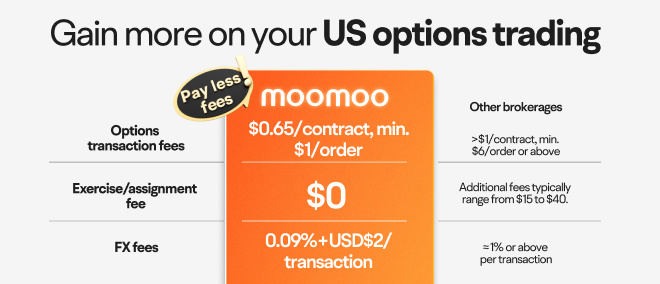
Commission | $0.65/contract | $0.99/contract | $2/contract (Core) | $1.25 + $9.99 |
Exercise Fee | $0 | $24.95 | $20–$45 | Varies, often complex |
Level 1 Market Data | Free with any funding | Available | Limited | Limited |
Level 2 Market Data | Available (paid) | Available (paid) | Not offered | Limited |
Options Strategies & Tools | Real-time option chain, supporting 13 options trading strategies | Basic | Limited | Basic |
1. Very affordable fees
Moomoo Canada offers one of the lowest options trading commissions in Canada:
Commission: $0.65 per contract, with a minimum of $1 per order.
Exercise fee: $0 (Questrade charges $24.95, Wealthsimple charges up to $45).
Compared to traditional banks ($1.25 + $9.99), moomoo is significantly more cost-effective.
2. Comprehensive and real-time market data
Moomoo provides high-quality options data, essential for making informed trades:
Level 1 data: Free for all users with any funded account. Includes real-time quotes and basic order book info.
Level 2 data: Available for purchase and includes a 10-depth bid/ask order book.
This ensures Canadian users get access to the same market insights as professional traders.

3. Easy-to-use and powerful trading tools
Moomoo Canada is designed for both beginners and experienced traders:
Offers 13 built-in options strategies and supports 8 types of order types.
Advanced analysis tools, including:
Options-specific dashboards
Strategy scanners
Earnings and volatility analysis
Unusual options activity tracking
How to trade NVIDIA options on moomoo?
Step 1: If you don’t have a moomoo account yet, you can open one right away. It only takes three steps to do it!

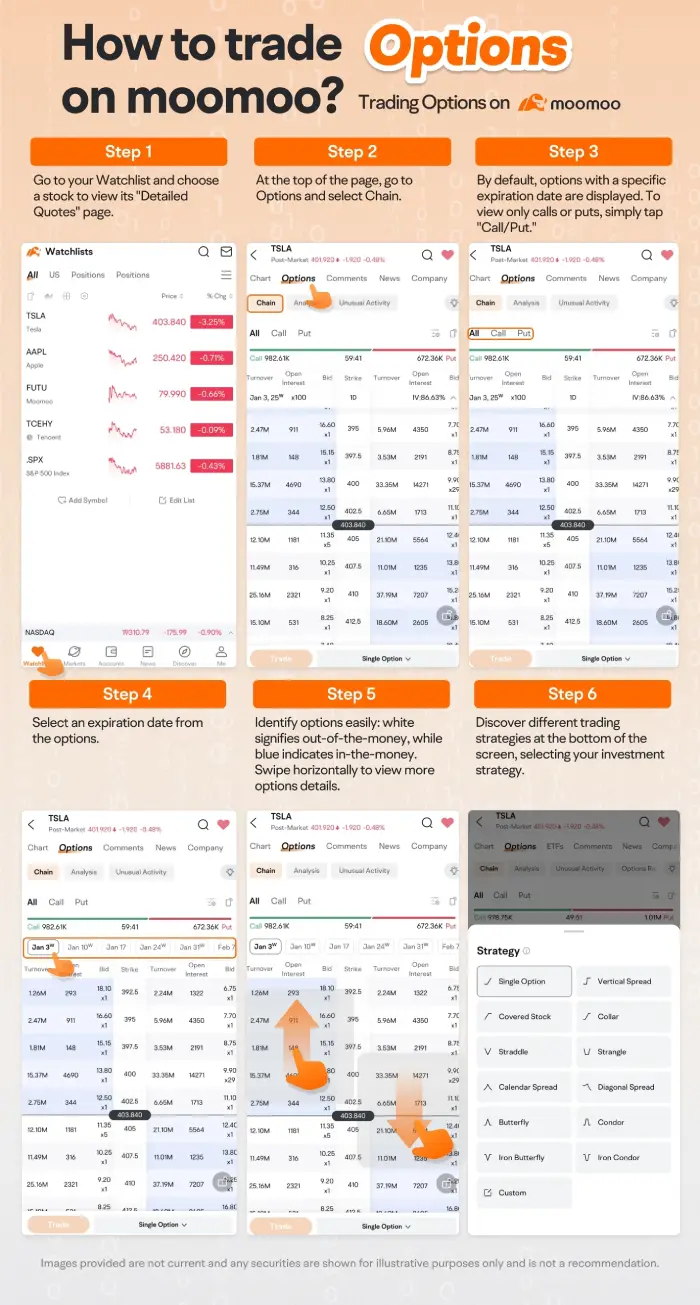
Step 2: Log in to your account on the moomoo app or moomoo website. If you choose to use the moomoo app to trade options, you can follow the specific steps in the picture below.
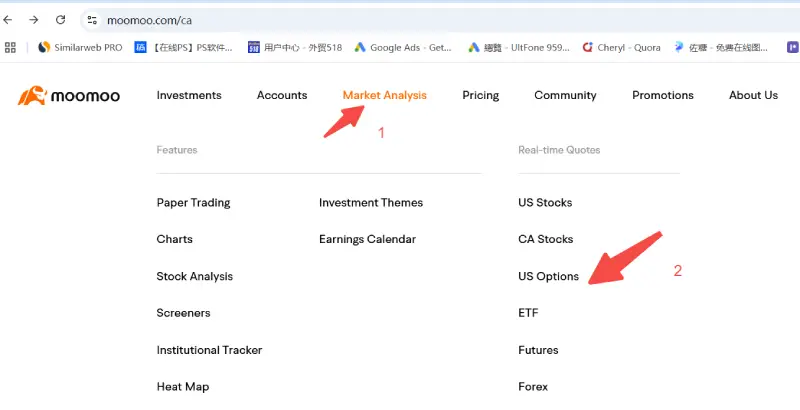
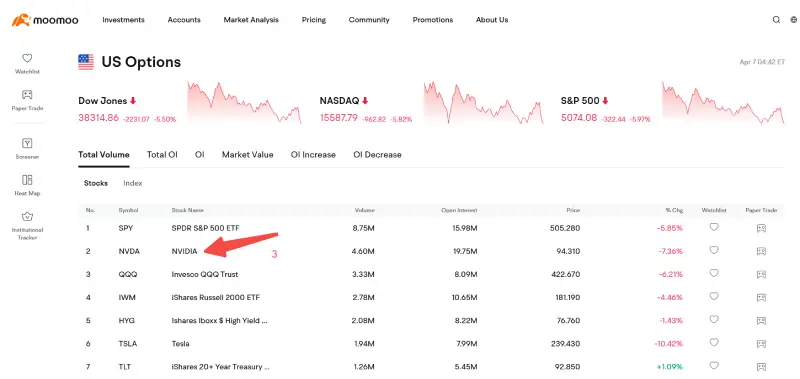
Step 3: If you choose to use the moomoo website to trade options, first, select Market Analysis in the top navigation bar, then click US options, and finally select NVDA to trade.
Are you new to options trading? Don’t dare to start live trading? Then you can try paper options trading first! Read our article to help you get started: Paper Trading Options in Canada: How to Do It Properly?
Best NVIDIA options strategy for Canadian investors
Investing in NVIDIA options can be a strategic approach for Canadian investors aiming to enhance returns, generate income, or hedge existing positions. Below are some effective options strategies tailored to NVIDIA Corporation (NVDA) that align with various investment objectives:
1. Covered Call Strategy
A covered call strategy involves owning shares of NVIDIA and simultaneously selling call options on those shares. This approach enables investors to generate additional income from the premiums received, which can serve as a protective buffer against small drops in the stock's value. It's particularly suitable in neutral to slightly bullish market conditions where significant price appreciation is not anticipated. However, it's important to note that this approach limits the potential for upside gains, as the stock may be called away if it surpasses the strike price.
2. Protective Put Strategy
A protective put entails purchasing put options for NVIDIA shares that you already own. This strategy acts as an insurance policy, offering protection against substantial declines in the stock's value. While it requires paying a premium for the put options, it provides peace of mind by capping potential losses. This approach is beneficial for investors who are bullish on NVIDIA in the long term but seek protection against short-term volatility.
3. Straddle/Strangle
If you anticipate a significant price movement in NVIDIA but are unsure of the direction, a straddle (buying a call and a put with the same strike price) or a strangle (buying a call and a put with different strike prices) can be appropriate. Given NVIDIA's high IV, these strategies are expensive but can yield substantial profits if NVIDIA's stock price moves significantly in either direction.
4. Collar Strategy
A collar combines holding NVIDIA shares, selling call options, and purchasing put options. This strategy aims to protect against significant losses while capping potential gains. The premium received from selling the call options can offset the cost of purchasing the put options, making it a cost-effective way to hedge against downside risk. This approach is suitable for investors who seek to lock in profits while safeguarding against adverse price movements.
Final thoughts
In conclusion, trading NVIDIA options can be a great way for Canadian investors to gain exposure to one of the world’s leading tech stocks. Whether you're looking to manage risk or take advantage of market trends, options offer flexibility. It’s important to understand how the NVIDIA options chain works and choose strategies that align with your goals and comfort level.
If you’re wondering how to buy NVIDIA options in Canada, platforms like moomoo make it easy to get started. Moomoo Canada offers access to U.S. markets, real-time data, and a user-friendly interface suited for both beginners and experienced traders. With the right tools and knowledge, Canadian investors can explore NVIDIA options with more confidence and control.
FAQs about NVIDIA options
1. Why are NVIDIA options so expensive?
NVIDIA options are often considered expensive due to several key factors:
High Implied Volatility (IV): Implied volatility reflects the market's expectations of a stock's future price fluctuations. NVIDIA's stock has experienced significant price swings, leading to elevated IV levels. This increase in IV raises the premiums of NVIDIA options, making them more costly for traders.
Earnings announcements: Around the time of NVIDIA's earnings releases, there's typically a surge in options trading activity. Traders anticipate potential price movements based on earnings results, which can drive up IV and, consequently, option prices.
Market demand and speculation: NVIDIA's prominence in sectors like gaming, artificial intelligence, and data centers attracts substantial attention from investors and speculators. This heightened demand for NVIDIA options can contribute to their higher premiums.
Overall market conditions: Broader market factors, such as economic indicators, geopolitical events, and industry trends, can influence investor sentiment and impact the pricing of options. For instance, supply chain issues or trade policies affecting the tech industry can lead to increased uncertainty, thereby elevating option prices.
2. How to invest in Nvidia in Canada?
Investing in Nvidia in Canada can be done through several methods. You can buy Nvidia stock directly on the NASDAQ by opening a brokerage account that allows international trading, though this involves currency conversion fees and potential withholding taxes on dividends. Another option is investing in Exchange-Traded Funds (ETFs) that include Nvidia, such as the CI Global Artificial Intelligence ETF, which offers diversified exposure but less direct control over Nvidia holdings.
3. Are you allowed to buy options in TFSA?
Yes, you are allowed to buy options in a Tax-Free Savings Account (TFSA) in Canada, but there are certain limitations. You can trade basic options, typically classified as level 1 or 2, which include covered calls and buying calls or puts. However, frequent trading or complex strategies might lead the Canada Revenue Agency (CRA) to consider your activities as "carrying on a business," potentially jeopardizing the tax-free status of your TFSA.
This presentation is for informational and educational use only and is not a recommendation or endorsement of any particular investment or investment strategy. Investment information provided in this content is general in nature, strictly for illustrative purposes, and may not be appropriate for all investors. Read more