Long Iron Butterfly
You may consider a long iron butterfly when you expect the price of an underlying asset to move beyond a certain price range and want to limit risk.
Construction of the strategy
A long iron butterfly strategy involves trading four options of the same underlying asset.
● Sell a put1
● Buy a put2
● Buy a call1
● Sell a call2
Put1, put2, call1, and call2 have the same expiration date but different strike prices.
Strike price: put1 < put2 = call1 < call2, and put2 - put1 = call2 - call1
Brief description
A long iron butterfly strategy consists of buying a call and a put at the same strike price (middle strike) and selling a put with a lower strike and a call with a higher strike. The lower and higher strike prices are equidistant from the middle strike price. All options have the same expiration date.
A long iron butterfly is also a combination of two strategies: bull call spread and bear put spread, or long straddle and short strangle.
This strategy potentially has limited maximum profit and limited risk before the contracts expire.
You can profit when the asset price moves in either direction and potentially get the maximum profit if the asset price moves above the higher or below the lower strike price at expiration. The maximum risk can potentially occur if the asset price reaches the middle strike at expiration.
A long iron butterfly has a similar profit-loss pattern to the short call/put butterfly strategies. But the difference is that the long iron butterfly is a net debit strategy, while the short call/put butterfly strategies are net credit strategies. A net debit strategy means requiring a net outflow of cash.
When using this strategy, you should pay attention to the cost (including commissions) because it includes at least four option trades. It is important to ensure a favorable risk/reward ratio.
Gain & Loss
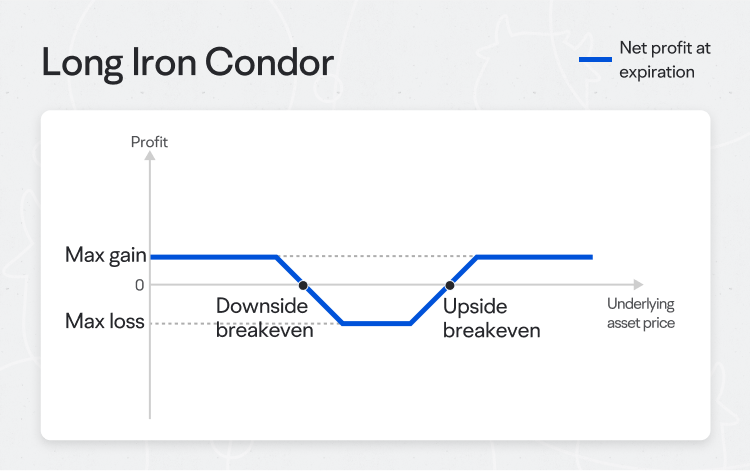
● Breakeven
Upside Breakeven = Middle Strike + Net Premium Paid.
Downside Breakeven = Middle Strike - Net Premium Paid.
● Max gain
Max Gain = Higher Strike - Middle Strike - Net Premium Paid
● Max loss
Net Premium Paid
Example
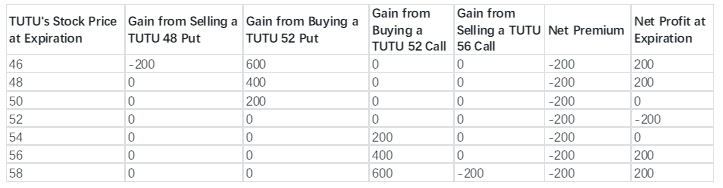
Suppose a theoretical stock called TUTU on Nasdaq is currently trading at $52.
You expect its price to have some volatility and will likely move above $56 or below $48. So you decide to use a long iron butterfly:
● Sell a $2 TUTU put with a strike of $48
● Buy a $3 TUTU put with a strike of $52
● Buy a $3 TUTU call with a strike of $52
● Sell a $2 TUTU call with a strike of $56
(The following calculations do not include transaction costs.)
This presentation is for informational and educational use only and is not a recommendation or endorsement of any particular investment or investment strategy. Investment information provided in this content is general in nature, strictly for illustrative purposes, and may not be appropriate for all investors. Read more
Recommend

How to set up a Long Put on moomoo?

What is a Long Put?

How Short Put Works: Earning Premiums with Options

Options Earnings Series 1: What's Behind the Rise and Fall of Stock Prices After Earnings?
Options Earnings Series 3: Exploring Common Two-Legged Option Strategies for Earnings Season
How the Options Market Can Signal When Earnings Events Are Too Risky to Trade
Options Earnings Series 2: Option Buying and Selling Strategies for Earnings
The Wheel Strategy: An Income Generating Options Strategy
Why Investors May Consider Cash-Secured Puts in a Downturn
Short Put Options Strategy in Options Trading
Understanding Implied Volatility in Options Trading
Never Be Surprised Again: Understand the Eight Common Market Reactions to Earnings
How Can Options Work During Earnings Season? Three Useful Option Strategies to Consider
Earnings unlocked: how options might enhance your trading approach
Why Stocks Drop After Beating Earnings: 6 Key Reasons Behind the Post-Earnings Slump
Why Pre-Earnings Volatility Attracts Option Traders
Approaching Post-Earnings IV Crush With Options
A Closer Look at 0DTE Options: Short-Term Trading Explained
Understanding Witching Days: What Investors and Traders Need to Know
Long Call Options Strategy: Definition, Potential Benefits, and Risks
Discovering Protective Puts: A Beginner's Guide
How to Hedge a Market Downturn with Options:Here's what you need to know
A Guide to the Long Put Strategy: Basics You Need to Know
What should options buyers do if they no longer want to exercise their options?
What's next for a Short Put?
Who are involved in the option exercise process?
When should options buyers exercise?
Long Put Butterfly
What's next for a Long Put?
Essential rules to understand about exercising options
What is a Short Put?
Why did options buyers' exercise request fail?
Closing vs. Exercising Options: What's the difference?
How can options sellers manage risk?
How does options buyers exercise their option?
How to set up a Short Put on moomoo?
Short Call Butterfly
Short Diagonal Bull Put Spread
Long Diagonal Bull Call Spread
How to set up a Short Call on moomoo
Short Put Butterfly
What is a Long Call?
What's next for a Long Call?
What's next for a Short Call?
Short Diagonal Bear Call Spread
What is a Short Call?
Long Diagonal Bear Put Spread
How to set up a Long Call on moomoo?
Long Call Butterfly
Long Iron Butterfly
Long Call Condor
Bull Put Spread
Long Put Condor
Short Put Condor
Short Iron Butterfly
Long Iron Condor
Protective Call
Protective Put
Bear Call Spread
Covered Call
Long Straddle
Long Collar
Short Put
Short Iron Condor
Short Strangle
Long Put
Bull Call Spread
Bear Put Spread
Short Collar
Short Call Condor
Covered Put
Long Strangle
Short Straddle
Cash-Secured Put
Short Call
Long call
How to set up a Long Put on moomoo?
What is a Long Put?
How Short Put Works: Earning Premiums with Options
Options Earnings Series 1: What's Behind the Rise and Fall of Stock Prices After Earnings?
Options Earnings Series 3: Exploring Common Two-Legged Option Strategies for Earnings Season
How the Options Market Can Signal When Earnings Events Are Too Risky to Trade
Options Earnings Series 2: Option Buying and Selling Strategies for Earnings
The Wheel Strategy: An Income Generating Options Strategy
Why Investors May Consider Cash-Secured Puts in a Downturn
Short Put Options Strategy in Options Trading
Understanding Implied Volatility in Options Trading
Never Be Surprised Again: Understand the Eight Common Market Reactions to Earnings
How Can Options Work During Earnings Season? Three Useful Option Strategies to Consider
Earnings unlocked: how options might enhance your trading approach
Why Stocks Drop After Beating Earnings: 6 Key Reasons Behind the Post-Earnings Slump
Why Pre-Earnings Volatility Attracts Option Traders
Approaching Post-Earnings IV Crush With Options
A Closer Look at 0DTE Options: Short-Term Trading Explained
Understanding Witching Days: What Investors and Traders Need to Know
Long Call Options Strategy: Definition, Potential Benefits, and Risks
Discovering Protective Puts: A Beginner's Guide
How to Hedge a Market Downturn with Options:Here's what you need to know
A Guide to the Long Put Strategy: Basics You Need to Know
What should options buyers do if they no longer want to exercise their options?
What's next for a Short Put?
Who are involved in the option exercise process?
When should options buyers exercise?
Long Put Butterfly
What's next for a Long Put?
Essential rules to understand about exercising options
What is a Short Put?
Why did options buyers' exercise request fail?
Closing vs. Exercising Options: What's the difference?
How can options sellers manage risk?
How does options buyers exercise their option?
How to set up a Short Put on moomoo?
Short Call Butterfly
Short Diagonal Bull Put Spread
Long Diagonal Bull Call Spread
How to set up a Short Call on moomoo
Short Put Butterfly
What is a Long Call?
What's next for a Long Call?
What's next for a Short Call?
Short Diagonal Bear Call Spread
What is a Short Call?
Long Diagonal Bear Put Spread
How to set up a Long Call on moomoo?
Long Call Butterfly
Long Iron Butterfly
Long Call Condor
Bull Put Spread
Long Put Condor
Short Put Condor
Short Iron Butterfly
Long Iron Condor
Protective Call
Protective Put
Bear Call Spread
Covered Call
Long Straddle
Long Collar
Short Put
Short Iron Condor
Short Strangle
Long Put
Bull Call Spread
Bear Put Spread
Short Collar
Short Call Condor
Covered Put
Long Strangle
Short Straddle
Cash-Secured Put
Short Call
Long call