How Tariffs Could Impact the Copper Landscape?
In July 2025, President Trump announced a 50% tariff on imported copper, designating copper as a critical material of strategic importance.
Beyond its traditional applications, copper is now the backbone of the energy transition and a key player in AI-driven data centers.
The U.S. isn't exactly a copper powerhouse, and it heavily relies on imports. According to the USGS, about half of the copper used in the U.S. comes from abroad.
In 2024, the world mined 23 million tons of copper, but the U.S. managed to dig up 1.1 million tons—less than 5%. As for refineries, the U.S. is running on fumes with just two in operation.
What's the impact of these tariffs on the copper industry? Let's dive into this macro lesson.

Takeaways:
Rising U.S. copper tariffs are disrupting the global market, increasing uncertainty.
Tariffs aim to boost domestic production by increasing import costs, but supply chain complexities may limit the immediate impact.
Investors could consider companies with significant exposure to the copper industry and U.S. operations, as they may benefit.
1. The Rush to Stock Up
Even before the July tariff announcement, the market was buzzing with anticipation.
In February, President Trump signed an executive order directing the Department of Commerce to investigate whether foreign copper products pose risks to the U.S. economy and national security.
"American industries depend on copper, and it should be made in America. No exemptions, no exceptions," said Commerce Secretary Howard Lutnick.
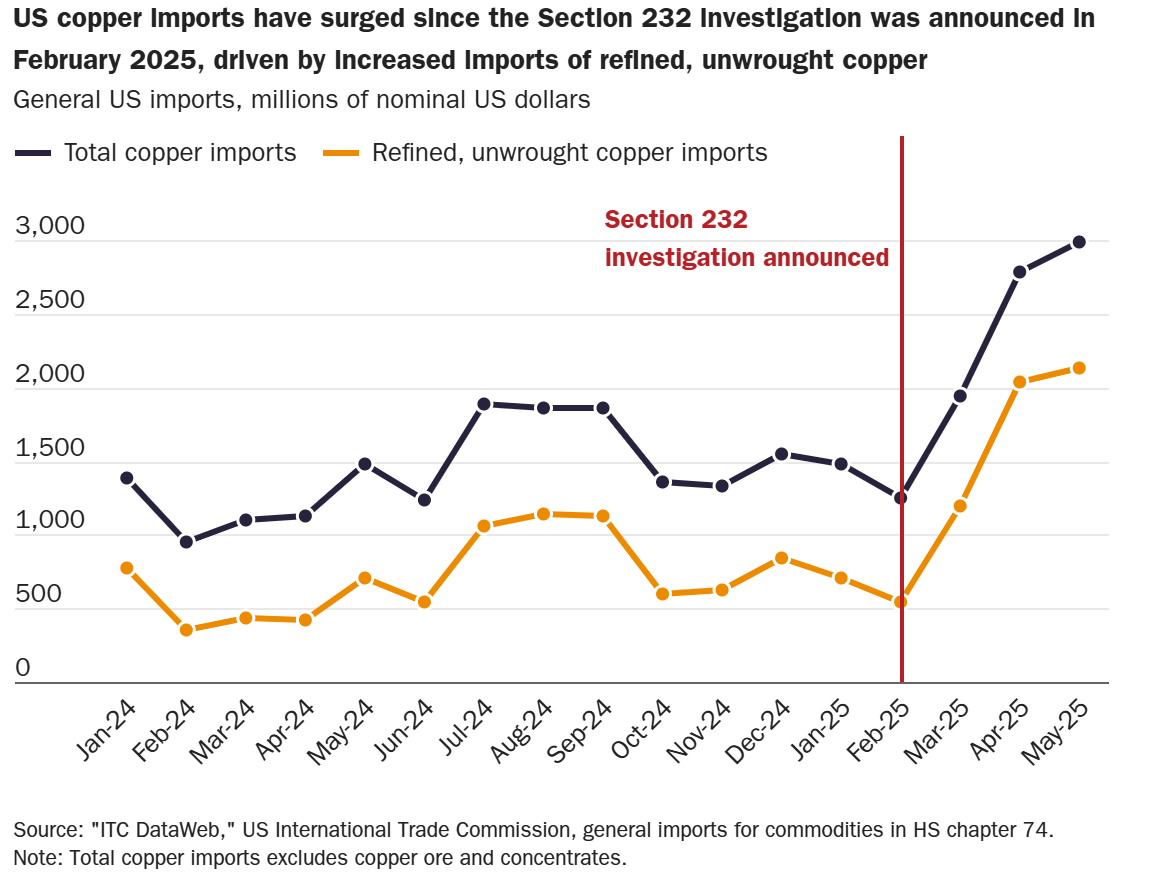
This is for information and illustrative purposes only.
Since the review began, importers have scrambled to beat the tariff clock, resulting in a surge in U.S. copper imports.
The influx of copper products like rods and bars jumped over 50% year-on-year. In April and May alone, the U.S. imported over 200,000 tons of refined copper each month, setting new records.
Comex copper inventories hit their highest levels in over a decade. By July 2025, according to S&P Global, the U.S. had enough copper in stock to cover 9-12 months of expected consumption.
As tariffs take effect, the global copper supply-demand balance is expected to stabilize.
2. A New Dawn for U.S. Copper?
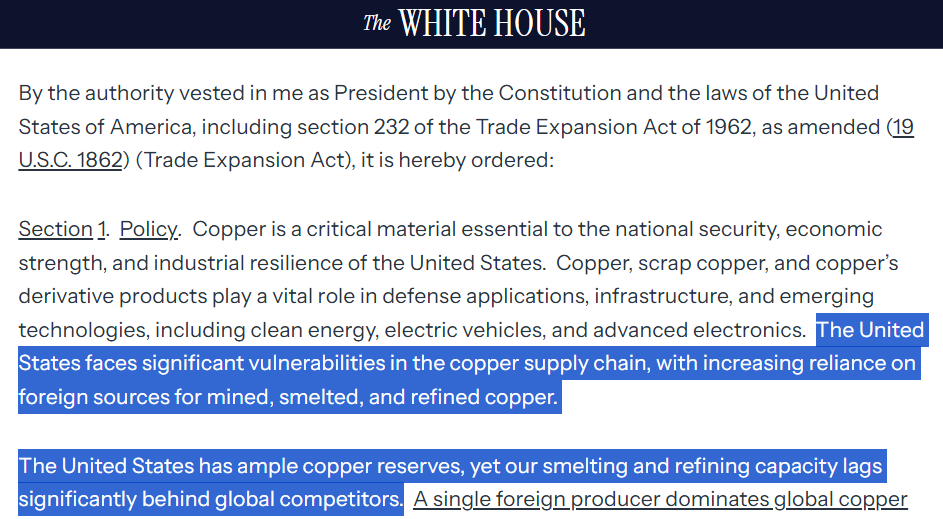
Trump's executive order highlighted "significant vulnerabilities in the copper supply chain, with increasing reliance on foreign sources... The United States has ample copper reserves, yet our smelting and refining capacity lags significantly behind global competitors."
This is for information and illustrative purposes only.
Currently, the U.S. has only two copper refineries: one run by $Freeport-McMoRan (FCX.US)$ in Arizona and another by $Rio Tinto (RIO.US)$ in Utah. With 25 mines mainly in Arizona, the U.S. copper scene is sparse.
By raising tariffs, domestic copper producers are expected to gain a competitive edge, spurring local production and attracting investment in mining and refining.
But remember, Rome wasn't built in a day. America's lack of investment in copper mining and refining is a long-standing issue that tariffs alone won't fix overnight.
Building refineries is quicker, taking a few years, but it demands hefty capital and energy. Mining is a slow beast, averaging 29 years in the U.S., one of the longest cycles globally.
"We do not believe it is possible for the U.S. to become self-sufficient in copper from a 'mine-to-customer' basis over the next decade," a Jefferies analyst noted.
3. Investing in Copper
Given copper's relatively low unit value, ETFs tracking copper prices can struggle with roll yield, failing to outperform spot prices over time. We've covered this in our oil ETF lesson.
>> Learn more: Why do oil ETFs lag behind oil prices in the long run?
Owning shares in copper companies might be a more viable way to participate in any future copper price increases.
If you decide to invest in mining stocks, knowing the industry and the companies is crucial.
Note that some companies have other metal-related businesses in addition to copper. For example, Rio Tinto and BHP are two of the world's largest iron ore giants. Additionally, the copper tariff policy primarily benefits domestic U.S. producers.
You can use moomoo's "Revenue Breakdown" feature to examine a company's business and regional exposure, aiding your investment decisions.
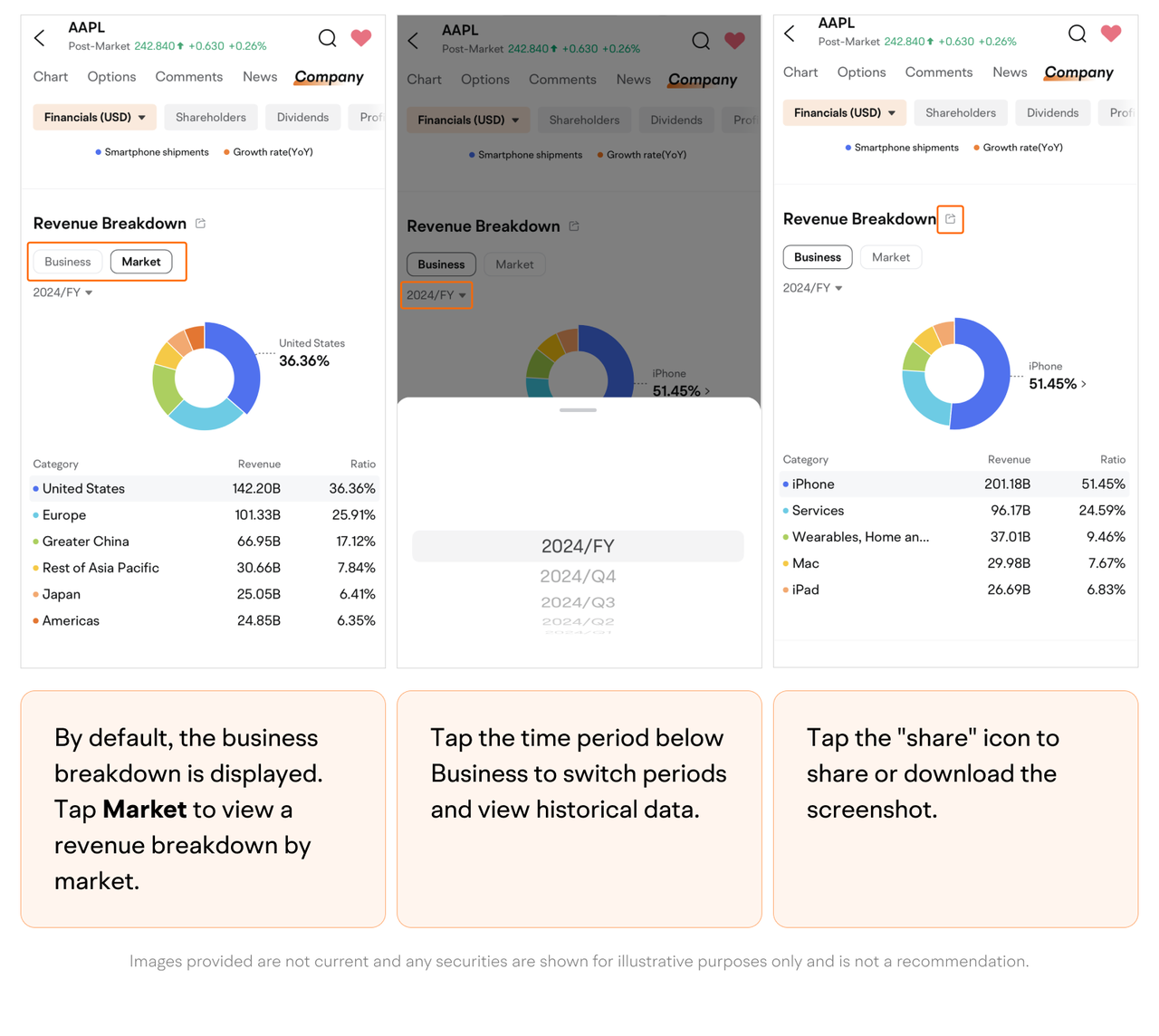
For those who prefer not to dive into individual mining stocks, copper company ETFs offer a diversified approach, though they can't shield you from industry-wide issues.
This presentation is for informational and educational use only and is not a recommendation or endorsement of any particular investment or investment strategy. Investment information provided in this content is general in nature, strictly for illustrative purposes, and may not be appropriate for all investors. Read more