Protective Puts: How to Protect Your Portfolio
Why long term investors consider “insurance” for their stocks
When you are investing, market volatility is part of the process. Prices can pull back, paper gains can shrink, and positions can move into loss. At that point, many investors face the same dilemma:
Sell and risk missing future upside
Hold and risk further downside
A protective put is designed to help manage this exact situation. It allows you to stay invested while putting a limit on potential losses.
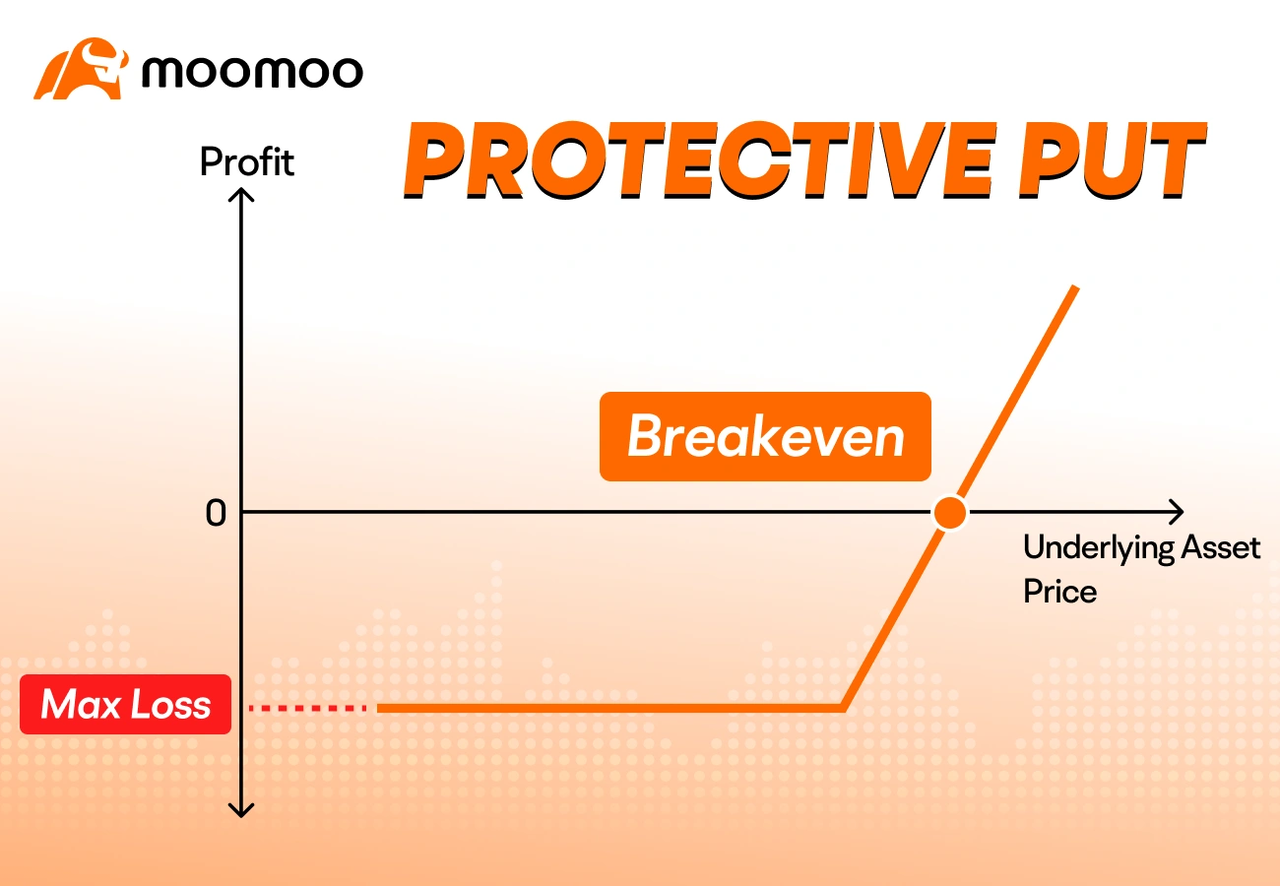
What is a protective put?
A protective put is an options strategy where you:
Hold a stock
Buy a put option on the same stock
A put option gives you the right to sell your shares at a set price, known as the strike price, before the option expires.
If the stock falls below the strike price, you can sell at that level
If the stock stays above the strike price, the option expires and you keep your shares
The premium you pay for the option is the cost of protection
Think of it as insurance for your portfolio.
Why investors use this strategy
1. Caps your downside risk
By paying a relatively small premium, you set a minimum exit price for your shares. This limits how much you can lose if the market falls.
2. Keeps your upside intact
If the stock continues to rise, you still benefit from the full upside. The only cost is the premium paid for protection.
3. Simple to manage
There is no need to constantly trade in and out of your position. You either exercise the option if needed or let it expire.
This makes it well suited to long term investors who want protection without overcomplicating their strategy.
Scenario analysis
Let’s walk through a simplified example to show how this works in practice. These figures are for illustration only.
Setup
You hold 1,000 shares of a stock at $190
You want to protect against downside over the next 3 months
You buy put options with:
Strike price: $185
Premium: $4 per share
Contracts: 10 (each covering 100 shares)
Total cost: $4,000
Scenario 1: the stock falls below the strike
Market movement: The stock drops to $178 within 3 months.
Action: You exercise the put and sell your shares at $185.
Outcome
Sale proceeds: $185,000
After premium: $181,000
Without protection, selling at $178 would return $178,000.
Result:You avoided an additional $3,000 loss.
Key takeaway: Your downside is capped. The protective put acts as a safety net.
Scenario 2: the stock moves sideways
Market movement: The stock trades between $186 and $189.
Action: The option expires unused.
Outcome
Loss: $4,000 premium
You continue holding your shares
Key takeaway: You paid for protection, but avoided making reactive decisions during uncertainty.
Scenario 3: the stock rises strongly
Market movement: The stock rises to $210.
Action: The option expires unused.
Outcome
Premium cost: $4,000
Share gains: $20,000
Net gain: $16,000
Key takeaway: You keep the full upside, minus the cost of protection.
Scenario 4: the stock falls, then recovers
Market movement: The stock drops to $180 early, then recovers to $198 by expiry.
Two possible approaches
Option 1: close the put early
Sell the option when price recovers
Recover part of the premium (for example $1,500)
Net cost: $2,500
Option 2: hold to expiry
Option expires worthless
Full premium cost: $4,000
Shares gain $8,000
Key takeaway: You can adjust your approach as the market evolves. The strategy gives flexibility, not just protection.
Important considerations
It is not a profit tool: The premium is a fixed cost. If the stock does not fall, that cost is not recovered
Strike price matters: Lower strike prices are cheaper but offer less protection. Higher strike prices cost more but provide stronger downside coverage
Liquidity matters: Choose actively traded options to ensure you can enter and exit positions efficiently
Summary
A protective put does not eliminate risk, but it helps you balance long term investing with short term uncertainty.
By paying a defined cost, you create a safety net for your portfolio while staying invested in your long term view.
For investors with concentrated positions or concerns about market volatility, it can be a practical way to manage risk without stepping out of the market.
Risk warning: This information is general in nature and has been prepared without considering your financial objectives, situation or needs. Consider the appropriateness of this information in light of your personal circumstances before making investment decisions. Options trading involves substantial risks and may not be suitable for all investors. Losses could potentially exceed your initial investment. Please consider our Financial Services Guide (FSG), US Options Product Disclosure Statement (PDS) and US Options Target Market Determination (TMD) available on moomoo.com/au before trading options with us.
This presentation is for informational and educational use only and is not a recommendation or endorsement of any particular investment or investment strategy. Investment information provided in this content is general in nature, strictly for illustrative purposes, and may not be appropriate for all investors. Read more
Recommend

How to Place Option Orders on Moomoo Desktop
How to Analyze an Option in depth

Understanding Selling Puts: A Structured Way to Buy The Dip

Understanding the Function of Call Options in Upward Trend
Analysing Earnings: Is This Company Worth a Long Term Position?
Understanding Balance Sheets: How to Assess a Company’s Risk
Protective Puts: How to Protect Your Portfolio
Why Trading Options Takes More Than Picking The Right Company
Understanding Call and Put Options
Master 5 Terms to Read an Options Chain
Trading with Limited Capital: Why Options Can Be More Capital Efficient Than Shares
Avoid the trap: don’t buy cheap options blindly
Avoid pitfalls: expiration choices explained
Master these 5 terms to confidently read an options chain
Understanding Options : A Beginner's Guide
Options P/L Curve Tutorial: Simulate your Options Trade to Visualize Potential Profit and Loss
Exercise, Let expire or Close. Three Smart Moves
10-Minute Guide to Understanding Options
Top 0DTE Options by Volume: Start Trading Mag 7 Stock Options Today
Options Ticks: Capture real-time options market actions
Options Price Calculator: How to calculate the future price of an option
Gamma Exposure (GEX): Understanding Dealer Hedging Flows, and Key Levels
Options Seller Dashboard:Quickly Find High-ROI Options Contracts
Volatility Analysis: IV / HV / IV Rank / IV Percentile
Volatility Analysis: Volatility Term Structure / Volatility Smile
Volatility Analysis: How to estimate an option's value more accurately?
Options Unusual Activity: how to potentially monitor the moves of institutional investors
Open Interest Analysis: How to potentially grasp the market's capital flow?
How to Place Option Orders on Moomoo Desktop
How to Analyze an Option in depth
Understanding Selling Puts: A Structured Way to Buy The Dip
Understanding the Function of Call Options in Upward Trend
Analysing Earnings: Is This Company Worth a Long Term Position?
Understanding Balance Sheets: How to Assess a Company’s Risk
Protective Puts: How to Protect Your Portfolio
Why Trading Options Takes More Than Picking The Right Company
Understanding Call and Put Options
Master 5 Terms to Read an Options Chain
Trading with Limited Capital: Why Options Can Be More Capital Efficient Than Shares
Avoid the trap: don’t buy cheap options blindly
Avoid pitfalls: expiration choices explained
Master these 5 terms to confidently read an options chain
Understanding Options : A Beginner's Guide
Options P/L Curve Tutorial: Simulate your Options Trade to Visualize Potential Profit and Loss
Exercise, Let expire or Close. Three Smart Moves
10-Minute Guide to Understanding Options
Top 0DTE Options by Volume: Start Trading Mag 7 Stock Options Today
Options Ticks: Capture real-time options market actions
Options Price Calculator: How to calculate the future price of an option
Gamma Exposure (GEX): Understanding Dealer Hedging Flows, and Key Levels
Options Seller Dashboard:Quickly Find High-ROI Options Contracts
Volatility Analysis: IV / HV / IV Rank / IV Percentile
Volatility Analysis: Volatility Term Structure / Volatility Smile
Volatility Analysis: How to estimate an option's value more accurately?
Options Unusual Activity: how to potentially monitor the moves of institutional investors
Open Interest Analysis: How to potentially grasp the market's capital flow?