
Moomoo Insights
Jul 16 15:38
TSMC Earnings: AI Demand Is Stronger Than the Chip Selloff Suggests
Moomoo Insights
Sep 30 05:04
Live Take | Anthropic’s $518B Compute Bet: Who Wins From the AI Buildout?
Have you heard about index options?
Unlike stock options that are tied to individual companies, these options are based on market indices.
They come with several features:
cash settlements, no early assignment risk, and potential tax advantages, which make them appealing for some traders.
But remember, the stock market is always in flux. A strong understanding of index options is crucial, especially being aware of potential risks.
Let's take a closer look at index options and how you can access them on moomoo.
An index option is a financial contract based on a stock market index, like the S&P 500, which represents the performance of about 500 major companies and reflects the overall US stock market.
Index options let you trade in the direction you expect the entire market to move, whether you think it will rise, fall, or stay relatively stable.
When you trade options on the S&P 500, for example, you're speculating on the general movement of the market, rather than on the performance of individual companies.
Moreover, a broad market index is less vulnerable to company-specific events such as management turnover or financial missteps.
This is because an index is made up of a diverse group of stocks, so the impact of any single company's issues is diluted.
• Broader Market Exposure
• Lowered Volatility and Diversification
Potential to Generate income.
Help Protect your portfolio against declines.
• Tax Efficiency*
60% of gains and losses are considered long-term; 40% are short-term.
Benefit from potentially lower tax rates on returns.
Note: Under section 1256 of the Tax Code, profit and loss on transactions in certain exchange-traded options, including SPX Options, are entitled to be taxed at a rate equal to 60% long-term and 40% short-term capital gain or loss, provided that the investor involved and the strategy employed satisfy the criteria of the Tax Code. Investors should consult with their tax advisors to determine how the profit and loss on any particular option strategy will be taxed. Tax laws and regulations change from time to time and may be subject to varying interpretations.
Moomoo offers 10 different sets of index options that encompass the needs of most investors.
Whether you're targeting popular market indexes or seeking specialized options, you can find the right option to match your trading strategy.
Index options differ from equity or ETF options in several ways. Let's examine the potential benefits of trading index options.
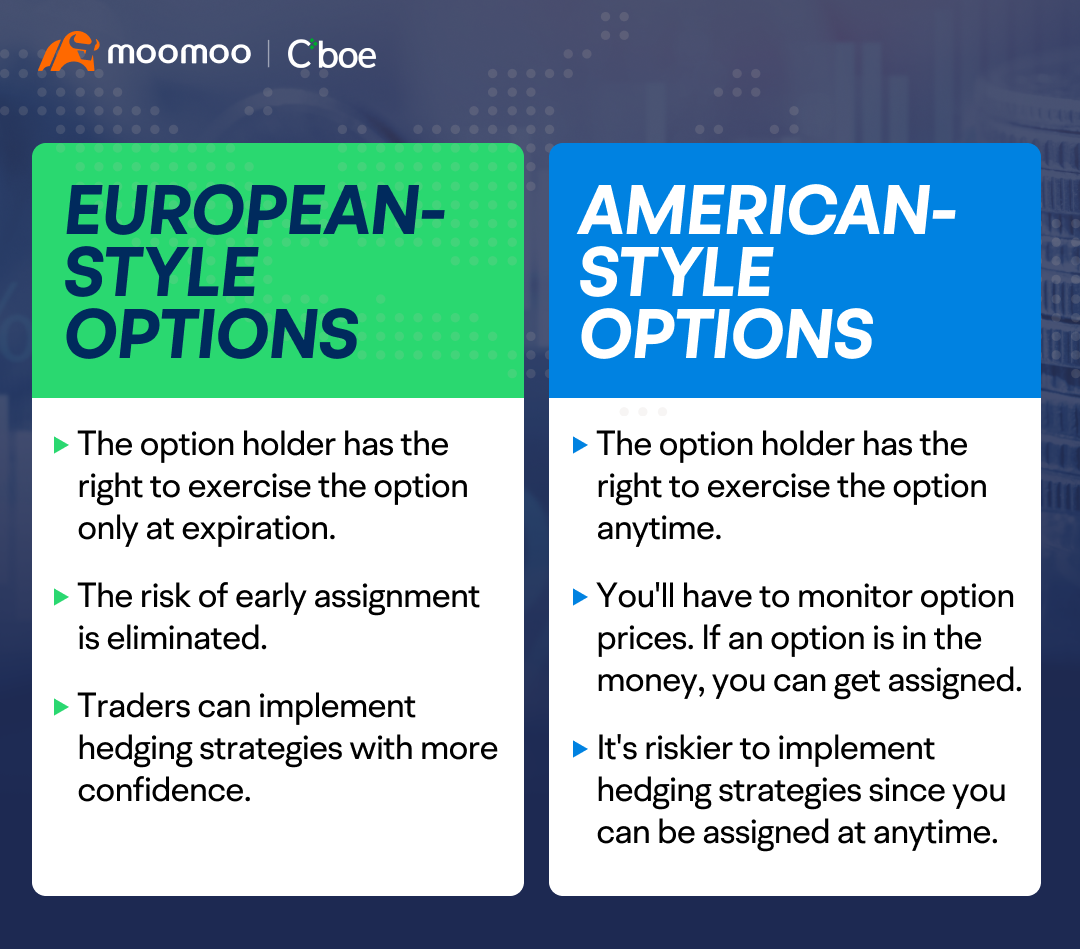
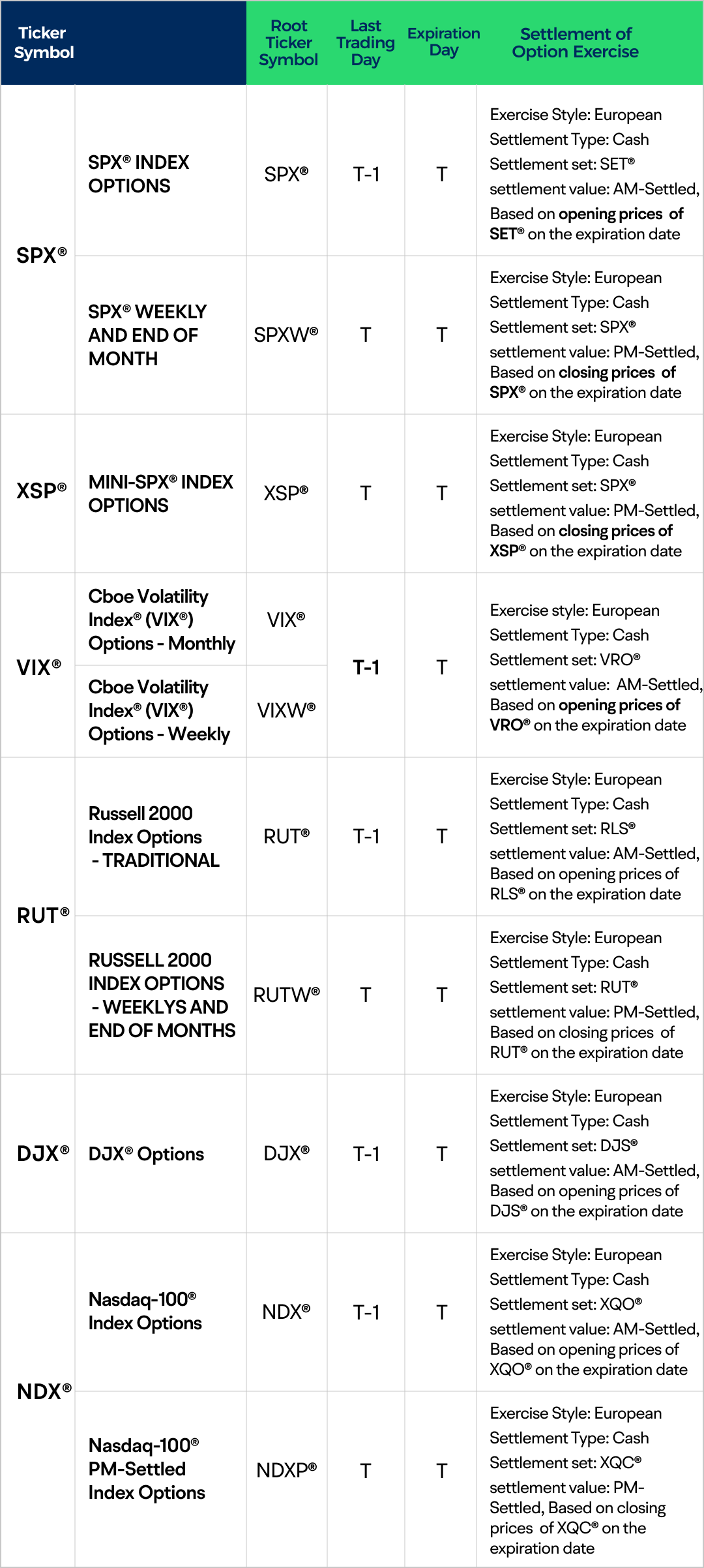
Unlike stock options that involve the exchange of physical shares, index options are cash-settled because you can't trade the underlying index itself.
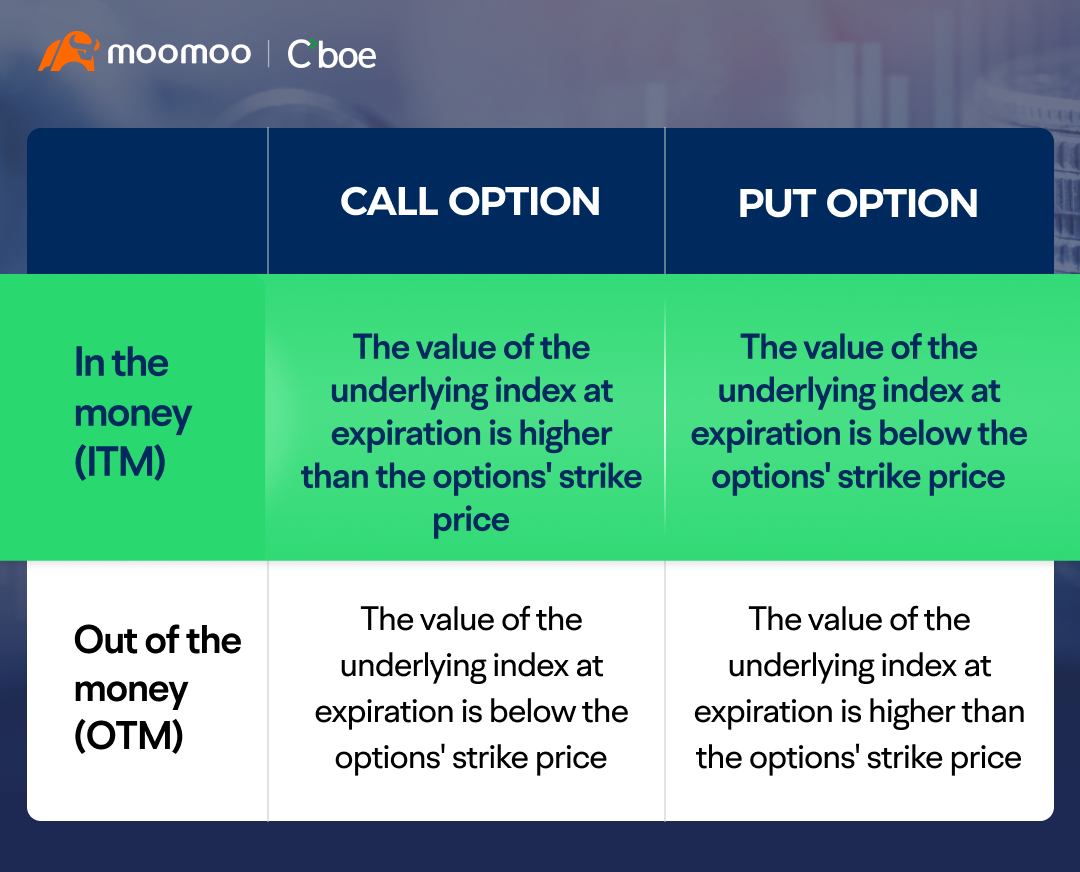
At expiration, the option's value is determined by the difference between the strike price and the settlement price, with the resulting profit or loss directly reflected in your account. (See the table below for details.)
Take SPX index options as an example:
If you hold an SPX call option with a strike price of 4,420 and SPX settles at 4432 at expiration, your option's settlement value is calculated as (4432 - 4420) × 100, resulting in a $1,200 profit.
If SPX settles at 4418, the option expires worthless, and the settlement value is $0.
Note: the contract multiplier for SPX index options is 100.
The size of an option contract is calculated by multiplying the option's contract multiplier by its strike price.
Generally, index options have a larger contract size compared to ETF options.
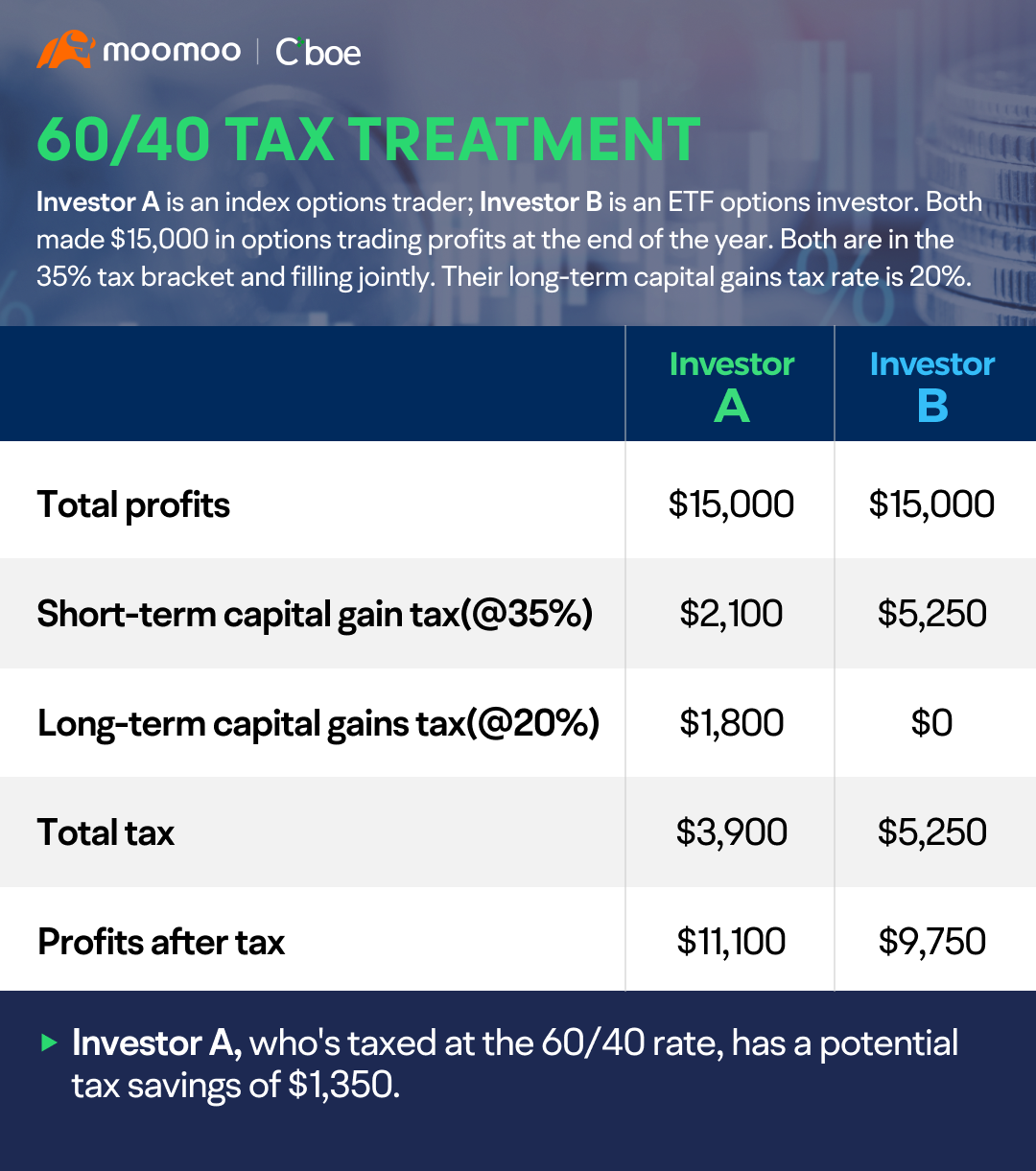
Index options receive favorable tax treatment as they are classified as Section 1256 contracts.
Regardless of how long they are held, 60% of the gains are taxed at the long-term capital gains rate, and 40% at the short-term rate.
Conversely, taxes on equity and ETF options depend on how long they are held. If held for less than a year, gains are taxed as short-term;
if held for over a year, they're taxed as long-term capital gains, which vary based on income.
Since most options are held for short periods, typically under a year, trading index options can offer a tax advantage, with a larger portion of the profits being taxed at the lower long-term rate. However, this benefit does not apply to tax-exempt accounts like IRAs.
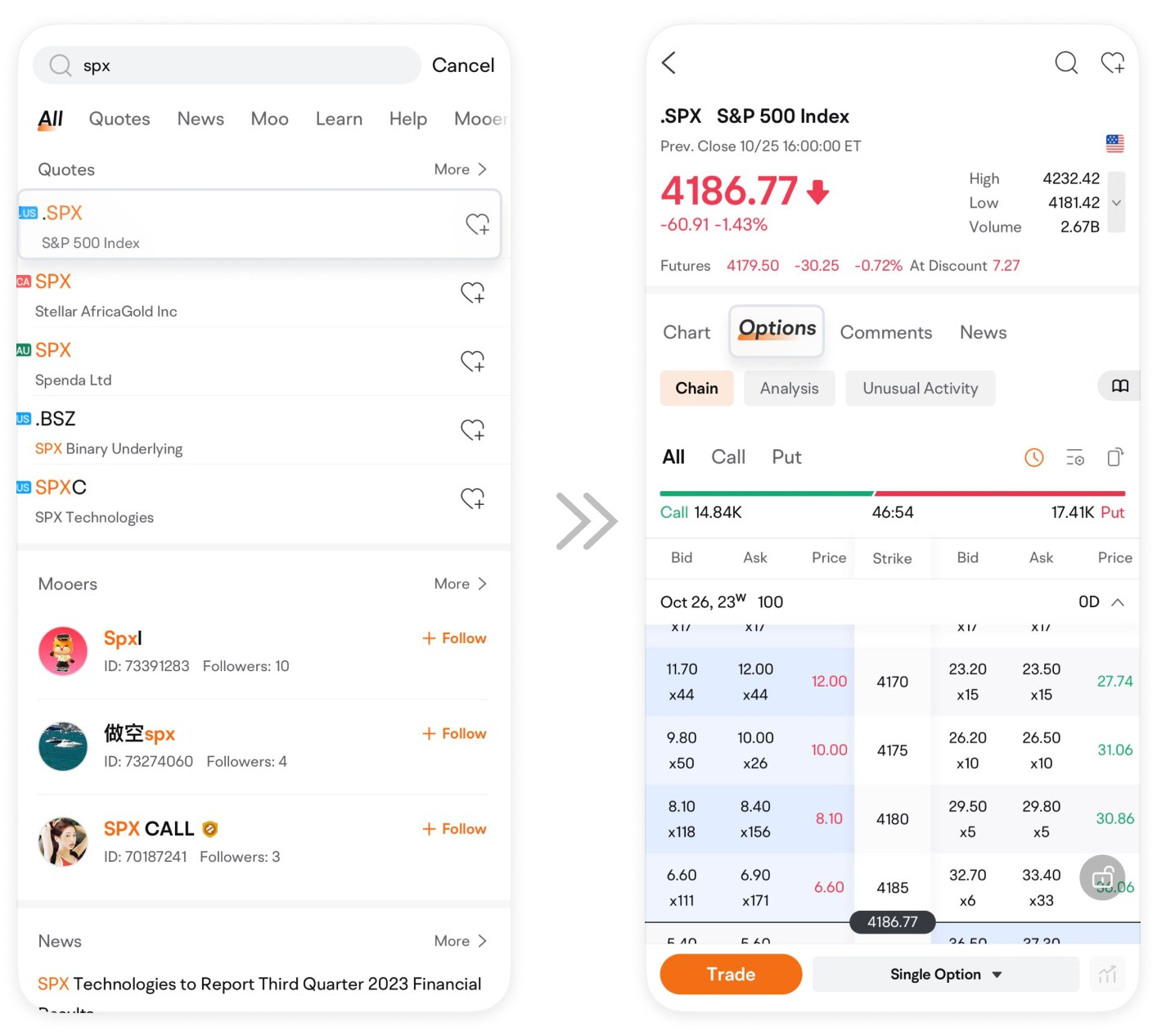
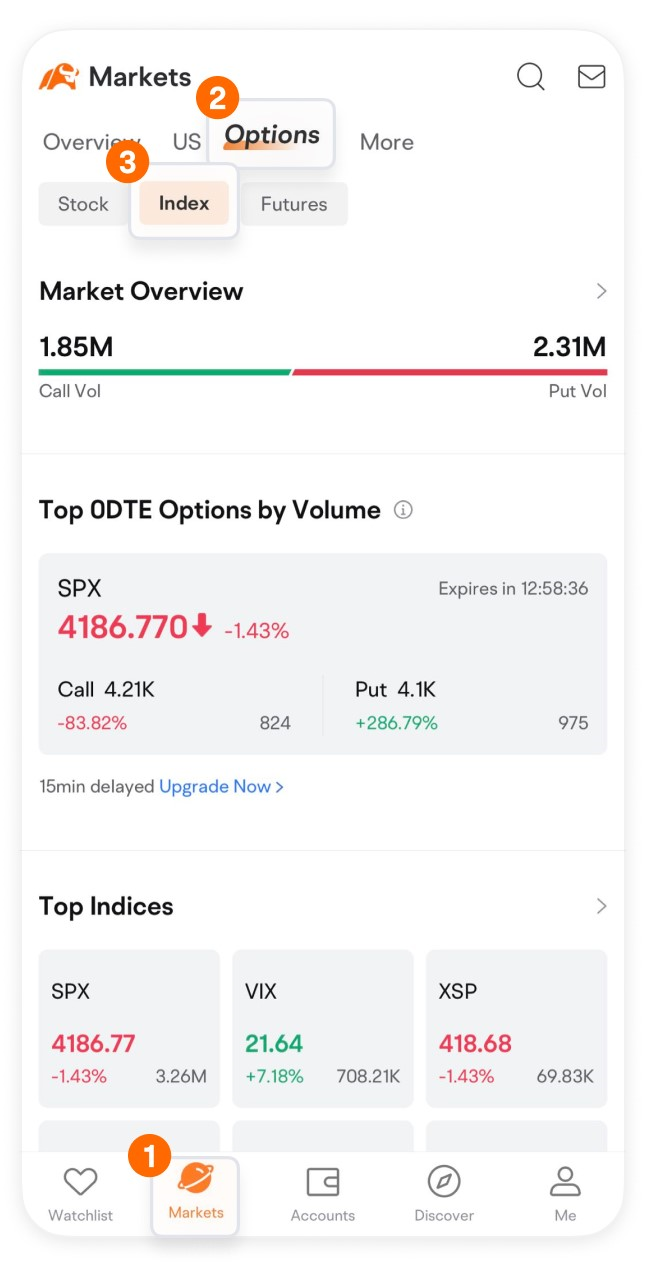
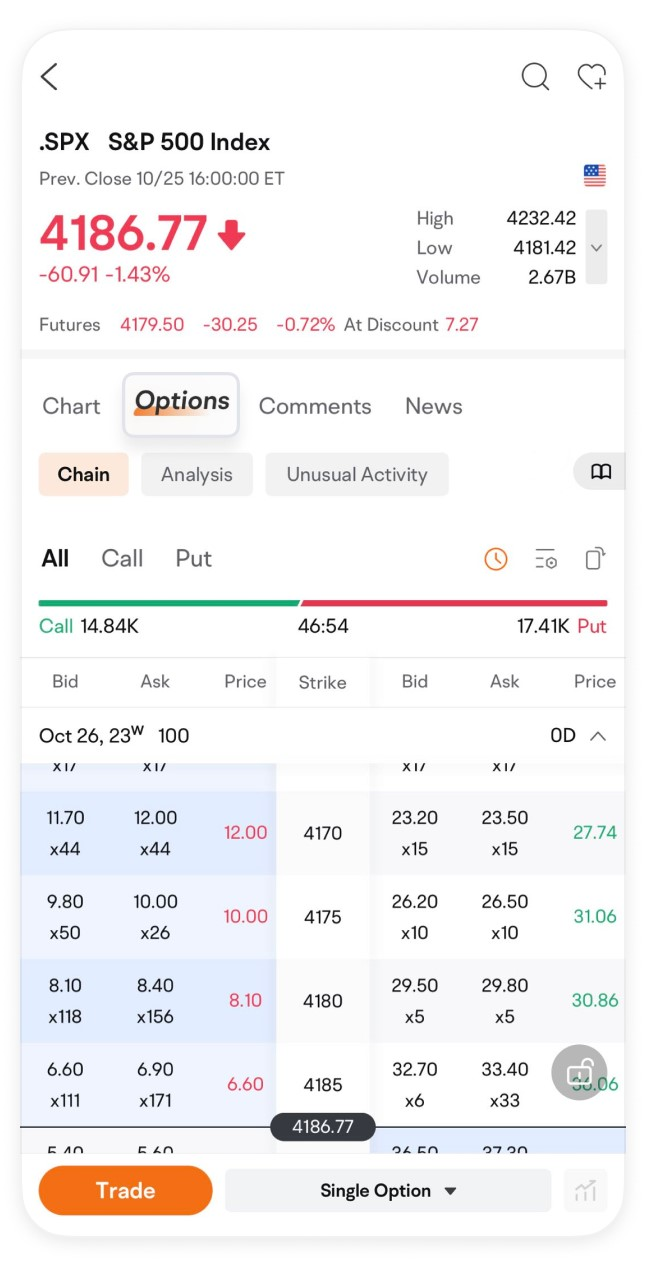
Pathway 1: Open moomoo and search for the index that you're interested in. Let's use SPX as an example (for eductional purposes only).
Pathway 2: Tap on Markets > Options > Index to view market overview, top indices, and option rankings.
Note: Any app images provided are not current and any securities shown are for illustrative purposes only and is not a recommendation.
Tap on your desired index option to enter its detailed quotes page for trading.
Then you can use features such as Analysis and Unusual Activities to help you make more informed decisions.
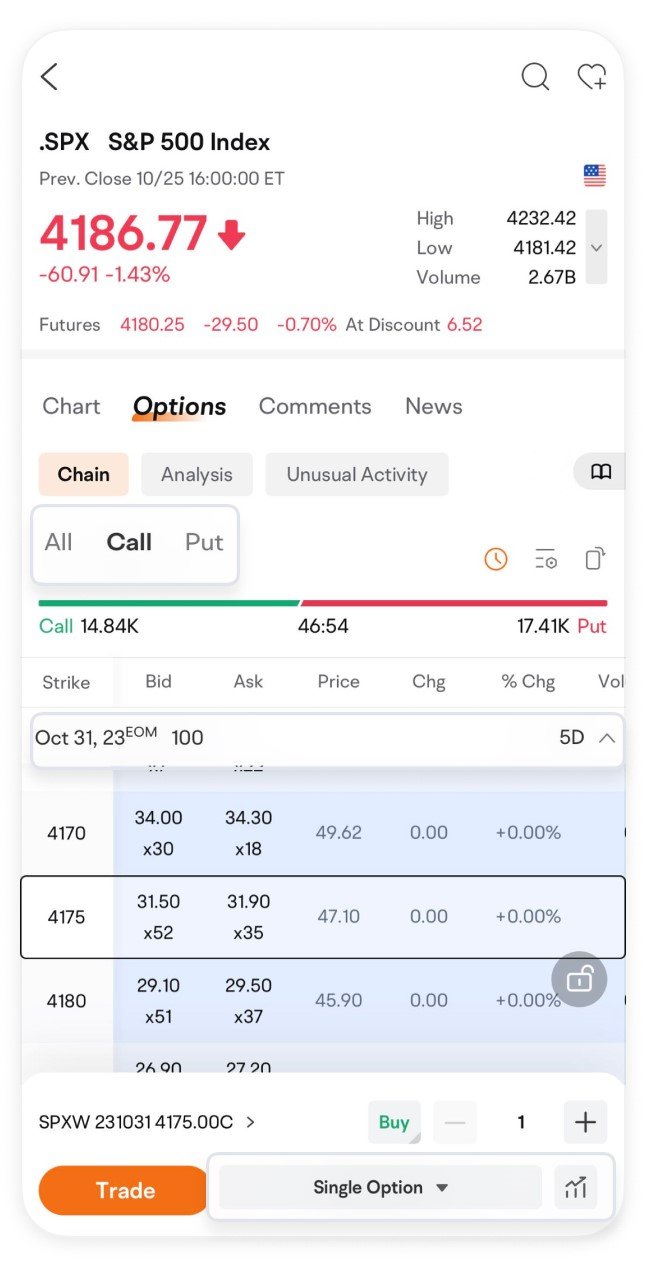
The steps for entering a trade for index options are the same as stock options.
On the options chain page, select Call or Put, choose a trading strategy, select an expiration date and price, and tap on the trade button to place your order.
Note: Any app images provided are not current and any securities shown are for illustrative purposes only and is not a recommendation.
Regular trading day:
9:30a.m-16:15p.m ET
Last trading day:
AM-settled index options:
9:30a.m-16:15p.m ET
PM-settled index options: 9:30a.m-16:00p.m ET
Moomoo Financial above trading sessions, moomoo does not support other trading sessions for index options.
The follow strategies are eligible for margin requirement reductions:
Vertical Spread
Short Straddle
Short Strangle
Butterfly
Condor
Long Calendar Spread
Long Diagonal Spread
The rules on margin requirement reductions are the same for index and stock options. For more information, refer to the help article "Margin Requirements for Options Strategies".
This presentation is for informational and educational use only and is not a recommendation or endorsement of any particular investment or investment strategy. Investment information provided in this content is general in nature, strictly for illustrative purposes, and may not be appropriate for all investors. Read more
Recommend
How Short Put Works: Earning Premiums with Options
How the Options Market Can Signal When Earnings Events Are Too Risky to Trade
Options Earnings Series 1: What's Behind the Rise and Fall of Stock Prices After Earnings?

Options Earnings Series 2: Option Buying and Selling Strategies for Earnings
Options Earnings Series 3: Exploring Common Two-Legged Option Strategies for Earnings Season
Never Be Surprised Again: Understand the Eight Common Market Reactions to Earnings
Why Stocks Drop After Beating Earnings: 6 Key Reasons Behind the Post-Earnings Slump
Earnings unlocked: how options might enhance your trading approach
What should options buyers do if they no longer want to exercise their options?
Why did options buyers' exercise request fail?
A Closer Look at 0DTE Options: Short-Term Trading Explained
Approaching Post-Earnings IV Crush With Options
How to Hedge a Market Downturn with Options:Here's what you need to know
A Guide to the Long Put Strategy: Basics You Need to Know
Understanding Witching Days: What Investors and Traders Need to Know
Understanding Implied Volatility in Options Trading
Discovering Protective Puts: A Beginner's Guide
Why Investors May Consider Cash-Secured Puts in a Downturn
Why Pre-Earnings Volatility Attracts Option Traders
The Wheel Strategy: An Income Generating Options Strategy
What's next for a Short Put?
Long Call Options Strategy: Definition, Potential Benefits, and Risks
Short Put Options Strategy in Options Trading
How to set up a Short Put on moomoo?
What's next for a Long Put?
What is a Short Put?
Who are involved in the option exercise process?
Essential rules to understand about exercising options
When should options buyers exercise?
How can options sellers manage risk?
How does options buyers exercise their option?
What is XSP®
Closing vs. Exercising Options: What's the difference?
What's next for a Short Call?
How to set up a Short Call on moomoo
What is a Short Call?
What's next for a Long Call?
Understanding the Benefits of Index Options
XSP® vs SPY®
XSP® Use Cases
How to set up a Long Call on moomoo?
What is SPX®
Dispelling the Myths of Trading Index Options
What is a Long Call?
Short Put Butterfly
What Are Index Options and How Do They Work
Long Diagonal Bull Call Spread
Short Diagonal Bull Put Spread
Long Diagonal Bear Put Spread
Short Diagonal Bear Call Spread
Long Call Butterfly
Short Iron Butterfly
Short Call Butterfly
Long Put Butterfly
Bear Call Spread
Short Iron Condor
Covered Put
Short Put Condor
Bull Put Spread
Bull Call Spread
Long Collar
Short Strangle
Long Strangle
Long Iron Butterfly
Protective Put
Long Iron Condor
Long Put
Short Straddle
Short Call
Cash-Secured Put
Short Put
Long call
Index Options: An Introduction for Traders
Protective Call
Long Call Condor
Short Call Condor
Long Straddle
Long Put Condor
Short Collar
Bear Put Spread
Covered Call
How Short Put Works: Earning Premiums with Options
How the Options Market Can Signal When Earnings Events Are Too Risky to Trade
Options Earnings Series 1: What's Behind the Rise and Fall of Stock Prices After Earnings?
Options Earnings Series 2: Option Buying and Selling Strategies for Earnings
Options Earnings Series 3: Exploring Common Two-Legged Option Strategies for Earnings Season
Never Be Surprised Again: Understand the Eight Common Market Reactions to Earnings
Why Stocks Drop After Beating Earnings: 6 Key Reasons Behind the Post-Earnings Slump
Earnings unlocked: how options might enhance your trading approach
What should options buyers do if they no longer want to exercise their options?
Why did options buyers' exercise request fail?
A Closer Look at 0DTE Options: Short-Term Trading Explained
Approaching Post-Earnings IV Crush With Options
How to Hedge a Market Downturn with Options:Here's what you need to know
A Guide to the Long Put Strategy: Basics You Need to Know
Understanding Witching Days: What Investors and Traders Need to Know
Understanding Implied Volatility in Options Trading
Discovering Protective Puts: A Beginner's Guide
Why Investors May Consider Cash-Secured Puts in a Downturn
Why Pre-Earnings Volatility Attracts Option Traders
The Wheel Strategy: An Income Generating Options Strategy
What's next for a Short Put?
Long Call Options Strategy: Definition, Potential Benefits, and Risks
Short Put Options Strategy in Options Trading
How to set up a Short Put on moomoo?
What's next for a Long Put?
What is a Short Put?
Who are involved in the option exercise process?
Essential rules to understand about exercising options
When should options buyers exercise?
How can options sellers manage risk?
How does options buyers exercise their option?
What is XSP®
Closing vs. Exercising Options: What's the difference?
What's next for a Short Call?
How to set up a Short Call on moomoo
What is a Short Call?
What's next for a Long Call?
Understanding the Benefits of Index Options
XSP® vs SPY®
XSP® Use Cases
How to set up a Long Call on moomoo?
What is SPX®
Dispelling the Myths of Trading Index Options
What is a Long Call?
Short Put Butterfly
What Are Index Options and How Do They Work
Long Diagonal Bull Call Spread
Short Diagonal Bull Put Spread
Long Diagonal Bear Put Spread
Short Diagonal Bear Call Spread
Long Call Butterfly
Short Iron Butterfly
Short Call Butterfly
Long Put Butterfly
Bear Call Spread
Short Iron Condor
Covered Put
Short Put Condor
Bull Put Spread
Bull Call Spread
Long Collar
Short Strangle
Long Strangle
Long Iron Butterfly
Protective Put
Long Iron Condor
Long Put
Short Straddle
Short Call
Cash-Secured Put
Short Put
Long call
Index Options: An Introduction for Traders
Protective Call
Long Call Condor
Short Call Condor
Long Straddle
Long Put Condor
Short Collar
Bear Put Spread
Covered Call

