
Moomoo Insights
Jul 16 15:38
TSMC Earnings: AI Demand Is Stronger Than the Chip Selloff Suggests
Moomoo Insights
Sep 30 05:04
Live Take | Anthropic’s $518B Compute Bet: Who Wins From the AI Buildout?
You may consider a long iron condor when you expect the price of an underlying asset to move beyond a certain price range and want to limit risk.
A long iron condor strategy involves trading four options of the same underlying asset.
● Sell a put1
● Buy a put2
● Buy a call1
● Sell a call2
Put1, put2, call1and call2 have the same expiration date but different strike prices.
Strike price: put1<put2<call1<call2, and="" put2-put1="call2-call1</p"></put2<call1<call2,>
A long iron condor strategy consists of selling a put with the lowest strike, buying another put with the second lowest strike, buying a call with the second highest strike, and selling another call with the highest strike.
The distance between the calls is equal to that of the puts. All options have the same expiration date.
A long iron condor is also a combination of two strategies: a bull call spread and a bear put spread, or a long strangle and a short strangle.
This strategy potentially has limited maximum profit and limited risk before the contracts expire. You can potentially get the maximum profit if the asset price moves above the highest strike price or below the lowest strike price at expiration.
A long iron condor has a similar profit-loss pattern to the short call/put condor strategies. The difference is that the long iron condor is a net debit strategy, while the short call/put condor strategies are net credit strategies.
When using this strategy, you should pay attention to the cost (including commissions) because it includes at least four option trades. It is important to ensure a risk/reward ratio.
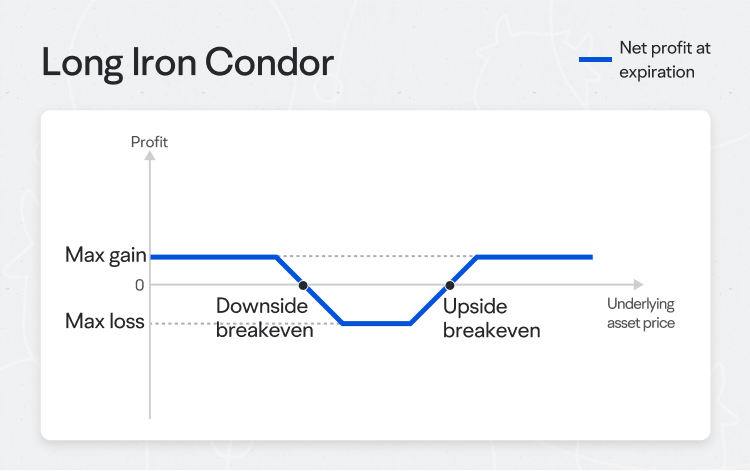
● Breakeven
Upside Breakeven = Second Highest Call Strike + Net Premium Paid.
Downside Breakeven = Second Lowest Put Strike - Net Premium Paid.
● Max gain
Max Gain = Highest Call Strike – Middle Higher Call Strike - Net Premium Paid
● Max loss
Net premium paid
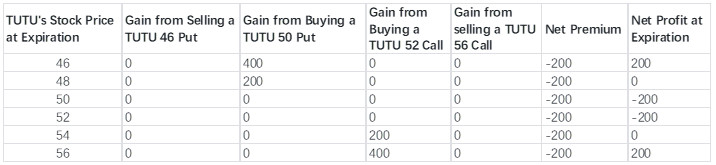
Suppose a theoretical stock called TUTU is on Nasdaq currently trading at $52.
You expect its price will very likely move above $56 or below $48. So you decide to use a long iron condor:
● Sell a $1 TUTU put with a strike of $46
● Buy a $2 TUTU put with a strike of $50
● Buy a $2 TUTU call with a strike of $52
● Sell a $1 TUTU call with a strike of $56
(The following calculations do not include transaction costs.)
This presentation is for informational and educational use only and is not a recommendation or endorsement of any particular investment or investment strategy. Investment information provided in this content is general in nature, strictly for illustrative purposes, and may not be appropriate for all investors. Read more
Recommend

How Short Put Works: Earning Premiums with Options

How the Options Market Can Signal When Earnings Events Are Too Risky to Trade

Options Earnings Series 1: What's Behind the Rise and Fall of Stock Prices After Earnings?

Options Earnings Series 2: Option Buying and Selling Strategies for Earnings
Options Earnings Series 3: Exploring Common Two-Legged Option Strategies for Earnings Season
Never Be Surprised Again: Understand the Eight Common Market Reactions to Earnings
Why Stocks Drop After Beating Earnings: 6 Key Reasons Behind the Post-Earnings Slump
Earnings unlocked: how options might enhance your trading approach
What should options buyers do if they no longer want to exercise their options?
Why did options buyers' exercise request fail?
A Closer Look at 0DTE Options: Short-Term Trading Explained
Approaching Post-Earnings IV Crush With Options
How to Hedge a Market Downturn with Options:Here's what you need to know
A Guide to the Long Put Strategy: Basics You Need to Know
Understanding Witching Days: What Investors and Traders Need to Know
Understanding Implied Volatility in Options Trading
Discovering Protective Puts: A Beginner's Guide
Why Investors May Consider Cash-Secured Puts in a Downturn
Why Pre-Earnings Volatility Attracts Option Traders
The Wheel Strategy: An Income Generating Options Strategy
What's next for a Short Put?
Long Call Options Strategy: Definition, Potential Benefits, and Risks
Short Put Options Strategy in Options Trading
How to set up a Short Put on moomoo?
What's next for a Long Put?
What is a Short Put?
Who are involved in the option exercise process?
Essential rules to understand about exercising options
When should options buyers exercise?
How can options sellers manage risk?
How does options buyers exercise their option?
What is XSP®
Closing vs. Exercising Options: What's the difference?
What's next for a Short Call?
How to set up a Short Call on moomoo
What is a Short Call?
What's next for a Long Call?
Understanding the Benefits of Index Options
XSP® vs SPY®
XSP® Use Cases
How to set up a Long Call on moomoo?
What is SPX®
Dispelling the Myths of Trading Index Options
What is a Long Call?
Short Put Butterfly
What Are Index Options and How Do They Work
Long Diagonal Bull Call Spread
Short Diagonal Bull Put Spread
Long Diagonal Bear Put Spread
Short Diagonal Bear Call Spread
Long Call Butterfly
Short Iron Butterfly
Short Call Butterfly
Long Put Butterfly
Bear Call Spread
Short Iron Condor
Covered Put
Short Put Condor
Bull Put Spread
Bull Call Spread
Long Collar
Short Strangle
Long Strangle
Long Iron Butterfly
Protective Put
Long Iron Condor
Long Put
Short Straddle
Short Call
Cash-Secured Put
Short Put
Long call
Index Options: An Introduction for Traders
Protective Call
Long Call Condor
Short Call Condor
Long Straddle
Long Put Condor
Short Collar
Bear Put Spread
Covered Call
How Short Put Works: Earning Premiums with Options
How the Options Market Can Signal When Earnings Events Are Too Risky to Trade
Options Earnings Series 1: What's Behind the Rise and Fall of Stock Prices After Earnings?
Options Earnings Series 2: Option Buying and Selling Strategies for Earnings
Options Earnings Series 3: Exploring Common Two-Legged Option Strategies for Earnings Season
Never Be Surprised Again: Understand the Eight Common Market Reactions to Earnings
Why Stocks Drop After Beating Earnings: 6 Key Reasons Behind the Post-Earnings Slump
Earnings unlocked: how options might enhance your trading approach
What should options buyers do if they no longer want to exercise their options?
Why did options buyers' exercise request fail?
A Closer Look at 0DTE Options: Short-Term Trading Explained
Approaching Post-Earnings IV Crush With Options
How to Hedge a Market Downturn with Options:Here's what you need to know
A Guide to the Long Put Strategy: Basics You Need to Know
Understanding Witching Days: What Investors and Traders Need to Know
Understanding Implied Volatility in Options Trading
Discovering Protective Puts: A Beginner's Guide
Why Investors May Consider Cash-Secured Puts in a Downturn
Why Pre-Earnings Volatility Attracts Option Traders
The Wheel Strategy: An Income Generating Options Strategy
What's next for a Short Put?
Long Call Options Strategy: Definition, Potential Benefits, and Risks
Short Put Options Strategy in Options Trading
How to set up a Short Put on moomoo?
What's next for a Long Put?
What is a Short Put?
Who are involved in the option exercise process?
Essential rules to understand about exercising options
When should options buyers exercise?
How can options sellers manage risk?
How does options buyers exercise their option?
What is XSP®
Closing vs. Exercising Options: What's the difference?
What's next for a Short Call?
How to set up a Short Call on moomoo
What is a Short Call?
What's next for a Long Call?
Understanding the Benefits of Index Options
XSP® vs SPY®
XSP® Use Cases
How to set up a Long Call on moomoo?
What is SPX®
Dispelling the Myths of Trading Index Options
What is a Long Call?
Short Put Butterfly
What Are Index Options and How Do They Work
Long Diagonal Bull Call Spread
Short Diagonal Bull Put Spread
Long Diagonal Bear Put Spread
Short Diagonal Bear Call Spread
Long Call Butterfly
Short Iron Butterfly
Short Call Butterfly
Long Put Butterfly
Bear Call Spread
Short Iron Condor
Covered Put
Short Put Condor
Bull Put Spread
Bull Call Spread
Long Collar
Short Strangle
Long Strangle
Long Iron Butterfly
Protective Put
Long Iron Condor
Long Put
Short Straddle
Short Call
Cash-Secured Put
Short Put
Long call
Index Options: An Introduction for Traders
Protective Call
Long Call Condor
Short Call Condor
Long Straddle
Long Put Condor
Short Collar
Bear Put Spread
Covered Call

