
Moomoo Insights
Jul 16 15:38
TSMC Earnings: AI Demand Is Stronger Than the Chip Selloff Suggests
Moomoo Insights
Sep 30 05:04
Live Take | Anthropic’s $518B Compute Bet: Who Wins From the AI Buildout?
Short put options are a popular strategy in options trading, offering some investors the opportunity to potentially profit from a bullish or neutral market outlook. In this guide, we'll explain how they work, compare short and long puts as well as share some short put risks. Whether you're new to options trading or looking to expand your knowledge, understanding short put options can be important for effective portfolio management.
A short put option is a strategy where an investor sells a put option contract with the expectation that the underlying stock's price will either remain stable or increase. By selling a put option (a writer), the investor receives a premium upfront. If the stock price remains above the strike price at expiration, the option expires worthless, and the investor keeps the premium as profit. However, if the stock price falls below the strike price, the investor may be obligated to buy the stock at the strike price, resulting in potential losses.
From the sell side, an investor sells a put option contract, agreeing to buy the underlying stock at a predetermined price (strike price) if the buyer exercises the option. This strategy could potentially profit when the stock price remains above the strike price at expiration, allowing the investor to keep the premium without buying the stock.
On the buy side, an investor purchases a put option contract, gaining the right to sell the underlying stock at the strike price if desired. This strategy could potentially profit if the stock price falls below the strike price, enabling the investor to sell the stock at a higher price than the market value.
Let's consider both the sell and buy sides of a short put option scenario.
Sell side (writer of the positon): Suppose stock XYZ is trading at $50 per share, and an investor sells a put option contract with a strike price of $45 for a premium of $2 per share. If the stock price remains above $45 at expiration, the option expires worthless, and the seller keeps the $2 premium as a $200 profit (100 shares x $2) less any commissions. However, if the stock price falls below $45, the seller may be obligated to buy the stock at $45 per share if assigned on the option, resulting in potential losses.
Buy side (the options holder): A buyer purchases the same put option contract for $2 per share. If the stock price remains above $45 at expiration, the option expires worthless, and the buyer loses the premium paid. However, if the stock price falls below $45, the buyer can exercise the option of selling the stock at $45 per share.
The profit potential of a short put option strategy for a seller is limited to the premium received upfront, while the potential losses can be substantial if the stock price declines significantly below the strike price.
If the stock price remains above the strike price, the investor keeps the premium as profit.
If the stock price at expiration falls below the strike price, the investor may incur losses equal to the difference between the strike price and the stock's market price, minus the premium received.
It's essential for investors to manage their positions carefully and consider implementing risk management techniques, such as stop-loss orders, which close out the position if the underlying asset's price moves unfavorably, reaching a predefined level. This method can help limit losses on a trade.
Limit and stop orders do not guarantee that an execution will occur because the price may never reach your limit or stop price, or there are other orders ahead of yours.
Expiration risks associated with short puts are contingent on what happens at the contract's expiration date. The primary risk is the underlying asset's price falls significantly below the put option's strike price, obligating the seller to purchase the asset at a higher price than the current market value. This can result in substantial losses if the market price has dropped considerably.
Another concern is the potential for assignment risk if the put option is in-the-money prior to expiration. This occurs when the option holder exercises their right to sell the underlying asset, forcing the writer to buy the asset at the strike price. Assignment can happen independently, creating issues if the trader is not prepared or lacks sufficient capital in their account.
Besides the financial implications, short puts carry margin requirements that can change as the price of the underlying asset approaches the strike price. Brokers may issue margin calls, requiring the trader to deposit additional funds to maintain the position, adding another layer of risk and complexity. Therefore, it's crucial for traders to monitor their positions closely and be prepared for possible outcomes when writing short puts.
The main difference between a short put and a long put is a long put is a bearish strategy, while a short put is a neutral to bullish strategy. The choice between them depends on your market outlook, risk tolerance, and investment goals.
Short put: The investor sells a put option, expecting the stock price to remain stable or increase and receives a premium upfront.
Long put: The investor purchases a put option, anticipating the stock price to decrease, and potentially profits if the stock price falls below the strike price by expiration.
Keep in mind, both the long put and short have their advantages and disadvantages. They reflect opposing market views and potentially profit from different market movements.
For a step-by-step guide to trading option on Moomoo, see here:
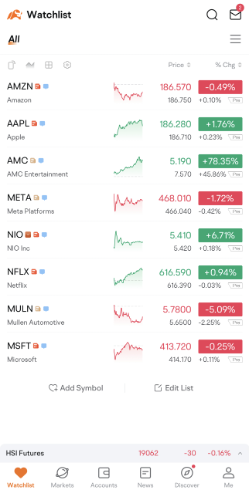
Step 1: Navigate to your Watchlist, then select a stock's "Detailed Quotes" page.
Images provided are not current and any securities are shown for illustrative purposes only and is not a recommendation.
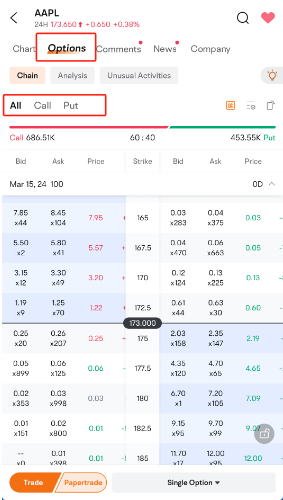
Step 2: Navigate to Options> Chain located at the top of the page.
Step 3: By default, all options with a specific expiration date are shown. For selective viewing of calls or puts, simply tap "Call/Put."
Images provided are not current and any securities are shown for illustrative purposes only and is not a recommendation.
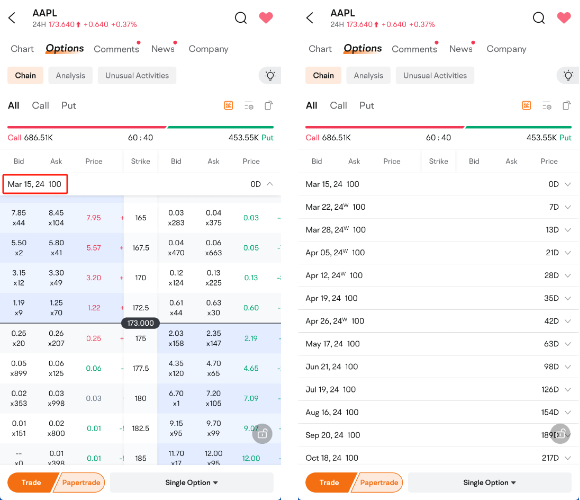
Step 4: Adjust the expiration date by choosing your preferred date from the menu.
Images provided are not current and any securities are shown for illustrative purposes only and is not a recommendation.
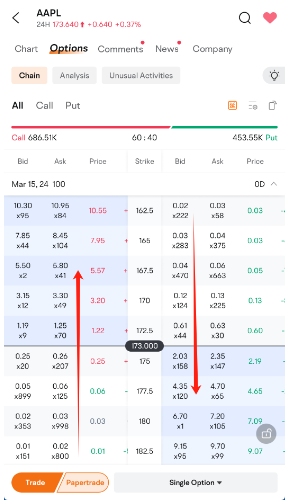
Step 5: Easily distinguish between options: white denotes out-of-the-money, and blue indicates in-the-money. Swipe horizontally to access additional option details.
Images provided are not current and any securities are shown for illustrative purposes only and is not a recommendation.
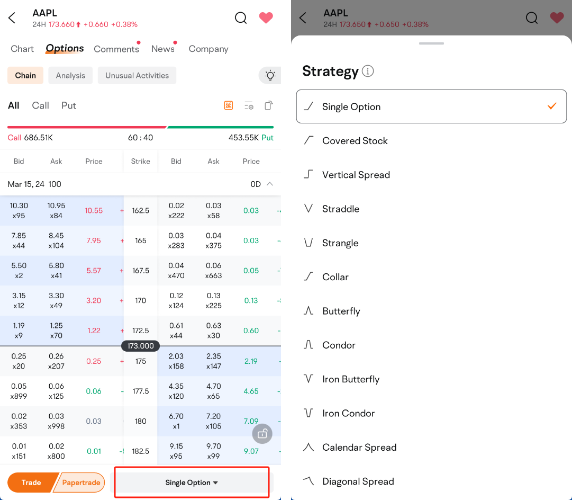
Step 6: Explore various trading strategies at the screen's bottom, offering flexibility for your investment approach.
Images provided are not current and any securities are shown for illustrative purposes only and is not a recommendation.
A short put option is considered a neutral to bullish strategy because the investor profits if the stock price remains stable or increases. By selling a put option, the investor benefits from upward price movement in the underlying stock, as the option expires worthless if the stock price remains above the strike price at expiration.
To write a short put, an investor needs to sell a put option contract through their brokerage account. Be sure the account has been approved as an options account. Then select an underlying stock, the desired expiration date and strike price. Enter the trade details, including the quantity of contracts to sell and the premium. If the trade is executed, the investor becomes the seller (or writer) of the put option.
Remember, options and particularly this strategy are risky and it's not appropriate for everyone. Investors writing a short put should have a level of knowledge and experience to be approved to sell naked options. This needs to be considered prior to using this strategy.
Whether an investor should use a short or long put option depends on their market outlook and trading strategy.
A short put (writer) may be suitable for some investors who are bullish or neutral on the underlying stock, seek to profit from stable or upward price movement, and hopes the contract will expire worthless, enabling them to keep the premium as a profit.
A long put (holder) is preferred by investors who anticipate a decline in the underlying stock price and wish to potentially profit from downside movement.
Some disadvantages of a short put option strategy include profit potential is limited to the premium income received, potential for substantial losses if the stock price falls significantly below the strike price, and maintenance calls due to insufficient margin, resulting in liquidity risks from a trader needing to buy back the put option to close the position.
A lack of market liquidity is another disadvantage, which could result in paying a higher price, thereby reducing profits or exacerbating losses. Short put positions require careful management and monitoring to manage risks and investors should be ready to act in the market if the position needs an adjustment.
This presentation is for informational and educational use only and is not a recommendation or endorsement of any particular investment or investment strategy. Investment information provided in this content is general in nature, strictly for illustrative purposes, and may not be appropriate for all investors. Read more
Recommend
How Short Put Works: Earning Premiums with Options
How the Options Market Can Signal When Earnings Events Are Too Risky to Trade
Options Earnings Series 1: What's Behind the Rise and Fall of Stock Prices After Earnings?

Options Earnings Series 2: Option Buying and Selling Strategies for Earnings
Options Earnings Series 3: Exploring Common Two-Legged Option Strategies for Earnings Season
Never Be Surprised Again: Understand the Eight Common Market Reactions to Earnings
Why Stocks Drop After Beating Earnings: 6 Key Reasons Behind the Post-Earnings Slump
Earnings unlocked: how options might enhance your trading approach
What should options buyers do if they no longer want to exercise their options?
Why did options buyers' exercise request fail?
A Closer Look at 0DTE Options: Short-Term Trading Explained
Approaching Post-Earnings IV Crush With Options
How to Hedge a Market Downturn with Options:Here's what you need to know
A Guide to the Long Put Strategy: Basics You Need to Know
Understanding Witching Days: What Investors and Traders Need to Know
Understanding Implied Volatility in Options Trading
Discovering Protective Puts: A Beginner's Guide
Why Investors May Consider Cash-Secured Puts in a Downturn
Why Pre-Earnings Volatility Attracts Option Traders
The Wheel Strategy: An Income Generating Options Strategy
What's next for a Short Put?
Long Call Options Strategy: Definition, Potential Benefits, and Risks
Short Put Options Strategy in Options Trading
How to set up a Short Put on moomoo?
What's next for a Long Put?
What is a Short Put?
Who are involved in the option exercise process?
Essential rules to understand about exercising options
When should options buyers exercise?
How can options sellers manage risk?
How does options buyers exercise their option?
What is XSP®
Closing vs. Exercising Options: What's the difference?
What's next for a Short Call?
How to set up a Short Call on moomoo
What is a Short Call?
What's next for a Long Call?
Understanding the Benefits of Index Options
XSP® vs SPY®
XSP® Use Cases
How to set up a Long Call on moomoo?
What is SPX®
Dispelling the Myths of Trading Index Options
What is a Long Call?
Short Put Butterfly
What Are Index Options and How Do They Work
Long Diagonal Bull Call Spread
Short Diagonal Bull Put Spread
Long Diagonal Bear Put Spread
Short Diagonal Bear Call Spread
Long Call Butterfly
Short Iron Butterfly
Short Call Butterfly
Long Put Butterfly
Bear Call Spread
Short Iron Condor
Covered Put
Short Put Condor
Bull Put Spread
Bull Call Spread
Long Collar
Short Strangle
Long Strangle
Long Iron Butterfly
Protective Put
Long Iron Condor
Long Put
Short Straddle
Short Call
Cash-Secured Put
Short Put
Long call
Index Options: An Introduction for Traders
Protective Call
Long Call Condor
Short Call Condor
Long Straddle
Long Put Condor
Short Collar
Bear Put Spread
Covered Call
How Short Put Works: Earning Premiums with Options
How the Options Market Can Signal When Earnings Events Are Too Risky to Trade
Options Earnings Series 1: What's Behind the Rise and Fall of Stock Prices After Earnings?
Options Earnings Series 2: Option Buying and Selling Strategies for Earnings
Options Earnings Series 3: Exploring Common Two-Legged Option Strategies for Earnings Season
Never Be Surprised Again: Understand the Eight Common Market Reactions to Earnings
Why Stocks Drop After Beating Earnings: 6 Key Reasons Behind the Post-Earnings Slump
Earnings unlocked: how options might enhance your trading approach
What should options buyers do if they no longer want to exercise their options?
Why did options buyers' exercise request fail?
A Closer Look at 0DTE Options: Short-Term Trading Explained
Approaching Post-Earnings IV Crush With Options
How to Hedge a Market Downturn with Options:Here's what you need to know
A Guide to the Long Put Strategy: Basics You Need to Know
Understanding Witching Days: What Investors and Traders Need to Know
Understanding Implied Volatility in Options Trading
Discovering Protective Puts: A Beginner's Guide
Why Investors May Consider Cash-Secured Puts in a Downturn
Why Pre-Earnings Volatility Attracts Option Traders
The Wheel Strategy: An Income Generating Options Strategy
What's next for a Short Put?
Long Call Options Strategy: Definition, Potential Benefits, and Risks
Short Put Options Strategy in Options Trading
How to set up a Short Put on moomoo?
What's next for a Long Put?
What is a Short Put?
Who are involved in the option exercise process?
Essential rules to understand about exercising options
When should options buyers exercise?
How can options sellers manage risk?
How does options buyers exercise their option?
What is XSP®
Closing vs. Exercising Options: What's the difference?
What's next for a Short Call?
How to set up a Short Call on moomoo
What is a Short Call?
What's next for a Long Call?
Understanding the Benefits of Index Options
XSP® vs SPY®
XSP® Use Cases
How to set up a Long Call on moomoo?
What is SPX®
Dispelling the Myths of Trading Index Options
What is a Long Call?
Short Put Butterfly
What Are Index Options and How Do They Work
Long Diagonal Bull Call Spread
Short Diagonal Bull Put Spread
Long Diagonal Bear Put Spread
Short Diagonal Bear Call Spread
Long Call Butterfly
Short Iron Butterfly
Short Call Butterfly
Long Put Butterfly
Bear Call Spread
Short Iron Condor
Covered Put
Short Put Condor
Bull Put Spread
Bull Call Spread
Long Collar
Short Strangle
Long Strangle
Long Iron Butterfly
Protective Put
Long Iron Condor
Long Put
Short Straddle
Short Call
Cash-Secured Put
Short Put
Long call
Index Options: An Introduction for Traders
Protective Call
Long Call Condor
Short Call Condor
Long Straddle
Long Put Condor
Short Collar
Bear Put Spread
Covered Call

