
Moomoo Insights
Jul 16 15:38
TSMC Earnings: AI Demand Is Stronger Than the Chip Selloff Suggests
Moomoo Insights
Sep 30 05:04
Live Take | Anthropic’s $518B Compute Bet: Who Wins From the AI Buildout?
Investors and traders of all levels may find long calls as a useful options trading strategy. A long call option may belong call optionay to leverage capital, as buying an option usually requires a lower initial investment compared to buying the underlying asset outright.
Long calls also provide a way to express bullish sentiment on a stock or index while looking to manage risk; this characteristic can make long calls a useful alternative for some traders to help protect against downward price movements that can come with owning the underlying stock while still participating in potential upward gains.
Read on to learn more.
A long call strategy is the purchase of a call option that gives the buyer the right, but not the obligation, to purchase an underlying asset, like a stock, at a predetermined price (the strike price), on or before a specified expiration date. The buyer pays a premium to the seller for this right.
The primary goals of using long call options revolve around seeking to leverage potential market opportunities while trying to manage risk. Other goals include aiming to potentially profit from upward price movements in the underlying asset without committing a significant amount of capital that can come with owning 100 shares of the underlying stock.
Additional goals? This can include capitalizing on short-term market volatility, which can enable traders to potentially take advantage of quick price swings and offer portfolio diversification as long calls can allow investors to explore different sectors and assets while maintaining a limited risk profile.

A long call buyer's goal is to profit from the underlying stock's price increase without the equivalent level of upfront capital required to own the stock outright, while also trying to manage risk. The call option's value tends to increase as the price of the underlying asset approaches and surpasses the strike price. The buyer can potentially profit by looking to sell the call for more premium than originally paid before the expiration date.
In an effort to profit from a long call, the buyer often sells the call before the expiration date when the stock price has increased. The buyer compares the price they paid for the call to the price they sold it for to determine their profit or loss. For example, if the buyer paid $6 for the call and sold it for $9, they would make a $3 per share gain.
However, timing is important for a long call strategy because all value must be realized before the option expires. If the stock price doesn't increase enough or quickly enough, or if the expiration date passes before the buyer can sell the call, they may experience a loss.
The theoretical maximum loss for the buyer is the premium plus any commissions paid for the option. This occurs if the option is "out of the money" when it expires, making it worthless. However, the realized loss can be smaller if the call is sold prior to expiration and has some time value remaining.
The breakeven price for a long call option is the strike price plus the premium paid. For example, if an investor paid $4.50 (the premium) for a 100 call option, the breakeven price would be $104.50. The breakeven point is the point at which neither the buyer nor the seller of an options contract has a profit or loss.
What is a long call option? Let's review an example.
A trader buys 1 ABC 100 call at $4.30 (ABC is a fictitious stock used for this example). If the stock price is above $104.30 when the option expires, they can possibly profit, but the potential is unlimited if the stock continues to indefinitely rise.
The theoretical maximum loss is limited to the premium paid plus commissions. A loss of this amount is realized if the call is held to expiration and it expires worthless. For this example, it's $4.30 plus commissions or $4.30 x 100 (option multiplier) = $430.
For the breakeven point at expiration, it's the strike price plus the premium paid. Here, it's 100 + $4.30 = $104.30.
Moomoo provides a user-friendly platform for trading options. Here's a step-by-step guide to get you started:
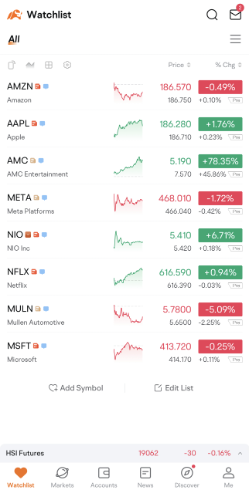
Step 1: Navigate to your Watchlist, then select a stock's "Detailed Quotes" page.
Images provided are not current and any securities are shown for illustrative purposes only and is not a recommendation.
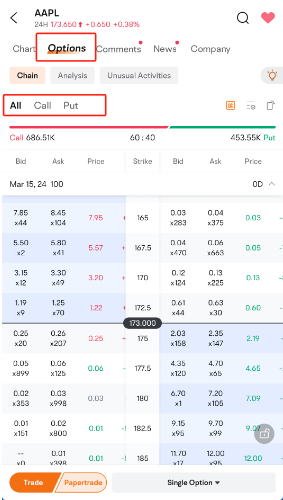
Step 2: Navigate to Options> Chain located at the top of the page.
Step 3: By default, all options with a specific expiration date are shown. For selective viewing of calls or puts, simply tap "Call/Put."
Images provided are not current and any securities are shown for illustrative purposes only and is not a recommendation.
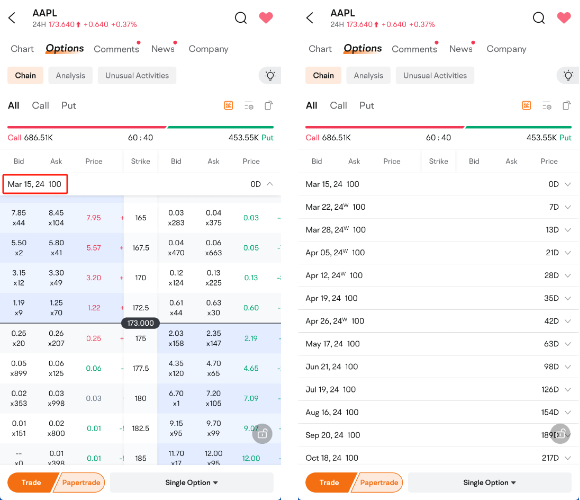
Step 4: Adjust the expiration date by choosing your preferred date from the menu.
Images provided are not current and any securities are shown for illustrative purposes only and is not a recommendation.
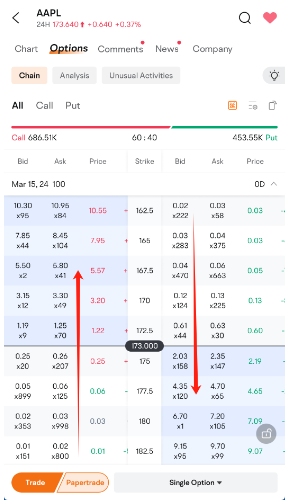
Step 5: Easily distinguish between options: white denotes out-of-the-money, and blue indicates in-the-money. Swipe horizontally to access additional option details.
Images provided are not current and any securities are shown for illustrative purposes only and is not a recommendation.
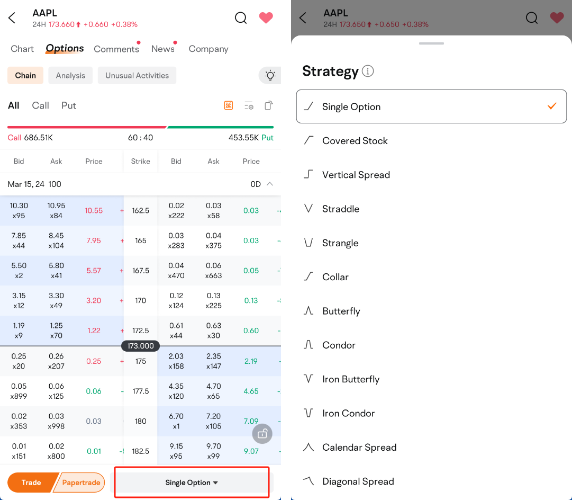
Step 6: Explore various trading strategies at the screen's bottom, offering flexibility for your investment approach.
Images provided are not current and any securities are shown for illustrative purposes only and is not a recommendation.
Long calls can potentially profit if the underlying asset's price increases above the strike price of the option before or on expiration. If the underlying price falls, then the value of the long call decreases as well, assuming other factors remain constant.
When volatility increases, generally so does the price of the option. Long call positions tend to benefit from rising volatility and are hurt by decreasing volatility.
For any given option, the longer the time to expiration, the higher the probability that the option will favor the buyer. This usually increases the option's time value and price. However, as expiration approaches, the time value portion of the option's price decreases (known as time erosion).
Additional factors can affect long calls such as interest rates. Traders may monitor interest rate trends because they can change option values and strategy effectiveness. Dividends are another factor as their payments before expiration can impact the call premium. The stock price is expected to drop on the ex-dividend date and call premiums will be lower. Dividend payments can also be a reason for call buyers to exercise their option early.
Limited risk: Theoretical maximum loss is limited to the premium paid for the option, which is usually less than the cost of owning 100 shares of the underlying stock.
Leverage: Can control a larger position in the underlying asset with a smaller investment. This can increase an investor's potential gains if the price moves in their favor.
Profit potential: Theoretically unlimited because the price of the underlying asset can rise indefinitely.
Time decay: Options have a limited lifespan and will expire worthless if the price of the underlying asset doesn't rise above the strike price before the expiration date.
Volatility: Calls are susceptible to volatility impacts, such as an increase or decrease in implied volatility.
Capital loss: A trader could lose their entire investment if the underlying stock doesn't perform as anticipated within the necessary time frame.
Market movement: A trader may need significant market movement for potential profitability.
While long calls and short puts are both bullish strategies, they do have their differences.
A long call is when a trader buys a call option, giving them the right, but not the obligation, to buy the underlying stock at a specific price. The trader can benefit if the stock price increases before the options expire; theoretically there is unlimited upside potential but limited downside risk. The break-even point for a long call is the sum of the strike price and premium paid. If the stock price is below the break-even point upon expiration, the trader loses the premium.
A short put is when a trader sells a put option and potentially profits from the price of the underlying asset being at or above the strike price by the expiration date. This strategy can allow the trader to collect a premium and potentially buy the stock at a specified price. The trader could face substantial losses if the stock price falls below that price.
In options trading, long calls and short calls are strategies that differ in risk profile, profit potential, and market outlook. Long calls are bullish strategies that involve buying a call option and expecting an asset price increase. Short calls are bearish strategies that involve selling a call option and expecting a price decrease or stagnation in the underlying stock. A short call also has an unlimited risk potential whereas long calls are risk defined.
To calculate the potential profit or loss for a long call option, a trader can use this formula at expiration:
To calculate a potential profit, you can use the formula: Profit = (Stock price at expiration - strike price) - option premium
A trader can also use a payoff profile and the price paid for the option to calculate profit. To potentially realize a profit, the long call option must be above the break-even price at expiration. The break-even price can be calculated by adding the contract's premium to the option's strike price.
To calculate a potential loss at expiration, you can use the following formula:
If the Market Price at expiration − Strike Price = Negative number, then replace it with a zero.
Buying a call option is generally considered a bullish strategy. This is because the buyer normally only stands to profit if the price of the underlying shares increases. The price of the call option usually increases when the price of the underlying security increases, and vice versa.
To exercise a call option, a trader can contact their brokerage firm and instruct them to exercise the option for them. This can be done within the trading platform if using an online broker. When exercising a call option, a trader is exercising their right to buy the underlying stock at the strike price, on or before the expiration date. After exercising the option, a trader can choose to sell the underlying security or hold on to it.
If a trader exercises an option before expiration, they must notify their broker before the cut-off time for accepting exercise instructions to ensure that the option is exercised on that particular day. Options that expire in-the-money will usually be exercised automatically by the broker.
After exercising the option, a trader can choose to sell the underlying security or hold on to it.
A long call is a speculative options strategy that allows traders to possibly profit from a rise in the stock's price without owning the underlying shares. They pay a premium to buy the right to buy a stock at a specific price (the strike price) before the contract expires.
If the stock price rises above the strike price, traders may achieve a profit. They can also potentially benefit from increased volatility, leading to larger price movements and increasing the option's value.
And a trader can potentially benefit from the price rise as they may tie up less money than they would be purchasing an equivalent amount of the underlying stock outright. They would still need the funds or margin available to support exercise should it expire in-the-money.
This presentation is for informational and educational use only and is not a recommendation or endorsement of any particular investment or investment strategy. Investment information provided in this content is general in nature, strictly for illustrative purposes, and may not be appropriate for all investors. Read more
Recommend
How Short Put Works: Earning Premiums with Options
How the Options Market Can Signal When Earnings Events Are Too Risky to Trade
Options Earnings Series 1: What's Behind the Rise and Fall of Stock Prices After Earnings?

Options Earnings Series 2: Option Buying and Selling Strategies for Earnings
Options Earnings Series 3: Exploring Common Two-Legged Option Strategies for Earnings Season
Never Be Surprised Again: Understand the Eight Common Market Reactions to Earnings
Why Stocks Drop After Beating Earnings: 6 Key Reasons Behind the Post-Earnings Slump
Earnings unlocked: how options might enhance your trading approach
What should options buyers do if they no longer want to exercise their options?
Why did options buyers' exercise request fail?
A Closer Look at 0DTE Options: Short-Term Trading Explained
Approaching Post-Earnings IV Crush With Options
How to Hedge a Market Downturn with Options:Here's what you need to know
A Guide to the Long Put Strategy: Basics You Need to Know
Understanding Witching Days: What Investors and Traders Need to Know
Understanding Implied Volatility in Options Trading
Discovering Protective Puts: A Beginner's Guide
Why Investors May Consider Cash-Secured Puts in a Downturn
Why Pre-Earnings Volatility Attracts Option Traders
The Wheel Strategy: An Income Generating Options Strategy
What's next for a Short Put?
Long Call Options Strategy: Definition, Potential Benefits, and Risks
Short Put Options Strategy in Options Trading
How to set up a Short Put on moomoo?
What's next for a Long Put?
What is a Short Put?
Who are involved in the option exercise process?
Essential rules to understand about exercising options
When should options buyers exercise?
How can options sellers manage risk?
How does options buyers exercise their option?
What is XSP®
Closing vs. Exercising Options: What's the difference?
What's next for a Short Call?
How to set up a Short Call on moomoo
What is a Short Call?
What's next for a Long Call?
Understanding the Benefits of Index Options
XSP® vs SPY®
XSP® Use Cases
How to set up a Long Call on moomoo?
What is SPX®
Dispelling the Myths of Trading Index Options
What is a Long Call?
Short Put Butterfly
What Are Index Options and How Do They Work
Long Diagonal Bull Call Spread
Short Diagonal Bull Put Spread
Long Diagonal Bear Put Spread
Short Diagonal Bear Call Spread
Long Call Butterfly
Short Iron Butterfly
Short Call Butterfly
Long Put Butterfly
Bear Call Spread
Short Iron Condor
Covered Put
Short Put Condor
Bull Put Spread
Bull Call Spread
Long Collar
Short Strangle
Long Strangle
Long Iron Butterfly
Protective Put
Long Iron Condor
Long Put
Short Straddle
Short Call
Cash-Secured Put
Short Put
Long call
Index Options: An Introduction for Traders
Protective Call
Long Call Condor
Short Call Condor
Long Straddle
Long Put Condor
Short Collar
Bear Put Spread
Covered Call
How Short Put Works: Earning Premiums with Options
How the Options Market Can Signal When Earnings Events Are Too Risky to Trade
Options Earnings Series 1: What's Behind the Rise and Fall of Stock Prices After Earnings?
Options Earnings Series 2: Option Buying and Selling Strategies for Earnings
Options Earnings Series 3: Exploring Common Two-Legged Option Strategies for Earnings Season
Never Be Surprised Again: Understand the Eight Common Market Reactions to Earnings
Why Stocks Drop After Beating Earnings: 6 Key Reasons Behind the Post-Earnings Slump
Earnings unlocked: how options might enhance your trading approach
What should options buyers do if they no longer want to exercise their options?
Why did options buyers' exercise request fail?
A Closer Look at 0DTE Options: Short-Term Trading Explained
Approaching Post-Earnings IV Crush With Options
How to Hedge a Market Downturn with Options:Here's what you need to know
A Guide to the Long Put Strategy: Basics You Need to Know
Understanding Witching Days: What Investors and Traders Need to Know
Understanding Implied Volatility in Options Trading
Discovering Protective Puts: A Beginner's Guide
Why Investors May Consider Cash-Secured Puts in a Downturn
Why Pre-Earnings Volatility Attracts Option Traders
The Wheel Strategy: An Income Generating Options Strategy
What's next for a Short Put?
Long Call Options Strategy: Definition, Potential Benefits, and Risks
Short Put Options Strategy in Options Trading
How to set up a Short Put on moomoo?
What's next for a Long Put?
What is a Short Put?
Who are involved in the option exercise process?
Essential rules to understand about exercising options
When should options buyers exercise?
How can options sellers manage risk?
How does options buyers exercise their option?
What is XSP®
Closing vs. Exercising Options: What's the difference?
What's next for a Short Call?
How to set up a Short Call on moomoo
What is a Short Call?
What's next for a Long Call?
Understanding the Benefits of Index Options
XSP® vs SPY®
XSP® Use Cases
How to set up a Long Call on moomoo?
What is SPX®
Dispelling the Myths of Trading Index Options
What is a Long Call?
Short Put Butterfly
What Are Index Options and How Do They Work
Long Diagonal Bull Call Spread
Short Diagonal Bull Put Spread
Long Diagonal Bear Put Spread
Short Diagonal Bear Call Spread
Long Call Butterfly
Short Iron Butterfly
Short Call Butterfly
Long Put Butterfly
Bear Call Spread
Short Iron Condor
Covered Put
Short Put Condor
Bull Put Spread
Bull Call Spread
Long Collar
Short Strangle
Long Strangle
Long Iron Butterfly
Protective Put
Long Iron Condor
Long Put
Short Straddle
Short Call
Cash-Secured Put
Short Put
Long call
Index Options: An Introduction for Traders
Protective Call
Long Call Condor
Short Call Condor
Long Straddle
Long Put Condor
Short Collar
Bear Put Spread
Covered Call

