
Moomoo Insights
Jul 16 15:38
TSMC Earnings: AI Demand Is Stronger Than the Chip Selloff Suggests
Moomoo Insights
Sep 30 05:04
Live Take | Anthropic’s $518B Compute Bet: Who Wins From the AI Buildout?
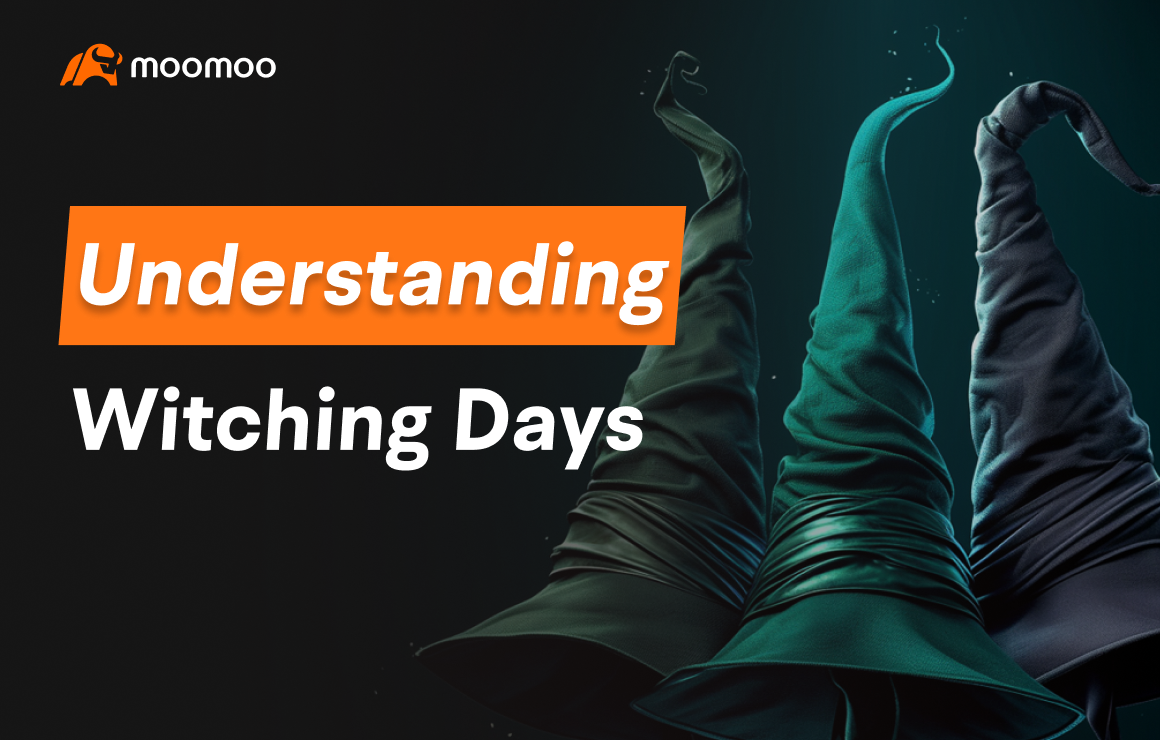
1. What Are Witching Days?
"Witching days" refer to the expiration dates of multiple types of derivative contracts — typically stock options, index options, futures, and index futures — all occurring on the same day. These expirations happen simultaneously on:
Triple Witching: Third Friday of March, June, September, and December
Quadruple Witching: Same dates, with the addition of single-stock futures
These events can lead to unusually high trading volume and short-term volatility, as market participants adjust, close, or roll over positions before expiration.
Several factors can contribute to increased volatility and volume:
Contract Expirations: As large volumes of derivative contracts expire, traders may need to rebalance or unwind positions, which can lead to sudden price swings.
Portfolio Adjustments: Institutional investors may rebalance portfolios to manage exposures or maintain market neutrality, sometimes triggering large block trades.
Options Hedging Activity: As expiration approaches, traders who are hedging options positions may buy or sell the underlying stock to adjust their delta exposure. This hedging flow can contribute to short-term price movement.
These drivers are typically mechanical or technical, not necessarily linked to fundamentals like earnings or macroeconomic news.
For most retail traders, witching days do not necessarily present a unique edge. The volatility is often driven by options market mechanics, such as delta hedging or contract settlement, rather than clear directional signals or fundamental shifts.
Without a specific strategy or experience navigating such conditions, it can be challenging to anticipate market behavior. As a result, the risks may outweigh the rewards for many retail participants.
Long-term investors tend to focus on company fundamentals and broader economic trends, rather than short-lived events like witching days.
Witching-related volatility generally does not affect a company's intrinsic value, which is determined by factors such as:
Earnings Performance: Companies with consistent profit generation over time often signal operational strength and financial health.
Revenue Growth: Steady or accelerating sales can indicate expanding market demand or successful product execution.
Management Quality: Effective leadership can be seen through capital allocation decisions, strategic direction, and operational efficiency.
Competitive Moats: Sustainable advantages like brand, cost structure, or technology may help companies outperform over time.
Market Position: A strong position in a growing sector often supports long-term potential.
Because witching day volatility is usually short-term and technically driven, it may not carry meaningful implications for long-term value. Investors anchored in fundamentals may prefer to avoid overreacting to these temporary market swings.
While volatility can create opportunity, witching days are notoriously unpredictable. Much of the price action stems from the expiration mechanics and hedging adjustments — not directional news or company performance.
Retail traders without a clearly defined strategy or risk control process may find it difficult to anticipate market movements during these periods.
Price swings might appear attractive, but they often lack clear setups. The trading environment can become highly reactive and fast-moving, which increases the potential for slippage, whipsaws, and emotional decisions.
For experienced traders who decide to participate, managing risk becomes even more critical. Some commonly referenced considerations include:
7. Position Sizing
Effective capital allocation is key to limiting downside. The portion of capital committed to any single trade often depends on the trader’s risk appetite, objectives, and portfolio size. For example, a trader who prefers conservative risk exposure may choose to size each position at around 2% of their total capital. This helps ensure that no single trade significantly impacts overall performance. The actual sizing approach varies by strategy.
8. Stop-Loss Planning
Predefining exit levels can help manage unexpected moves. For instance, some traders may use stop-loss orders to automatically limit downside if a position moves against them. Witching days often see quick price shifts, so having a predetermined exit level may help reduce the impact of sudden volatility. However, stop-loss use should be tailored to individual risk preferences and market conditions.
9. Trade Frequency Control
Volatile markets may tempt traders to take more trades, but overtrading can often lead to mistakes. Traders may consider narrowing their focus to fewer, higher-conviction setups. Some adopt limits on daily trades or use journaling to track emotional decision-making. Managing trade frequency can support discipline and avoid impulsive participation in unpredictable markets.
10. Option Strategy Selection and Execution Timing
If trading options on witching days, the choice of strategy and timing becomes even more critical. Due to elevated volatility and rapid shifts in open interest, bid-ask spreads can widen, and execution quality may be inconsistent. Traders should consider:
Liquidity: Stick to highly liquid contracts with tight spreads to reduce slippage. Look at open interest and volume, especially at-the-money or near-term strikes.
Strategy Type: Favor strategies that align with the day's expected volatility. For instance, strategies (like verticals or Long Call/Put) may help manage risk better than outright directional bets, as they define max loss upfront.
Execution Tactics: Use limit orders, not market orders, to avoid poor fills in fast-moving markets. Be patient and plan trades ahead of the expiration rush.
Greeks Awareness: Rapid changes in delta, gamma, and theta are common near expiration — especially in the final trading hours. Traders must monitor these shifts closely, as small price changes in the underlying can result in outsized P&L swings.
Witching days may offer high intraday opportunity — but with options, the fast decay, shifting IV, and crowded trades mean preparation, discipline, and defined risk parameters are even more essential.
Witching days are driven by expirations and hedging flows not fundamentals. For long-term investors, these short-term swings are often just noise, with little impact on a company’s true value. Staying anchored in fundamentals is usually the best course.
For traders, the surge in volatility may present opportunity but without a clear plan, it’s easy to get caught in unpredictable price action. Those who choose to participate should enter with well-defined strategies, disciplined risk management, and realistic expectations.
In the end, whether you're investing or trading, the key is alignment: match your approach to your objective and respect the unique dynamics of the day.
Disclaimer
Options trading entails significant risk and is not appropriate for all customers. It is important that investors read Characteristics and Risks of Standardized Options before engaging in any options trading strategies. Opening new options positions close to or on their expiration date comes with substantial risk of losses for reasons that include potential volatility of the underlying security and limited time to expiration. Options transactions are often complex and may involve the potential of losing the entire investment in a relatively short period of time. Certain complex options strategies carry additional risk, including the potential for losses that may exceed the original investment amount. Supporting documentation for any claims, if applicable, will be furnished upon request.
Although hedging strategies seek to limit or reduce investment risk, they may also limit or reduce the profit potential. There is no assurance that hedging strategies will be successful. Keep in mind, Option Greeks are calculated using options pricing models and are theoretical estimates. Greek values are based on the assumption that all other factors remain constant.
This presentation is for informational and educational use only and is not a recommendation or endorsement of any particular investment or investment strategy. Investment information provided in this content is general in nature, strictly for illustrative purposes, and may not be appropriate for all investors. It is provided without respect to individual investors’ financial sophistication, financial situation, investment objectives, investing time horizon, or risk tolerance. You should consider the appropriateness of this information having regard to your relevant personal circumstances before making any investment decisions. Past investment performance does not indicate or guarantee future success. Returns will vary, and all investments carry risks, including loss of principal. Moomoo makes no representation or warranty as to its adequacy, completeness, accuracy or timeliness for any particular purpose of the above content.
Moomoo is a financial information and trading app offered by Moomoo Technologies Inc. Securities offered through Moomoo Financial Inc., Member FINRA/SIPC
In the U.S., investment products and services available through the moomoo app are offered by Moomoo Financial Inc., a broker-dealer registered with the U.S. Securities and Exchange Commission (SEC) and a member of Financial Industry Regulatory Authority (FINRA)/Securities Investor Protection Corporation (SIPC).
In Singapore, investment products and services available through the moomoo app are offered through Moomoo Financial Singapore Pte. Ltd. regulated by the Monetary Authority of Singapore (MAS). Moomoo Financial Singapore Pte. Ltd. is a Capital Markets Services Licence (License No. CMS101000) holder with the Exempt Financial Adviser Status. This advertisement has not been reviewed by the Monetary Authority of Singapore.
In Australia, financial products and services available through the moomoo app are provided by Moomoo Securities Australia Limited, an Australian Financial Services Licensee (AFSL No. 224663) regulated by the Australian Securities and Investment Commission (ASIC). Please read and understand our Financial Services Guide, Terms and Conditions, Privacy Policy, Options PDS, Target Market Determination and other disclosure documents which are available on our website https://www.moomoo.com/au.
In Canada, order-execution only services available through the moomoo app are provided by Moomoo Financial Canada Inc., regulated by the Canadian Investment Regulatory Organization (CIRO).
In Malaysia, investment products and services available through the moomoo app are offered through Moomoo Securities Malaysia Sdn. Bhd.("Moomoo MY") regulated by the Securities Commission of Malaysia (SC). Moomoo Securities Malaysia Sdn. Bhd.is a Capital Markets Services Licence (License No. eCMSL/A0397/2024) holder. This advertisement has not been reviewed by the SC.
Moomoo Technologies Inc., Moomoo Financial Inc., Moomoo Financial Singapore Pte. Ltd., Moomoo Securities Australia Limited
This presentation is for informational and educational use only and is not a recommendation or endorsement of any particular investment or investment strategy. Investment information provided in this content is general in nature, strictly for illustrative purposes, and may not be appropriate for all investors. Read more
Recommend
How Short Put Works: Earning Premiums with Options
How the Options Market Can Signal When Earnings Events Are Too Risky to Trade
Options Earnings Series 1: What's Behind the Rise and Fall of Stock Prices After Earnings?

Options Earnings Series 2: Option Buying and Selling Strategies for Earnings
Options Earnings Series 3: Exploring Common Two-Legged Option Strategies for Earnings Season
Never Be Surprised Again: Understand the Eight Common Market Reactions to Earnings
Why Stocks Drop After Beating Earnings: 6 Key Reasons Behind the Post-Earnings Slump
Earnings unlocked: how options might enhance your trading approach
What should options buyers do if they no longer want to exercise their options?
Why did options buyers' exercise request fail?
A Closer Look at 0DTE Options: Short-Term Trading Explained
Approaching Post-Earnings IV Crush With Options
How to Hedge a Market Downturn with Options:Here's what you need to know
A Guide to the Long Put Strategy: Basics You Need to Know
Understanding Witching Days: What Investors and Traders Need to Know
Understanding Implied Volatility in Options Trading
Discovering Protective Puts: A Beginner's Guide
Why Investors May Consider Cash-Secured Puts in a Downturn
Why Pre-Earnings Volatility Attracts Option Traders
The Wheel Strategy: An Income Generating Options Strategy
What's next for a Short Put?
Long Call Options Strategy: Definition, Potential Benefits, and Risks
Short Put Options Strategy in Options Trading
How to set up a Short Put on moomoo?
What's next for a Long Put?
What is a Short Put?
Who are involved in the option exercise process?
Essential rules to understand about exercising options
When should options buyers exercise?
How can options sellers manage risk?
How does options buyers exercise their option?
What is XSP®
Closing vs. Exercising Options: What's the difference?
What's next for a Short Call?
How to set up a Short Call on moomoo
What is a Short Call?
What's next for a Long Call?
Understanding the Benefits of Index Options
XSP® vs SPY®
XSP® Use Cases
How to set up a Long Call on moomoo?
What is SPX®
Dispelling the Myths of Trading Index Options
What is a Long Call?
Short Put Butterfly
What Are Index Options and How Do They Work
Long Diagonal Bull Call Spread
Short Diagonal Bull Put Spread
Long Diagonal Bear Put Spread
Short Diagonal Bear Call Spread
Long Call Butterfly
Short Iron Butterfly
Short Call Butterfly
Long Put Butterfly
Bear Call Spread
Short Iron Condor
Covered Put
Short Put Condor
Bull Put Spread
Bull Call Spread
Long Collar
Short Strangle
Long Strangle
Long Iron Butterfly
Protective Put
Long Iron Condor
Long Put
Short Straddle
Short Call
Cash-Secured Put
Short Put
Long call
Index Options: An Introduction for Traders
Protective Call
Long Call Condor
Short Call Condor
Long Straddle
Long Put Condor
Short Collar
Bear Put Spread
Covered Call
How Short Put Works: Earning Premiums with Options
How the Options Market Can Signal When Earnings Events Are Too Risky to Trade
Options Earnings Series 1: What's Behind the Rise and Fall of Stock Prices After Earnings?
Options Earnings Series 2: Option Buying and Selling Strategies for Earnings
Options Earnings Series 3: Exploring Common Two-Legged Option Strategies for Earnings Season
Never Be Surprised Again: Understand the Eight Common Market Reactions to Earnings
Why Stocks Drop After Beating Earnings: 6 Key Reasons Behind the Post-Earnings Slump
Earnings unlocked: how options might enhance your trading approach
What should options buyers do if they no longer want to exercise their options?
Why did options buyers' exercise request fail?
A Closer Look at 0DTE Options: Short-Term Trading Explained
Approaching Post-Earnings IV Crush With Options
How to Hedge a Market Downturn with Options:Here's what you need to know
A Guide to the Long Put Strategy: Basics You Need to Know
Understanding Witching Days: What Investors and Traders Need to Know
Understanding Implied Volatility in Options Trading
Discovering Protective Puts: A Beginner's Guide
Why Investors May Consider Cash-Secured Puts in a Downturn
Why Pre-Earnings Volatility Attracts Option Traders
The Wheel Strategy: An Income Generating Options Strategy
What's next for a Short Put?
Long Call Options Strategy: Definition, Potential Benefits, and Risks
Short Put Options Strategy in Options Trading
How to set up a Short Put on moomoo?
What's next for a Long Put?
What is a Short Put?
Who are involved in the option exercise process?
Essential rules to understand about exercising options
When should options buyers exercise?
How can options sellers manage risk?
How does options buyers exercise their option?
What is XSP®
Closing vs. Exercising Options: What's the difference?
What's next for a Short Call?
How to set up a Short Call on moomoo
What is a Short Call?
What's next for a Long Call?
Understanding the Benefits of Index Options
XSP® vs SPY®
XSP® Use Cases
How to set up a Long Call on moomoo?
What is SPX®
Dispelling the Myths of Trading Index Options
What is a Long Call?
Short Put Butterfly
What Are Index Options and How Do They Work
Long Diagonal Bull Call Spread
Short Diagonal Bull Put Spread
Long Diagonal Bear Put Spread
Short Diagonal Bear Call Spread
Long Call Butterfly
Short Iron Butterfly
Short Call Butterfly
Long Put Butterfly
Bear Call Spread
Short Iron Condor
Covered Put
Short Put Condor
Bull Put Spread
Bull Call Spread
Long Collar
Short Strangle
Long Strangle
Long Iron Butterfly
Protective Put
Long Iron Condor
Long Put
Short Straddle
Short Call
Cash-Secured Put
Short Put
Long call
Index Options: An Introduction for Traders
Protective Call
Long Call Condor
Short Call Condor
Long Straddle
Long Put Condor
Short Collar
Bear Put Spread
Covered Call

