TFSA vs RRSP: Which Account Is Right for Me?
In Canada, TFSA (Tax-Free Savings Account) and RRSP (Registered Retirement Savings Plan) are two of the most popular vehicles for saving and investing. These accounts play different roles in personal financial planning, and whether you are considering how to best save for short-term goals such as home renovation or long-term objectives like retirement, understanding the differences between these accounts is crucial.
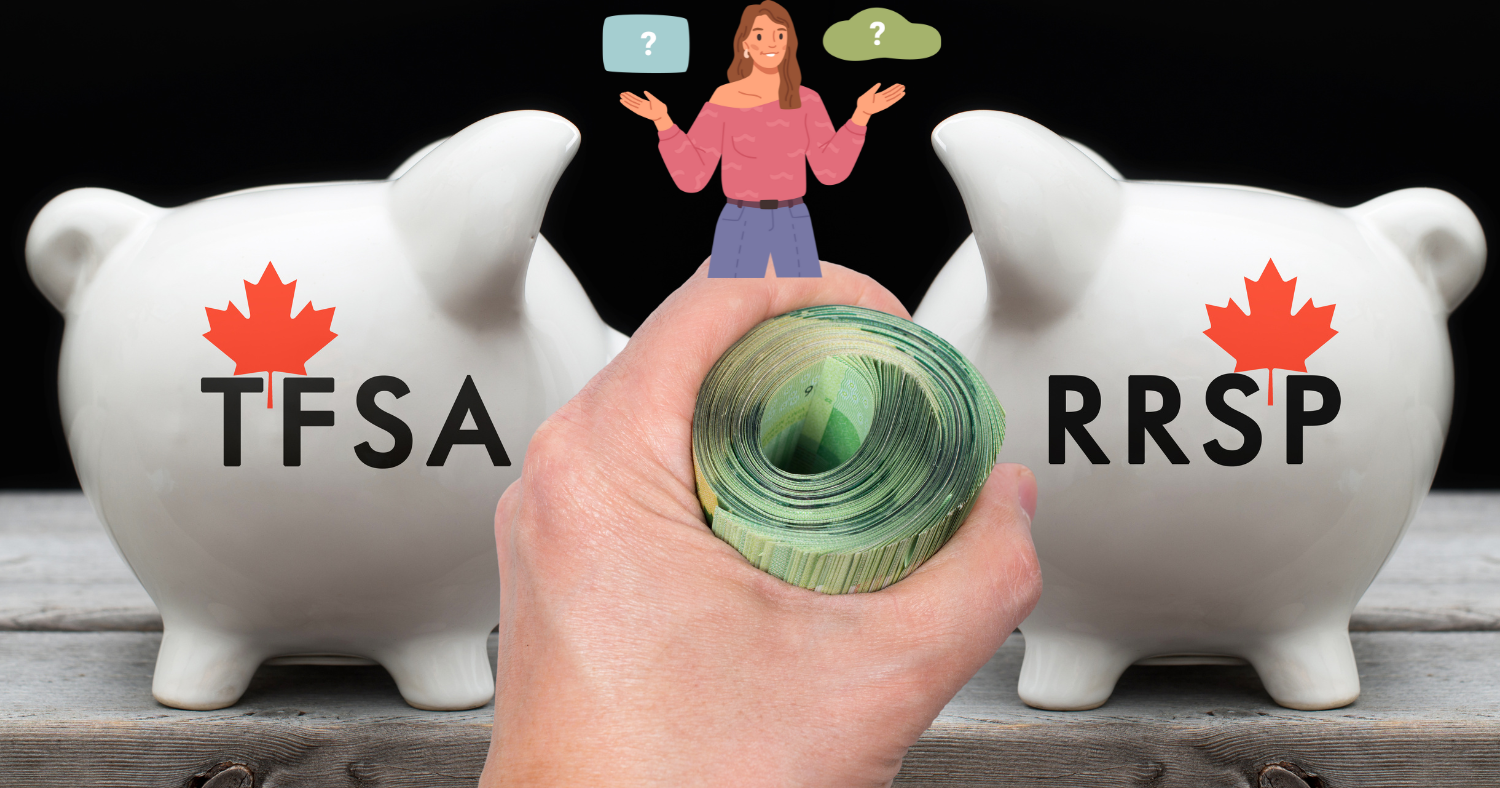
When faced with the choice between "TFSA vs RRSP", you need to assess your current financial situation, future plans, and tax considerations. For many Canadians, the decision is not necessarily an either/or scenario, but rather finding the right balance between the two.
By exploring the differences between "RRSP vs TFSA", we aim to provide insights that will help you make a wise decision that aligns with your personal financial strategy.
What is a TFSA?
The Tax-Free Savings Account (TFSA) is a flexible registered savings tool introduced by the Canadian government in 2009, designed to help individuals save and invest on a tax-free basis. The TFSA allows Canadians to earn income from investments within the account, including capital gains, dividends, and interest, without having to pay any federal or provincial income tax on the growth within the account. Funds deposited into a TFSA are after-tax dollars, so withdrawals from the account are also tax-free.
The main features of the TFSA include an annual contribution limit set by the CRA (Canada Revenue Agency), the ability to carry forward unused contribution room to future years, and the capacity to hold a variety of investment products such as cash, stocks, bonds, GICs (Guaranteed Investment Certificates), and mutual funds.
In the process of using a TFSA, managing your contribution room is very important. Contributions that exceed the contribution room can result in over-contributions and corresponding tax liabilities. Therefore, investors need to remember that contribution room is the accumulation of unused contribution limits, which is the sum of the contribution limits over the years minus the contributions made in those years plus the contribution room restored due to withdrawals. It is important to note that the contribution room corresponding to withdrawals is restored at the beginning of the following year.
Learn more about TFSA: What Is a TFSA (Tax-Free Savings Account)?
When should you use a TFSA?
The investment income and withdrawals from a TFSA are both tax-free, but contributions to a TFSA are made with after-tax income. This characteristic determines under what circumstances investors should use a TFSA.
If you are currently in a lower tax bracket: If your income is not high and you are in a lower personal income tax bracket, investing through a TFSA may be a better choice. Because compared to other registered accounts that may require tax payments upon withdrawal, using a TFSA now and paying taxes at the current lower rate is more cost-effective than potentially higher tax rates in the future.
Flexible short-term and medium-term savings goals: A TFSA is well-suited for short-term or medium-term savings goals, such as buying a car, traveling, or establishing an emergency fund. Since you can withdraw funds at any time tax-free, it provides great flexibility.
What is an RRSP?

The Registered Retirement Savings Plan (RRSP) is an investment account established by the Canadian government to encourage individuals to save for retirement. RRSPs offer significant tax advantages to help Canadians accumulate funds for their retirement life.
Contributions to an RRSP can be deducted from taxable income in the year they are made, thereby reducing your tax burden for that year. Additionally, investment earnings within the RRSP (including capital gains, dividends, and interest) are tax-free until withdrawn. This means your investments can grow tax-sheltered through compound interest, which aids in the growth of wealth over the long term. When you withdraw funds from the RRSP, these amounts are considered taxable income. Ideally, these withdrawals are made during retirement when your income may be lower, and thus the applicable tax rate is also lower, reducing the overall tax liability.
There is also a contribution limit for RRSPs. The annual RRSP contribution limit is based on 18% of your previous year's taxable income, but it must not exceed the maximum limit set by the Canada Revenue Agency (CRA). The remaining contribution room can be rolled over into future periods.
RRSPs can hold a variety of investment products, such as stocks, bonds, mutual funds, exchange-traded funds (ETFs), and Guaranteed Investment Certificates (GICs), allowing for a customized investment strategy based on individual risk tolerance and financial goals.
Learn more about RRSP: What is an RRSP? Why Does It Matter to You?
When should you use an RRSP?
The significant feature of an RRSP is that contributions to it can reduce taxable income, but withdrawals in retirement are counted as taxable income. Based on this characteristic, RRSPs are suitable for the following situations:
Currently in a higher tax bracket: If you are in a high-income group, currently subject to a higher personal income tax rate, and expect to be in a relatively lower tax bracket upon retirement, then contributing to an RRSP can maximize tax benefits. This is because RRSPs allow you to defer taxable income to a future period with a lower tax rate, thereby reducing your current tax burden.
Long-term retirement savings: RRSPs are specifically designed as a tool for retirement savings. If you have clear long-term savings goals and wish to take advantage of the tax deductions provided by the government to increase your savings, an RRSP is a good choice.
Utilizing unused contribution space: If you have unused RRSP contribution room from previous years and now have the opportunity to earn a high income and wish to reduce your tax burden for the current year, this may be a good time to take advantage of this contribution space.
TFSA vs RRSP: What's the difference?
To help everyone more intuitively compare these two accounts, here is a detailed table showcasing the differences between a TFSA and an RRSP in terms of purpose, contribution rules, withdrawal regulations, growth, and tax deductions.
TFSA | RRSP | |
Purpose | Designed for a wide range of savings goals, from short-term needs to long-term investments. It offers great flexibility and is suitable for various types of investment or savings objectives. | Primarily designed for retirement savings. It encourages long-term planning by deferring taxes until withdrawals are made, ideally when income is lower during retirement. |
Contributions | The annual contribution limit is set by the government (for example, $7,000 for the year 2026). Unused contribution room can be carried forward indefinitely. | The contribution limit is 18% of your previous year's taxable income, or the maximum amount set by the government, whichever is less. Unused contribution room can be carried over to future years. |
Withdrawals | You can withdraw funds at any time without penalties or taxes. The withdrawn funds will restore an equivalent amount of contribution room the following year. | You can withdraw from your RRSP at any time, as long as your funds are not in a locked-in plan. However, withdrawals will be considered income and will be included in your total income when filing taxes. After retirement (at the age of 71), you can withdraw all funds from your RRSP in a lump sum, convert your RRSP to a RRIF, or use your RRSP to purchase an annuity. |
Growth | Investment income is tax-exempt. | Investment income is subject to tax deferral, and is included in personal income for taxation upon withdrawal. |
Tax Deductions | Contributions are made with after-tax income, so there is no direct tax benefit at the time of contribution. Over-contributions will face a monthly tax penalty of 1% on the amount exceeding the limit. | All investment earnings within the account are tax-deferred. They are only considered taxable income, and taxed at the applicable rates, when funds are withdrawn from the RRSP. |
How to choose between TFSA vs RRSP?
When faced with the choice between "RRSP vs TFSA", investors should make their decisions based on their personal financial situation, future planning, and tax considerations.
Overall, TFSAs are suitable for people at all income levels, especially those in lower or middle tax brackets who want the flexibility to use their funds. Those planning to use their savings for short- to medium-term goals or as supplementary retirement income are also well-suited to achieve their goals through TFSAs. RRSPs are suitable for individuals who are currently in higher tax brackets and expect to be in a lower tax bracket upon retirement. Contributions to RRSPs provide immediate tax benefits through tax deductions.
Flexibly using both TFSAs and RRSPs at different stages of your career can provide greater tax efficiency for your financial planning. During high-income phases of your career, when marginal tax rates are high, prioritize contributing to RRSPs. This can reduce current taxable income, provide immediate tax relief, and save for future periods of lower tax rates. When income is lower, or approaching retirement, shift to utilizing TFSAs more. At this time, the tax deduction effect of RRSPs may not be as significant as during high-income periods, while TFSAs ensure tax-free withdrawals.
Additionally, if investors have the need to balance family income, they can plan through RRSPs. For example, high-income earners can contribute to their low-income spouse's RRSP and obtain the corresponding tax deductions.
How to open TFSA or RRSP in Canada?
Now you know the main difference between TFSA and RRSP! If you don't have TFSA or RRSP yet, it's better for you to open one. Before opening a TFSA or RRSP account, it's important to understand the requirements for setting up these accounts.
For investors looking to open a TFSA, three conditions must be met: being a resident of Canada; being at least 18 years old (some provinces require 19 years old, depending on the province); and having a Canadian Social Insurance Number (SIN).
For investors looking to open an RRSP, three conditions must be met: being a resident of Canada; having a Canadian Social Insurance Number; and having taxable income and having filed taxes.
After confirming that you meet the above requirements, you can choose to use moomoo Canada to open your TFSA or RRSP account (yes, moomoo supports both RRSP and TFSA- account types). Here are the simple steps to open an account:

Prepare the necessary account opening information, such as your phone number or email address, residential address, and SIN.
Fill out the application, during which you will need to provide your personal details and sign your full name.
Submit the application and wait for it to be reviewed and approved, which generally takes 1-3 business days.
This presentation is for informational and educational use only and is not a recommendation or endorsement of any particular investment or investment strategy. Investment information provided in this content is general in nature, strictly for illustrative purposes, and may not be appropriate for all investors. Read more