Stock Options vs. Futures: Key Differences Every Investor Should Know
Key takeaways
![]() Options and futures are derivatives that get their value from underlying assets like stocks, indexes, or commodities.
Options and futures are derivatives that get their value from underlying assets like stocks, indexes, or commodities.
![]() Options give the holder the right, but not the obligation, to buy or sell at a set price before expiry.
Options give the holder the right, but not the obligation, to buy or sell at a set price before expiry.
![]() Futures require both buyer and seller to complete the trade at a set price on a future date.
Futures require both buyer and seller to complete the trade at a set price on a future date.
![]() Both contracts can be traded before expiration, though futures often lead to actual delivery in commodity markets.
Both contracts can be traded before expiration, though futures often lead to actual delivery in commodity markets.
 Options and futures are derivatives that get their value from underlying assets like stocks, indexes, or commodities. Options give the holder the right, but not the obligation, to buy or sell at a set price before expiry. Futures require both buyer and seller to complete the trade at a set price on a future date. Both contracts can be traded before expiration, though futures often lead to actual delivery in commodity markets.
For Canadian investors looking to diversify their portfolios, understanding the differences between futures and options is crucial. Both are popular financial derivatives used to speculate on market movements or hedge risks, but they operate quite differently.
When comparing futures vs options, it’s important to recognize that options give investors the right, but not the obligation, to buy or sell an asset at a predetermined price before the contract expires. In contrast, futures contracts require both the buyer and seller to complete the transaction at a set price on a specific future date, creating a binding obligation.
This article will break down the key differences, pros and cons, and considerations of stock options and futures to help Canadian investors make informed decisions when trading futures and options.
What are stock options?
An option is a financial contract that grants the holder the right—but not the obligation—to buy or sell an underlying asset, such as a stock, at a predetermined price before or on a specific expiration date. Each option has a limited lifespan, and once it reaches its expiry, it is either settled for its value or becomes worthless, at which point it no longer exists.
Options are traded on public exchanges and derive their value from the price movements of the underlying asset. To acquire an option, the buyer pays a fee called a premium to the seller. Each option contract typically represents 100 shares of the asset. Until the contract expires, the buyer can choose to exercise the option and transact at the agreed-upon strike price. The seller, in turn, is obligated to fulfill the contract terms if exercised.
Because of the dynamic nature of options markets, using a top-rated options trading platform can give investors access to powerful tools and real-time data.
Types of options: call and put options
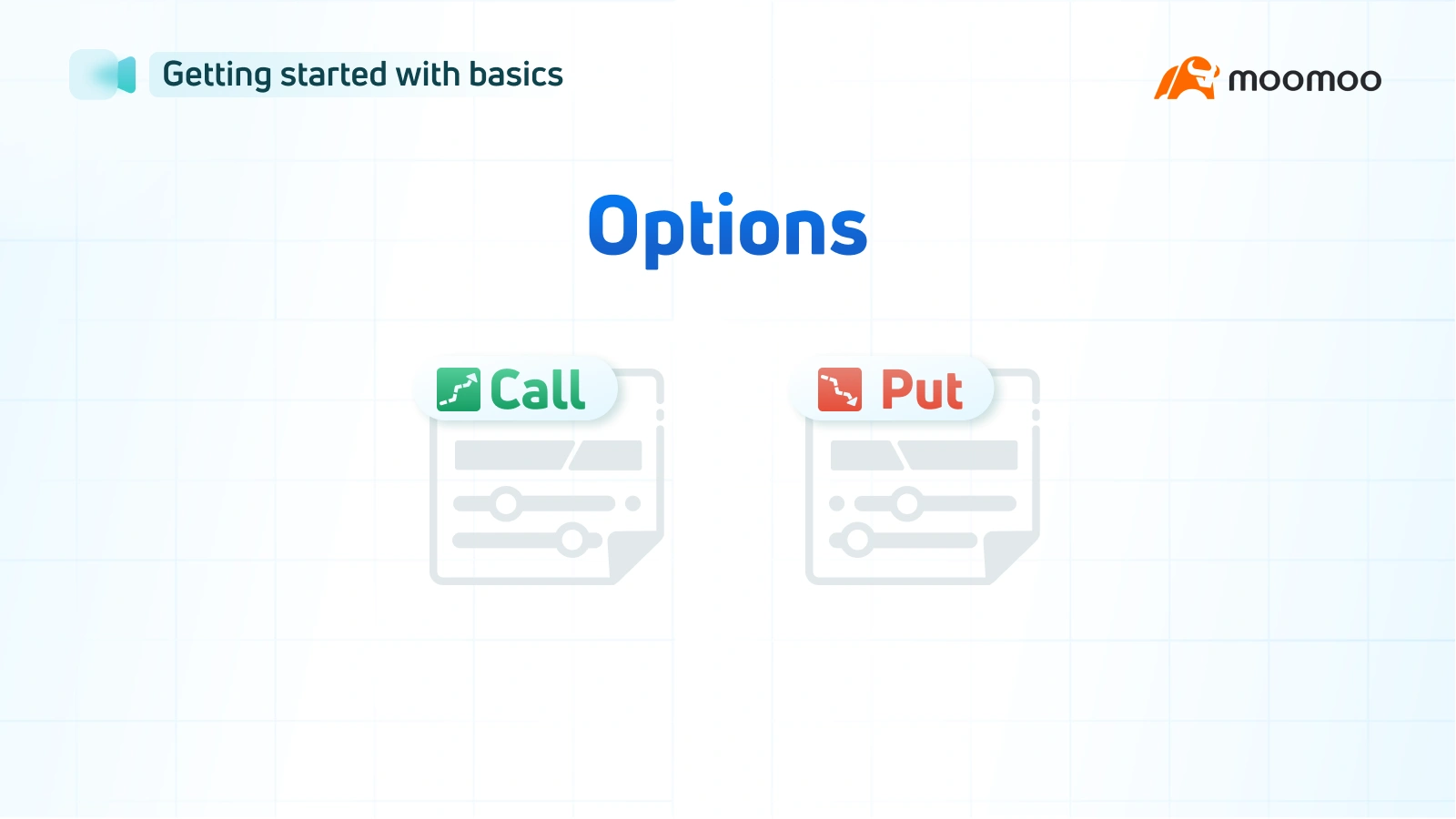
Options come in two basic forms: call options and put options. A call option gives the holder the right to purchase an asset at a fixed price (known as the strike price) before the contract expires. In contrast, a put option allows the holder to sell the asset at a predetermined price within the same time frame.
Here’s how a call option works in practice. Suppose an investor purchases a call option for stock XYZ with a strike price of $50 and a three-month expiration. At the time of purchase, XYZ is trading at $49. If the share price rises to $60, the investor can choose to exercise the option and buy the shares at $50. They could then sell the shares at the current market price of $60, earning a profit of $10 per share (minus any premiums and fees).
What are futures?
A futures contract is a legal agreement to buy or sell a specific asset at a predetermined price on a set future date. Unlike options, futures involve an obligation for both parties to fulfill the terms of the contract. These contracts are commonly used as a hedging tool, especially in commodity markets such as oil, wheat, or corn.
For example, a farmer might use a futures contract to secure a selling price for their upcoming harvest, protecting against the risk of prices dropping before the crops are ready. On the other side, a buyer—like a food processor—may agree to a futures contract to lock in current prices and avoid the risk of future price increases.
Here’s a clear example of a futures contract:
Suppose an airline expects to purchase 1,000 barrels of crude oil in three months. To protect against rising fuel prices, it enters a futures contract to buy those barrels at a fixed price of $60 each. Meanwhile, an oil producer takes the opposite position, agreeing to sell oil at that price. The exchange guarantees both sides will honor the deal.
If, at contract expiration, oil trades at $70/barrel, the airline gains $10 per barrel.
If it falls to $50/barrel, the airline still buys at $60, absorbing a $10 loss—but its fuel costs remain predictable.
What are key differences between stock options and futures?
When exploring futures vs options, it’s important to understand the key differences that set these two financial instruments apart. Both are derivatives that allow investors to speculate on or hedge against price movements in underlying assets, but they operate under different rules and risk profiles.
Futures contracts obligate both parties to buy or sell the asset at a set price on a specific future date, while options provide the buyer with the right, but not the obligation, to make the transaction.
Below we will compare futures vs options from multiple aspects.
Feature | Options | Futures |
Obligation | Right, not obligation | Binding contract |
Upfront Cost | Premium | Margin deposit |
Risk for Buyer | Limited to premium | Unlimited |
Settlement | Exercise, sale, or expiration | Daily mark-to-market; cash or delivery |
Time Decay | Yes | No |
Leverage | Moderate; premium-dependent | High; margin-driven |
Market Suitability | Ideal for risk-limited strategies | Ideal for hedging and speculating |
Obligation vs. right
Options grant the right, but not the obligation, to buy (call) or sell (put) the underlying asset. Buyers can simply let them expire if unprofitable.
Futures impose a contractual obligation on both parties to buy or sell the asset at expiration unless the position is closed before then.
Contract specifications
Options are defined by several terms—strike price, expiration date, type (call or put), and usually represent 100 shares of stock.
Futures are highly standardized: they specify delivery date, contract size (e.g., 1,000 barrels of oil or a fixed number of TSX 60 Index units), quality standards, and settlement terms.
Upfront costs
When trading futures, investors typically post an initial margin, a fraction of the contract’s total value, which acts as a performance bond. This margin is generally fixed and known in advance.
Options buyers pay a premium upfront, which varies based on factors like volatility and time to expiration. This premium is the maximum loss for the option buyer, whereas futures margin requirements can lead to additional margin calls if the market moves against the position.
Settlement methods
Futures contracts are marked-to-market daily, meaning gains and losses are settled each trading day, and traders may need to add funds if their margin falls below maintenance levels. At expiration, physical delivery or cash settlement occurs depending on the contract.
Options, however, settle only upon exercise or expiration, and the option holder can choose whether to exercise the right or let the option expire worthless.
Margin requirements
Option buyers require no margin—since risk is limited to the premium.
Option sellers (“writers”) often do need margin due to the obligation they assume.
Futures traders must maintain margin throughout the position’s life and cover any margin calls from daily mark-to-market movements.
Maximum risk exposure
Option buyers risk only the premium paid.
Option sellers can face theoretically unlimited losses (especially uncovered sellers).
Futures involve symmetric, unlimited risk—both gain and loss are uncapped and tied to the price movement of the underlying.
Profit potential
Option buyers have significant upside with limited downside, but profit is reduced by the premium paid.
Futures offer linear profit or loss—$1 move in the underlying equals $1 move in the contract—amplified by leverage.
Leverage implications
Options provide leverage through small premium outlays relative to the contract value. However, options suffer time decay (theta), weakening over time.
Futures offer straightforward, powerful leverage via margin. They do not decay over time, making them more capital-efficient but also riskier.
Pros and cons of trading options and futures
Trading stock options and futures offers Canadian investors unique opportunities but also comes with distinct risks. Understanding the advantages and disadvantages of each can help you decide which instrument fits your investment style and risk tolerance.
Advantages and disadvantages of stock options
Advantages of options (as a buyer):
Limited risk: Your maximum loss is the premium paid, so you know your worst-case scenario upfront.
Leverage: A small premium can give you exposure to a much larger position, potentially magnifying returns.
Flexibility: Options allow a variety of strategies, from hedging to income generation and speculation, giving investors many ways to manage risk and seek profit.
Income Generation: Selling covered calls can generate additional income on stocks already owned.
Disadvantages of options:
Time Decay: Value erodes as the option nears expiration, even if the underlying asset hasn’t moved.
Complexity: Options pricing involves factors like volatility and time decay, making them more complex than stocks or futures.
Potential for Unlimited Losses (Sellers): While buyers have limited risk, option sellers can face unlimited losses if the market moves against them.
Premium Costs & Liquidity: Markets with wide bid‑ask spreads can eat into potential profits, and premiums may be pricey in volatile conditions.
Advantages and disadvantages of futures
Advantages of futures:
High Leverage: Contracts typically require only 3–10% margin, allowing significant market exposure with limited capital.
Clear Obligations: Futures contracts are standardized and legally binding, providing transparency and certainty in trading terms.
Daily Settlement: Futures are marked-to-market daily, which helps manage risk by settling gains and losses regularly.
Profit Potential: Futures offer symmetrical profit and loss potential, allowing traders to benefit fully from price movements in either direction.
Disadvantages of futures:
Unlimited Risk: Both gains and losses can be unlimited in either direction; small price movements can quickly lead to margin calls.
Margin Calls: Because of daily settlement, traders may face margin calls requiring additional funds to maintain positions.
Higher Capital Requirement: Although margin is smaller than full contract value, futures often require more upfront capital than buying options.
Less Flexibility: Unlike options, futures do not offer the right to choose whether to execute; both parties must fulfill the contract terms.
Options vs Futures: Which is better for your portfolio?
Choosing between options and futures depends largely on your investment goals and what markets you’re interested in. If you're looking to speculate on stock price movements or hedge an equity position, options may be the better fit. They let you control a larger investment for a relatively small upfront premium, providing built-in leverage without requiring full exposure.
Options are widely available through most online brokerages in Canada, and some even offer commission-free trading on options contracts. This makes them more accessible to beginners and smaller investors looking to test out strategies with lower capital requirements.
On the other hand, if your interest lies in trading commodities, like oil, wheat, or even livestock—futures contracts are the way to go. Futures are commonly used for these types of assets and are favored by traders who want direct exposure to price shifts in goods and more complex financial instruments.
However, not all brokerages support futures trading, and those that do often require higher account minimums and a better understanding of margin. Futures are known for their potential to deliver significant profits but come with equally high risks, which can make them less ideal for newcomers.
Best trading platform for investing options
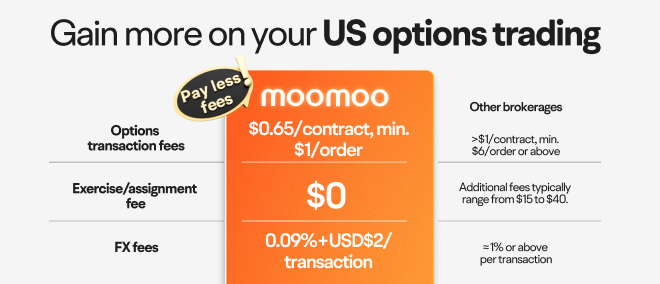
For Canadian investors looking to trade options, moomoo Canada stands out as one of the best options trading platforms in 2025. Moomoo offers a powerful, user-friendly interface combined with low commissions, making it an excellent choice for both beginners and experienced traders.
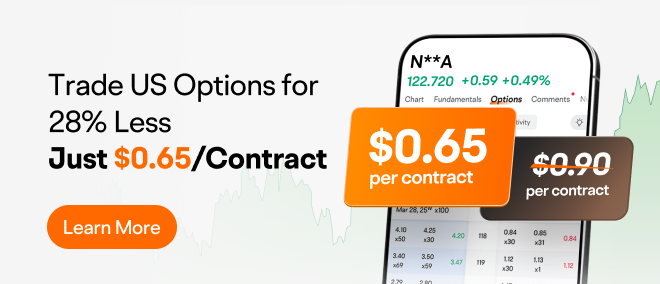
With competitive pricing—charging just $0.65 per options contract and a minimum of $1 per order—moomoo is significantly more affordable than many traditional brokers in Canada.
Why choose moomoo?
Charges low commissions, such as $0.65 per options contract with a minimum of $1 per order, making it cost-effective.
Provides a paper trading feature that allows users to practice strategies in a risk-free environment.
Provides access to Canadian and U.S. stocks, ETFs, and options, allowing broad market exposure for Canadian investors.
Offers free real-time Level 2 market data, showing detailed bid and ask prices to help traders assess market depth and liquidity.
Features advanced charting tools with over 100 technical indicators and comprehensive analytics for in-depth market analysis.
Regulated by Canadian authorities such as the Canadian Investment Regulatory Organization (CIRO).
Member of the Canadian Investor Protection Fund (CIPF), ensuring a secure and reliable trading environment.
How to trade options with moomoo?
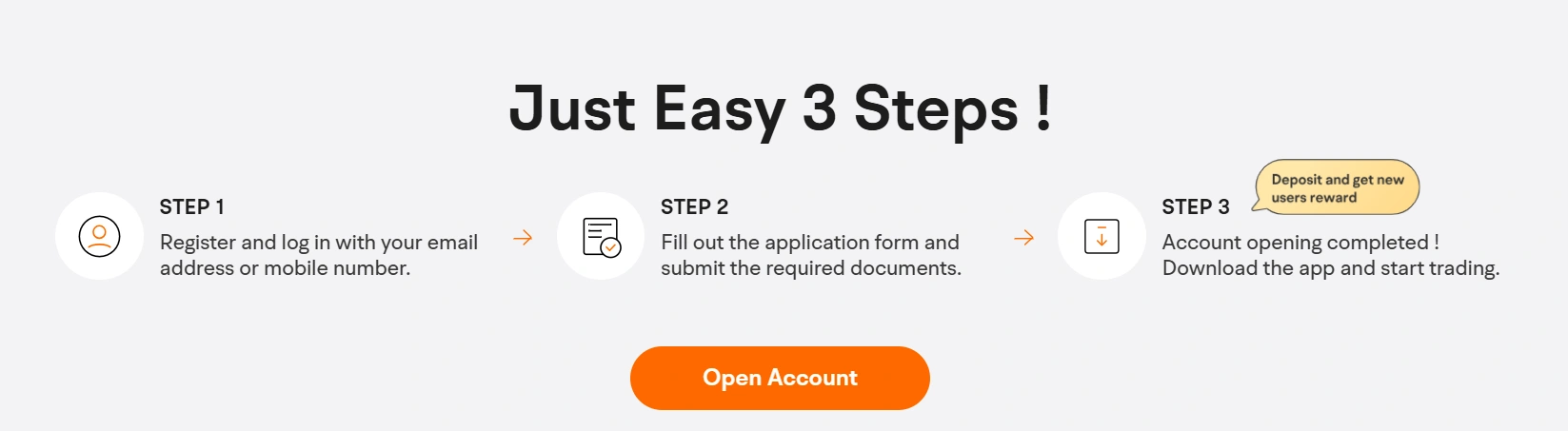
New to moomoo? You can set up your account quickly in just three easy steps!
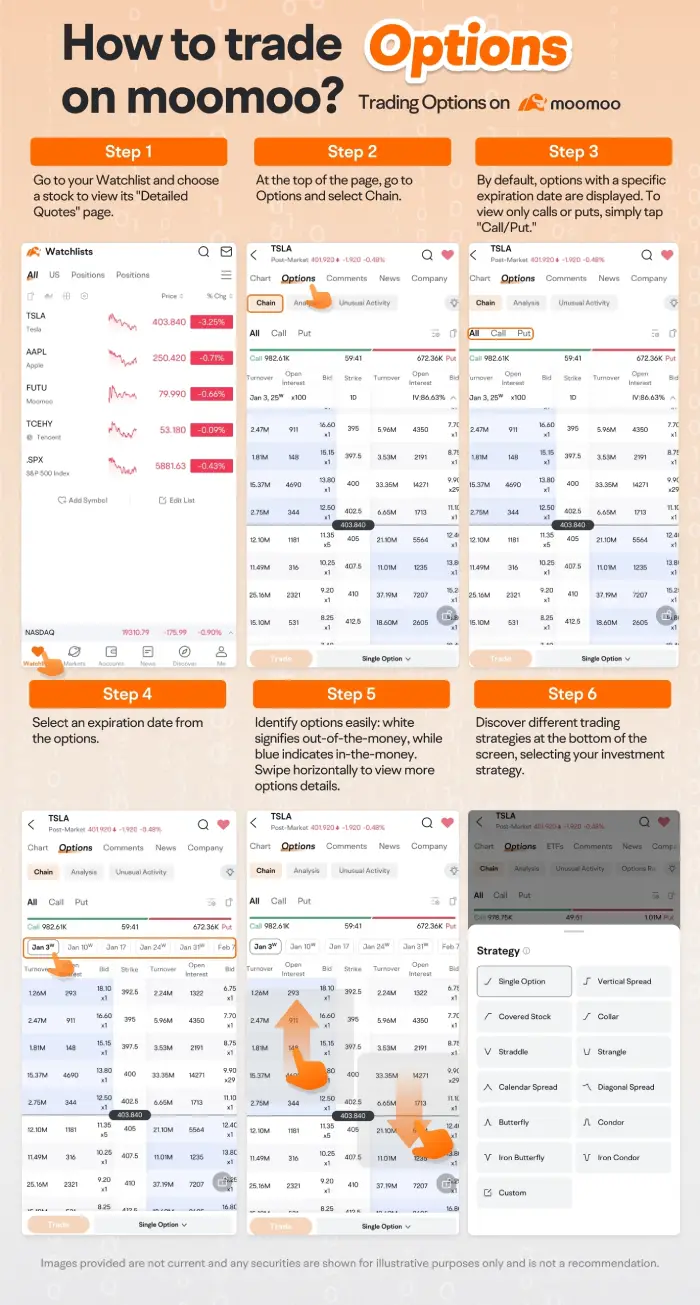
Then, you can follow the specific steps in the picture below.
Frequency Asked Questions
What is the key difference between futures contracts and options?
Key differences include the underlying asset (stock vs futures contract), and the mechanics of expiration and exercise. Futures options are options on futures contracts, whereas stock options are directly on shares. Both provide rights without obligation, but futures options relate to contracts that have their own delivery obligations.
Are options better than futures?
No, options aren’t inherently better than futures. The right choice depends on your goals, risk tolerance, and strategy: - Options let you control a large position with a small premium, offering limited risk (downside capped at the premium) and strategic flexibility—making them a good fit for speculation, hedging, and income strategies. - Futures, by contrast, require binding obligations and carry unlimited risk, but they provide steady margin costs, no time decay, high liquidity, and straightforward pricing, making them appealing for direct bets on commodities, currencies, or indexes. In short, options may suit investors seeking defined risk and tactical versatility, while futures are often better for those pursuing strong leverage and clean exposure.
This presentation is for informational and educational use only and is not a recommendation or endorsement of any particular investment or investment strategy. Investment information provided in this content is general in nature, strictly for illustrative purposes, and may not be appropriate for all investors. Read more