Why should you invest?
Key Takeaways
Inflation may subtly erode your buying power as time passes.
Choosing to invest can yield higher returns than merely saving your money.
Earning passive income grants you more flexibility and liberty to manage your time.
The advantage of compound interest comes with investing; starting earlier enhances the potential to increase your wealth.
What is investing?
If you aim to grow your wealth, consider investing as a vital strategy.
It involves a methodical plan to accumulate wealth over time through well-informed investment decisions that suit your financial objectives and risk appetite.

Investing covers various factors, such as determining the best avenues for funds, which could be stocks, bonds, gold, bank deposits, or real estate. With plethora of choices at hand, having a clear grasp of your investment goals and the timeframe you’re looking at is essential to leverage the potential advantages.
Benefits of investing
Individual investment objectives differ, but there are shared motivations behind why people invest their money.
Enhance purchasing power
During the COVID-19 pandemic, Australia experienced rising inflation and living costs, with inflation surpassing 7% in the September 2022 quarter, well above the Reserve Bank of Australia's targeted inflation rate of 2-3%.
Over time, inflation can gradually diminish your purchasing power, reducing the quantity and quality of goods and services you can acquire with the same sum of money.
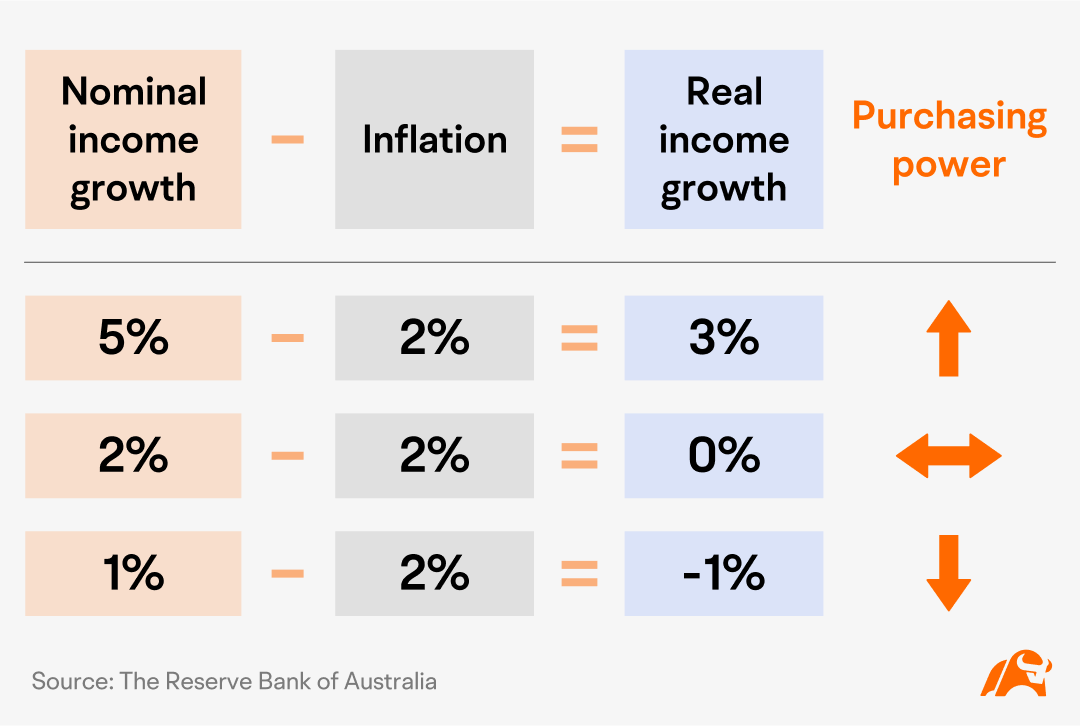
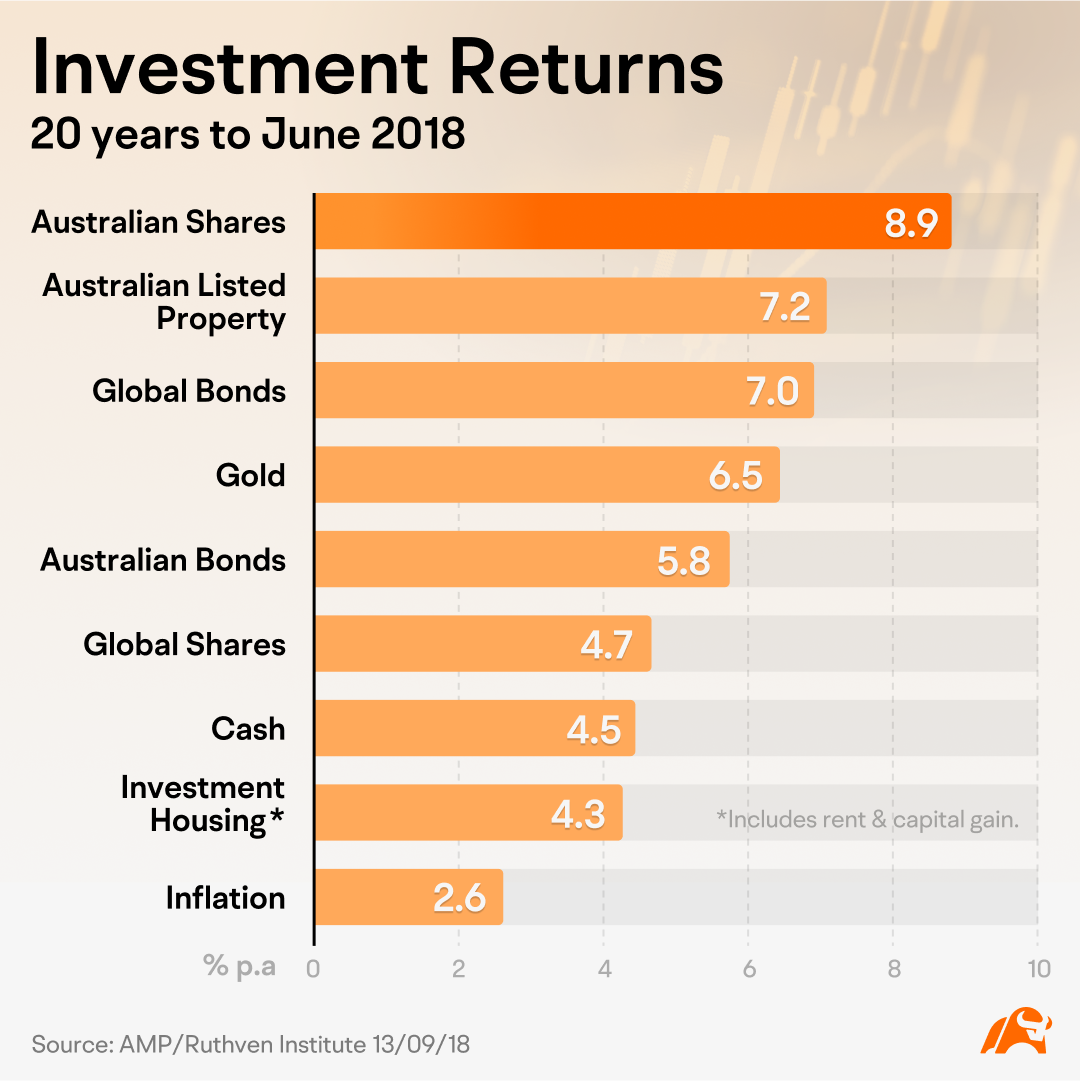
Investing your funds could yield higher returns compared to keeping them in a savings account, potentially accelerating your money’s growth and enhancing your purchasing power.
The following chart demonstrates the annualized returns of different investment assets.
Generate passive income
Investments like dividend-paying stocks can provide a steady flow of returns, commonly known as passive income.
Passive income is a vital aspect of many people's financial planning, as it can provide a reliable income stream that complements their primary source of income. Unlike active income, it is not dependent on the amount of time or labor you put in, which provides more flexibility and freedom to spend your time.
Benefit from compound interest
Investing also presents the advantage of compound interest, where the returns you earn are reinvested to produce further gains.
For example, say you invest $1,000 in an asset with an annual interest of 5%. At the end of the first year, you’d earn $50 in interest. If you reinvest that $50, your investment grows to $1,050, and the next year, you’d earn 5% on this new amount, which equals $52.50 in interest.
Over time, compound interest can significantly increase the value of your investment. This is why it's important to start investing early and allow your money to compound over time.
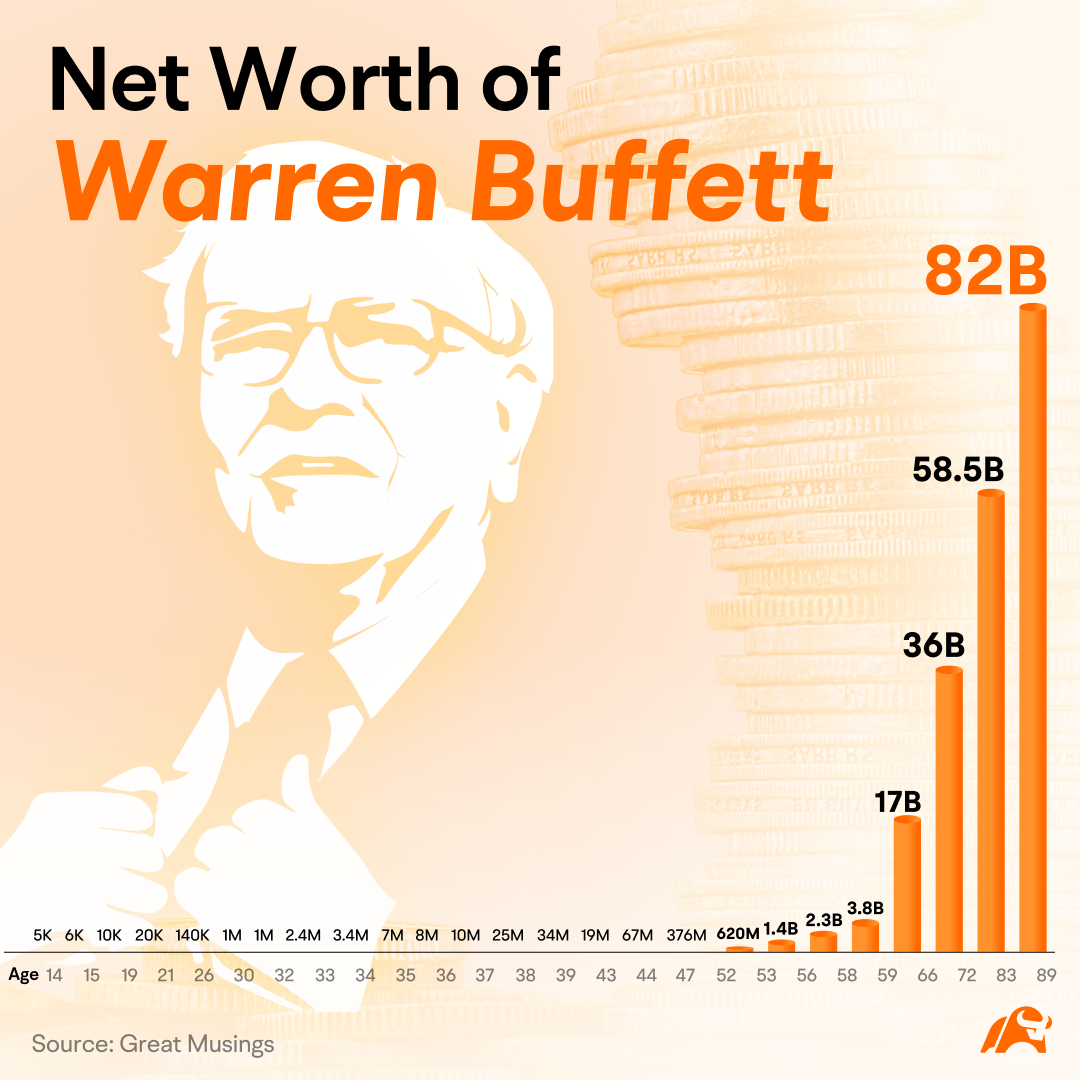
Warren Buffett, one of the most successful investors in history, bought his first stock at the age of 11. He amassed over 99% of his fortune after his 50th birthday. Buffett’s long-term investment approach has effectively harnessed the power of compounding, enabling him to realize extraordinary return over the decades.
Time is the friend of the wonderful company, the enemy of the mediocre.
- Warren Buffett
Start investing earlier
Jest like many other aspects of life, the benefits of investing are maximized when you start early. The sooner you begin to plan for retirement, the larger your potential investment returns could be.
Investing is a journey that spans a lifetime, and an early start opens up more possibilities for your money to grow. Additionally, the longer your investment horizon, the less you’ll be affected by short-term volatility in the markets.
Many prospective investors hold off for the “perfect” time to enter the market, yet predicting the market’s movements is notoriously difficult. Therefore, it’s advisable to begin investing as early as you can. Remember the well-known investment wisdom: "Time in the market is more important than timing the market."
You don't have to be a financial guru to get started with investing. A basic grasp of investment principles, a solid plan, and the discipline to adhere to this plan are all you need. No matter what your financial standing is, it’s vital to inform yourself about the various investment options available to you.
Risks of investing
While there are many reasons why people may start investing, it is important to remember that all investments come with risks.
Investment risk refers to the likelihood of losing some or all of the money you have invested, which can be due to a decline in the investment's value or underperformance.
There are various types of risks that can affect the value of your investment, such as systematic risk, market risk, credit risk, and liquidity risk. As a general rule, the higher the expected return on an investment, the higher the risk associated with it.
It is important to remember that taking the time to carefully consider the risks of investing can help you optimize your potential returns and ensure that your portfolio aligns with your risk tolerance. This will allow you to avoid creating a portfolio that carries more risk than you are comfortable with and help you achieve your investment goals.
This presentation is for informational and educational use only and is not a recommendation or endorsement of any particular investment or investment strategy. Investment information provided in this content is general in nature, strictly for illustrative purposes, and may not be appropriate for all investors. Read more