Decoding Analyst Ratings: Learn from the experts
Have you noticed that you’re drawn to investing in companies you know well? It’s like picking a favourite restaurant—you know the menu and what to expect. This familiarity can give you an edge, helping you understand the company better than others might.
But here’s the thing: even if you’re a super-fan of a company and know their products inside out, figuring out when to buy or sell their shares can still be tricky. It’s like trying to predict the weather—even the pros sometimes get it wrong.

So, what can you do? Well, why not tap into the brains of Wall Street’s smartest cookies? The moomoo app has a nifty feature called ‘Analyst Ratings’. This feature opens a window into professional analysis, allowing you to access timely, free expert opinions from various institutional analysts on specific stocks.
What are ‘Analyst Ratings’?
Analyst ratings, also known as ‘buy-sell ratings’, are like report cards for stocks, graded by financial experts. These ratings come from in-depth research. Analysts act as market detectives, examining company financials, participating in conference calls and interacting with executives.
Using this intel, they apply complex models to predict company performance and set a ‘target price’—their forecast of the stock’s future value.
For average investors, analyst reports can seem complex. Fortunately, these reports boil down to two key elements:
● Rating Opinion: It simply tells you whether the analyst thinks you should buy, hold or sell a particular stock.
● Target Price: It’s like a price tag from the future, showing what the analyst thinks the stock could be worth in the future (typically 12 months).
Think of these ratings like a traffic light system:
● Green (Buy): The analysts are saying, ‘Go for it’.
● Yellow (Hold): They’re suggesting, ‘Keep what you have’.
● Red (Sell): This is their way of saying, ‘Time to let go’.
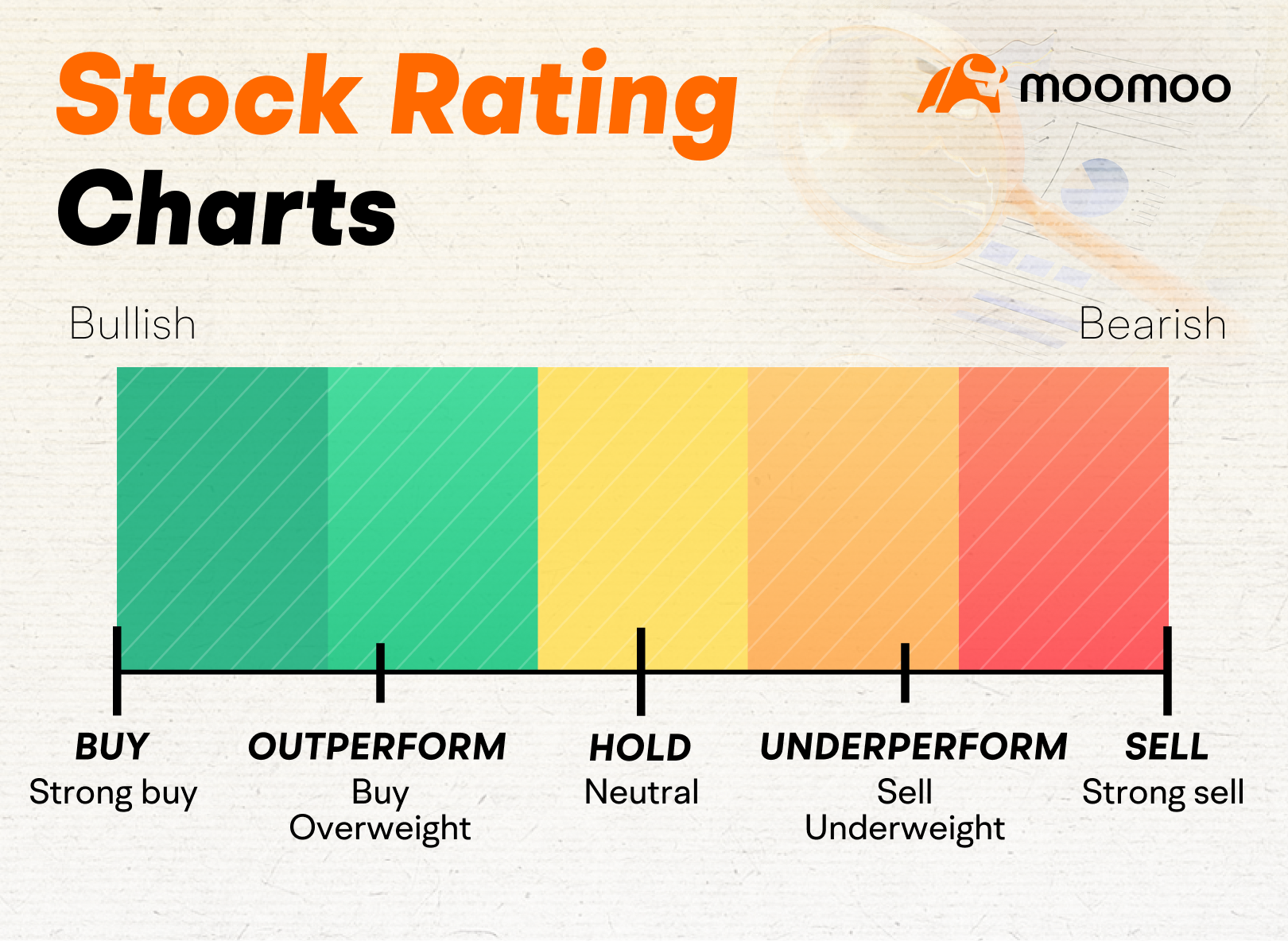
Analysts sometimes use fancier terms like Outperform, Underperform, Overweight or Underweight. These are just nuanced versions of buy, hold or sell ratings. Combining these ratings with target prices provides a quick guide for your investment decisions, offering insight into expert opinions.
Do Analyst Ratings work?
The effectiveness of analyst ratings has been questioned in the market. Let’s look at this issue from two aspects:
● The crowd effect
Like a stadium wave, when the vast majority of analysts agree on a stock, it can trigger a chain reaction, influencing market sentiment and potentially getting everyone else excited (or worried) about that stock too. It’s like the whole market is doing the wave.
● The stock market tango
Analyst ratings and stock prices are like dance partners, constantly influencing each other. If most analysts are bullish on a stock, it’s difficult for its price to keep falling. Persistent price drops despite bullish sentiment might cause analysts to reconsider and adjust their ratings. Conversely, if a stock’s price keeps rising, analysts are unlikely to quickly label it a bad investment, avoiding being the ‘party pooper’ during a rally.
So, are analyst ratings perfect predictors? No. They’re more like weather forecasts—generally helpful, but not infallible. Wise investors use them as one tool among many, not as their sole guide for investment decisions.
How to use Analyst Ratings?
The Analyst Ratings feature brings together expert data from third-party sources and presents it in a clear, easy-to-digest format. Let’s dive in!
● Easy access
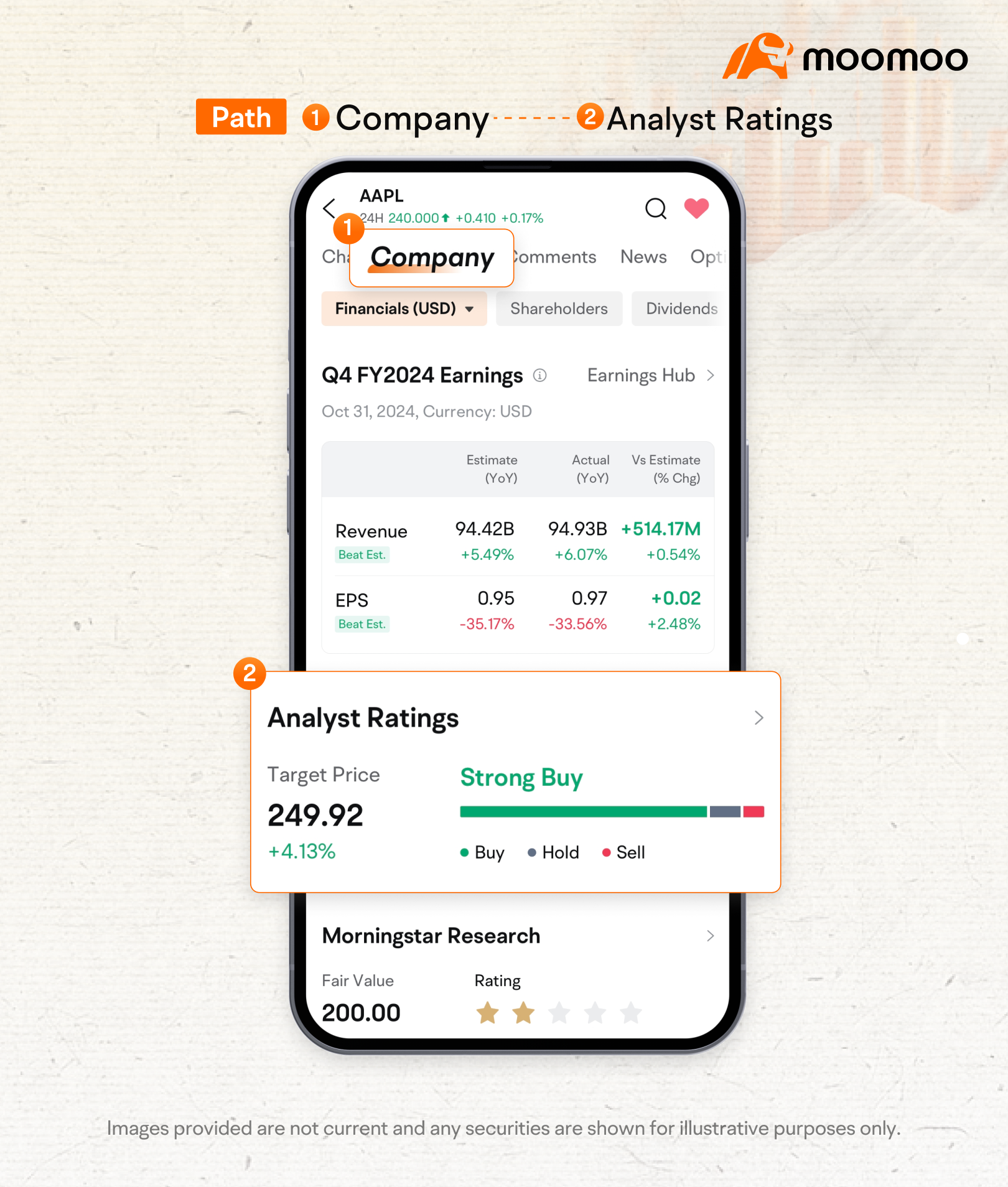
On the moomoo app, go to any stock’s Detailed Quotes page. Tap on the ‘Company’ tab and you’ll find the ‘Analyst Ratings’ section.
● Snapshot view
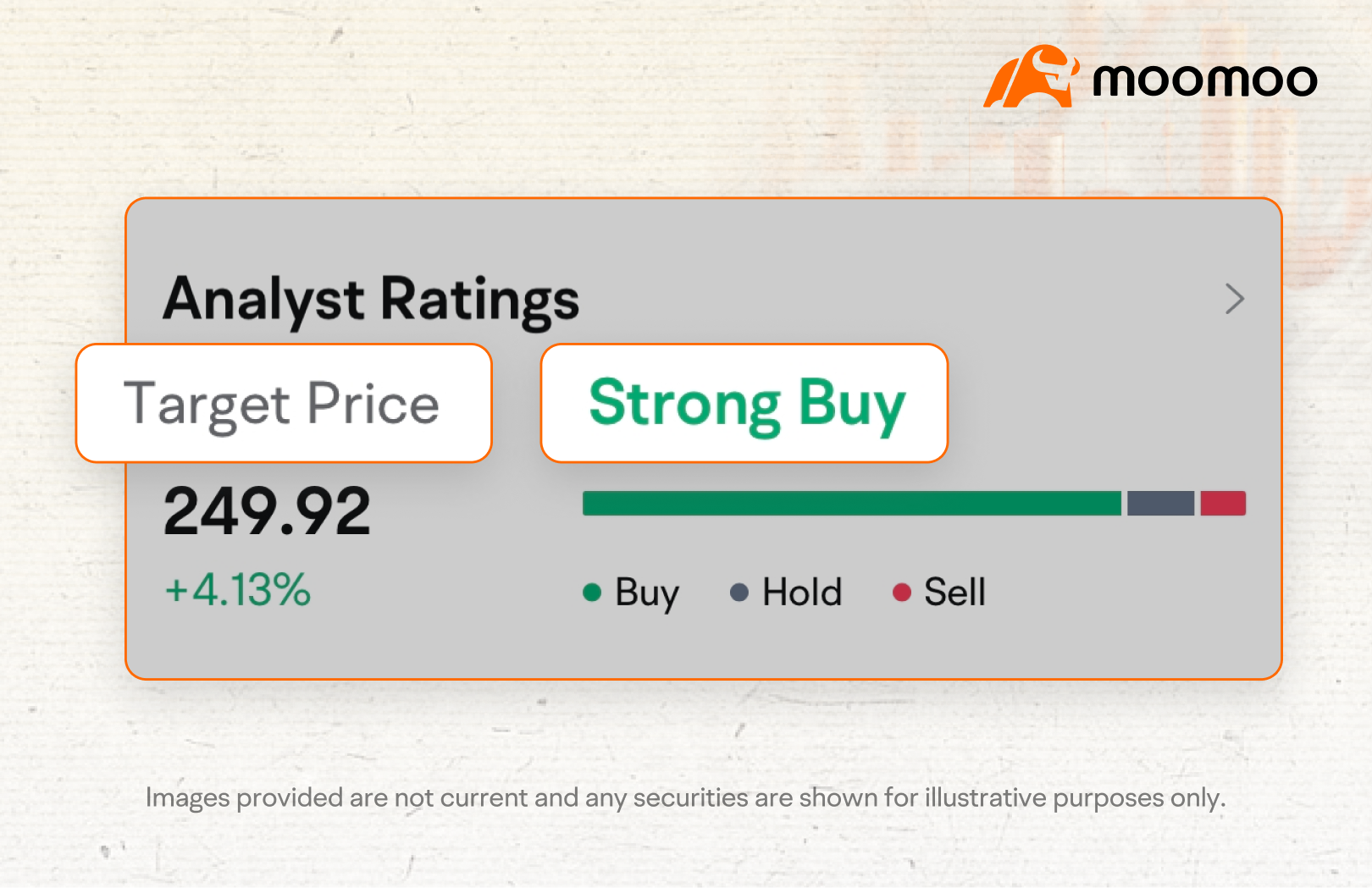
The snapshot view presents a summary of all analyst ratings and an average of target prices. At a glance, you can see what analysts think about a stock’s potential.
● Detailed information
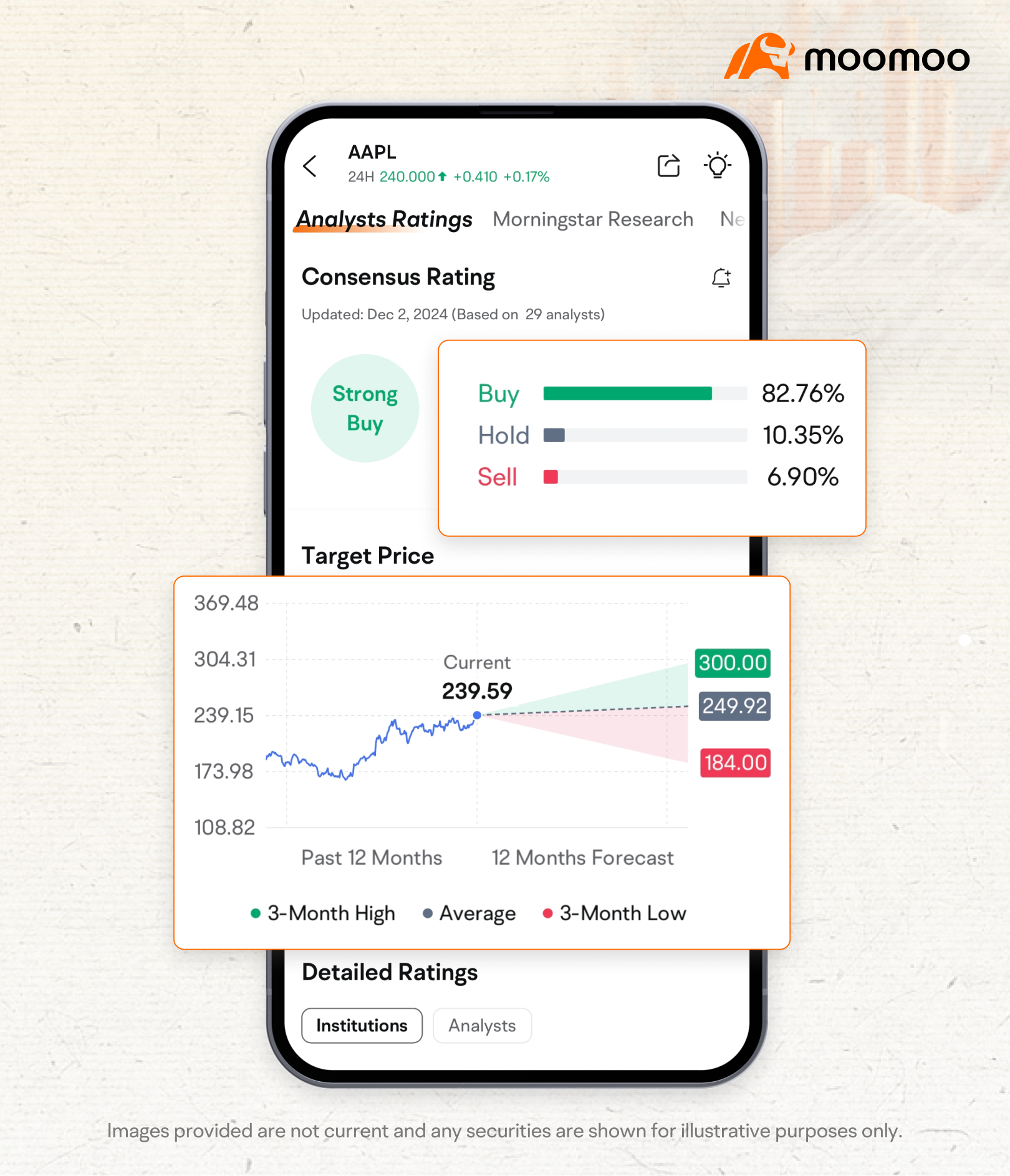
The Analyst Ratings feature simplifies analyst ratings into buy, hold and sell categories, with a clear chart showing how many analysts are in each camp. It also graphically shows past stock price movements and the highest, lowest and average price targets predicted by analysts.
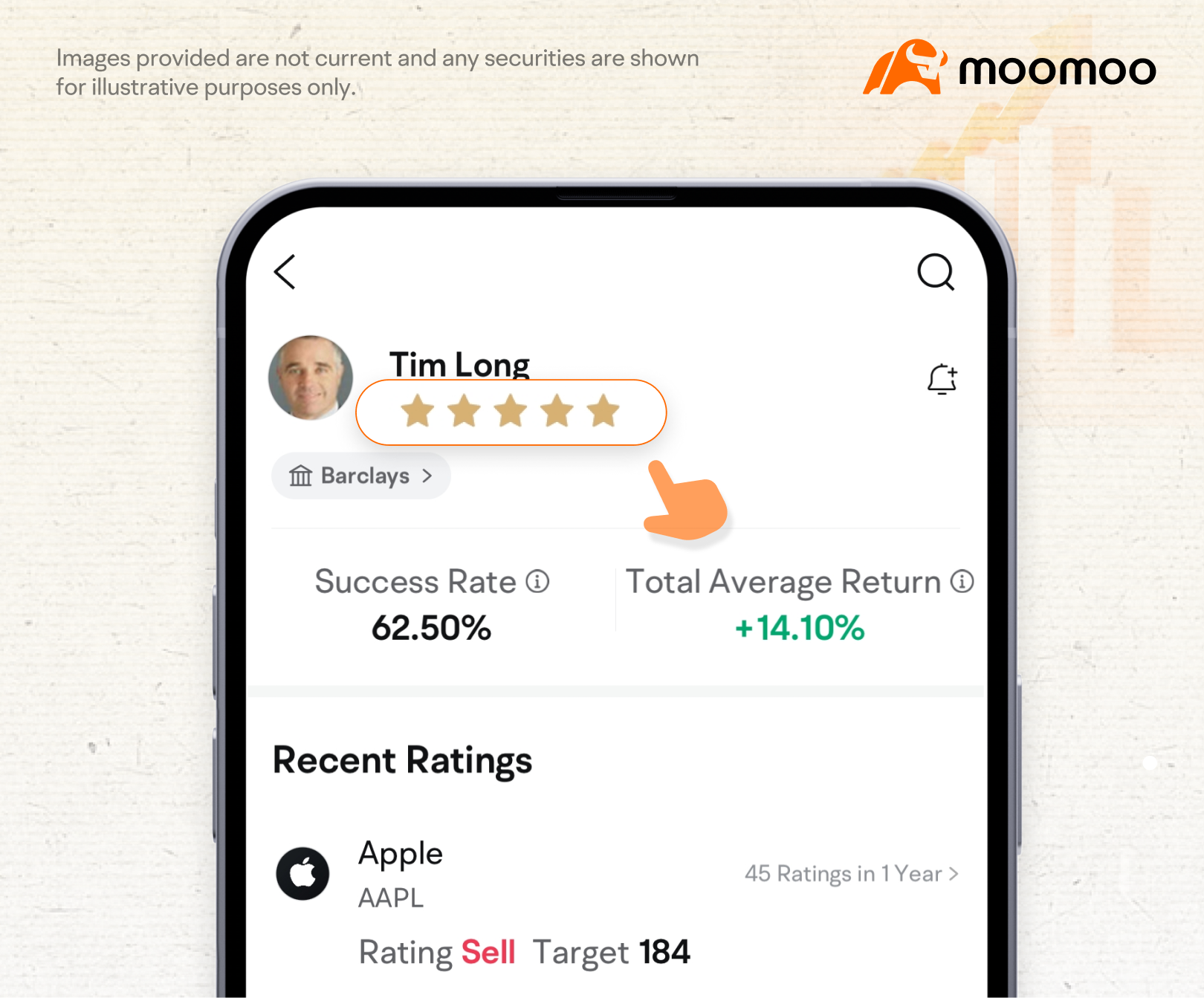
● Analyst star ratings
Based on a rigorous assessment by the third party, five-star analyst ratings are calculated using a combination of Success Rate and Total Average Return, reflecting past performance. The higher the star rating, the stronger prediction track record of the analyst. This indicator allows you to judge the credibility of analysts’ opinions.
● Smart Alerts
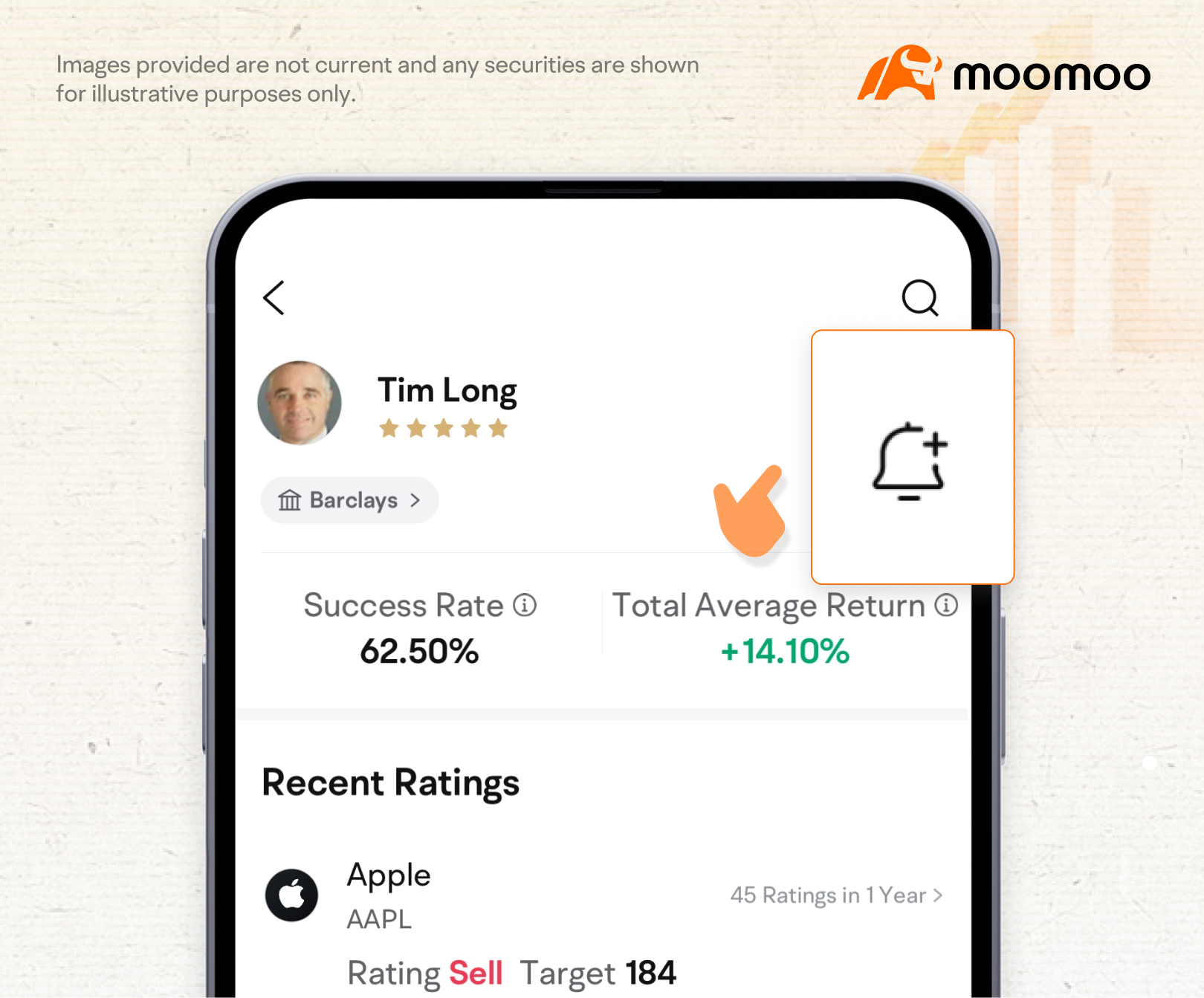
The Analyst Ratings feature provides a customisable alert system. On the detailed page of a specific institution or analyst, tap the Alert icon in the upper right corner to subscribe to updates. When there’s a new rating change or price target update, you’ll receive a timely push notification, ensuring you don’t miss any important information.
● Timely updates
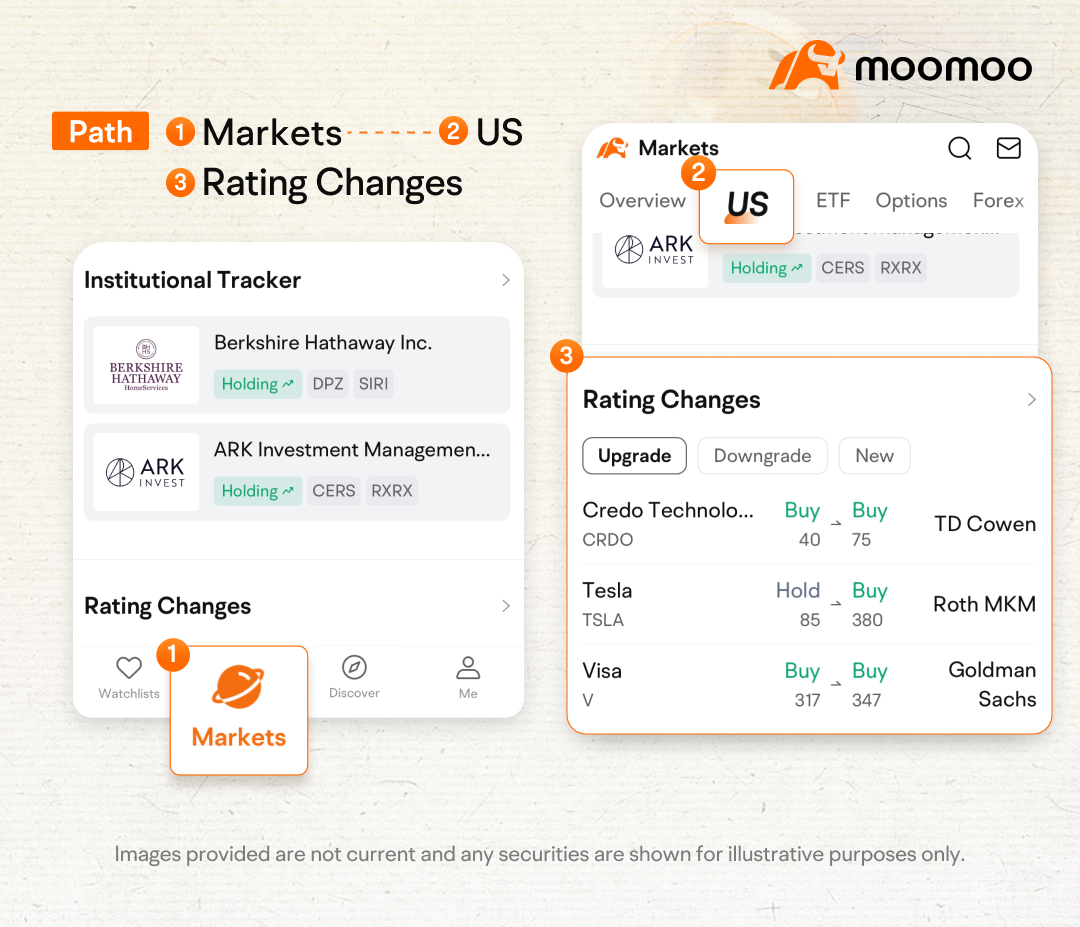
While you can always check analyst ratings on a stock’s Detailed Quotes page, there’s a handy way to catch the latest analyst buzz even faster. On the moomoo app, tap on ‘Markets’ > ‘US’ and then scroll down to the ‘Rating Changes’ section. This approach allows you to view the most recent analyst rating changes, helping you spot emerging market trends across the board.
Quick tips for assessing analyst credibility
Analyst ratings can be a goldmine of investment insights, but how do you separate the valuable information from the less useful? Here’s how to potentially maximise their benefits:
● Follow top-tier analysts
Not all analysts are equal. Those from globally recognised institutions often carry more weight and potentially impact stock movements more significantly. Their expertise and resources typically lead to higher-quality research.
● Track record matters
An analyst’s reputation is tied to their accuracy. However, conflicts of interest can affect judgment. Use the analyst star ratings feature to quickly assess an analyst’s performance. It showcases their success rate and average returns, serving as a performance indicator.
● Focus on stocks with high consensus ratings
High consensus ratings occur when most analysts agree on a stock’s outlook. This agreement can influence market sentiment and stock prices. It often indicates strong company performance or promising prospects. Pay attention to stocks receiving widespread analyst approval.
● Closely monitor rating changes
Significant changes in analyst ratings usually signal important shifts in a company’s fundamentals. An analyst reversing their opinion, especially against popular sentiment, may indicate hidden opportunities or potential risks. These changes warrant careful investor attention.
The bottom line
Analyst ratings offer valuable insights into market sentiment and company potential. However, they’re just one piece of the investment puzzle.
Stock prices are influenced by complex factors including company fundamentals, market sentiment and macroeconomic conditions. Analyst ratings may not always fully capture these rapidly changing variables.
So, think of analyst ratings as your co-pilot, not the driver. Start with what the analysts are saying, then dig deeper. Mix in your own detective work and a dash of big-picture thinking. It’s like being a market chef—analyst ratings are just one ingredient in your investment recipe.
This presentation is for informational and educational use only and is not a recommendation or endorsement of any particular investment or investment strategy. Investment information provided in this content is general in nature, strictly for illustrative purposes, and may not be appropriate for all investors. Read more