What is a Crypto ETF and How to Buy Crypto ETFs in Australia

In today's digital age, cryptocurrency has emerged as a new asset class that has captured the attention of investors worldwide. Crypto ETFs offer an ideal solution for those who wish to participate in this exciting market while avoiding the complexities and risks associated with direct cryptocurrency trading. Crypto ETFs are investment funds listed on stock exchanges that allow investors to indirectly invest in a basket of cryptocurrencies or companies related to cryptocurrencies by purchasing fund shares.
With the SEC approving Bitcoin and Ethereum ETFs in 2024, Australian investors can now easily integrate these digital assets into their investment portfolios through traditional securities trading platforms, including the Australian Securities Exchange (ASX).
This article will provide a detailed introduction to what Crypto ETFs are, how they operate, their advantages compared to conventional direct investment in cryptocurrencies, and how to invest in Crypto ETFs in ASX.
What is a Crypto ETF?
Crypto ETFs, or cryptocurrency exchange-traded funds, are a new type of investment instrument that combines the liquidity and regulatory framework of traditional ETFs with the dynamic characteristics of the cryptocurrency market. These funds allow investors to indirectly invest in a range of cryptocurrency assets, such as Bitcoin and Ethereum, as well as potentially including stocks of companies related to blockchain technology, by purchasing and selling fund shares, thus eliminating the need to hold and manage these complex digital assets directly.
Crypto ETFs come in various types, including Crypto Spot ETFs and Crypto Futures ETFs, offering a broad range of options for investors with different risk preferences. Overall, Crypto ETFs provide investors with a relatively safe and convenient way to participate in the cryptocurrency market but also require investors to stay alert to market dynamics, regulatory changes, and potential technical issues.

How do Crypto ETFs work?
Crypto ETFs' operation mechanisms combine traditional ETFs' trading characteristics with investment opportunities in the cryptocurrency market. Initially, crypto ETFs were created by professional fund management companies responsible for selecting and monitoring the cryptocurrency assets included in the ETF.
These assets may include mainstream cryptocurrencies such as Bitcoin and Ethereum, as well as other smaller cryptocurrencies or stocks of companies related to blockchain technology. Fund management companies adjust the investment portfolio based on market conditions and investment strategies to maximise returns and manage risks.
Investors can purchase shares of Crypto ETFs through stock exchanges, just like trading stocks. These shares represent the proportion of investors' ownership of cryptocurrency assets the fund holds. Since Crypto ETFs are listed on exchanges, they offer high liquidity, allowing investors to buy and sell at any time during the trading day. This differs from traditional mutual funds which usually only calculate net value at the end of the trading day.
Despite providing investment convenience, Crypto ETFs face challenges like market volatility, regulatory changes, and technological risks. Australia's regulatory environment is relatively open to Crypto ETFs, but investors still need to pay attention to changes in regulatory policies, which may affect the operation and performance of ETFs. In addition, due to the high volatility of the cryptocurrency market, the investment value of Crypto ETFs can change rapidly, and investors need to have a deep understanding of market dynamics and a cautious attitude.

How do Crypto ETFs differ from direct crypto investing?
Crypto ETFs and direct investment in cryptocurrencies have significant differences in several aspects, including investment convenience, asset custody, portfolio diversity, impact of market volatility, and regulatory compliance. Here is a detailed comparison of these two investment approaches, aimed at helping investors make wise decisions based on their own needs and risk preferences.
1. Investment convenience
Crypto ETF: Investors can purchase shares of Crypto ETFs through traditional stock exchanges, just as easily as trading stocks. This provides convenience for investors who are not familiar with cryptocurrency trading platforms or are unwilling to deal with digital wallets.
Direct investing: Direct investment in cryptocurrencies requires investors to create accounts on cryptocurrency exchanges, learn how to manage digital wallets, and handle security issues such as private key management.
2. Asset custody
Crypto ETF: The cryptocurrency assets in the fund are usually custodied by third-party custodians, who are responsible for ensuring the security and compliance of the assets.
Direct investing: Investors are responsible for the custody of their assets, which means they must ensure the security of their digital wallets to prevent hacking and theft.
3. Investment diversity
Crypto ETF: Investors can achieve diversified investments in multiple cryptocurrencies by purchasing a single ETF share, reducing the risk of fluctuations in a single asset.
Direct investing: Investors need to purchase and manage various cryptocurrencies separately, which may require more capital and effort.

4. Market volatility
Crypto ETF: Although ETFs offer diversification, they still face the high volatility of the cryptocurrency market. However, professional fund management may adopt strategies to mitigate the impact of volatility.
Direct investing: Investors bear the full volatility of specific cryptocurrencies without the help of professional management to mitigate risks.
5. Regulatory compliance
Crypto ETF: Crypto ETFs are subject to the same regulation as traditional financial products, providing a certain level of protection for investors.
Direct investing: The cryptocurrency market is relatively unregulated, and investors may face higher regulatory uncertainty and risks.
In summary, Crypto ETFs and direct investment in cryptocurrencies each have their advantages and disadvantages. Crypto ETFs provide investors with a more convenient, diversified, and regulated investment method, suitable for those who seek to reduce technical barriers and security risks. Direct investment is suitable for those who are willing to invest more time and effort and want higher control over their investments.
How to Buy Crypto ETFs on moomoo
Investing in ETFs related to cryptocurrencies is relatively low-risk and more convenient, making it an ideal choice for new investors. One can invest in Bitcoin stocks and ETFs through various digital trading platforms in the Australian market. Taking moomoo as an example, the routine process for purchasing Bitcoin ETFs in Australia can be summarised as follows:
1. Open an account: First, you need to open a free trading account with moomoo and complete the identity verification process.
2. Fund your account: After your account is opened and verified, you need to deposit funds into your moomoo account. This can usually be done through bank transfers, credit cards, or other payment methods supported by moomoo.
3. Find Crypto ETFs: Enter "Crypto" in the search bar, then click "More" to view a list of different types of ETFs. On moomoo, you can also navigate to "Markets" > "Others/AU" > "ETFs" > "Crypto ETFs" to find them.
4. Select a Crypto ETF: You can sort the list based on criteria such as price change, trading volume, transaction amount, and market value.
5. Place an order: You can place an order to trade on the moomoo platform. You can choose a market order, which buys immediately at the current market price, or a limit order, which executes the purchase when the market price reaches a specific level you set.

Best ASX Crypto ETF in 2024
When exploring Australian ASX Crypto ETFs, investors will find a variety of ways to invest in the cryptocurrency market. The following is a selection of the best-performing ASX Crypto ETFs in the Australian market, based on the latest data as of November 19, 2024, taking into account market capitalisation and year-to-date returns, for reference by Australian investors only.
Symbol | Market Cap | YTD |
BetaShares Crypto Innovators ETF (CRYP) | 202.44M | 49.70% |
Global X 21Shares Bitcoin ETF (EBTC) | 172.95M | 120.75% |
VanEck Bitcoin ETF (VBTC) | 125.55M | 43.72% |
Global X 21Shares Ethereum ETF (EETH ) | 28.61M | 38.71% |
Global X Fintech & Blockchain (FTEC) | 6.67M | 27.54% |
1. BetaShares Crypto Innovators ETF (CRYP)
BetaShares Crypto Innovators ETF (CRYP) is the first exchange-traded fund (ETF) in Australia that provides investors with indirect exposure to cryptocurrency-related assets. CRYP does not directly invest in Bitcoin, Ethereum, or any other cryptocurrencies; instead, it offers indirect exposure by investing in global companies closely associated with the "crypto economy." The CRYP portfolio consists of up to 50 assets, currently holding 32 companies, primarily involved in cryptocurrency infrastructure such as exchanges, miners, and software.
2. Global X 21Shares Bitcoin ETF (EBTC)
Global X 21Shares Bitcoin ETF (EBTC) offers investors a simple, regulated, and transparent way to gain exposure to Bitcoin (BTC). EBTC is fully backed by physical Bitcoin, meaning the Bitcoin assets it holds are stored in 'cold storage,' a method of keeping Bitcoin private keys offline to reduce the risk of hacking attacks. EBTC is custodied by Coinbase, one of the world's largest cryptocurrency custodians. This custodianship requires approval from multiple individuals to release funds from the cold storage accounts, achieved by dispersing and distributing private keys across multiple servers globally.
3. VanEck Bitcoin ETF (VBTC)
VanEck Bitcoin ETF (VBTC) is the first Bitcoin spot ETF listed on the Australian Securities Exchange (ASX), issued by the American asset management firm VanEck. VBTC offers a simple and convenient way for investors to gain exposure to the price fluctuations of Bitcoin without the need to directly hold and manage Bitcoin themselves. As a feeder fund to VanEck's Bitcoin ETF HODL, which has a market value of $647 million in the United States, VBTC is registered with the Australian Securities and Investments Commission (ASIC) and is regulated as a "registered managed investment scheme."
4. Global X 21Shares Ethereum ETF (EETH)
Global X 21Shares Ethereum ETF (EETH) is a product traded on the Australian market that allows investors to access Ethereum within a regulated environment. EETH is fully backed by physical Ether, which is stored in Coinbase's cold storage, one of the world's largest cryptocurrency custodians. The goal of EETH is to track the price performance of Ether relative to the Australian dollar, offering investors a way to trade Ether on a stock exchange without the need to directly manage their own Ethereum wallets.
5. Global X Fintech & Blockchain (FTEC)
Global X Fintech & Blockchain ETF (FTEC) is an exchange-traded fund focused on the financial technology and blockchain technology sectors, aiming to invest in cutting-edge companies and major innovators in this field. The investment objective of FTEC is to track the performance of the Solactive Fintech & Blockchain Index, which covers multiple sub-themes including digital asset mining, blockchain, and digital asset trading, blockchain applications, blockchain and digital asset hardware, and the integration of blockchain and digital assets. By investing in companies across these sectors, the ETF offers investors a diversified portfolio, allowing them to benefit from the growth and application of blockchain technology.
Types of Crypto ETFs in Australia
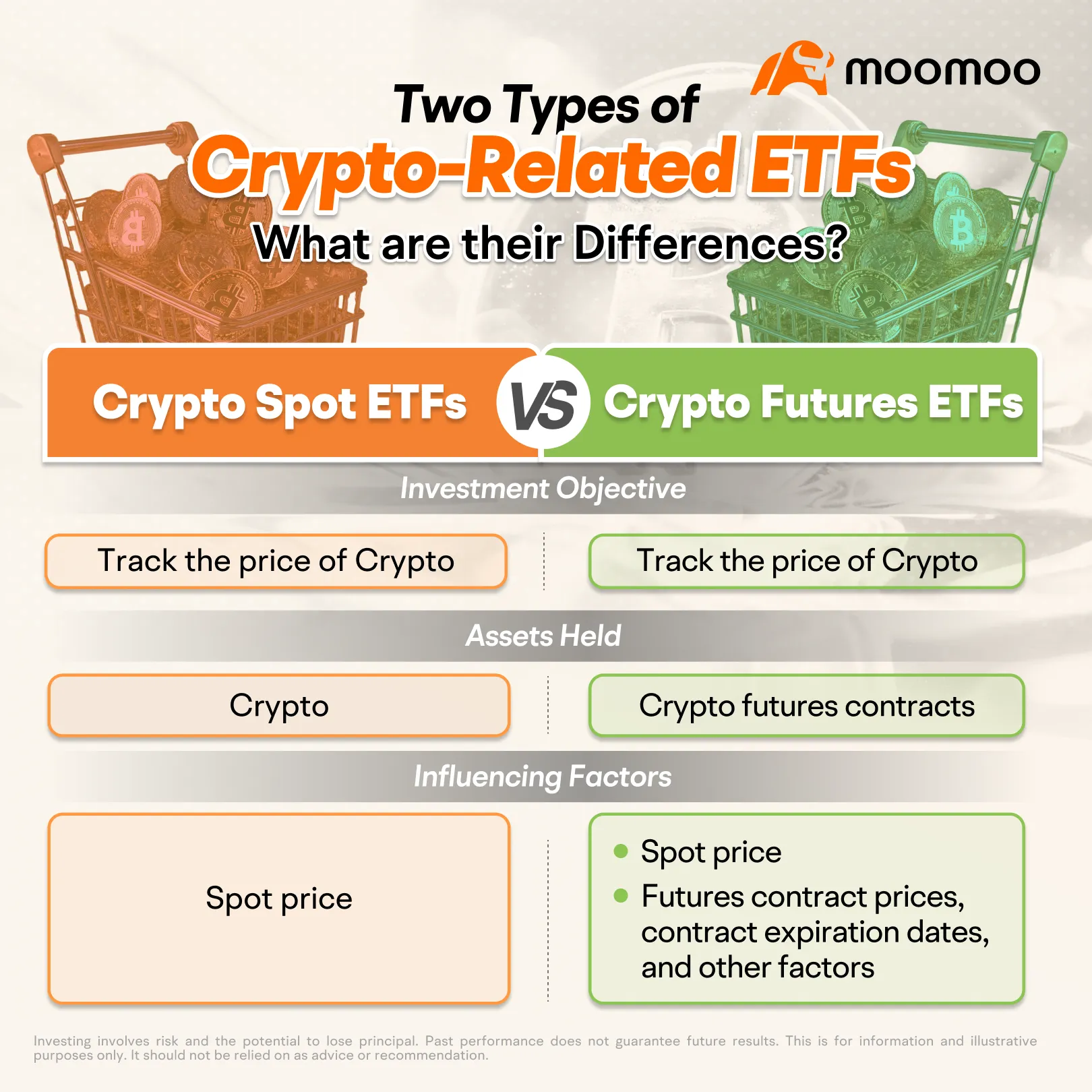
In Australia, Crypto ETFs are primarily divided into two major categories: Crypto Spot ETFs and Crypto Futures ETFs, which have significant differences in investment strategies and risk exposure. Each type of ETF has its characteristics and mechanisms, corresponding to different investment strategies and risk preferences. Here is an introduction to these two types of Crypto ETFs, aimed at helping investors understand the differences between them and make investment choices that suit their own needs.
Crypto Spot ETFs
Crypto Spot ETFs are ETFs that directly invest in the cryptocurrency spot market. These ETFs track the price performance of actual cryptocurrencies, such as Bitcoin and Ethereum, by purchasing and holding them. When investors buy shares of a Crypto Spot ETF, they are indirectly holding these cryptocurrencies.
The advantage of these ETFs is that they offer direct market exposure, allowing investors to benefit from the rise in cryptocurrency prices while avoiding the complexity and security risks of direct cryptocurrency trading. However, since they are directly linked to spot prices, they may experience greater price volatility and are relatively higher in risk.
Crypto Futures ETFs
Crypto Futures ETFs are ETFs that gain market exposure by investing in cryptocurrency futures contracts. Futures contracts are financial derivatives that allow investors to buy or sell cryptocurrencies at a predetermined price at some point in the future. The advantage of these ETFs is that they can provide tools to hedge against spot market volatility and allow speculation on market trends through both long and short futures contracts.
Additionally, futures ETFs can offer leverage, enabling investors to participate in larger market movements with a smaller amount of capital. However, futures ETFs are more complex and may face basis risk and rolling risk, which refer to the difference between futures prices and spot prices, as well as the risks that may arise when contracts need to be rolled over upon expiration.
Benefits of investing in Crypto ETFs
Crypto ETFs, as an emerging investment tool, have garnered attention due to their unique advantages. Here are several main benefits of investing in Crypto ETFs, which cover convenience, diversification, security, and regulatory compliance. These factors collectively constitute the appeal of Crypto ETFs, making them an ideal choice for investors seeking a convenient, secure, and regulated channel for investing in cryptocurrencies.
Convenience
Crypto ETFs simplify the investment process by allowing investors to trade on familiar stock exchange platforms, eliminating the complex steps of creating and maintaining digital wallets. They also provide instant market access and exit capabilities, enabling investors to buy and sell Crypto ETF shares like stocks at any time during the trading day, without the need to delve into the complexities of blockchain technology or cryptocurrencies.
Diversification
By investing in a single Crypto ETF, investors can achieve one-click diversification, gaining exposure to a variety of cryptocurrencies, effectively spreading the risk of a single asset, and enhancing the stability of their investment portfolio. Additionally, a diversified portfolio can reduce the impact of price fluctuations in specific cryptocurrencies, providing a smoother investment experience for investors.
Security
Crypto ETFs enhance the security of investments through asset custody, reducing the risk of hacking attacks, and increasing transparency. Assets are typically held by third-party custodians who follow strict security protocols, significantly reducing the risk of asset theft or loss. Unlike traditional cryptocurrency investments, investors do not need to worry about the security management of private keys, as professional institutions are responsible for the security of Crypto ETF assets. Moreover, the holdings and price information of Crypto ETFs are publicly transparent, allowing investors to easily monitor their investment value and reducing the risk of information asymmetry.
Regulatory compliance
Crypto ETFs in Australia are regulated by the Australian Securities and Investments Commission (ASIC), which means these funds must comply with strict legal and regulatory frameworks. Investors can be assured that the products they invest in are supervised in terms of transparency, fairness, and professionalism. Furthermore, Crypto ETFs are required to regularly disclose their holdings and financial conditions to regulatory authorities and the public, enhancing the transparency and disclosure of investments and allowing investors to gain a clearer understanding of the fund's operations, thus making more informed investment decisions.

Risks of investing in Crypto ETFs
When considering investing in Crypto ETFs, understanding their potential risks is crucial. Although Crypto ETFs offer a convenient and diversified way to access the cryptocurrency market, they also come with a range of specific risks, including management fees, transparency issues, non-direct ownership, and cryptocurrency price risk. These risk factors must be considered by any investor contemplating investing in Crypto ETFs to enable them to make more comprehensive and prudent investment decisions.
Management fees
Crypto ETFs typically involve management fees, which are charged by the fund management company to cover the operational costs of the fund, including asset management, marketing, compliance, and administrative expenses. These fees are deducted from the fund's assets, directly affecting investors' net returns. High management fees can erode investment gains, especially in the long term, where the accumulation of fees can significantly reduce investment returns.
Transparency issues
Although Crypto ETFs are required to disclose their holdings and financial conditions to regulatory authorities, their transparency may be lower compared to direct investment in cryptocurrencies. Some ETFs may not fully disclose the detailed composition of their holdings, or the disclosed information may not be timely enough, which can affect investors' understanding of the fund's actual investment status. Additionally, the opacity of the cryptocurrency market can also increase the difficulty of investment decision-making.
No direct ownership
Investing in Crypto ETFs means that investors do not directly own the underlying cryptocurrency assets. Instead, they own ETF shares, which represent indirect ownership of the cryptocurrencies held by the fund. This indirect ownership may limit investors' control over the assets, such as in asset transfer, voting rights, or participation in network governance. Moreover, if the ETF management company encounters problems, investors may face the risk of not being able to retrieve their assets promptly.
Crypto price risk
The cryptocurrency market is known for its high volatility and price uncertainty. The net value of a Crypto ETF is directly affected by the price fluctuations of the cryptocurrencies it holds. Market sentiment, technological developments, regulatory changes, and macroeconomic factors can all lead to sharp fluctuations in cryptocurrency prices, which in turn can affect the performance of an ETF. Investors need to stay alert to market dynamics and be prepared for possible price fluctuations.
Trade Crypto ETFs summed up
Crypto ETFs, as an emerging investment tool, provide investors with a convenient, diversified, and regulated channel for investing in cryptocurrencies. In Australia, investors can invest in various types of Crypto ETFs through ASX, including products that directly invest in the cryptocurrency spot market, as well as ETFs that gain market exposure by investing in cryptocurrency futures contracts.
However, investing in ASX Crypto ETFs also comes with potential risks such as management fees, transparency issues, non-direct ownership, and cryptocurrency price risks. Investors need to assess these potential risks, as well as the fund's fee structure and performance history, to make informed investment decisions.
Overall, Crypto ETFs offer a relatively safe and convenient way for investors seeking to reduce technological barriers and security risks to participating in the cryptocurrency market but also require investors to stay vigilant about market dynamics, regulatory changes, and potential technical issues.
FAQs about buying Crypto ETFs
Are Crypto ETFs a good investment for beginners?
Yes, for beginner investors, Crypto ETFs provide a convenient and relatively safe way to access the cryptocurrency market without the need to directly manage digital wallets and private keys. They typically include a variety of crypto assets, which helps to diversify risk and reduce the impact of volatility from a single currency.
However, investors should be aware that although Crypto ETFs offer regulation and transparency, their price fluctuations are closely tied to the underlying cryptocurrencies, and management fees may affect net returns. Therefore, it is crucial to understand how they operate, their fee structures, and the market risks before investing in Crypto ETFs.
Can I buy Crypto on moomoo?
Australian investors can invest in Crypto ETFs and stocks through the moomoo trading platform. Open a trading account and complete the identity verification process to easily trade crypto.
This presentation is for informational and educational use only and is not a recommendation or endorsement of any particular investment or investment strategy. Investment information provided in this content is general in nature, strictly for illustrative purposes, and may not be appropriate for all investors. Read more