What are Bitcoin ETFs and How to Trade Bitcoin ETF in Australia?

As the cryptocurrency market booms, Bitcoin has attracted the attention of global investors as an emerging asset class. For Australian investors, the introduction of Bitcoin ETFs in Australia marks the arrival of a new era, providing a regulated and convenient investment channel that reduces the technical barriers and security risks associated with direct Bitcoin investment in Australia.
ASX allows investors to indirectly invest in Bitcoin by purchasing fund shares, without directly needing to hold and manage Bitcoin assets, simplifying the investment process and lowering the entry barrier for Australian investors.
This article will provide a detailed introduction to the concept, working principle, types of Bitcoin ETFs in Australia, and how to purchase them. It will also discuss the advantages and future trends of investing in Bitcoin through ETFs in Australia.
What are Bitcoin ETFs?
Bitcoin ETFs are an innovative financial investment tool that allows investors to indirectly invest in Bitcoin by purchasing fund shares, without the need to hold and manage Bitcoin assets directly. The advantage of this investment method lies in its simplification of the investment process, reduction of entry barriers, and mitigation of the technical obstacles and security risks that investors face when directly participating in the cryptocurrency market.
Bitcoin ETFs are traded on stock exchanges, and investors can buy and sell these fund shares as easily as trading stocks, thereby gaining profits or losses from the price fluctuations of Bitcoin. Similar to traditional ETFs, Bitcoin ETFs are managed by professional fund managers who are responsible for tracking the price performance of Bitcoin and adjusting the fund's holdings to match this performance. This mode of operation allows investors to participate in Bitcoin investment without the need for a deep understanding of blockchain technology or the complexities of cryptocurrencies.
Furthermore, Bitcoin ETFs provide a compliant investment channel as they are regulated by securities regulatory authorities, offering investors an additional layer of protection. There are various types of Bitcoin ETFs, including spot Bitcoin ETFs, futures Bitcoin ETFs, and physically-backed Bitcoin ETFs, each with its specific investment strategies and risk characteristics.

How do Bitcoin ETFs Work?
The working principle of Bitcoin ETFs (Exchange Traded Funds) is based on the structure of traditional ETFs, but they are specifically designed to track the price performance of Bitcoin, a cryptocurrency. They provide investors with a way to indirectly invest in Bitcoin through the stock market without the need to directly purchase, store, and manage Bitcoin.
This indirect investment approach reduces the technical barriers and security risks faced by investors because Bitcoin ETFs are operated by professional fund managers who invest the fund's assets in Bitcoin or financial derivatives related to Bitcoin prices, such as futures contracts. Investors can trade these ETFs on the stock exchange, just like trading ordinary stocks, thereby indirectly gaining potential profits or losses from the price fluctuations of the Bitcoin market.
The operation of Bitcoin ETFs can be divided into several types, including spot Bitcoin ETFs, futures Bitcoin ETFs, and physically backed Bitcoin ETFs. Fund managers continuously adjust the ETFs' holdings in response to changes in the market price of Bitcoin to ensure that the performance of the ETFs remains consistent with the price of Bitcoin. This adjustment is usually achieved through algorithmic models to minimise tracking errors.
In addition, fund managers also need to deal with storage and security issues related to Bitcoin, as well as potential market liquidity issues. By purchasing shares of Bitcoin ETFs, investors are essentially entrusting fund managers to hold and manage Bitcoin assets on their behalf, thus avoiding the risks associated with directly managing private keys and facing hacking attacks.
What are the types of Bitcoin ETFs?
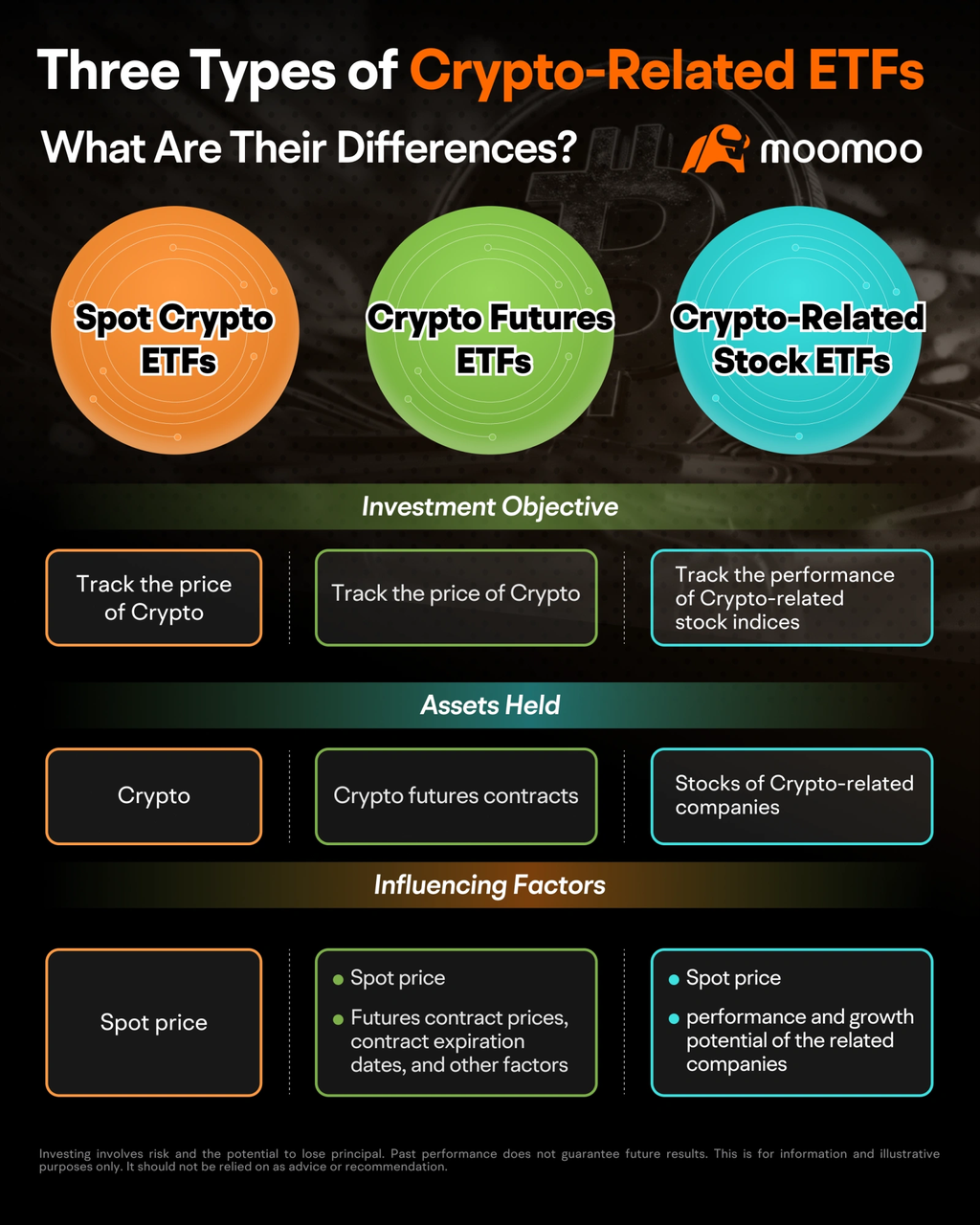
Bitcoin ETFs, as investment tools, can be categorised into several main types based on their investment strategies and asset structures, each with its unique characteristics and risk-return profiles.
Spot Bitcoin ETFs
Spot Bitcoin ETFs are fund products that directly invest in Bitcoin. Their goal is to replicate the price performance of Bitcoin, allowing investors to gain exposure similar to holding Bitcoin directly by purchasing ETF shares. These ETFs typically hold actual Bitcoin, so their net asset value (NAV) fluctuates with the market price of Bitcoin. Spot Bitcoin ETFs offer investors a simple and direct way to participate in the Bitcoin market easily through stock exchanges.
Futures Bitcoin ETFs
Futures Bitcoin ETFs invest in Bitcoin futures contracts rather than directly holding Bitcoin. Futures contracts are financial derivatives that involve buying and selling Bitcoin at a predetermined price on a specific future date. By doing so, futures Bitcoin ETFs provide investors with a tool to participate in the Bitcoin market while allowing the use of leverage and hedging strategies from the futures market. The assets of these ETFs are primarily composed of Bitcoin futures contracts, and their prices are influenced by futures market prices, contract expiration dates, and other factors.
Physically-backed Bitcoin ETFs
Physically-backed Bitcoin ETFs refer to ETFs that hold actual Bitcoin as backing for their assets. This means that for every share of the ETF, there is a corresponding amount of Bitcoin to support it, ensuring that the fund's physical assets correspond to the issued shares. This type of ETF offers an investment experience closest to holding Bitcoin directly while enjoying the liquidity and regulatory advantages of ETFs. Physically-backed Bitcoin ETFs are an ideal choice for investors who are looking to invest directly in Bitcoin but wish to maintain the habits of traditional financial investments.

How to trade Bitcoin ETFs in Australia with moomoo?
Investing in cryptocurrency-related ETFs is relatively low risk and more convenient, making it a good choice for novice investors. Purchasing Bitcoin stocks or ETFs in Australia can be done through various trading platforms. Taking moomoo as an example, here are the general steps to buy Bitcoin ETFs:
Open an Account: First, you need to open a trading account on moomoo and complete the identity verification process.
Fund your account: After your account is opened and verified, you need to deposit funds into your moomoo account. This can typically be done through bank transfers, credit cards, or other payment methods supported by moomoo.
Search for ETFs: Enter "Crypto" in the search bar and click "More" to view a list of different types of ETFs. On moomoo, you can also navigate to "Markets" > "Australia/Others" > "Investment Themes" > "Cryptocurrency" to find them.
Select Perferred Bitcoin ETF: You can sort the list based on criteria such as price change, trading volume, transaction amount, and market capitalisation.
Place an order: You can place an order to trade on the moomoo platform. You can choose a market order to buy immediately at the current market price, or a limit order to execute the purchase when the market price reaches a specific level.
Tips: In the moomoo app, you can search for "Spot bitcoin ETF" and select the corresponding tap to view all tradable US-listed spot bitcoin ETFs.

Advantages of investing in Bitcoin through ETFs in Australia
In Australia, investors are increasingly using Exchange Traded Funds (ETFs) to invest in Bitcoin, combining the convenience of traditional investments with the growth potential of cryptocurrencies. As a regulated investment product, ETFs offer a relatively safe and manageable way to participate in the Bitcoin market without dealing directly with the complexities of cryptocurrencies.
1. Regulatory compliance
Bitcoin ETFs are subject to strict regulation by authorities such as the Australian Securities and Investments Commission (ASIC), ensuring the compliance and transparency of investments. This regulatory environment provides additional protection for investors and reduces the risk of fraud and misconduct.
2. Asset security
Compared to traditional Bitcoin investment methods, Bitcoin ETFs are typically managed by professional fund management companies responsible for the storage and security of Bitcoin. This reduces the risk for investors of managing private keys and facing hacking attacks, as fund management companies implement strict security measures to protect assets.
3. Market liquidity
Bitcoin ETFs are listed on prominent stock exchanges, offering traders substantial liquidity. Participants can swiftly purchase or dispose of Bitcoin ETFs, akin to regular equities, which simplifies capital inflow and outflow and assists in readily locating trading partners.

4. Investment convenience
By investing in Bitcoin through ETFs, investors do not need to deal directly with the complex issues of purchasing, storing, and managing Bitcoin. This convenience allows even investors who are not familiar with cryptocurrencies to easily participate in the Bitcoin market.
5. Mainstream institutional recognition
Mainstream institutional recognition is a significant advantage of investing in Bitcoin ETFs in Australia. As cryptocurrencies gradually enter the mainstream financial market, more and more financial institutions are beginning to recognize the value of Bitcoin as an asset class.
What does the future hold for Bitcoin ETFs in Australia?
On November 6, 2024, Donald Trump once again became the President of the United States, a result that not only caused tremendous waves in the global political arena but also brought a significant boost to the cryptocurrency sector.
During his campaign, Trump expressed clear support for the cryptocurrency industry and promised to introduce policies to foster its growth. As soon as the news of Trump's election victory spread, the cryptocurrency market responded immediately, with the prices of major cryptocurrencies such as Bitcoin and Ethereum climbing significantly, and the stock prices of related companies also rising swiftly. Under Trump's administration, the cryptocurrency industry is expected to gain unprecedented development opportunities in the United States.
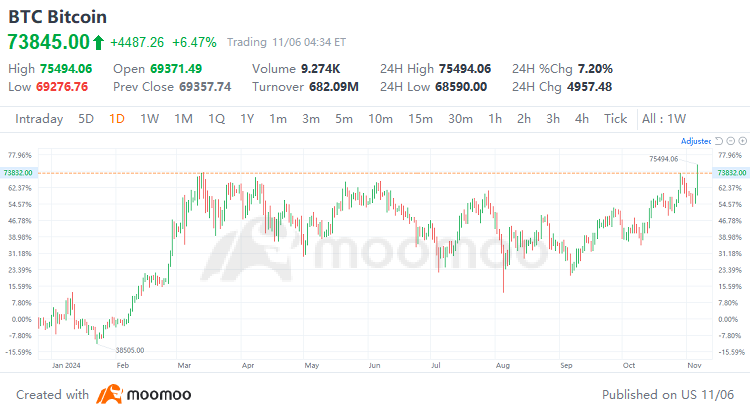
Trump's positive stance on cryptocurrencies suggests that the U.S. may introduce more supportive policies, providing a favorable regulatory environment for the development of Bitcoin ETFs. The support from the Trump administration could enhance market confidence in the cryptocurrency industry, attracting more investors to focus on and invest in Bitcoin ETFs, thereby increasing their trading volume and liquidity.
At the same time, the Trump government has pledged to continue supporting financial technology innovation, including blockchain technology and cryptocurrencies, which could promote the overall development of the cryptocurrency industry. Bitcoin ETFs, as part of the industry, may benefit from increased R&D funding, patent protection, and private-sector cooperation. Furthermore, policies of the Trump administration, such as tax cuts and low interest rates, may increase market demand for assets with inflation-resistant properties, thereby driving the performance of Bitcoin ETFs.
Under Trump's leadership, the cryptocurrency industry may usher in new development opportunities. Investors, when constructing trading strategies, should consider market volatility, the uncertainty of policy changes, and other macroeconomic factors. Additionally, the Trump administration's support for cryptocurrencies could have a global market impact, encouraging other countries to follow suit, and creating a more international market environment for Bitcoin ETFs. Investors should closely monitor international policy dynamics and how these changes affect the global investment appeal of Bitcoin ETFs.
Bitcoin ETFs in Australia summary
Bitcoin ETFs in Australia, as a regulated investment product, offer Australian investors a relatively safe and manageable channel to engage in the Bitcoin market without directly dealing with the complexities of cryptocurrencies. These ETFs not only ensure regulatory compliance, enhancing investment transparency and protecting investors from the risk of fraud but also mitigate the risks for individual investors in terms of storage and security through the management of professional fund management companies.
In addition, Bitcoin ETFs are available for trading on key stock exchanges, including the Australian Securities Exchange (ASX), offering investors significant liquidity. This ease of buying and selling is akin to trading traditional stocks, which streamlines the movement of capital. As cryptocurrencies gradually gain acceptance in mainstream financial markets, the investment appeal of Bitcoin ETFs in Australia continues to grow, especially considering global policy dynamics and market trends. Investors should closely monitor these changes to seize investment opportunities. However, investors should also be aware that Bitcoin ETFs in Australia are subject to market volatility, policy uncertainty, and other macroeconomic factors, and should consider these risks when investing.

FAQs about Bitcoin ETFS
Why are Australian investors interested in Bitcoin ETFs?
Australian investors are showing interest in Bitcoin ETFs for several reasons. Firstly, Bitcoin ETFs offer a regulated and secure way to gain exposure to the volatile but potentially high-return world of cryptocurrencies without the need to directly purchase and secure the underlying assets. This reduces the technical barriers and security risks associated with direct cryptocurrency ownership.
Secondly, Bitcoin ETFs provide liquidity and the ability to easily buy and sell on traditional stock exchanges, making them accessible to a wider range of investors. Additionally, they allow for diversification within investment portfolios, potentially offering a hedge against traditional market volatility.
Has a Bitcoin ETF been approved in Australia?
Australia has approved Bitcoin ETFs for trading on its stock exchanges. This approval signifies a level of regulatory acceptance and provides investors with a legally recognised and secure way to invest in Bitcoin through traditional financial channels. The approval process ensures that these ETFs meet certain standards and disclosures, offering a level of protection and transparency to investors.
Are there other types of Crypto ETFs besides Bitcoin?
The world of crypto ETFs is not limited to Bitcoin. Some ETFs track other cryptocurrencies, such as Ethereum, which is the second-largest cryptocurrency by market capitalisation. These diversified crypto ETFs may invest in a basket of different cryptocurrencies, offering exposure to the broader market and potentially spreading out risk.
Additionally, there are thematic ETFs that focus on companies involved in the blockchain and cryptocurrency space, rather than directly investing in the cryptocurrencies themselves. These can include businesses involved in mining, trading platforms, and blockchain technology development. The availability of such ETFs provides Australian investors with a variety of options to align with their investment strategies and risk tolerance.
This presentation is for informational and educational use only and is not a recommendation or endorsement of any particular investment or investment strategy. Investment information provided in this content is general in nature, strictly for illustrative purposes, and may not be appropriate for all investors. Read more