5 things to consider before investing
If you’re new to investing, figuring out where to begin can be daunting. Here, we’ll walk you through the investment process, highlighting key points you should consider before making your first investment. Our aim is to better equip you for success on your path to financial growth.
1. Evaluate your financial situation
Before diving into investing, it's crucial to assess your financial status thoroughly. Imagine embarking on a trip: knowing your starting point is as vital as understanding the destination, which in this case, is financial security.
It’s imperative to use only the money that isn’t allocated for essential expenses, like household bills or mortgage repayments, for your investments.
To gauge your readiness for investment, take a deep dive into your finances. Examine your income, expenses, assets, and debts to figure out the surplus funds you might have available to invest. This should ideally be money you won’t need in the short term, often not within the next year.
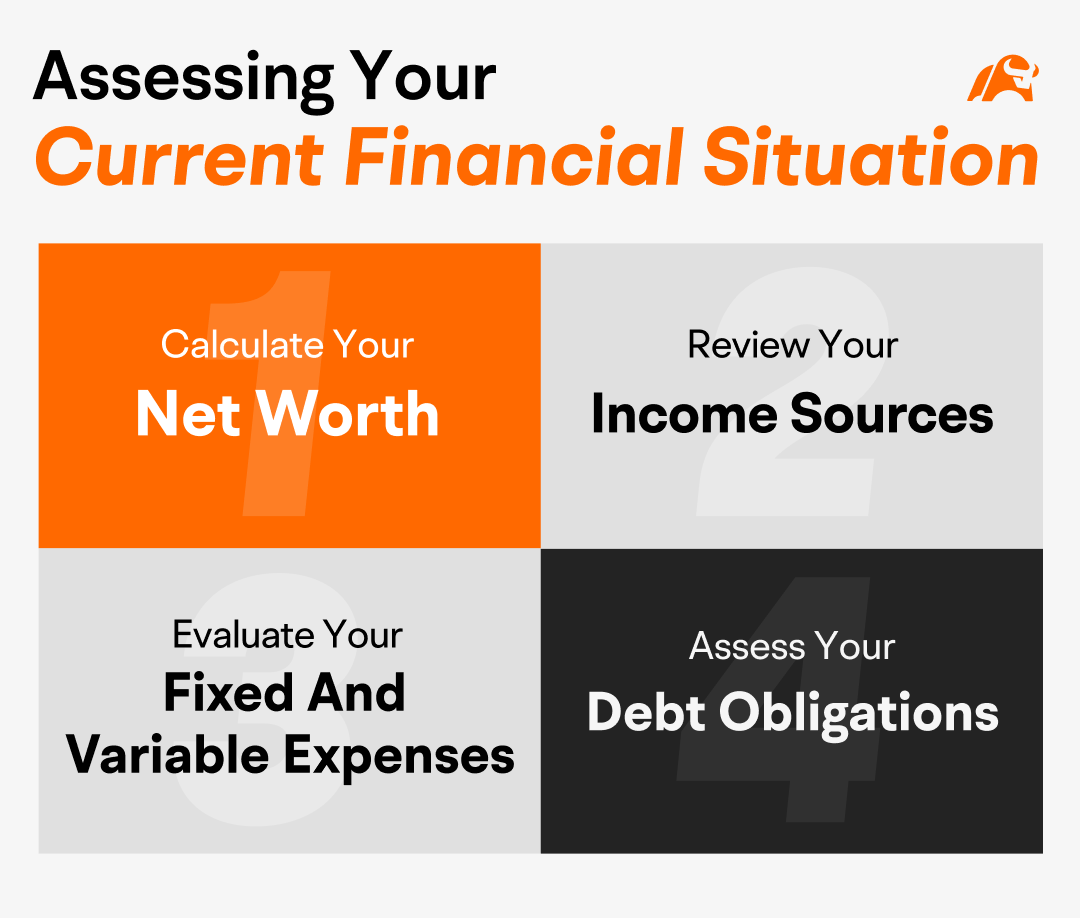
Remember, you don't need a massive bank balance to get started. Many financial advisors suggest regularly investing a certain percentage of your take-home pay—something in the range of 15%-25% of your net income could be a good benchmark.
2. Set your investment goals
Setting investment goals is a critical step in achieving financial success. It allows you to determine the appropriate amount and mix of assets for your investments.
While the primary objective of investing is often to increase wealth, it’s important to delve deeper and define the specific purposes for which you intend to use the money. This could include planning for retirement, purchasing a home, or saving for your children’s education. List out your financial goals and determine which ones take precedence.
The type of assets that are best suited for you may vary depending on the timelines associated with each of your goals. For instance, if you’re focusing on retirement and it’s several decades away, you might begin by making small but consistent contributions. These can be scaled up as your earnings increase, capitalizing on compound growth over a longer period.
3. Determine your risk tolerance
Investing inherently involves risk, as the value of your investment can fluctuate regardless of the type of asset you invest in.
Your investment goals should align with your risk tolerance. It’s essential to consider how much risk you’re willing to take before investing.
Successful investing is about managing risk, not avoiding it.
- Benjamin Graham
As a general rule, investments with higher expected return come with higher risk, and vice versa. Bonds, gold, and money market funds are generally considered safer investments, while stocks, particularly growth stocks, carry higher risks and potentially higher returns.
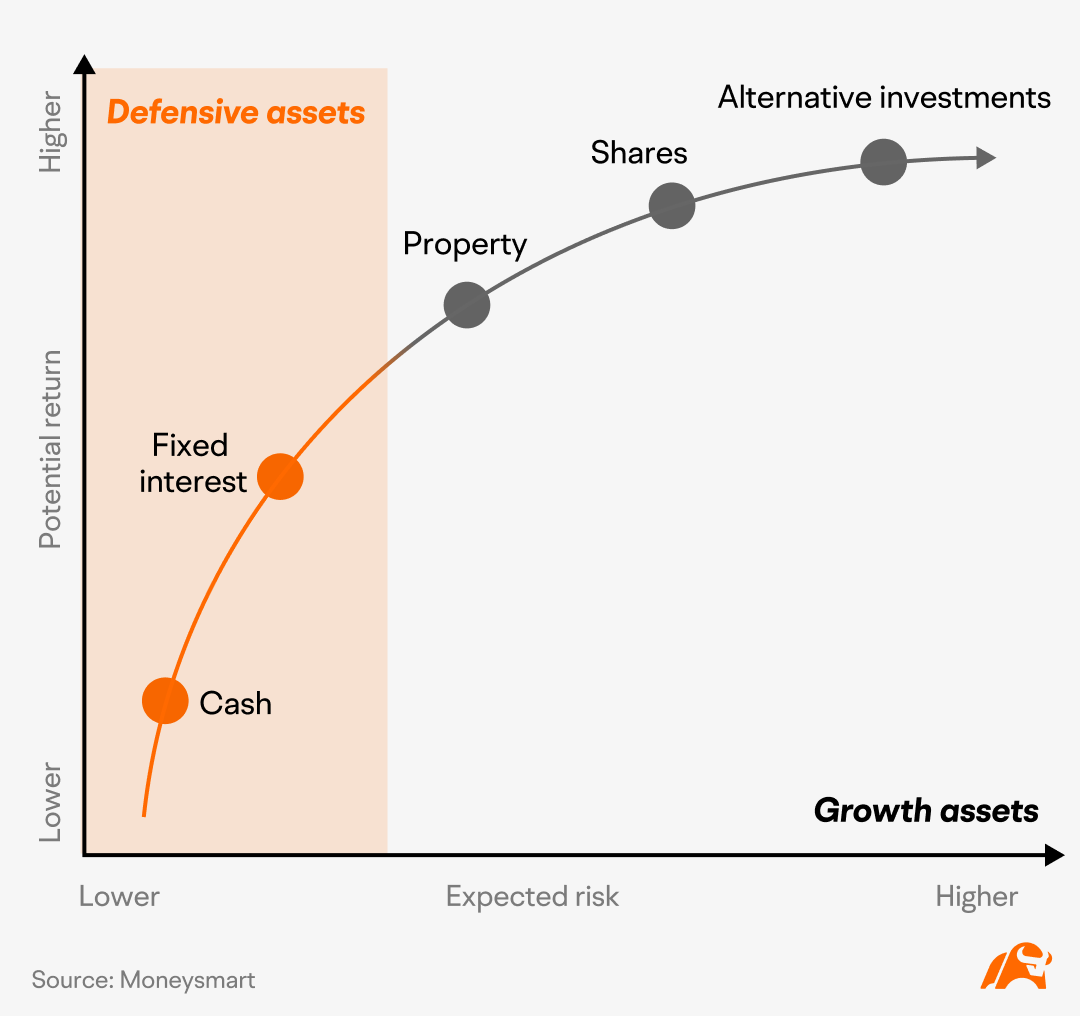
You can determine your risk tolerance by assessing your financial situation, investment time horizon, and investment goals. For instance, a young investor with a long-term investment horizon may have a higher risk tolerance as they have more time to recover from market downturns.
4. Create an emergency fund
An emergency fund is a pool of money set aside to cover unexpected or urgent costs. Think of it as a form of insurance that can save you from a bad situation.
It's recommended to have an emergency fund that can cover three to six months of expenses and to establish a separate high-interest savings account for it. This way, you'll be less likely to use it for everyday expenses.
If you don’t currently have the funds available, you can set by contributing a small amount and setting up a regular savings plan of, for example, $100 per month into the account until you reach your target.
5. Research your investment options
Investments can be classified into two categories: defensive and growth investments.
Defensive investments are typically of lower risk and aim to provide income while protect the invested capital. Defensive investments include cash and fixed interest investments.
Growth investments, on the other hand, are of higher risk and offer a greater potential return than defensive investments. They aim to generate capital growth and may also provide income through dividends for shares or rent for property. However, the value of growth investments can be volatile over the short term.
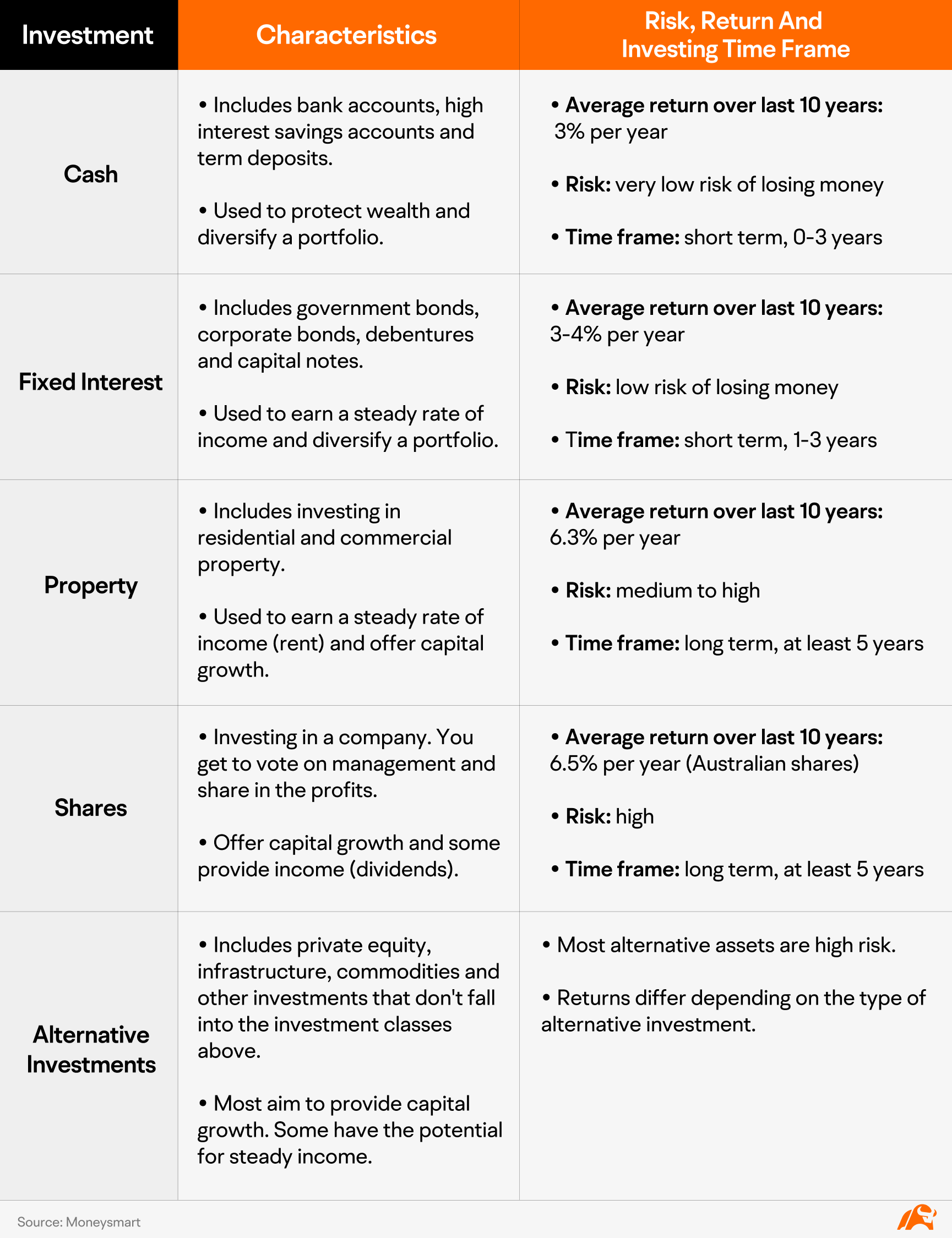
(See up-to-date information: https://moneysmart.gov.au/how-to-invest/choose-your-investments)
Before you invest, make sure you research your investments and remember to diversify your portfolio by investing in various types of assets.
Do not put all your eggs in one basket.
- Warren Buffett
This presentation is for informational and educational use only and is not a recommendation or endorsement of any particular investment or investment strategy. Investment information provided in this content is general in nature, strictly for illustrative purposes, and may not be appropriate for all investors. Read more