Why do oil ETFs lag behind oil prices in the long run?
The oil market has seen a handful of dramatic swings in recent years.
In early 2020, during the initial phase of the pandemic, oil prices plummeted to unprecedentedly low levels. Just two years later, the Russia-Ukraine conflict drove oil prices up to $130 per barrel. In 2025, the conflict between Israel and Iran introduced more uncertainty to the market.
Oil holds a central position in the commodities sector as the most traded and liquid commodity worldwide. Global daily oil consumption has exceeded 100 million barrels, with annual trade volumes reaching several trillion dollars, far surpassing other commodities.
Oil futures, ETFs, and energy companies are popular choices among investors, often used to hedge against inflation or geopolitical risks.
However, you may have noticed that some oil ETFs underperform the actual price of oil over the long term.
What is the reason behind this underperformance? If you're looking to invest in oil, what investment methods might be more effective? Let's dive in.
Takeaways:
The oil market has seen significant volatility due to events like the pandemic and geopolitical conflicts.
Oil ETFs often underperform oil prices over time due to the costs of rolling over futures contracts, especially in a contango market.
Investors might consider ETFs tracking oil companies, which avoid rollover costs and diversify risks, as a potentially more effective long-term investment strategy.
1. Oil ETFs vs. Oil
For most investors, directly holding commodities is not practical.
Imagine buying a barrel of oil and keeping it at home—where would you store it? Moreover, it's not gasoline that you can directly pour into your car's tank, so it doesn't help with your daily life.
In comparison, oil ETFs offer a simple and cost-effective way to track the performance of oil.
Oil ETFs typically do not directly purchase and store physical oil, as it's not practical due to high storage costs and complexity.
Instead, most oil ETFs achieve oil price tracking by investing in oil futures contracts.
Fund managers buy oil futures contracts that are nearing expiration and sell them before they expire, simultaneously purchasing contracts for the next term.
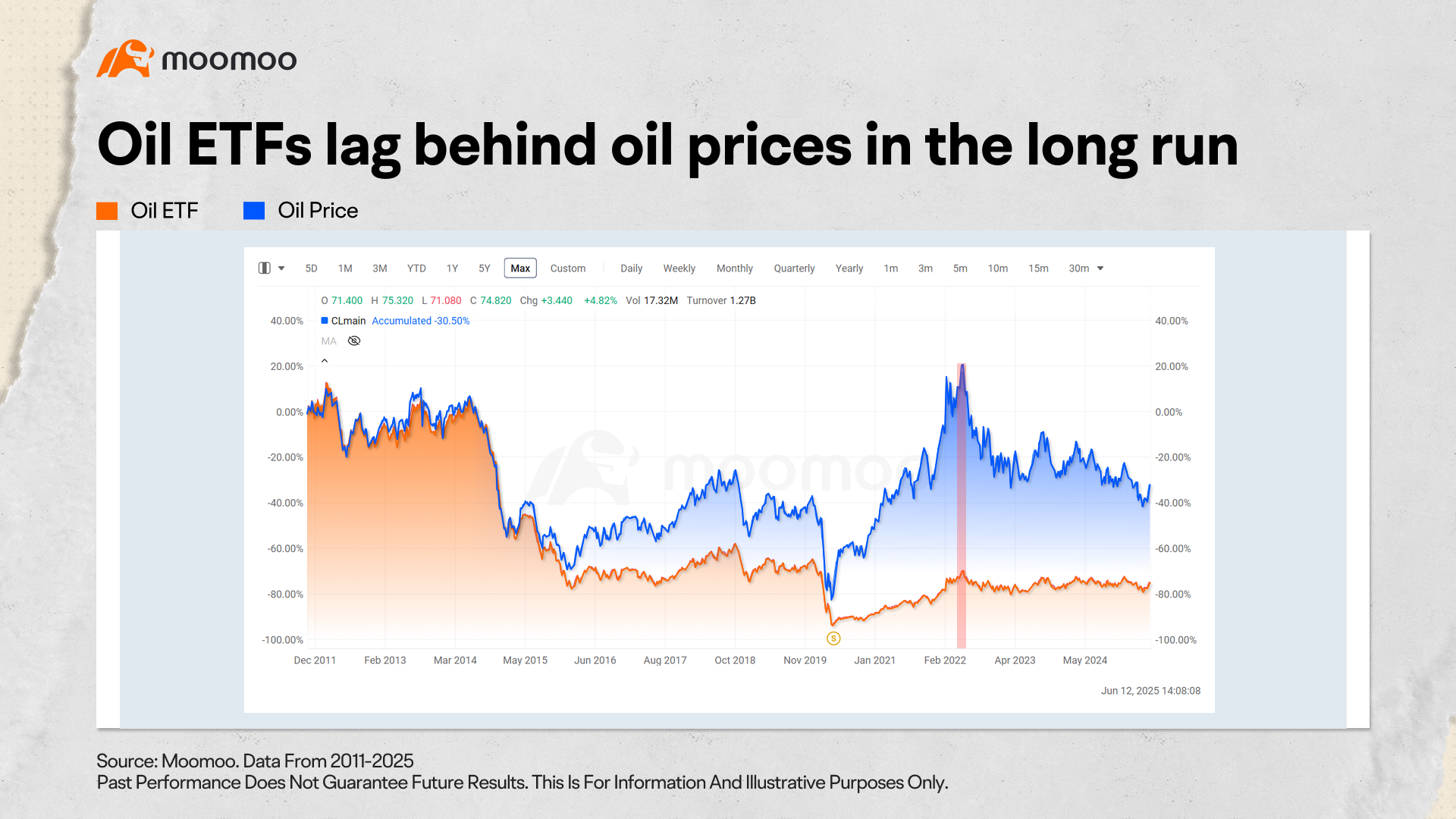
However, if you hold these oil ETFs for an extended period, you might notice a peculiar phenomenon: oil ETFs often fail to keep pace with the oil price itself.
In 2022, oil prices reached new highs not seen since 2008, but the ETF had not recovered to its 2019 levels.
2. How rollovers affect performance
The underperformance of oil ETFs is primarily due to the inherent flaws associated with their futures-based structure.
Let's break down the mechanism behind this.
Futures contracts have a specified expiration date. When the contract expires, the holder is obligated to either take or make delivery of the underlying asset.
To maintain continuous exposure to the price of crude oil without taking physical delivery, an oil ETF must "roll over" its futures contracts. This involves selling the contracts that are nearing expiration and purchasing new ones that expire at a later date.
Contango and backwardation are two key terms used to describe the shape of the futures price curve, reflecting the price relationships between futures contracts with different expiration times.
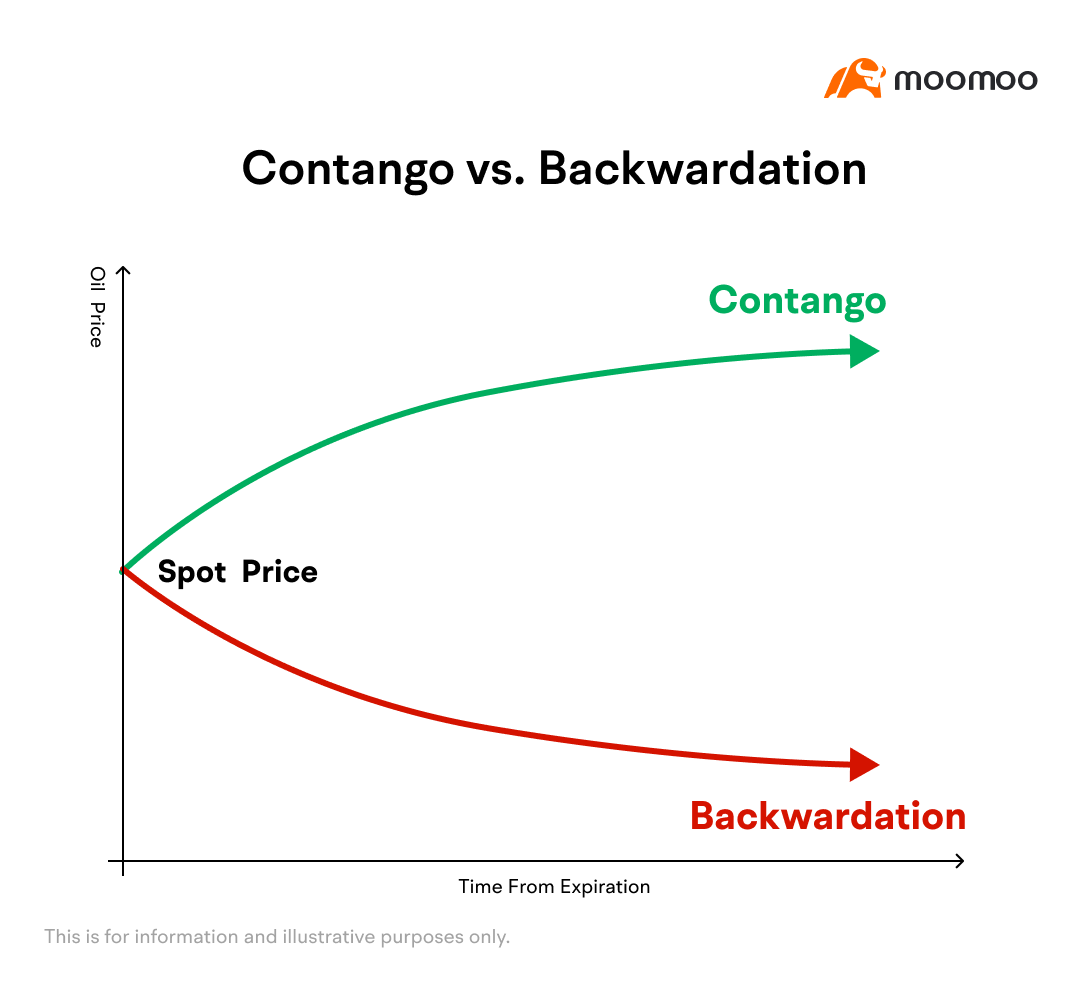
Contango: This occurs when the futures prices are higher than the spot prices.
Imagine it's January, and the current spot price of crude oil is $50 per barrel. The futures contract for delivery in February is priced at $52, while the contract for delivery in March is priced at $54. This situation, where futures prices are higher than the current spot price, is known as contango.
In a contango market, an ETF that rolls over its futures contracts (selling the near-month contract and buying the next-month contract) incurs a loss because it buys higher-priced contracts and sells lower-priced ones, eroding returns over time.
Backwardation: This occurs when futures prices are lower than spot prices, which can benefit ETFs as they roll over contracts.
However, markets are often in contango, especially for oil.
For oil, there are costs associated with storage, insurance, and financing. Futures prices often reflect these costs, leading to higher prices for forward contracts.
Backwardation in crude oil futures is less common and typically requires conditions such as immediate supply shortages, low inventories, and strong demand to prompt market participants to overlook holding costs.
Now, you might wonder whether ETFs for precious metals like gold are affected by the process of rolling futures contracts.
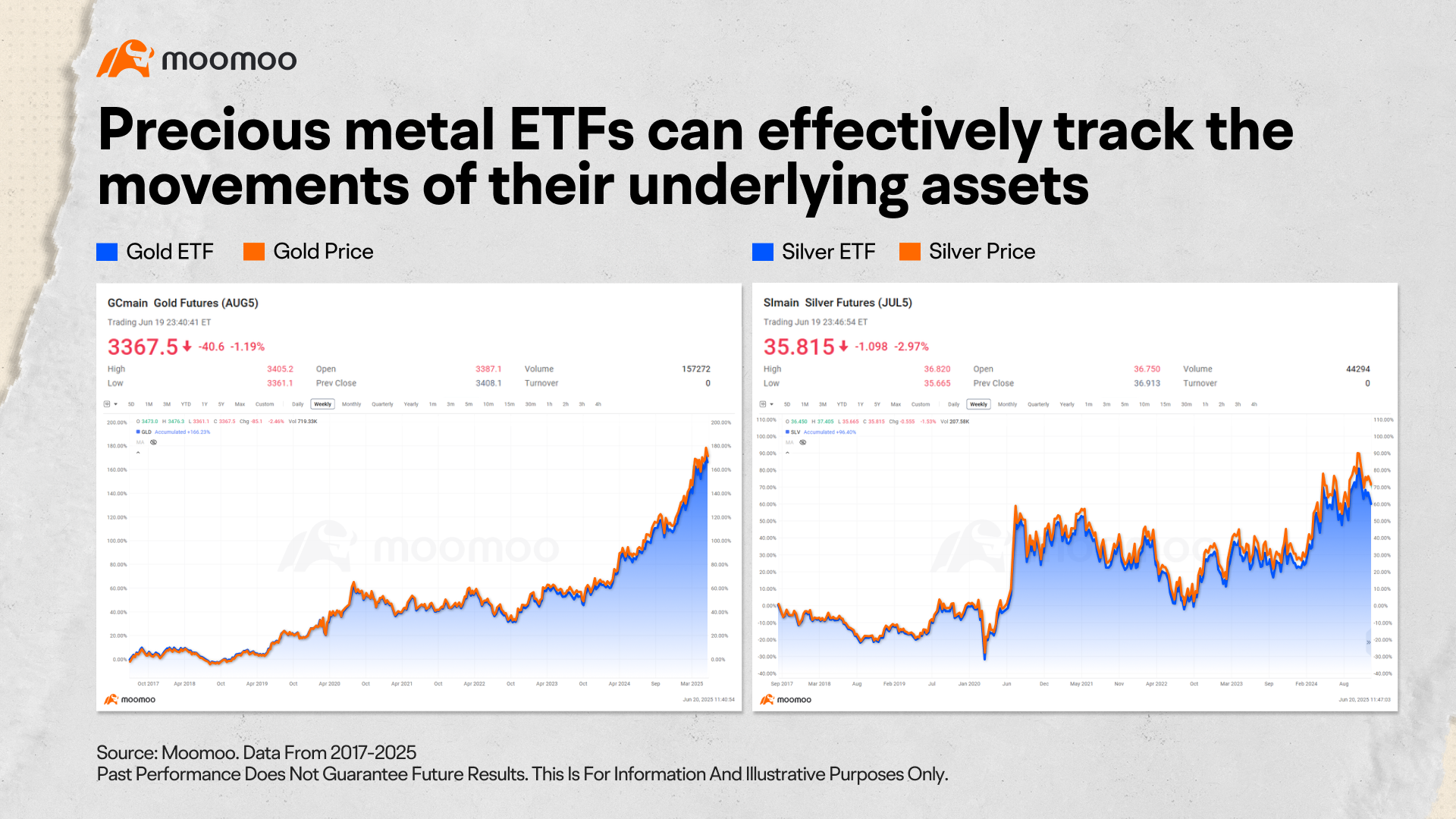
The unit value of precious metals is significantly higher than that of crude oil. These ETFs can hold physical assets directly, allowing their prices to align with spot prices. As a result, they are not affected by the costs of rollovers or the term structure.
3. What are some other oil investing strategies?
Since ETFs that track oil prices cannot overcome the losses incurred from rolling over contracts, oil stock ETFs might be a more investor-friendly choice: broad-based energy ETFs can diversify individual stock risks and have no rollover issues, making them potentially practical tools for long-term participation in the energy sector.
For investors interested in learning more:
You can use Moomoo’s Thematic ETF feature to find oil-related products.
Here's how: Markets > ETFs > Thematic ETFs.
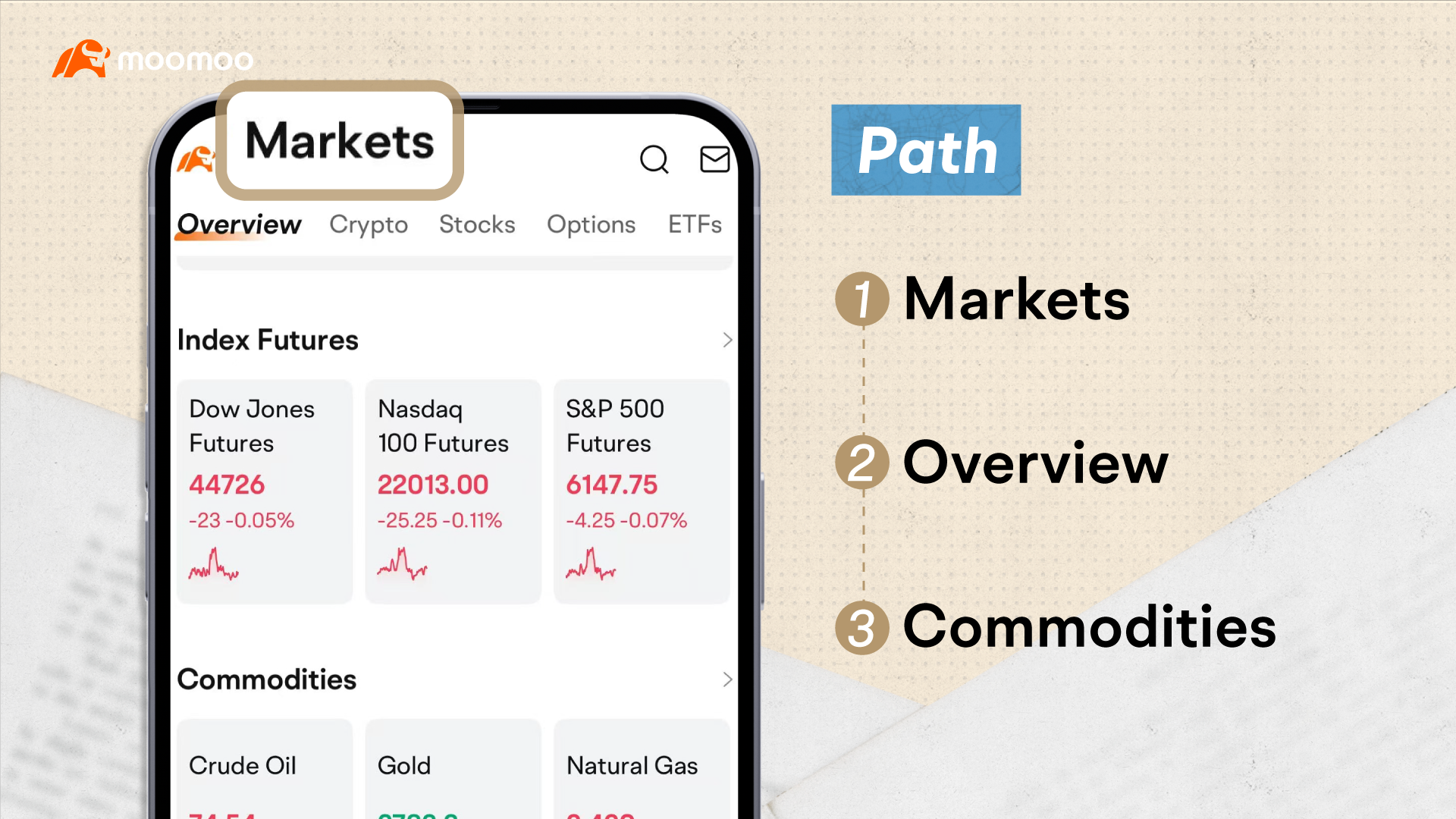
Also, you can check commodity performance on moomoo. Just hit "Markets," select "Overview," and scroll down to "Commodities." Add it to your "Favorites" on the details page to keep track of their movements.
Images provided are not current, and this is for information and illustrative purposes only.
This presentation is for informational and educational use only and is not a recommendation or endorsement of any particular investment or investment strategy. Investment information provided in this content is general in nature, strictly for illustrative purposes, and may not be appropriate for all investors. Read more