Mastering the Dollar Cycle: How to invest in a changing economy
The U.S. dollar plays a pivotal role in global capital flows, experiencing cycles of strength and weakness over the decades. In this session, let's explore how different assets perform throughout these cycles.
Takeaways:
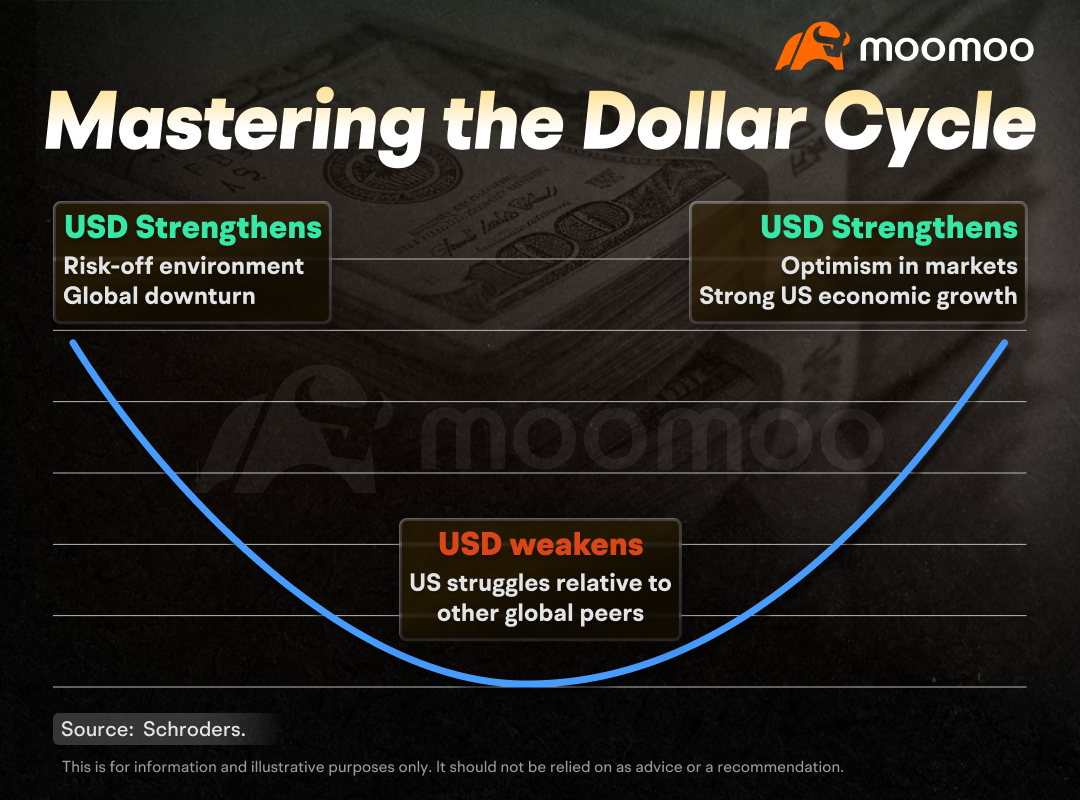
The dollar smile: strengthens during a global crisis or U.S. economic outperformance, and weakens when other economies grow faster.
A strong dollar typically benefits U.S. stocks and domestic companies, while a weak dollar favors non-U.S. markets, commodities, and multinational corporations.
The dollar's impact on assets is complex, requiring investors to consider broader economic contexts.
1. The Dollar Smile
The "Dollar Smile Theory," summarized by a Morgan Stanley analyst over two decades ago, offers a framework to understand the dollar's behavior in different economic scenarios.
Left Side Upturn: When the global economy is weak or in crisis, investors flock to safe assets. As the world's reserve currency, the dollar shines as a safe haven. Even if the U.S. economy stumbles with the rest of the world, the dollar still could rise.
Middle Downturn: As global economies recover and others outpace the U.S., investors may chase higher returns elsewhere, reducing demand for the dollar.
Right Side Upturn: When the U.S. economy outperforms others, the dollar strengthens again. Strong U.S. growth attracts more capital, boosting demand for dollar-denominated assets.
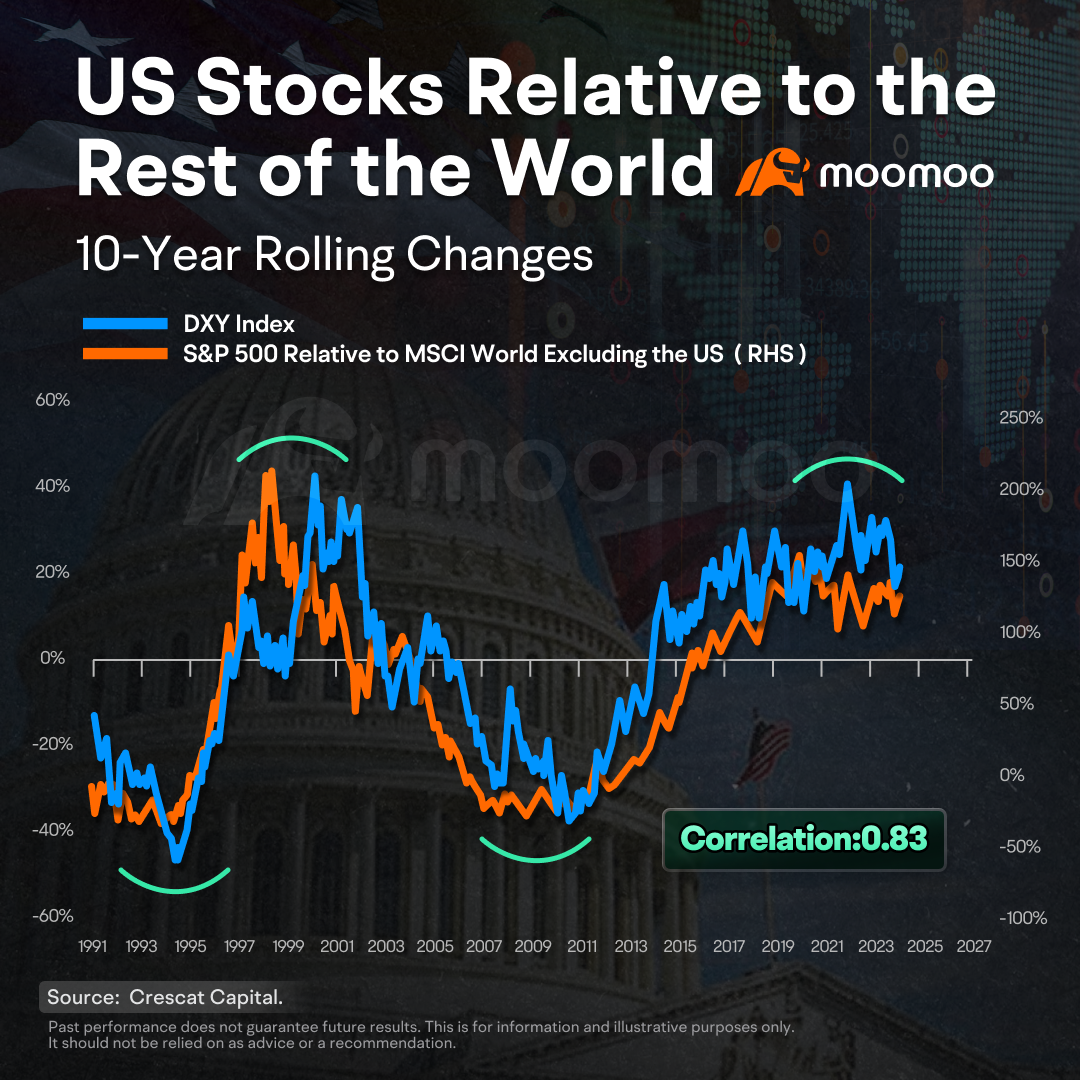
This pattern is mirrored in the stock market.
Historically, when the Dollar Index is strong, the S&P 500 tends to outperform global markets. Yet, when the dollar weakens, international markets frequently perform better than U.S. stocks. The correlation between these data points is strong.
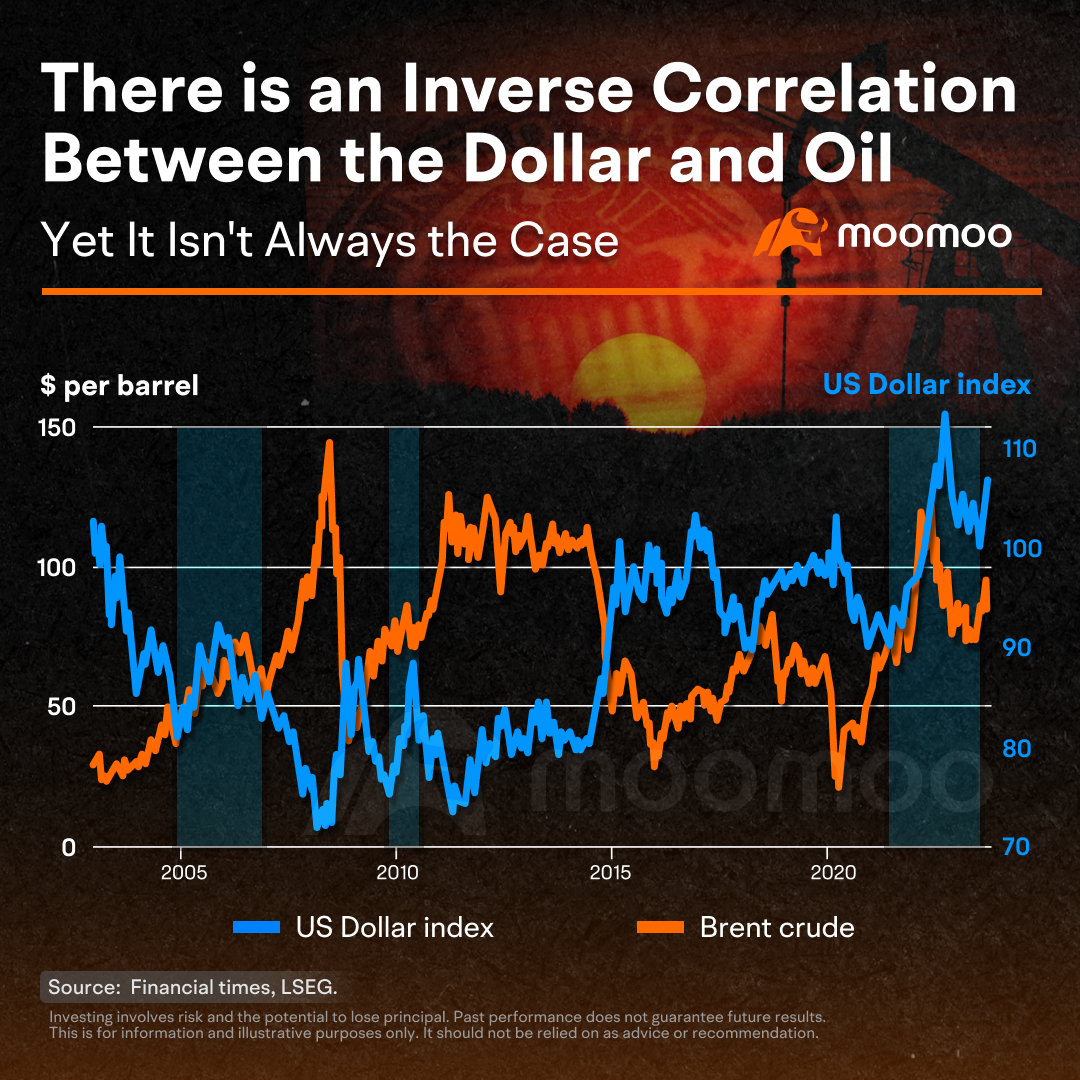
In addition, as the global pricing and settlement currency for commodities, dollar fluctuations also impact these assets, typically showing an inverse relationship.
When the dollar appreciates, commodities priced in dollars become cheaper. A strong dollar often accompanies Fed rate hikes, raising the opportunity cost of holding non-interest-bearing commodities.
However, this isn't a hard-and-fast rule.
For example, while the dollar and oil prices usually move inversely, in opposite directions, they have often moved up or down together, especially following the 2020 pandemic.
If inflation expectations rise, investors might buy both dollars and commodities as hedges. Geopolitical risks, like the Russia-Ukraine conflict, can also boost demand for both.
2. How to Invest in Different Cycles?
Now that you know how the dollar impacts your portfolio's assets, here's a summary of which assets might thrive in different dollar cycles.
Strong Dollar:
Dollar Cash and Equivalents: This includes dollar deposits, money market funds, and short-term U.S. treasuries, benefiting directly from dollar appreciation and high interest rates.
U.S. Domestic Companies: Firms like utilities, consumer staples, and healthcare are more insulated from exchange rate fluctuations. Think of companies like Home Depot, Walmart, and UnitedHealth.
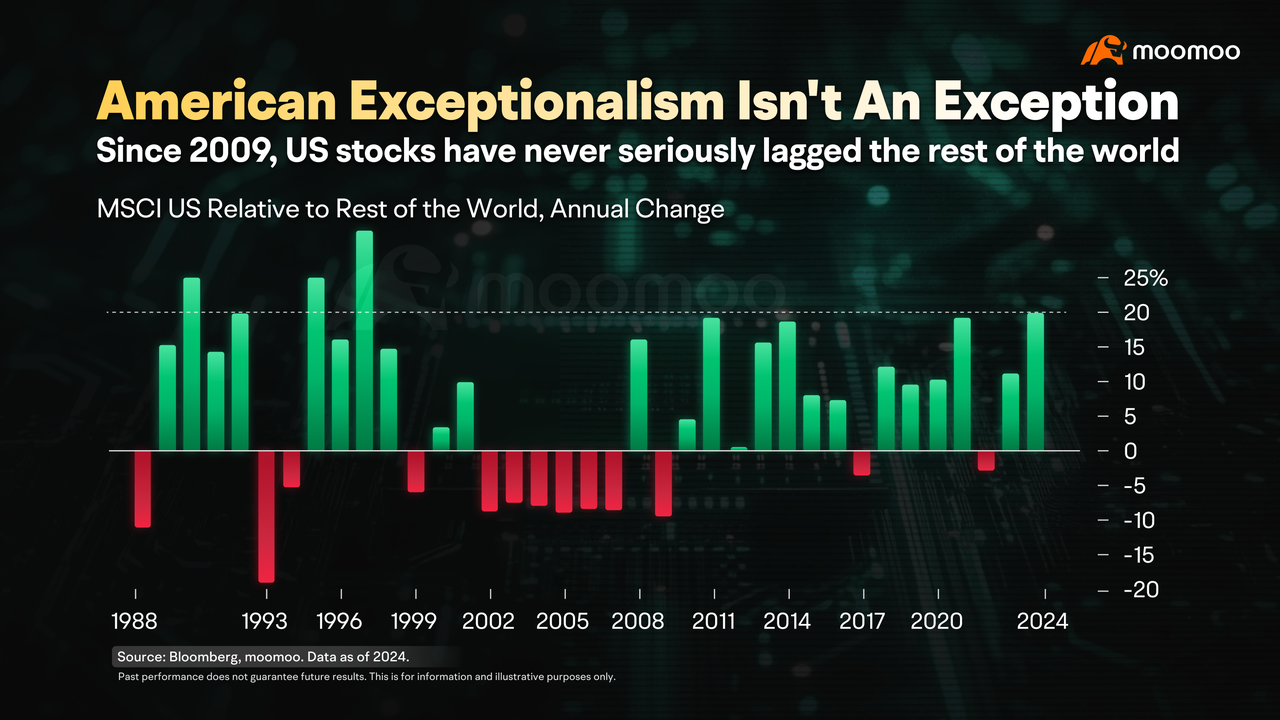
U.S. Stock Market: A strong dollar attracts significant capital inflows, reinforcing the "American Exceptionalism" narrative post-financial crisis.
Weak Dollar:
Non-U.S. Stock Markets: Capital flows to non-U.S. regions, boosting global markets outside the U.S.
Commodities: Precious metals like gold and silver, industrial metals like copper and aluminum, and energy resources like oil and natural gas may benefit.
Multinational Companies: Firms with substantial overseas revenue, such as tech giants Apple and Microsoft.
It's crucial to remember that the dollar's impact on assets is complex and influenced by numerous factors, often over extended periods. Therefore, decisions should consider the broader market context and specific industry changes.
This presentation is for informational and educational use only and is not a recommendation or endorsement of any particular investment or investment strategy. Investment information provided in this content is general in nature, strictly for illustrative purposes, and may not be appropriate for all investors. Read more